Offered by Galerie FC Paris
REQUEST INFORMATION
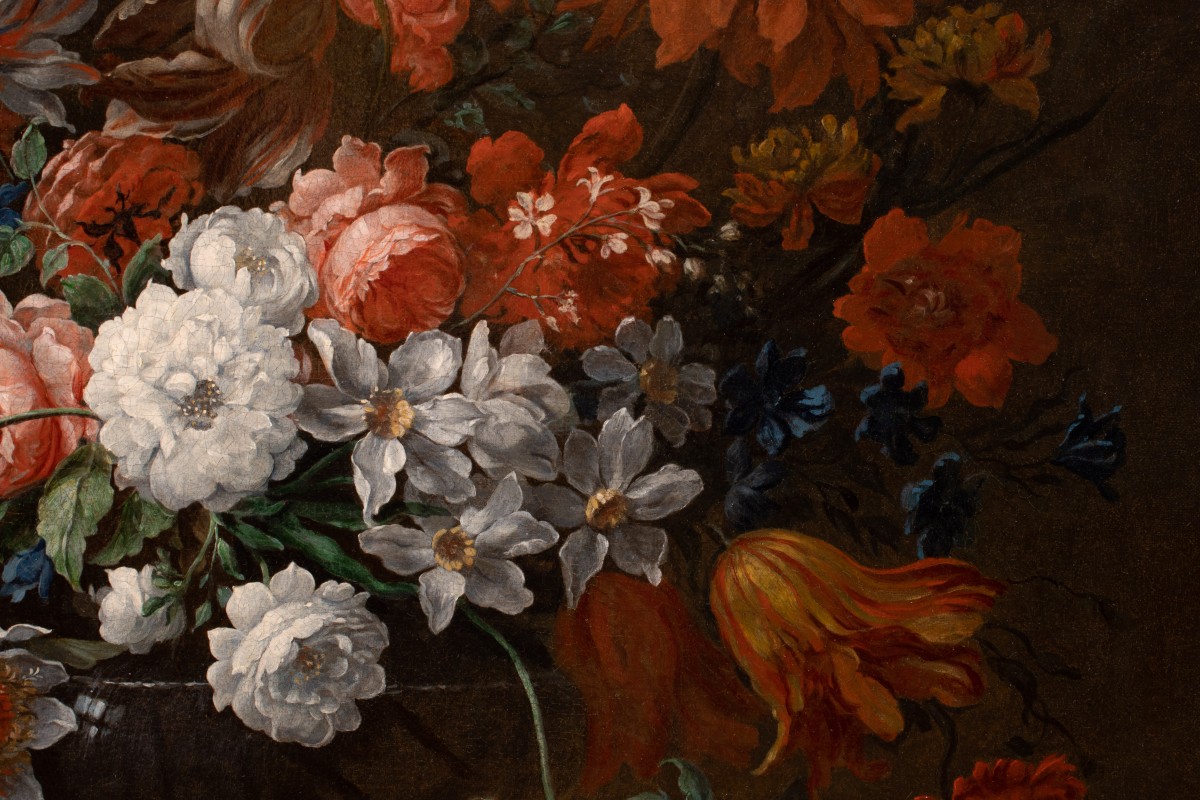

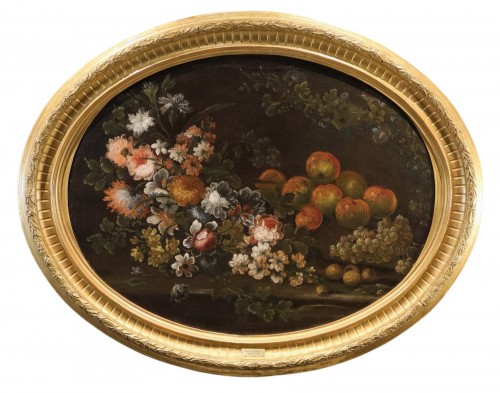
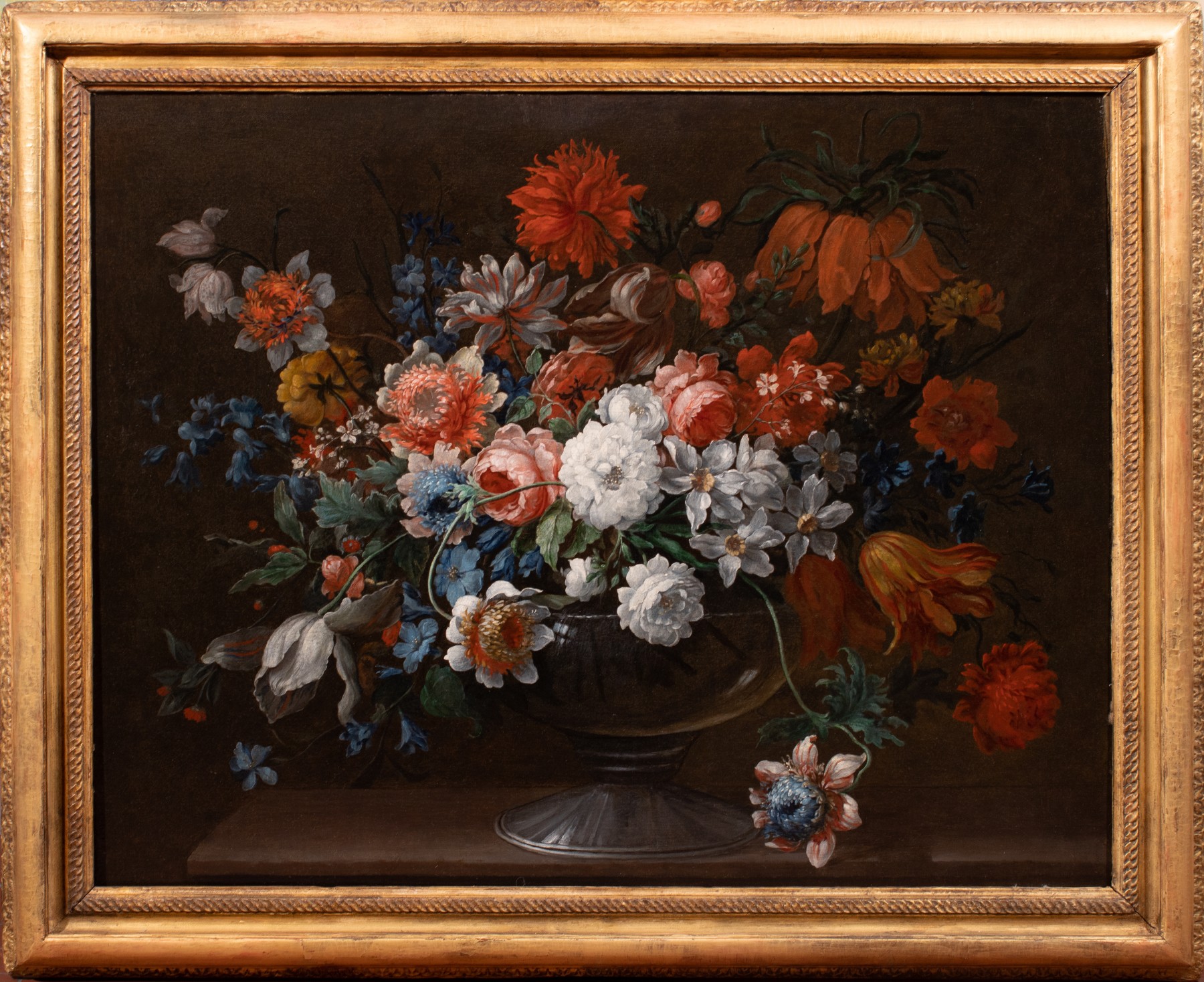
Large Vase of Flowers on a Marble Ledge
Oil on canvas
Presented in a very fine 18th century period frame, moulded and gilded wood, carved with a twisted garland motif.
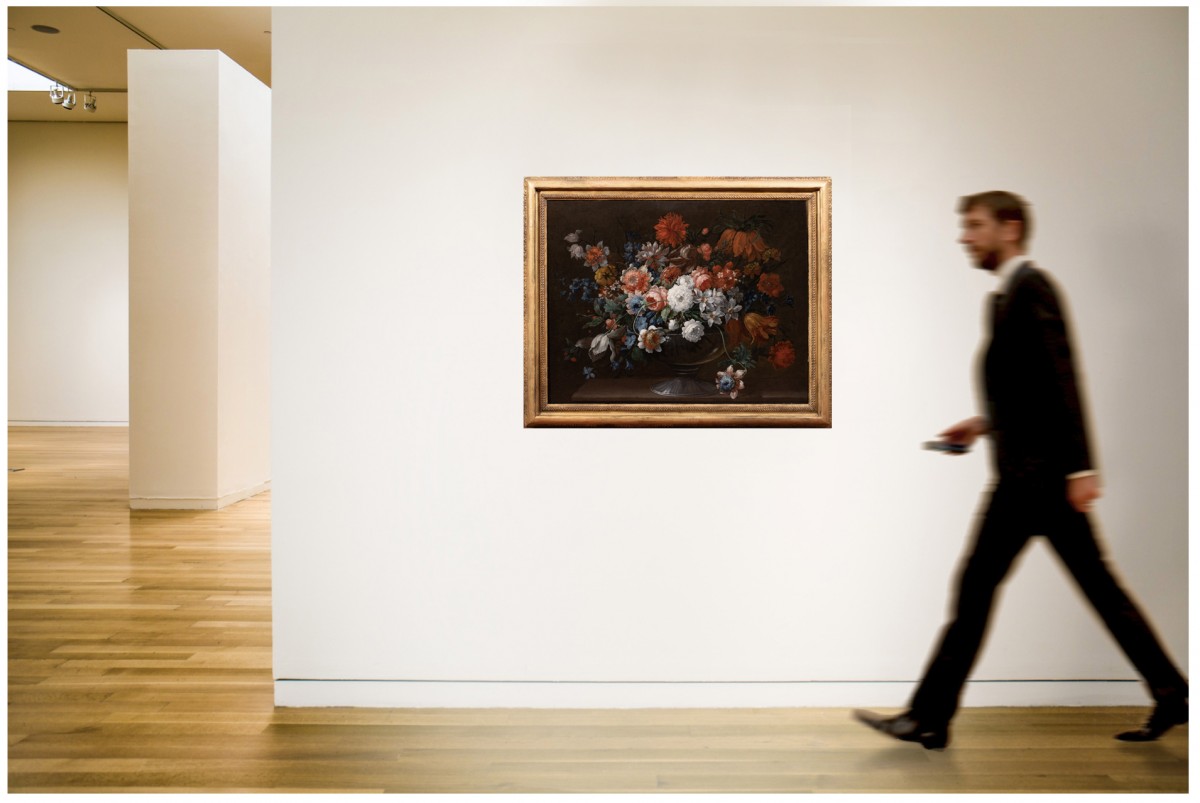
Framed dimensions: 85 × 104 cm. Canvas alone: 70 × 90 cm.
This sumptuous composition exemplifies the great vogue for flower painters in France during the 17th century, a period in which the floral still life emerged as a fully recognised genre, celebrated for its virtuosity and decorative refinement. Artists competed to convey the luxuriance of bouquets and the delicacy of petals with near botanical precision, responding to the taste of collectors who sought impressive works to adorn aristocratic residences.
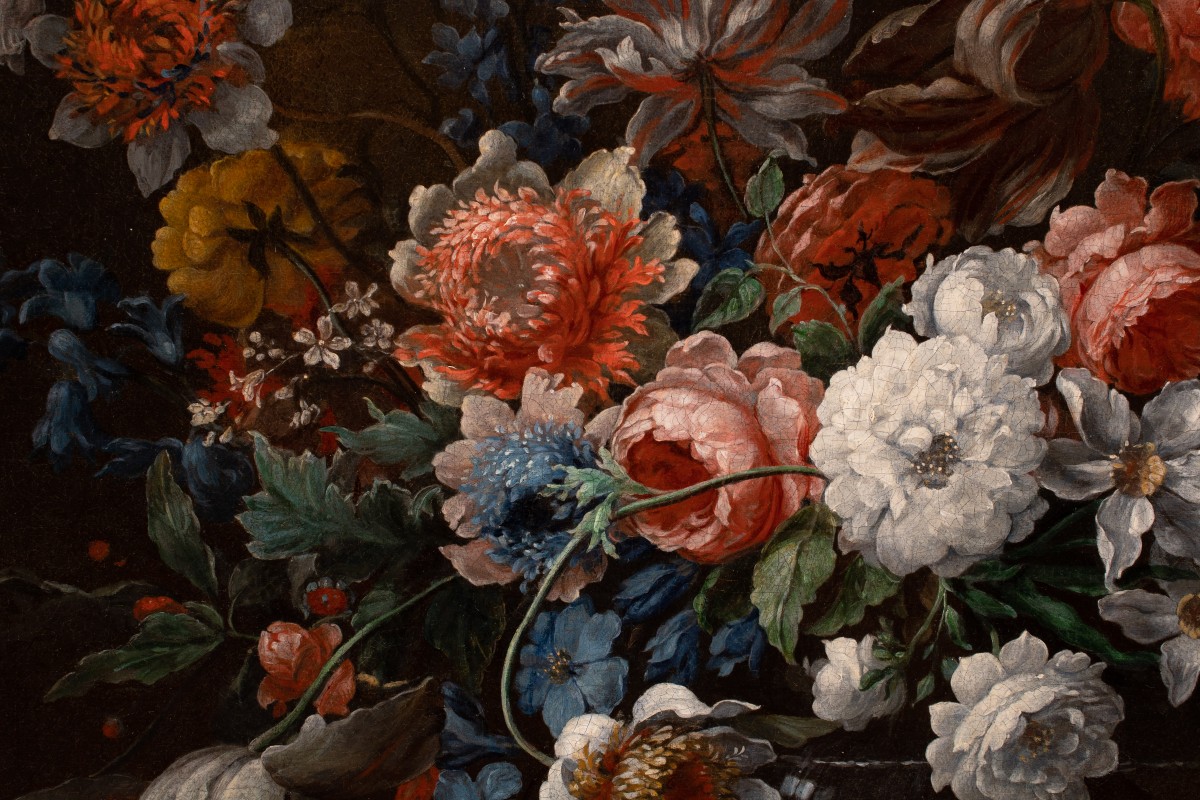
At the centre of a vase set upon a marble entablature unfolds a profuse bouquet combining roses, peonies, tulips, anemones, narcissi, carnations, ranunculus, campanulas and imperial fritillaries. Pearly whites, deep reds and intense blues stand out against a dark background, heightening the sense of relief and luminosity. The thoughtful arrangement of the flowers — some already beginning to fade — evokes the transience of time and the beauty of ephemerality, themes dear to Baroque painting.
The broad, fluid brushwork, the chromatic richness and the mastery of chiaroscuro are characteristic of Jean Baptiste Monnoyer, the undisputed master of monumental bouquets. A painter of the great decorative schemes at Versailles and the Tuileries (notably overdoor panels), he collaborated with Charles Le Brun and was appointed Painter to the King. His art, at the crossroads of Flemish realism and the French taste for symmetry and grace, exerted a lasting influence on decorative painting well into the 18th century.
Biography of Jean Baptiste Monnoyer
Born in Lille in 1636, Monnoyer trained within the Flemish tradition before settling in Paris around 1655. He quickly became renowned for his large bouquets and garlands executed for the court and for private collectors. In 1673, he was admitted to the Royal Academy of Painting and Sculpture, where he exhibited floral works of exceptional virtuosity.
Towards the end of his career, he travelled to England, working for Queen Anne and various aristocratic households. He died in London in 1699, leaving behind a prolific body of work that would influence 18th century decorative painters such as Alexandre François Desportes and, later, Jean François Bony.
Excellent condition.
Sold with a certificate of authenticity.