Offered by Galerie PhC
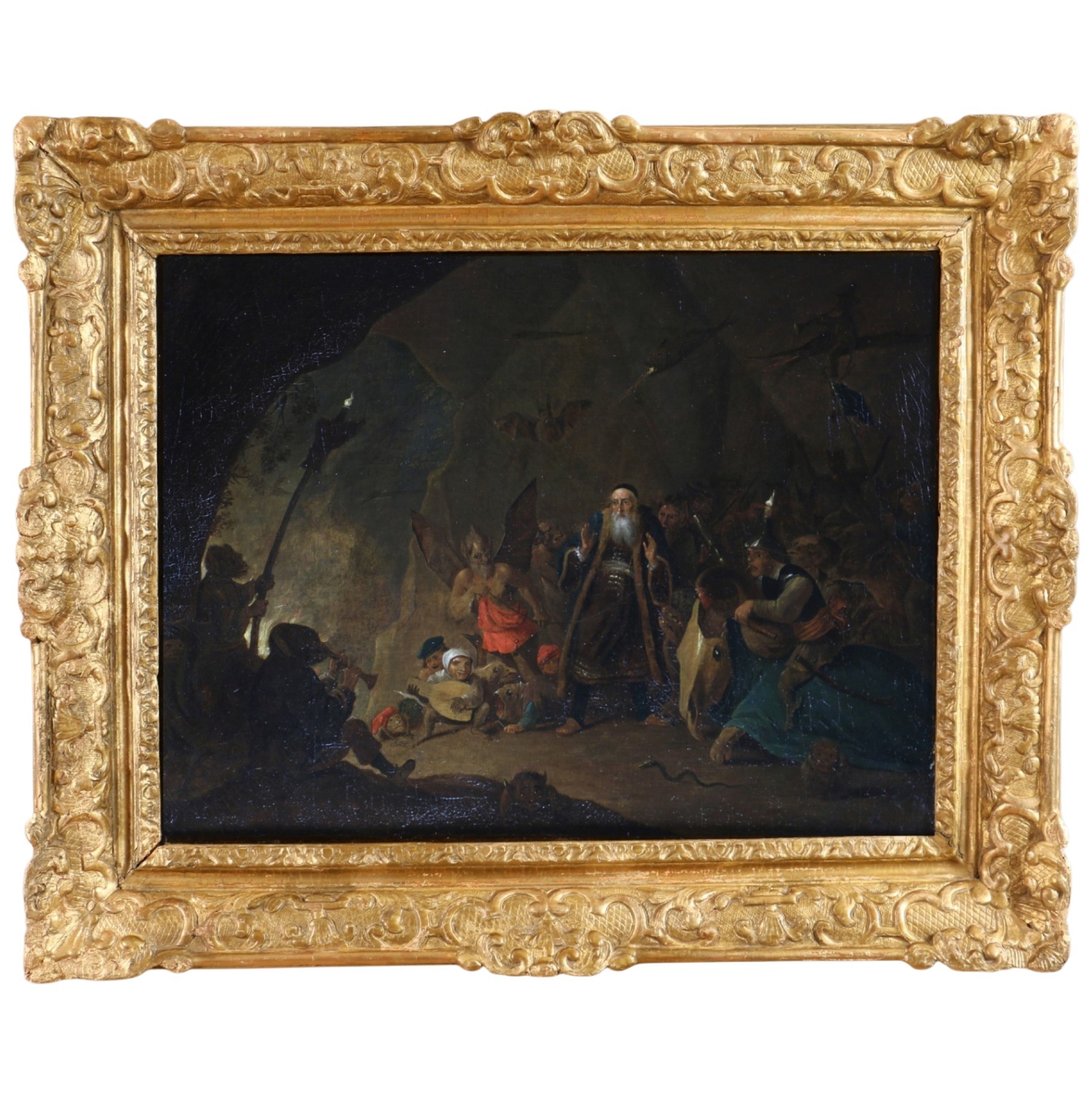

European paintings from the 17th, 18th and 19th centuries.
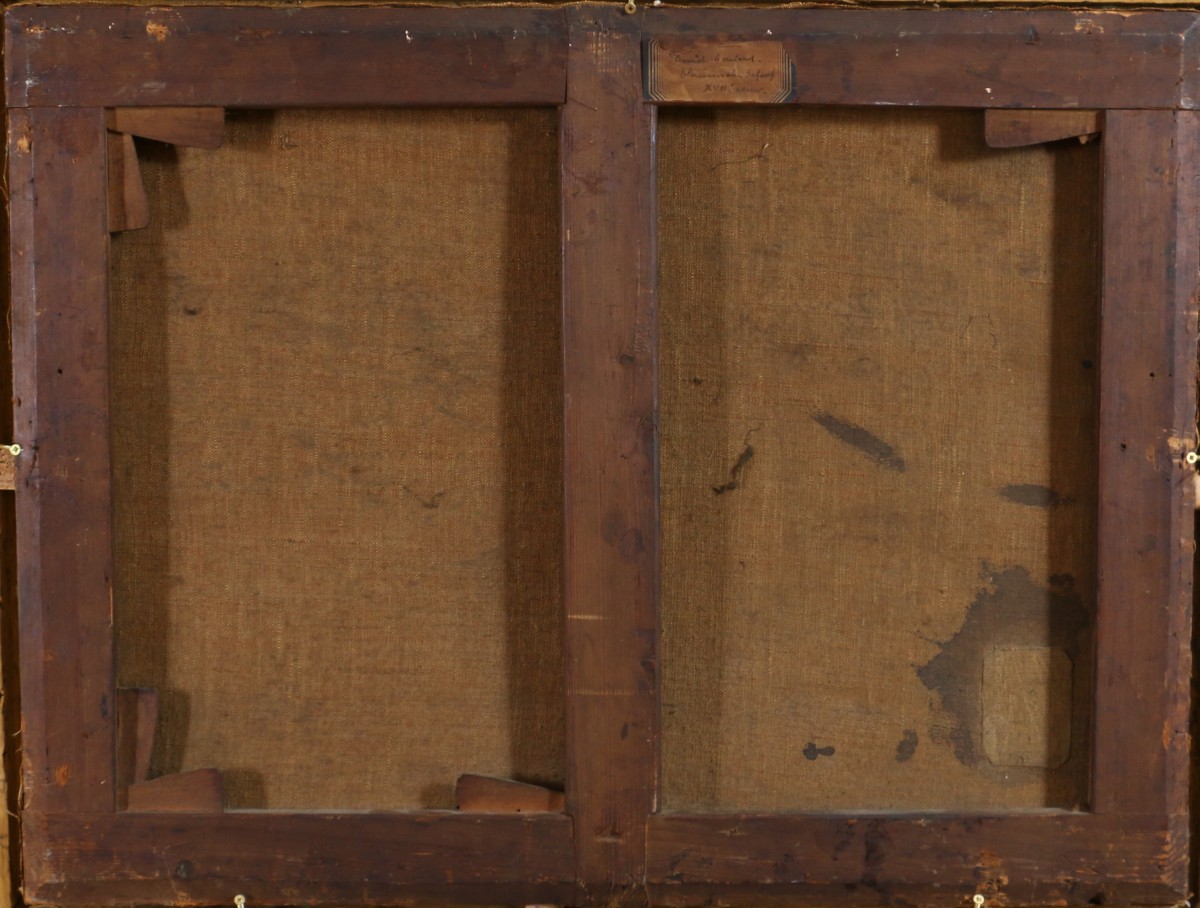
Oil on canvas, previously relined; 49 × 65 cm.
Period frame: 84 cm by 70 cm.
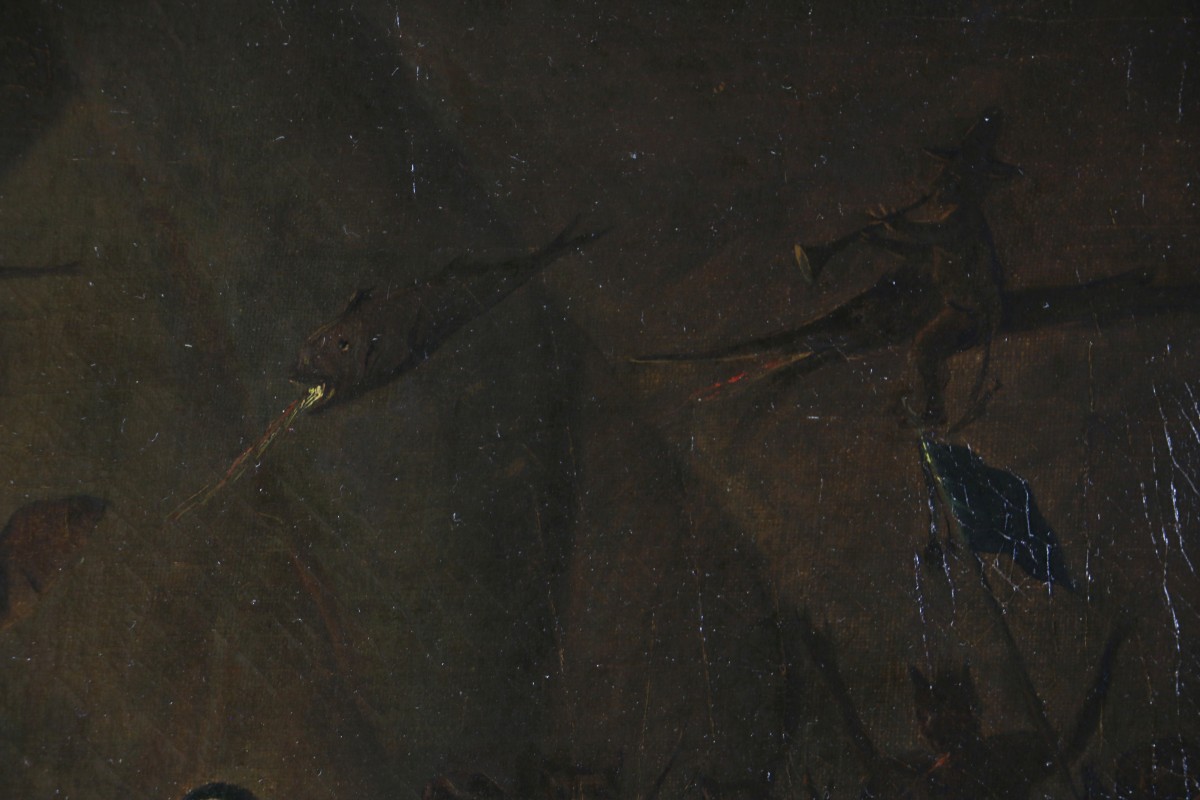
(The white dots and lines visible in the photos are artifacts of the photography.)
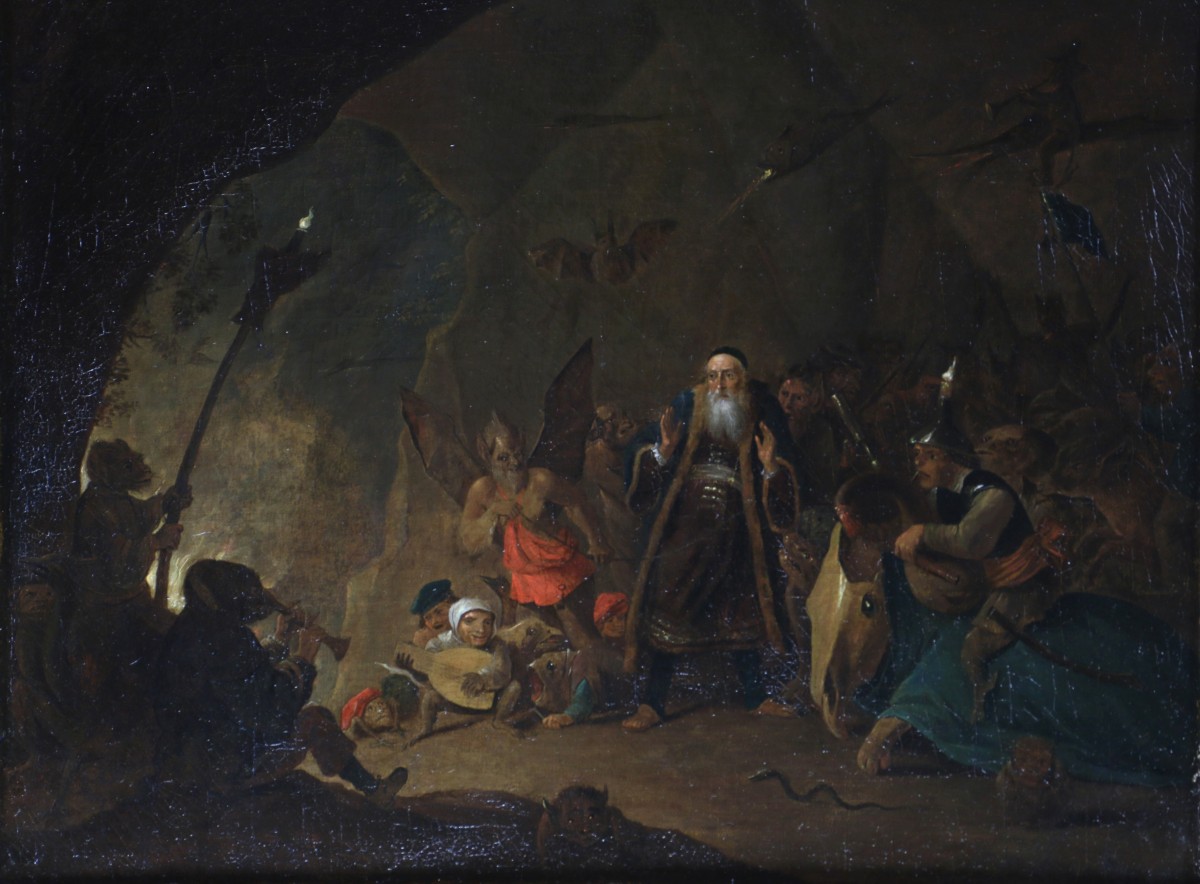
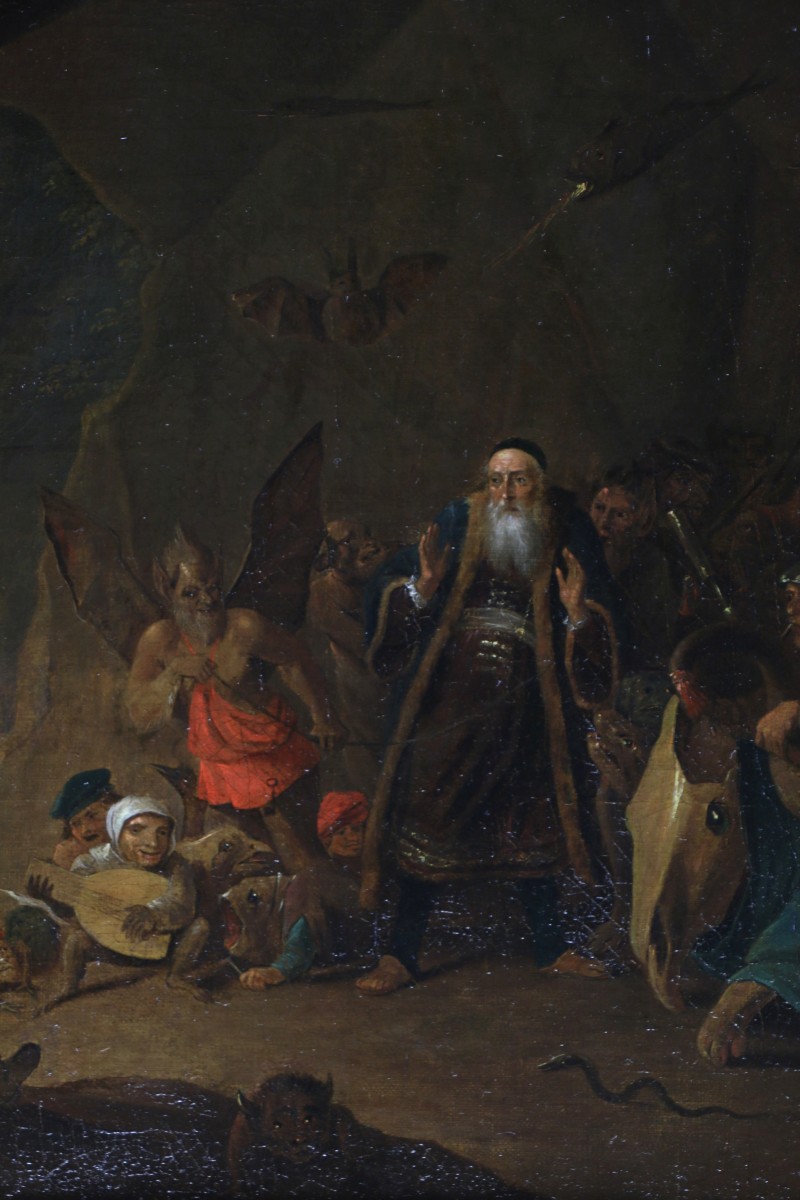
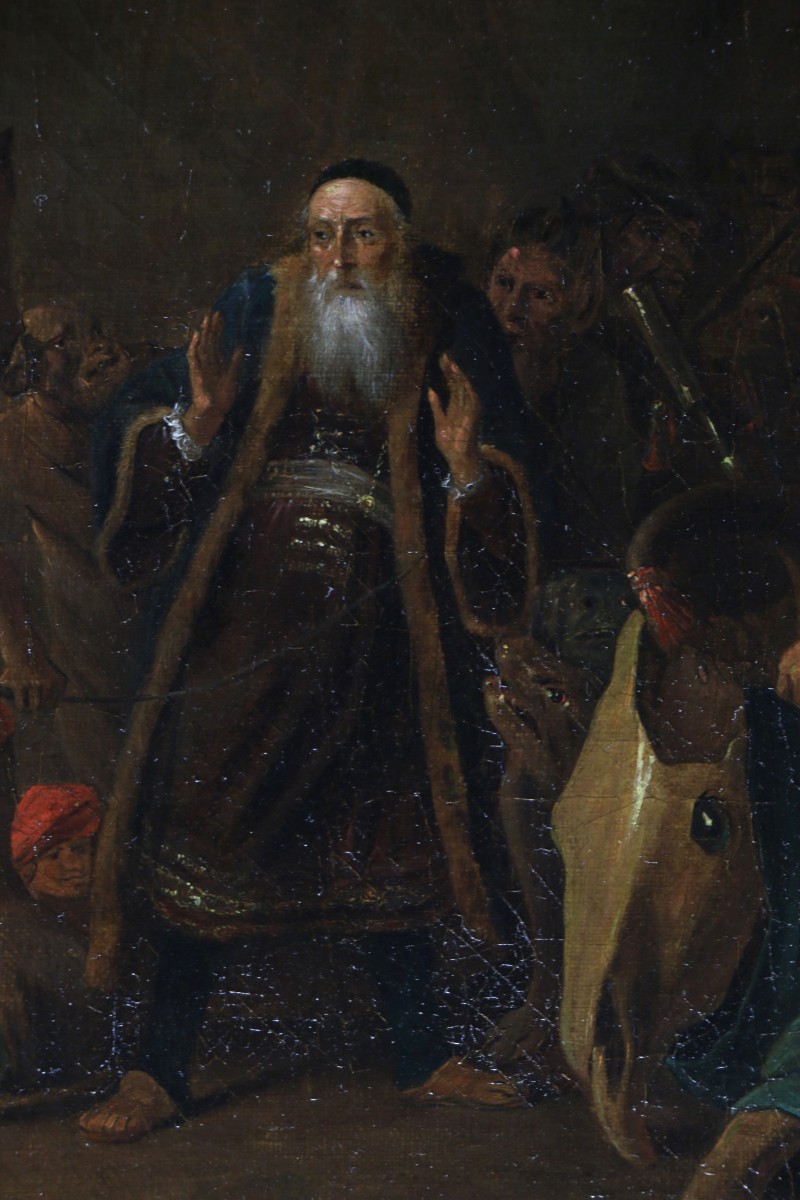
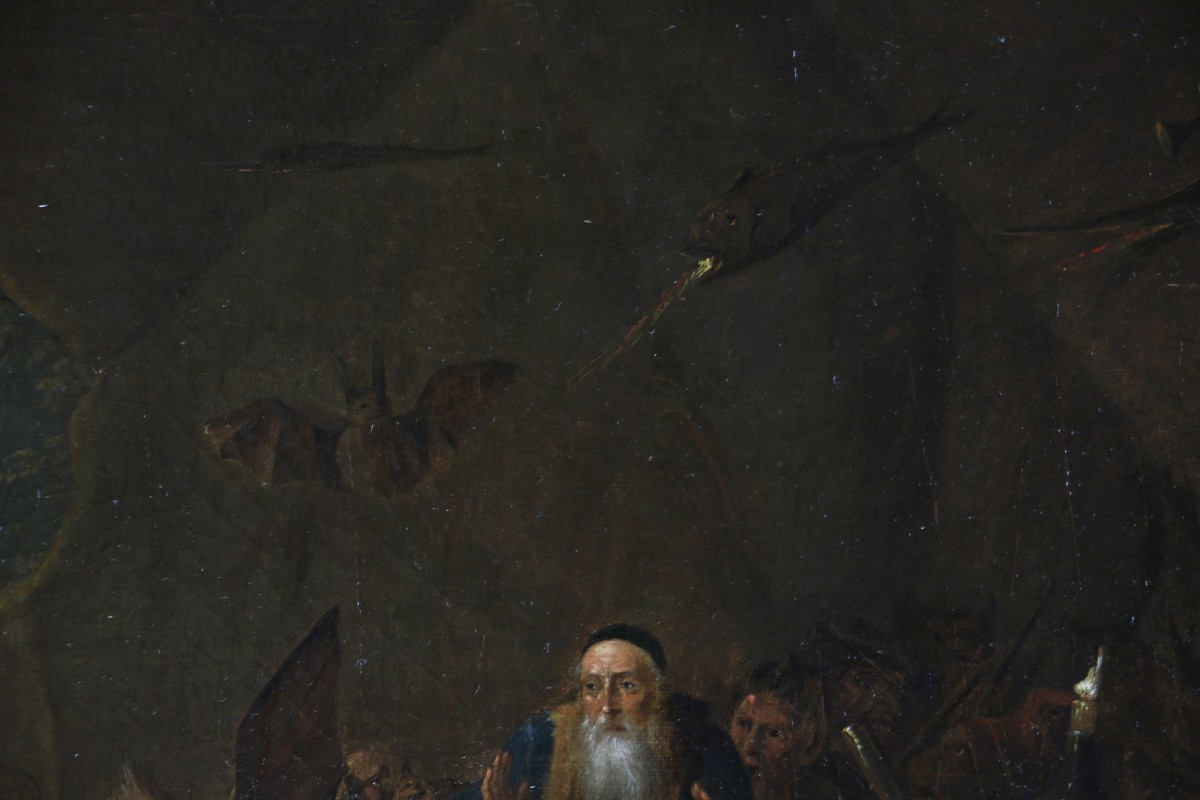
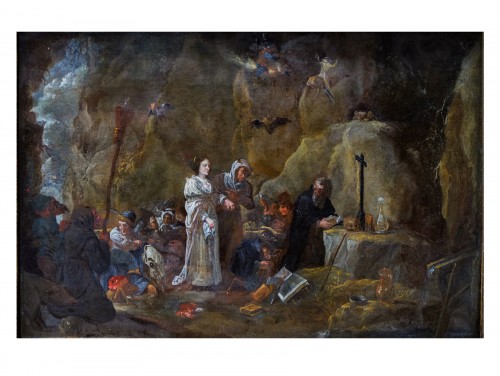
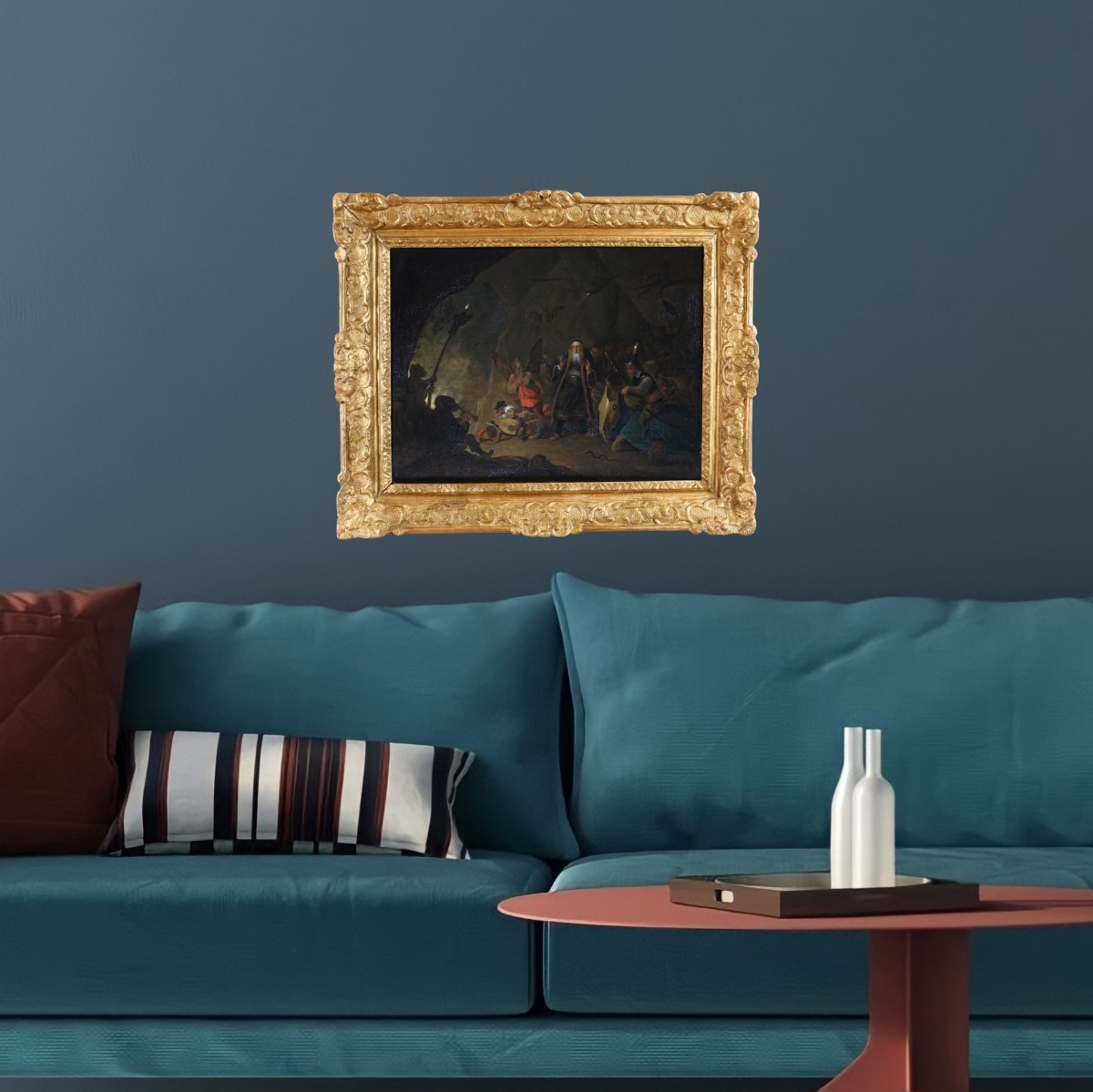
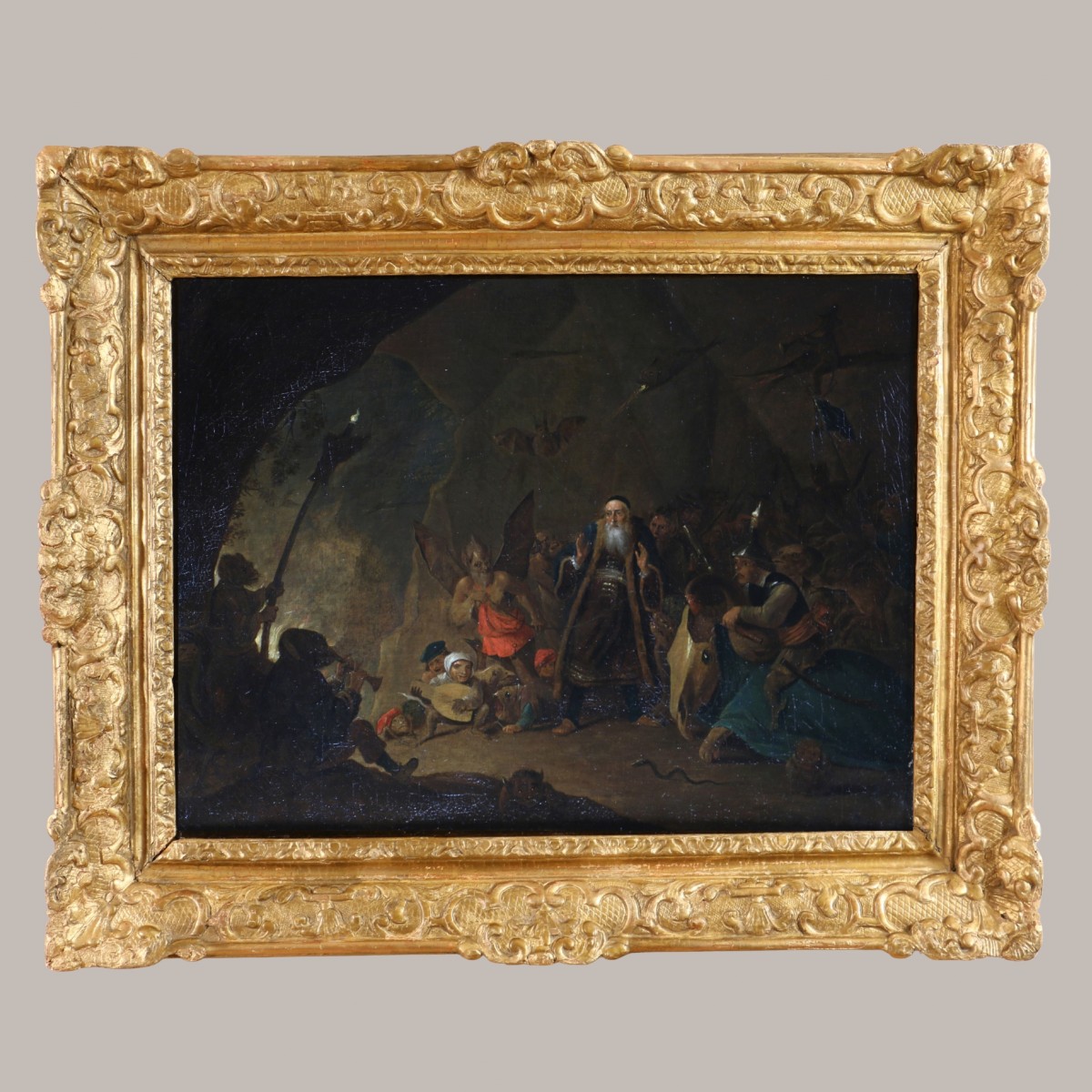
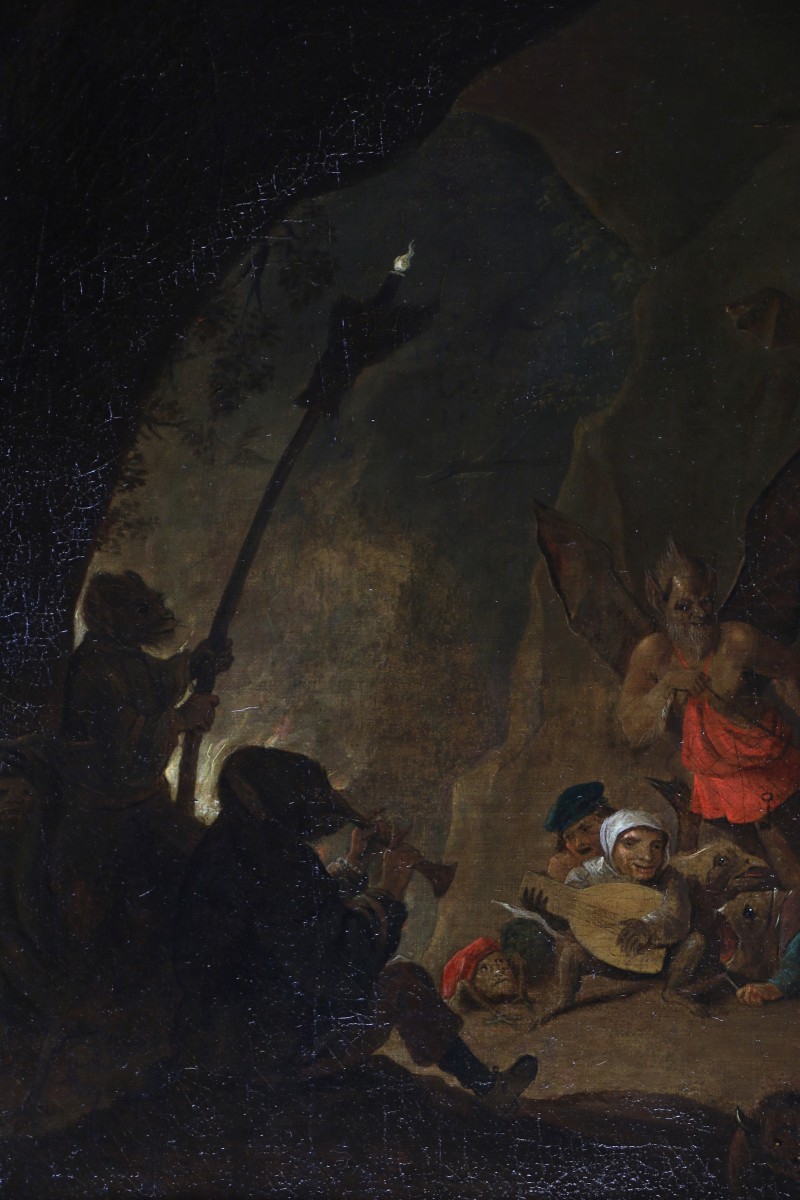
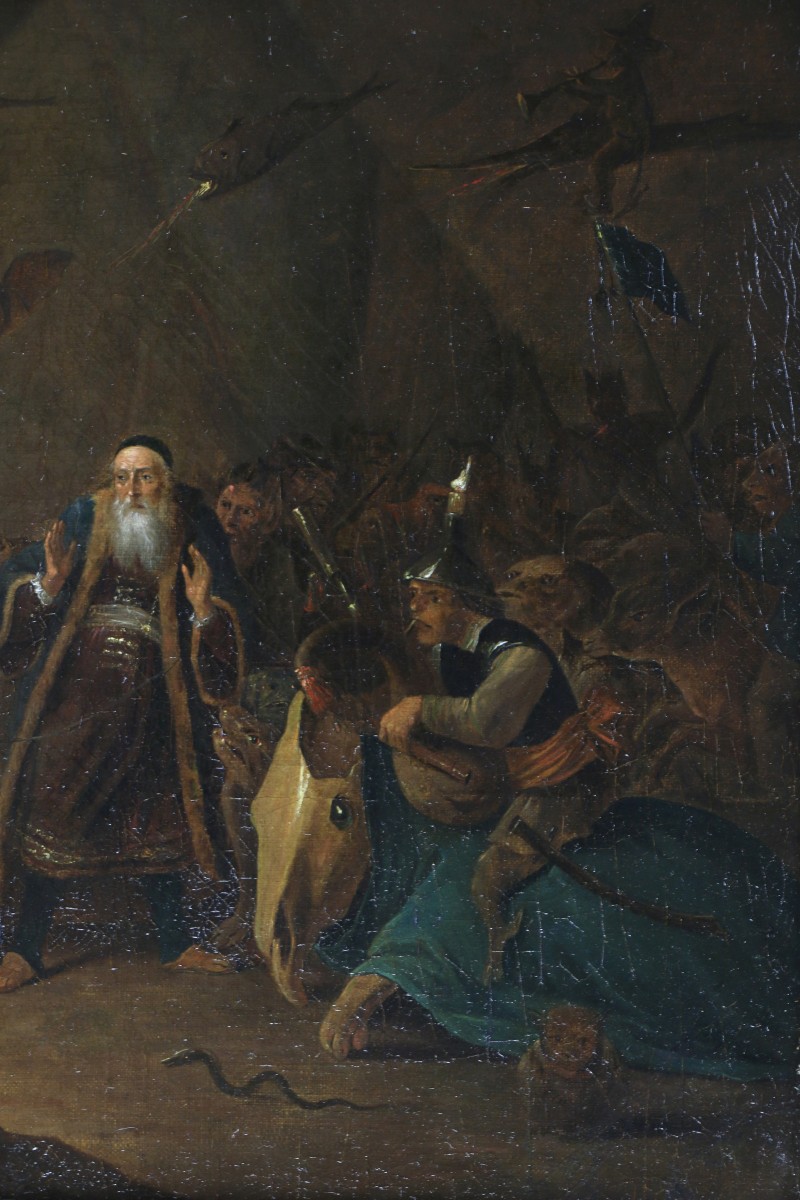
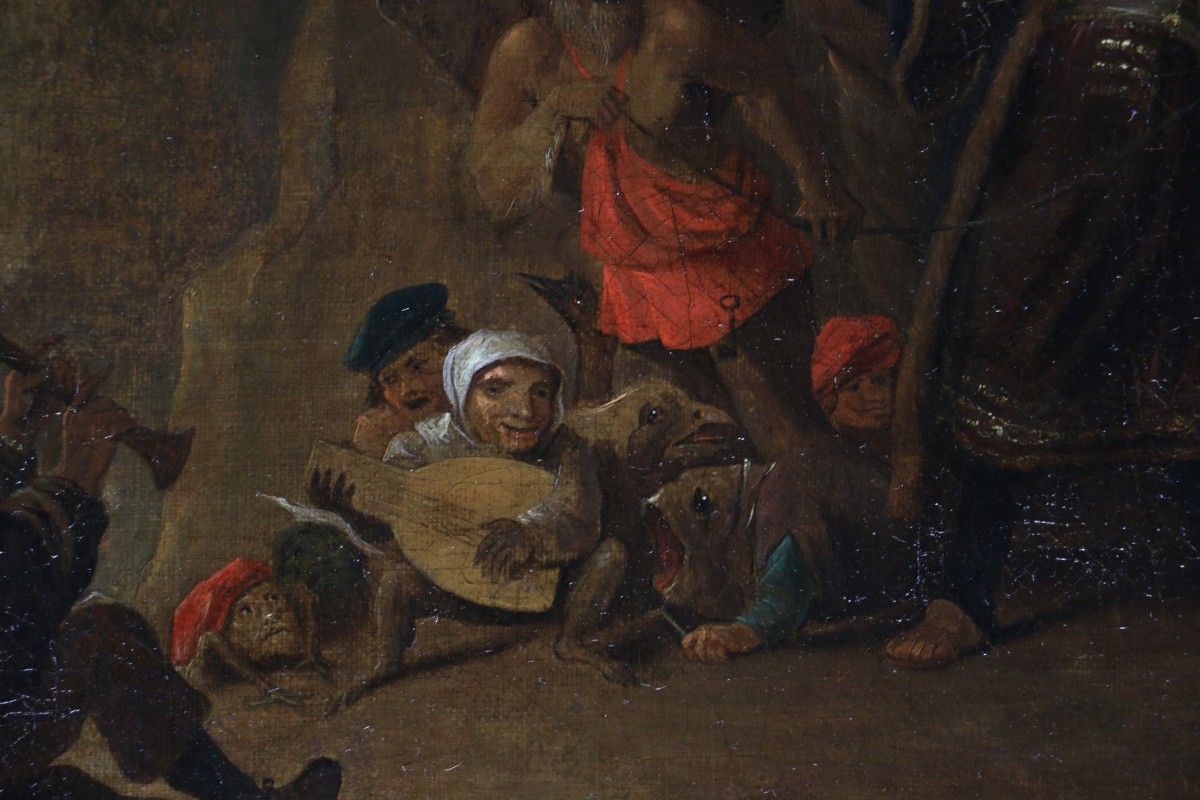
This painting is a workshop replica—featuring variations—of the work by the Master held at the National Gallery, London. Another early version of the composition is housed at the Palais des Beaux-Arts in Lille. Set within the darkness of a vast, infernal cavern, the Rich Man appears at the center of the composition, surrounded by a throng of demonic and grotesque creatures. Clad in a long, fur-trimmed robe, with a white beard and hands raised in a gesture mixing terror and astonishment, he beholds the fate awaiting him in hell. Unfolding around him is a fantastical world characteristic of David Teniers the Younger’s scenes of temptation and witchcraft. To his left, a winged demon with a human body and a grimacing face seems to welcome him, while in the foreground, several monstrous figures engage in burlesque music-making: one plays the lute, another a wind instrument. To the right, an imposing creature with an oversized snout accompanies a musician wearing a strange headdress. From the depths of the cave, further demons, fantastical beasts, and ominous silhouettes emerge from the shadows, while a torch illuminates the rock face on the left. The scene illustrates the Gospel parable of the Rich Man and Lazarus (Luke 16:19–31). After living in opulence without aiding the poor Lazarus who lay at his gate, the rich man dies and finds himself tormented in hell. Here, Teniers transposes the biblical narrative into a fantastical realm teeming with monsters—a setting rooted in the Flemish tradition of Hieronymus Bosch and Pieter Bruegel the Elder. The gravity of the subject matter is thus blended with a satirical and grotesque strain: musician-demons appear to welcome the damned man in a parody of a celebration, heightening the simultaneously unsettling and theatrical nature of his arrival in Hell. Our painting closely follows the famous composition by David Teniers the Younger held at the National Gallery in London, painted around 1647. The arrangement of the Rich Man and the key demonic figures is faithfully preserved, albeit within a slightly tighter frame.
The Workshop of David Teniers the Younger
A major figure in 17th-century Flemish painting, David Teniers the Younger (Antwerp, 1610 – Brussels, 1690) enjoyed a particularly brilliant career. Admitted as a master to the Guild of Saint Luke in Antwerp in 1632–1633, he produced a vast body of work comprising genre scenes, tavern interiors, landscapes, and religious subjects, as well as depictions of sorcerers, temptations, and hellscapes teeming with fantastic creatures—works that contributed significantly to his renown. The considerable success of his compositions naturally led to the establishment of a workshop capable of meeting demand. Replicas and variations of the models most sought after by collectors were produced under the master’s supervision. This practice—common in major 17th-century Flemish workshops—explains the existence of multiple early versions of a single composition, sometimes bearing striking similarities in dimensions and overall layout. The operation of Teniers’s workshop must also be viewed within the exceptional context of his career. After his time in Antwerp, the painter settled in Brussels and, in 1651, became court painter to Archduke Leopold Wilhelm, Governor of the Spanish Netherlands. Tasked with curating the Archduke’s vast painting collection, Teniers held a central position in a highly active artistic and commercial milieu. His workshop played a part in this intense activity, notably through the creation of replicas, variations, and smaller-scale versions of compositions prized by connoisseurs. In works originating from his workshop, the master’s compositions are sometimes reproduced with remarkable fidelity, extending even to secondary figures and anecdotal details. However, the hand of assistants is often revealed by an execution that lacks the verve and subtlety of Teniers’s own work—manifesting in heavier modeling, more schematic facial features, less delicate transitions of light, or a simplified treatment of secondary figures. Nevertheless, some repetitions are of such high quality and demonstrate such an intimate knowledge of the models that distinguishing them from autograph works sometimes requires in-depth technical examination. Scenes depicting hell and temptations are particularly well-suited to such repetitions. In these works, Teniers extends a fantastic tradition deeply rooted in Netherlandish painting—a legacy stemming notably from Hieronymus Bosch and Pieter Bruegel the Elder. Dark grottoes, sorcerers, hybrid demons, monstrous animals, and grotesque musicians allow him to blend infernal imagery with the keen eye for observation and anecdotal detail that characterizes his art. These compositions enjoyed great success, leading to the creation of various versions and early copies. It is within this context that our *Rich Man Being Led to Hell* must be viewed. The canvas faithfully reproduces the composition by David Teniers the Younger held at the National Gallery in London, which dates to around 1647. The arrangement of the main figures and the inclusion of numerous secondary motifs demonstrate a precise understanding of the model. Furthermore, the existence of other early repetitions of this composition—most notably the one held at the Palais des Beaux-Arts in Lille—attests to the popularity this invention enjoyed.
Delevery information :
All our paintings benefit from careful and secure packaging. No geographic restrictions.