Offered by Antichità Castelbarco
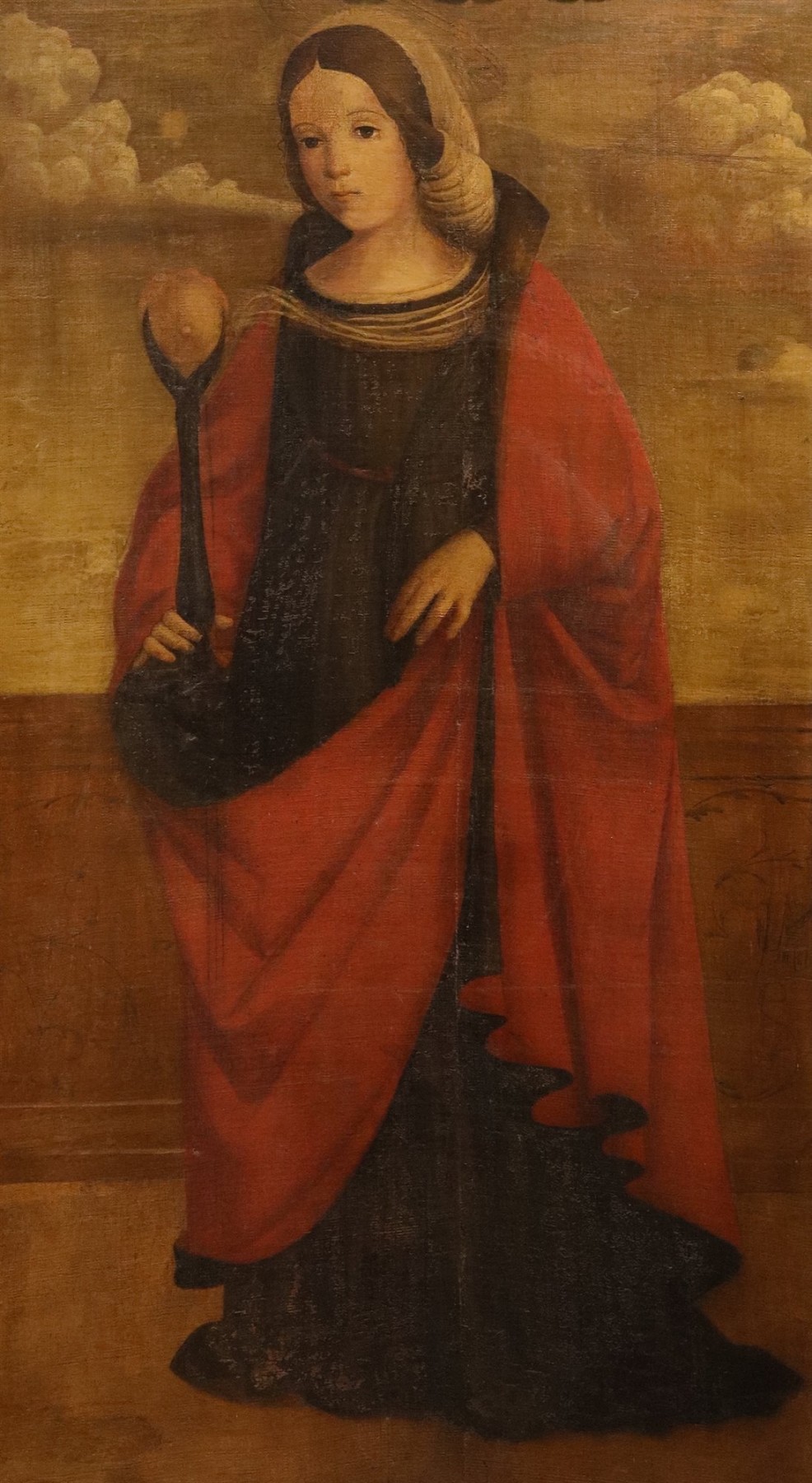
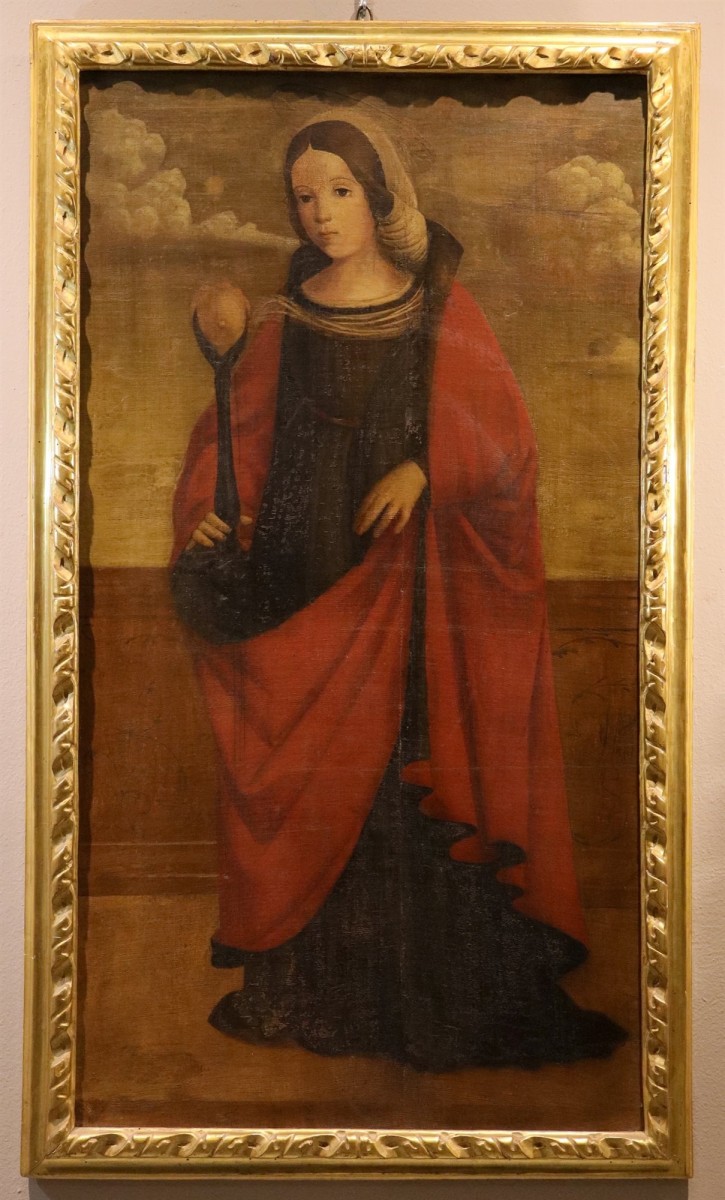

Oil on canvas 126 x 68 cm. Framed: 137 x 80 cm.
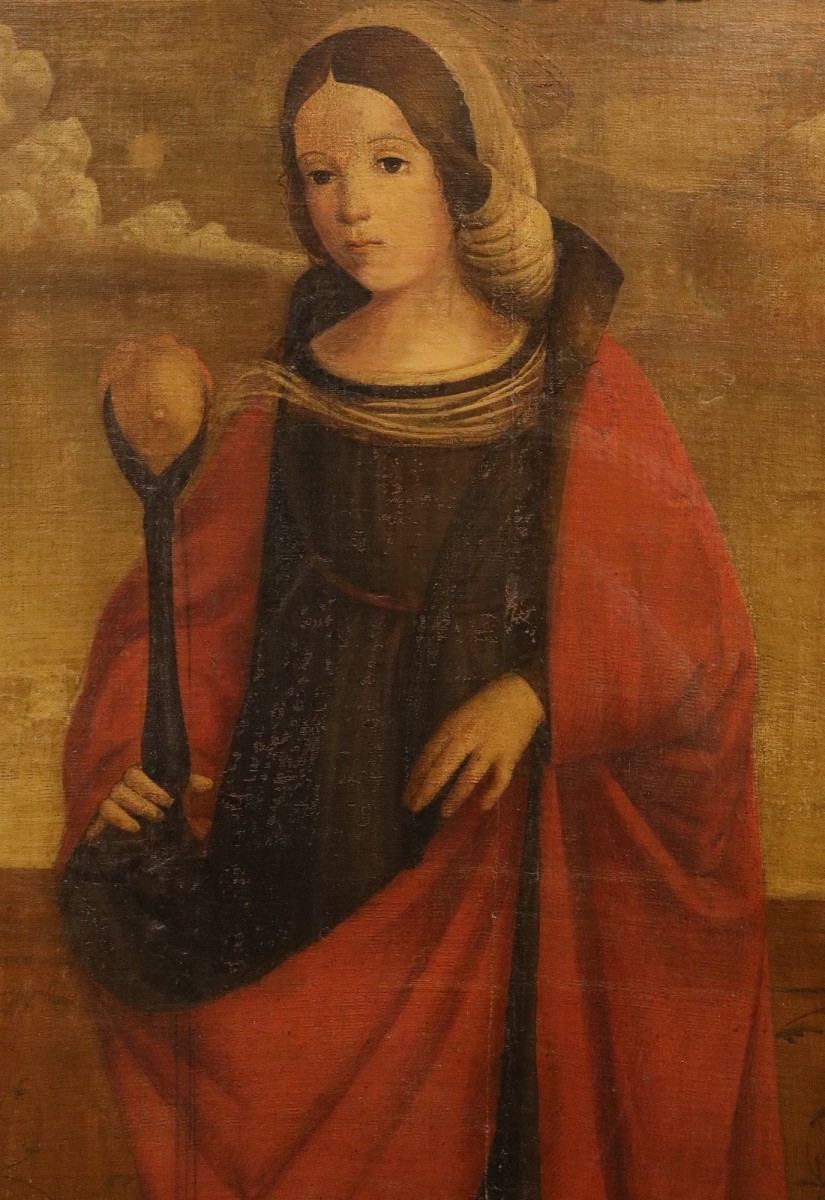
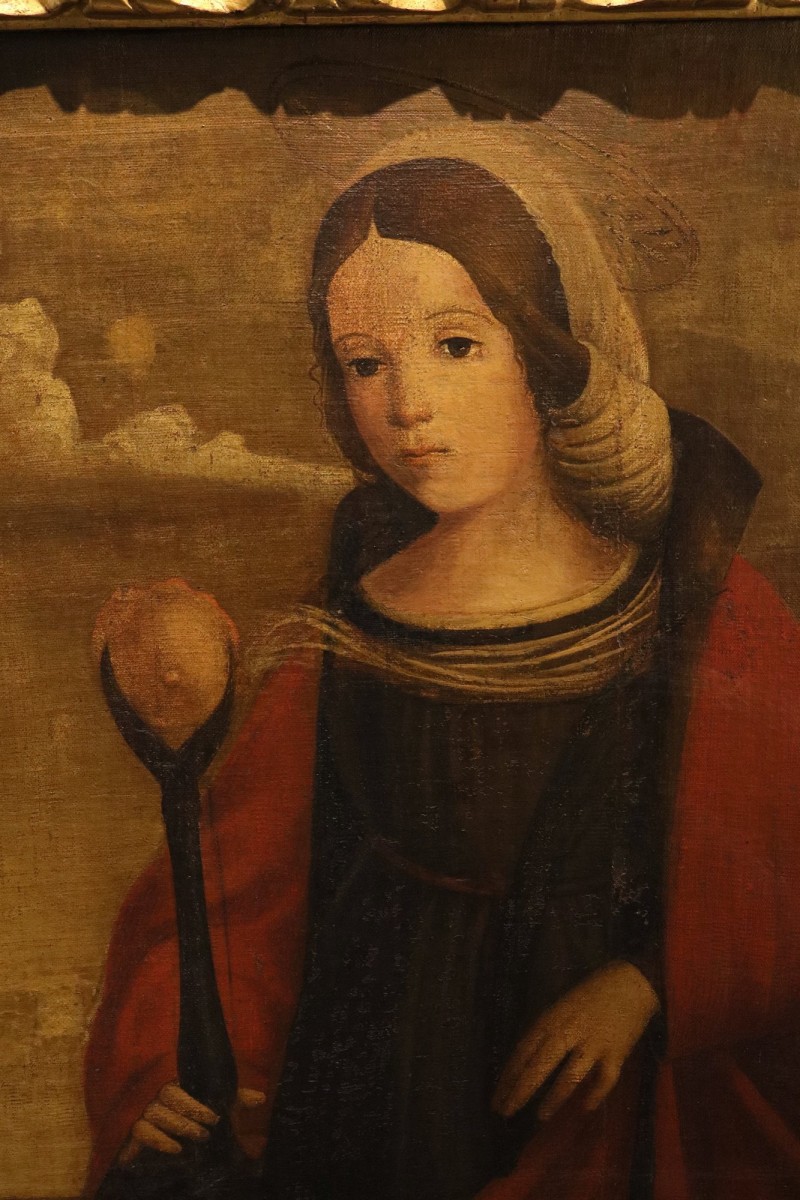
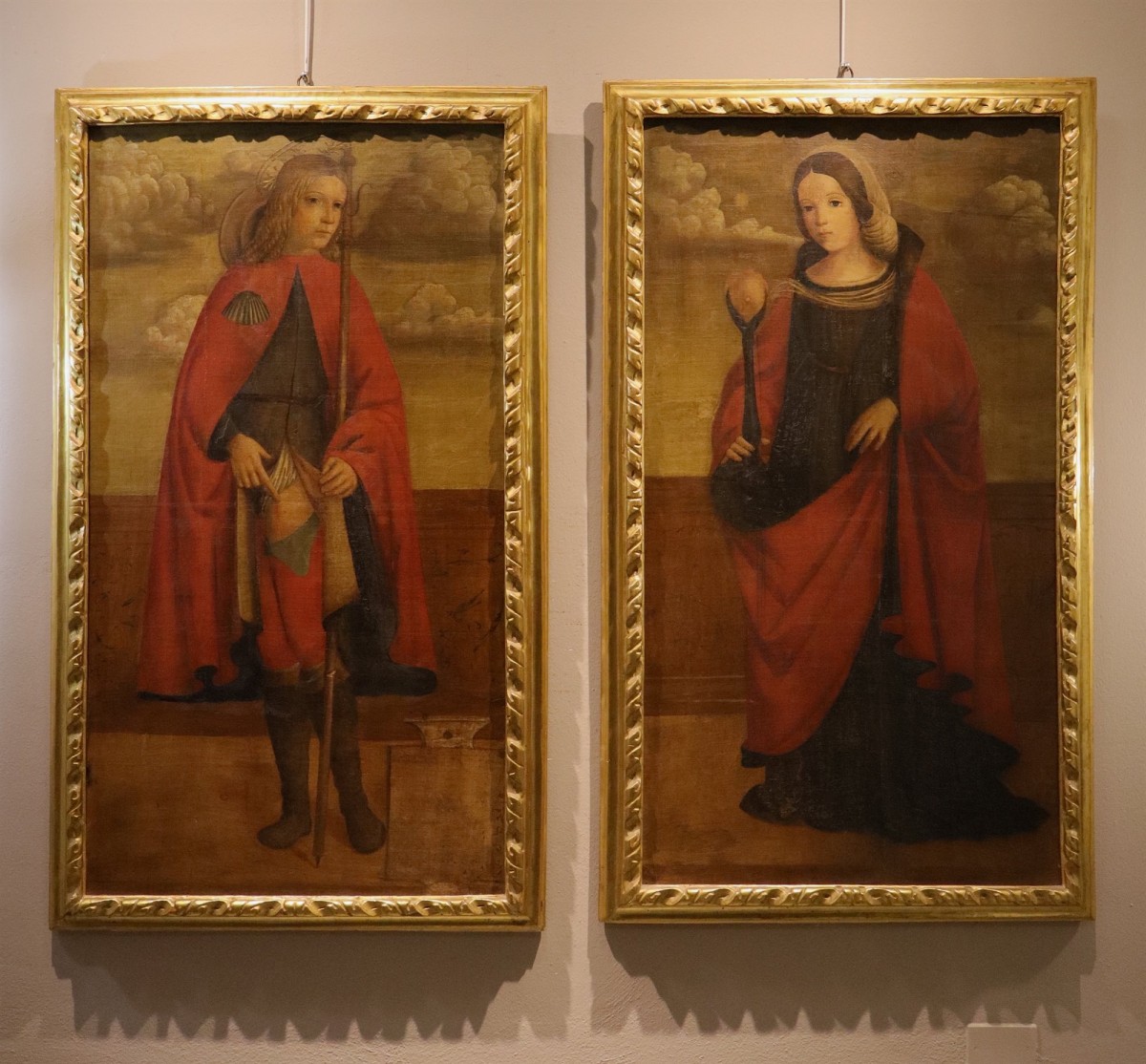
The painting depicts Saint Agatha (a companion piece featuring Saint Roch is also available), one of the most venerated martyrs in the Christian tradition, in a work attributed to Francesco da Santacroce (1516–1584), a leading figure in a dynasty of painters who took their name from their home town, near Bergamo, and who migrated to Venice from the end of the fifteenth century onwards.
The workshop, founded by his father Girolamo, operated successfully in the Venetian lagoon area, where it produced mainly devotional works, altarpieces and polyptychs, distinguishing itself through its extraordinary ability to assimilate and replicate the style of the great Renaissance masters.
In particular, their paintings blend the warm colour application, golden light and gentle facial features typical of Giovanni Bellini, of whom both his father and Francesco were pupils and collaborators. This is combined with the rigorous yet gentle compositional geometries drawn from Cima da Conegliano, alongside the expansive volumes and atmospheric softness of Palma il Vecchio or Lorenzo Lotto.
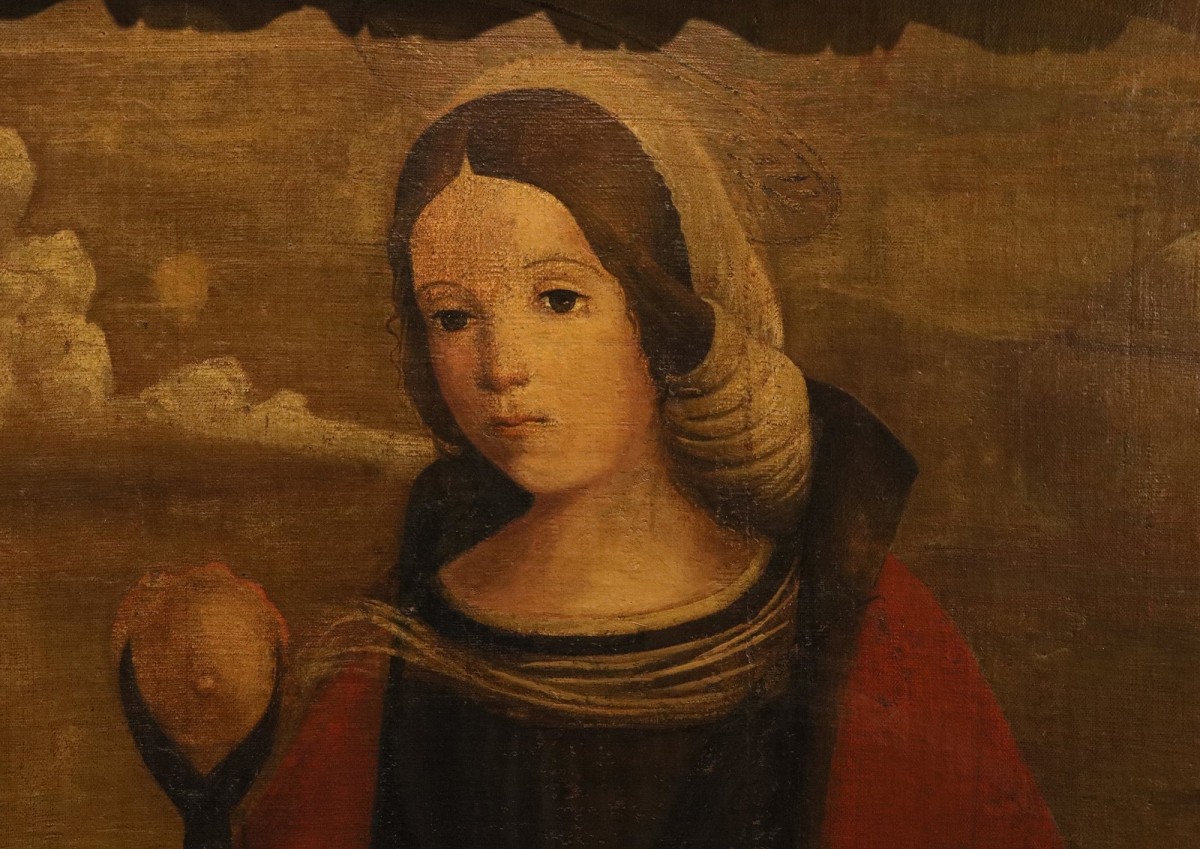
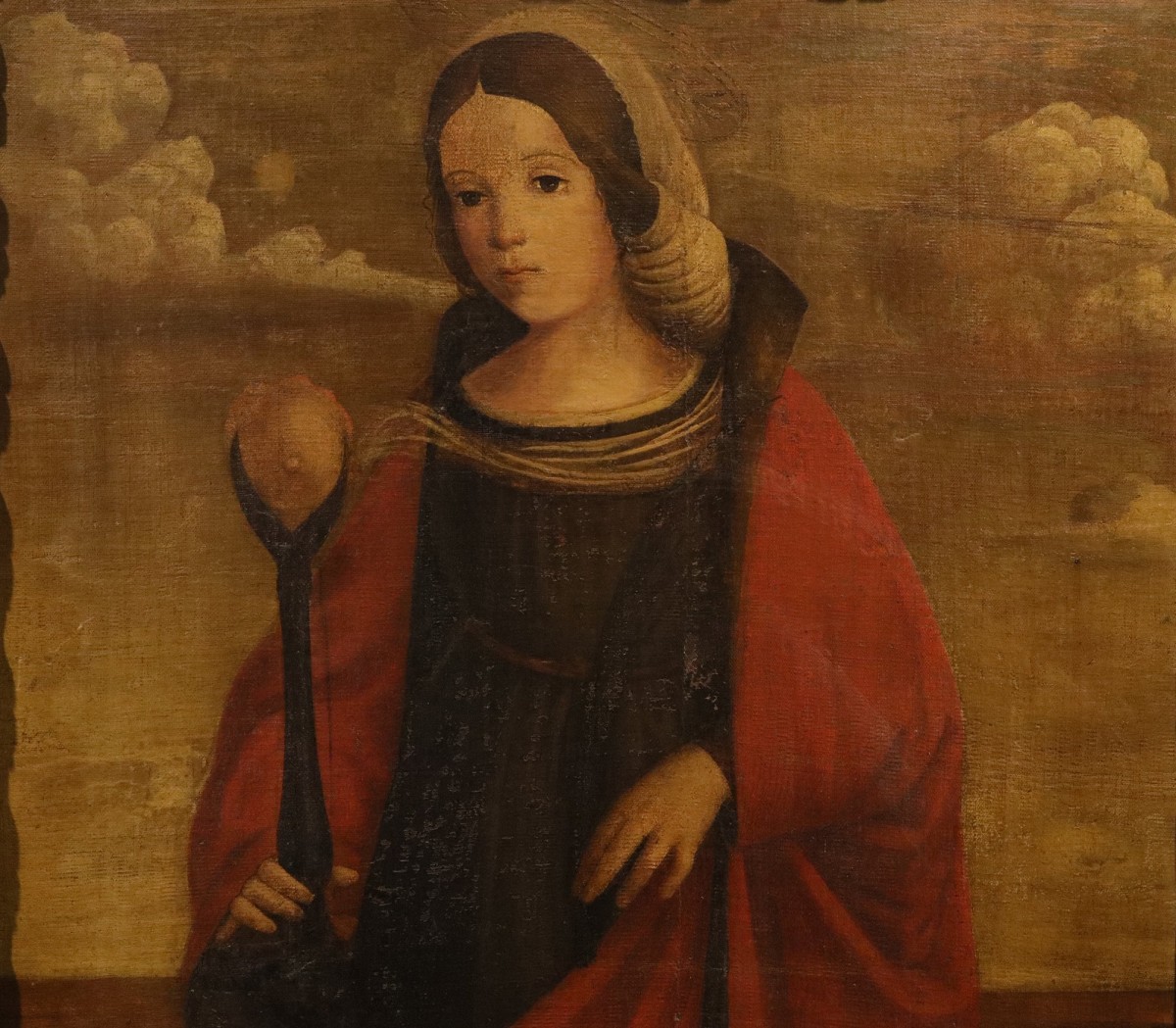
A distinctive feature of their works—which we can see in the portrait presented here and which made them highly sought-after even in their own time—is therefore their inspiration drawn from the models of great Venetian painting, yet always rendered in a simplified and accessible style: the figure of Saint Agatha in this painting is, in fact, rather static, composed and monumental, whilst retaining that 15th-century devotional grace so much admired by the more traditional clientele.
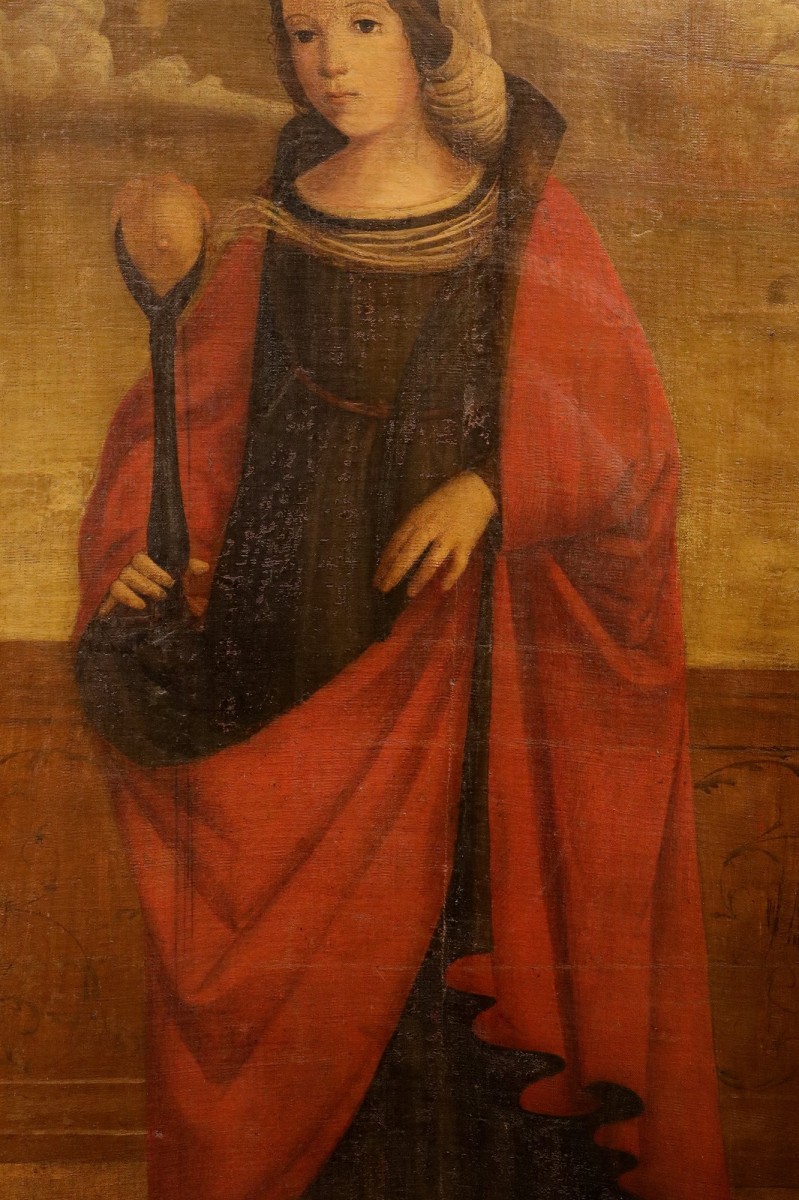
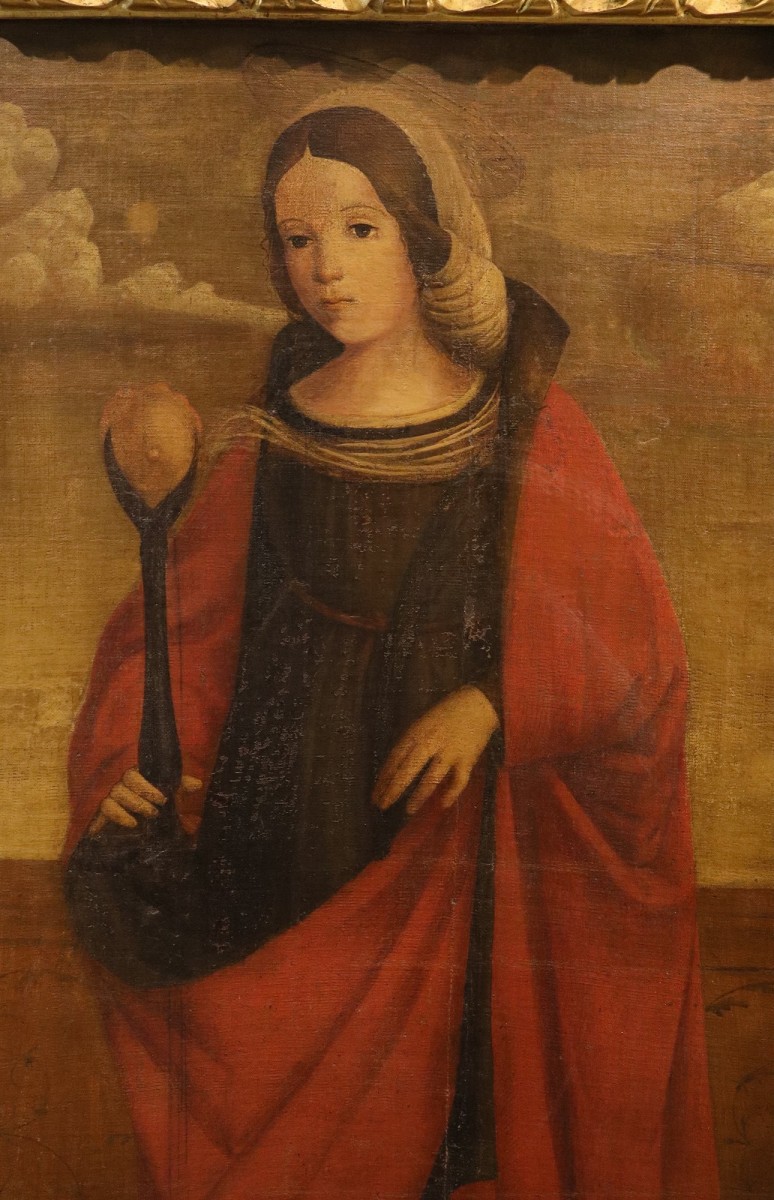
The drapery of the garments – notably the large, deep-red cloak enveloping her body – is heavy, crisp and clearly defined, designed to lend the figure a strong physical presence. The work is structured according to precise iconographic and stylistic choices, depicting the Saint in full-length, in a frontal and solemn pose, drawing consistently on Venetian Renaissance models.
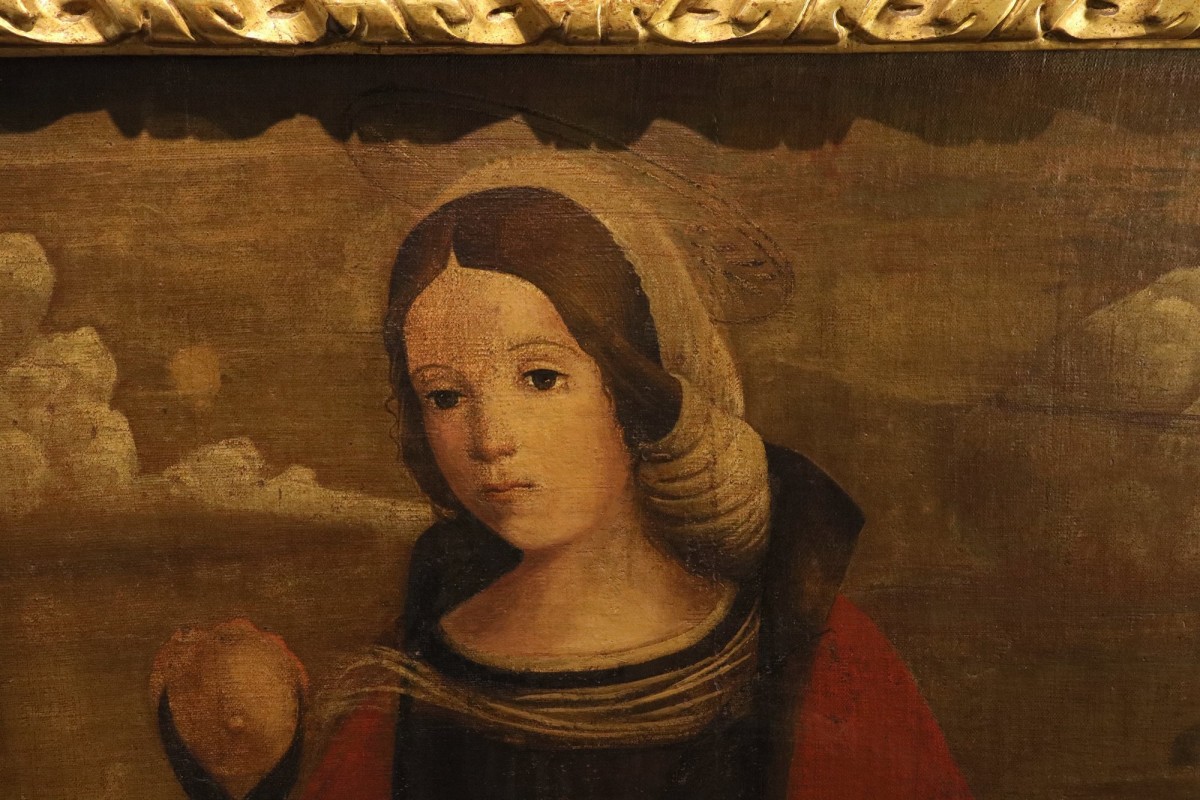
The young woman displays a sweet and solemn expression, with her gaze turned slightly to one side, and her head crowned by a delicate, slender golden halo. The Saint is depicted in accordance with her classical iconography whilst holding in her hand, like a queen’s sceptre, the instrument of her martyrdom—namely, a long, dark metal pair of tongs clamping one of her severed breasts, which have become her canonical descriptive attributes.
As is customary in painting, there is no trace of pain; instead, she is immortalised in a moment of pure contemplation and grace. Another characteristic feature of their style, inherited from Bellini’s school, is the positioning of the sacred figures in front of a sort of parapet that divides the scene; beyond it lies a golden sky with warm, twilight hues, enriched by soft white and grey cloud formations that lend the painting an atmospheric quality.
The Santacroce family organised their workshop as a fully-fledged business, capable of catering to an upper-middle-class clientele seeking Venetian quality at competitive prices; for this reason, their output – which included, in particular, ‘Sacred Conversations’ featuring figures of saints – was extensive and intended primarily for churches in the Venetian province or the Bergamo area.
It is therefore presumed that this work was originally the single panel of a more complex altarpiece comprising several panels, which over time was divided up and dispersed amongst various museums or collections. Francesco da Santacroce, always working under the auspices of the workshop and often in collaboration with his father Girolamo (with whom he is frequently confused), devoted much of his work to this type of piece: complex altarpieces populated by numerous patron saints.
Delevery information :
We take care of and organise the transport of the purchased works, both for Italy and abroad, through professional and insured carriers.
We take great care We personally take care of the packaging, to which we devote a great deal of care: each work is carefully packed, first with arti- cle material, then with a custom-made wooden box.
Should you have the desire to see this or other works in person, we would be happy to welcome you to our gallery in Riva del Garda, Viale Giuseppe Canella 18, we are always open by appointment only.