Offered by Ars Antiqua

Old Masters paintings, furniture, sculptures and modern art
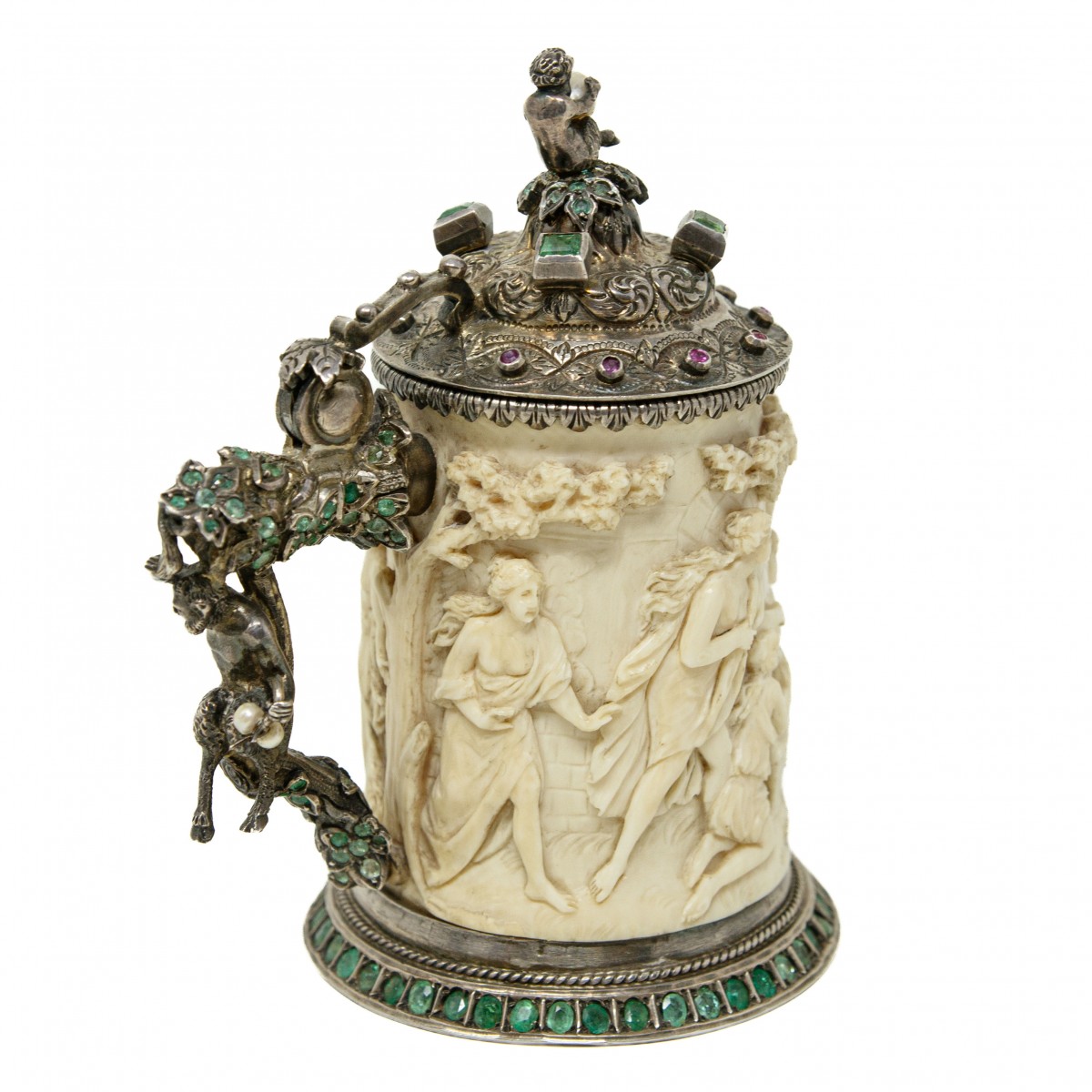
Small Ivory Tankard
19th century
Carved ivory, silver mount with gilded interior, emeralds, rubies, and pearls
H 10.8 cm
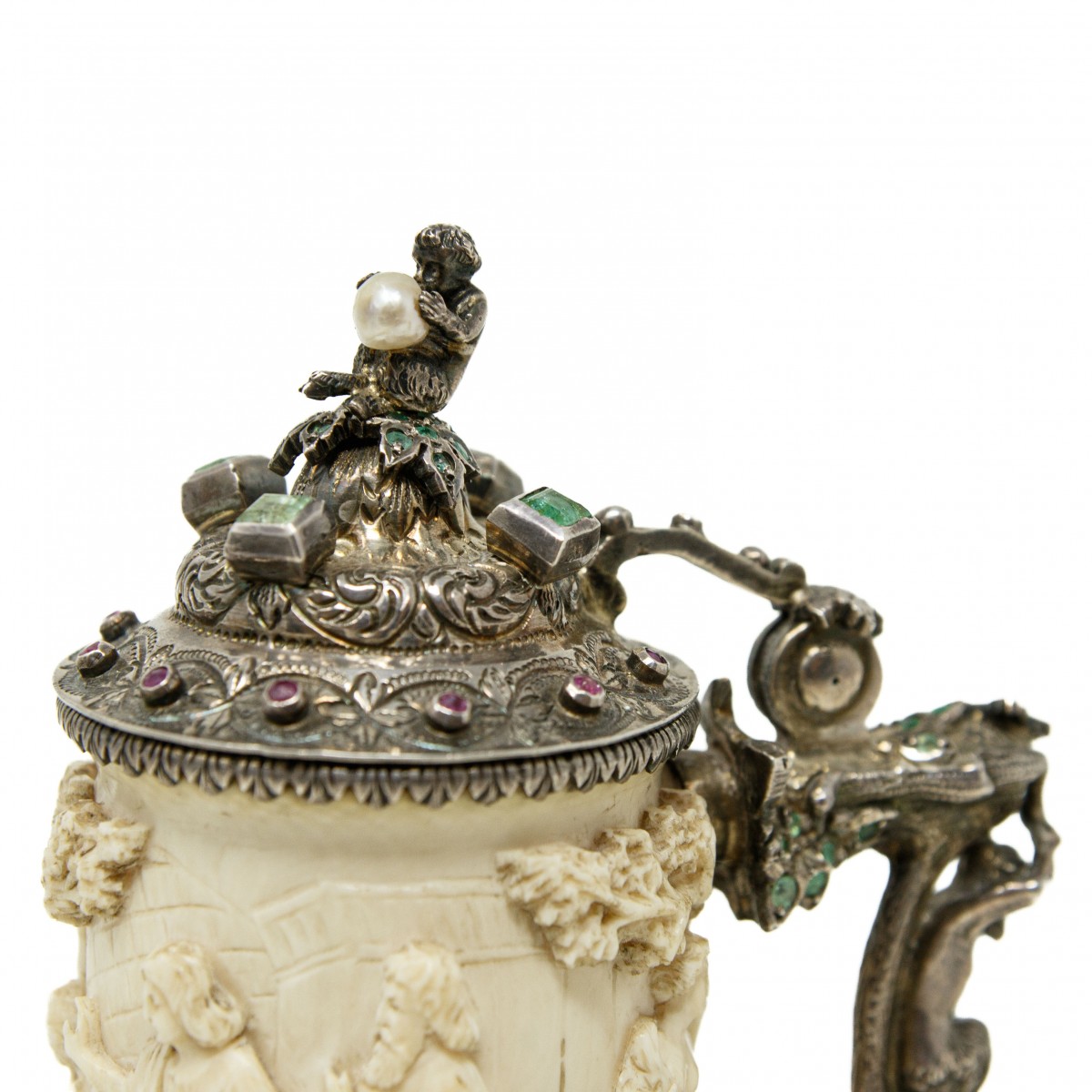
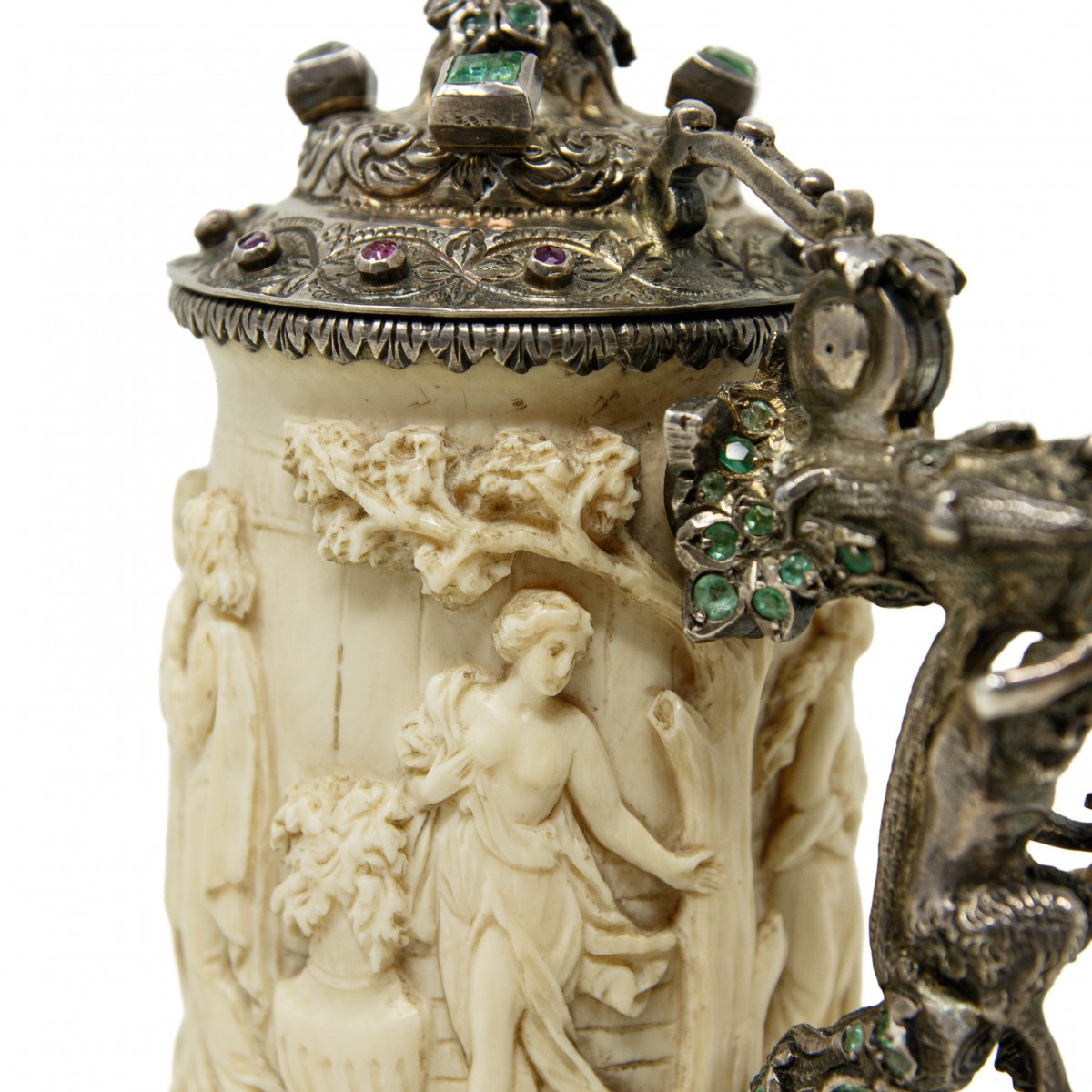
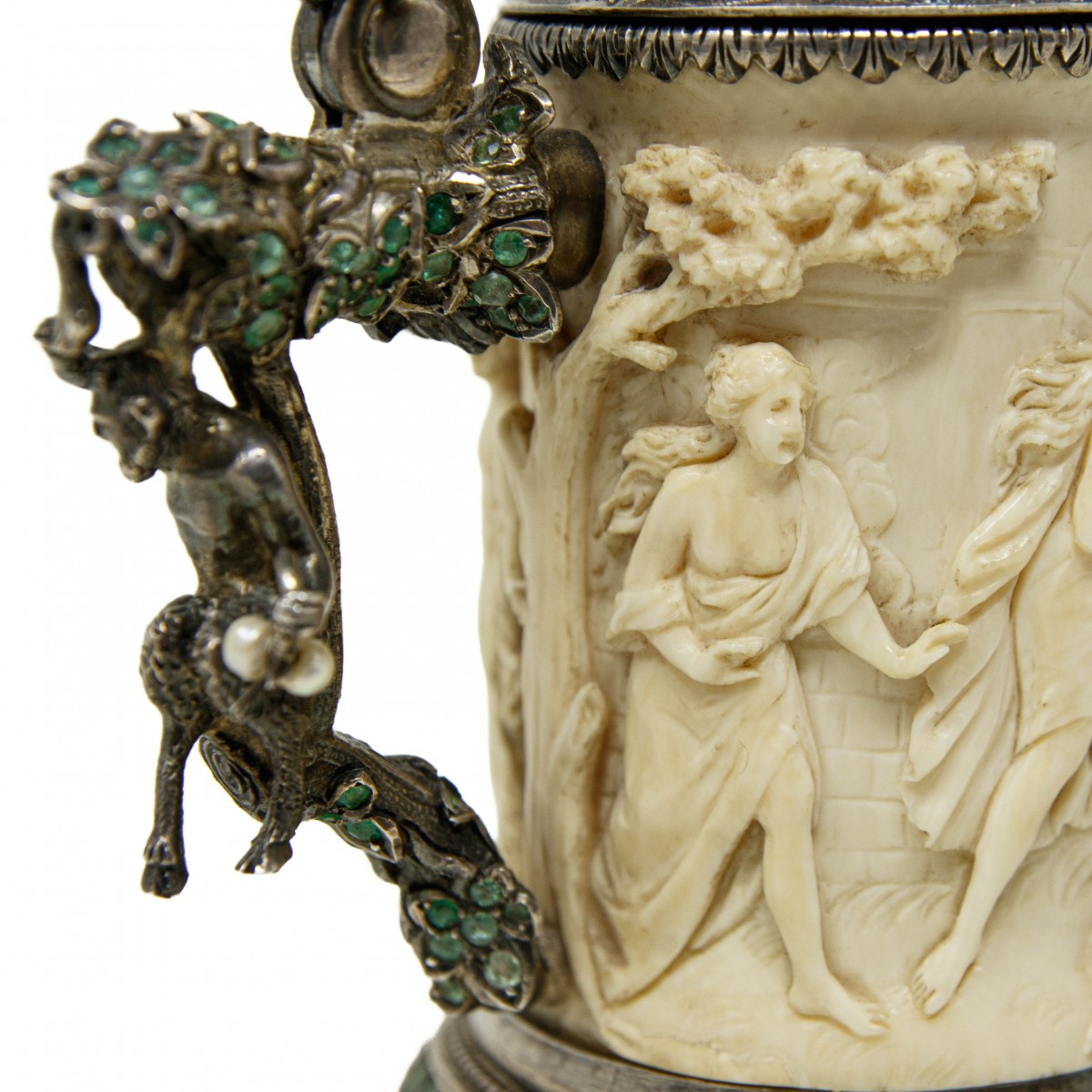
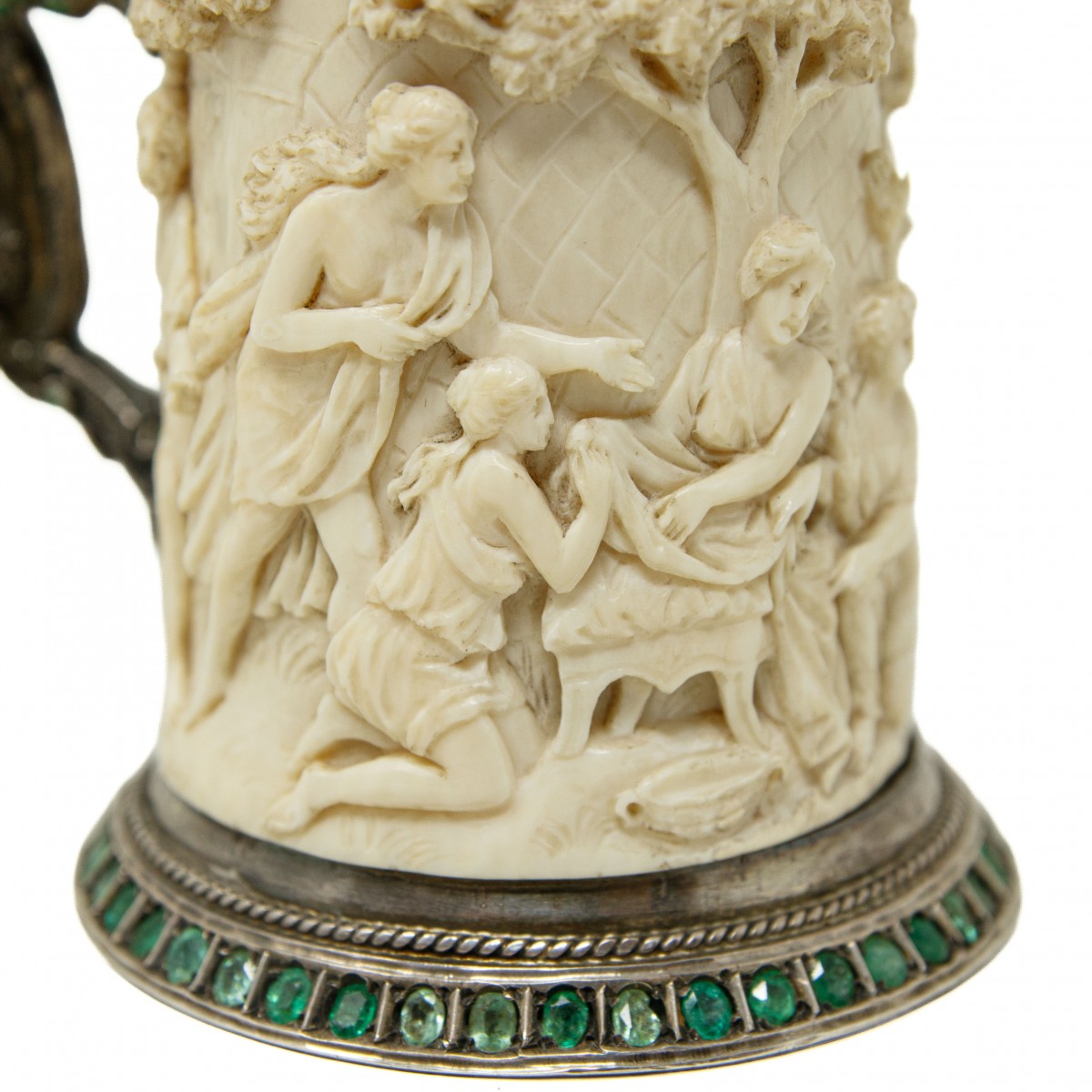
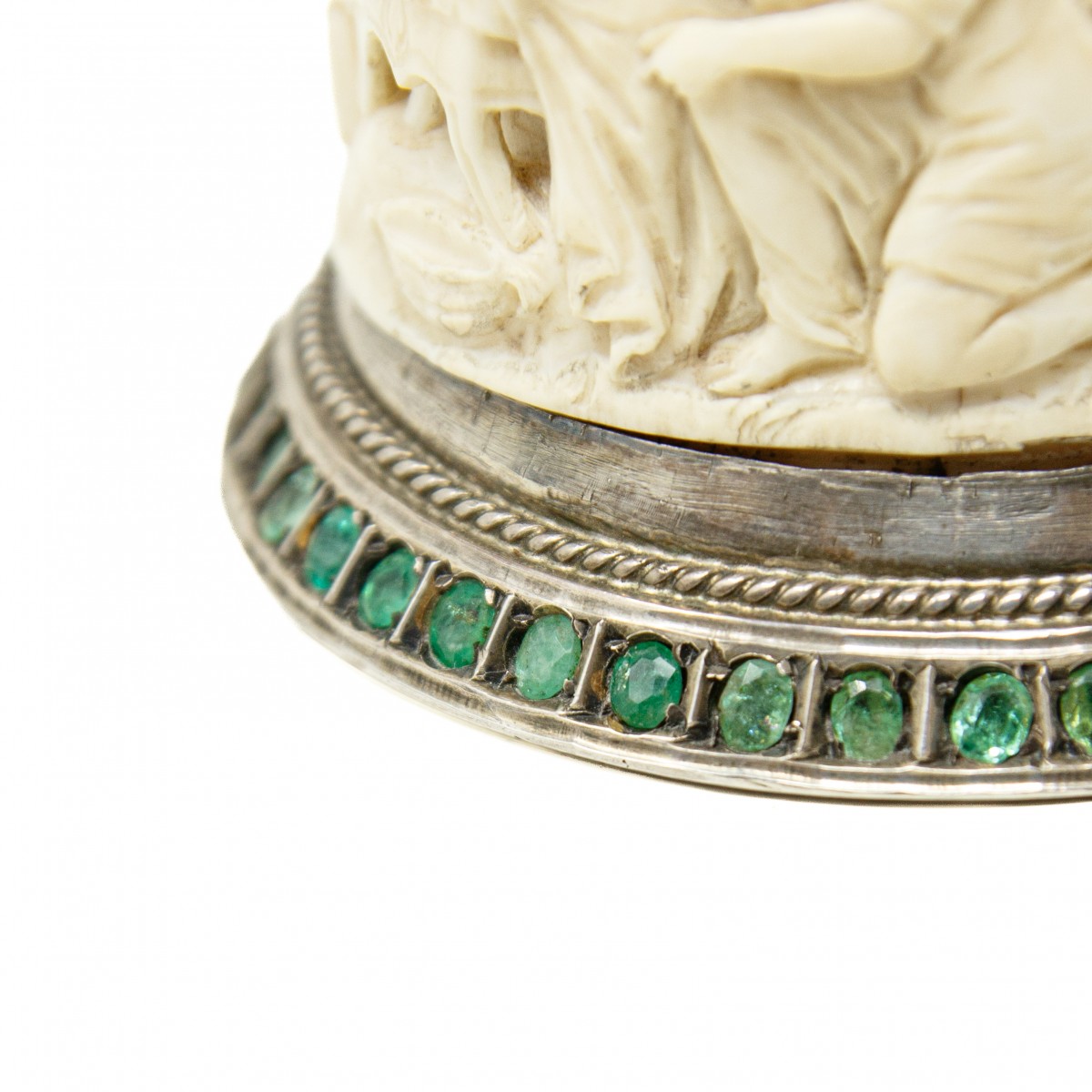
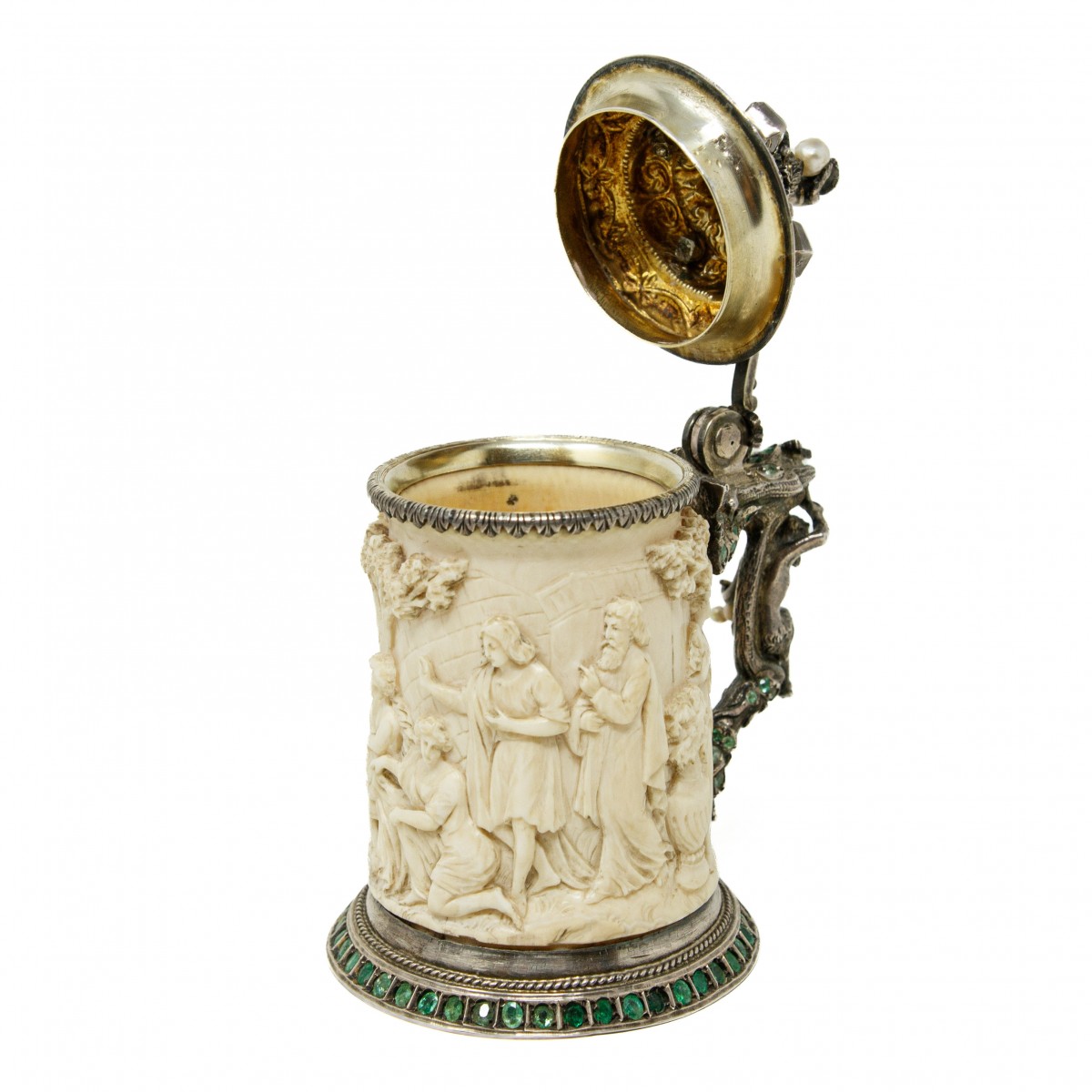
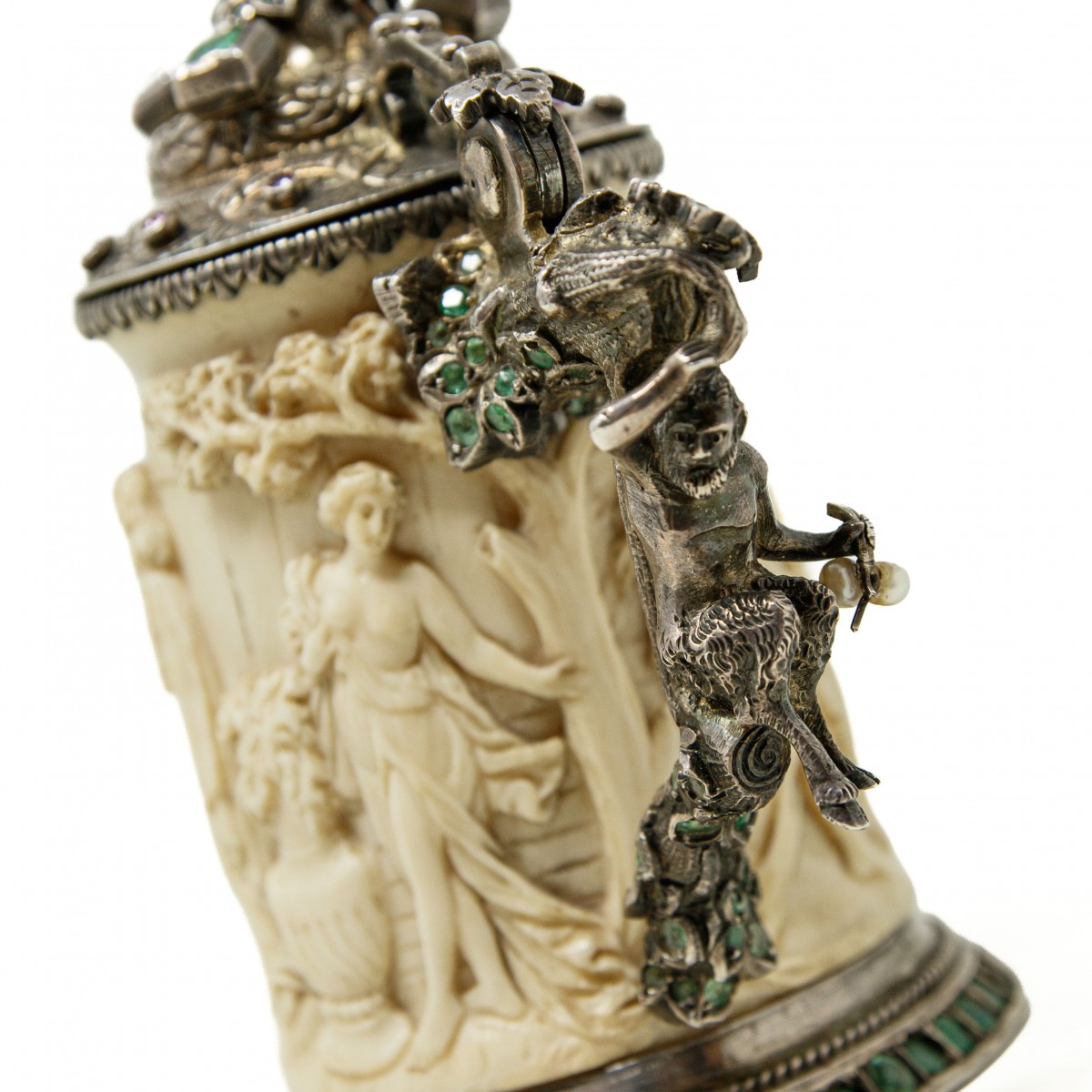
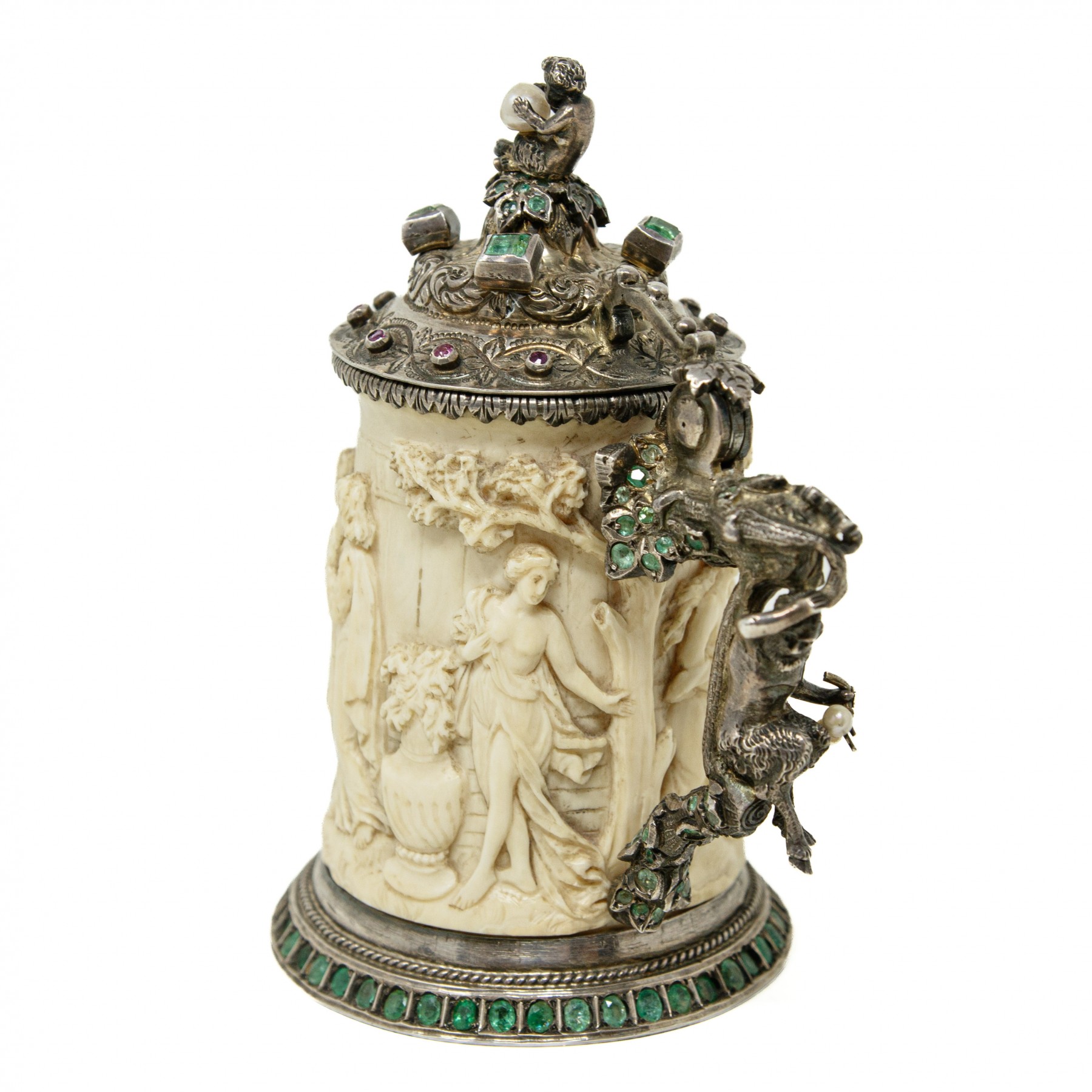
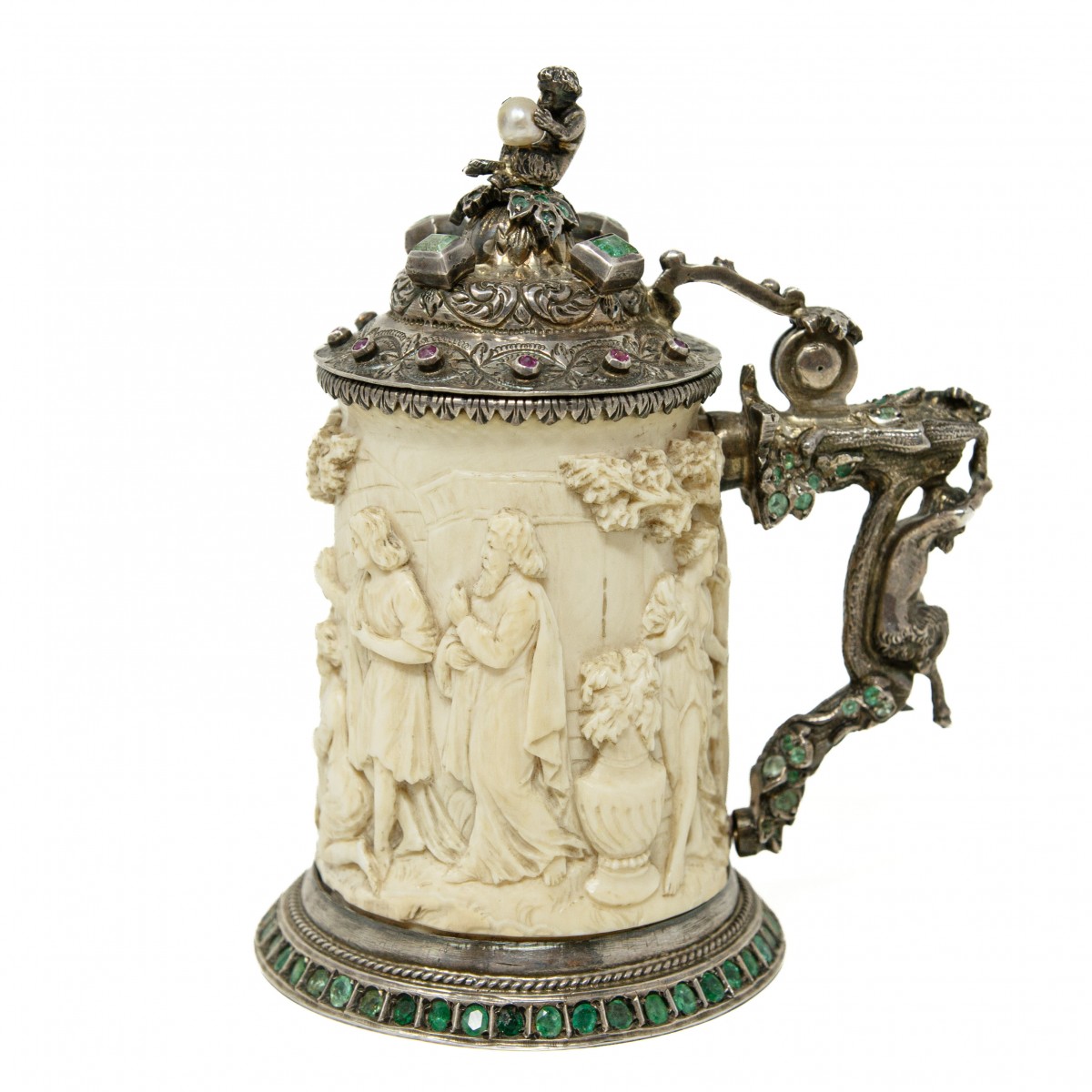
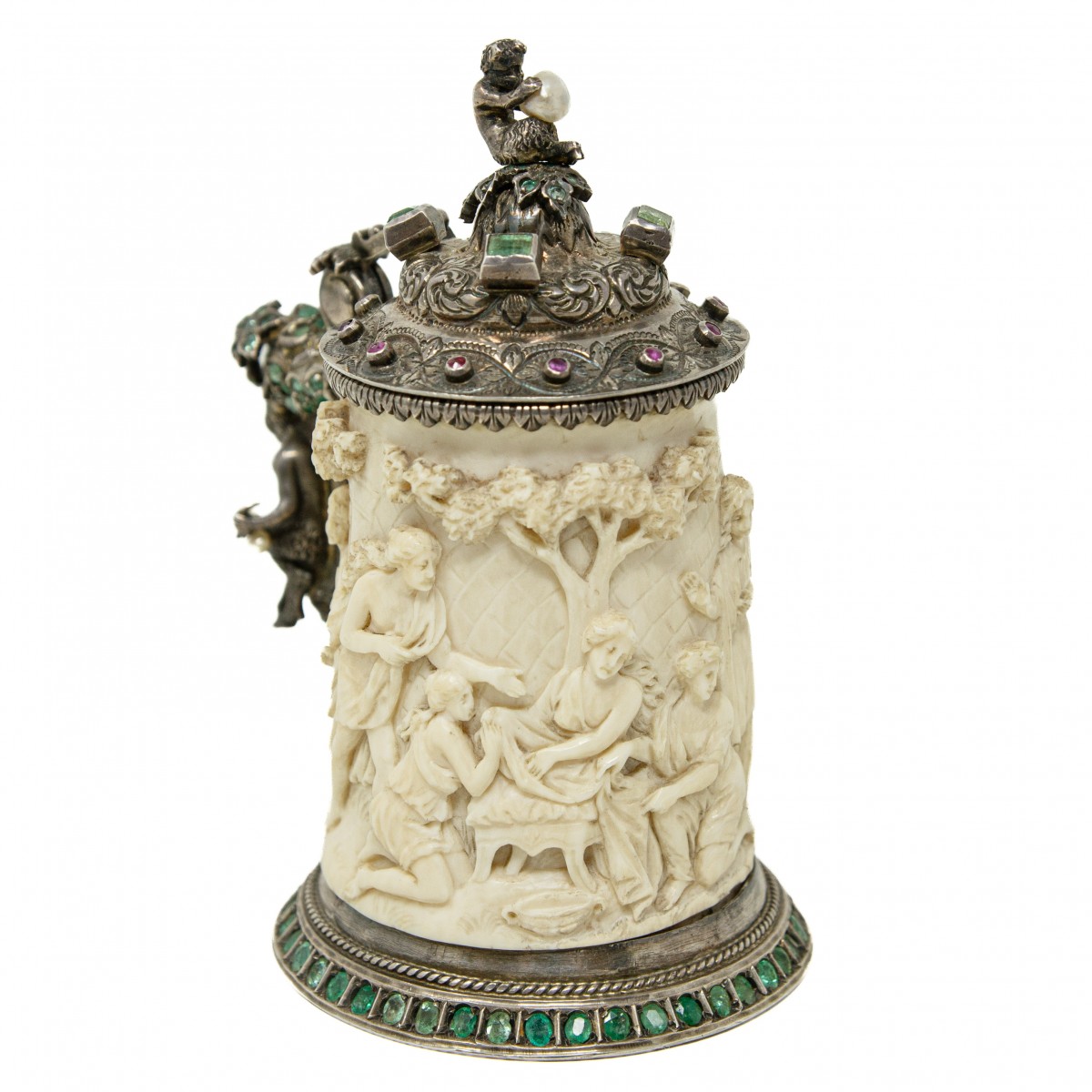
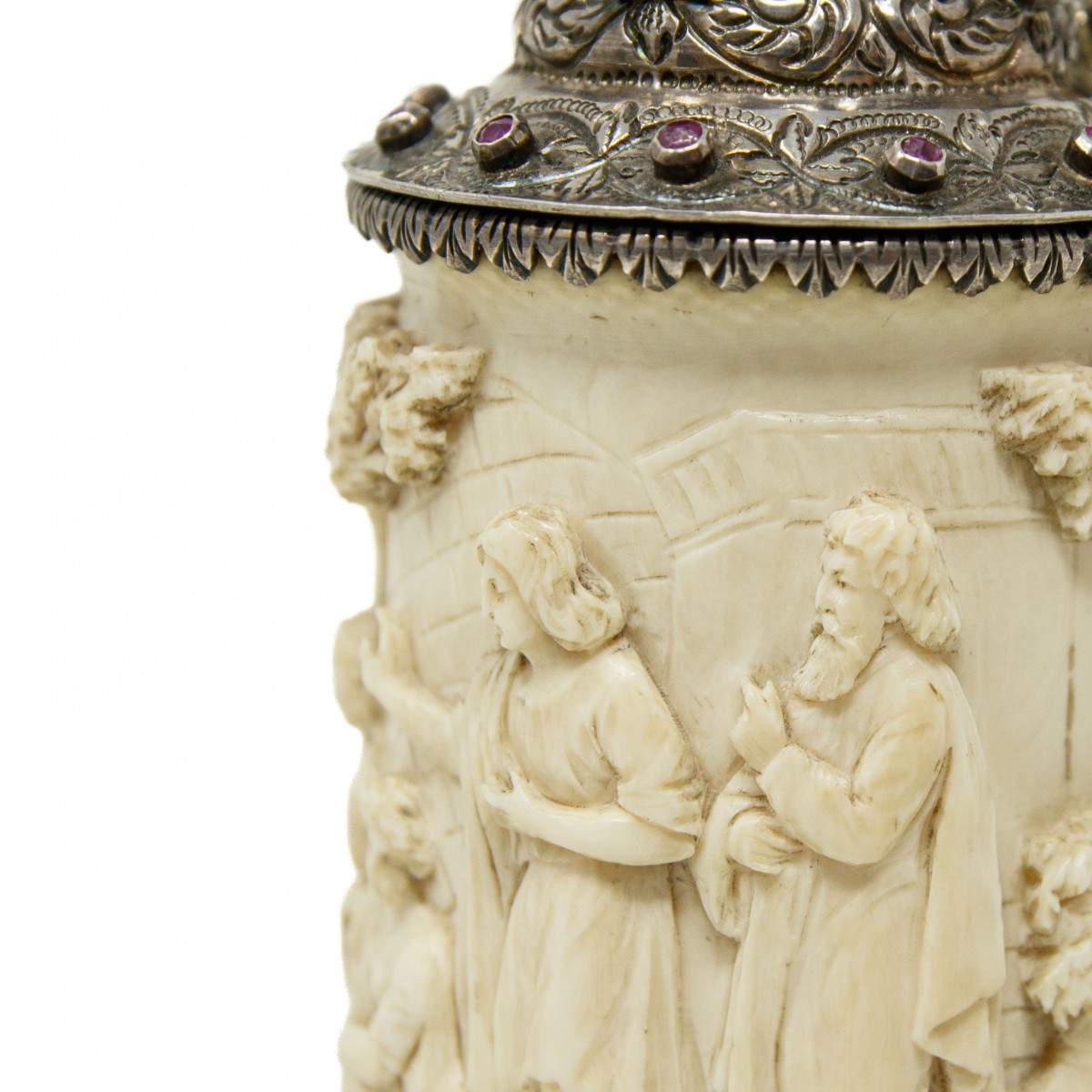
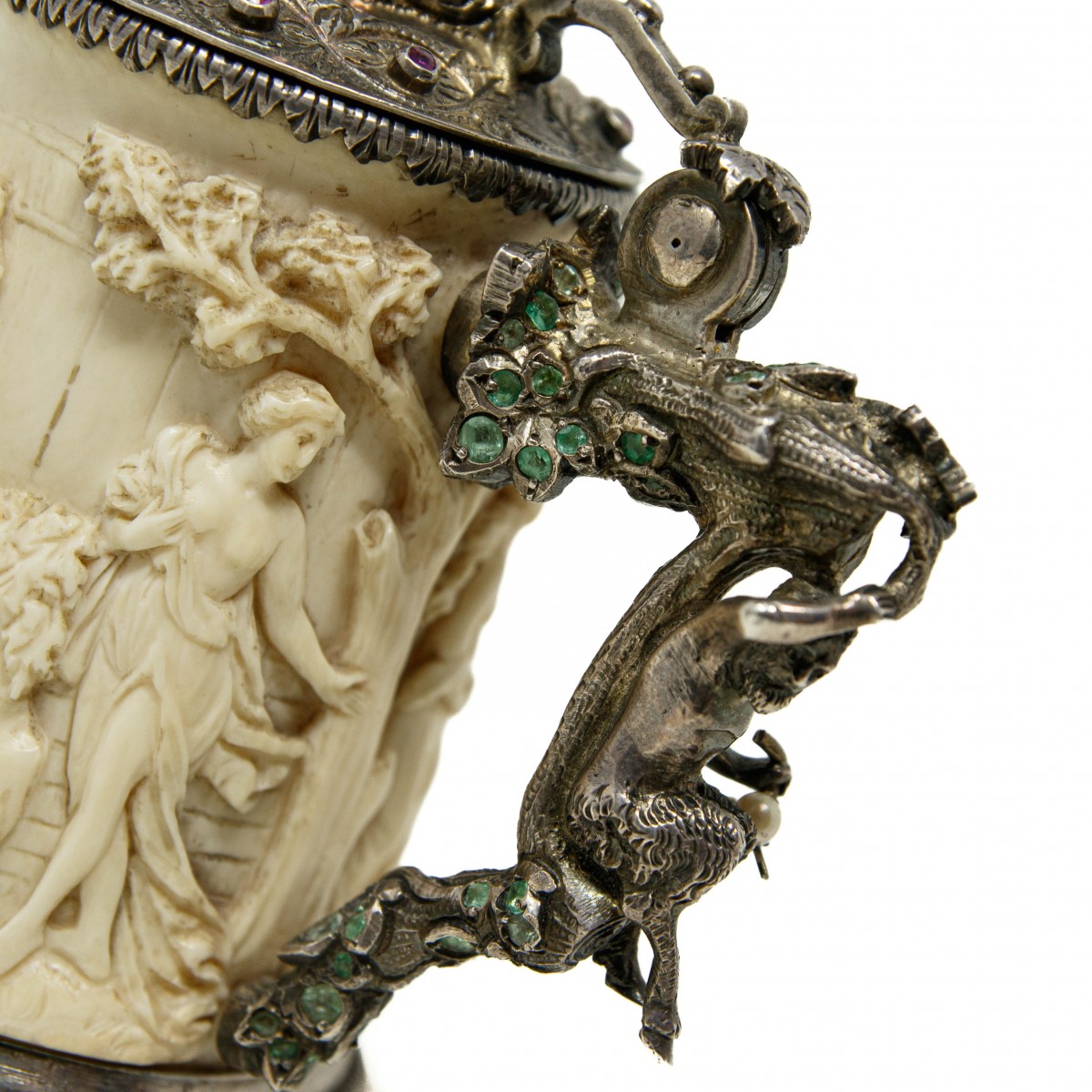
The realm of nineteenth-century decorative arts frequently turned to the splendor of the Baroque and Renaissance periods as an inexhaustible repertoire of wonder, translating their opulence through objects of extraordinary technical and executionary virtuosity. A sublime example is this small ivory tankard—a cabinet piece of high-collecting status that condenses an impressive material and formal richness into just over ten centimeters in height. The carved ivory cylindrical body dialogues harmoniously with a sumptuous worked silver mount, enriched inside by a warm gilding and decorated on the exterior with a profusion of precious gems. Finely set emeralds adorn the molded base and the tendrils of the handle, while rubies and pearls decorate the domed lid, culminating in a full-figure sculptural finial holding a large baroque pearl, enhancing the object's distinctly eclectic character.
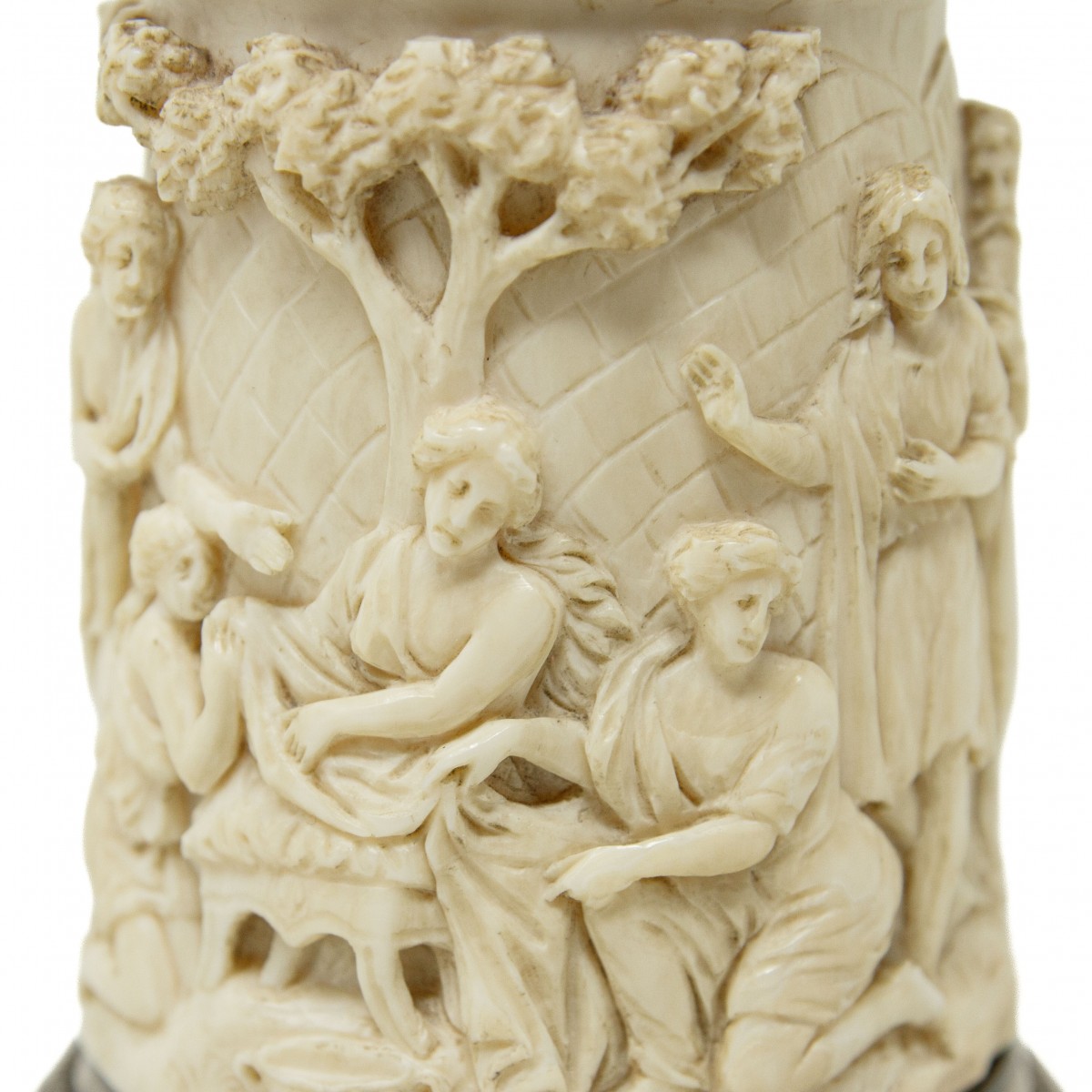
The work is distinguished by a continuous relief narrative encircling the cylindrical wall, revealing a crucial episode of classical epic literature drawn from Book XIX of the Odyssey. It portrays the touching and tense scene of the washing of Odysseus's feet upon his return to Ithaca disguised as an old beggar. On the explicit order of Penelope, the faithful old nurse Eurycleia is entrusted with welcoming the unknown guest and washing his feet—a ritual gesture of hospitality that transforms into a moment of secret recognition when the nurse identifies a scar on the hero's knee, inflicted in his youth by a wild boar on Mount Parnassus.
The complex relief composition develops with narrative continuity and a great sense of theatricality. At the center of the narrative, one finds not a seated figure, but an empty upholstered stool—the precise seat prepared to receive the hero. Standing distinctly behind this seat is a female figure, likely Queen Penelope herself or Eurycleia, captured as she oversees the preparations with a ceremonious and elegant gesture of her hands, as if indicating the space reserved for the honored guest. Kneeling opposite the stool, ready to carry out the royal command, is the figure of a maidservant, leaning completely downward toward the basin for the ritual bath. Odysseus stands solemnly, concealed by a thick beard and humble attire, maintaining a guarded stance to prevent his secret from being revealed prematurely. Beside him stand supporting figures, notably a young man identifiable as his son Telemachus, who acts as a guardian and protector of his father inside their own home, now invaded by the Suitors. The ivory master organizes the space by skillfully combining high and low relief, defining a lattice architectural background and leafy trees that frame the figures, bestowing spatial depth upon such a compact surface.
In terms of stylistic comparisons and sculptural inspiration, the tankard connects to the glorious tradition of ivory tankards produced in Augsburg, Nuremberg, and Flemish centers during the seventeenth century, celebrated for their continuous mythological or sacred narratives. The nineteenth-century carver demonstrates a deep knowledge of these models, instilling a captivating grace into the soft, flowing drapery of the garments and the delicate anatomy of the handmaidens. Accentuated by the metal mounts, the link to the Dionysian and hedonistic sphere typical of Baroque display vessels comes to life: the lid finial and the sumptuous scroll handle are fully modeled as lively, full-figure satyrs. These mythological creatures, with curled goat legs and expressive bearded faces, appear to climb the silver structure, creating a refined thematic and stylistic contrast between the solemnity of the epic scene carved in ivory and the vital, pagan licentiousness expressed through the silversmithing.
The result is a small masterpiece of micro-sculpture, conceived to captivate the close gaze of connoisseurs within the most exclusive Wunderkammern of the nineteenth century.
Delevery information :
Les frais d'expédition seront calculés au moment de la commande en fonction de la destination, des dimensions et du poids du tableau, ainsi que de l'assurance couvrant la valeur totale de l'œuvre.
For paintings purchased from abroad: following payment, the application process to obtain the export license (ALC - Attestato di Libera Circolazione) will be initiated. All antiques shipped abroad from Italy require this document, which is issued by the Ministry of Cultural Heritage. The procedure may take 3 to 5 weeks from the date of request; therefore, the painting will be shipped as soon as the document is obtained