Offered by Dei Bardi Art
REQUEST INFORMATION

Sculptures and works of art from the Middle Ages and the Renaissance
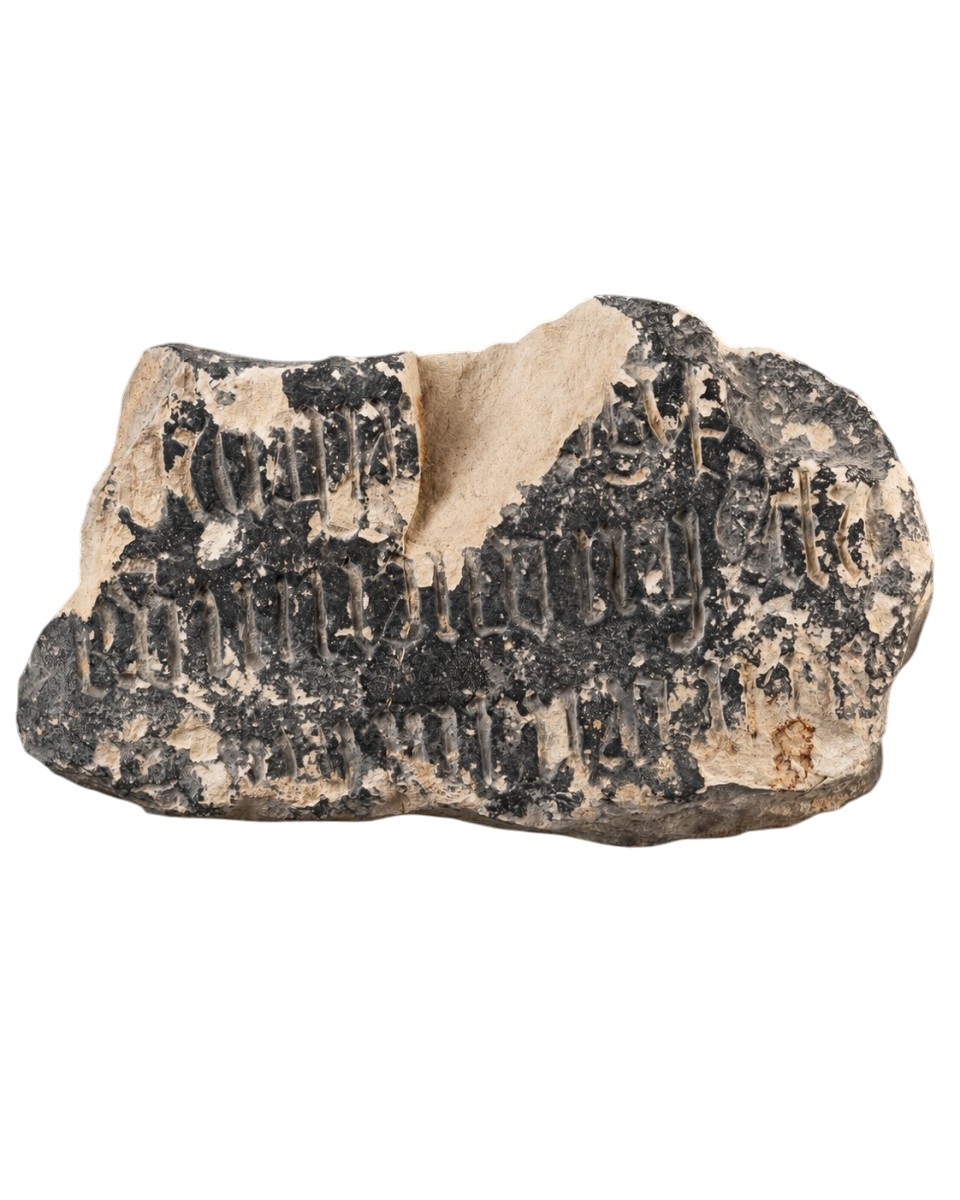
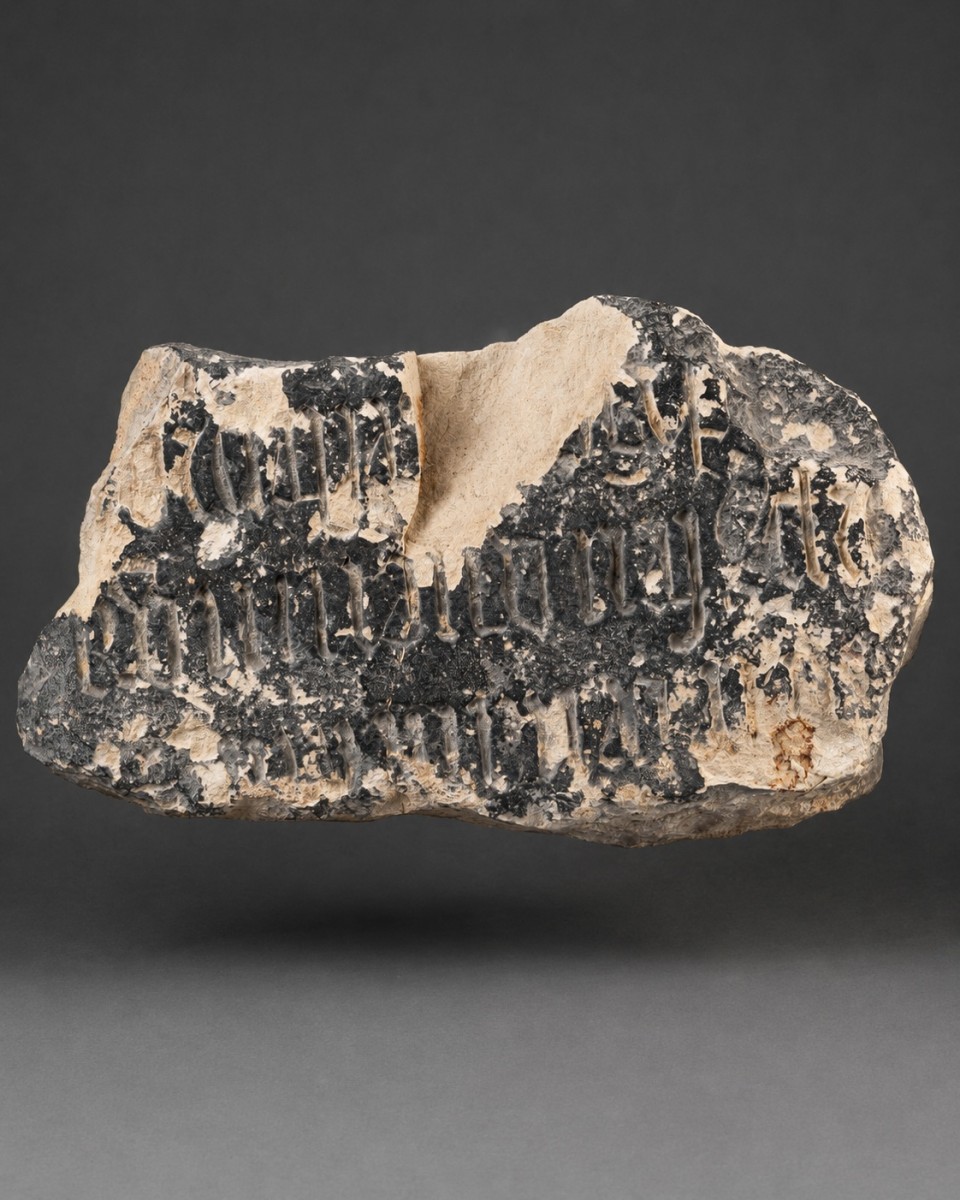
Inscription Fragment?
France, 15th century?
Limestone?
14 × 24.5 × 5 cm
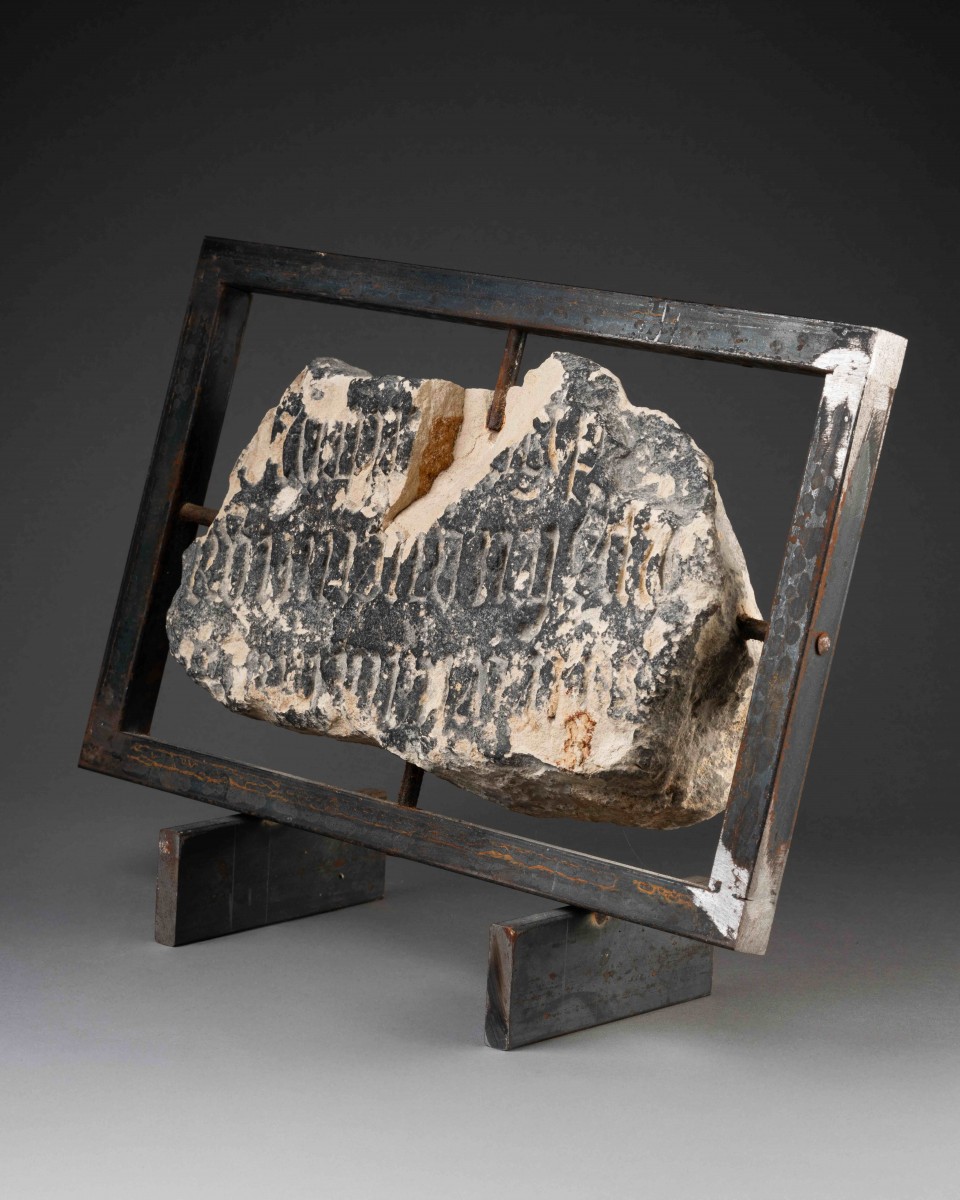
This limestone fragment preserves the remains of a Gothic inscription, a notable witness to the epigraphic art of the late Middle Ages. Though only partially preserved, the composition reveals all the graphic mastery and quality of execution characteristic of French monumental inscriptions of the fifteenth century.
The letters, of an elegant verticality, are distinguished by their narrow proportions, their elongated stems, and their angular serifs — features characteristic of Gothic textualis, or blackletter script, which dominated religious, funerary, and civic inscriptions for centuries. The skilfully rhythmic alternation of thick and thin strokes, translated here into stone with remarkable refinement, gives the inscription a plastic value that transcends the text's purely functional role. The script thus becomes a genuine ornamental motif, participating fully in the architecture and decoration of the monument.
The surface bears the marks of time: even erosion, a few losses, and an old restoration following a fracture that has since been stabilised. These alterations have nonetheless in no way diminished the subtlety of the stonemason's work. The chisel marks remain perceptible and continue to animate the surface through a delicate interplay of light and shadow, revealing the precision of the carver's hand and the aesthetic sensibility of its author.
The fragmentary state of the piece does not allow the text to be reconstructed. The surviving elements nonetheless suggest an inscription of a commemorative or dedicatory character, likely originating from a funerary monument, a chapel, or the elevation of a civil or religious building. Like many medieval lapidary fragments, this stone is today detached from its original context, yet retains intact its evocative power.
Situated at the boundary between sculpture and writing, this work constitutes a valuable witness to French monumental epigraphy of the late Middle Ages. It illustrates the essential place accorded to lettering within medieval visual culture, where inscription was not confined to conveying a message but contributed fully to the aesthetic of the monument. Through the sobriety of its composition as much as the refinement of its execution, this fragment recalls the full expressive power and timeless beauty of Gothic script, whose elegance continues to command admiration today.