Offered by Dei Bardi Art
REQUEST INFORMATION

Sculptures and works of art from the Middle Ages and the Renaissance
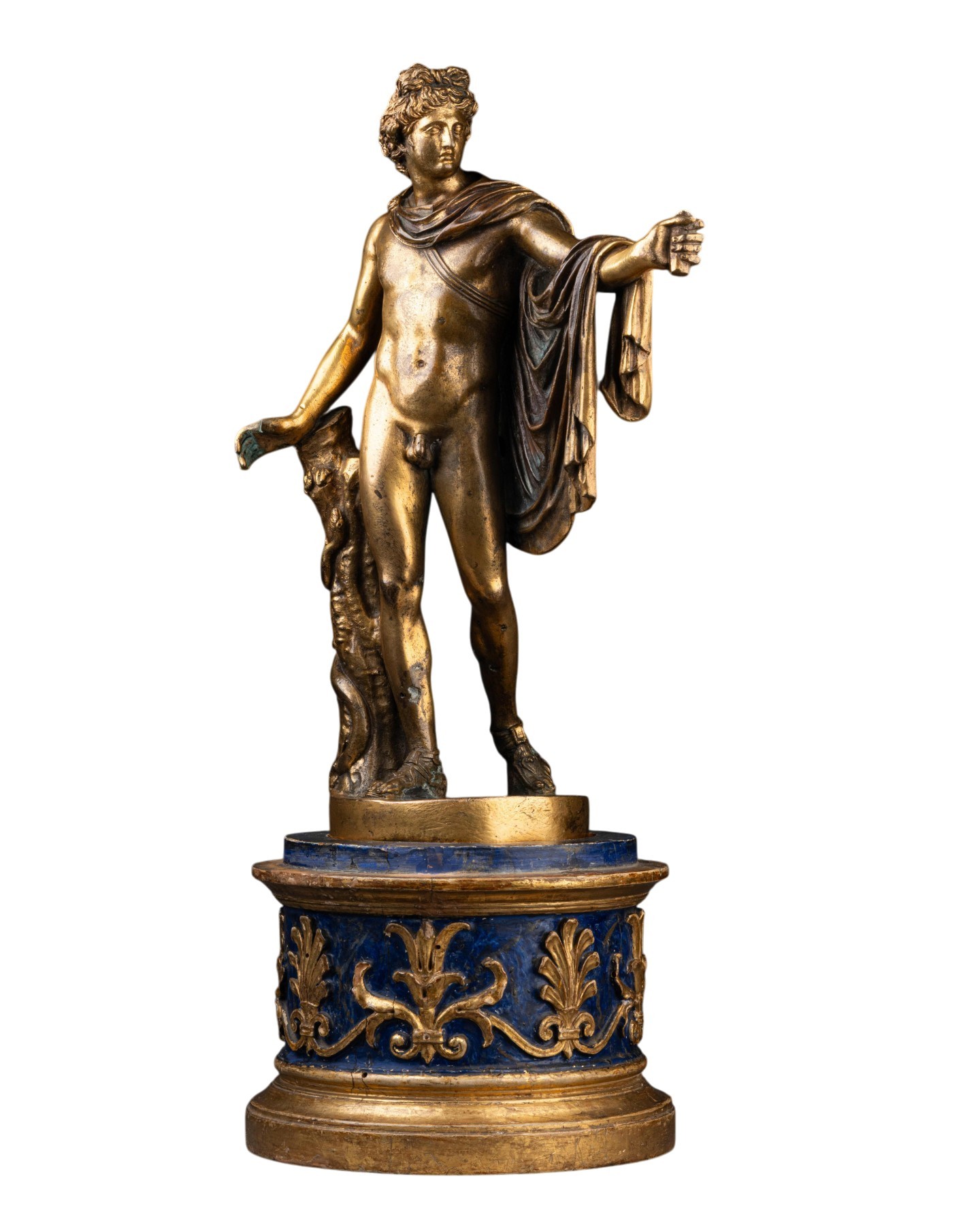
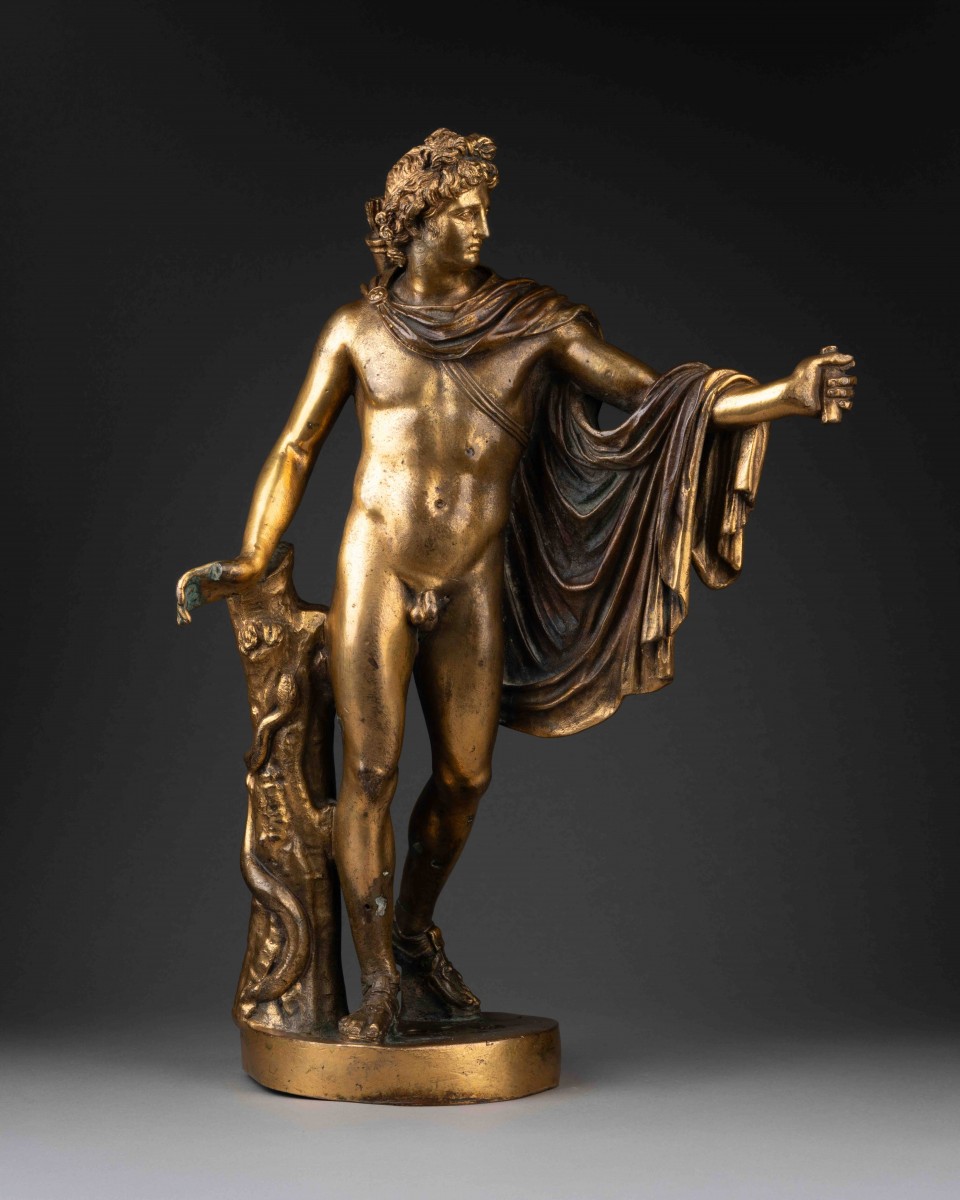
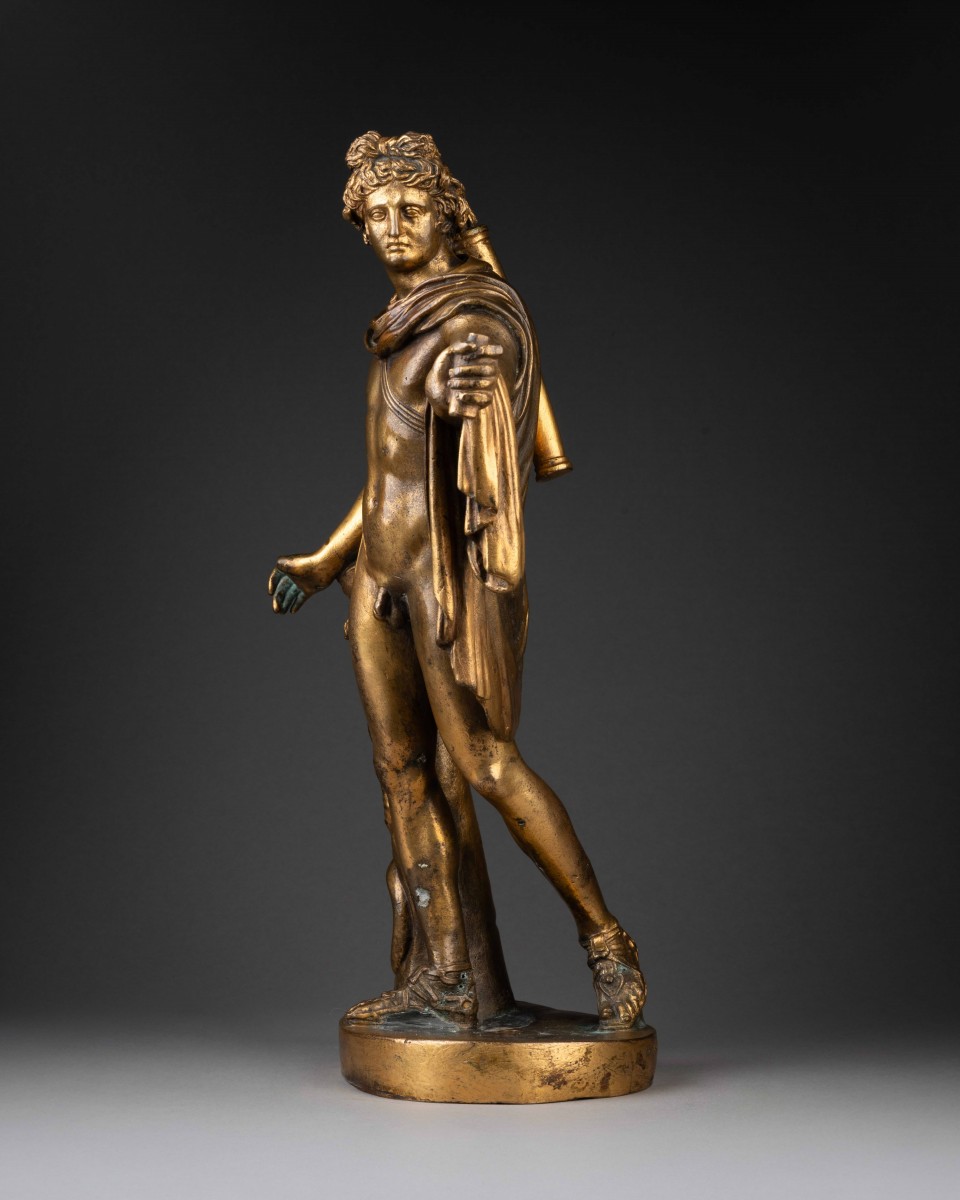
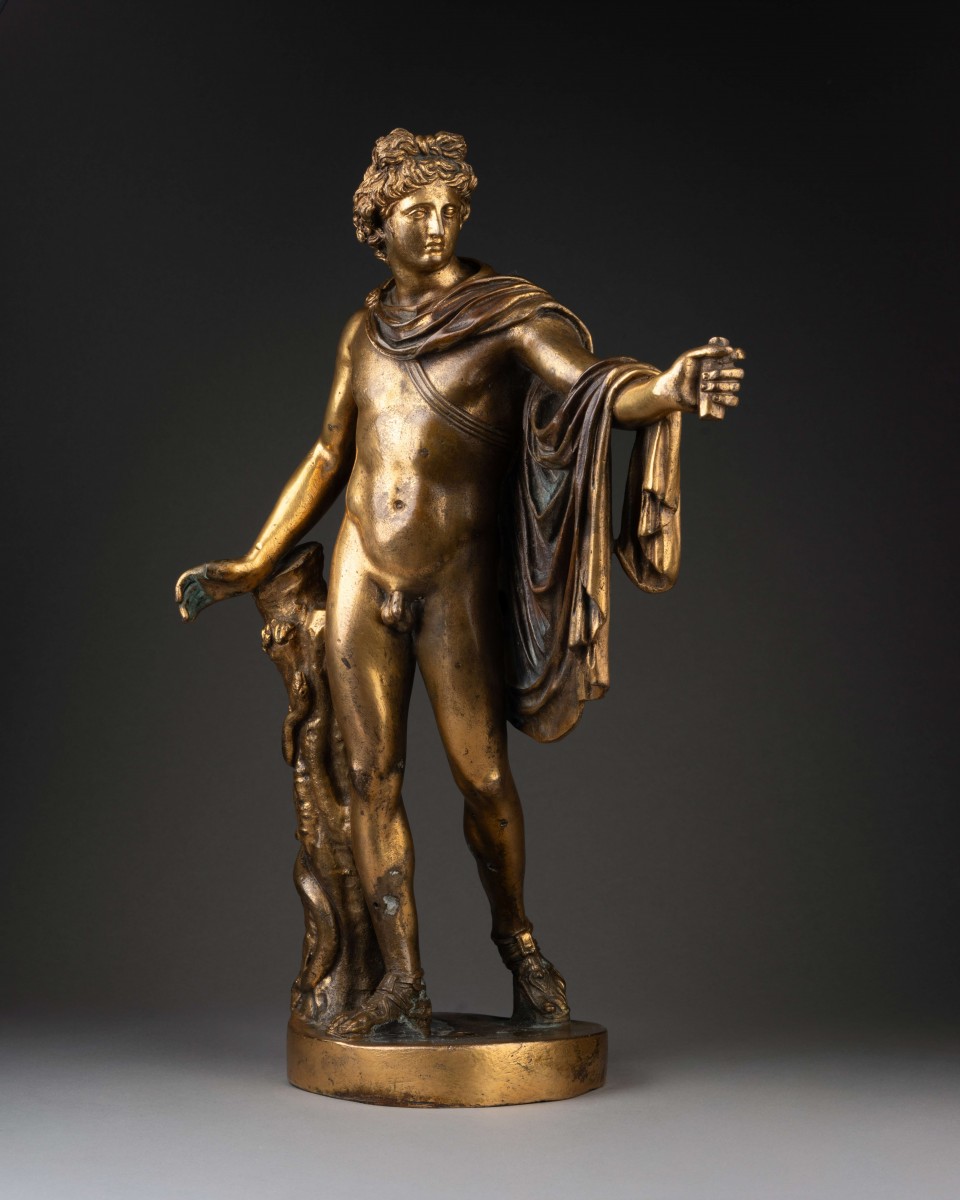
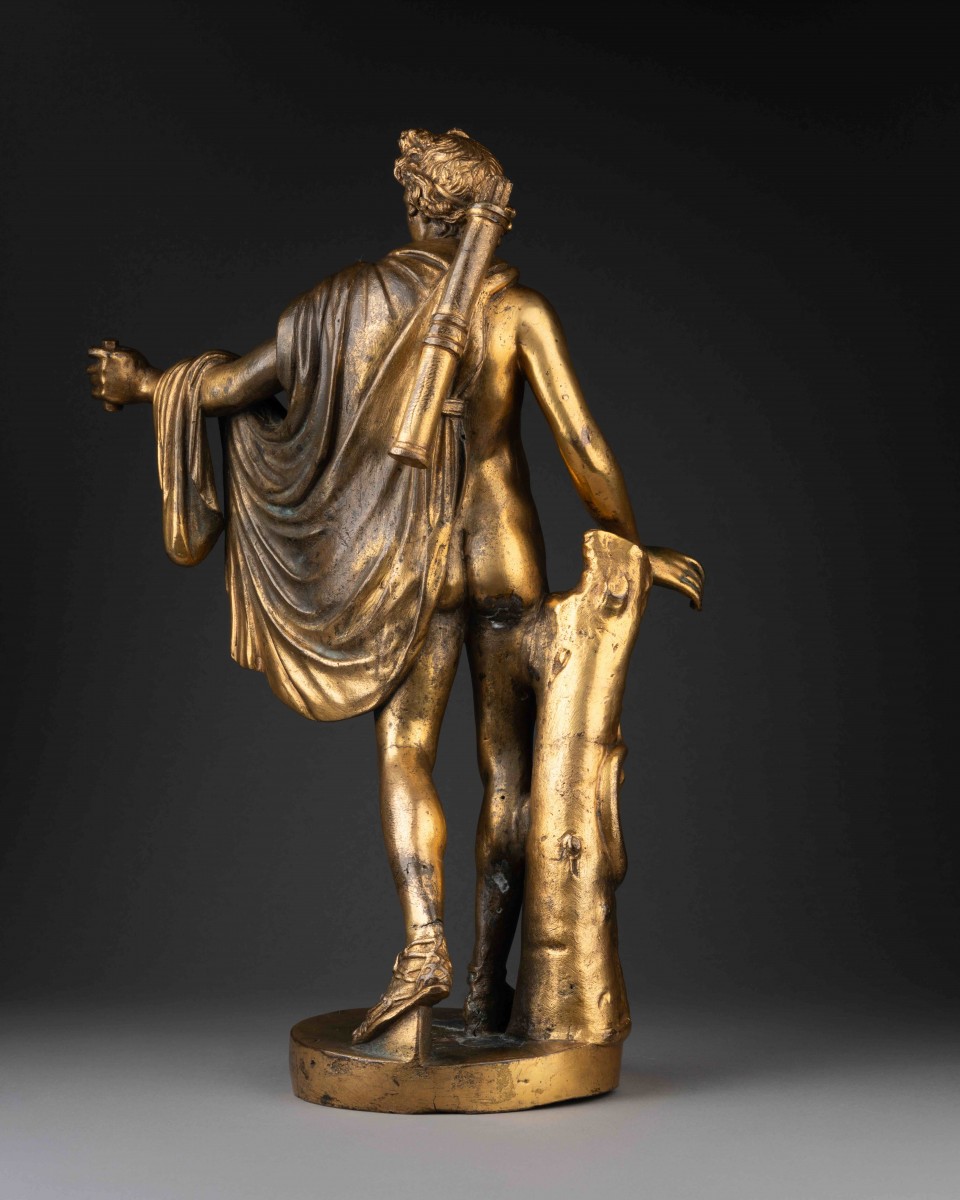
Apollo Belvedere
After the Antique, Rome, 18th century
Gilt bronze, on a carved and giltwood pedestal
H 33 cm ; H totale 47 cm
This superb gilt-bronze statuette reproduces one of the most celebrated masterpieces of Classical Antiquity: the Apollo Belvedere, the renowned marble preserved in the Cortile del Belvedere of the Vatican Museums (inv. 1015). For centuries regarded as the highest expression of ideal masculine beauty and divine perfection, the celebrated sculpture is a Roman marble copy of a lost Greek bronze of the fourth century BC, traditionally attributed to Leochares. Rediscovered near Anzio at the close of the fifteenth century, it soon entered the collection of Cardinal Giuliano della Rovere, the future Pope Julius II, and rapidly became one of the most admired works of art in Europe.
Apollo is represented nude, save for a finely draped himation fastened at the right shoulder and flowing behind the extended left arm, while a quiver is suspended from a strap crossing the chest. Advancing with effortless majesty, the god turns his head to the left as if contemplating the trajectory of an arrow just released. The right arm falls naturally at his side, while the elegant contrapposto imparts a remarkable sense of balance and vitality. Beside the right leg, a tree trunk entwined with a serpent provides the necessary support. Such elements, often adapted by Renaissance and later founders when translating the celebrated marble into bronze, vary subtly from one workshop to another and frequently offer valuable clues for attribution.
The present cast, distinguished by its luminous mercury gilding, perfectly embodies the refined taste for bronzes d'ameublement and Grand Tour souvenirs that flourished throughout the eighteenth century. Intended for princely collections and aristocratic cabinets, reductions after the most famous antique sculptures were prized both as objects of erudition and as symbols of cultivated taste.
Particularly noteworthy are the exceptional quality of the chasing and the richness of the gilding, which endow the figure with remarkable brilliance and refinement. The delicately modelled features, the crisp definition of the luxuriant curls, and the elegant treatment of the drapery reveal the hand of a highly accomplished founder. Taken together, these qualities point to one of the distinguished Roman workshops that supplied the international clientele of travellers, collectors, and connoisseurs drawn to the Eternal City during the age of the Grand Tour.