Offered by Ouaiss Antiquités
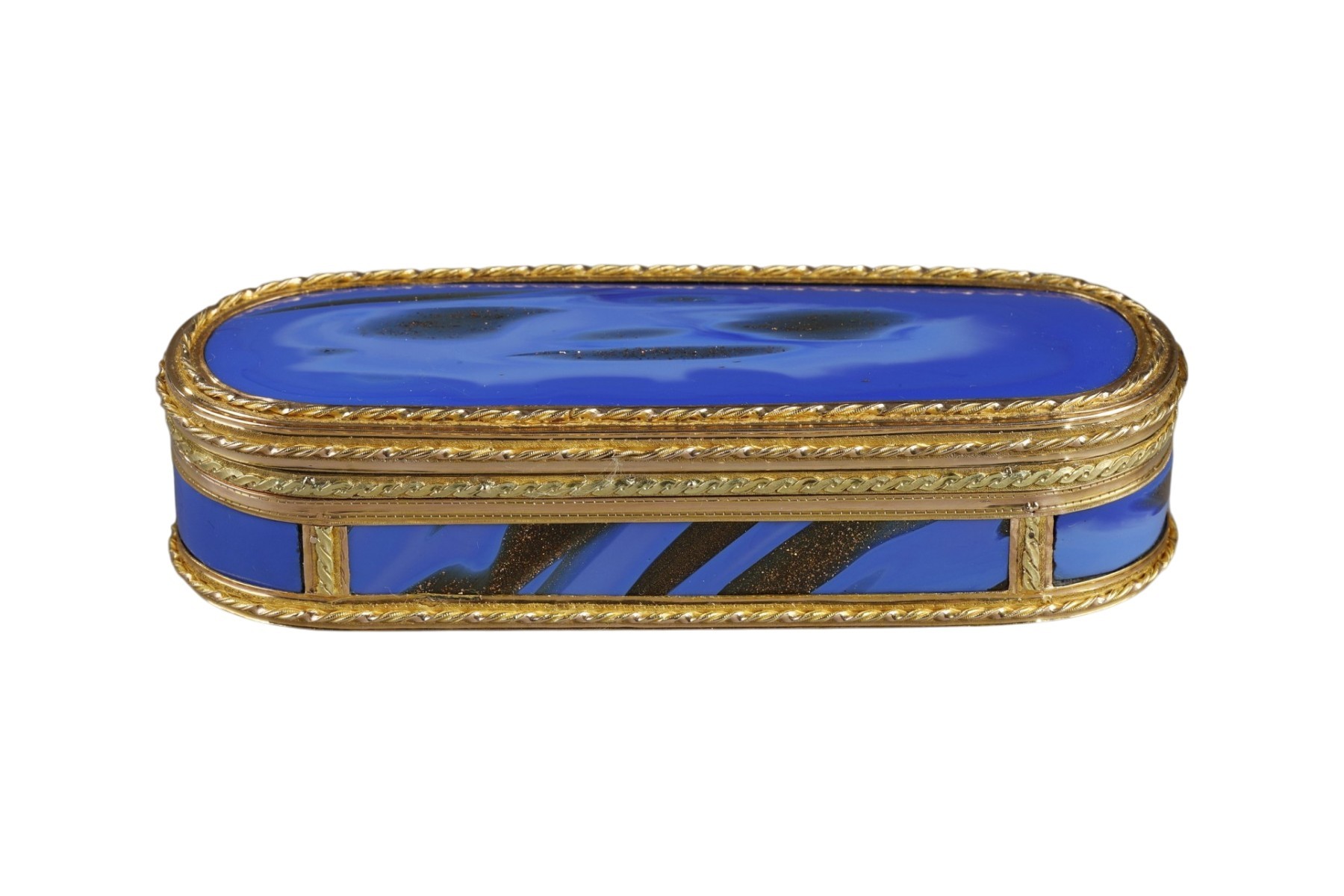
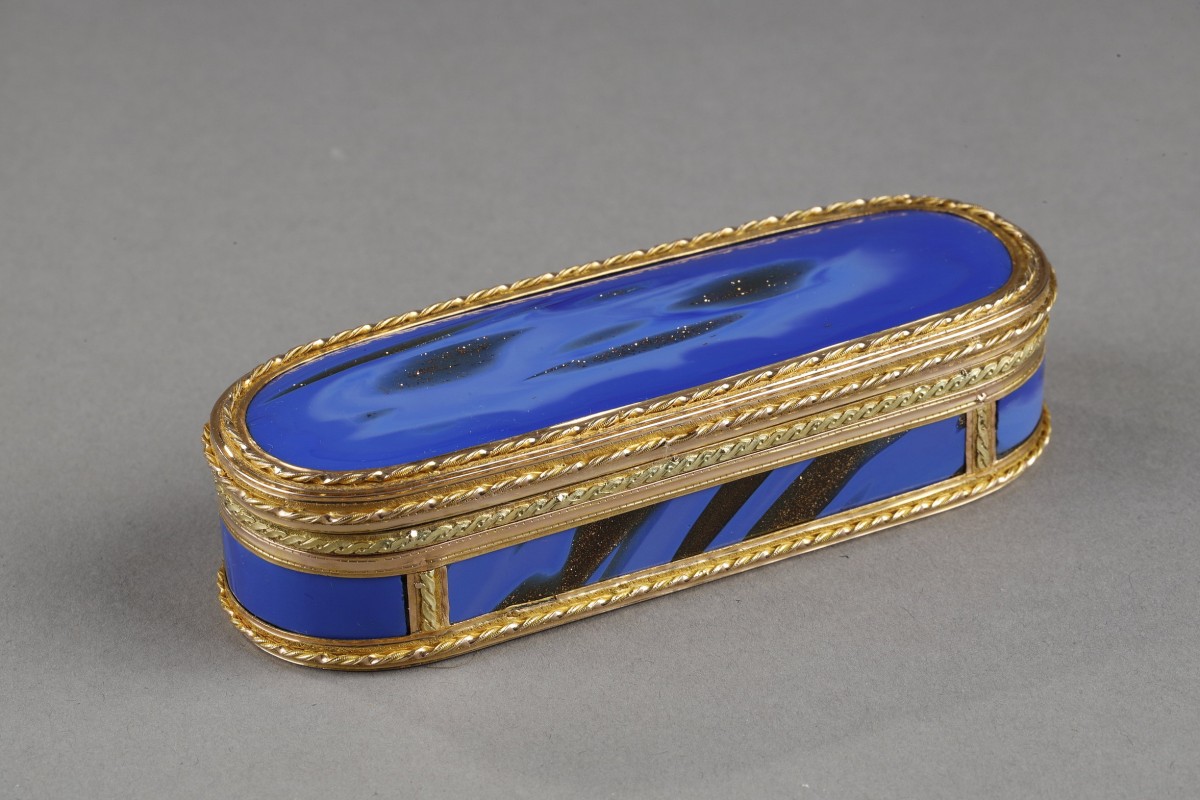
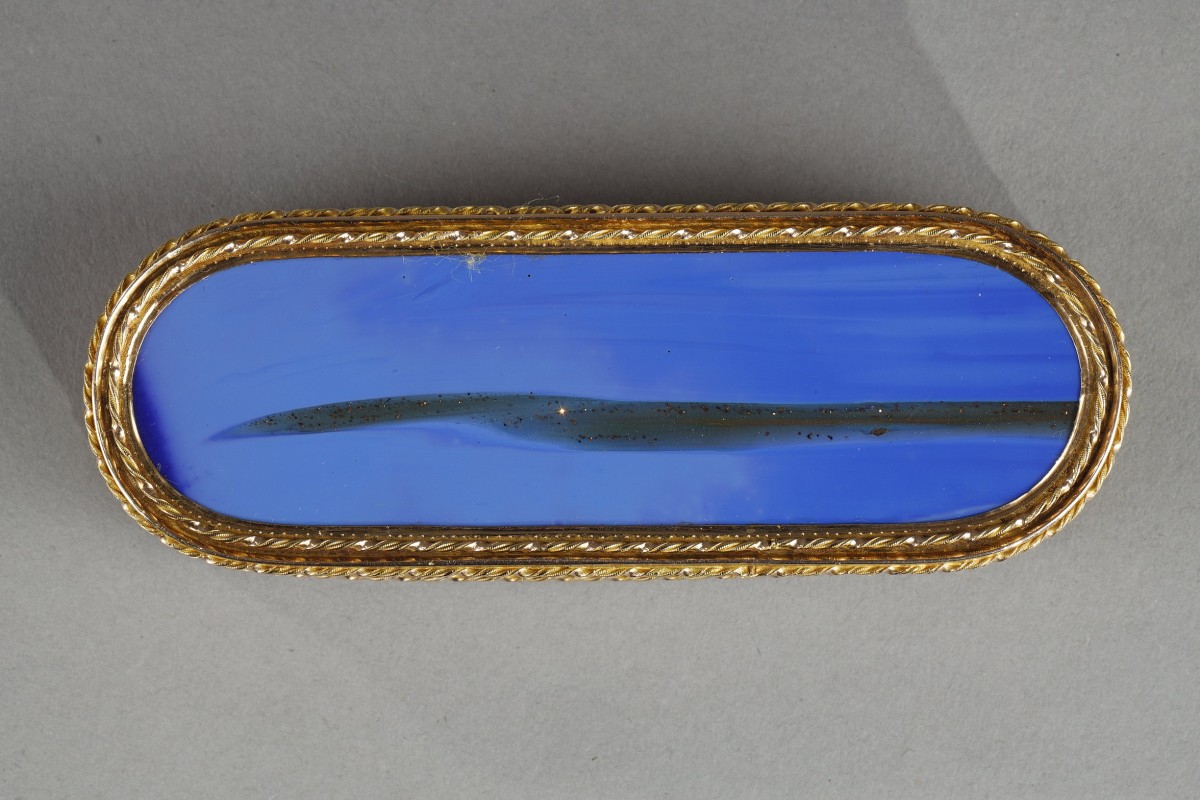
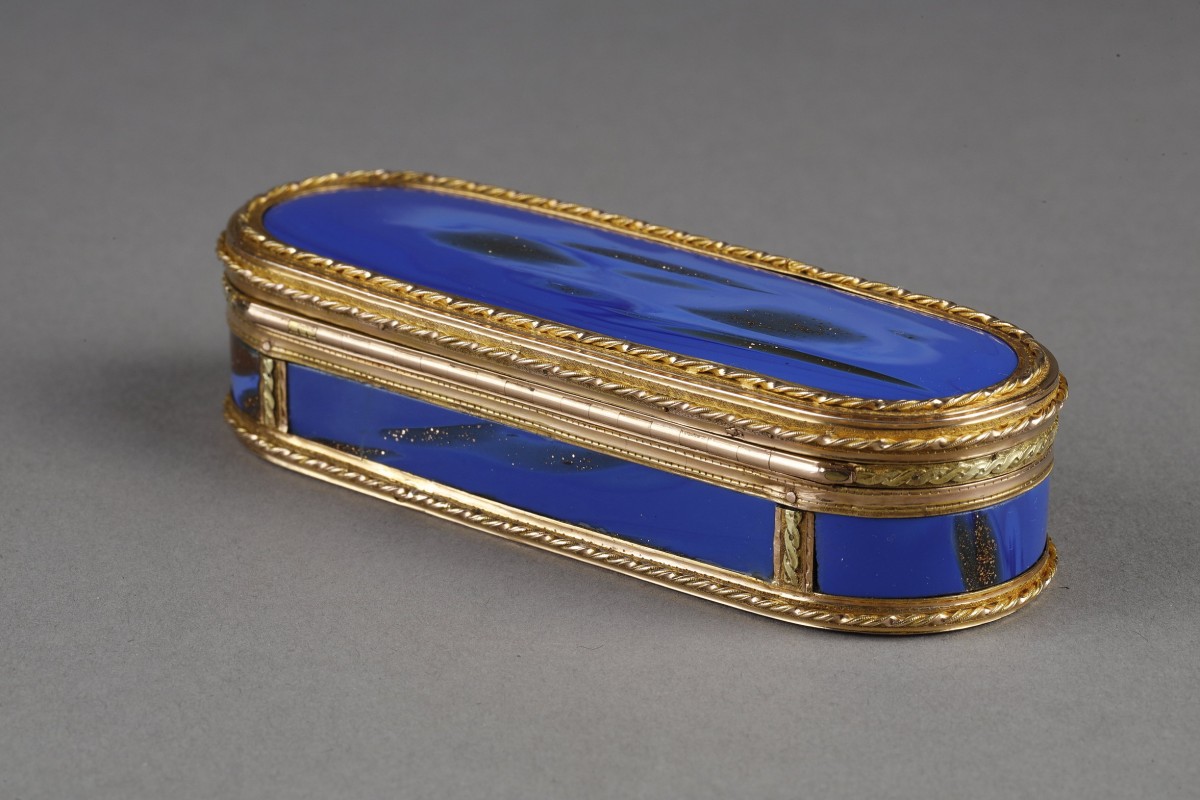
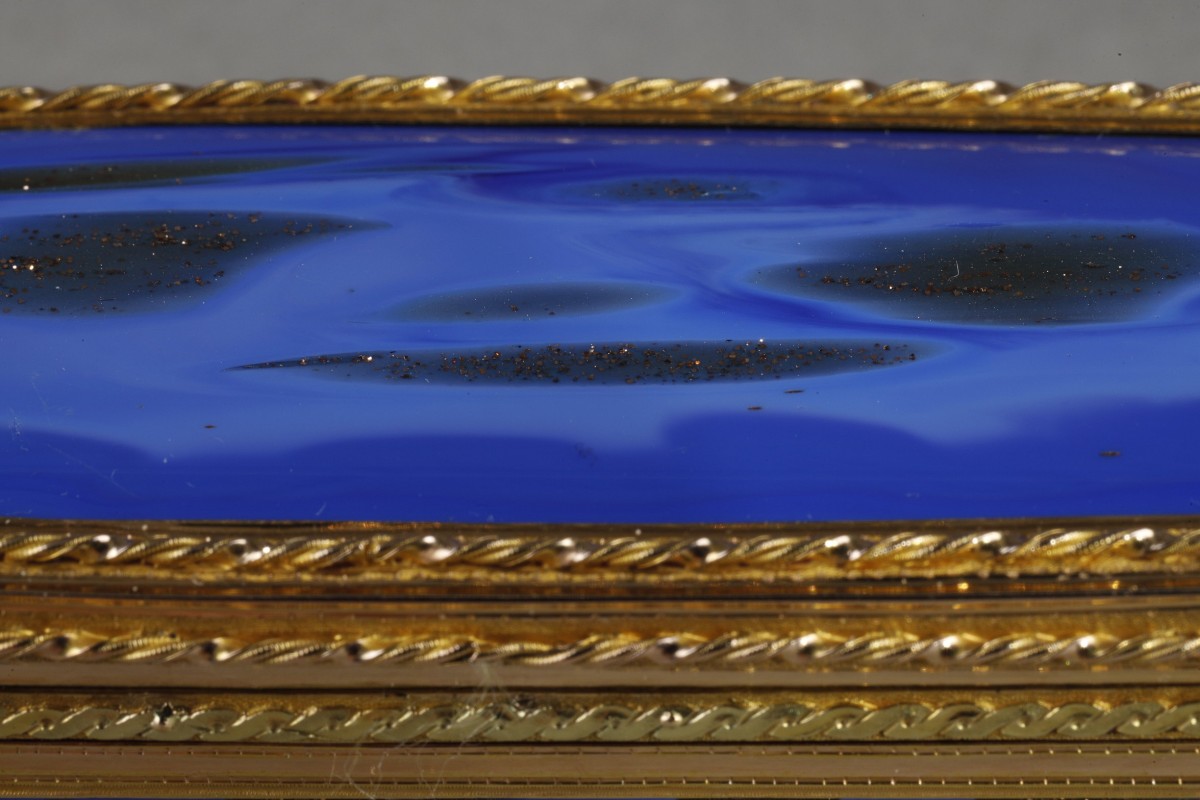

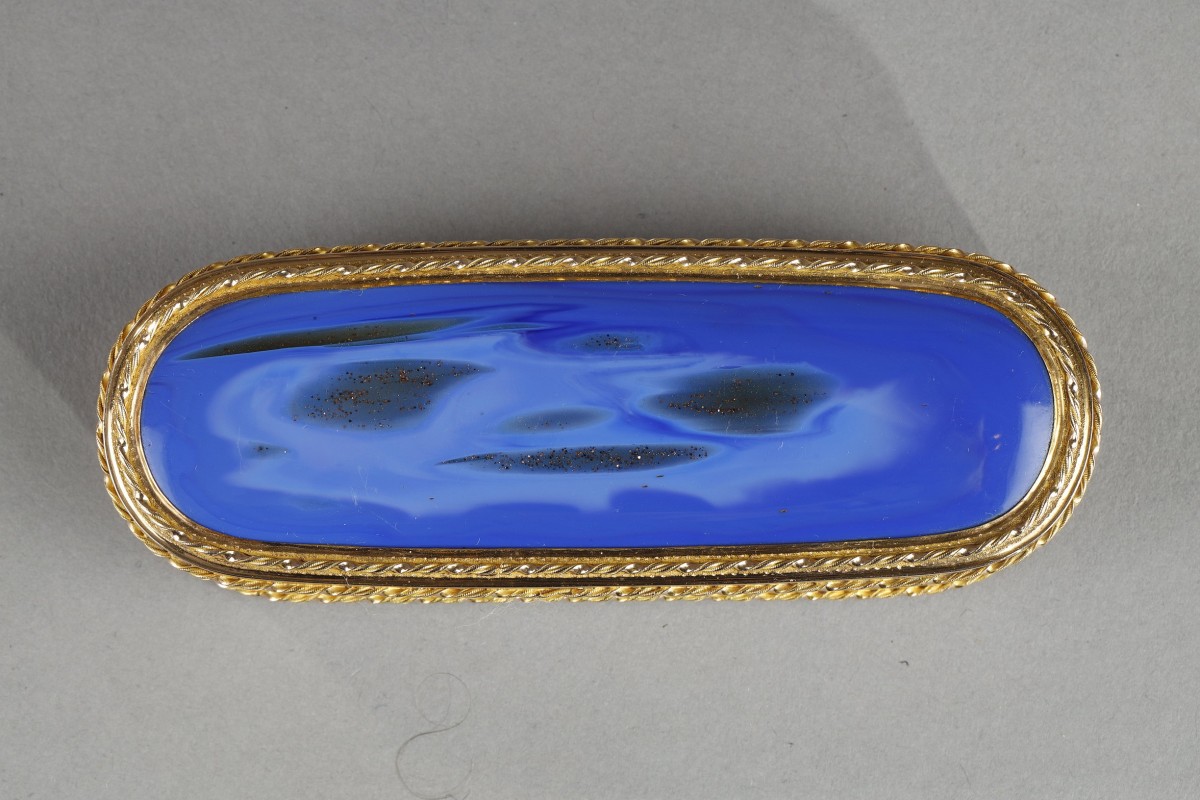
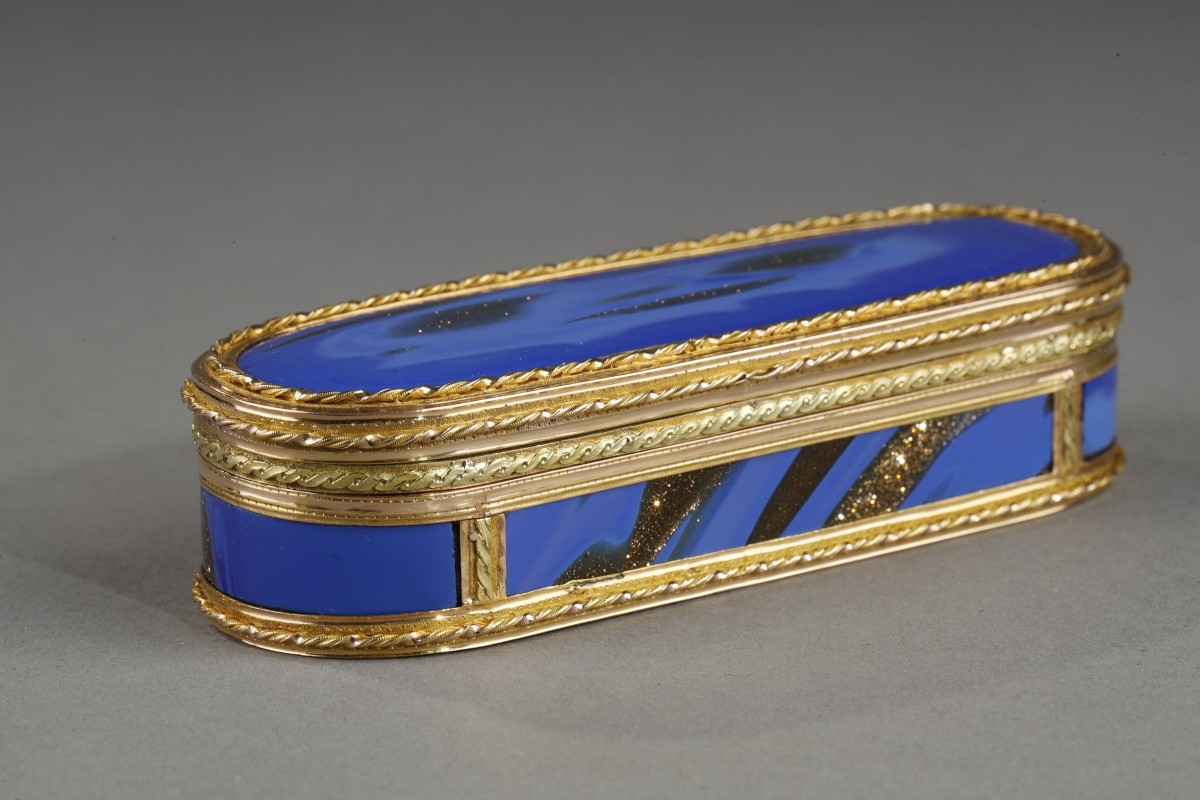
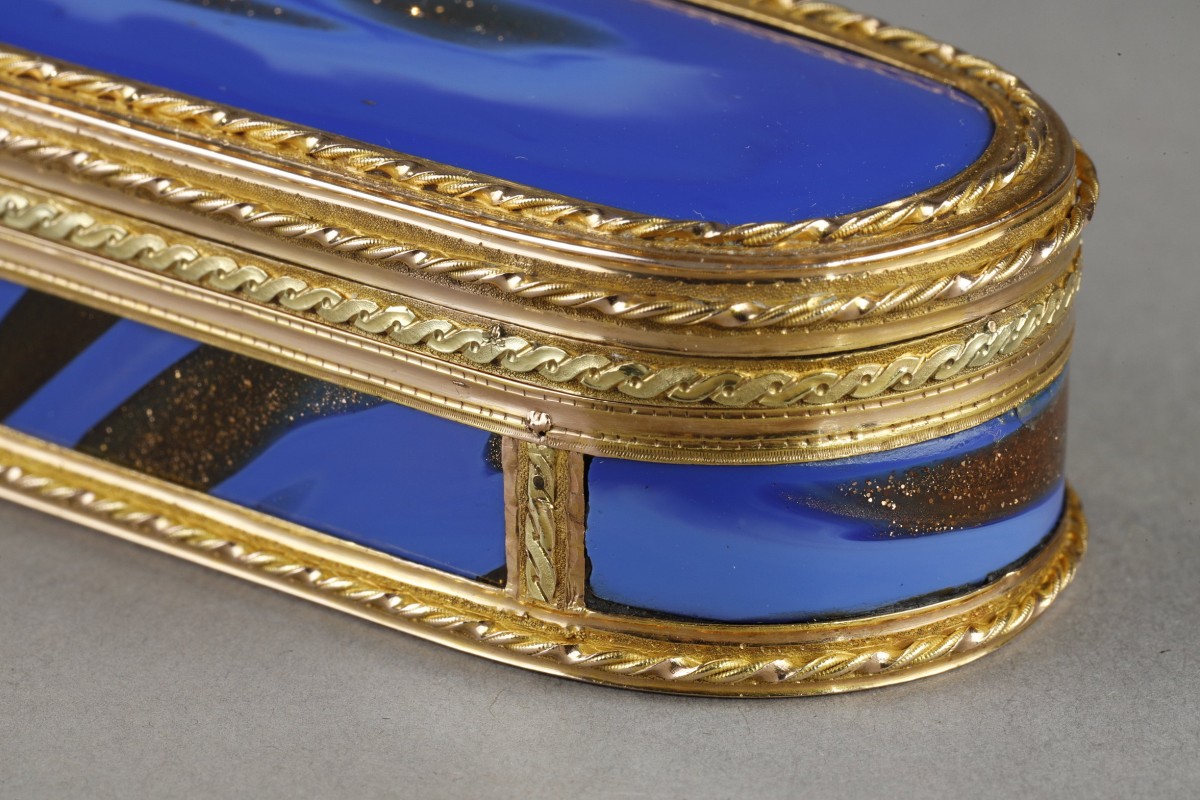
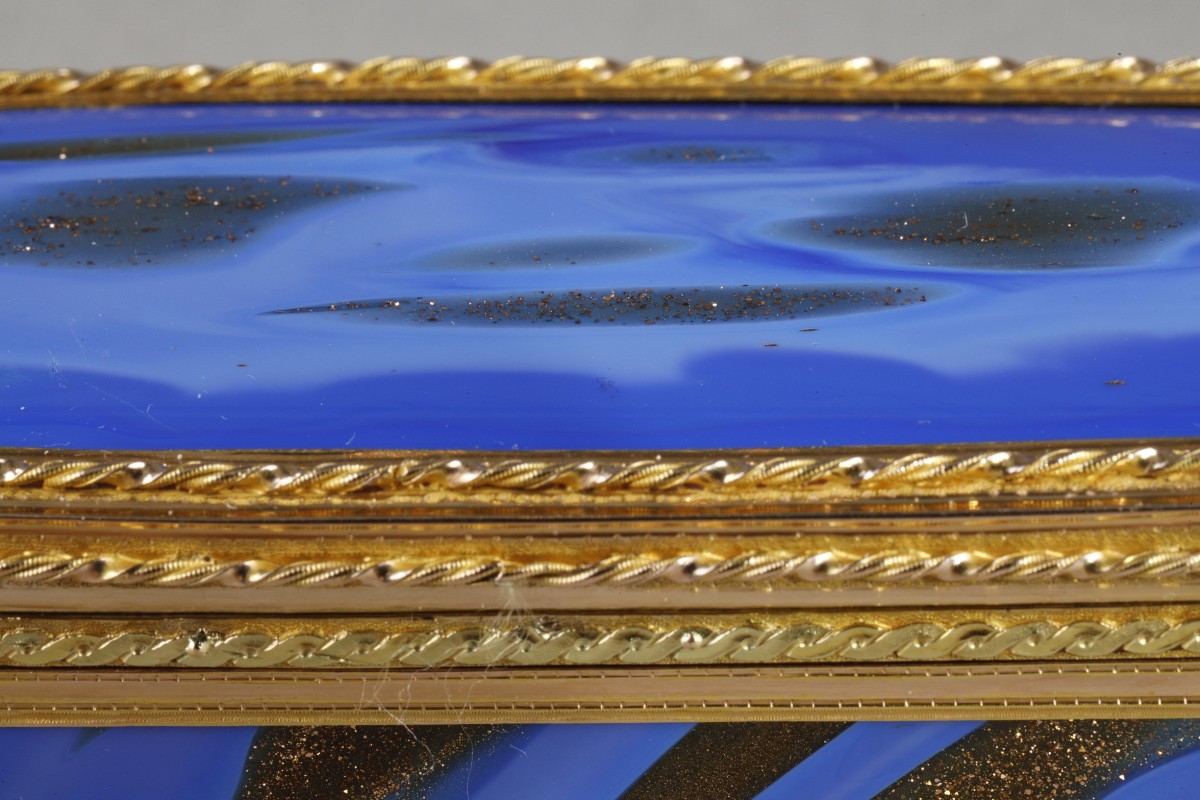
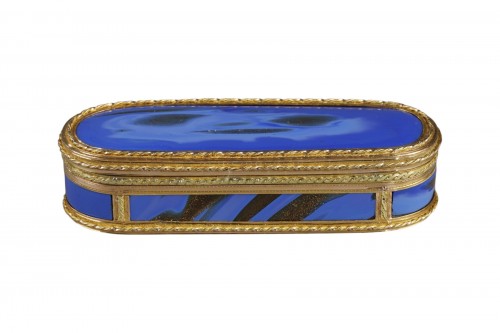
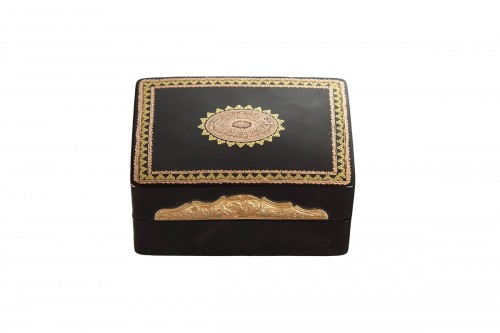
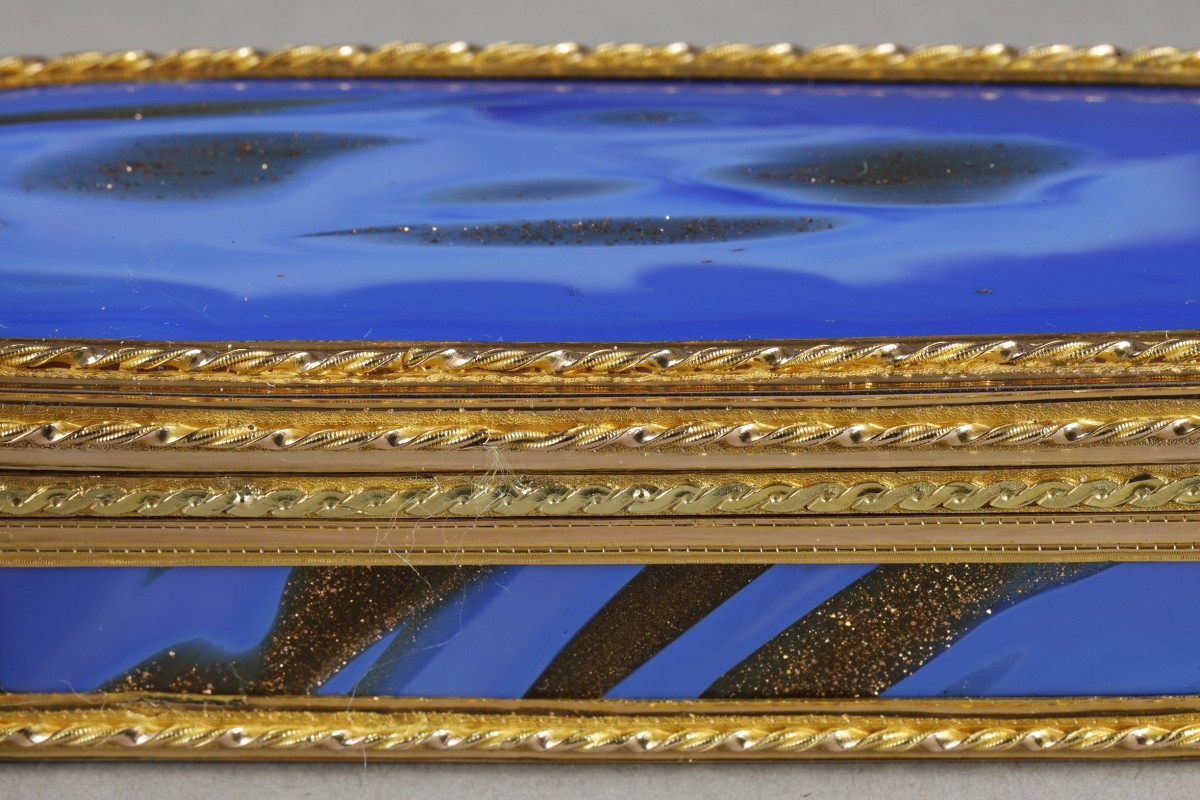
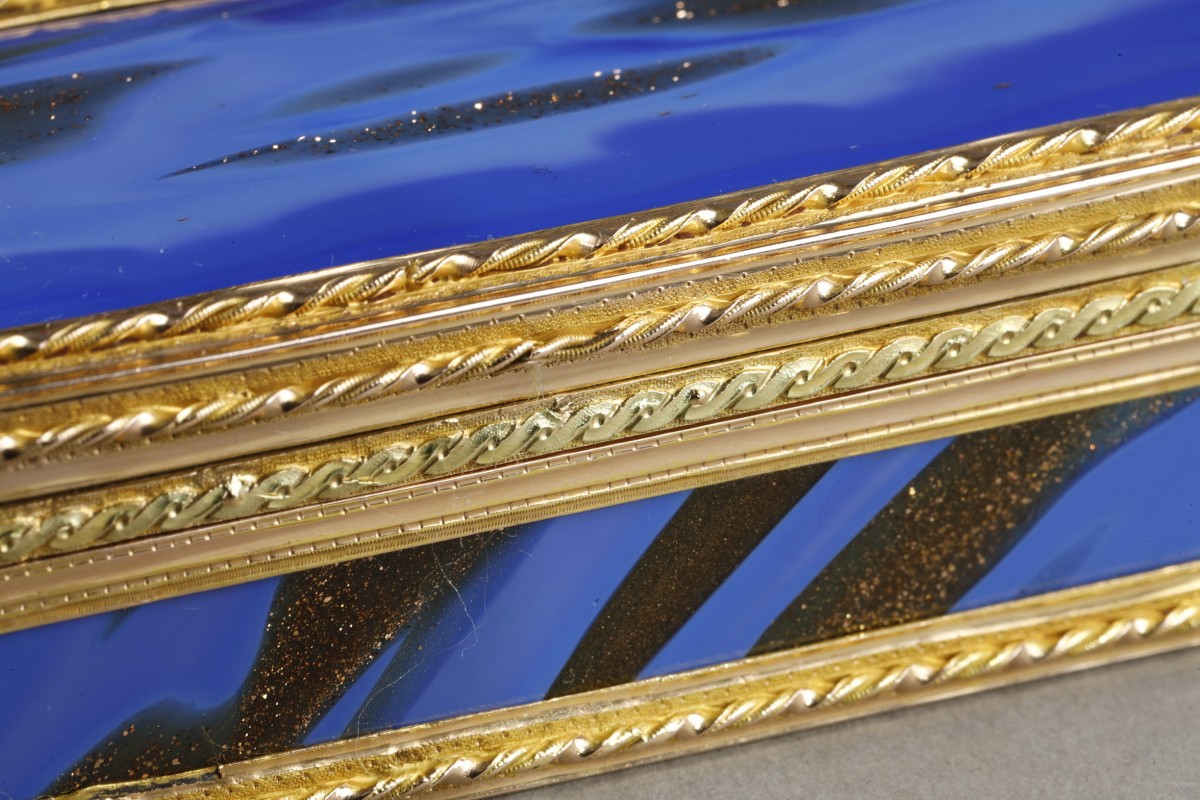
An oblong gold box with blue aventurine panels featuring a cloud-like effect, dotted with sparkling brown particles. The lid, base and sides are edged with a chiselled gold frame, enhanced with twisted and braided friezes. The gold interior shows some imperfections. There is a barely visible crack on the back panel
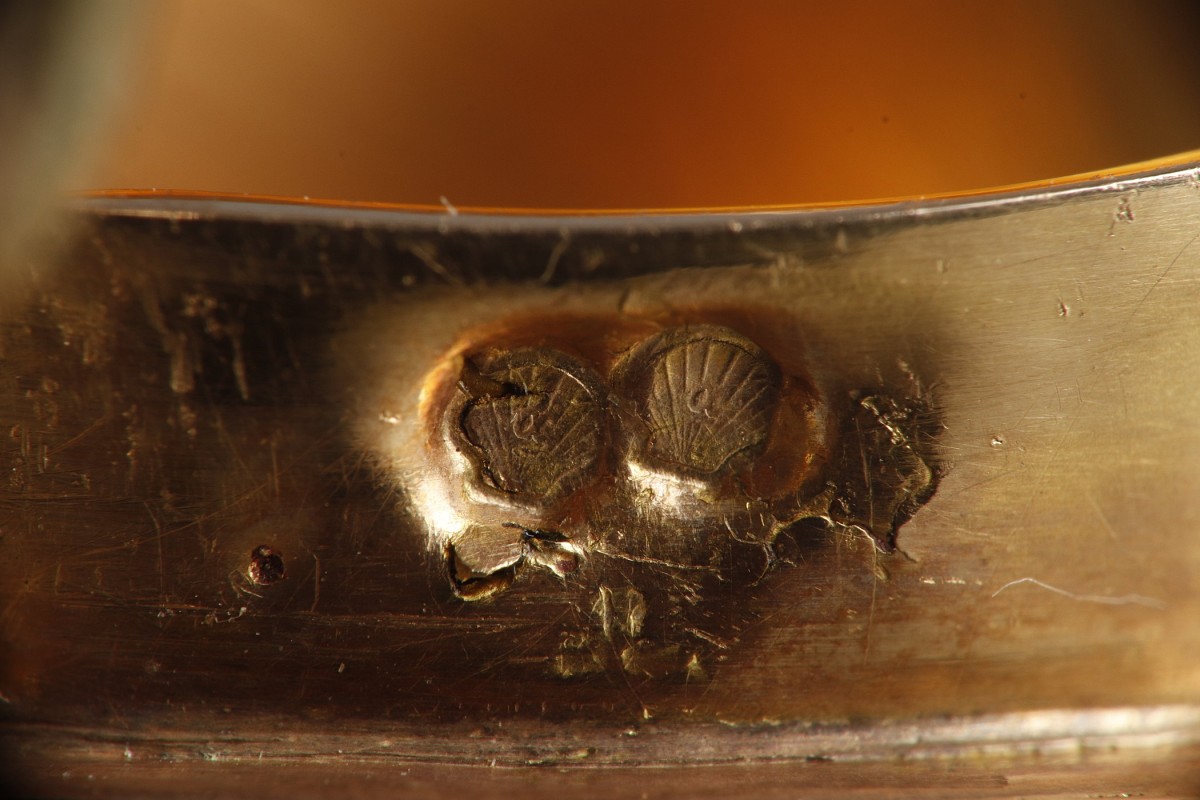
Crowned P hallmark, Date letter Paris 1784
Charge mark: Interlaced LL, 1783-1789
Discharge mark: Lapwing's head, 1783-1789
Tax farmer: Henri Clavel
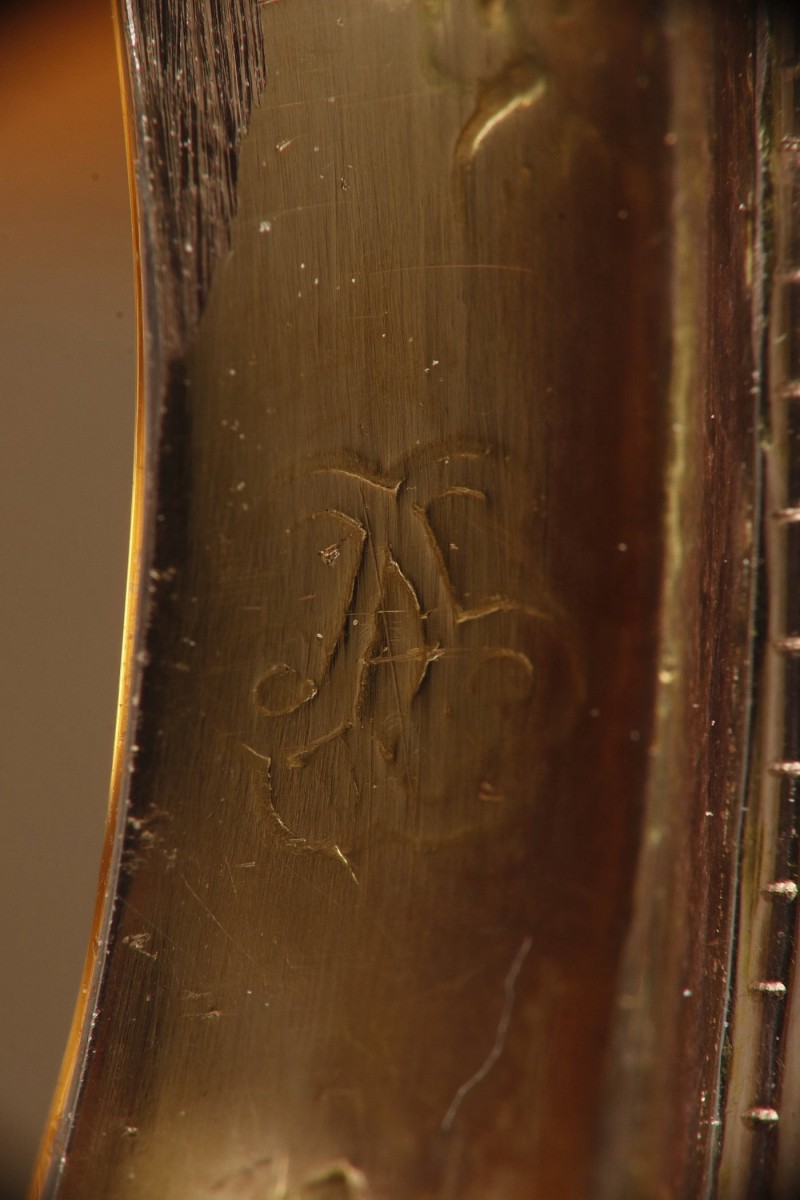
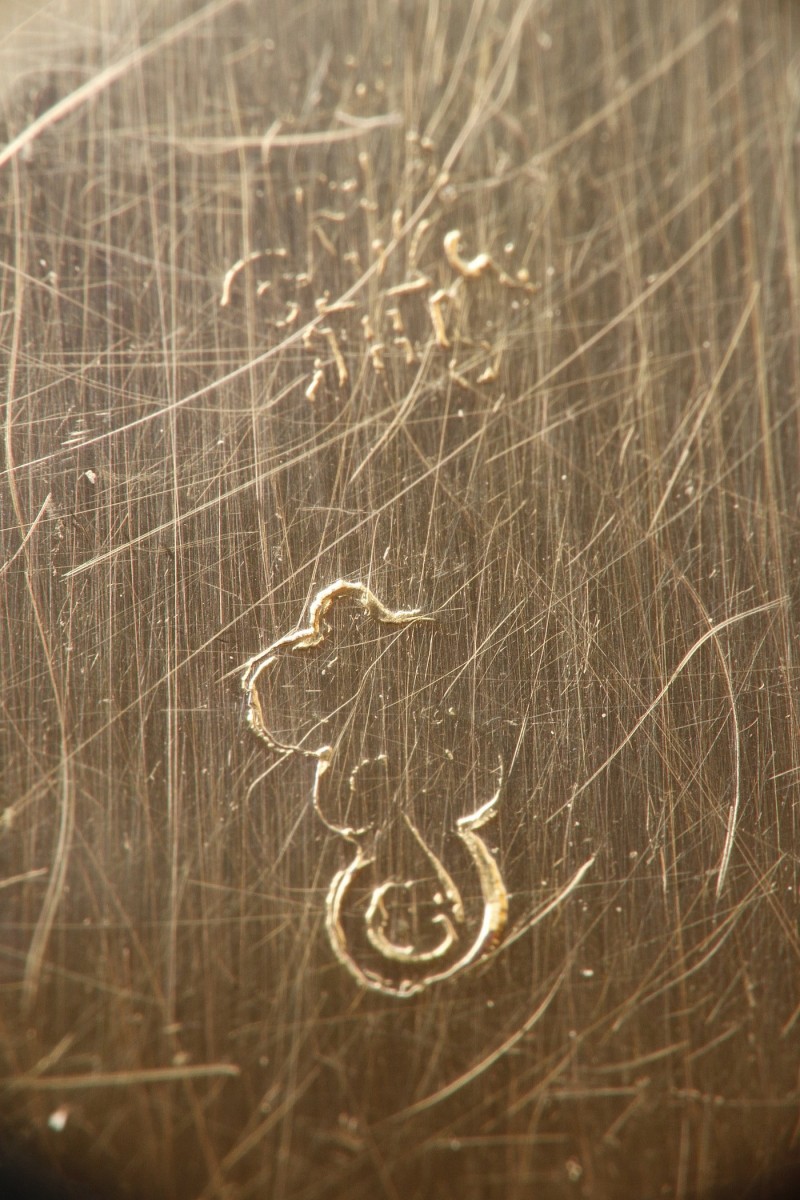
Master silversmith: GCH, crowned fleur-de-lys for Guillaume Claude Hanier, who was awarded master status in Paris in 1773; a master goldsmith who was still practising his trade in 1787.
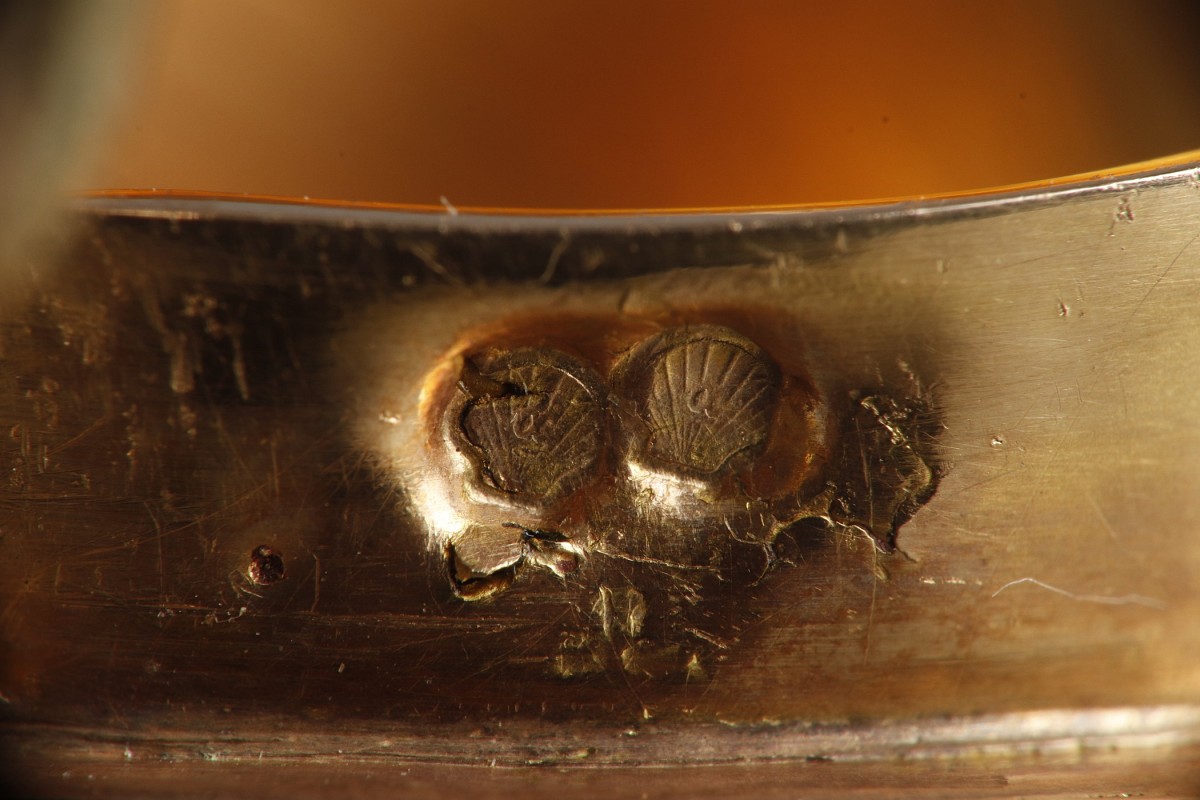
Scallop shells, re-assessed (between 14 and 18 carats)
Aventurine glass, invented by glassmakers in Murano in the 17th century (often also referred to as aventurine glass), is a type of glass that contains tiny metallic inclusions, giving it a sparkling appearance, as if it were filled with glitter. It can be red, brown, green, blue, etc. It shimmers thanks to small particles (often copper or other metals) dispersed throughout the glass. The visual effect is sometimes reminiscent of a semi-precious stone called aventurine and of enamel.