Offered by Galerie Meier
REQUEST INFORMATION

Paintings, Drawings, and Sculptures from the 16th to the 20th Century
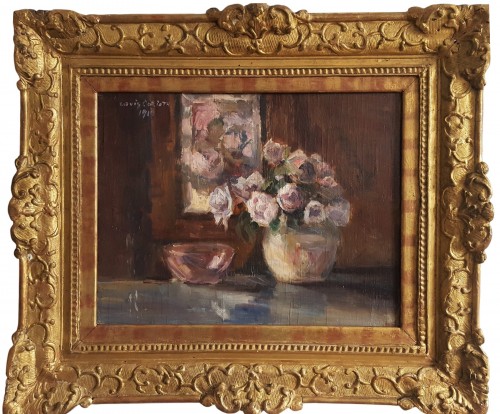
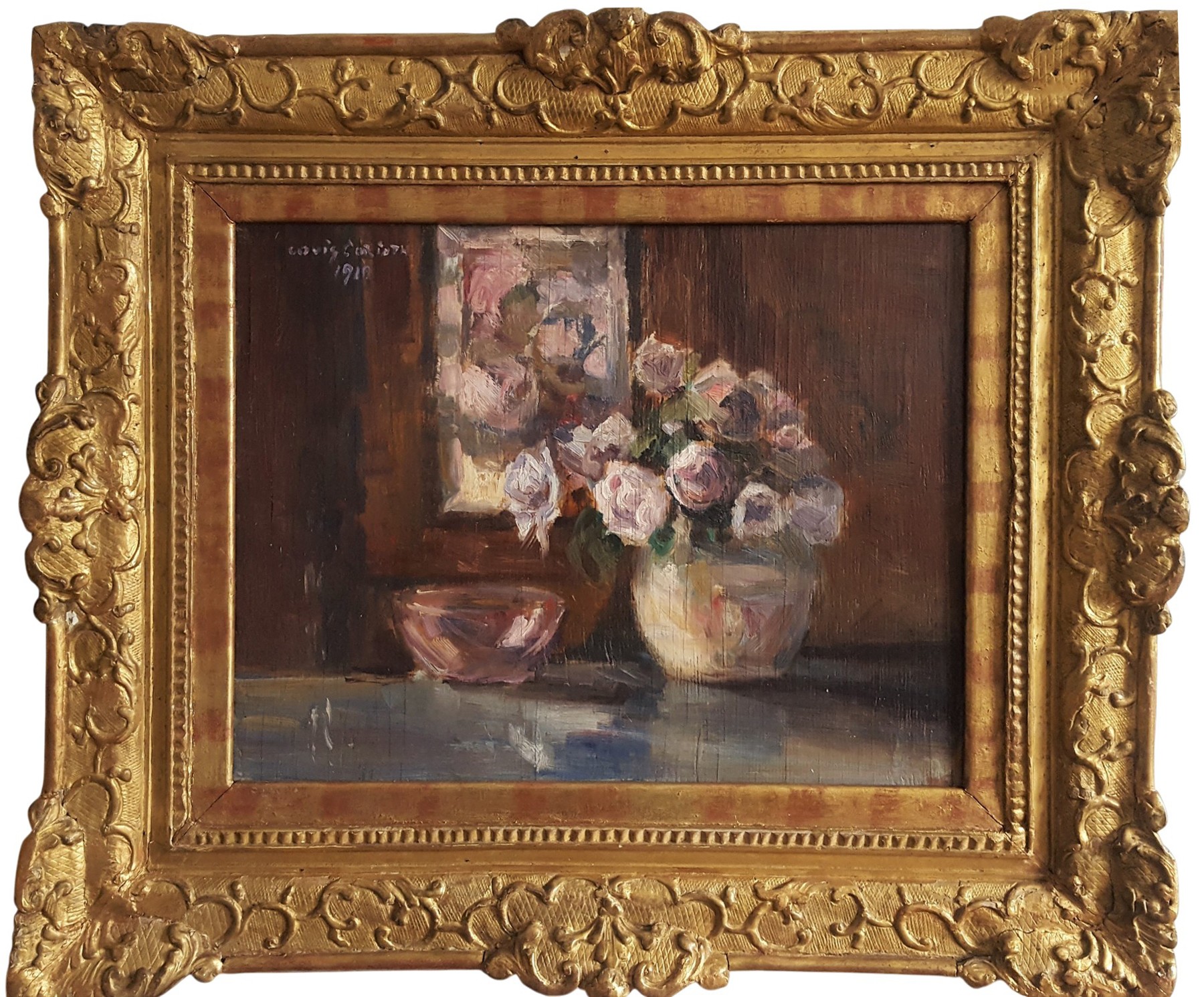
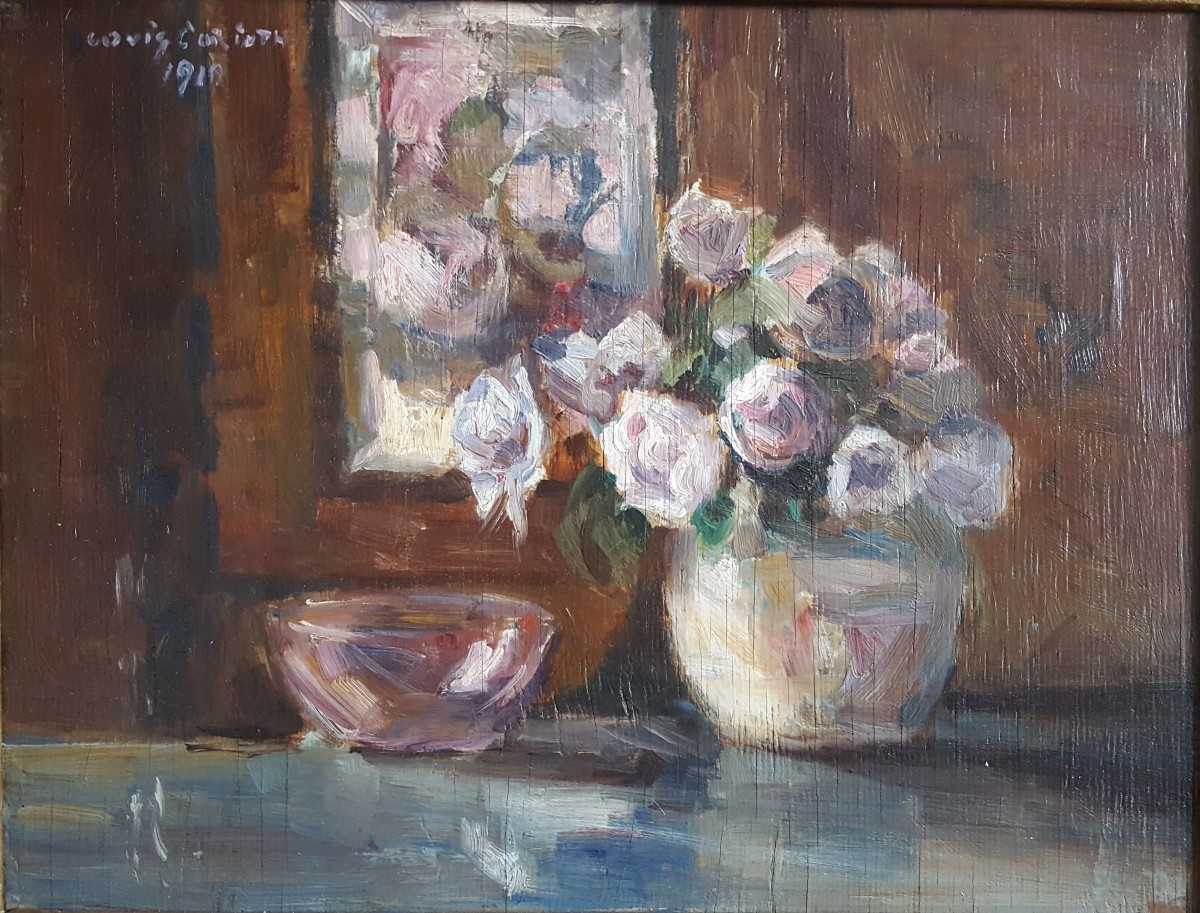
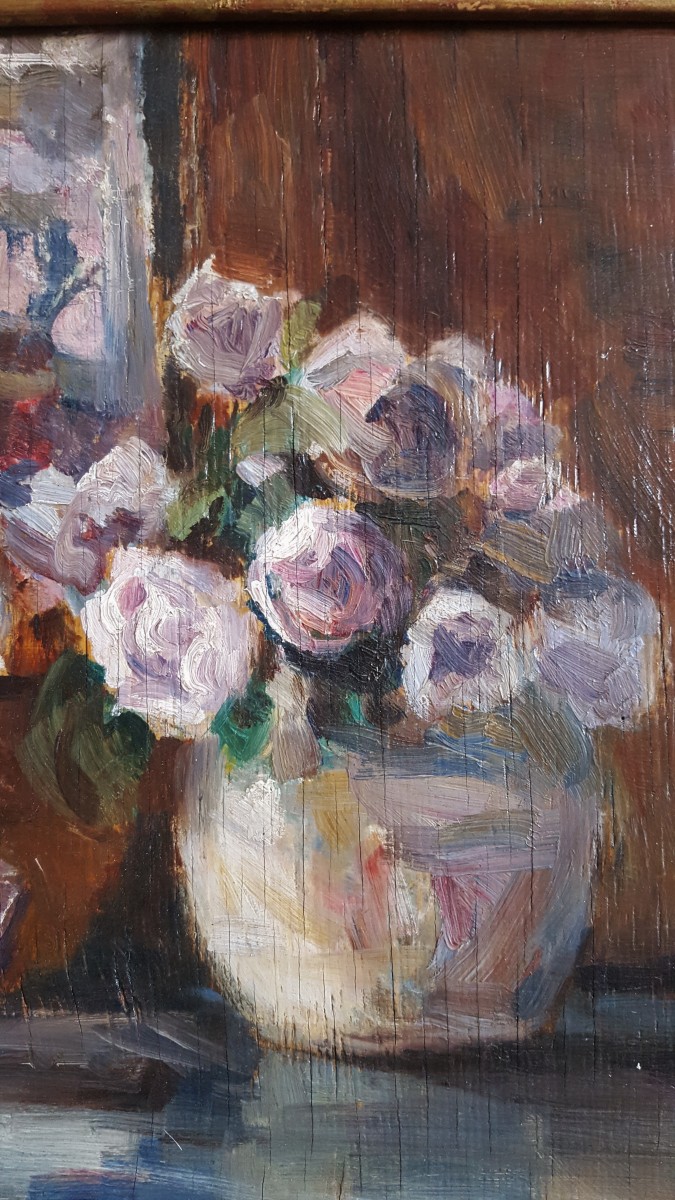
Oil on panel, 44 × 35 cm.
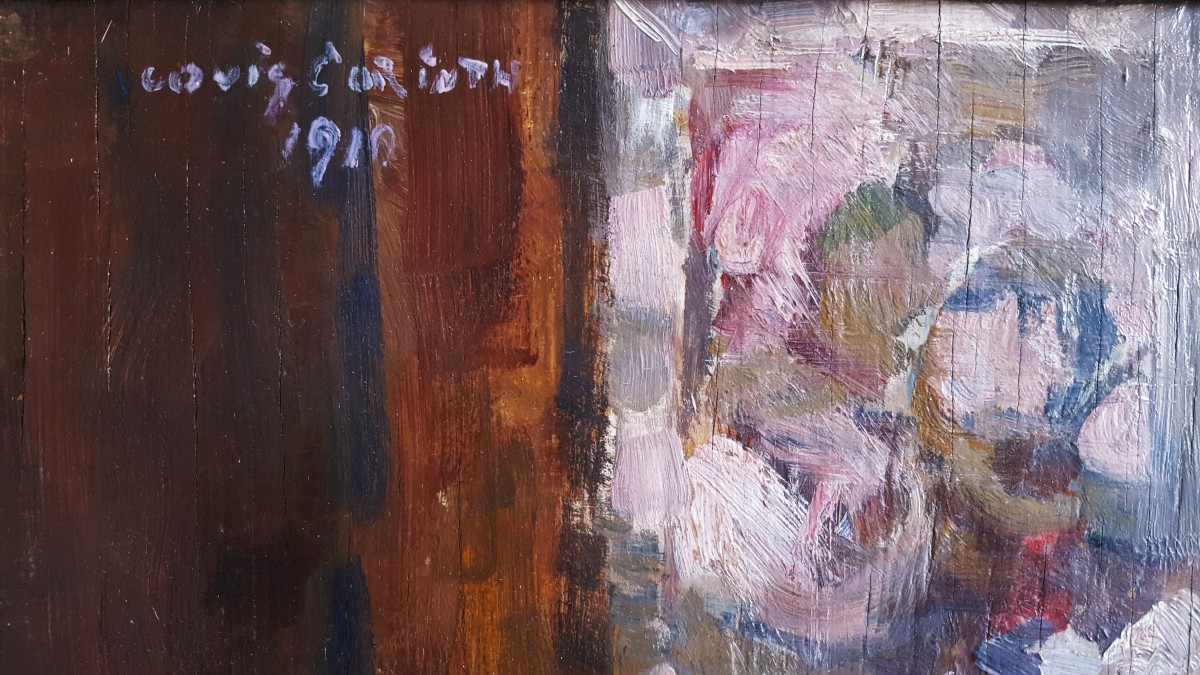
Signed and dated upper left: “Lovis Corinth 1910.”
Signed again on the reverse, accompanied by an exhibition number and a label from the “Neue Kunst Hans Goltz” gallery.
From 1910 onward, Lovis Corinth, one of the leading figures of German Impressionism alongside Max Liebermann and Max Slevogt, embarked on a radical stylistic evolution that gradually brought him closer to the Expressionist movement.
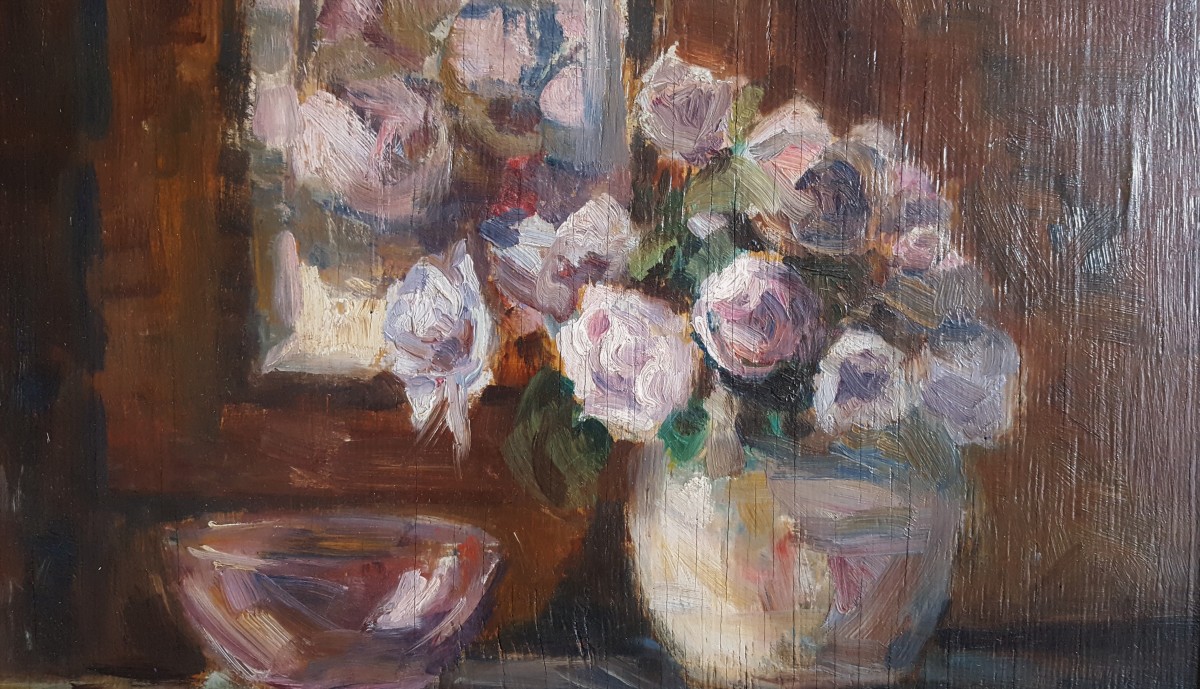
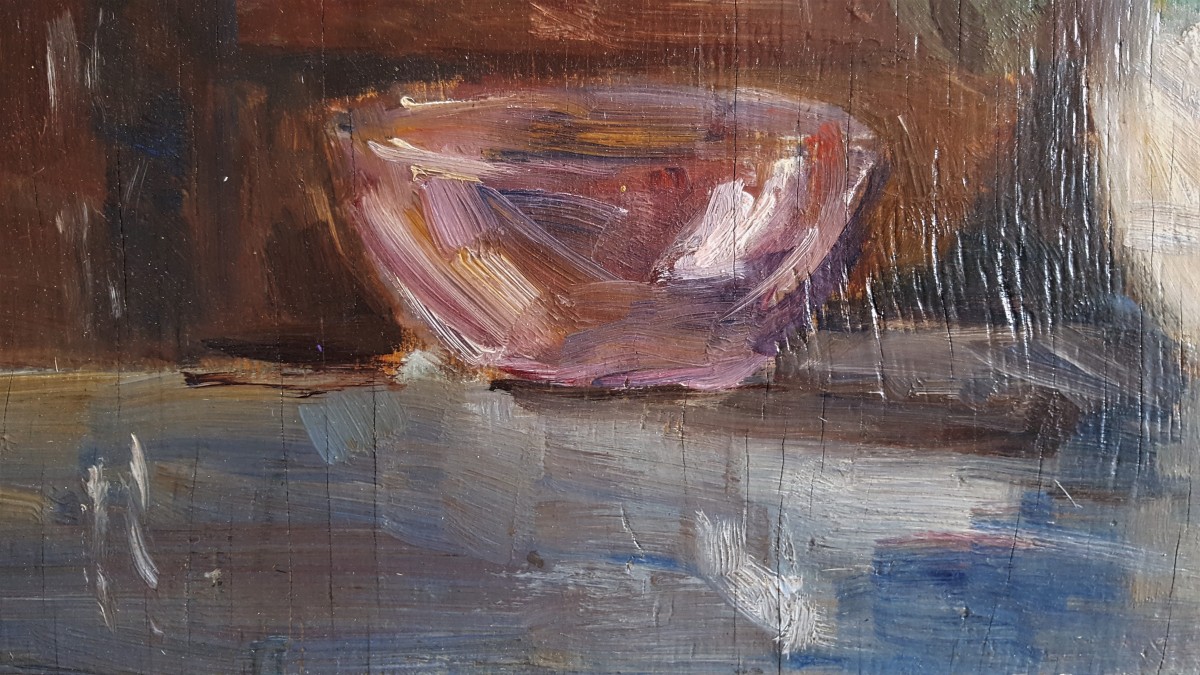
Several paintings executed that same year are known, the recurring motif of which consists of floral compositions of roses against a brown background. In these works, Corinth developed a free, spontaneous, and energetic brushstroke, applied with broad strokes, reminiscent of the characteristic technique of Édouard Manet.
His appointment as president of the Berlin Secession restored his confidence and unleashed a new energy that led him to adopt a bold pictorial language, akin to Expressionist explorations. Although he never fully aligned himself with this avant-garde movement, his later works — like those of the expressionists — would be labeled “degenerate art” by the Nazi regime.