Offered by Galerie Léage
REQUEST INFORMATION

France, Louis XVI period
Attributed to Joseph Gengenbach, called Canabas (1712?1797)
Close example
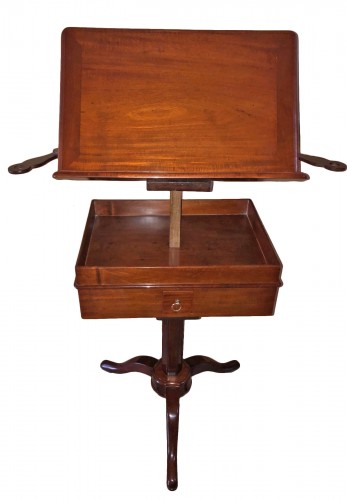
- Varnished cherry wood planter, Louis xvi period, Paris, Mobilier National (inv. gme?11951?000)
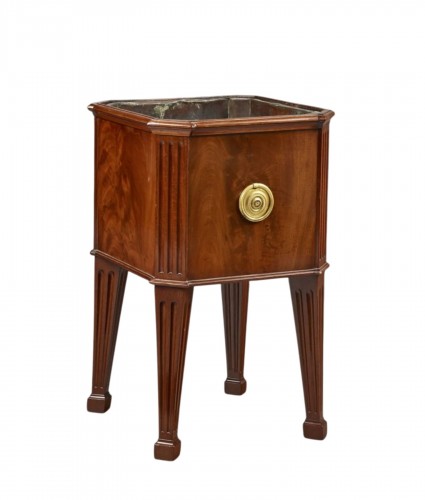
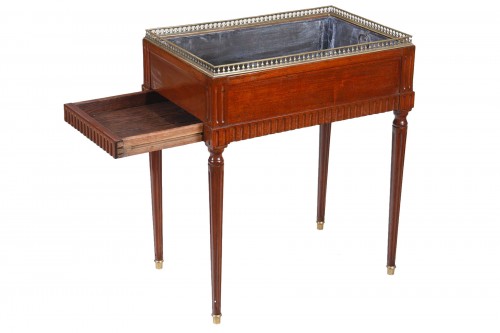
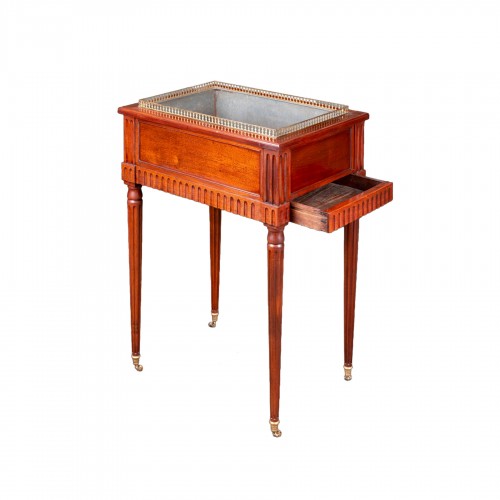
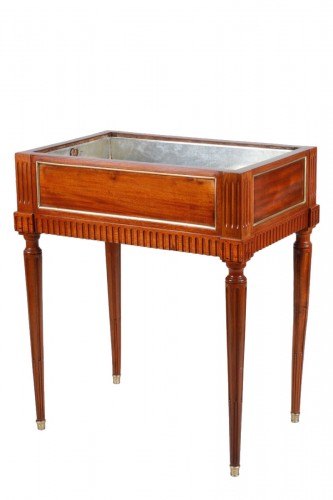
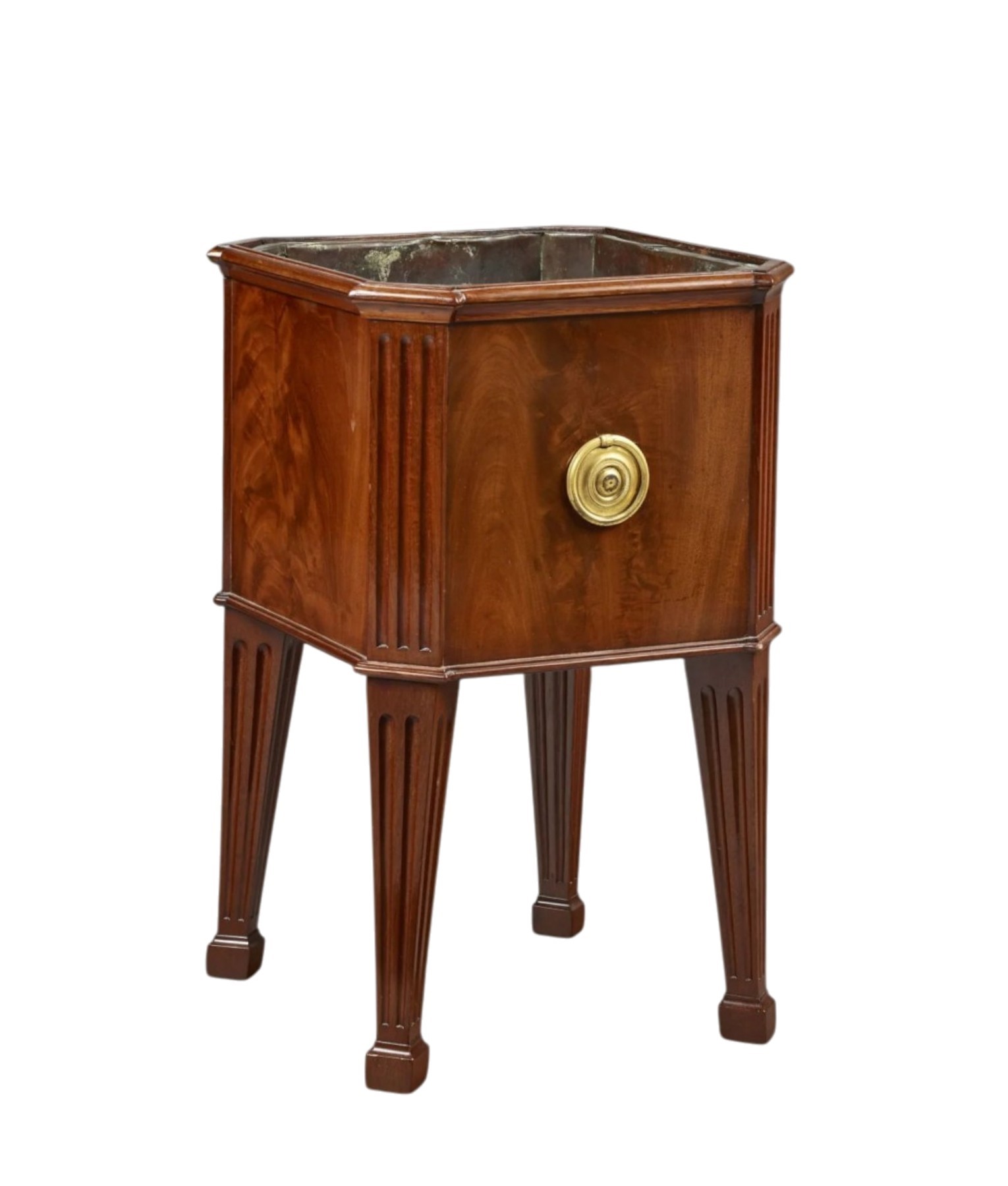
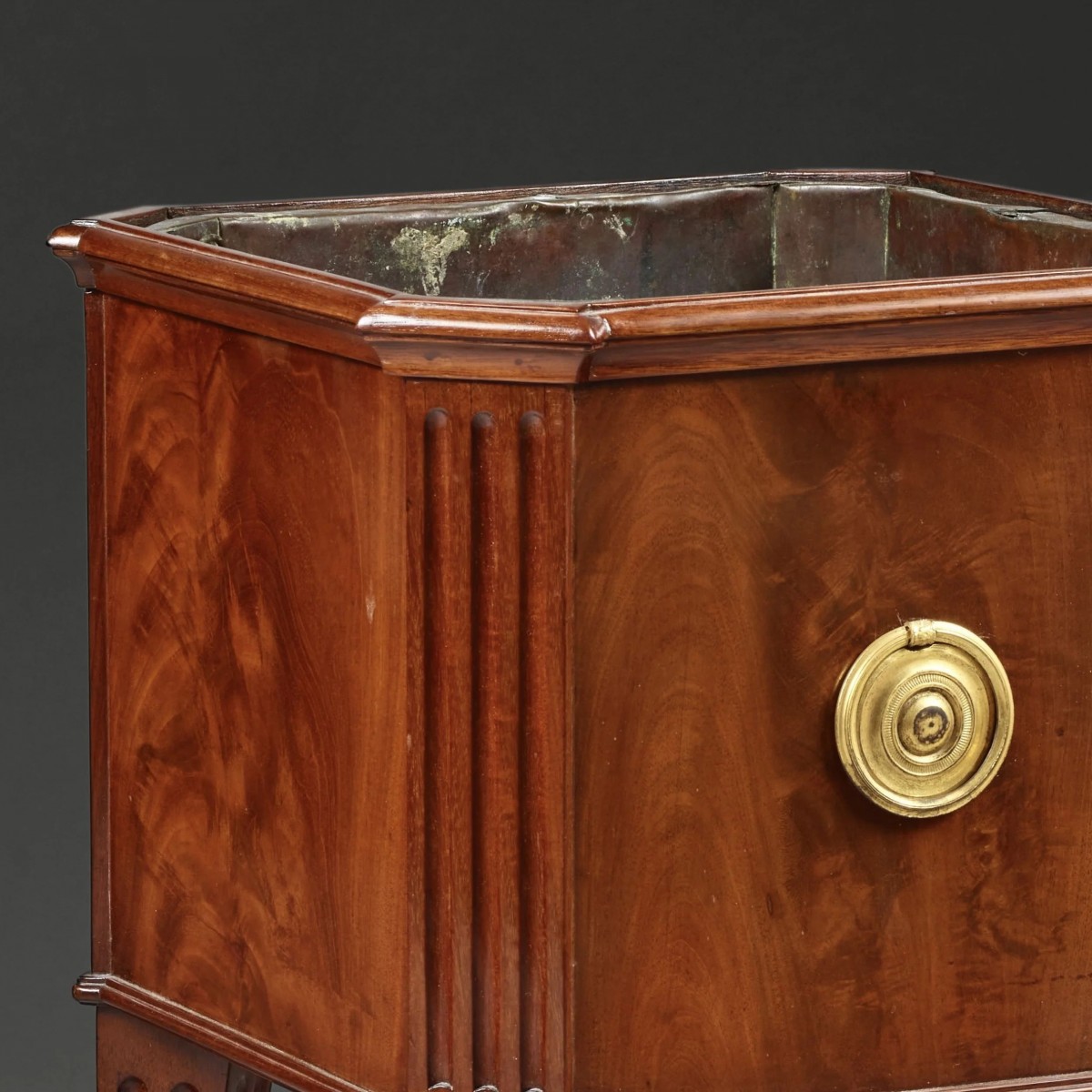
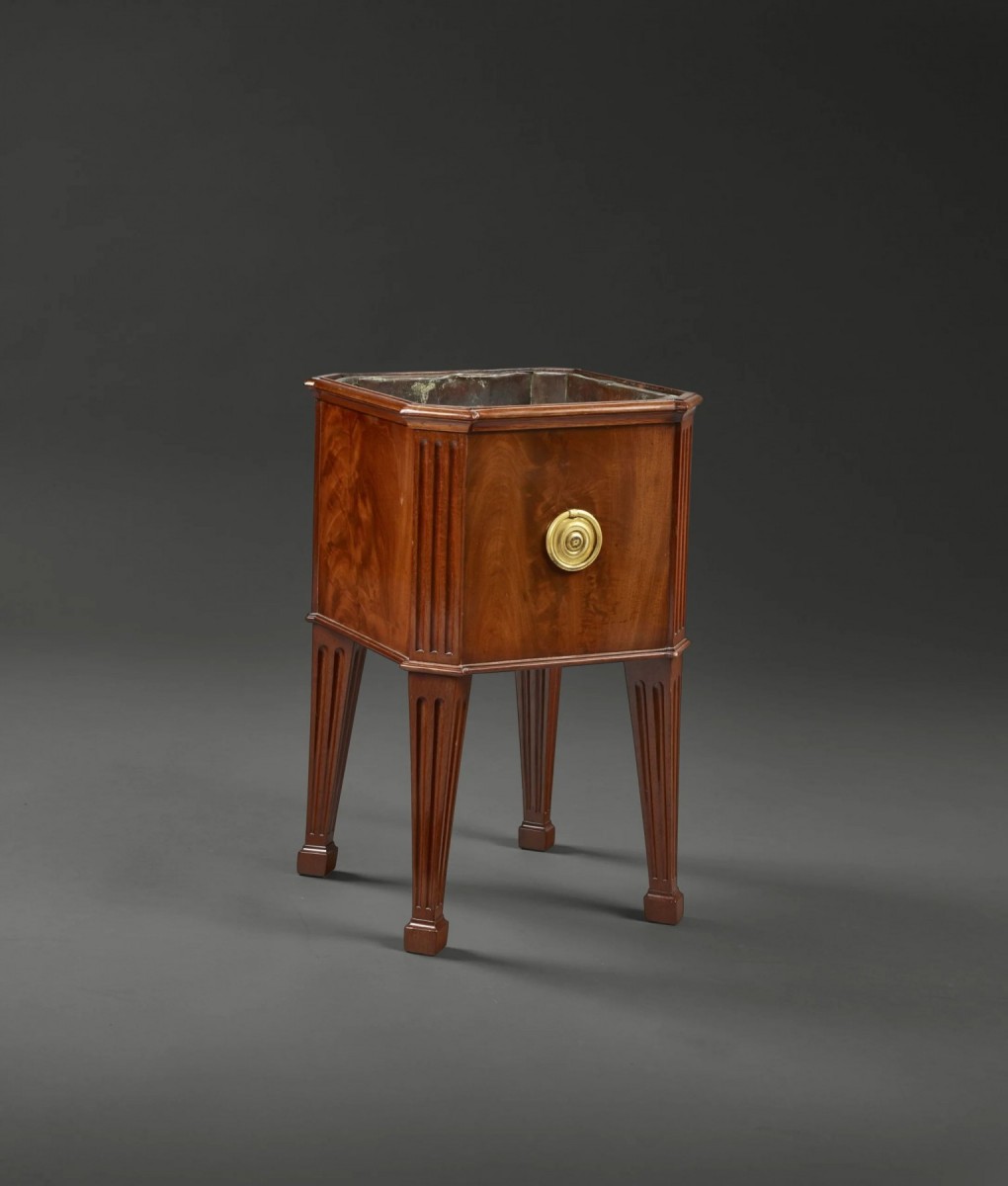
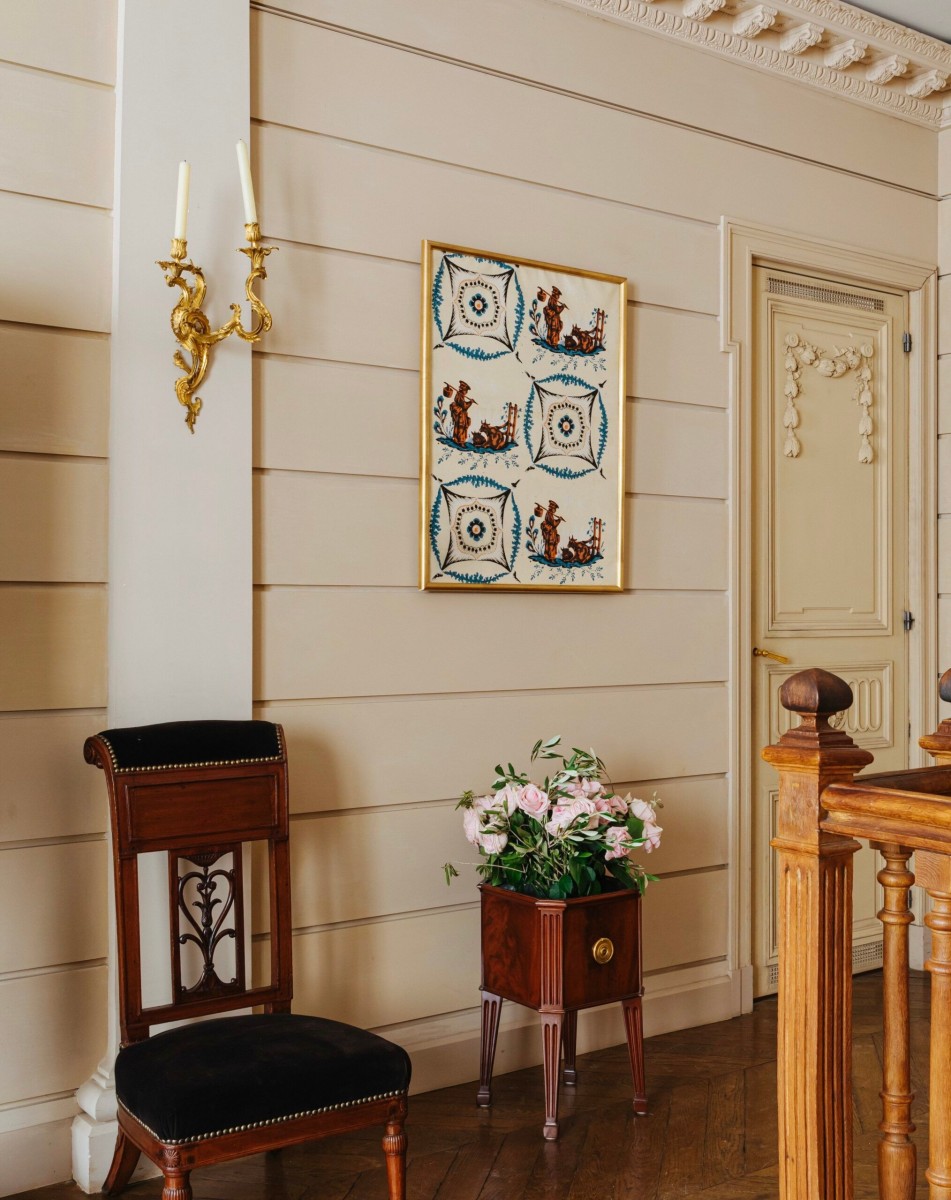
This planter on legs in mahogany burl with cut sides is of square octagonal shape. It rests on four obliquely fluted feet that end in hooves. Each corner of the planter is extended by a wide vertical strip, also fluted, typical of Canabas' work. The cornices at the top and bottom of the planter box have offsets at the wider sides. Two sides are decorated with rings and macaroons in gilded bronzes, forming the handles. The inside is lined with metal to accommodate the plants.
A Canabas Planter
This planter is representative of the work of Canabas, a cabinetmaker renowned for his small, utilitarian, practical, and often innovative pieces of furniture. It is crafted from solid mahogany, in this case burr mahogany, whose natural "water jet" grain creates a refined decorative effect.
Associated with the Louis XVI style, it is distinguished by its elegant simplicity: decoration limited to a few moldings, and an almost complete absence of bronze, highlighting the beauty of the wood. This decorative restraint is characteristic of Canabas's work.
Planters in the 18th Century
Appearing during the Renaissance with the rise of pleasure gardens, the planter accompanied the growing taste for flowers, prized for their aesthetic appeal, fragrance, and diversity, sometimes even sparking speculative phenomena such as tulip mania.
After a period of relative disinterest in the 17th century, it returned to vogue in the mid-18th century with the enthusiasm for nature, perceived as essential to balance. Floral arrangements became freer and more decorative, integrated into the interior space according to the architecture and furnishings.
Under Louis XVI, jardinières held fresh flowers and were often larger and freestanding, unlike those from the reign of Louis XV, which were smaller and frequently made of porcelain. Light and decorative pieces of furniture, they followed fashions, served as gifts, and adorned reception rooms. Canabas produced them in numerous shapes (round, oval, rectangular), often lined with metal trays and resting on fluted legs. They were integrated into furniture designed for practical use, particularly in contexts where servants were less present.
Joseph Gengenbach, known as Canabas (1712–1797)
Born in Germany, Canabas trained in Paris and became one of the great cabinetmakers of the 18th century, specializing in mahogany furniture. He initially worked for renowned masters such as Oeben and Migeon before becoming a master craftsman in 1766 and opening his own workshop in the Faubourg Saint-Antoine.
He developed a large clientele and collaborated with influential merchants. Inventories from his workshop attest to an abundant and varied production, dominated by solid mahogany furniture.
His success allowed him to weather the French Revolution without difficulty, and he continued his business until his death in 1797.
The Fashion for Mahogany in the 18th Century
An exotic wood imported from the Caribbean as part of the colonial trade, mahogany gradually became a staple in European furniture. First adopted in England, it was introduced to France by cabinetmakers in the ports, then by those at court.
Its spread accelerated, notably thanks to Madame de Pompadour, who commissioned it as early as 1753. Under Louis XVI, it became the quintessential noble material: bronze mounts were lightened to allow the wood and its natural grain to form the core of the decoration, as seen in this jardinière.
Bibliography
- Patrick George, L’essence du Bois, Paris, Éditions du Patrimoine, 2020.
- Robert Joffet, « Fruits, Fleurs et Jardins de France », Revue des deux Mondes, 1er avril 1953, pp. 446–458.
- Philippe Julian, Le Style Louis xvi, Paris, Éditions Baschet, 1983.
- Pierre Kjellberg, Le Mobilier Français du xviiie siècle, Paris, Éditions Massin, 1989.