Offered by Torres Nieto Fine Arts
REQUEST INFORMATION
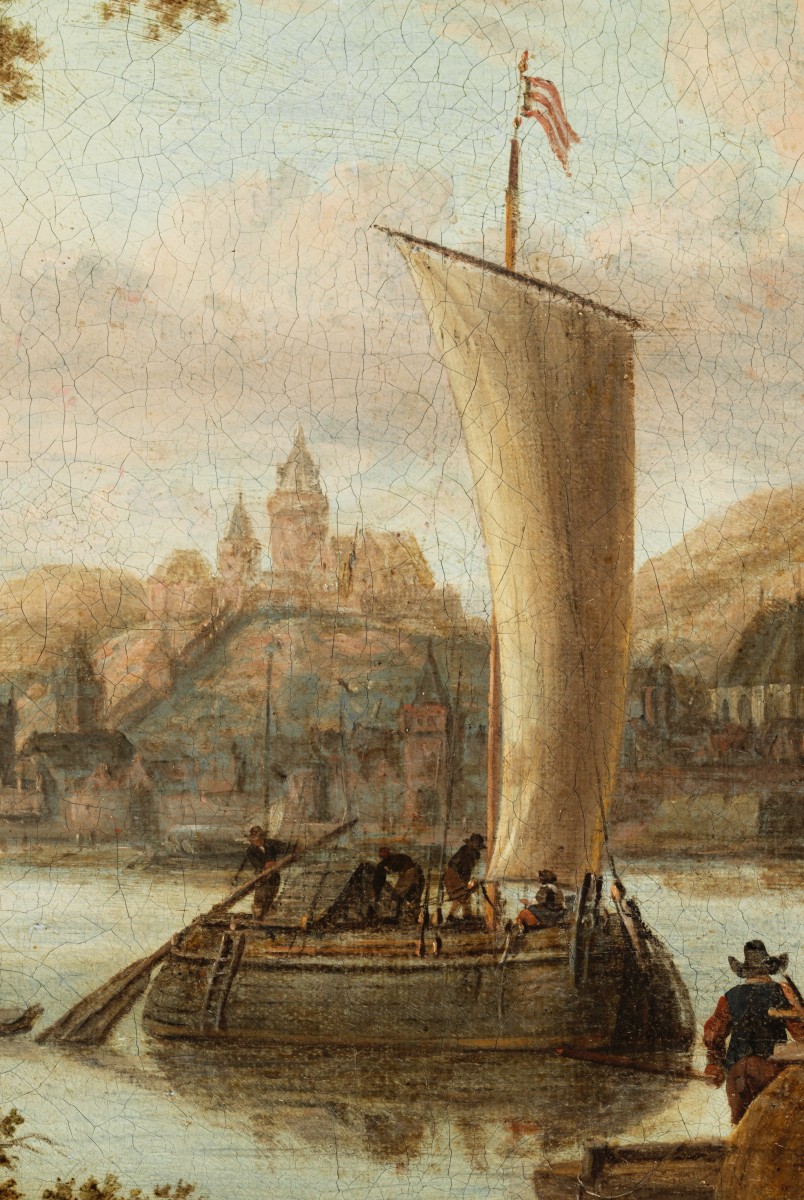
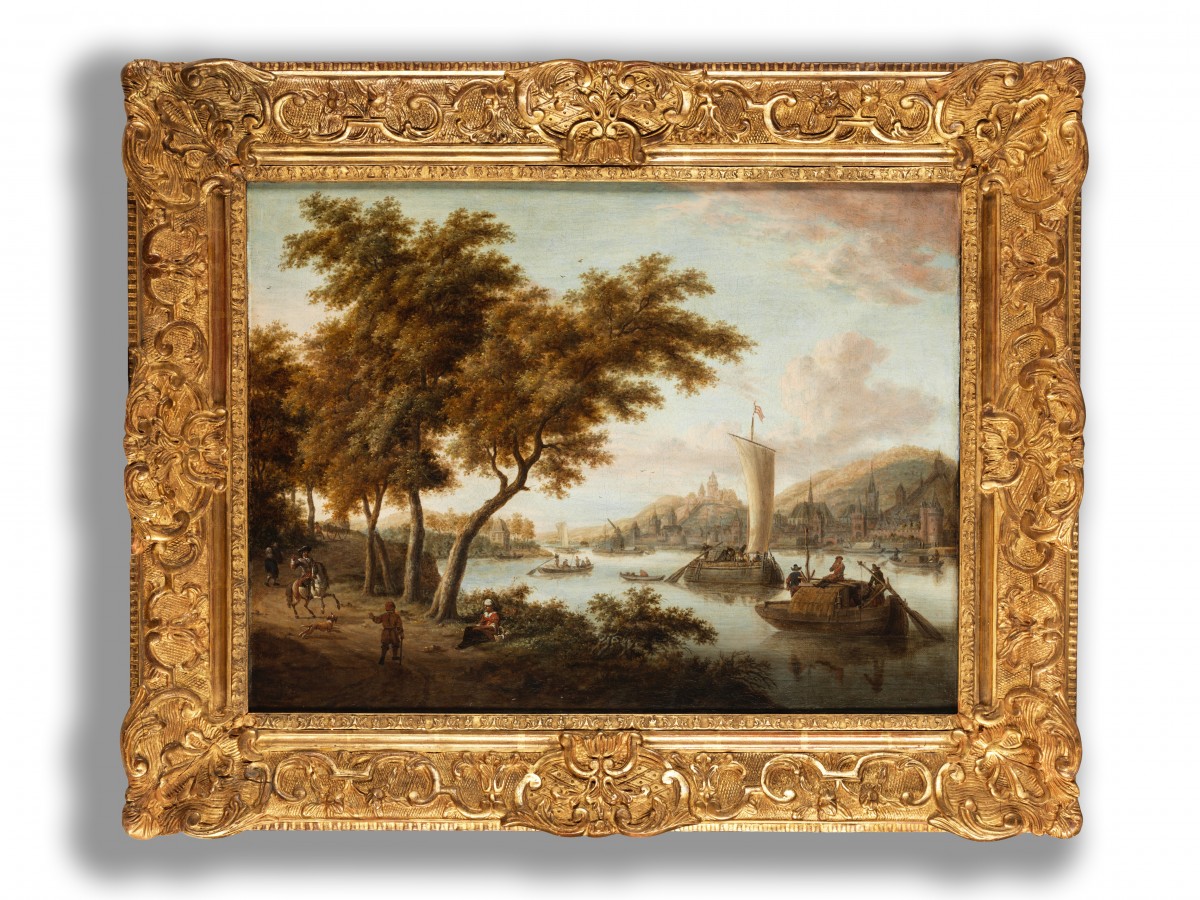

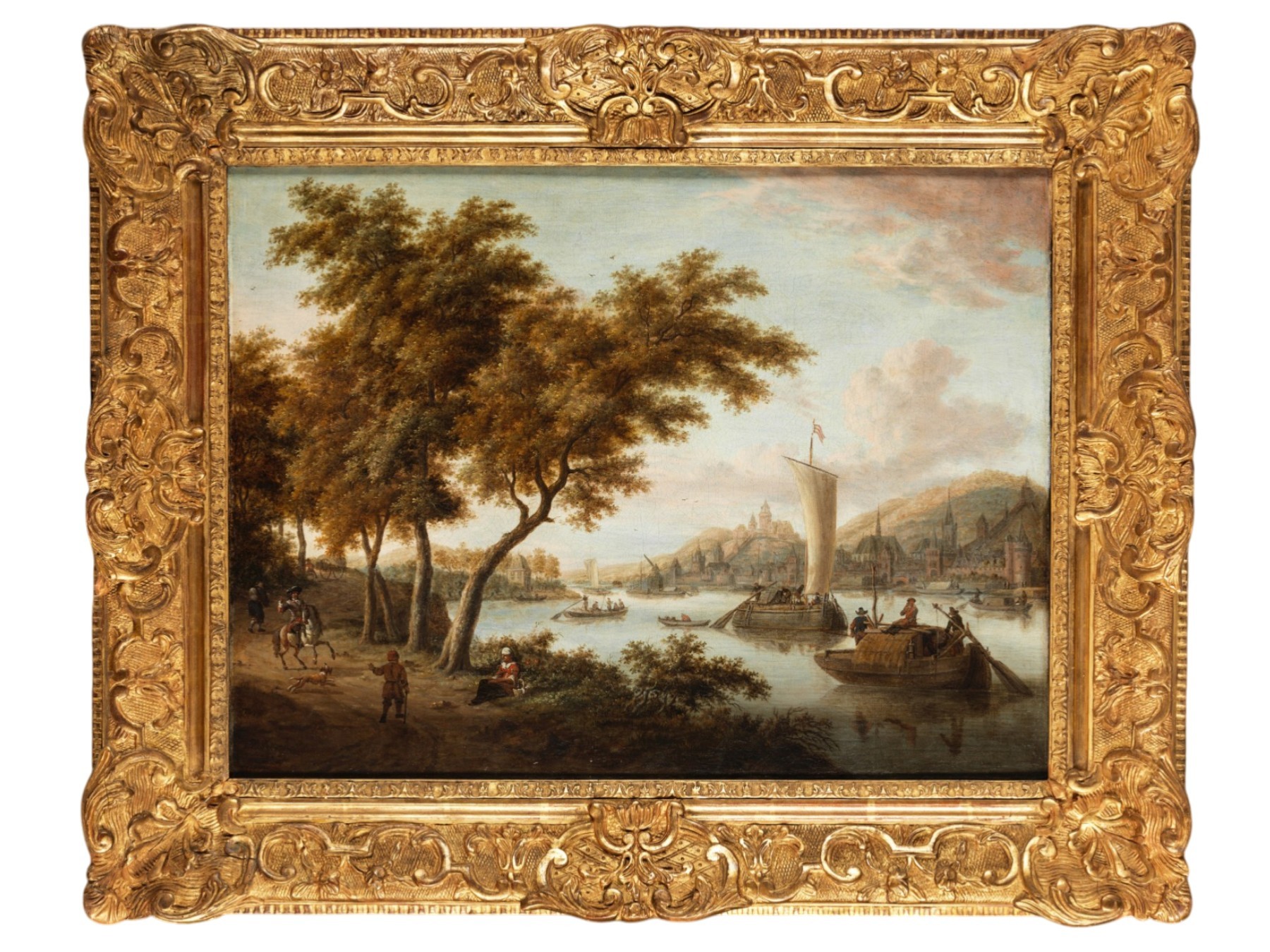
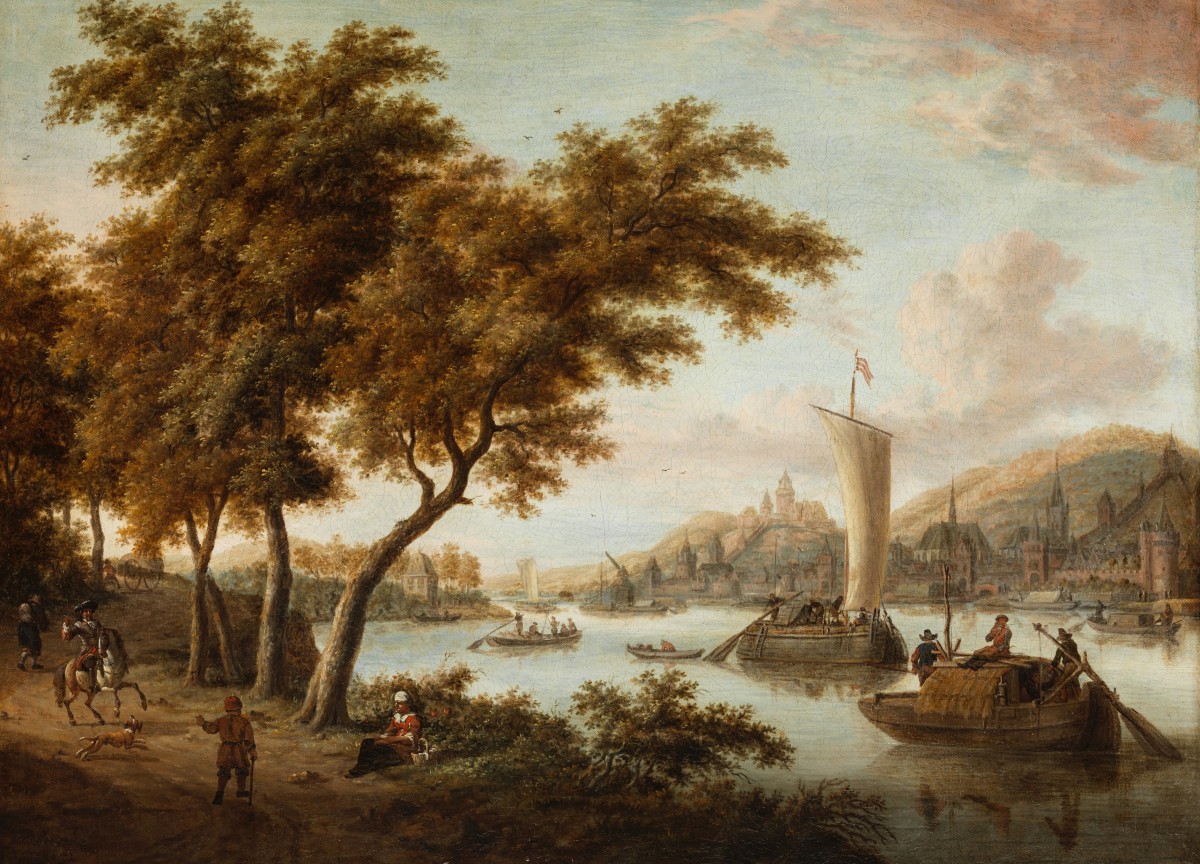
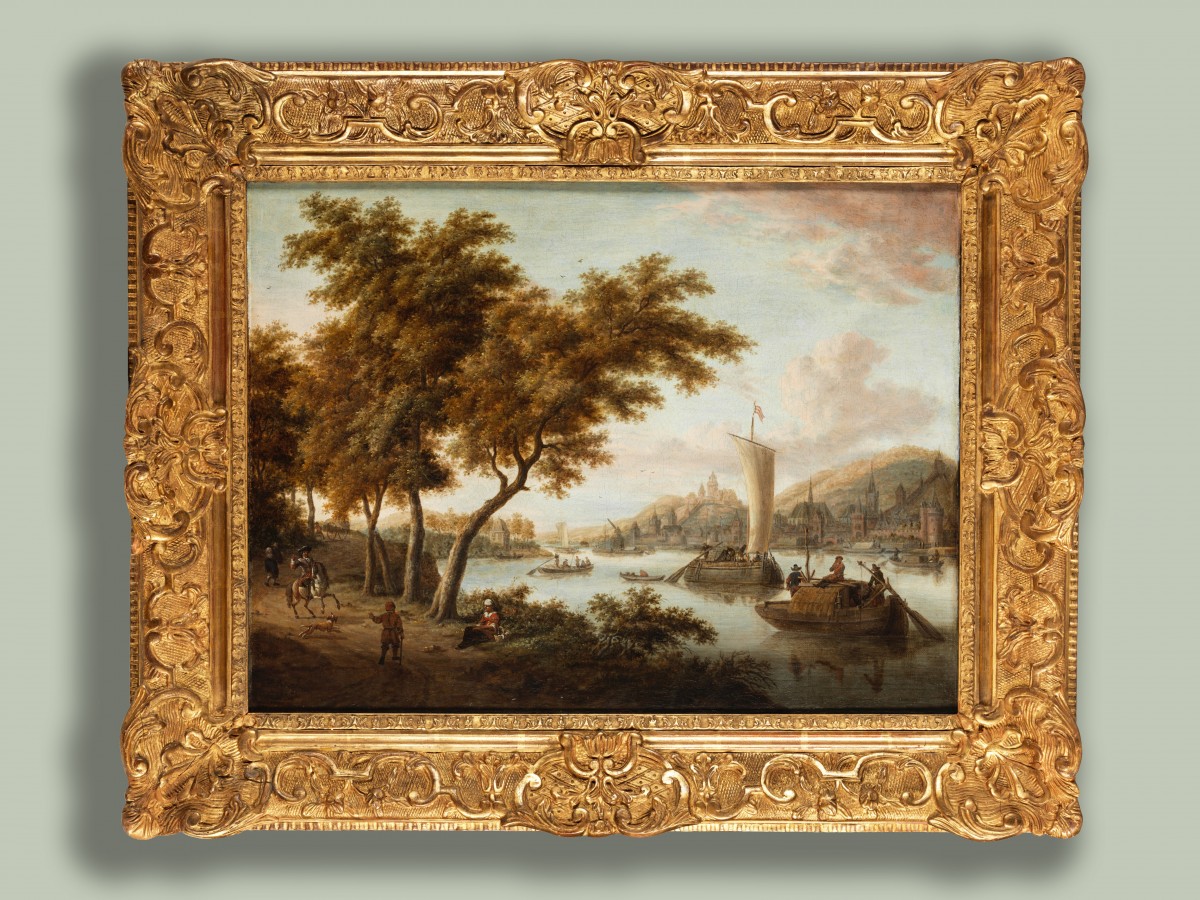
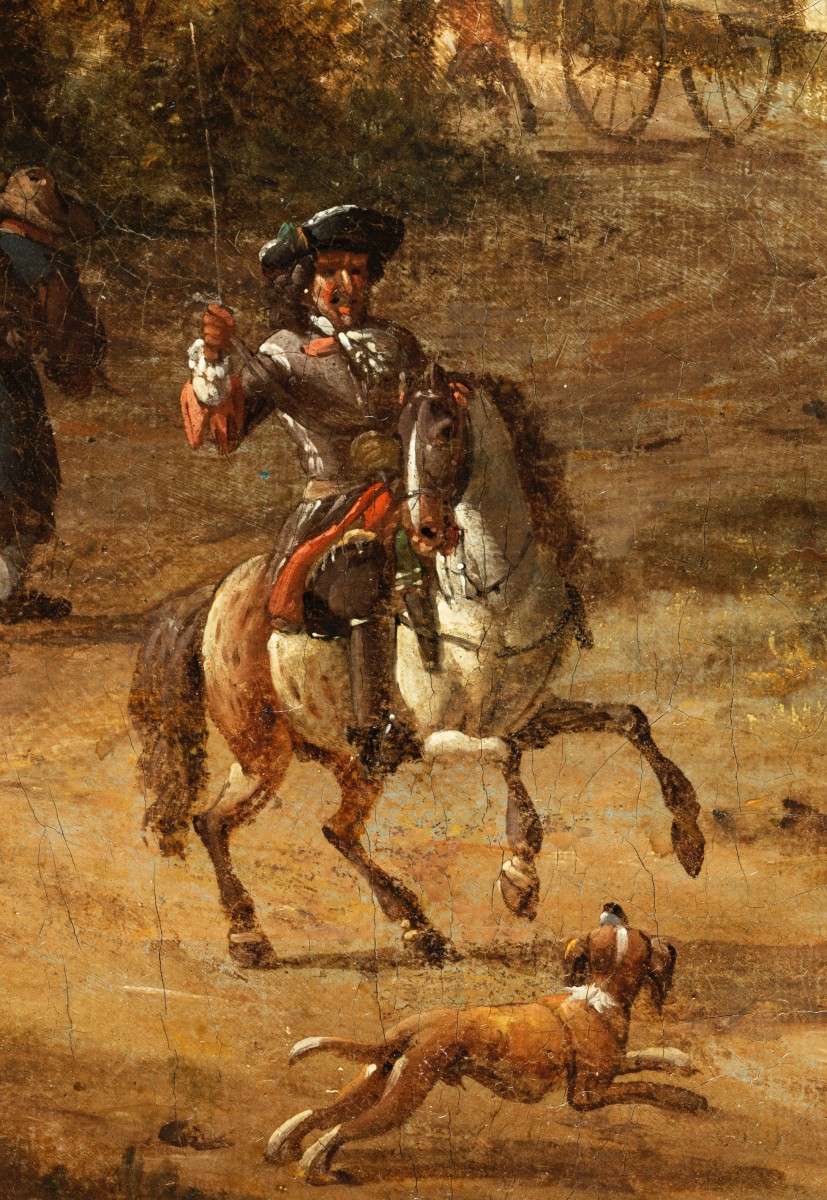
View of Bacharach from the North, 1685
47 × 64 cm (18.5 × 25.2 in).
Frame: 67 × 83 cm (26.37 × 32.67 in)
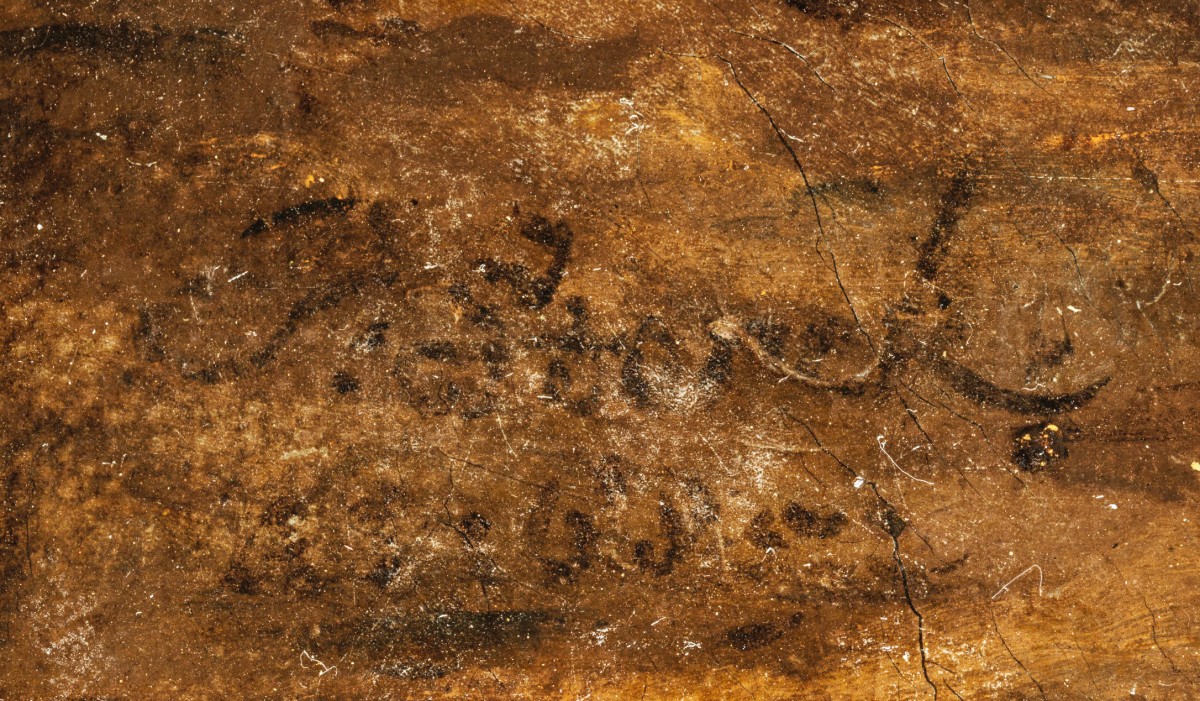
Signed and dated lower left: “J: Storck. 1685”.
We owe Fred Meijer for his confirmation and assistance with the provenance research (December 16, 2025).
Provenance:
Auction Hôtel des ventes, Evreux, December 9, 1990.
Jacobus Jansz. Storck, the elder brother of Abraham Storck, travelled along the Rhine in 1670, visiting cities such as Bonn, Mainz, Bingen, Worms, Speyer, and Aschaffenburg. Based on sketches he made during this journey — likely inspired by the region’s gently undulating landscape — he produced a series of accomplished town views.
Among Storck’s known depictions of the Rhine Valley, the painting presented stands out as a newly discovered and fully signed view of the town of Bacharach. Another view of Bacharach by Storck, dated 1693 and showing the medieval town from the south, is kept in the Statens Museum for Kunst in Copenhagen. At the time these paintings were executed, Bacharach remained under the rule of the Wittelsbach Counts Palatine, a status it retained until the dissolution of the Old Empire in the early nineteenth century, after which it passed into Prussian hands. Today, the town forms part of the federal state of Rhineland-Palatinate.
In the present painting, the artist adopts a viewpoint from the north-west bank of the Rhine, looking south over the island of Bacharacher Werth toward Bacharach. This island was also known as Heyles’en Werth, after the Heileß family, who owned it until the early eighteenth century. In the seventeenth century, a small building stood on the island, visible in Matthäus Merian’s engraving of 1645 and likely the dwelling where Gustavus Adolphus stayed when Swedish forces occupied Bacharach in 1632.
In the background of the composition, a floating crane can be seen on the Rhine, used for loading and unloading goods transported by ship — a reminder of Bacharach’s commercial significance. The present-day Hotel Kranenturm (Crane Tower) and Kranenstraße (Crane Street) still commemorate this structure. On the right-hand side of the painting rise the Werner Chapel — now in ruins — and the parish church of St Peter, whose distinctive tower is clearly recognizable. The distant skyline is crowned by Stahleck Castle, below which stands the Zollturm (Customs Tower) near the riverbank, while higher up the slope the Sonnenturm (Sun Tower) is also visible.
Besides its function as an idealised yet faithful representation of the Rhine’s scenic beauty, the painting articulates a broader play on the river’s cultural and economic significance. The rugged riverbank, planted with tall trees and shrubs, serves as a repoussoir, from which the river meanders in a gentle zigzag toward the horizon. The figures in the foreground, leisurely strolling along the bank evoke ideals of order, harmony, and the enjoyment of a landscape bathed in an almost Italianate, diffuse light. At the same time, the Rhine emerges as a powerful agent of exchange and connectivity — a lifeline for trade that enabled industry, prosperity, and territorial cohesion. In this synthesis of idyllic life and infrastructure, Storck presents the river not merely as a natural phenomenon, but as a formative force in the economic and social life of the early modern world.
Delevery information :
The prices indicated are prices ex works from the gallery.
Depending on the price of the item, its size, and the buyer's location, we are able to offer the best shipping solution, which will be invoiced separately by us or the shipping company and carried out under the buyer's responsibility.