Offered by Subert
REQUEST INFORMATION
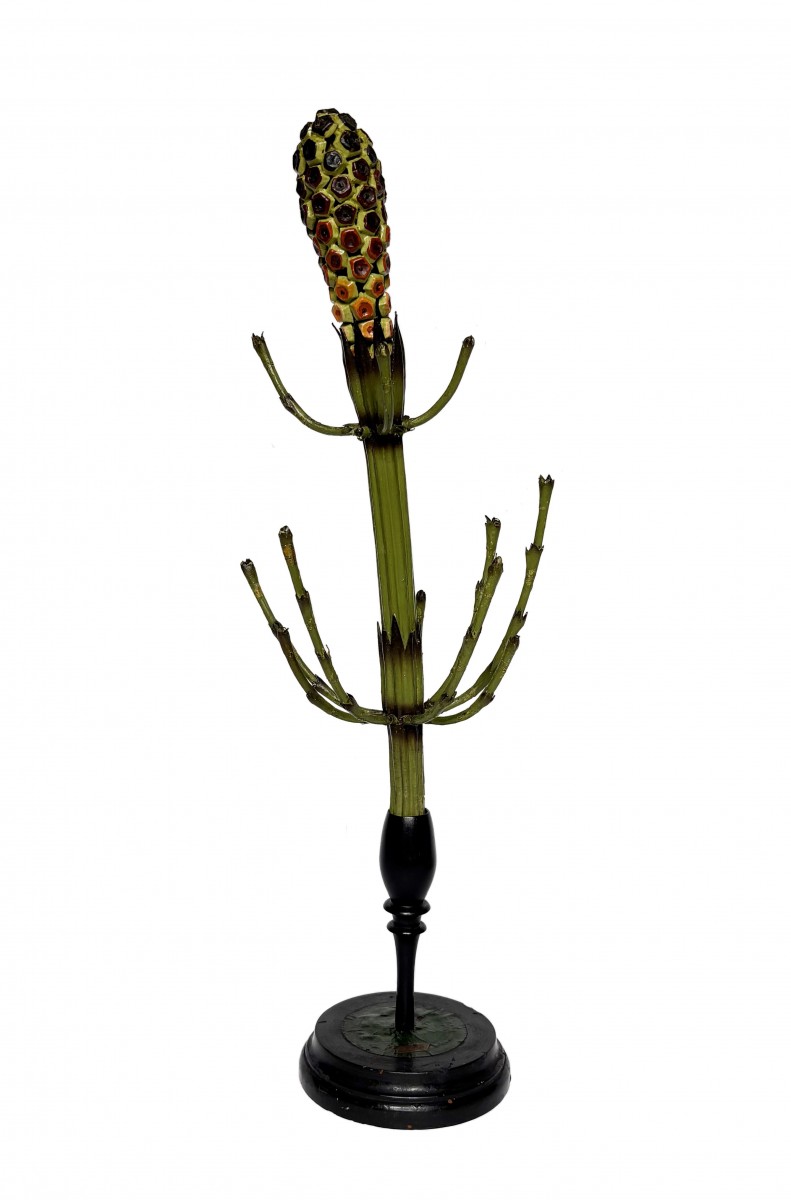

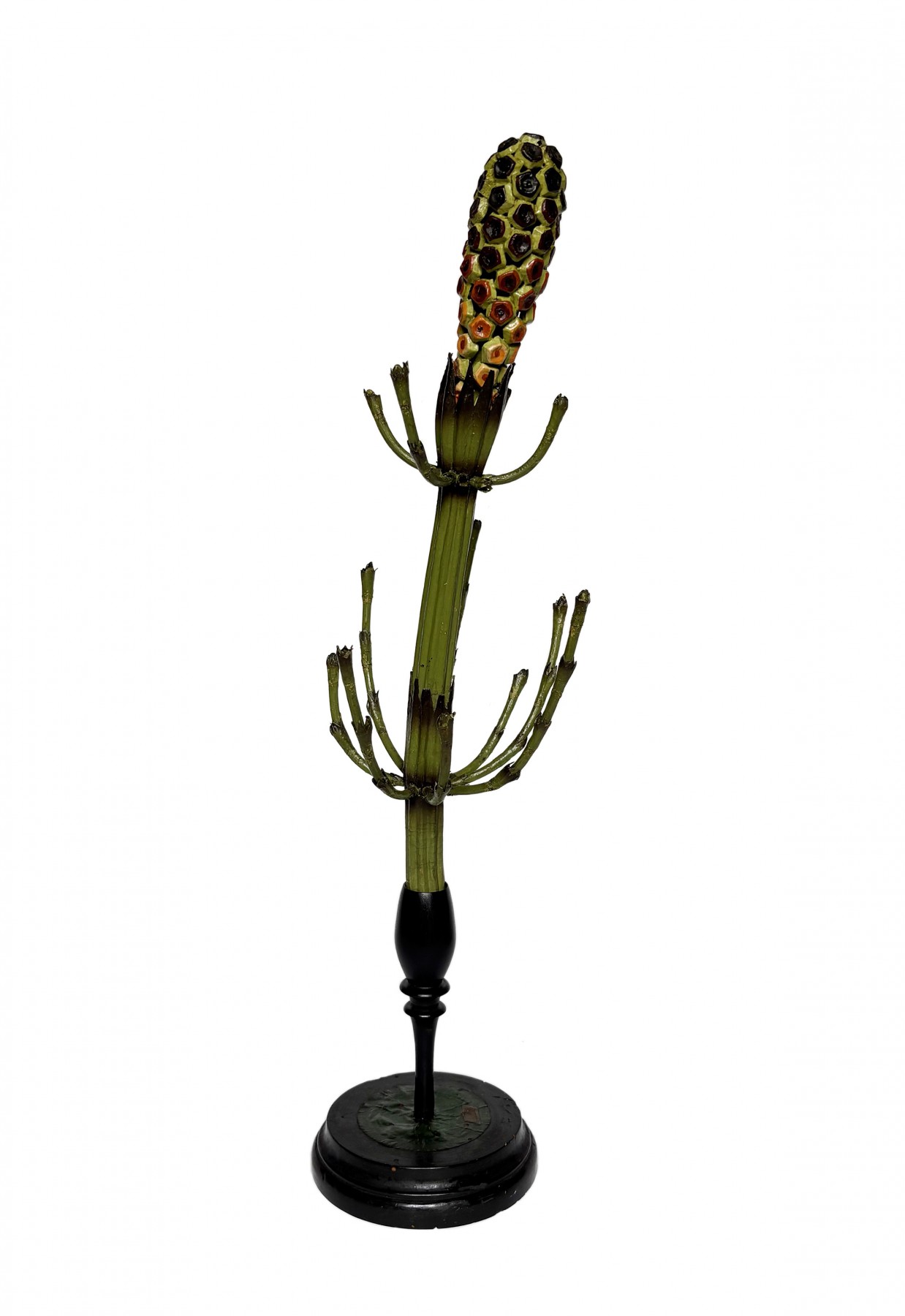
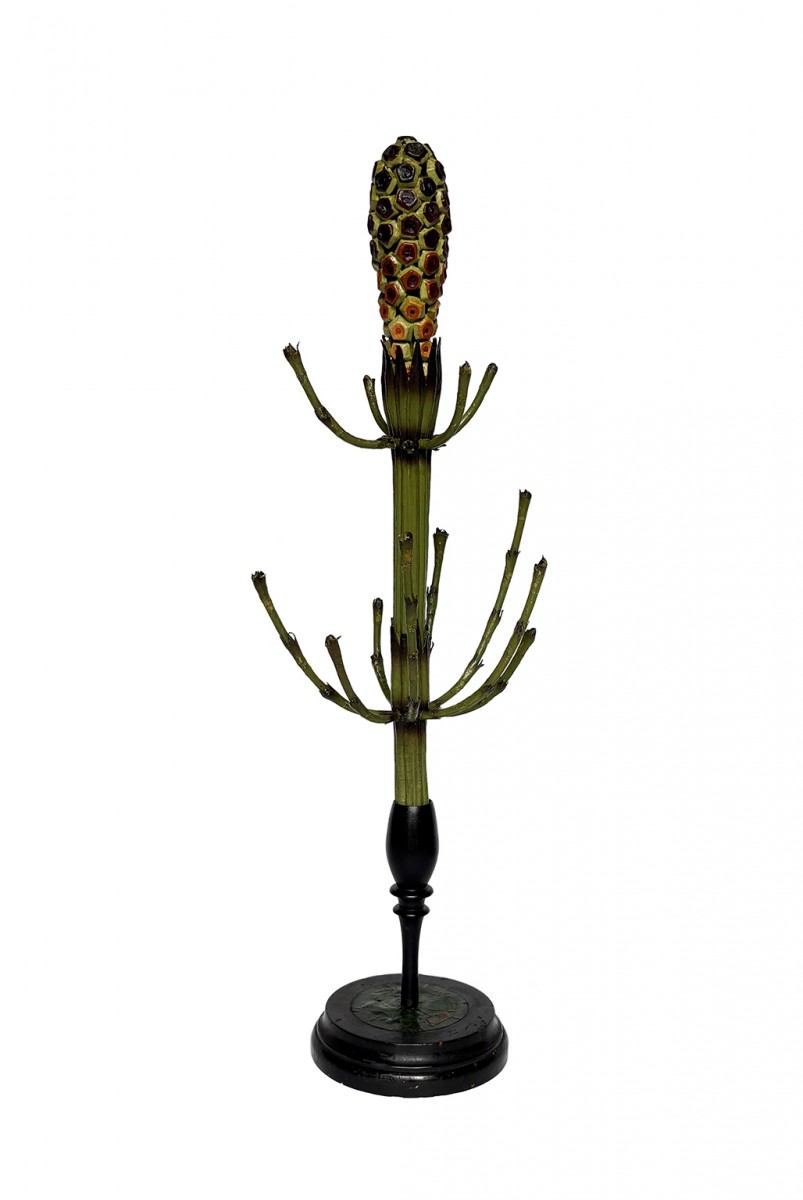
Botanical model Equissetum limosum L.
Robert Brendel
Breslau, circa 1880
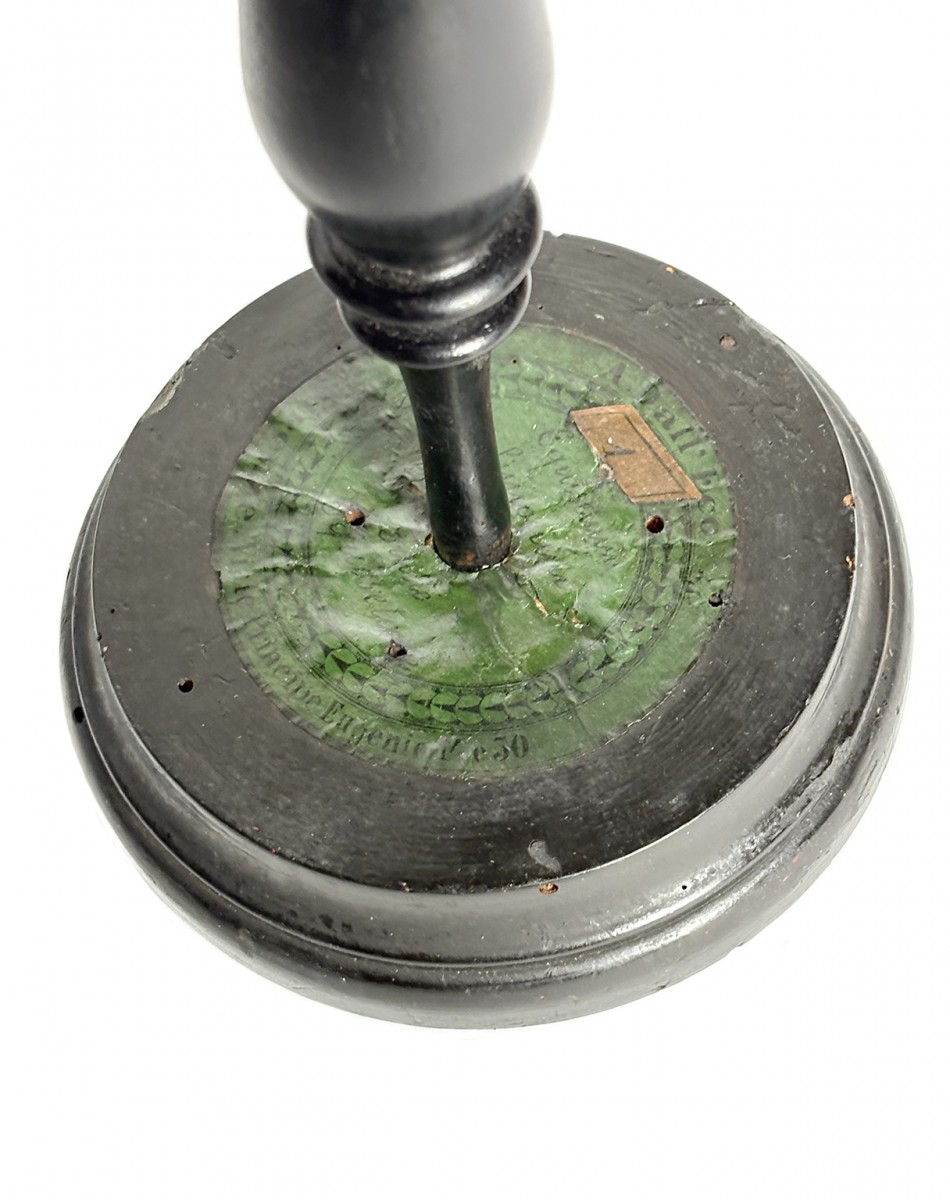
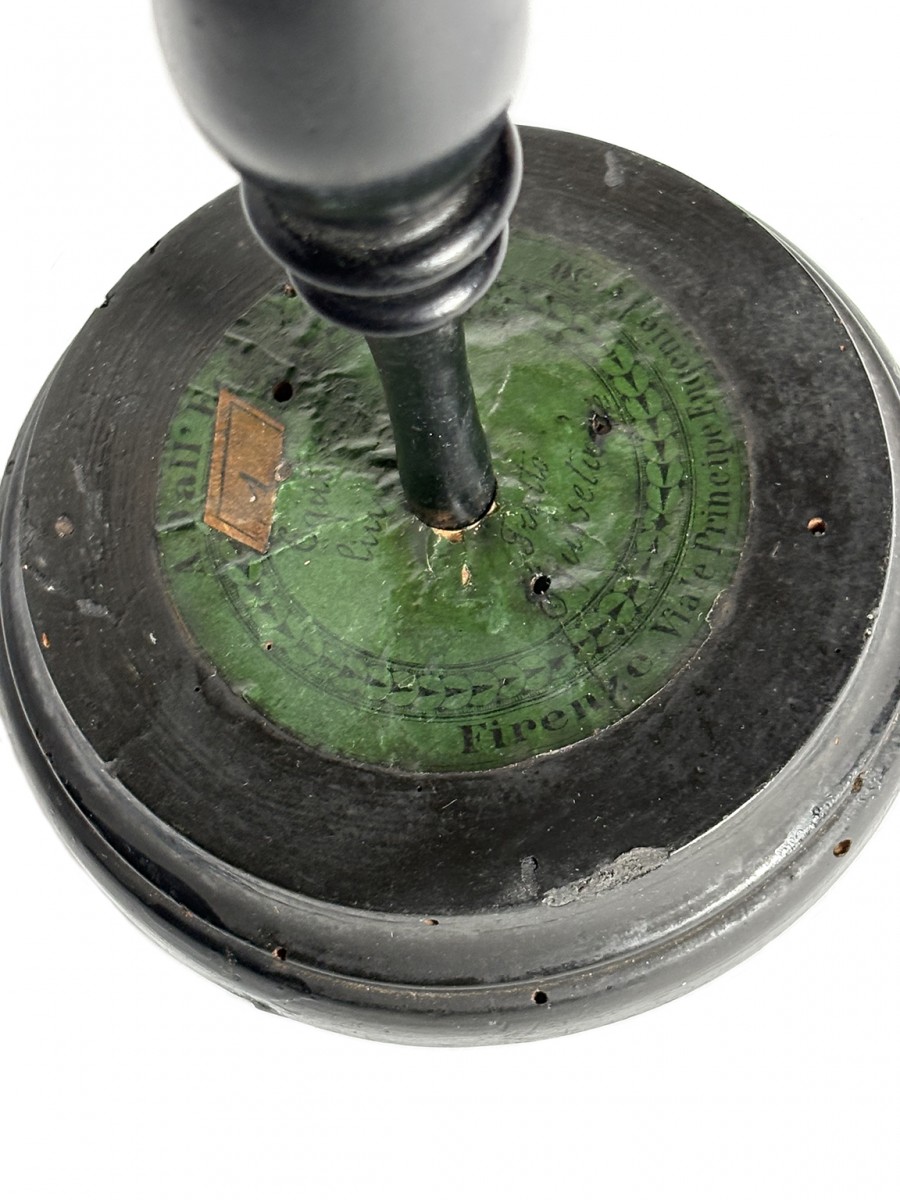
Label: printed A. Dall’Eco - Firenze. Viale Principe Eugenio 14 e 30; by hand Equissetum Limosum. Frutto Equiseta[c]e. On the same small label bearing the ink inscription No. 1
Hand-painted papier-mâché, plaster and wood
It measures: 19.09 in in height x 5.71 x 5.04 (48.5 cm x 14.5 x 12.8)
It weighs: 0.7 lb (311 g)
State of conservation: complete and in good condition, minor wear and tear. Original base from the same period.
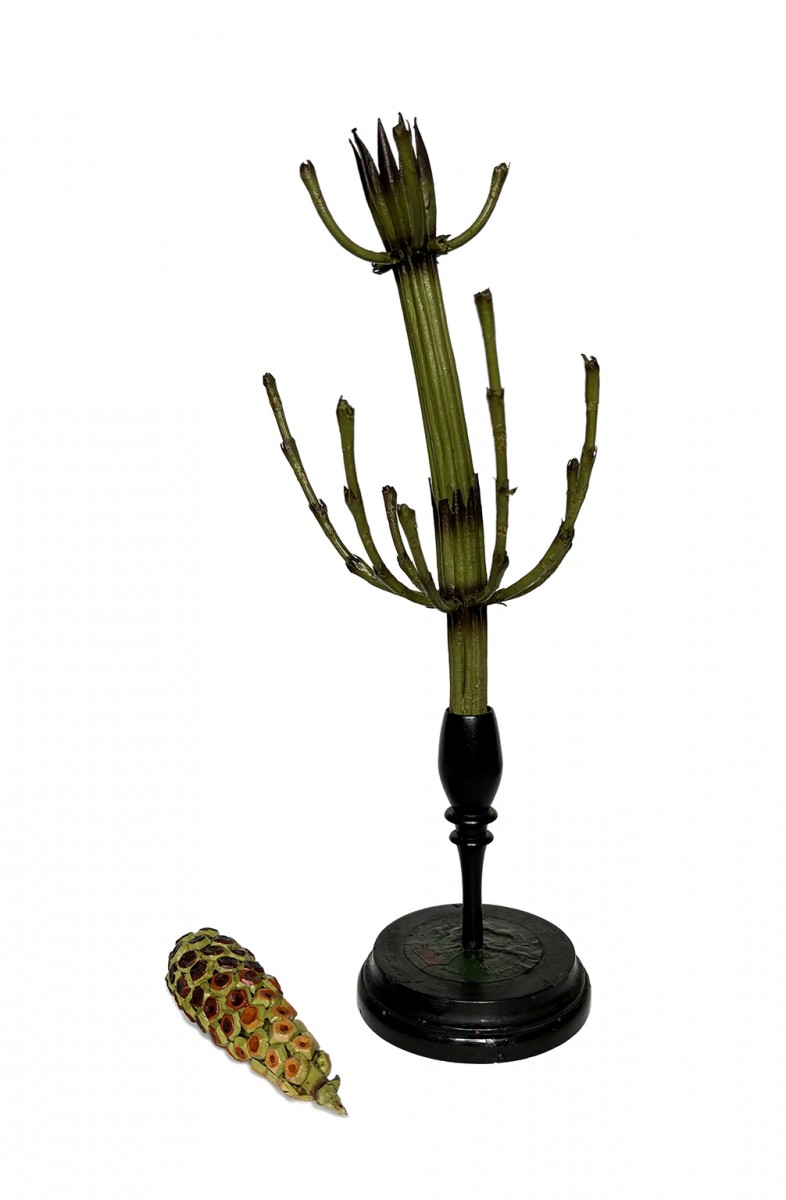
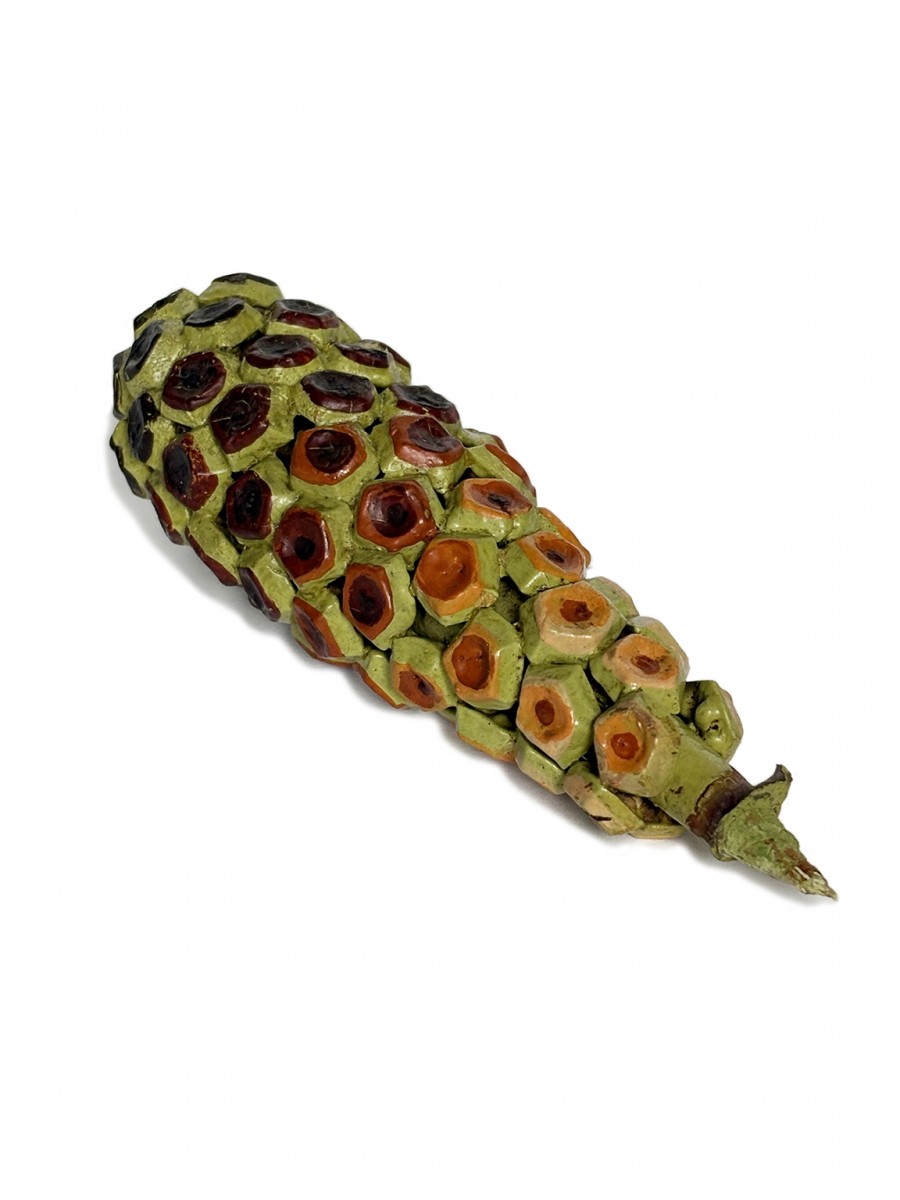
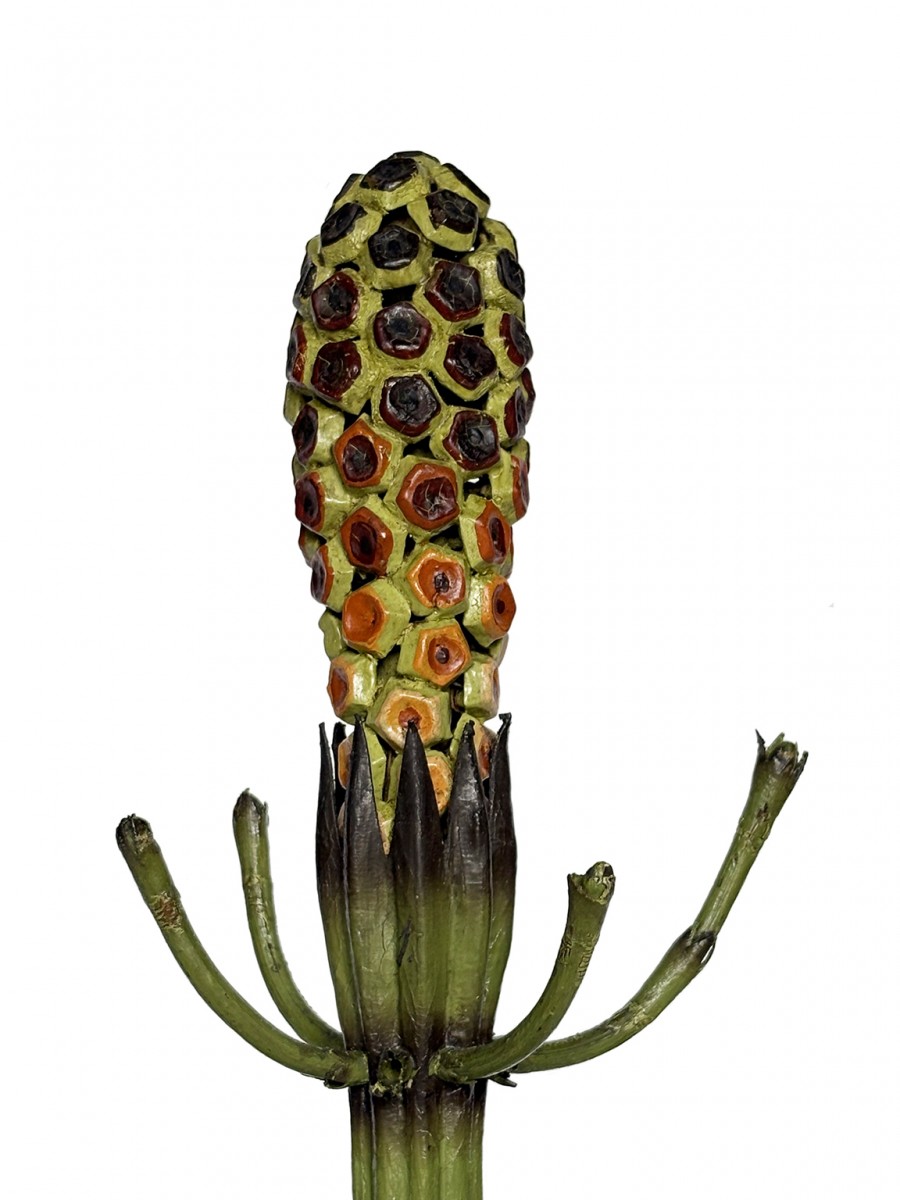
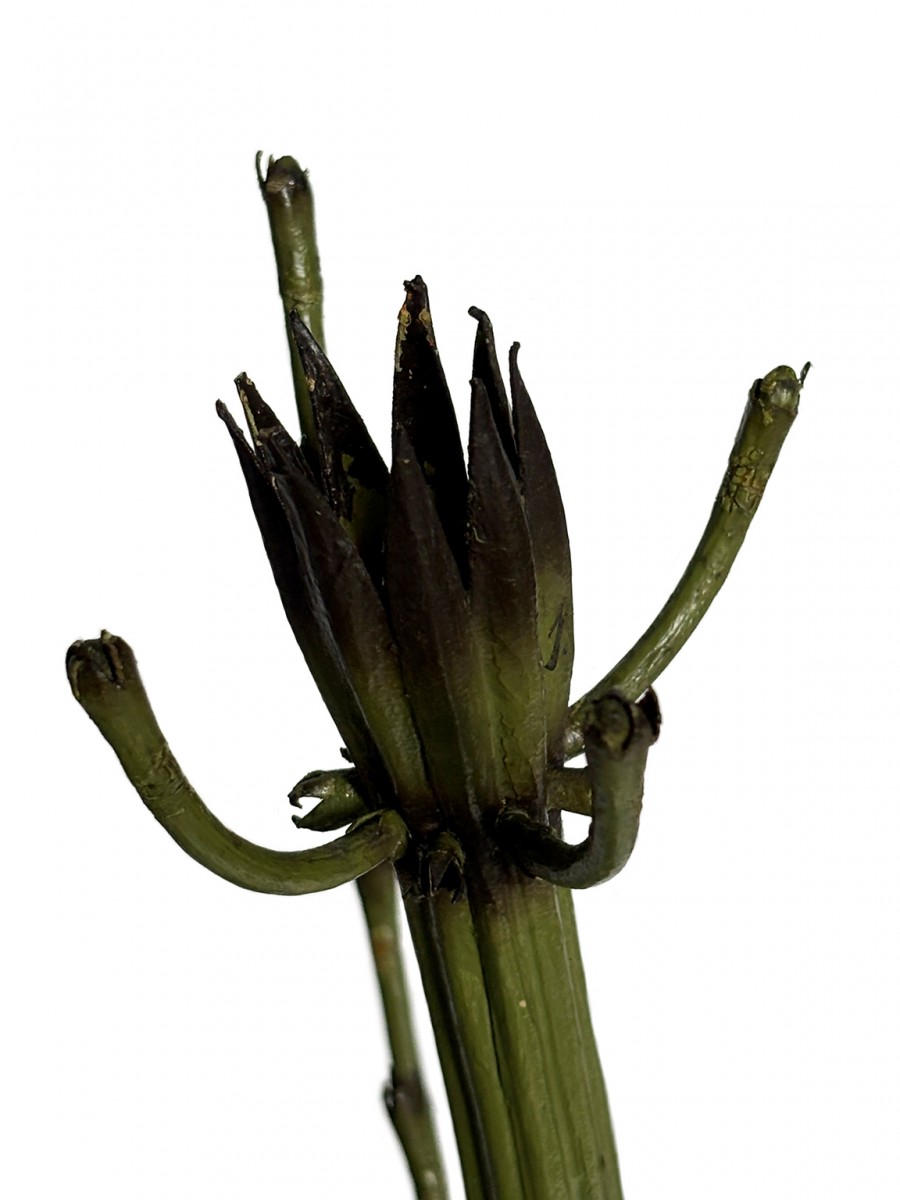
Created for educational purposes, this model depicts Equissetum limosum L., Horsetail, family Equisetaceae. The fruit on the top can be detached from the stem.
In this form, with a single flower and branches, the model is listed as number “1” in Brendel's original catalog from 1893. In the 1914 catalog, it has a different shape without branches and is identified as number 2.
The model shows comparisons with rare specimens preserved in museum collections, including that of Namur (P. Martin, La collection Brendel de l’université de Namur, Namur 2024, p. 15, fig. 8).
A comparison specimen, combined with other parts of the plant on the same base, is listed in the University collections of Bologna in 1880, where it is still preserved today (Università di Bologna, Erbario e Museo Botanico, identification code 9906005c).
The rediscovery and study of the Brendel models - beyond the well-documented museum and university collections - have fostered a discerning form of collecting, one fully aware of their significance in the history of science and of their undeniable historical and aesthetic value. This value is further enhanced by the uniqueness of each specimen, the result of the semi-artisanal nature of their production.
Brendel models were created from moulds that were subsequently assembled by model makers using a wide variety of materials: papier-mâché, wood, plaster, gelatin, and others. They were particularly notable for their considerable size and for the innovative feature of being designed to be taken apart and reassembled. The highly diversified production reached approximately two hundred models, distributed through a dense network of retailers, sometimes identifiable by their labels superimposed on the originals. The catalogues of these models, issued in various editions, differed according to the educational levels for which they were intended and described the works in meticulous detail, occasionally accompanied by photographic illustrations (A. Maurizzi, La collezione Brendel di modelli di fiori ed altri organi vegetali dell’Università di Bologna, in MUSEOLOGIA SCIENTIFICA nuova serie, 4(1-2): 105-110, 2010, p. 108).
Among the retailers mentioned by scholars are: Giorgio Santarelli and Alberto Dall'Eco (the latter was a retailer of scientific instruments and materials, documented between the late 19th and early 20th centuries) in Florence, Italy; Václav Fri? in Prague (then Austria-Hungary). In the United States, James W. Queen and Company operated in Philadelphia.
During the “Age of Enlightenment,” the traditional collecting practices typical of natural history cabinets gave way to new forms of display for objects and specimens, increasingly guided by a taxonomic and scientific vision. This evolution led to the creation of museums which, between the late nineteenth and the early twentieth centuries, became ideal venues for showcasing the discoveries emerging from rapidly expanding scientific, technological, and cultural activity, further encouraged by the success of the great World’s Fairs.
The invention of the camera and of photomicrography made it possible to disseminate unprecedented scientific images, generating a growing demand for educational models. Thus, the traditional eighteenth-century wax production gave way to the use of new materials, more varied and better suited to the needs of “enlarged images.” These new-generation models, intended for schools and universities, were semi-industrially produced, scientifically accurate, affordable, and sufficiently durable to withstand use by successive generations of students.
Among the major manufacturing firms - most of which were based in France and Germany - the Brendel company stands out. It was founded in 1866 by Robert Brendel in Breslau, now in Poland. For his production, Brendel relied on the scientific advice of the local pharmacist Dr. Carl Leopold Lohmeyer and of the botanist Professor Ferdinand Cohn, director of the Agricultural Station of Breslau. The latter was likely responsible for extending production from medicinal plants to all botanical species (P. Martin, La collection Brendel de l’université de Namur, Namur 2024, p. 12).
Upon the founder’s death in 1898, the company- already the recipient of gold medals at the Moscow (1872), Cologne (1890), and Chicago World’s Fair (1893) exhibitions - offered an extensive range of models spanning zoology, anthropology, crystallography, and mineralogy. His son, Reinhold Brendel, took over the business and transferred production to Grünewald, near Berlin. The firm’s reputation and entrepreneurial skill earned it further accolades at the Universal Expositions of Paris (1900), Santiago de Chile (1902), St. Louis (1904), Brussels, and Buenos Aires (1910).
After Reinhold’s death in 1927, records of the company’s activities become sporadic, probably due to the events of the war. Nevertheless, during the 1930s, production of Brendel models was reported in Göttingen, carried out by the PhyWe company.
Bibliography:
P. Martin, La collection Brendel de l’université de Namur, Namur 2024
G. Fiorini, L. Maekawa & P. Stiberc, La "Collezione Brendel" di Modelli di Fiori ed Altri Organi Vegetali del Dipartimento di Biologia Vegetale dell'Università degli Studi di Firenze. Museologia Scientifica, 22(2): 249-273 (2005).
G. Fiorini, L. Maekawa & P. Stiberc, Save the Plants: Conservation of Brendel Anatomical Botany Models, The Book and Paper Group Annual 27 (2008)
A. Maurizzi, La collezione Brendel di modelli di fiori ed altri organi vegetali dell’Università di Bologna, in “Museologia Scientifica” nuova serie, 4(1-2): 105-110, 2010
Delevery information :
to be agreed with the customer depending on the object and the place of destination