Offered by Poncelin de Raucourt Fine Arts
REQUEST INFORMATION

Paintings and drawings, from 16th to 19th century
Circle of Adolph von Menzel (Breslau, 1815 - 1905, Berlin)
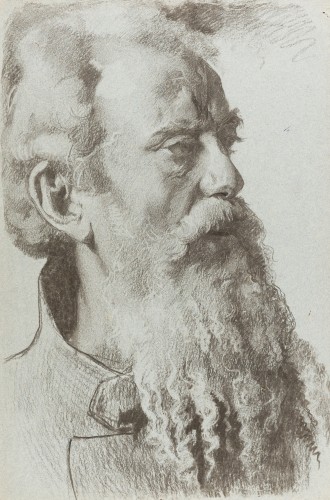
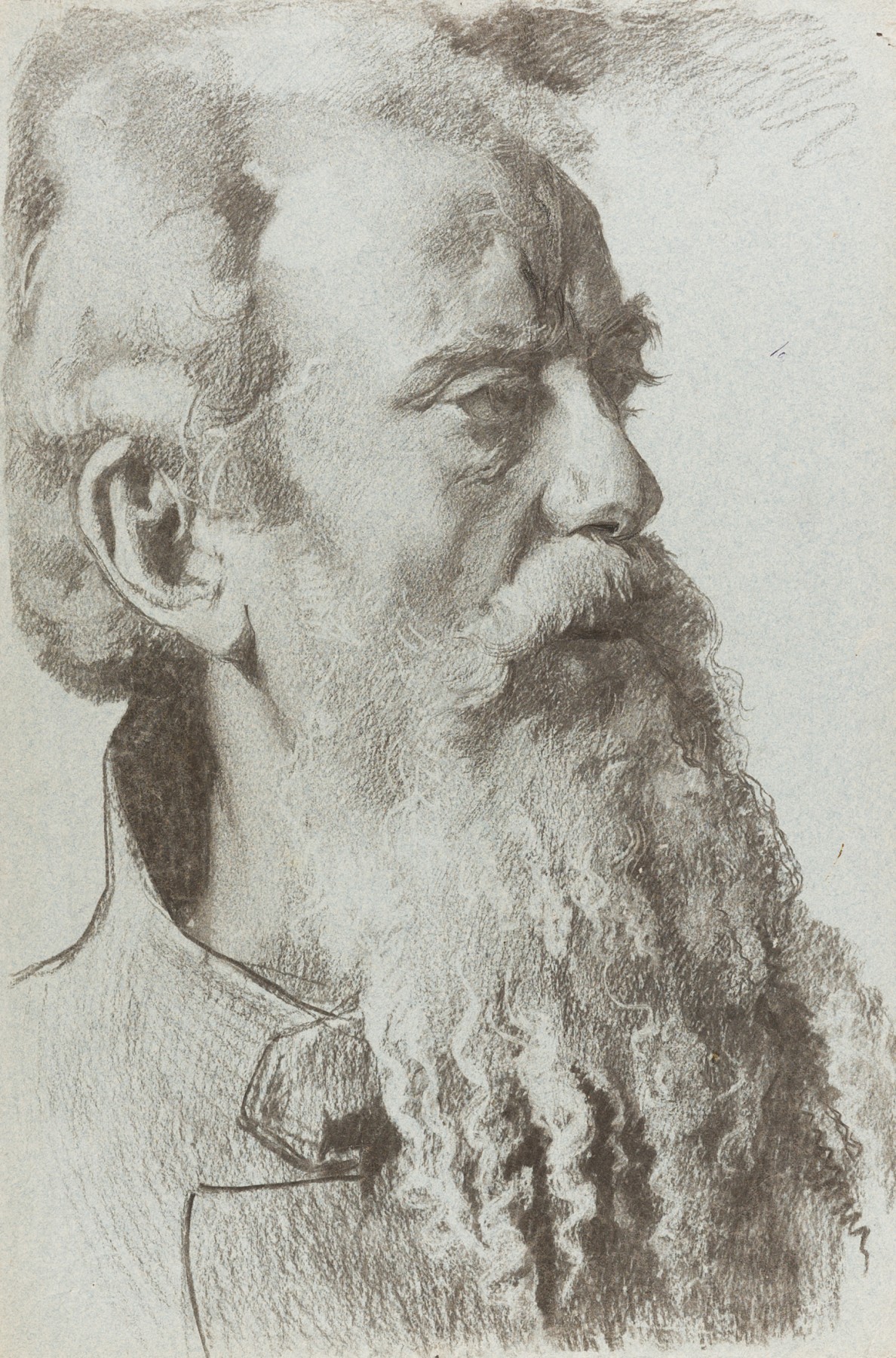
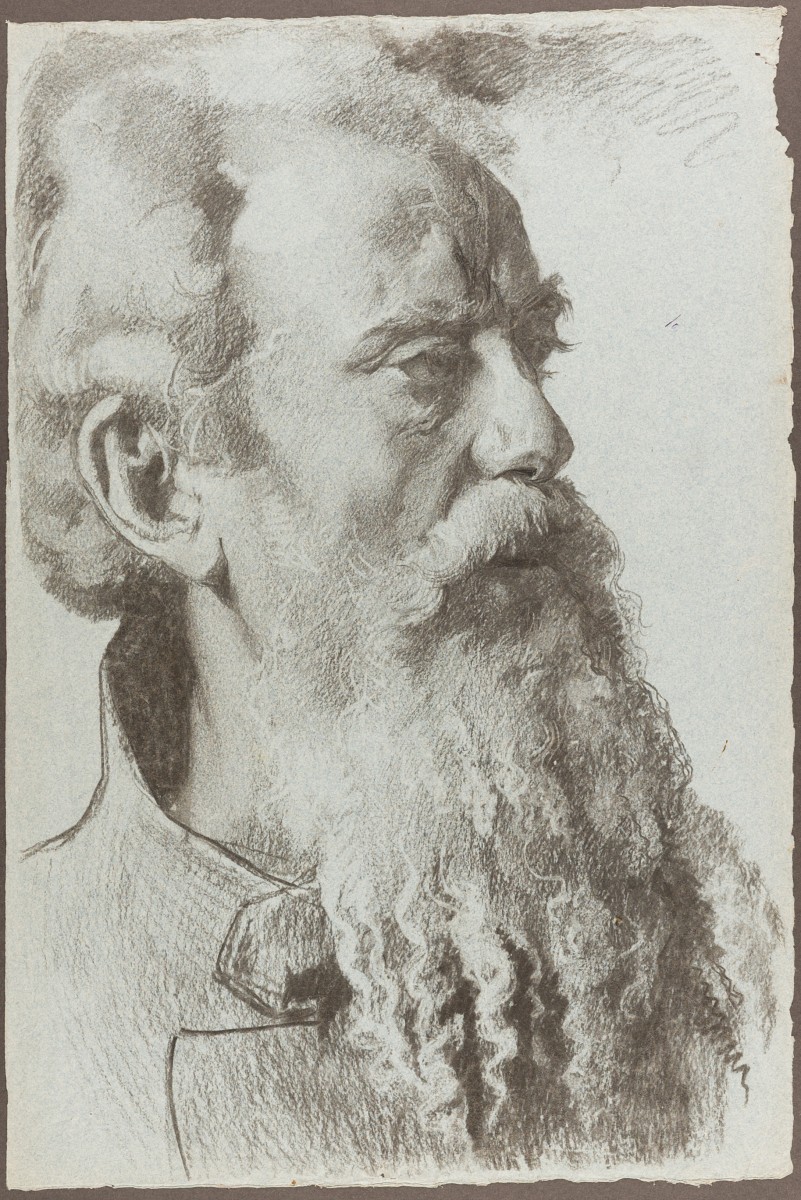
Head of a Bearded Man in Profile, Wearing an Officer’s Coat
Black chalk and white heightening on prepared blue paper
45 × 30.5 cm
Provenance:
Private collection
This remarkable drawing, executed in black chalk with white heightening on prepared blue paper, fully belongs to the tradition of late 19th-century German Realism, in the artistic lineage of Adolph von Menzel (1815–1905), one of the undisputed masters of draftsmanship in Imperial Germany.
Though unsigned, the sheet demonstrates strong technical command and a sensitivity reminiscent of the rigorous training imparted within the circles of students surrounding Ludwig von Herterich, as well as the Leibl-Kreis, the group shaped by the influence of Wilhelm Leibl, a fervent advocate of direct observation from nature.
The profile portrait conveys a sense of quiet strength. The modeling, particularly evident in the abundant beard and the deeply marked facial features, reveals a precise and demanding eye, intent on capturing the sitter’s truth rather than idealizing his traits. The rendering of textures—the roughness of the beard, the density of the hair, the weight of the coat—attests to a refined technical virtuosity placed at the service of striking realism. The restrained white highlights structure the illuminated planes and enhance the sculptural presence of the head.
The choice of blue paper is far from incidental: it enables a subtle interplay between shadow and light, reinforcing the sense of volume and aligning the work with an academic tradition that Menzel himself brought to an exceptional level of refinement.
At the crossroads of naturalism and a certain bourgeois idealism characteristic of Wilhelmine culture, this portrait evokes both the concerns of historical painting and the intimacy of a study from life. It may well represent an ambitious studio exercise, in which the student sought to rival the descriptive rigor and psychological intensity of his master.
The sheet immerses us in the atmosphere of the great academies of Munich or Berlin, where drawing was still regarded as the absolute foundation of any serious pictorial practice.