Offered by Antiquités Philippe Glédel

18th Furniture, country french furniture
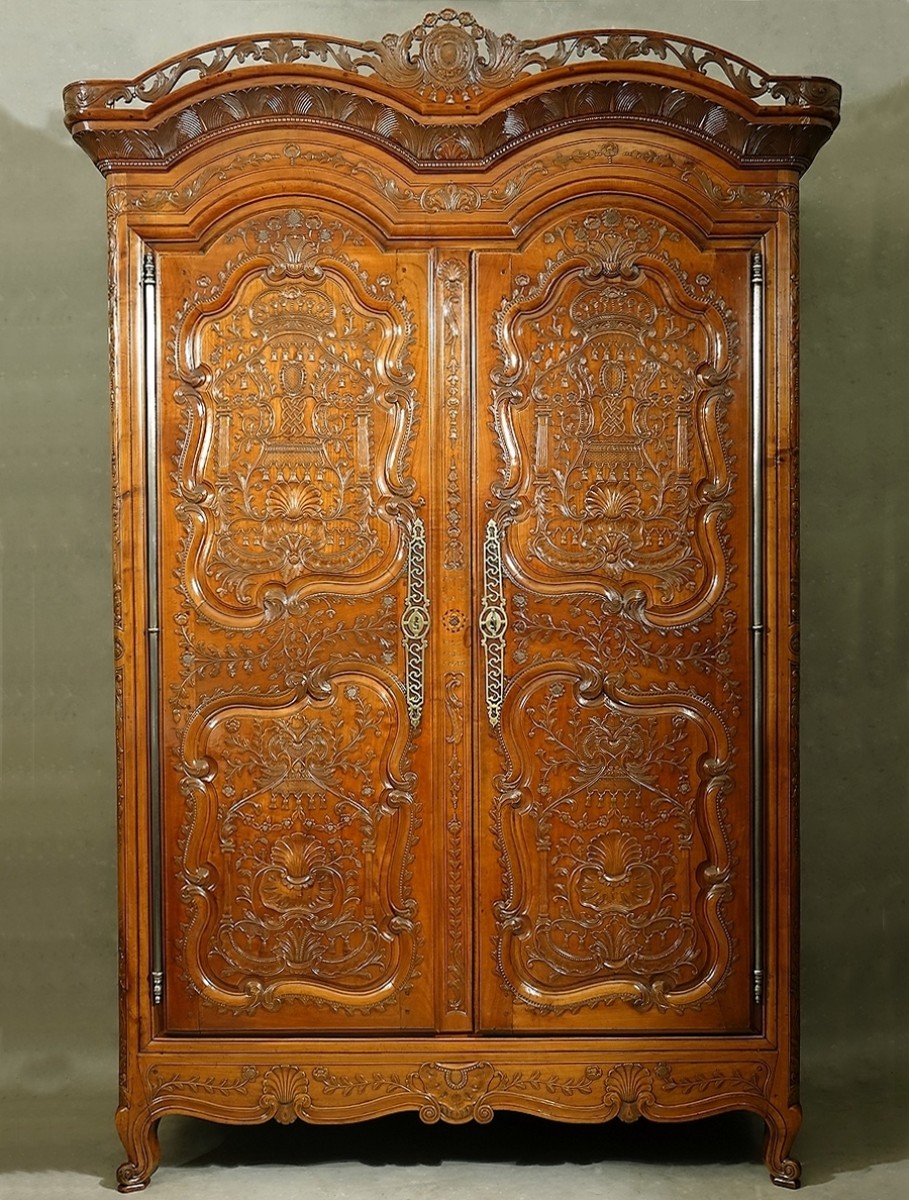
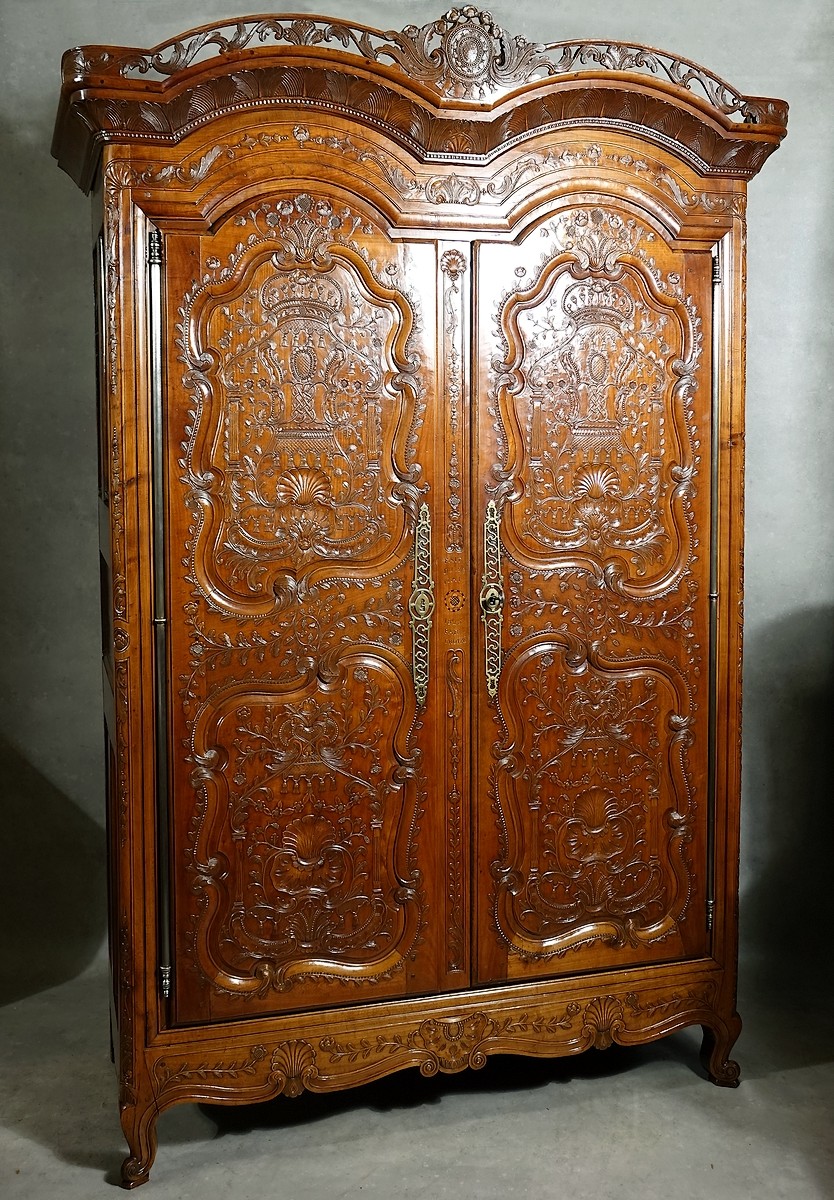
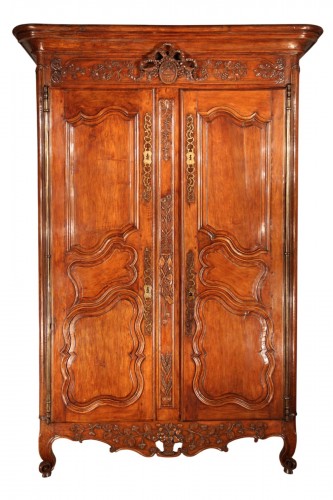
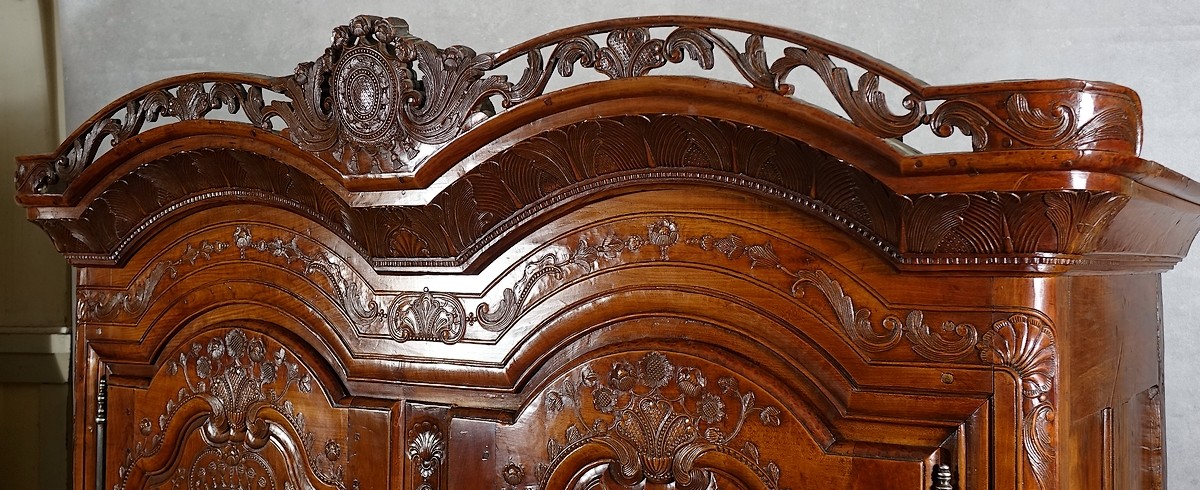
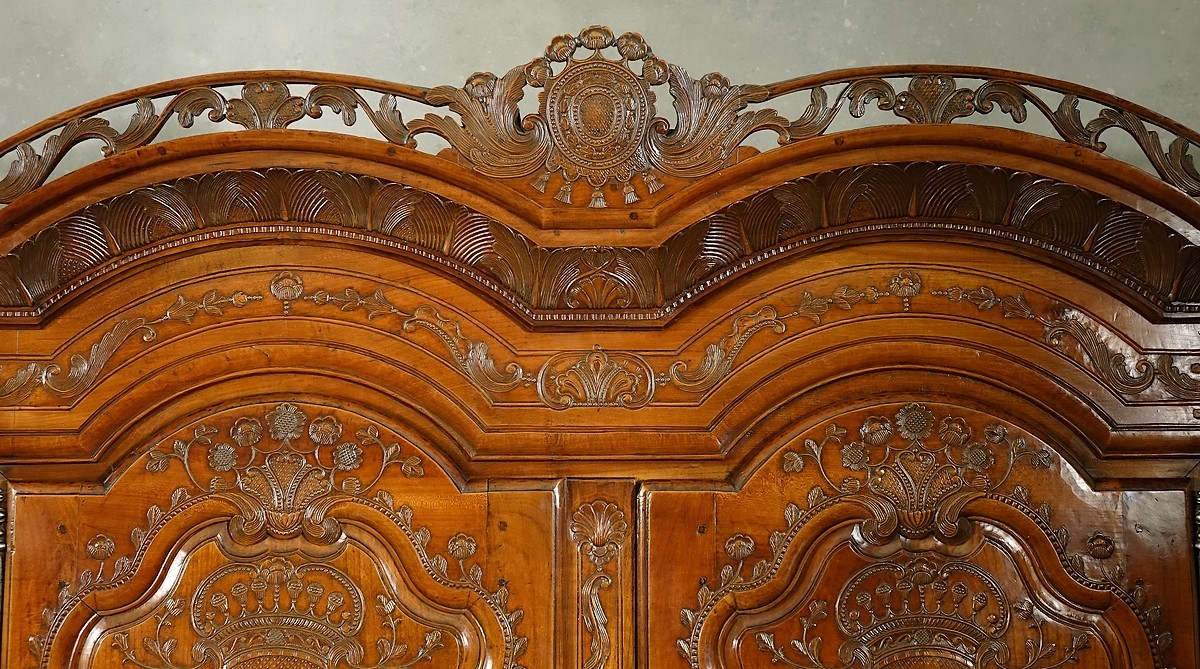
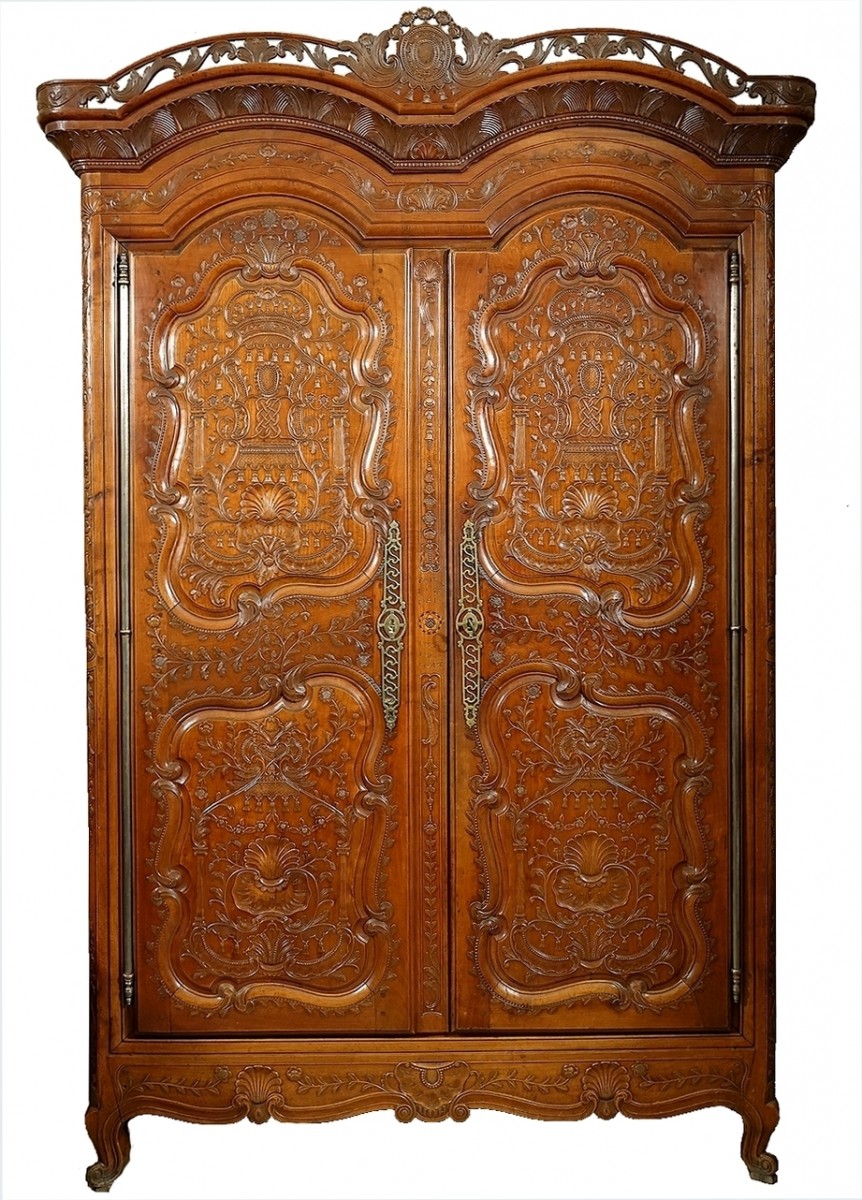
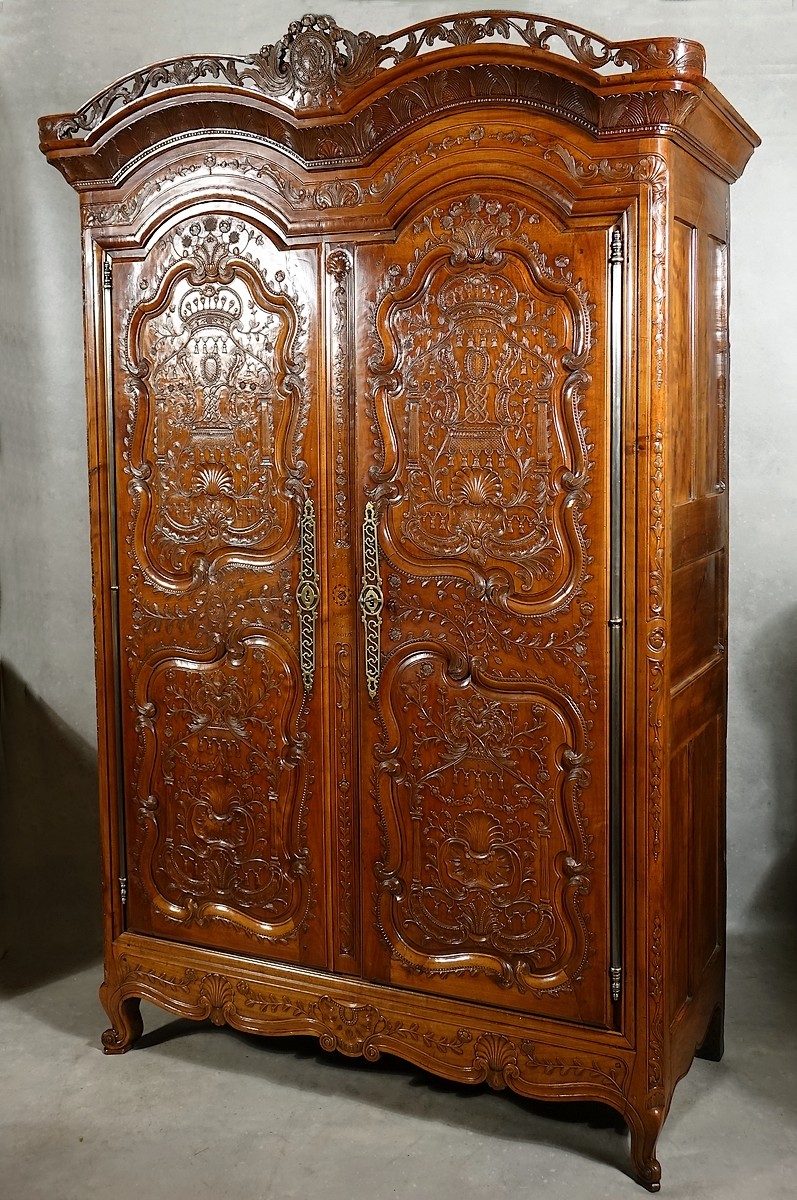
Exceptional Rennes wedding armoire in the Régence style, in richly carved cherrywood.
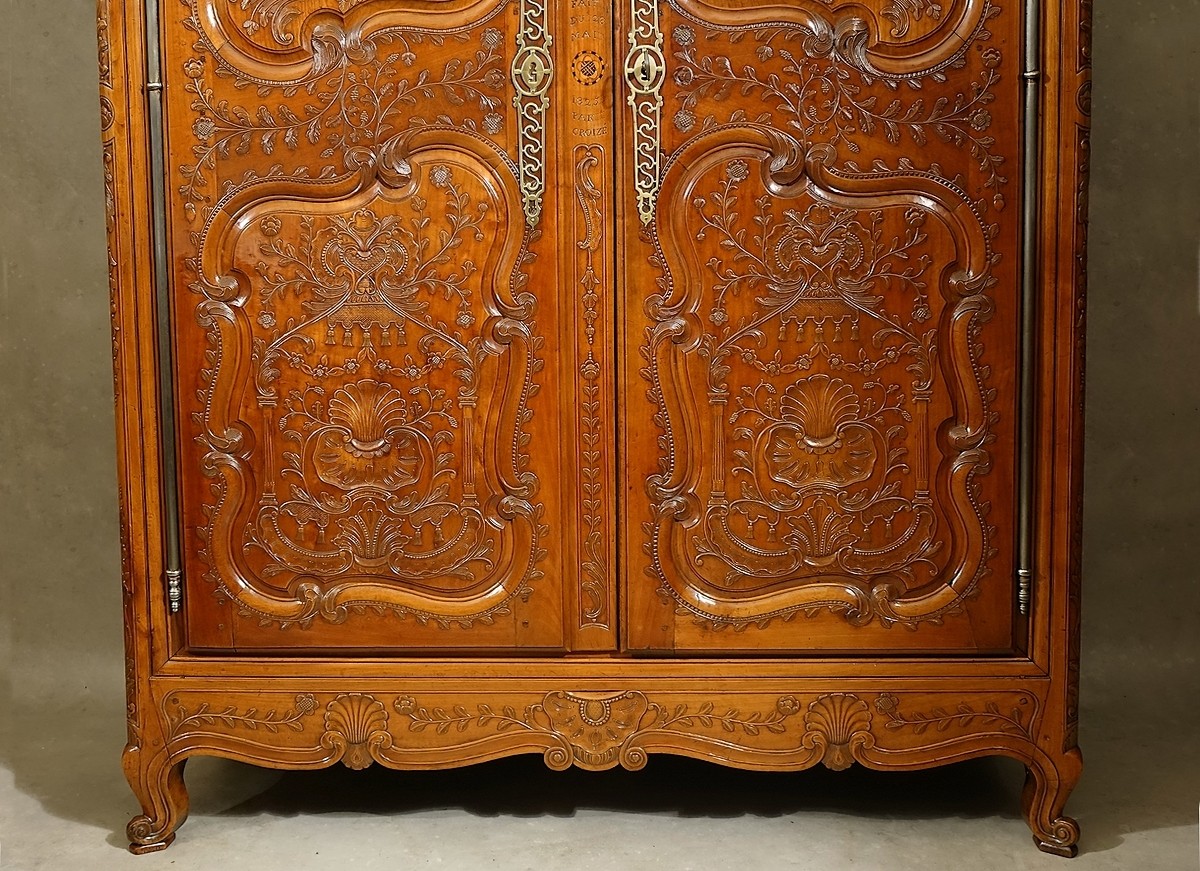
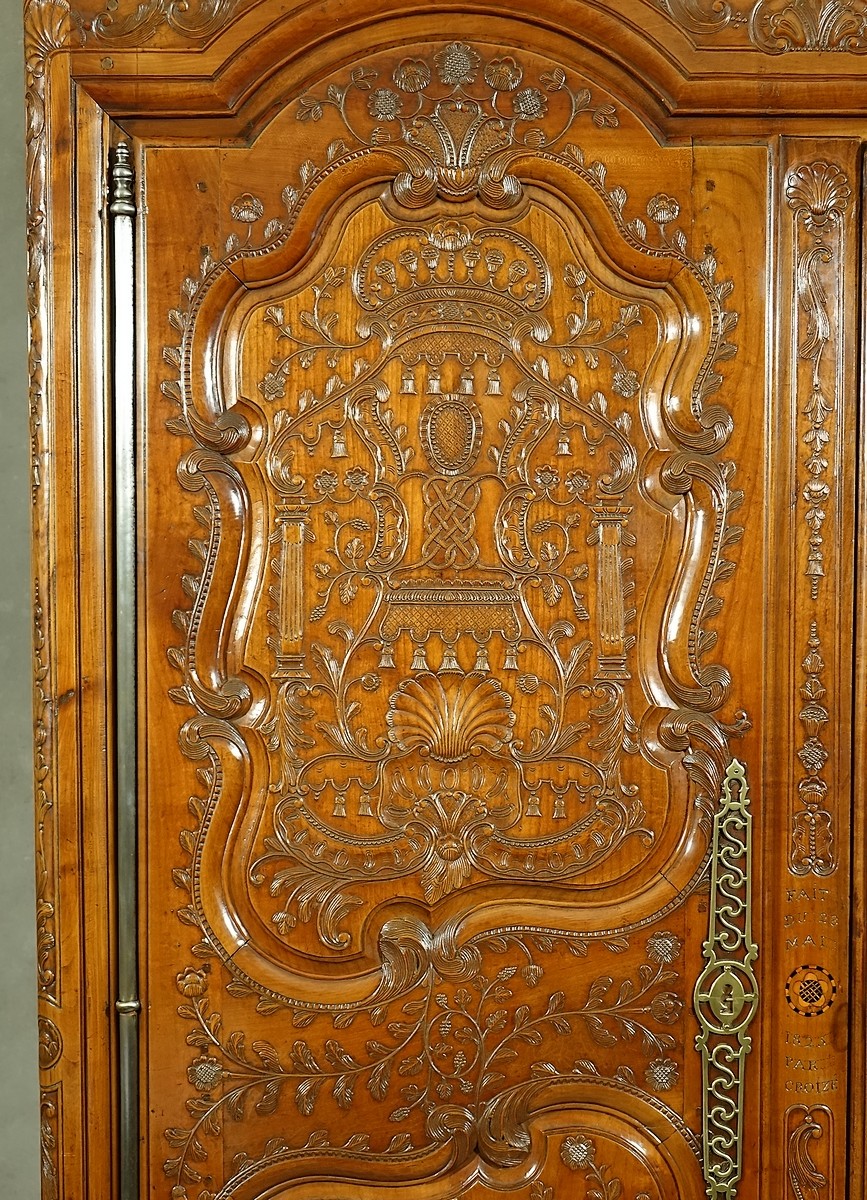
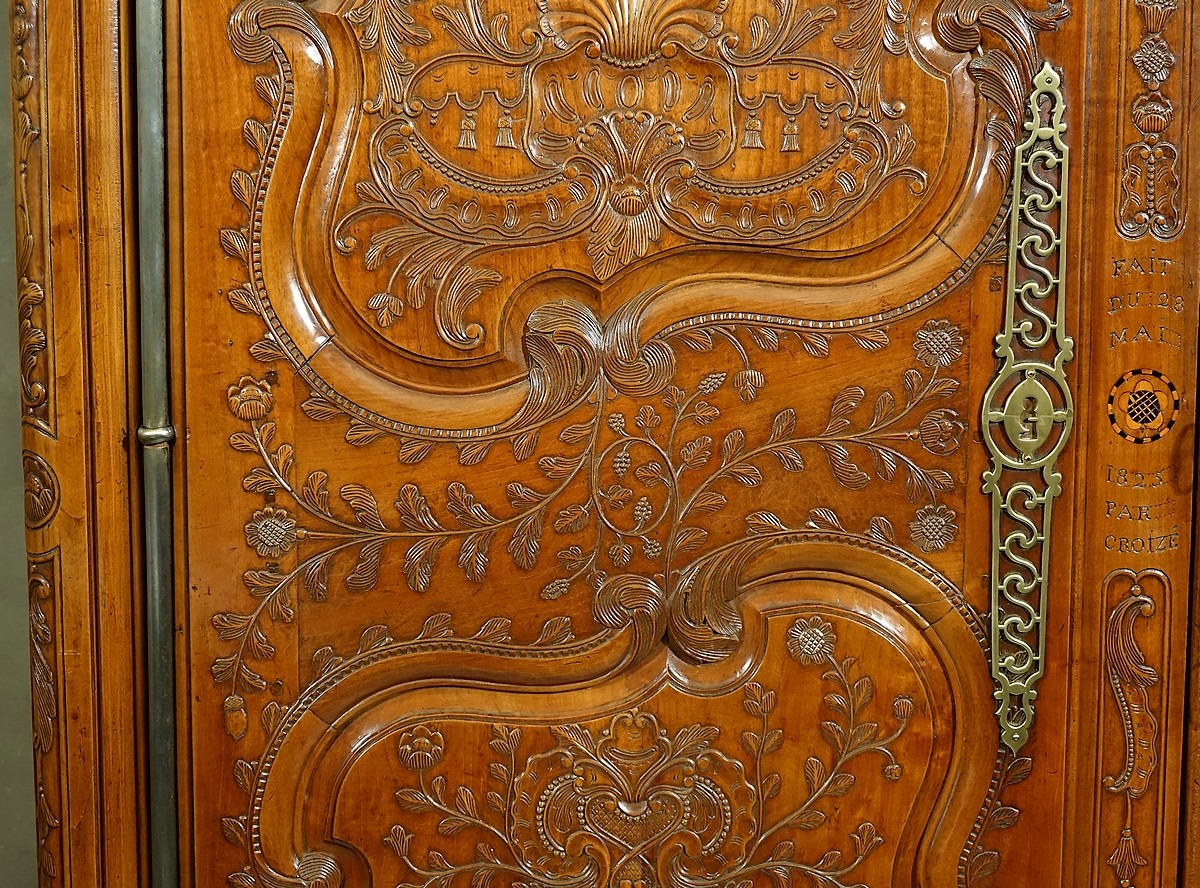
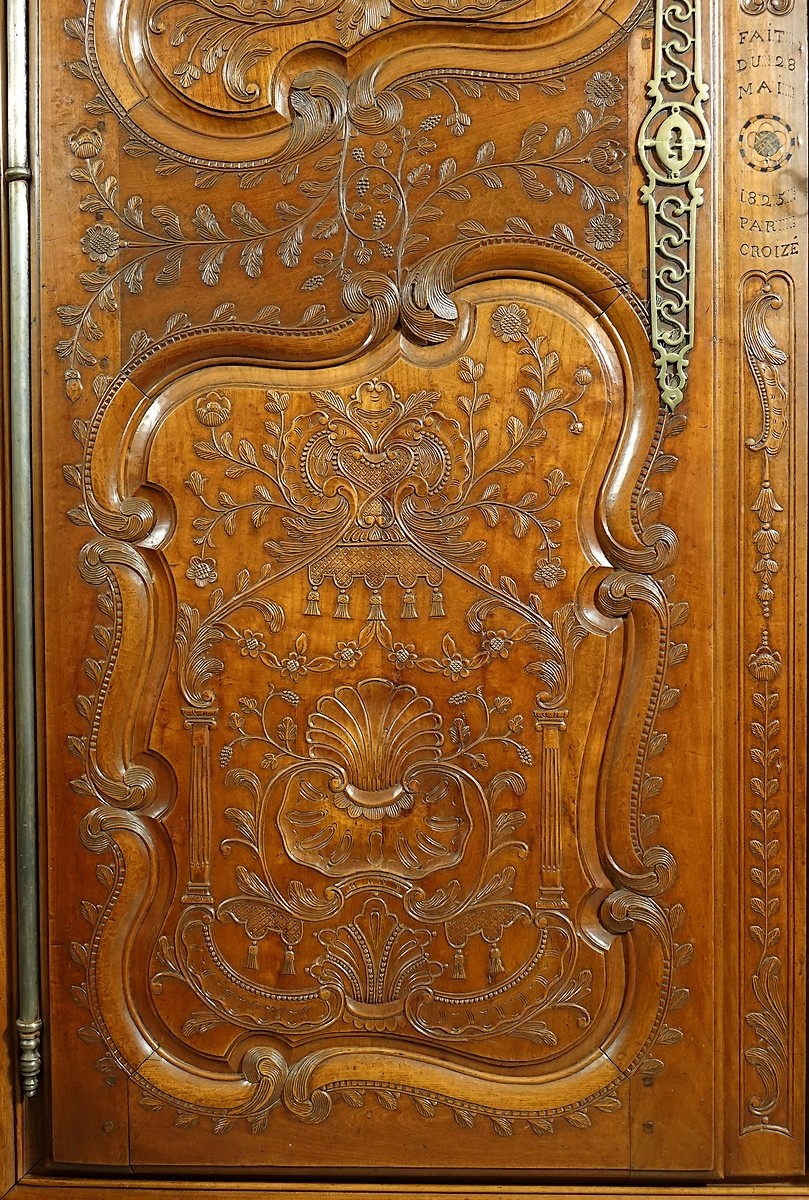
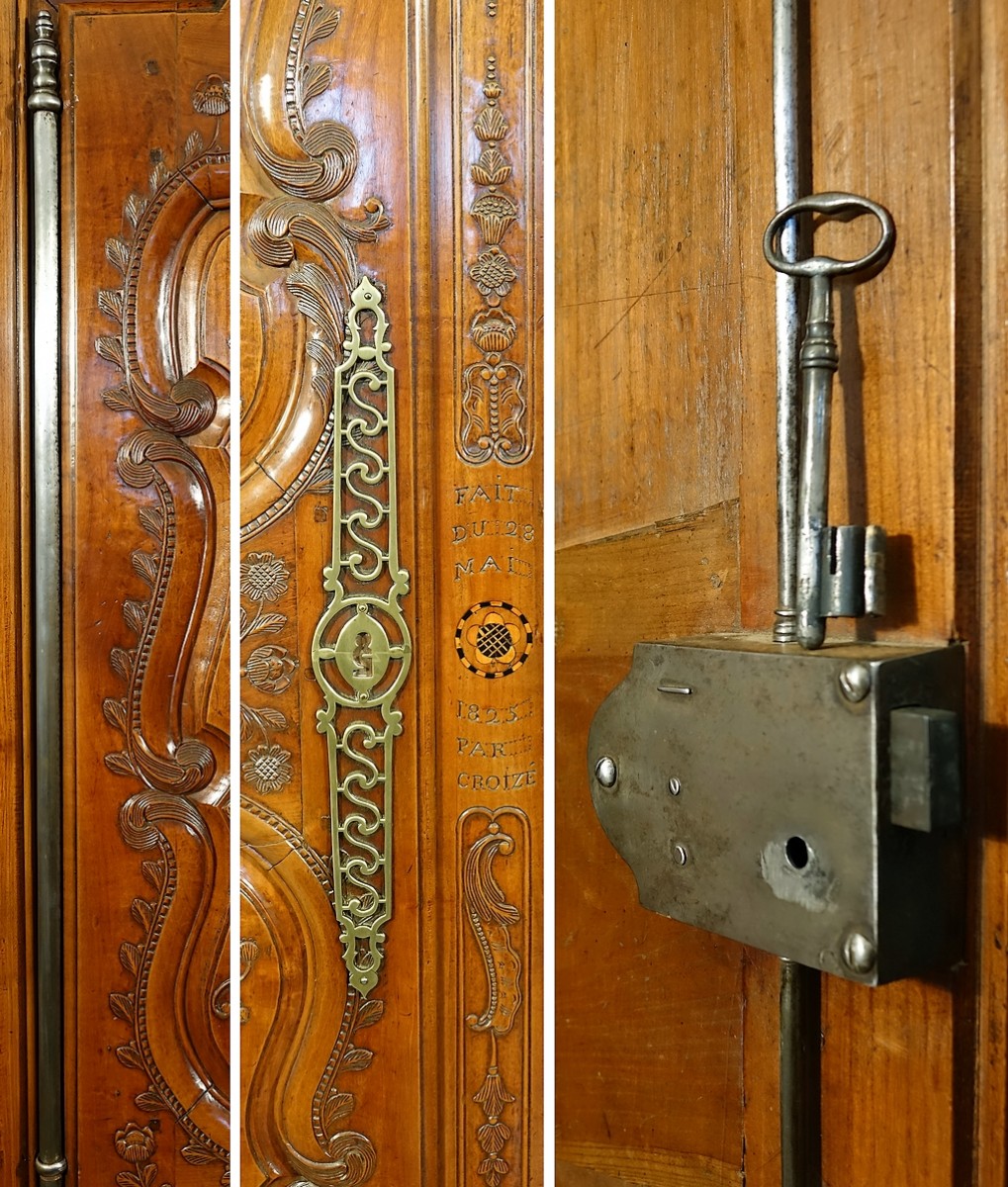
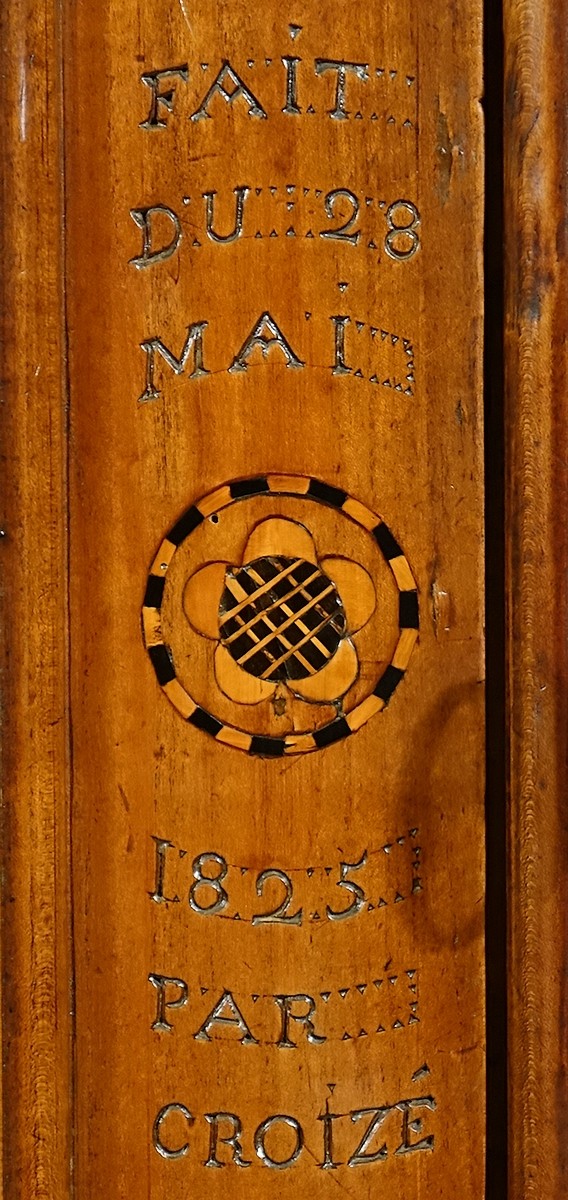
It is signed and dated: “FAIT DU 28 MAI 1825 PAR CROIZÉ.”
Work from the Rennes region.
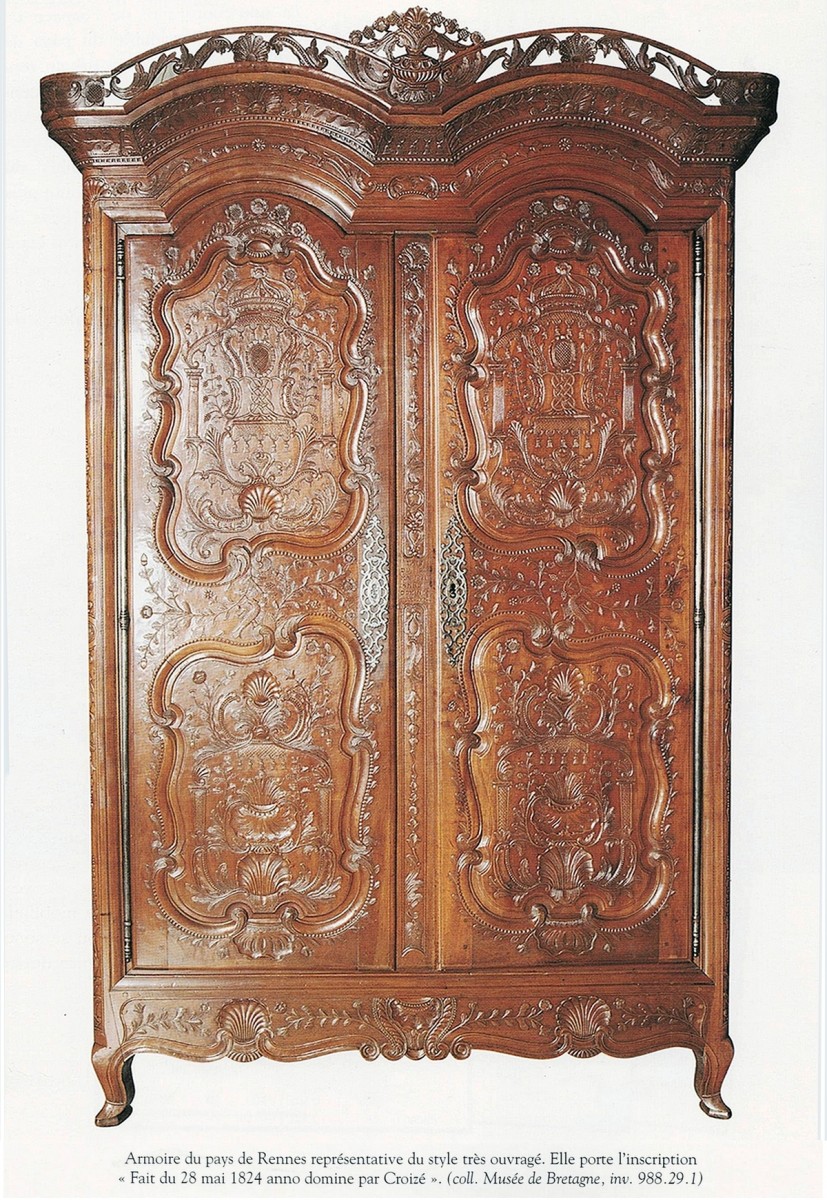
In March 1988, an armoire signed Croizé and dated 28 May 1824, offered at auction at the Rennes sale room, created a sensation. Indeed, it was not only more beautiful (once is not customary, and without equivocation, we will use this adjective here—especially as it is perfectly contextualised) than all other known Rennes armoires (and undoubtedly even more extraordinary than connoisseurs could have imagined), but it also set the record for the highest public auction price ever achieved for a Rennes armoire. Finally, it was pre-empted by the Museums of Rennes, and its curator, Jean-Yves Veillard, had personally travelled to acquire it.
That armoire, which we illustrate in the documentation, is considered sovereign among all Rennes armoires.
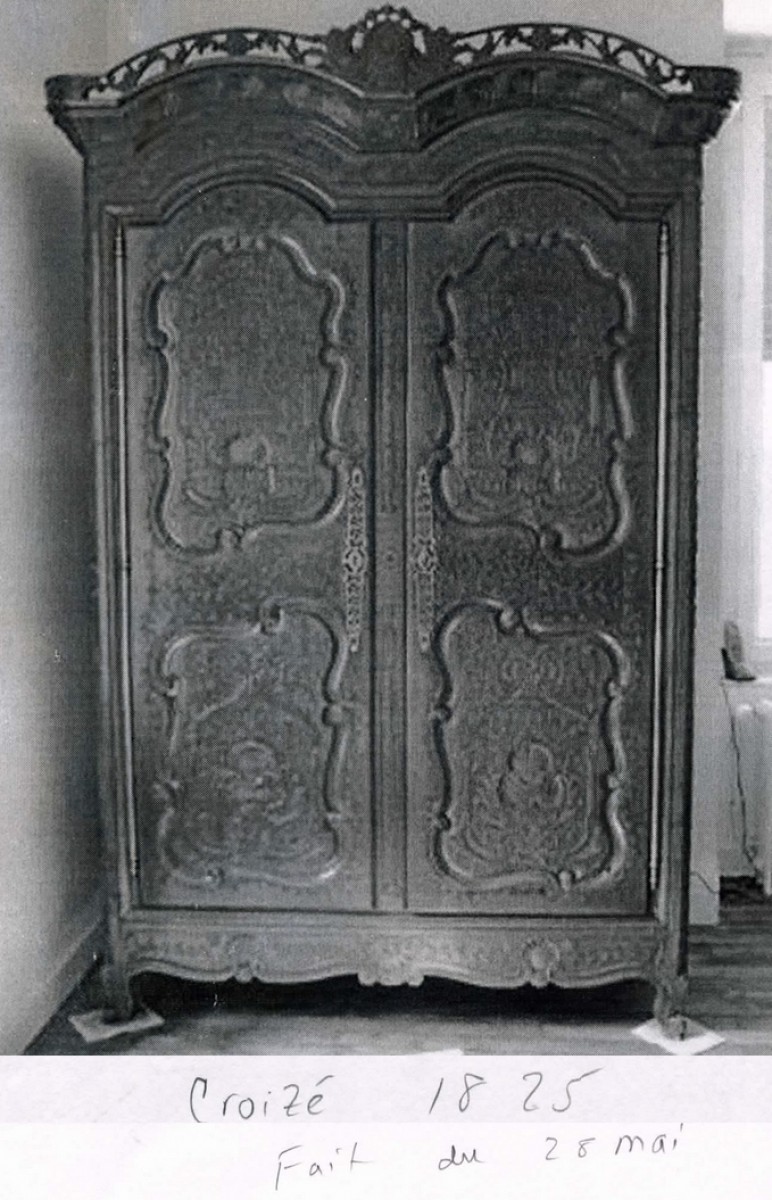
A few years later, Alison Clarke, curator of the Musée de la Bintinais, in preparation for the 1997 publication of Menuisiers et mobilier du Pays de Rennes, received from its owners a photograph of an almost similar armoire, this time dated 28 May 1825—a photograph of which she kindly provided us with a copy, which we have carefully preserved and reproduce in the documentation.
As is often the case in art, whether by the will of the artist or in response to an urgent commission, a masterpiece is frequently associated with a second version. Certainly, the dates of 28 May 1824 and 28 May 1825 are not fortuitous—especially as Charles II Croizé left other marks for posterity, notably a famous rebus signature.
It is this very armoire of 1825 that we have the great pleasure of presenting. Logically, we may state that it is the most exceptional Rennes armoire held in private hands—and would it be carried away by our passion to suggest that we might even go so far as to describe it as the most exceptional regional French armoire in private ownership? Let someone show us another combining such quality and such profusion of carving (without any sense of excess or stylistic exhaustion, which would only be observed many years later in the Rennes region).
The Croizé family are to Brittany what the Hache family are to the Dauphiné. Like them, over three generations, they used the finest regional woods; they produced the most carefully crafted furniture, but above all they proved innovative and among the greatest inventors in ornamentation, inspiring other craftsmen in their wake.
(Jean-)Charles Croizé (1775–1848), whom we call Charles II Croizé (as Charles was his sole given name in use), was the son of Charles Croizé (1746–1814). Like his father, he was in Upper Brittany the most gifted joiner-sculptor of his generation. He established his workshop in Pacé, which, with his sons working alongside him assisted by a few apprentices, became the most important in the region. His work continues that of his father—his master, with whom he collaborated until nearly forty years of age—but naturally he created his own ornamental repertoire. While he was fundamentally an artisan of the Louis XV style (a style that did not reach Brittany until the early 19th century), he occasionally returned to “à la Bérain” carving for a very small number of armoires in the style of his father and his uncle François Allory—furniture that marked the golden age of Rennes cabinetmaking—and, on these rare occasions, he produced works of even more dazzling brilliance.
A point of comparison may be made with an armoire from our former collections, undoubtedly the finest known armoire by Charles I Croizé:
http://antiquites-gledel-philippe.chez-alice.fr/T-Armoire-rennaise-de-mariage-signee-Charles-Croize.html
Other works by Charles II Croizé may be seen in the following reference publications:
UNE DYNASTIE DE MENUISIERS DU PAYS DE RENNES, LES CROIZÉ – Jean-Yves Veillard.
LES BEAUX MEUBLES RUSTIQUES DU VIEUX PAYS DE RENNES – Dr. Jambon / Ed. Plihon 1927 or reprint Ed. Laffitte.
MENUISIERS ET MOBILIER DU PAYS DE RENNES – Gwénaël Baron / Ed. Apogée.
One may also consult our study on the Croizé dynasty in which this armoire appears:
http://antiquites-gledel-philippe.chez-alice.fr/le_Mobilier_du_pays_de_Rennes_Les-Croize.htm
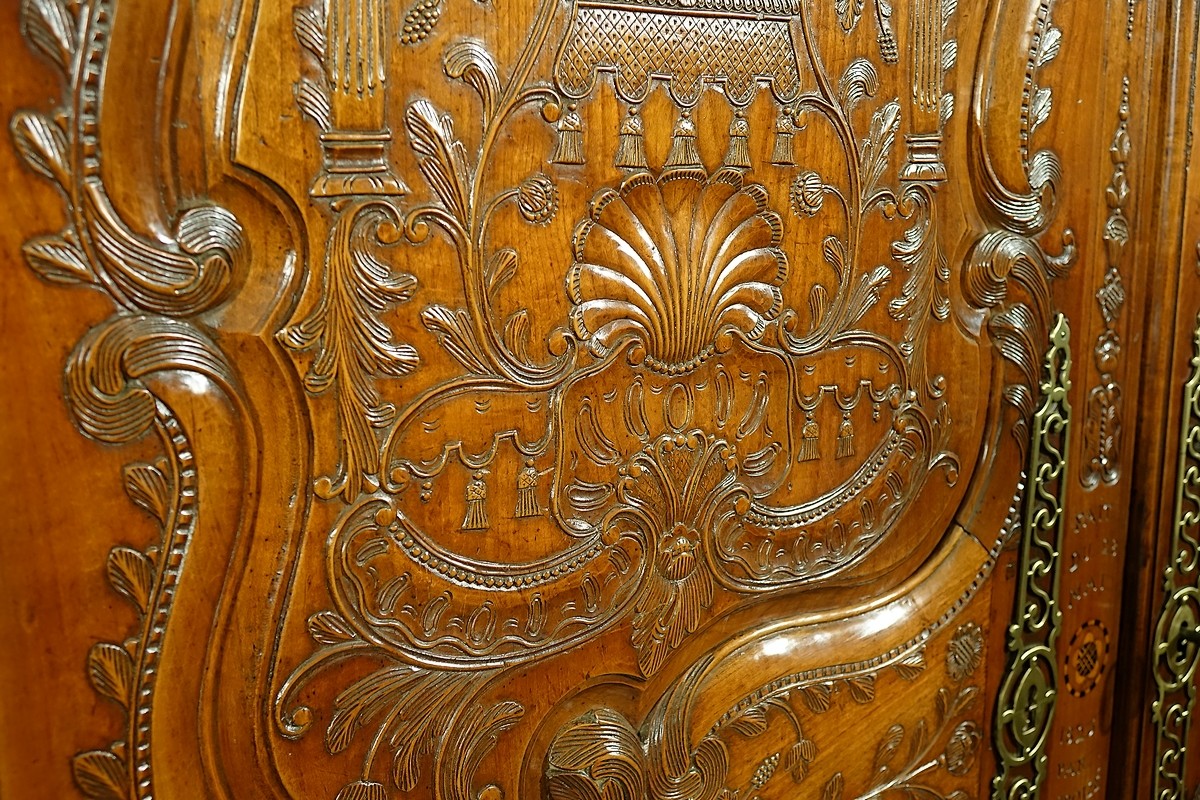
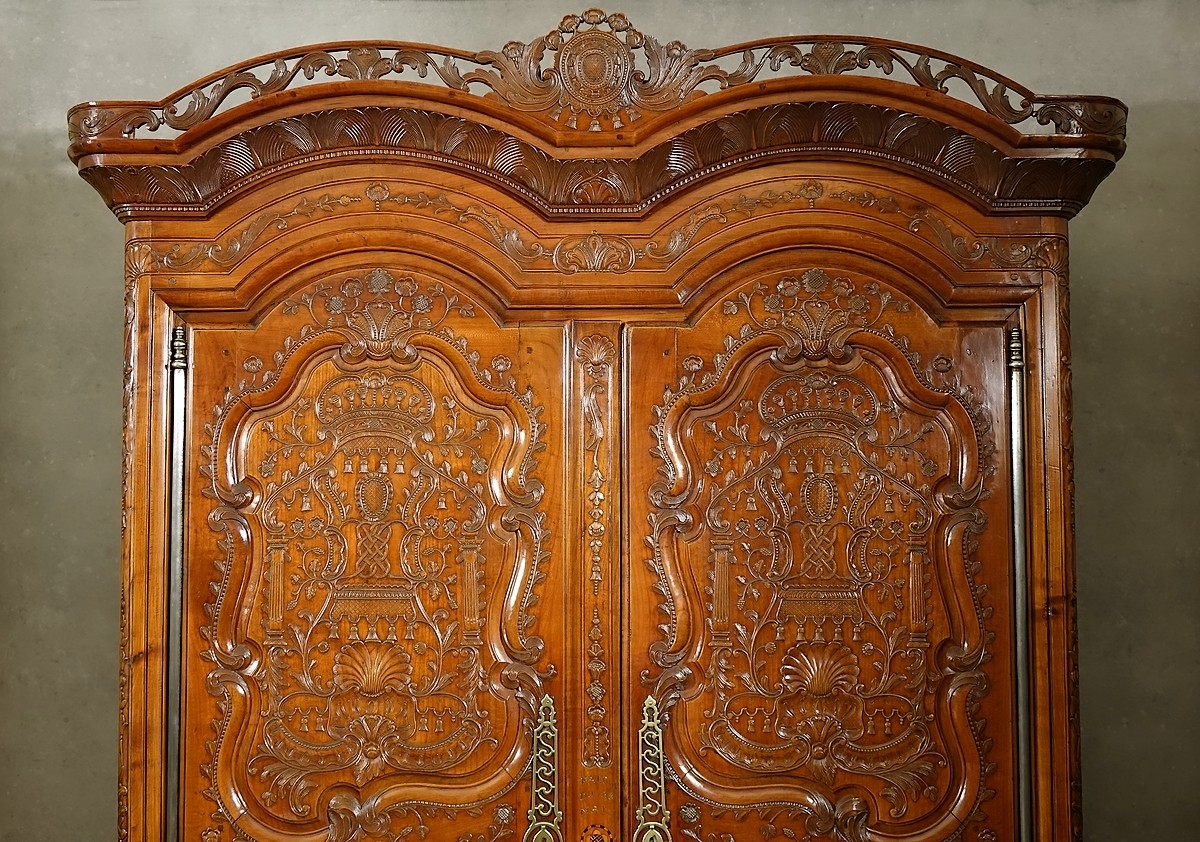
As can be seen, the carving of Charles II Croizé is of unparalleled refinement. It abounds in a multitude of motifs, and the master sculptor’s gouge has chiselled the cherrywood panels with as much virtuosity as grace and softness—truly “lacework.” This pure masterpiece of Upper Breton furniture irresistibly invites touch and caress.
Particularly noteworthy are:
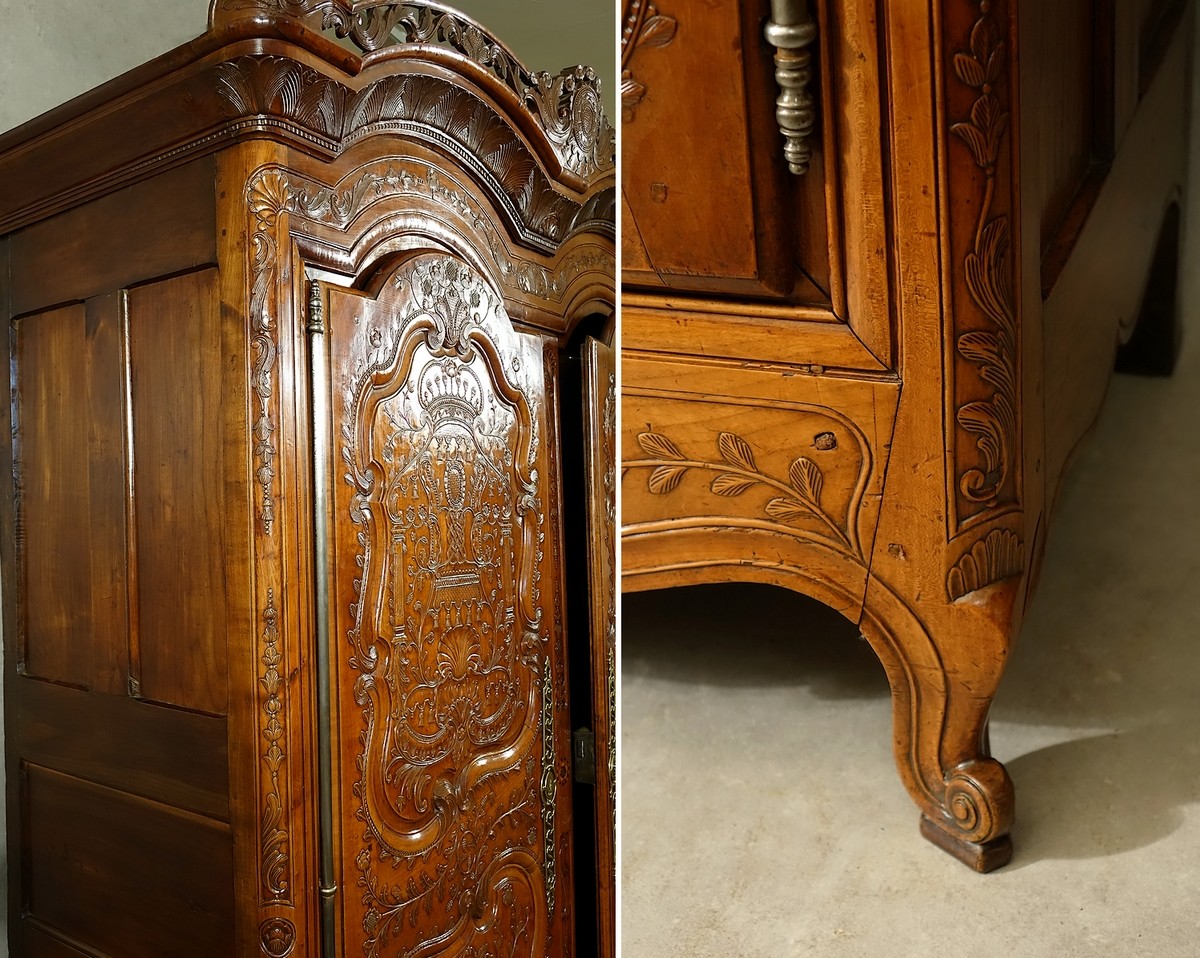
The cornice carved with interlaced acanthus leaves and its remarkable openwork “gallery” pediment extending across its full width.
The sumptuous ornamentation of the panels animated by a luxuriant “à la Bérain” repertoire: crowns, canopies, lambrequins adorned with campanulas, palmettes, mirrors, “love knots,” Ionic columns, naturalistic shells, elongated festooned shells, scalloped plumes, rows of pearls, floral stems, berry stems, floral garlands, fleurons, acanthus leaves, C- and S-scroll motifs, reticulated grounds…
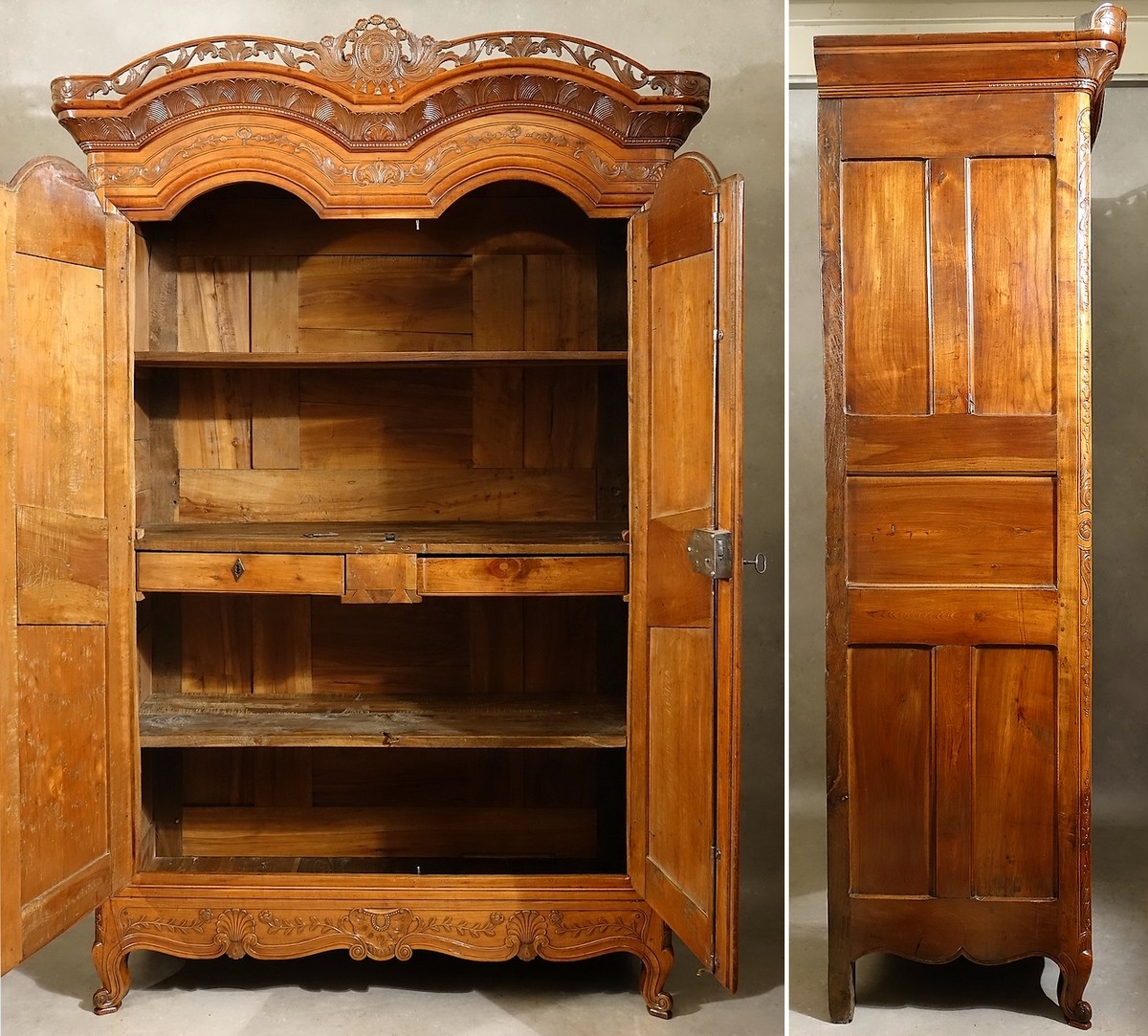
The so-called “snail” foot resting on a block also deserves attention; it alone signifies the work of Charles II Croizé, as to our knowledge no other Breton joiner achieved such perfection in its cut and the elegance of its curves.
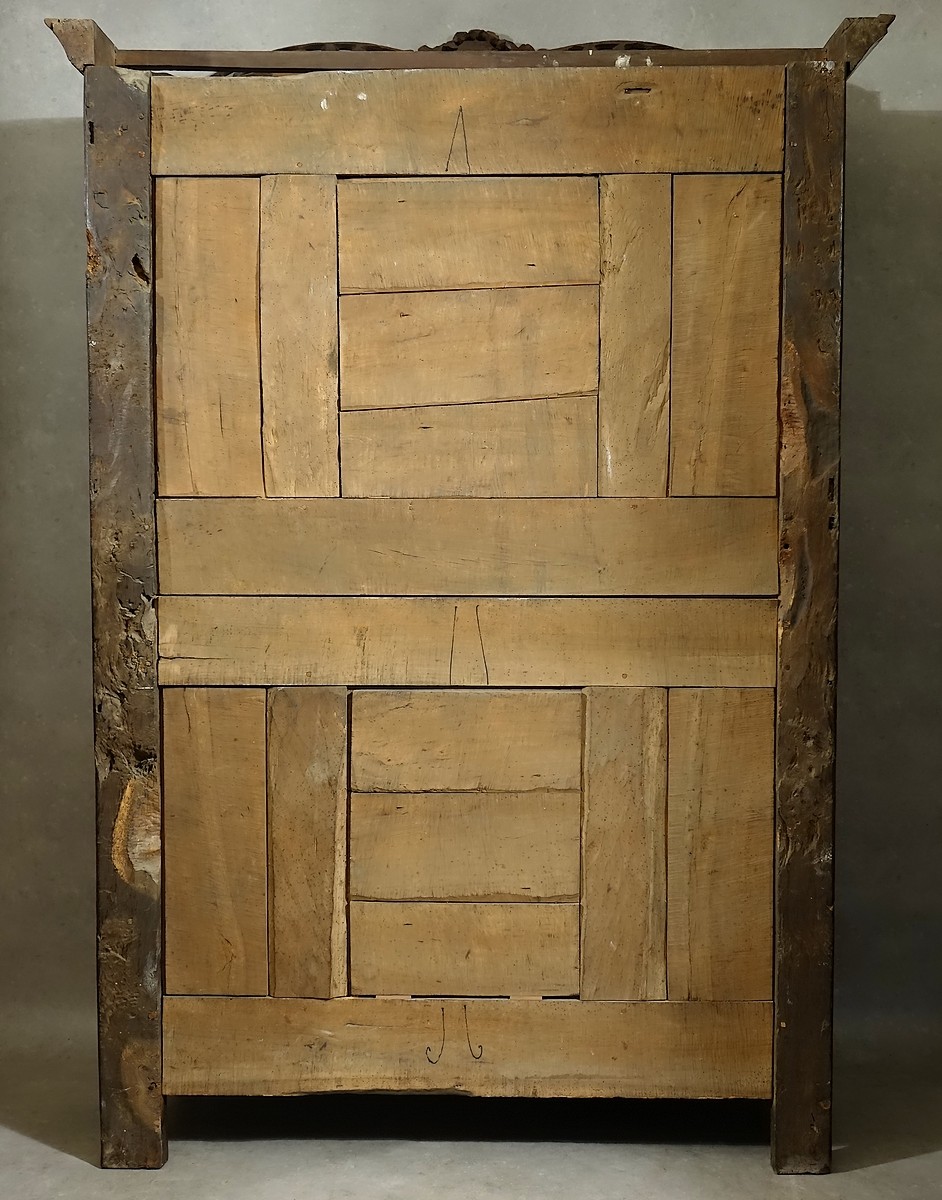
The armoire retains its three original shelves, the central one fitted with two drawers entirely made of cherrywood, as are all the panelled sides. The back, beautifully finished, is in solid pearwood. It also retains its original espagnolette lock and forged-iron key.
Condition:
Exceptional state of preservation, all elements
(including the numbered pegs) original,
minor customary restorations.
This piece has benefited from particularly thorough finishing; its deep original patina, revived through light sanding, polishing, filling, and meticulous waxing, is absolutely superb.
Reference piece:
Armoire signed FAIT DU 28 MAI 1824 ANNO DOMINE PAR CROIZÉ. Musée de Bretagne.
Former provenance:
Château du Breil (Martigné-Ferchaud). Preserved within the same family for generations. Sold due to relocation to Réunion Island.
Dimensions:
Height 2.44 m × Width 1.45 m × Depth 0.61 m
(excluding cornice projections for the latter two measurements)