Offered by Tobogan Antiques
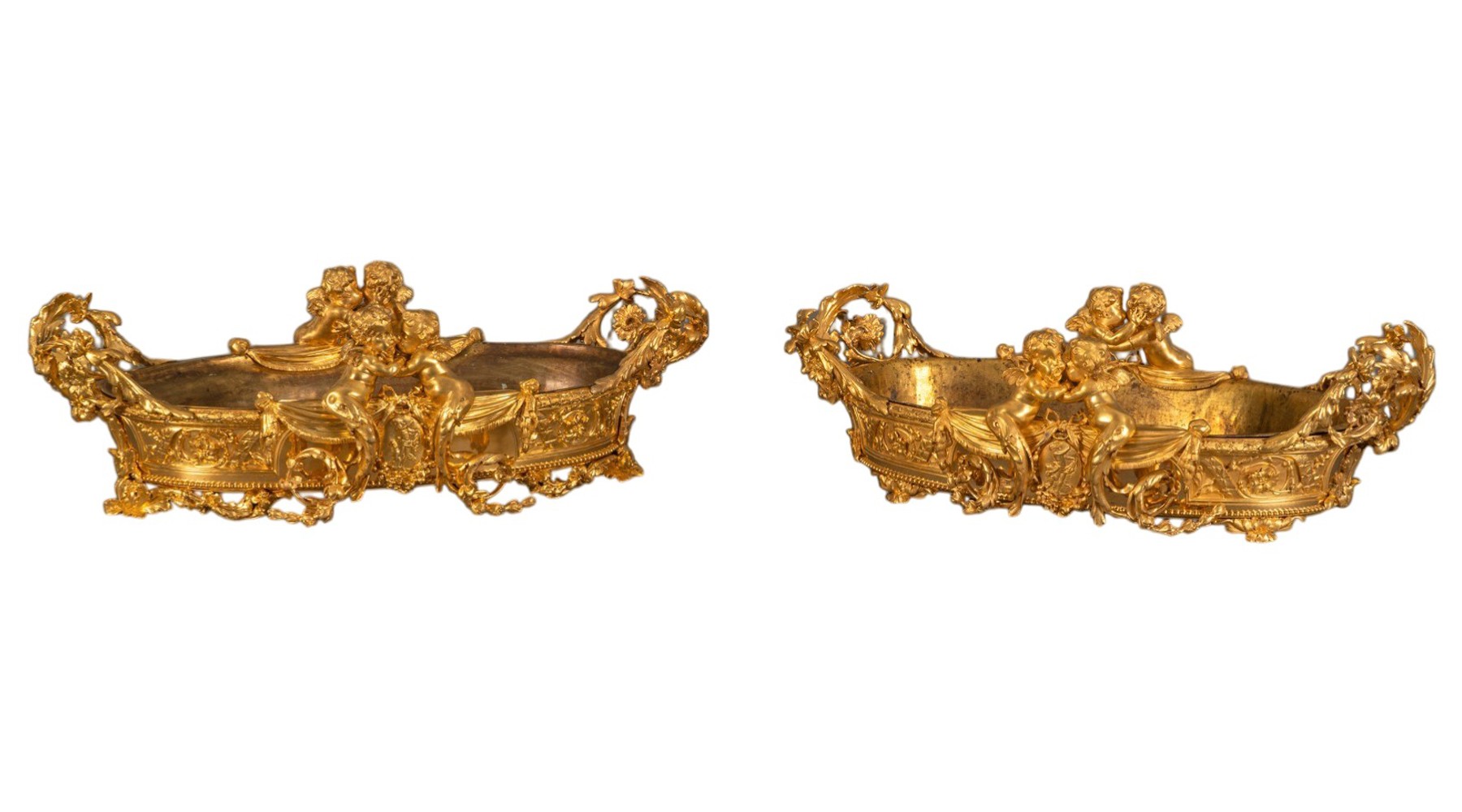

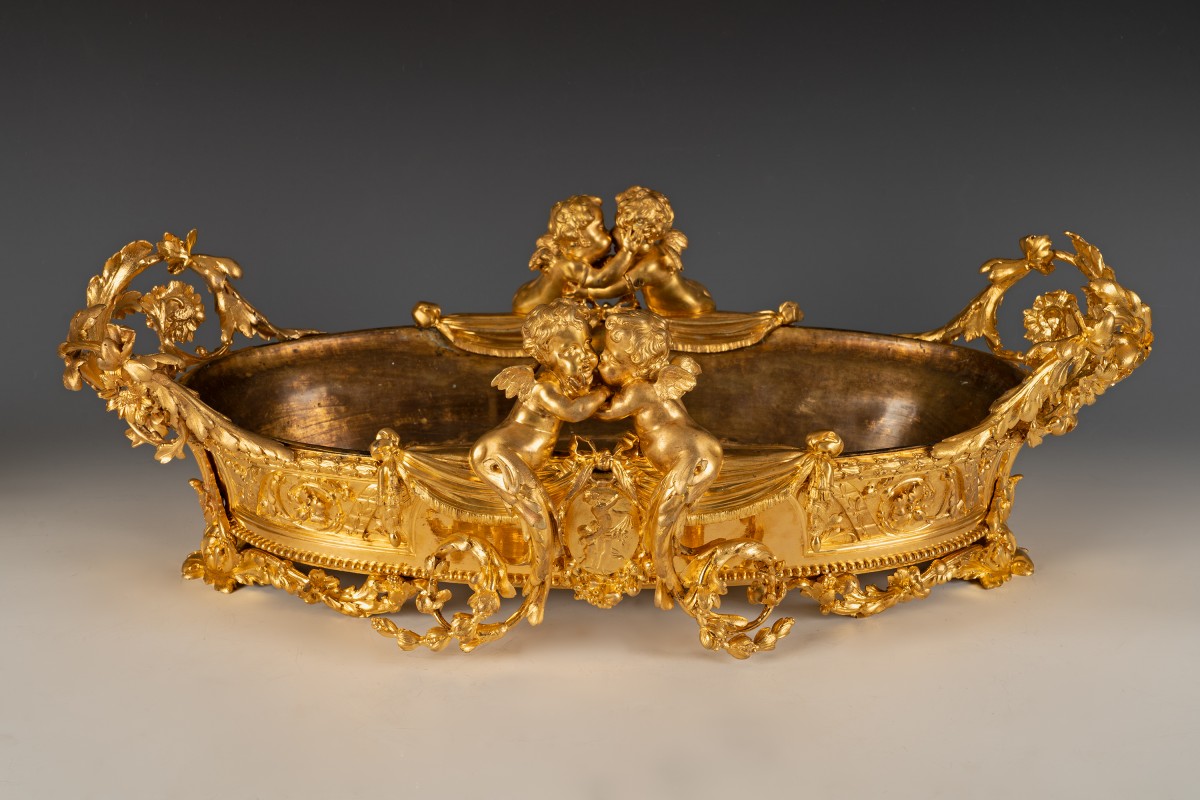
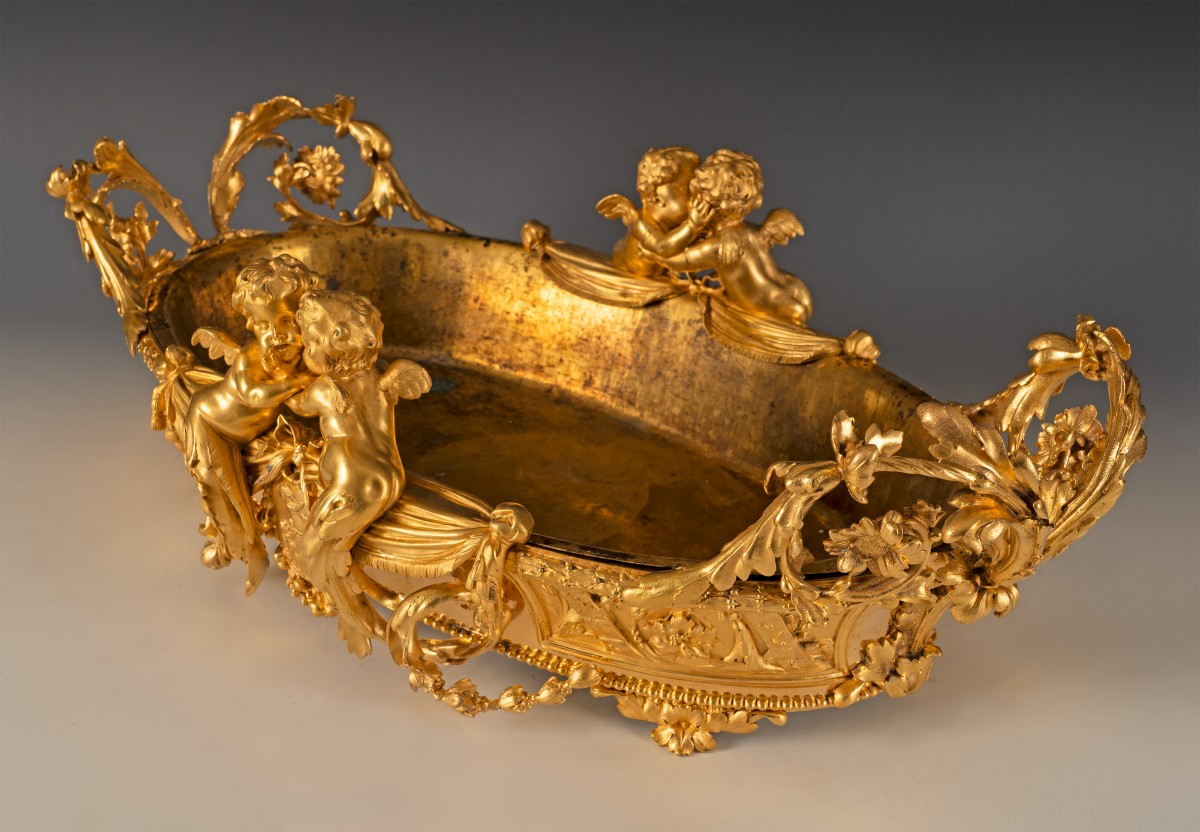
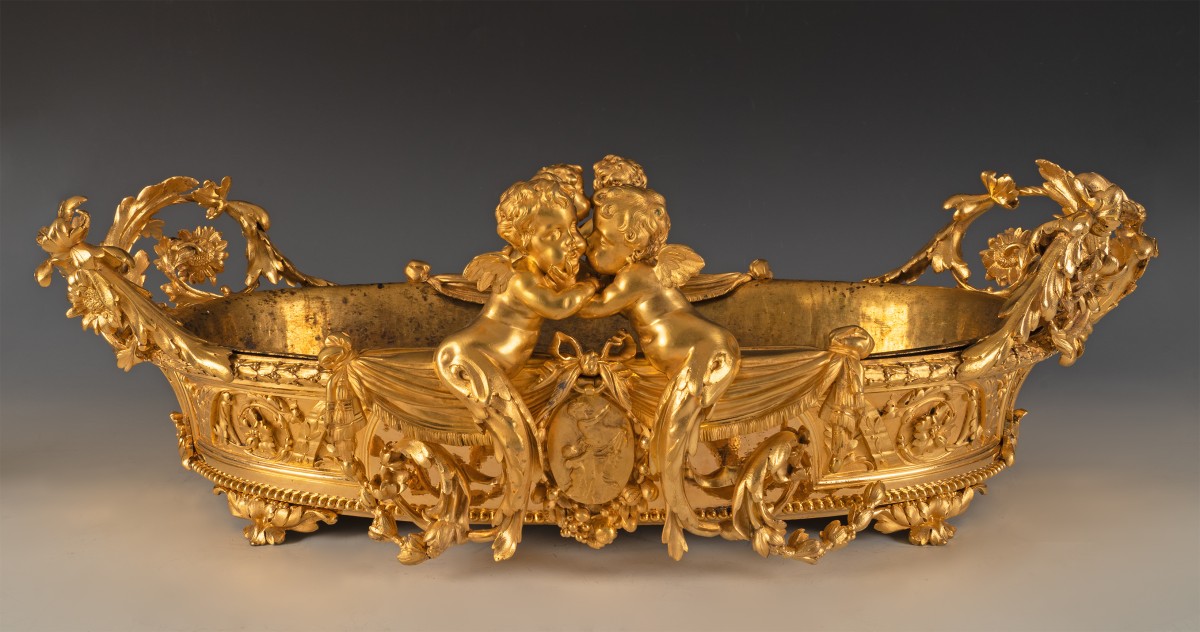

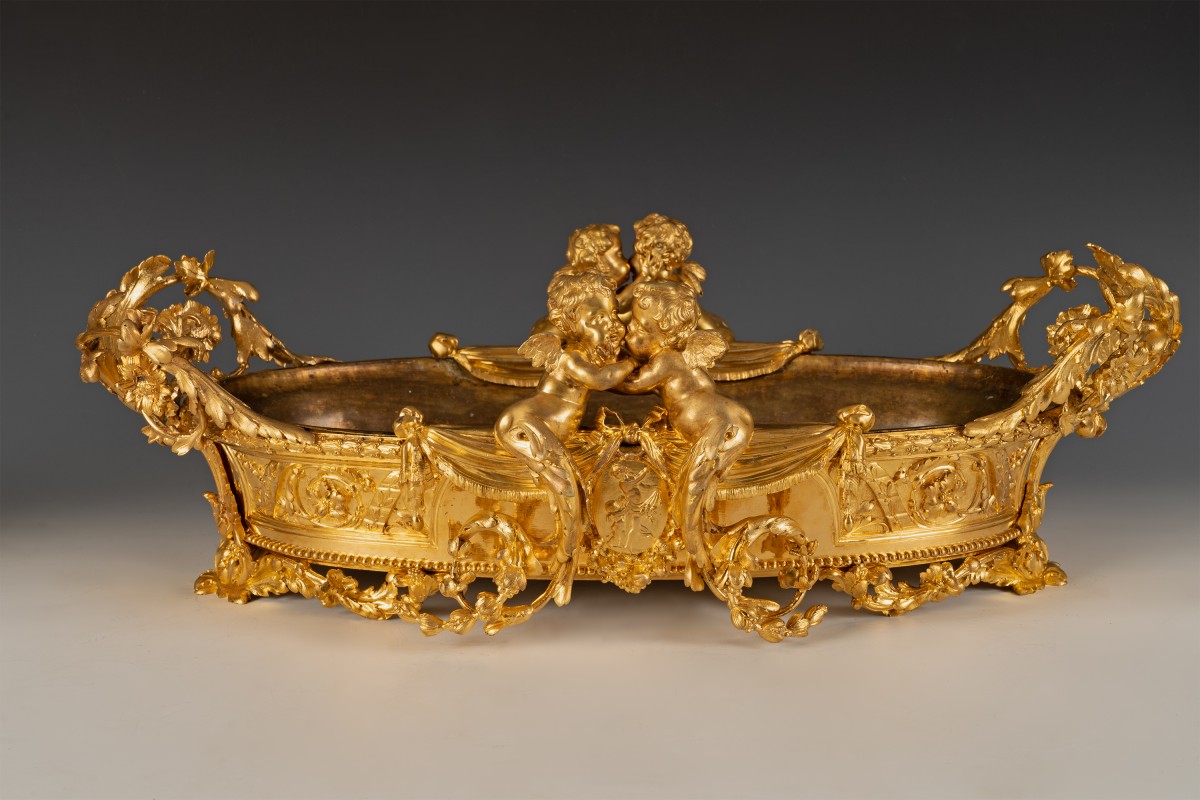
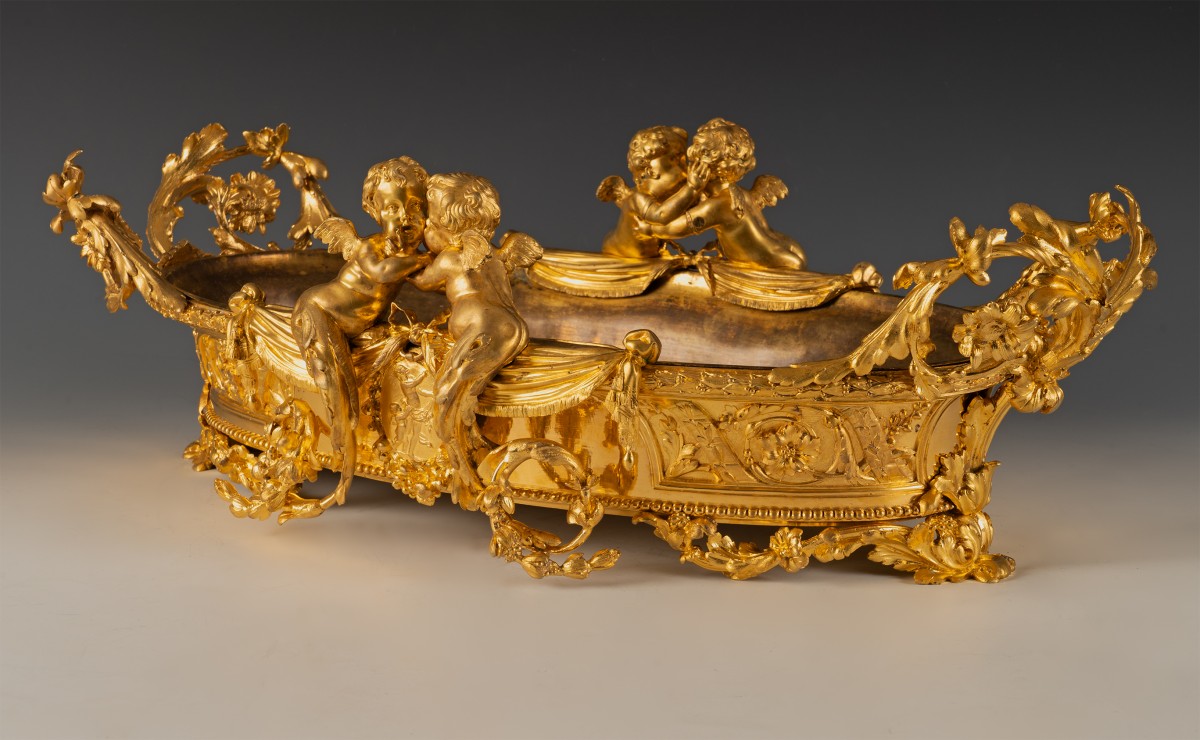
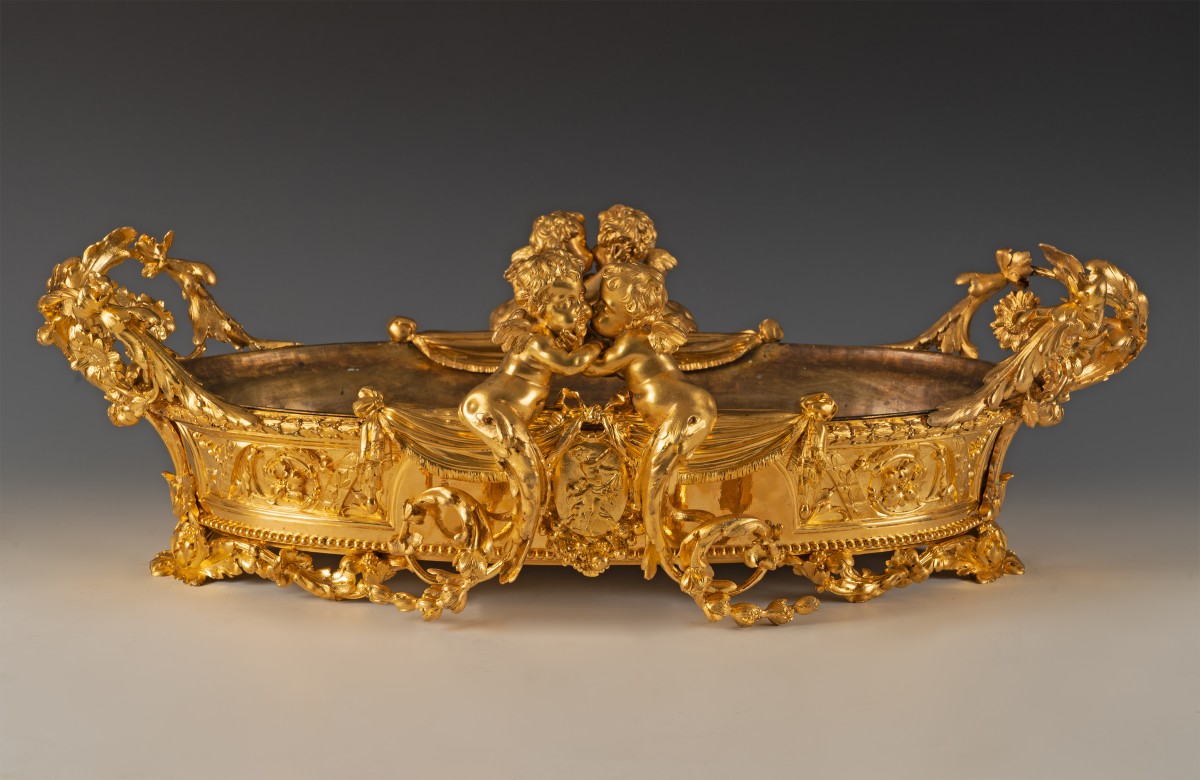
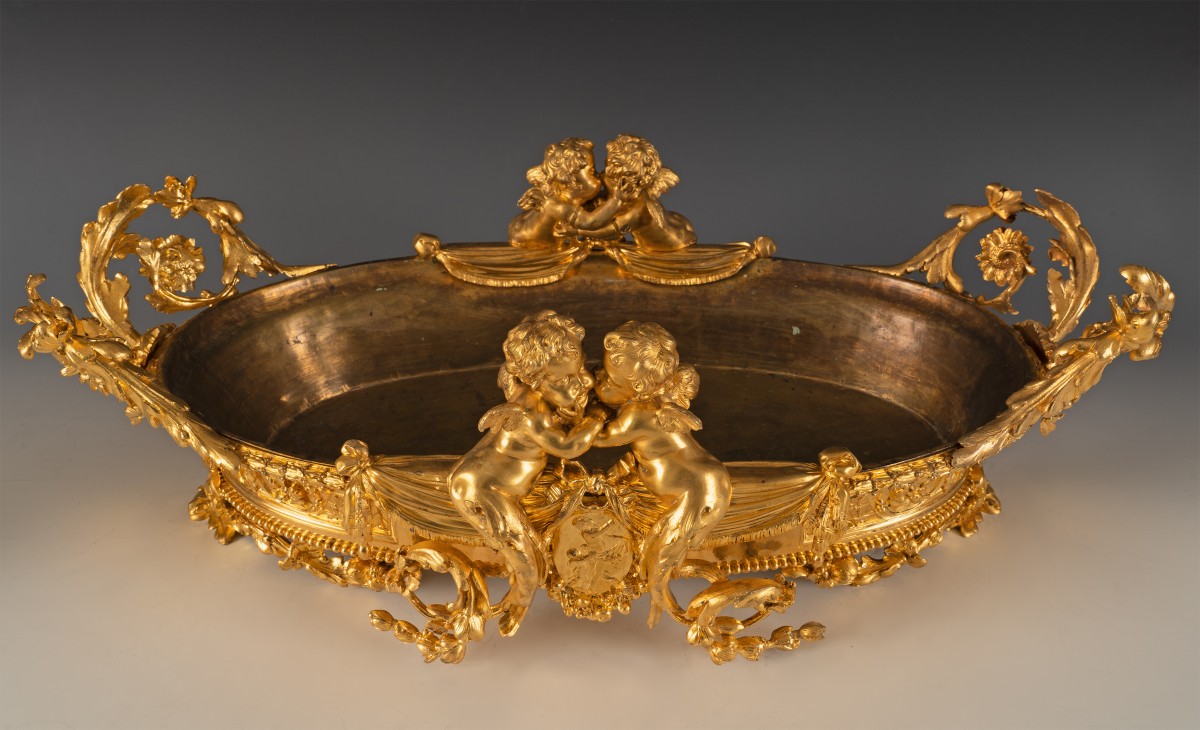
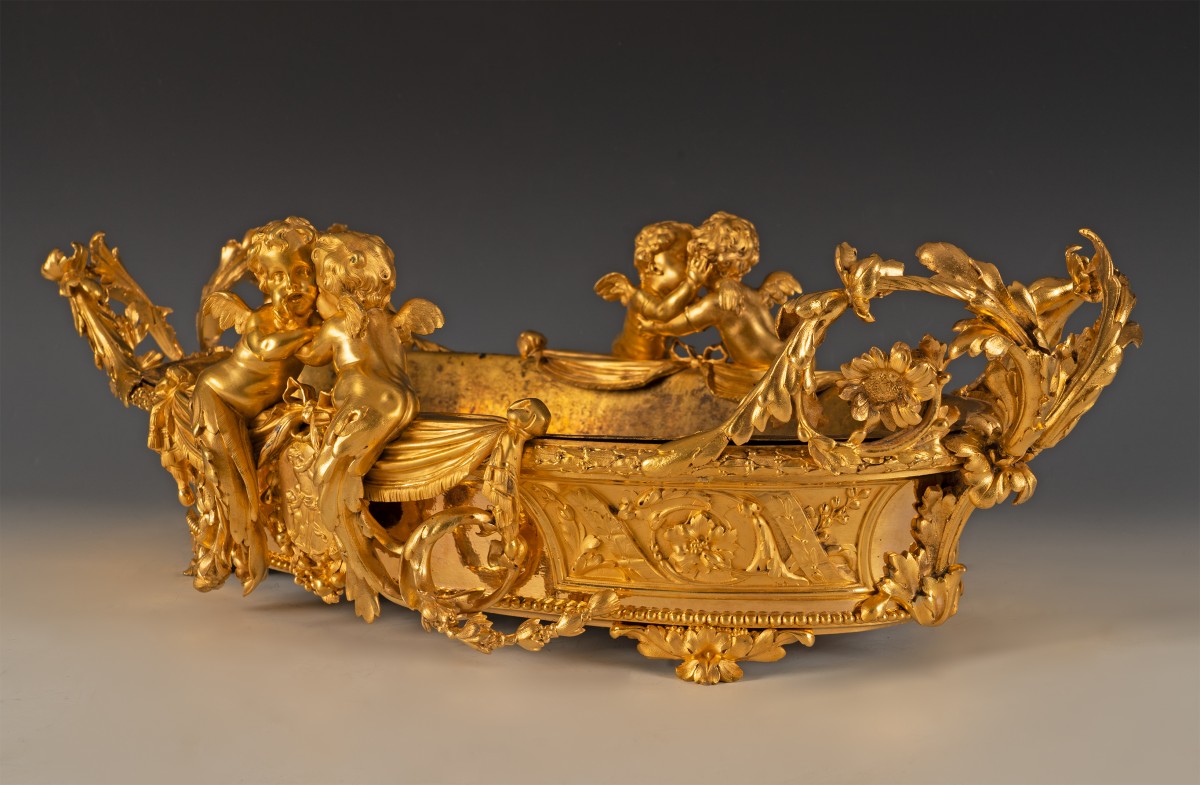
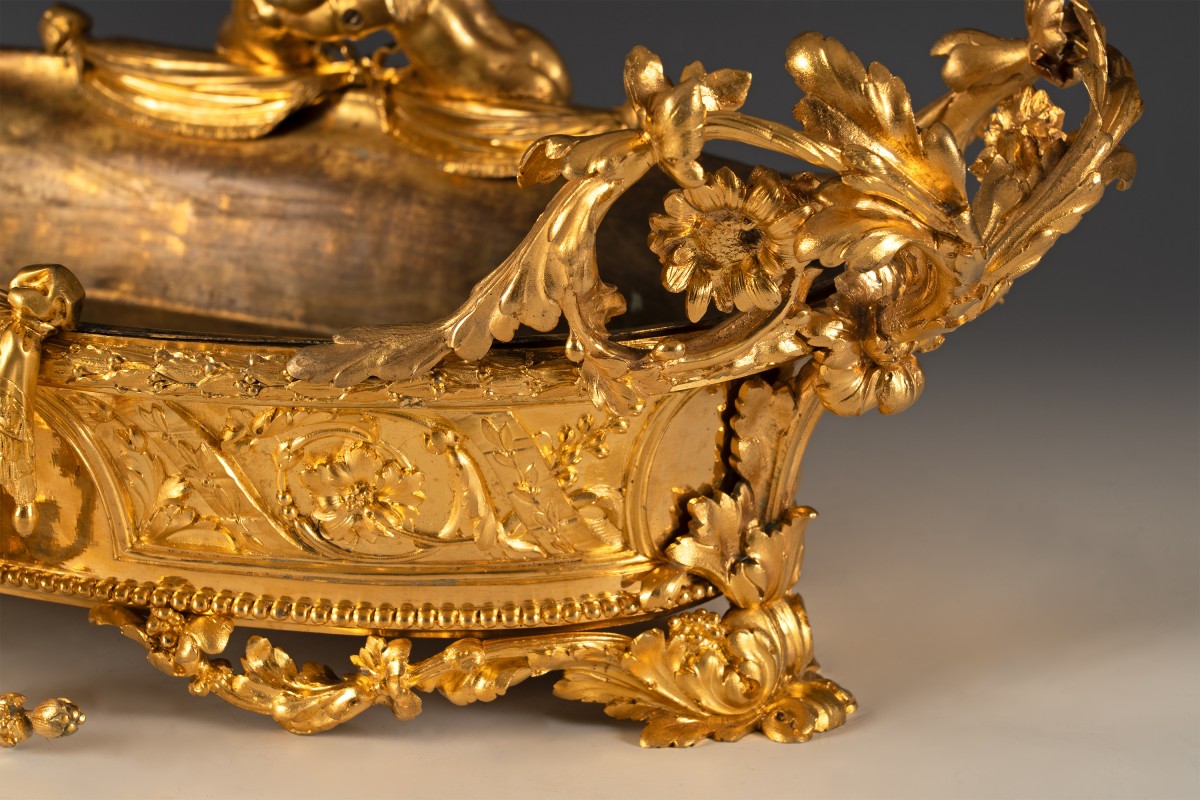
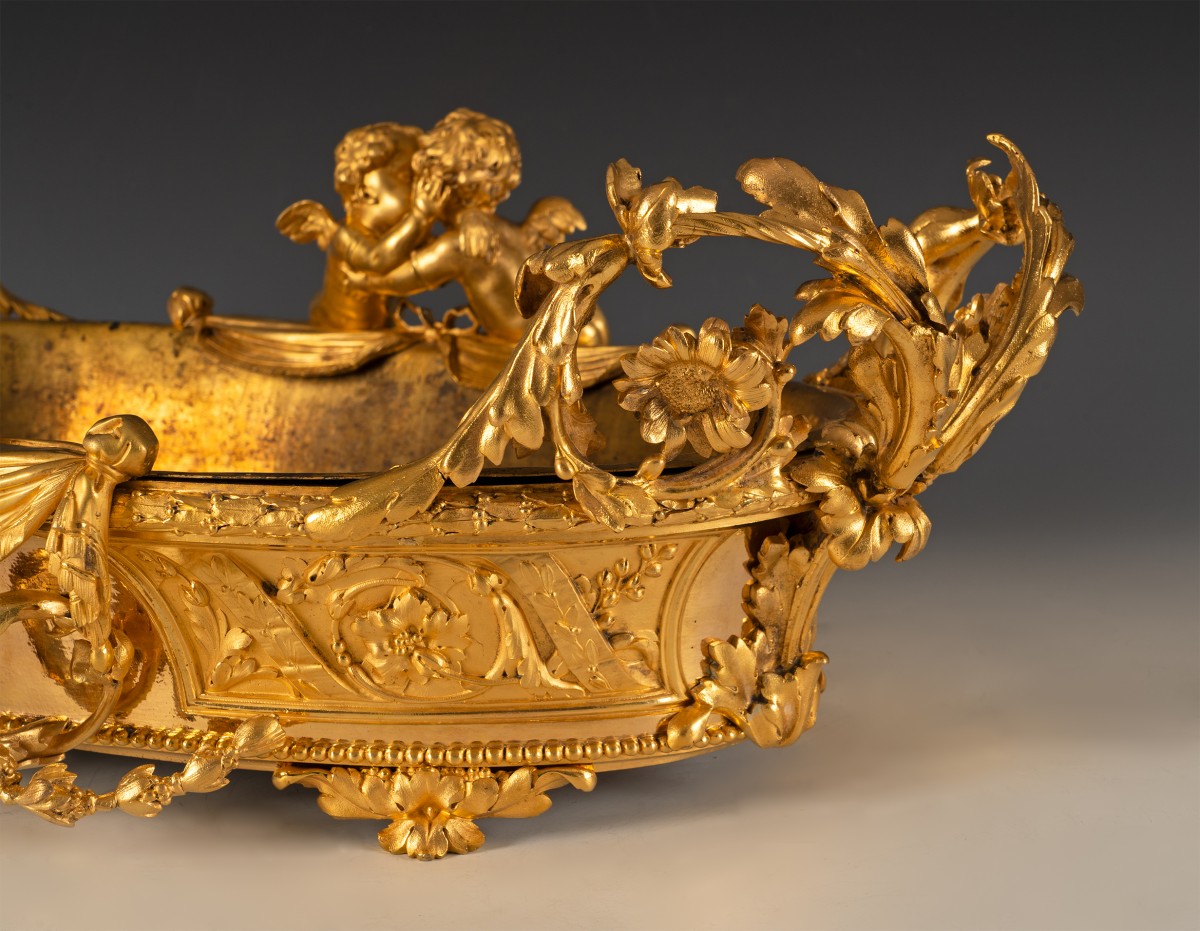
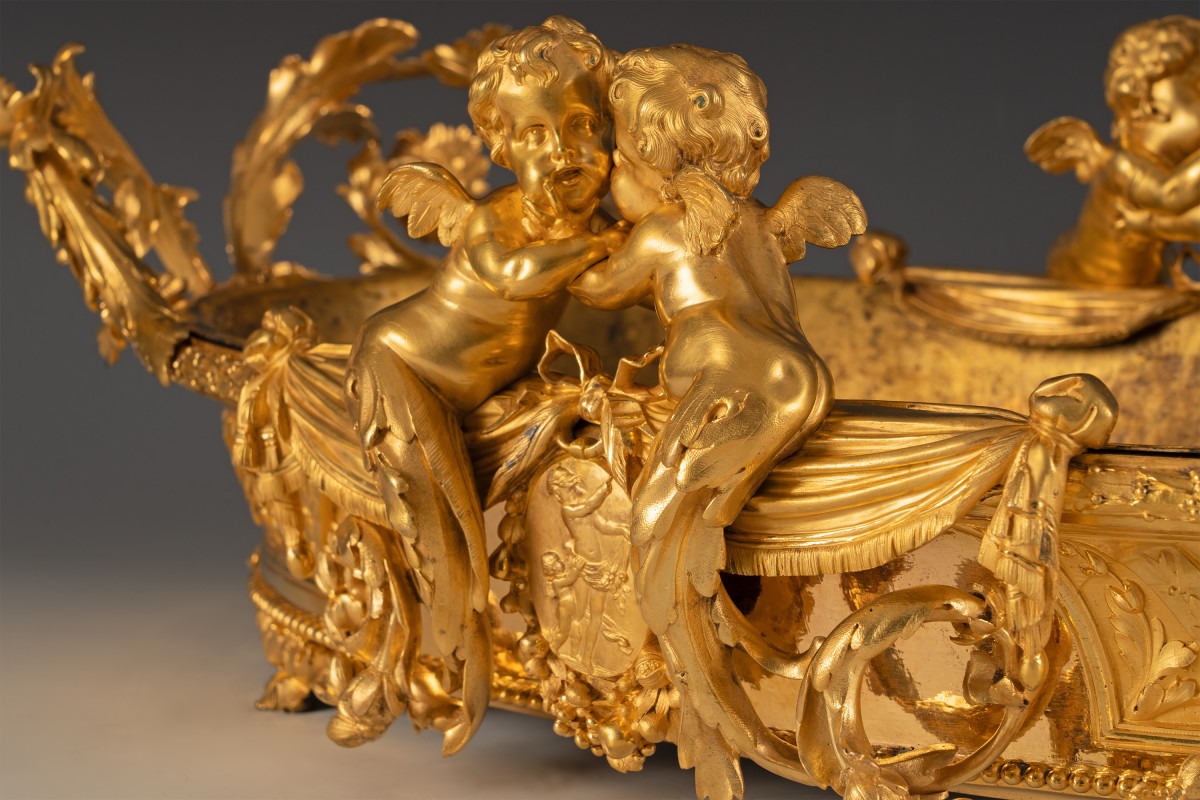
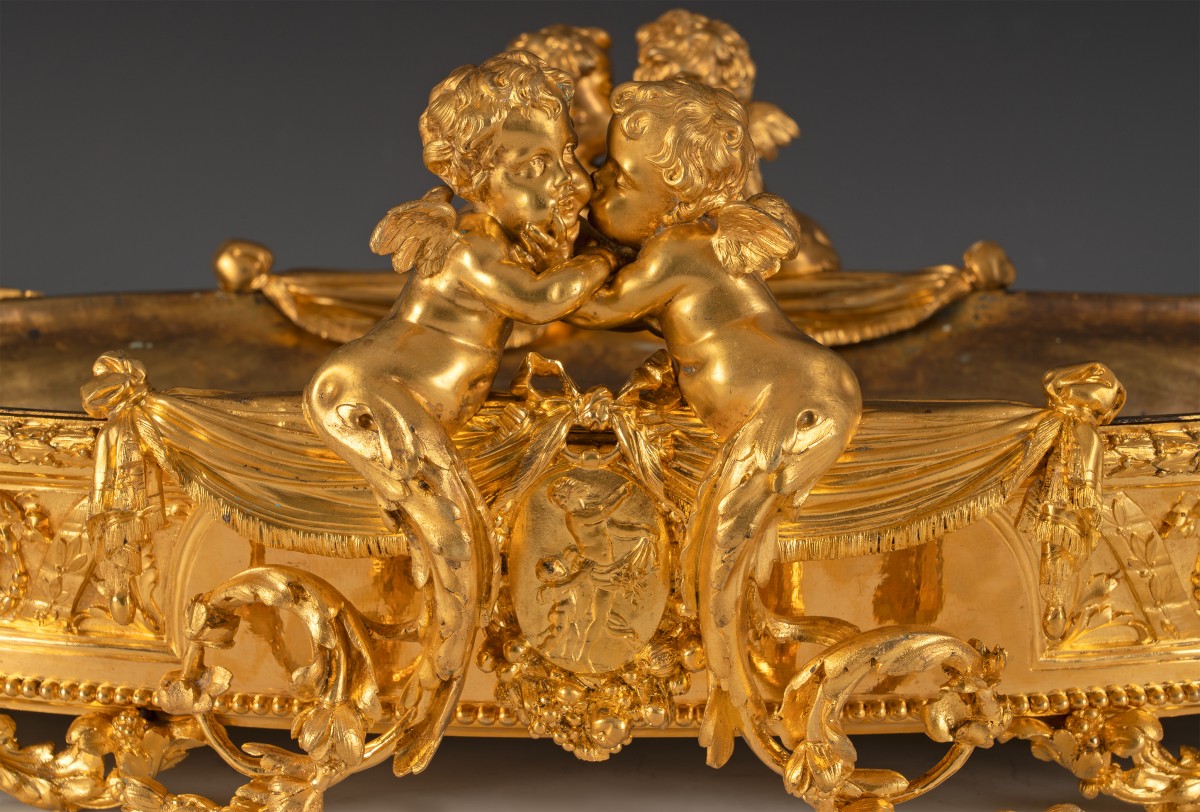
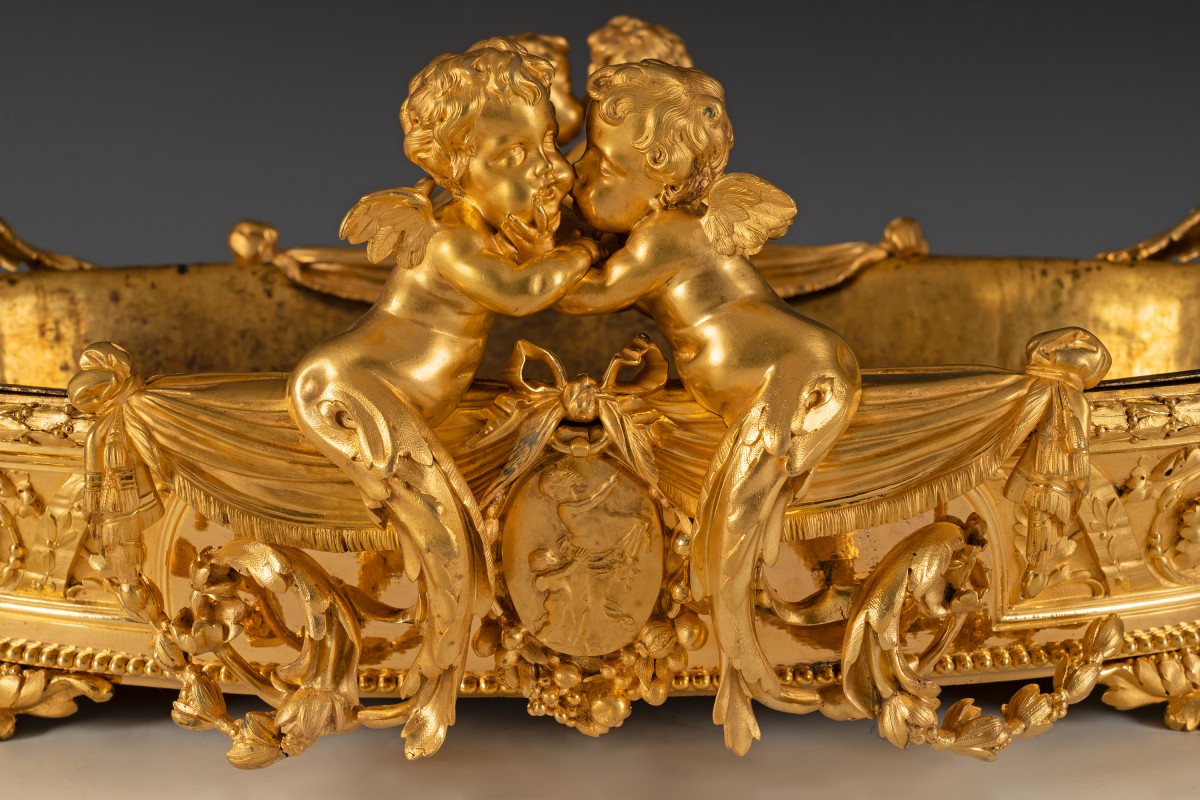
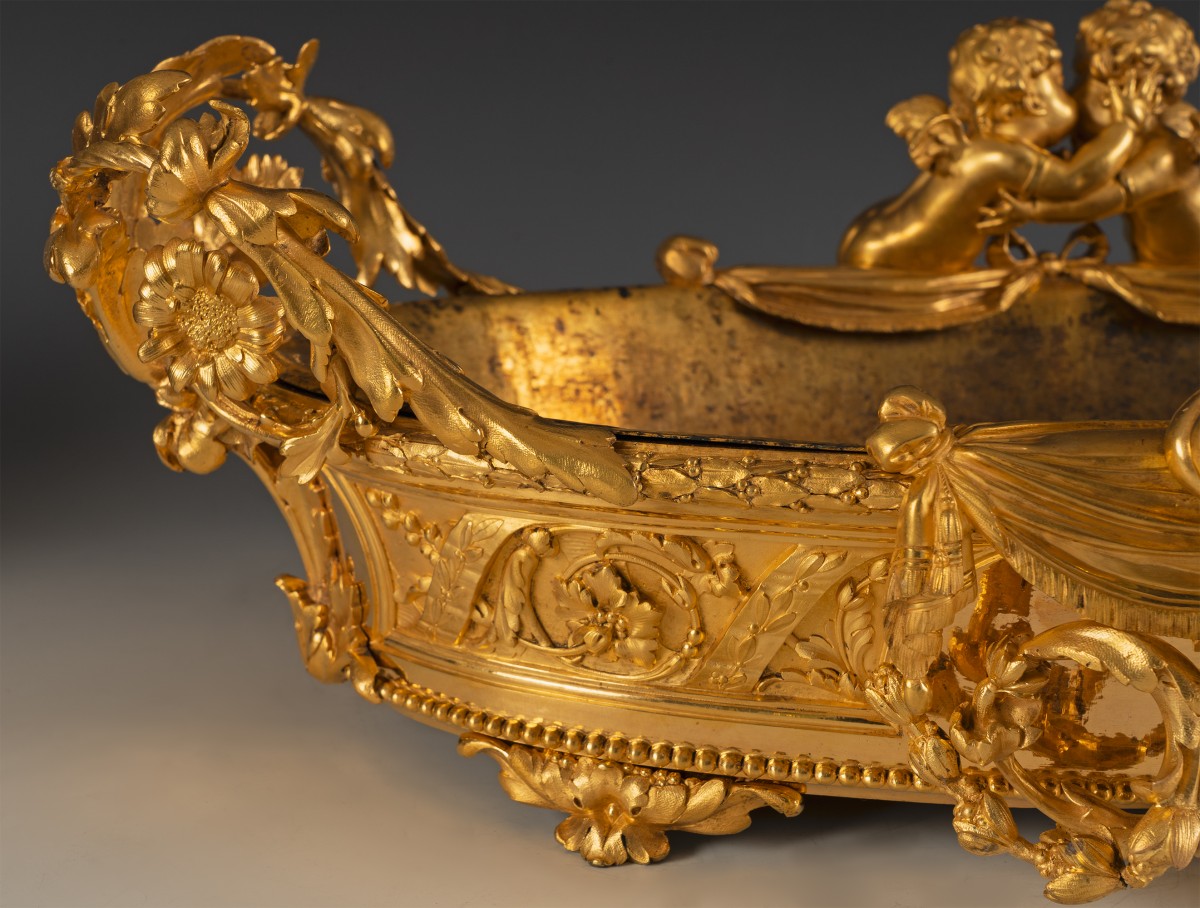
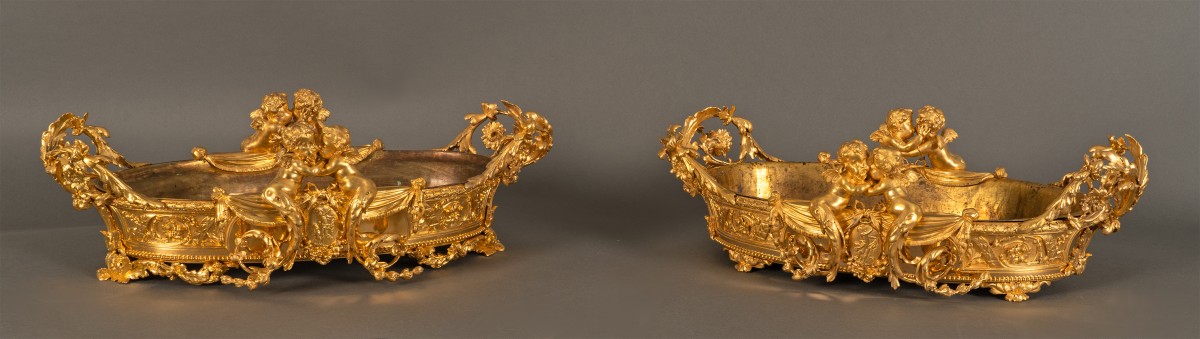
A fine pair of oval jardinieres in chiselled and gilded bronze, with inner liners. They are adorned in relief and enhanced by a subtle interplay of burnished and matte finishes, featuring leafy scrolls, asymmetrical volutes, shells, and clasps structuring the composition in a centered symmetrical rhythm. At the center stand out two winged cupids, rendered in the round, entwined in a tender embrace. Their supple modeling, full fleshy forms, rounded facial features, and curly hair reflect a desire for naturalism tempered by academic idealization. A second pair of cupids, arranged as pendants, repeat the same gesture. They surmount a medallion depicting Venus.
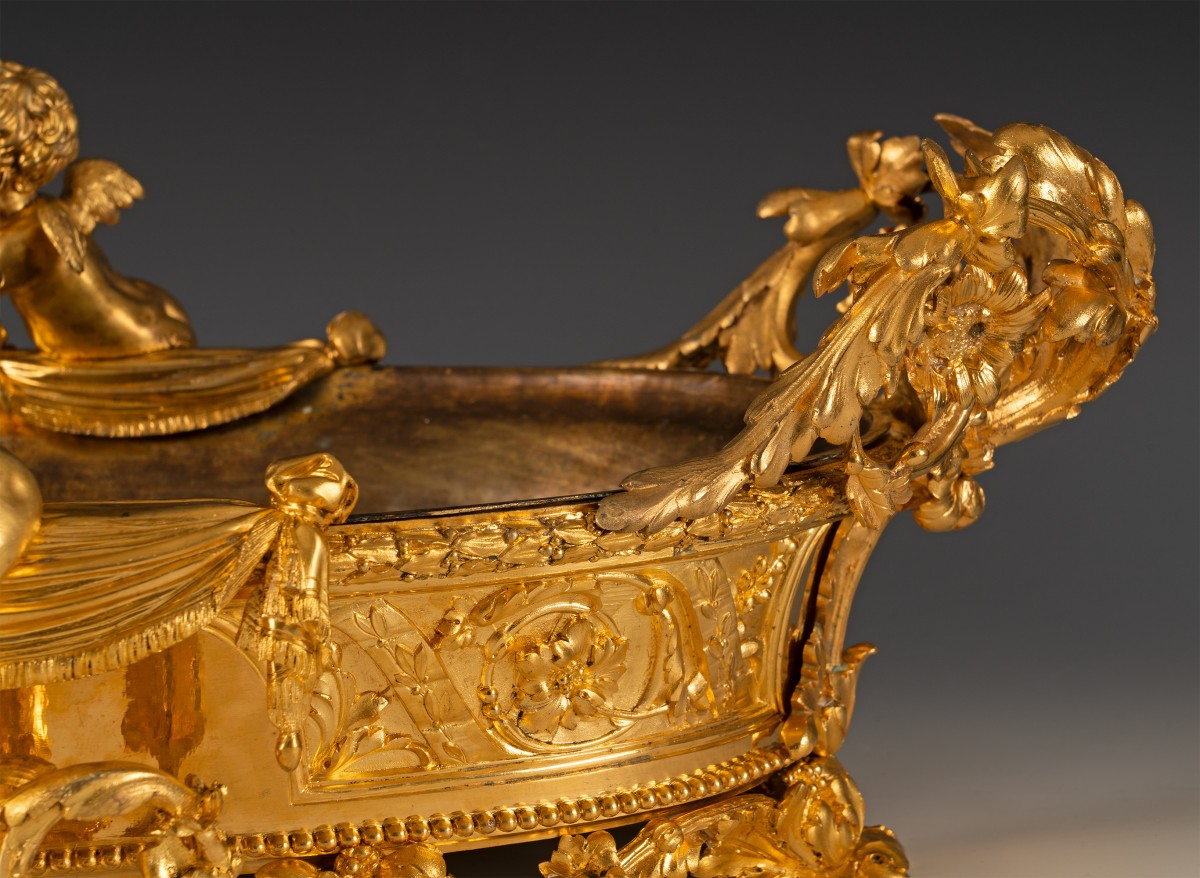
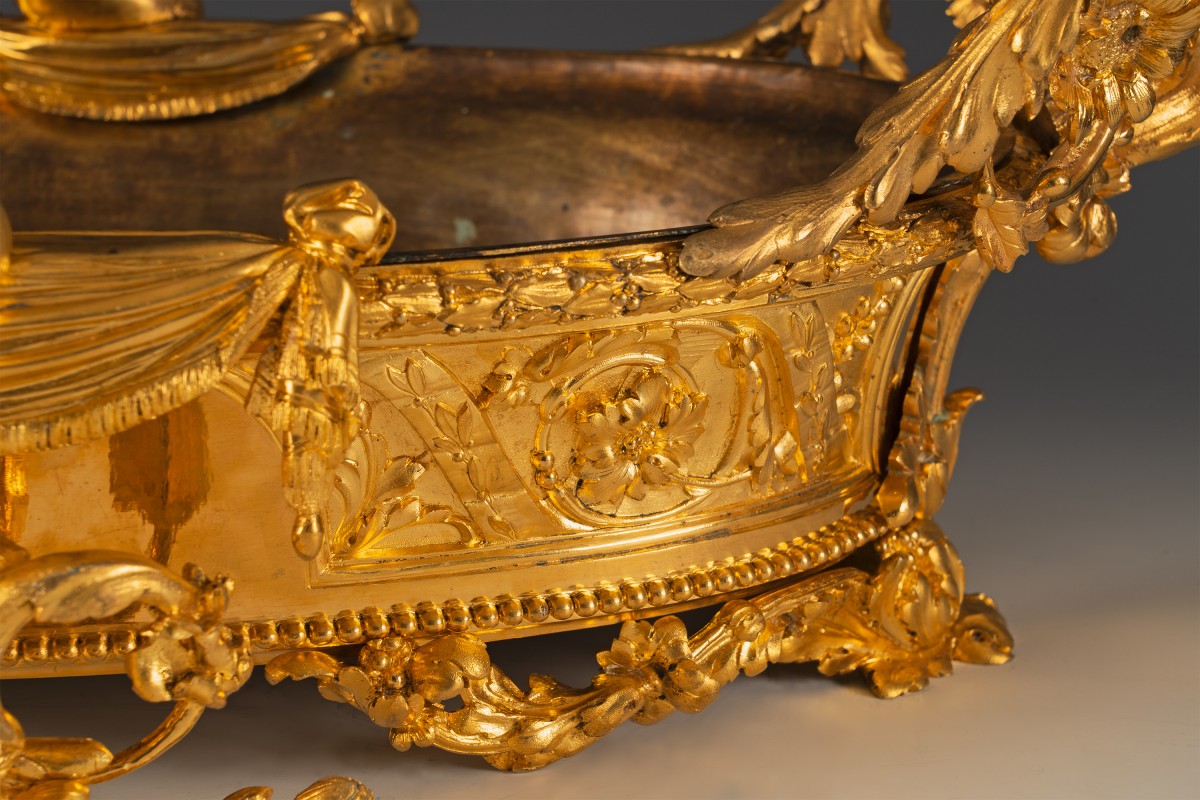
The lateral handles, pierced and asymmetrical, unfold into broad vegetal scrolls populated with flowers and foliage, in a distinctly Rocaille spirit. The base, composed of leafy scrollwork resting on small discreet supports, lends the ensemble a visual lightness despite the richness of the decoration.
The decorative vocabulary draws upon the Louis XV style in the dynamism of its lines and the abundance of scrollwork, while the overall composition, strictly axial and balanced, reveals a rationality inherited from Neoclassicism. This synthesis is characteristic of nineteenth-century Parisian bronziers, within the context of the revived taste for the eighteenth century under the Second Empire.
The theme of cupids refers to an iconography of ancient origin, reinterpreted during the Renaissance and widely disseminated in the French decorative arts. A symbol of love, abundance, or domestic felicity, their presence is particularly suited to a jardinière, an object associated with the cultivation of flowers and the ornamentation of bourgeois interiors. Intended to hold floral arrangements, ornamental plants or fruits, theses jardinieres belonged to a type of display furniture, likely conceived for a salon or boudoir. It testifies to the taste for spectacular pieces, both functional and sculptural, that contributed to the staging of domestic luxury.
Biography :
Henri Picard (active 1831–1864), gilder and bronzier, established himself in Paris at 6 rue de Jarente from 1831 to 1839, then at 10 rue de la Perle from 1840 to 1864. He carried out the gilding of the Petits Appartements of Napoleon III at the Louvre Palace. He produced a wide variety of works, such as a Japonist inkwell and Pompeian-style centrepieces. Henri Picard earned his reputation for the exceptional quality of his jardinières and fireplace garnitures.