Offered by Tobogan Antiques
REQUEST INFORMATION
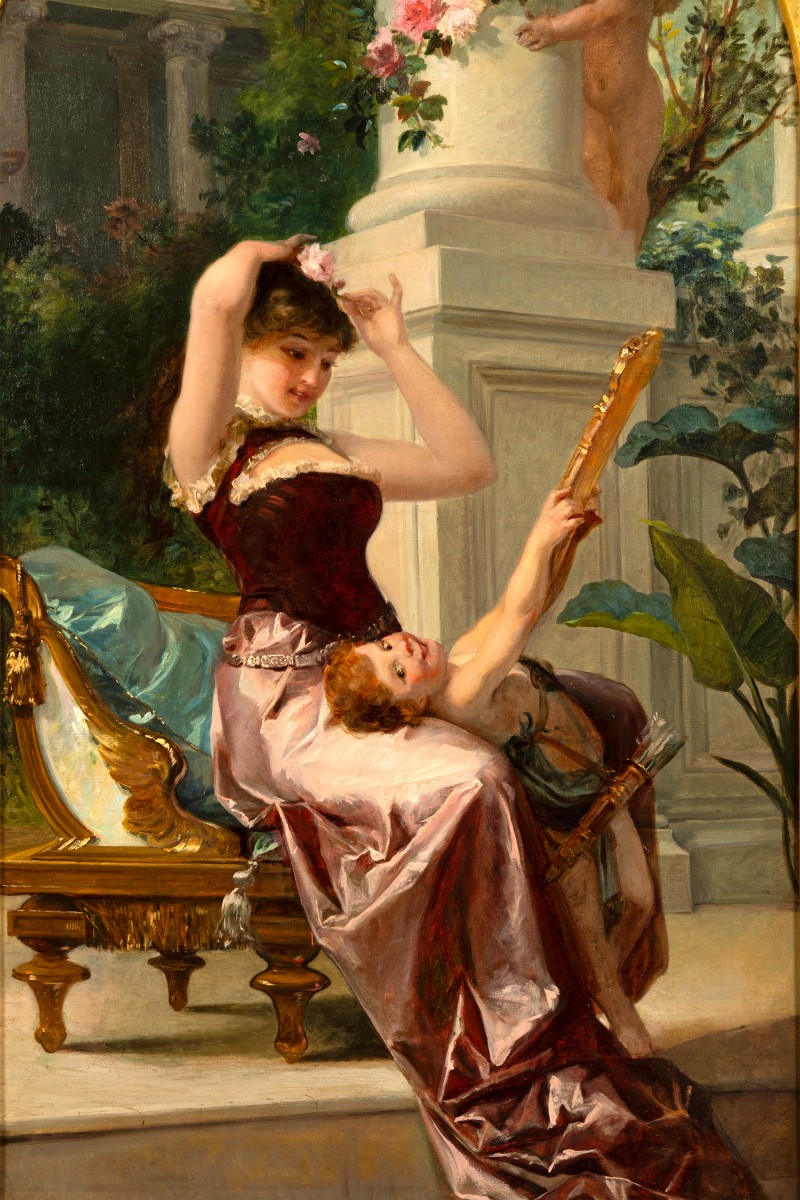
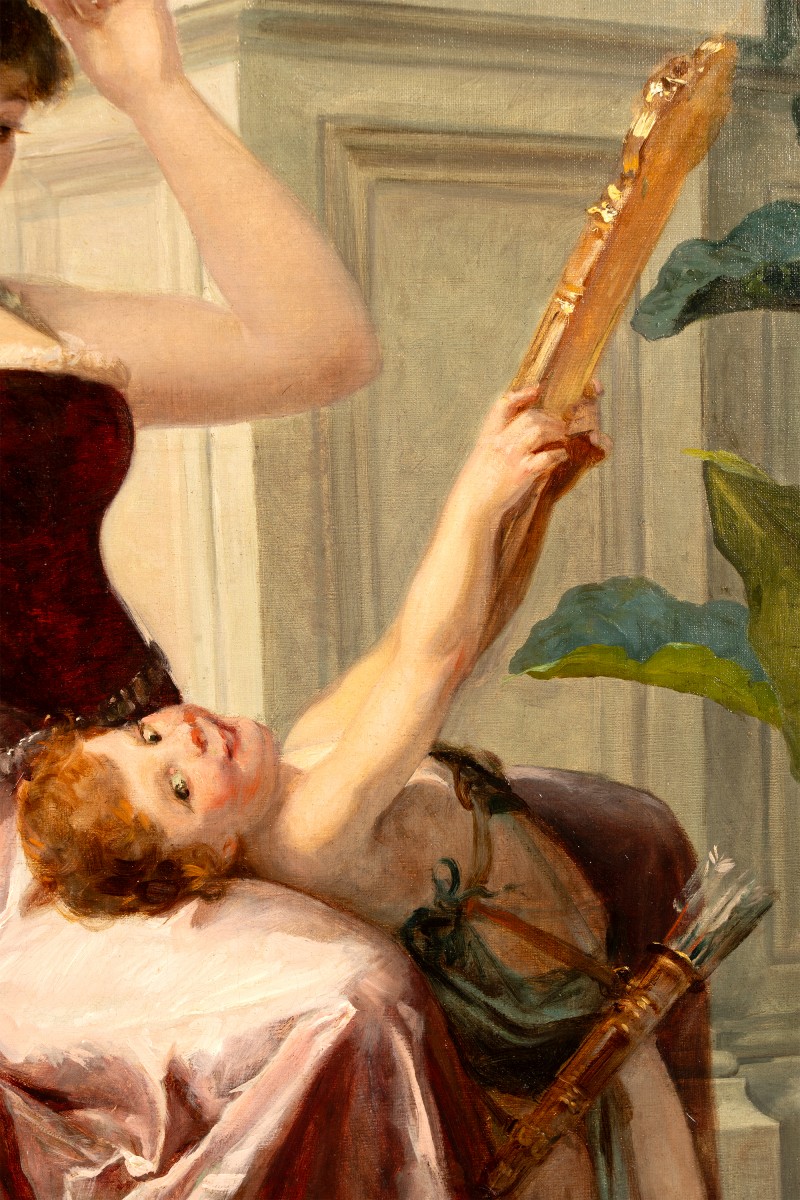

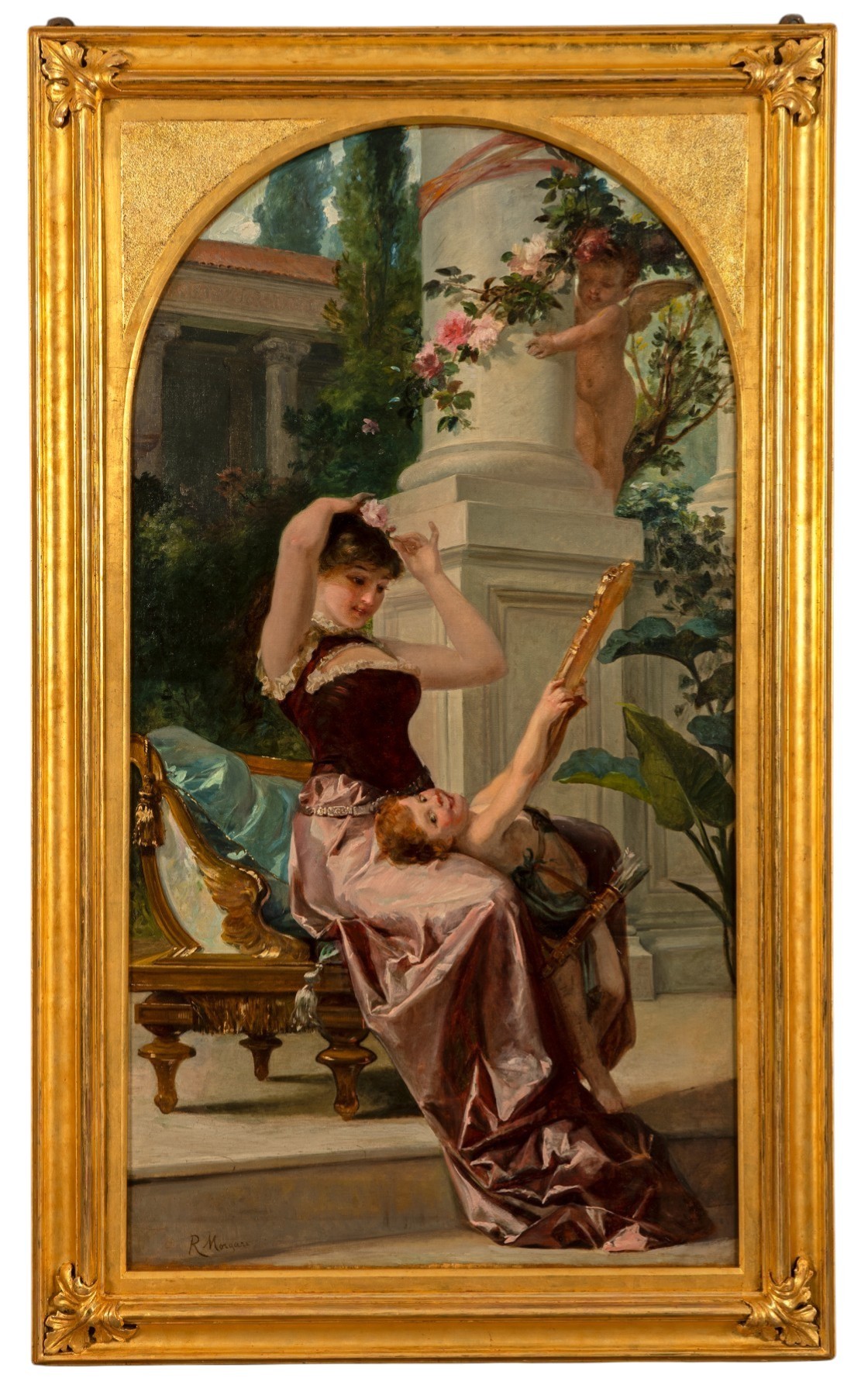
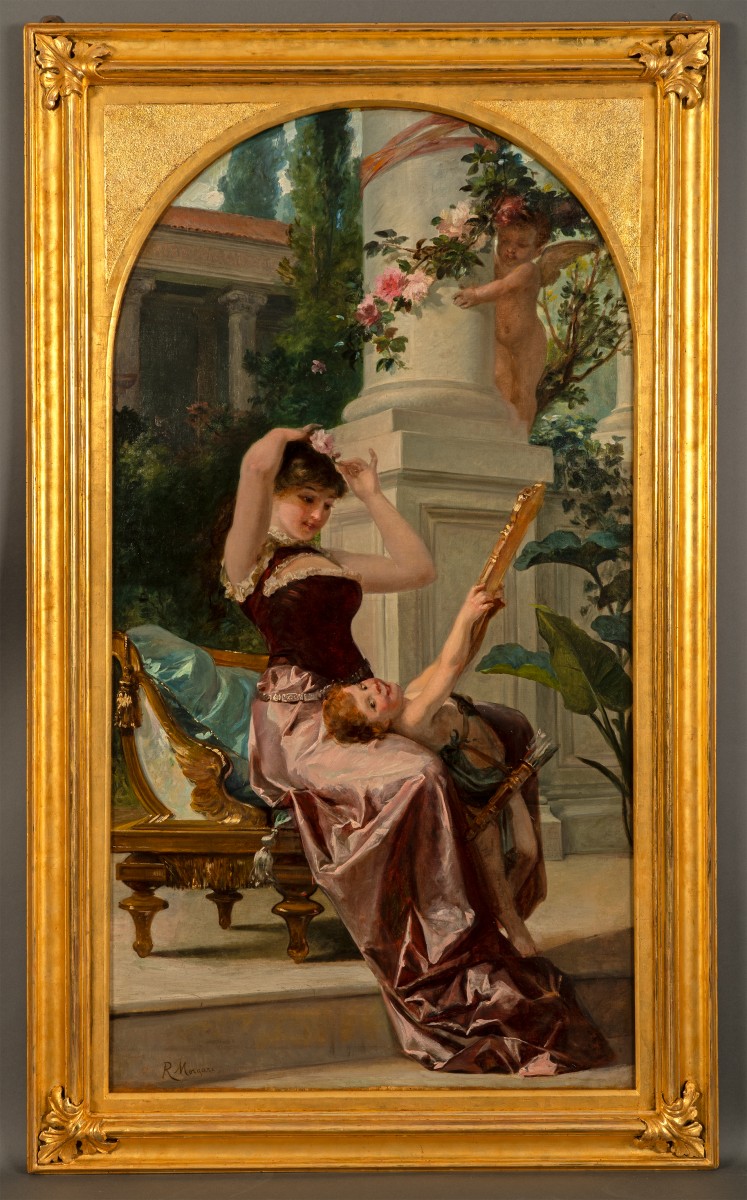
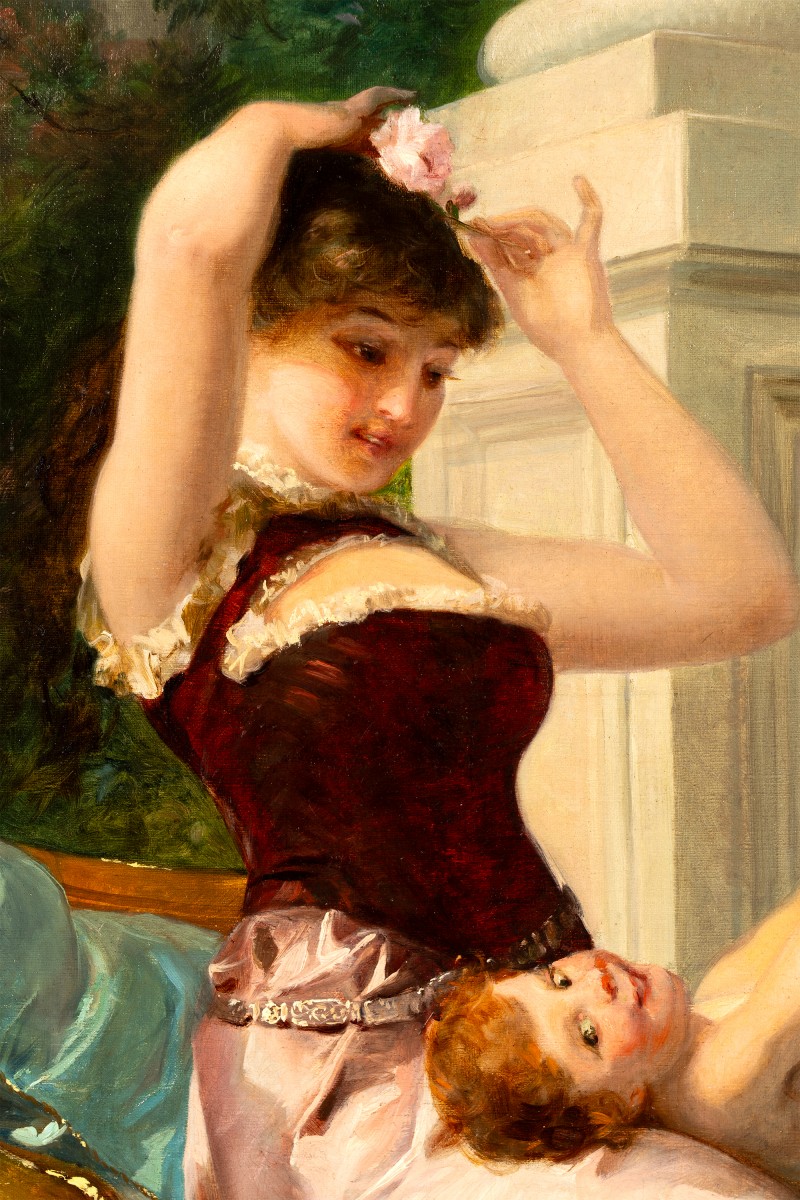
This painting depicts an elegantly dressed young woman seated in an armchair in a garden, adjusting a flower in her hair. A Cupid, half reclining across her lap, holds up a mirror tilted toward her. In the background, a winged putto stands on a pedestal, surrounded by floral garlands, introducing a symbolic dimension. The architecture, an antique colonnade partially concealed by cypresses and lush vegetation, creates a theatrical setting in which nature and culture harmoniously interact.
The presence of the putto, associated with blossoming flowers and the mirror, suggests an allegory of Beauty. The mirror, a traditional attribute of Venus, may allude to vanity or self-awareness, yet the tone here remains light and gallant rather than moralizing. The atmosphere evokes a refined genre scene more than a strictly codified allegory.
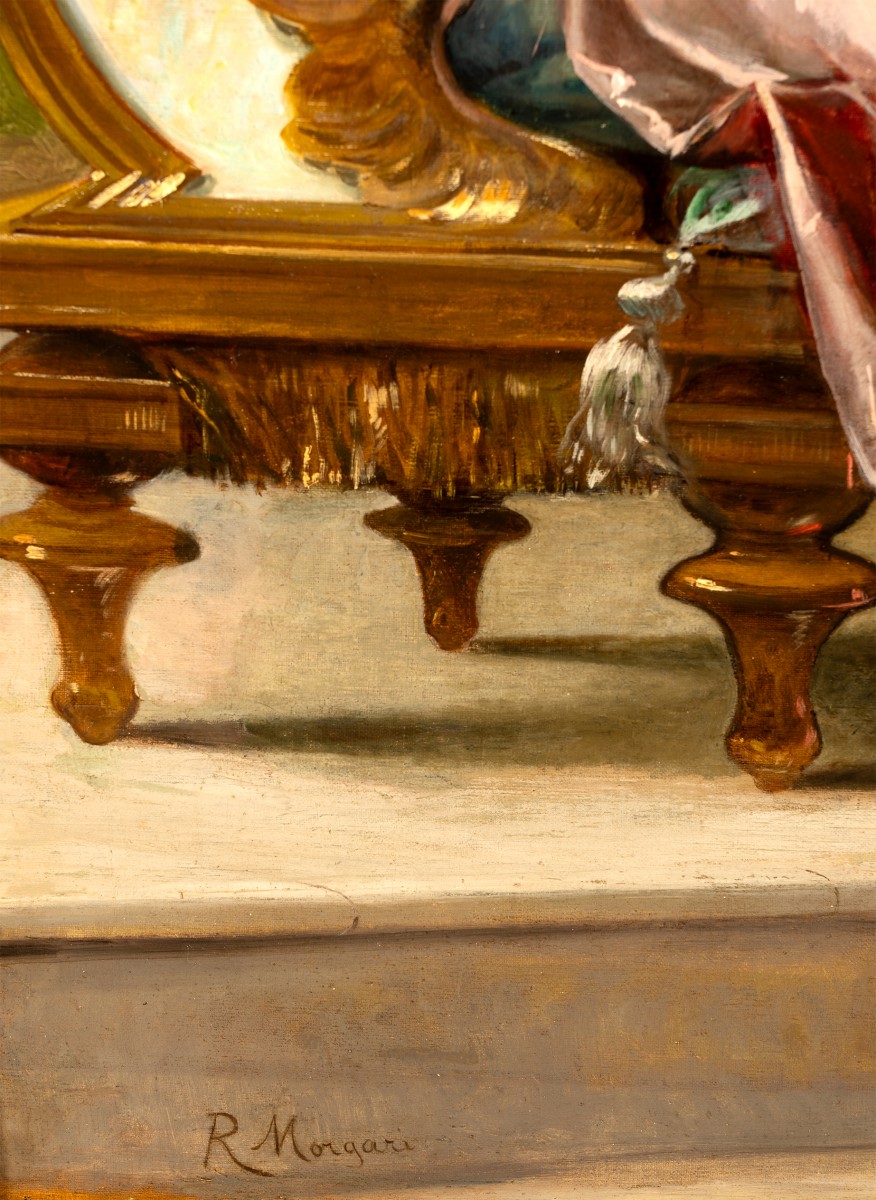
This work by Rodolfo Morgari belongs to the Italian academic tradition of the second half of the nineteenth century, marked by a pronounced taste for elegant scenes with allegorical and historicizing elements.
Biography :
Rodolfo Morgari (1827–1909) was born into a family of painters and decorators. He received his training at the Accademia Albertina di Belle Arti di Torino, one of the leading centers of academic instruction in Northern Italy. There, he developed a strong command of drawing, modeling, and monumental composition.
He was the brother of Paolo Emilio Morgari, also a painter, with whom he collaborated on several decorative commissions. Their production forms part of the broader movement of religious and civic decoration that accompanied the political and urban transformations of Piedmont in the nineteenth century.
Morgari initially specialized in monumental religious painting. He created numerous decorative cycles for churches in Piedmont and other Italian regions, responding to the growing demand for sacred ornamentation within the context of the nineteenth-century Catholic revival.
At the same time, he produced genre scenes and compositions of an allegorical or historicizing character, often marked by a Neo-Rococo or Neoclassical taste. These works, intended for a private clientele, reveal a keen sense of decorative elegance, refined color, and meticulous attention to fabrics and accessories.