Offered by Galerie PhC

European paintings from the 17th, 18th and 19th centuries.
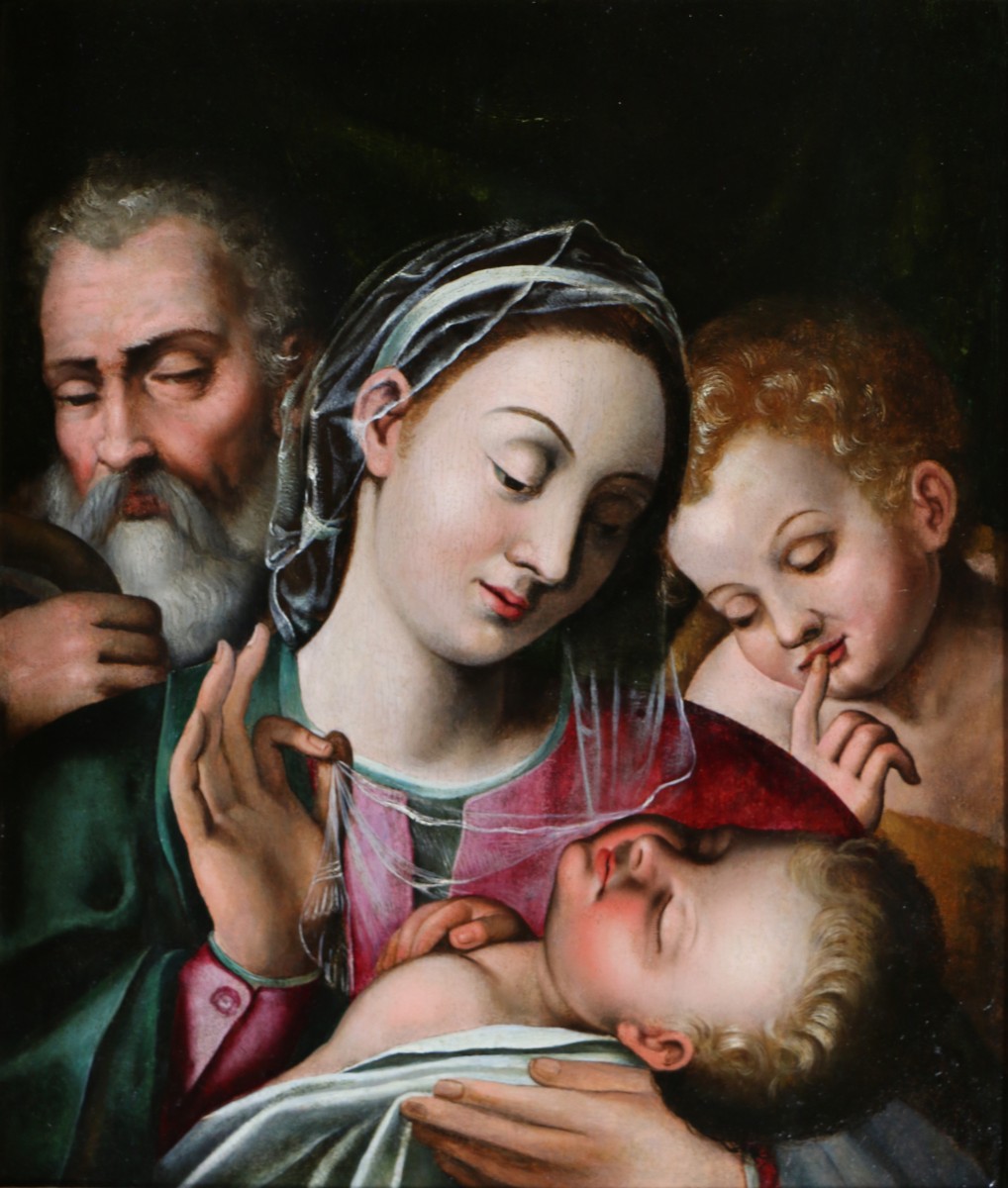
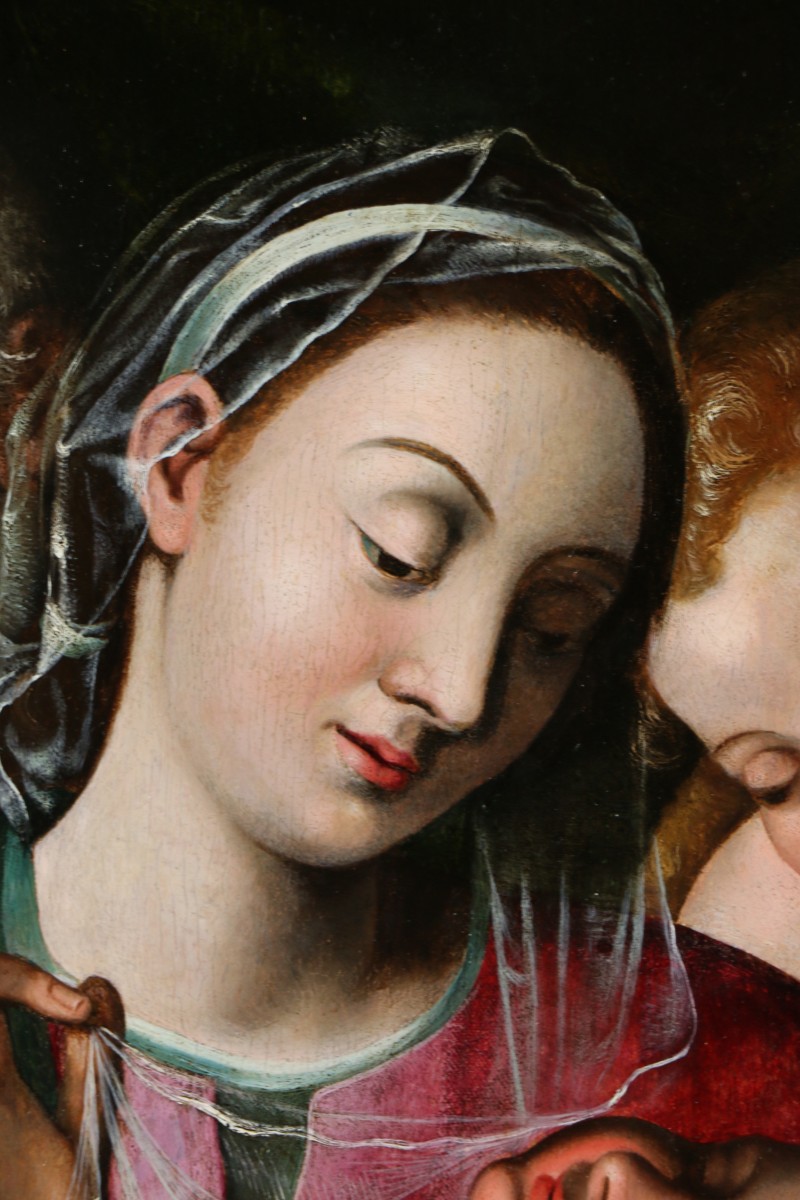
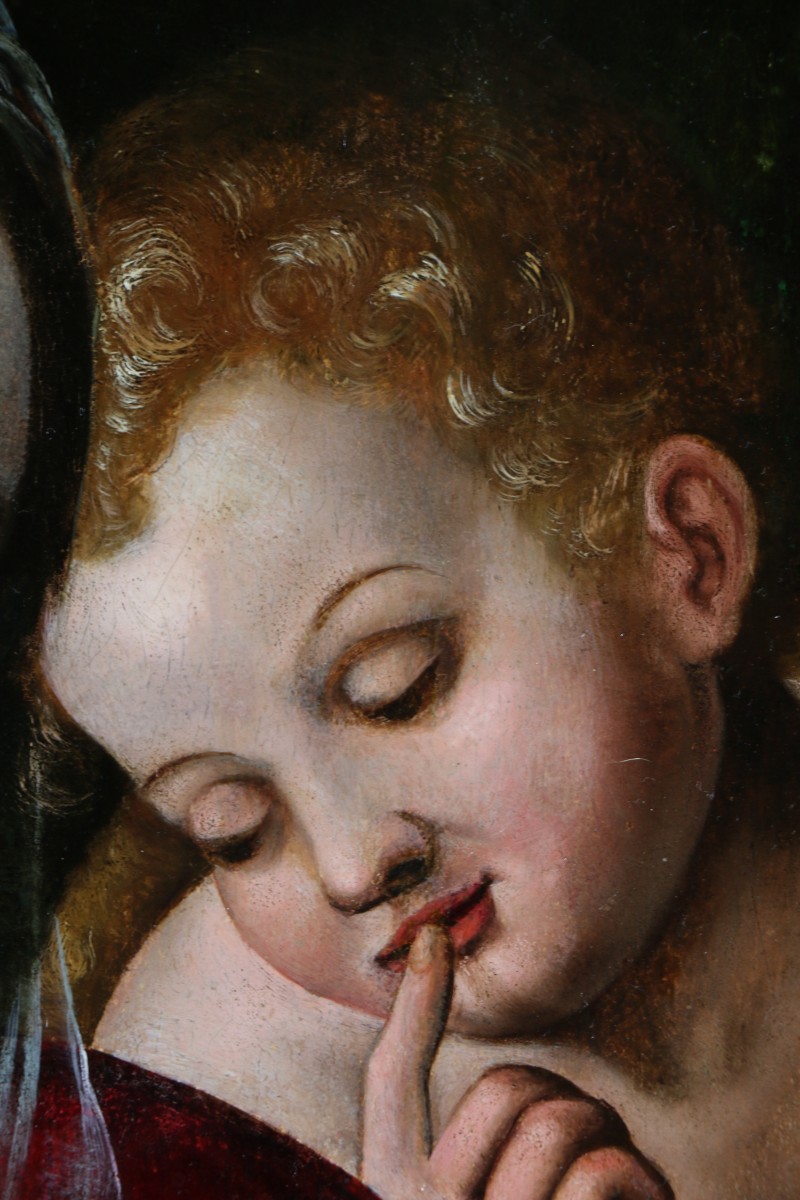
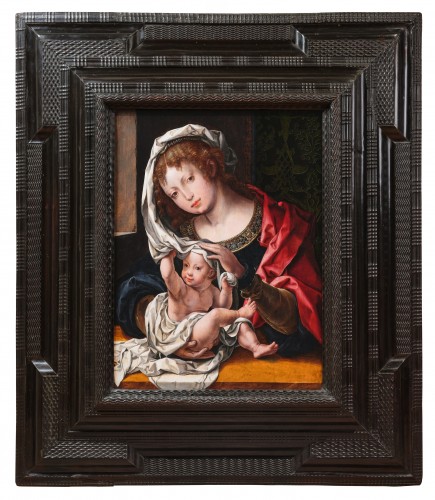
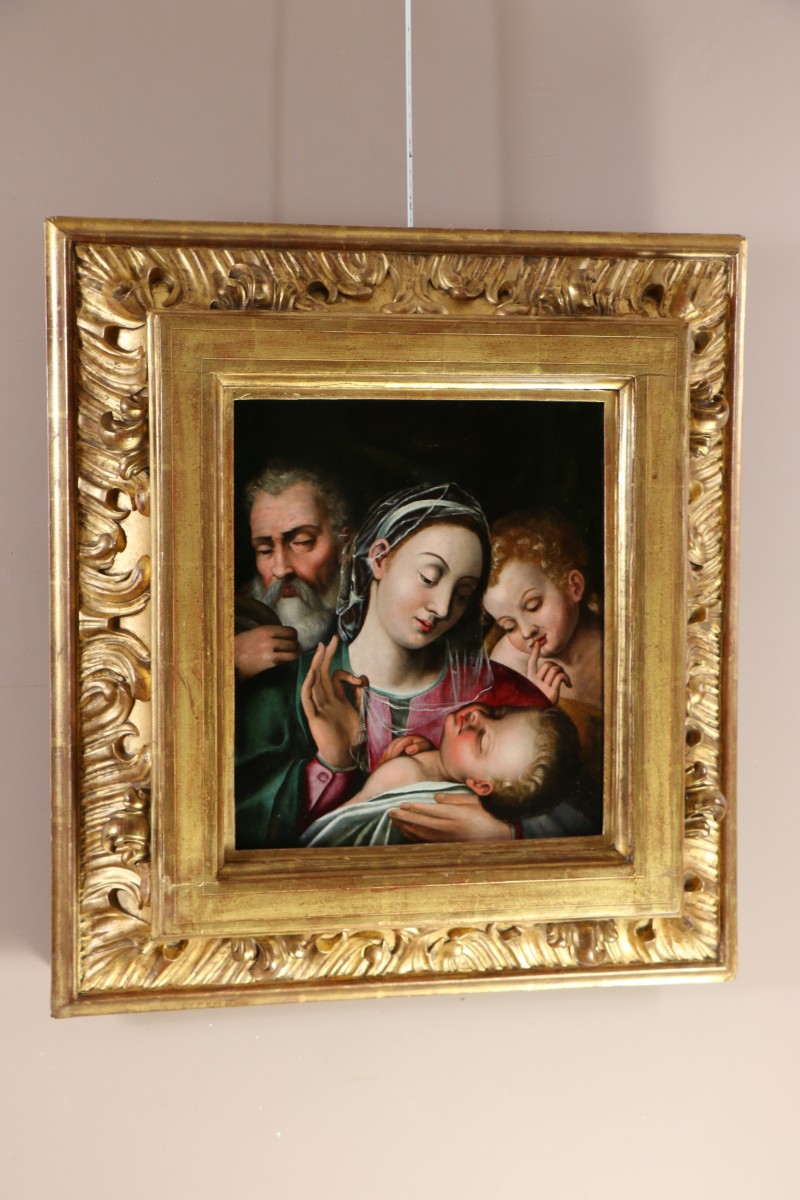
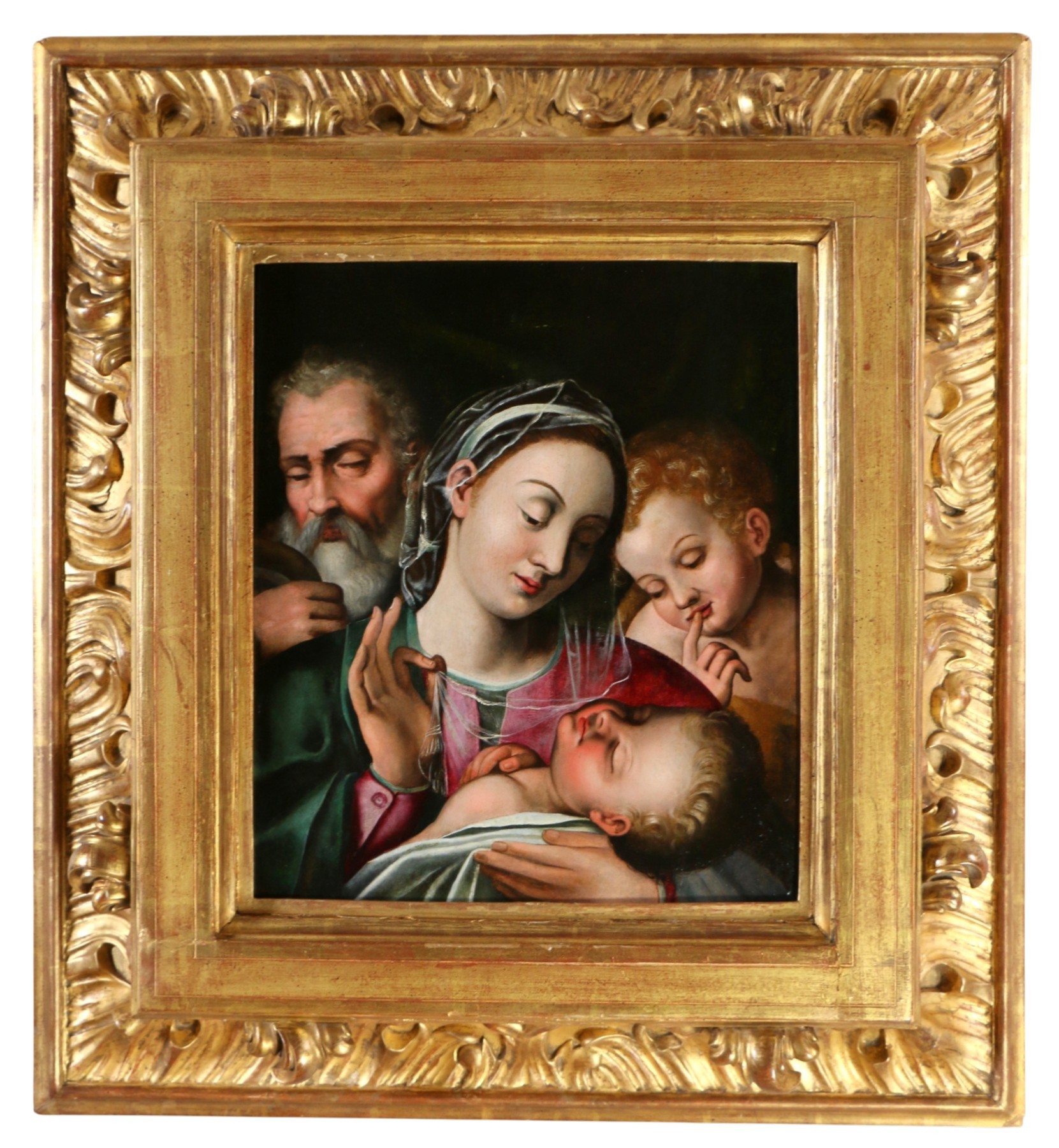
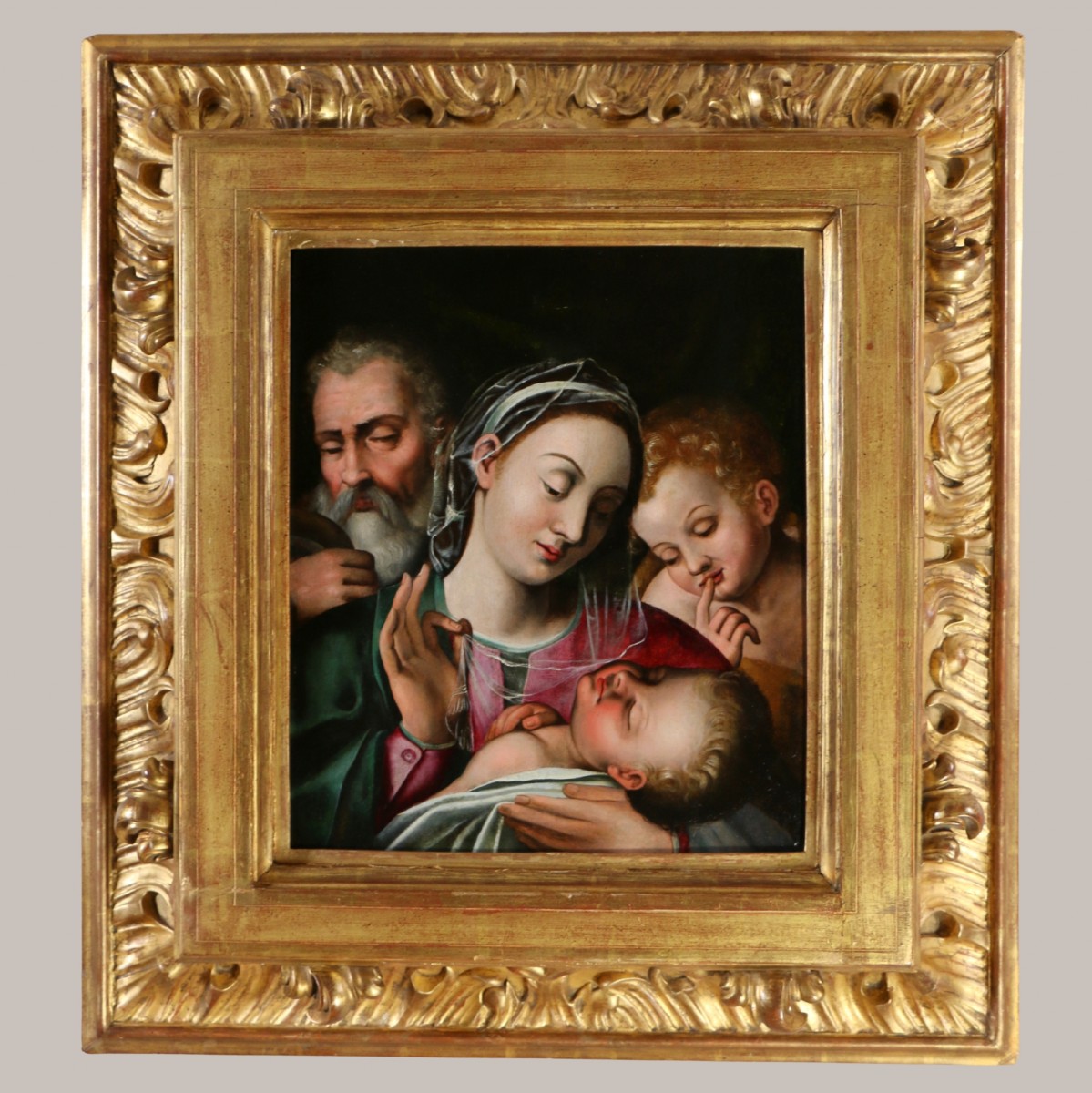
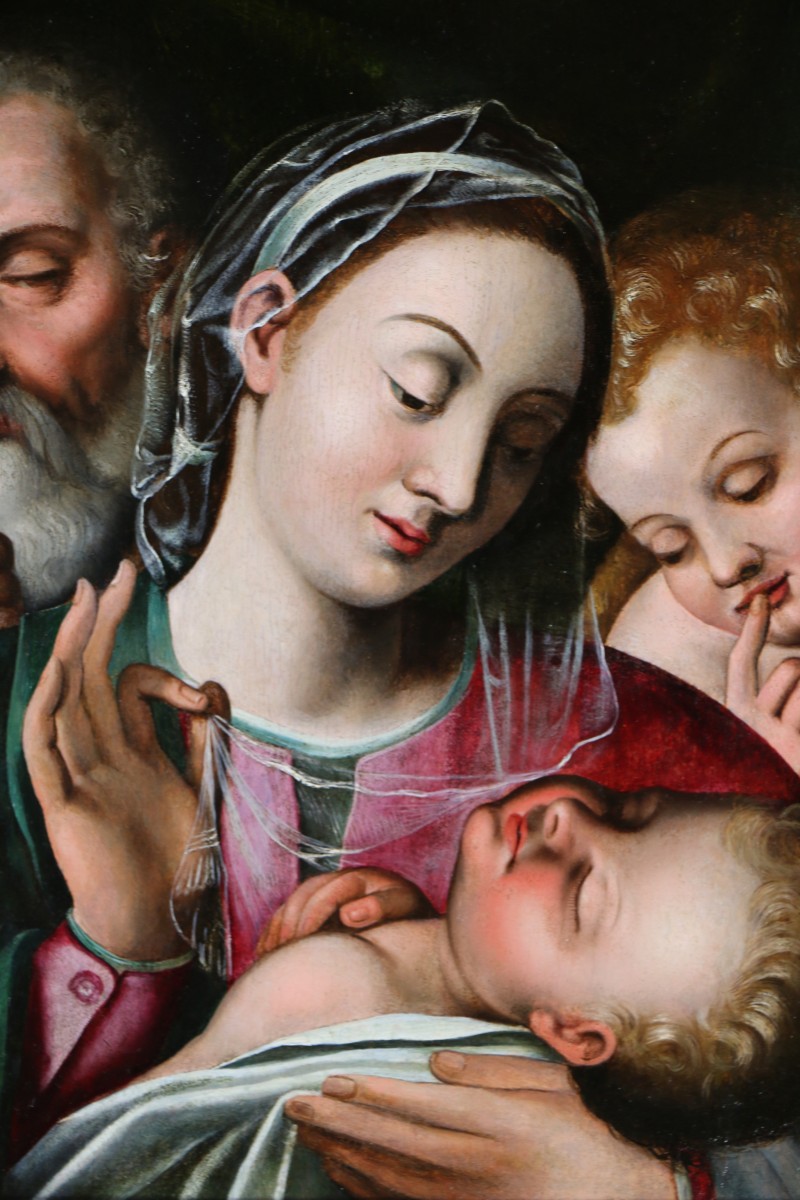
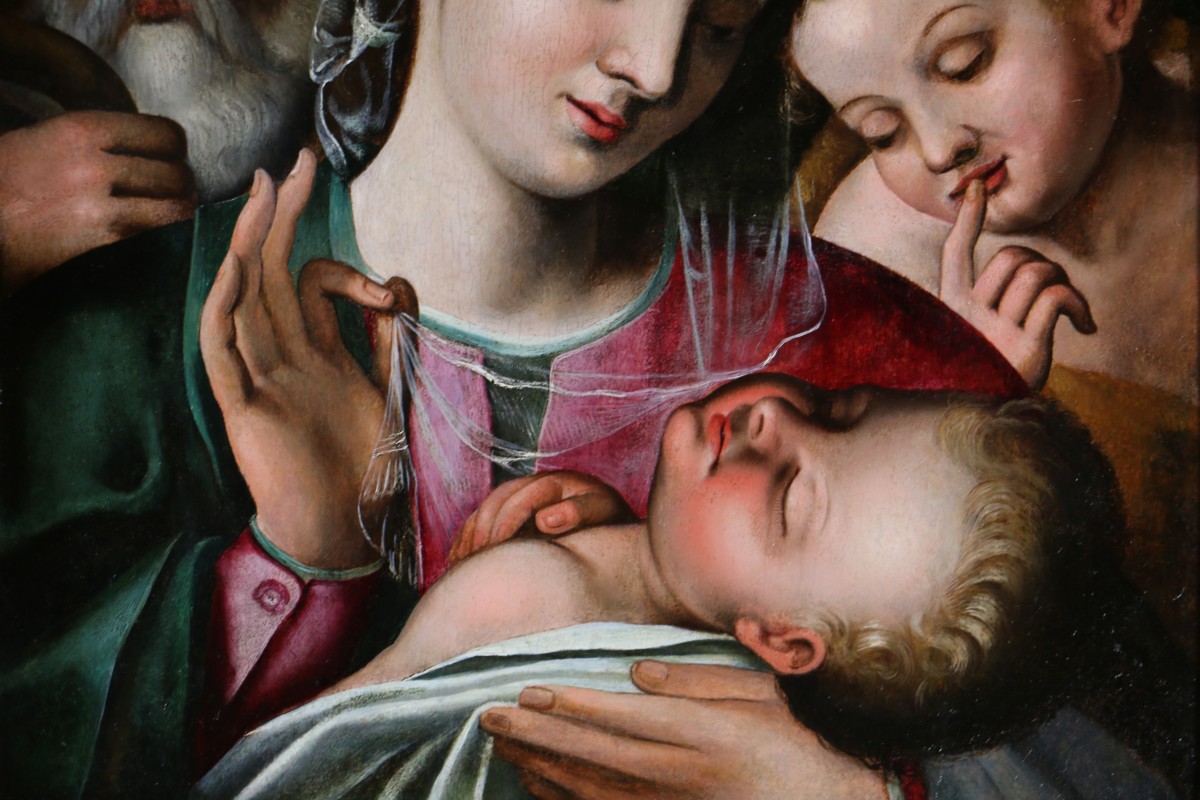
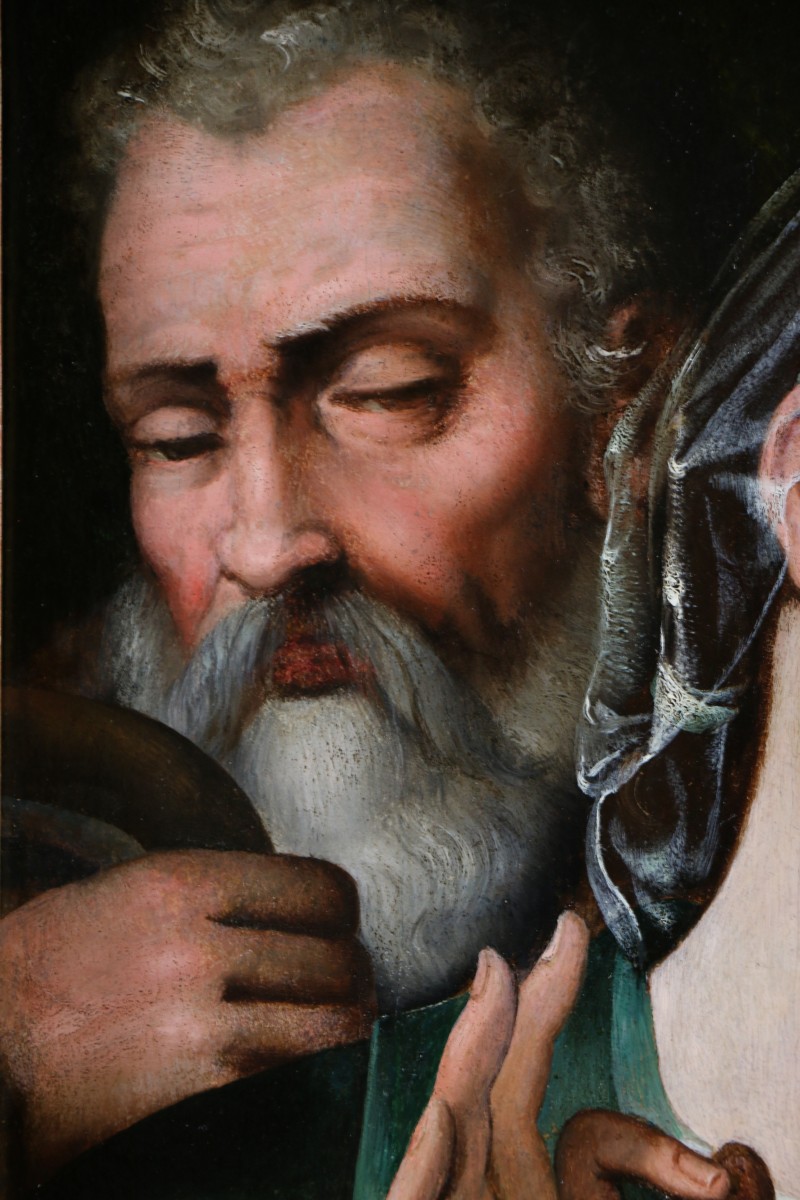
Giovanni Battista Ramenghi, known as Il Bagnacavallo (1521-1602), The Holy Family, circa 1540/50.
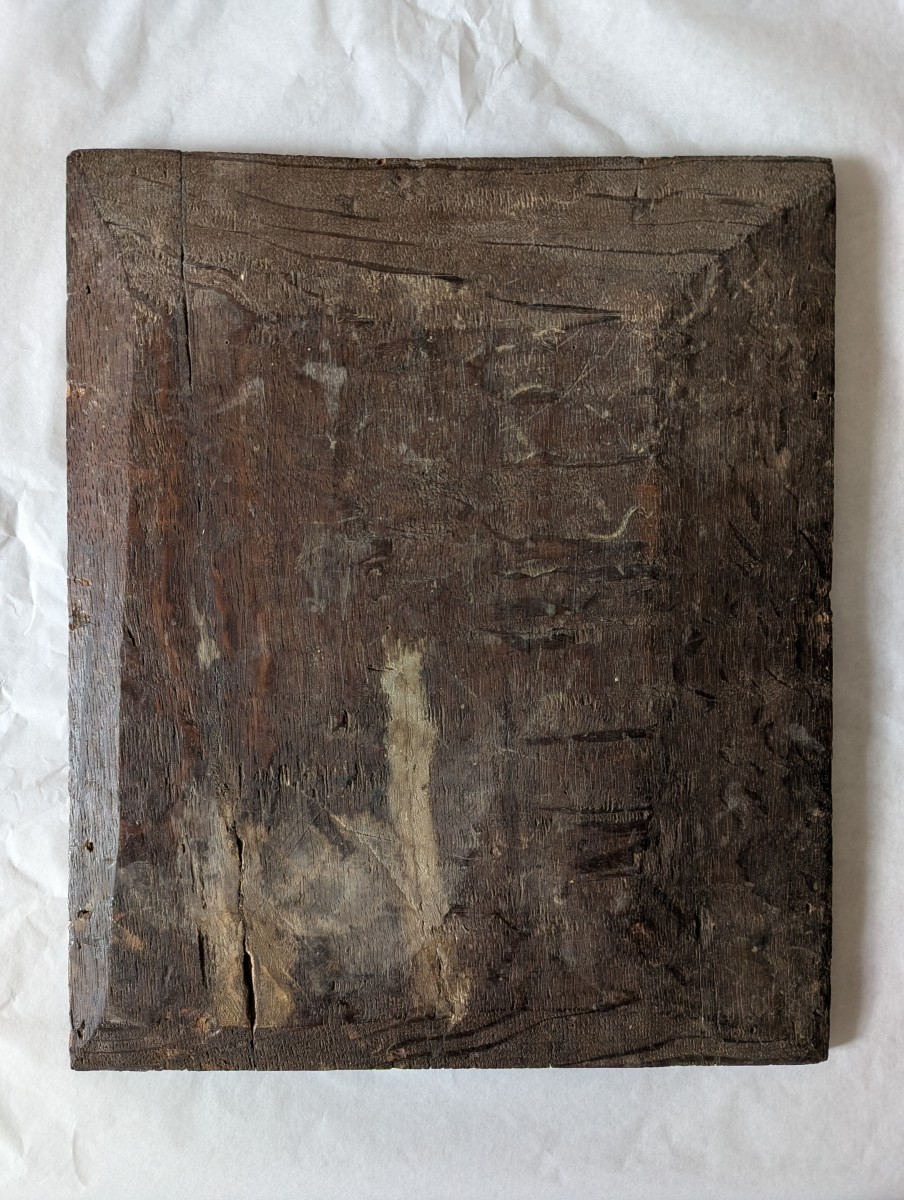
Panel measuring 40 cm by 33.5 cm.
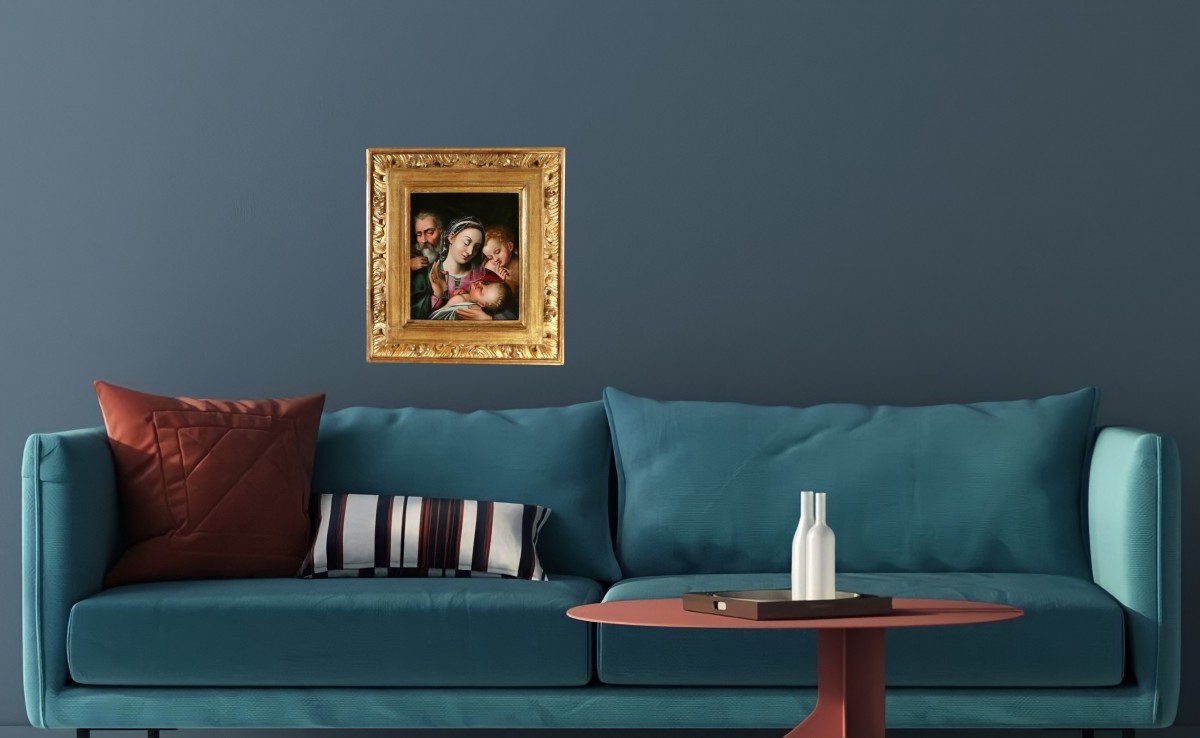
Antique frame measuring 68 cm by 63 cm.
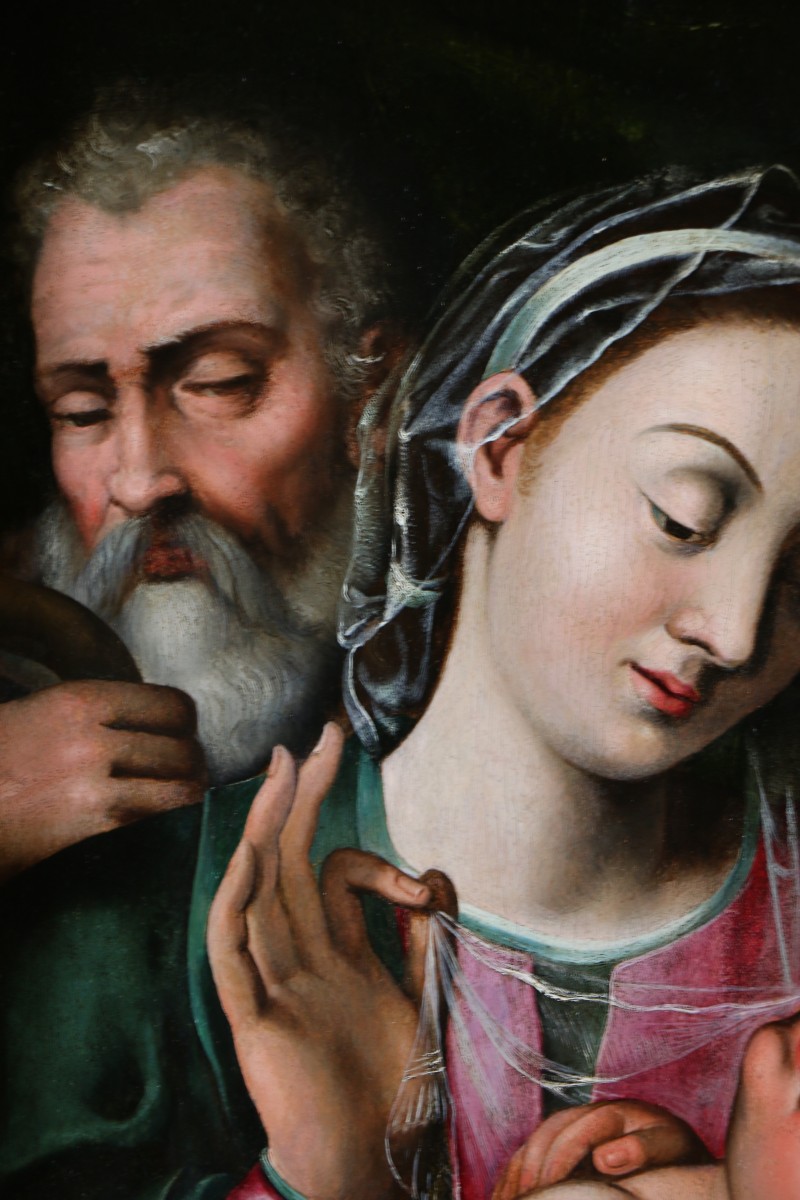
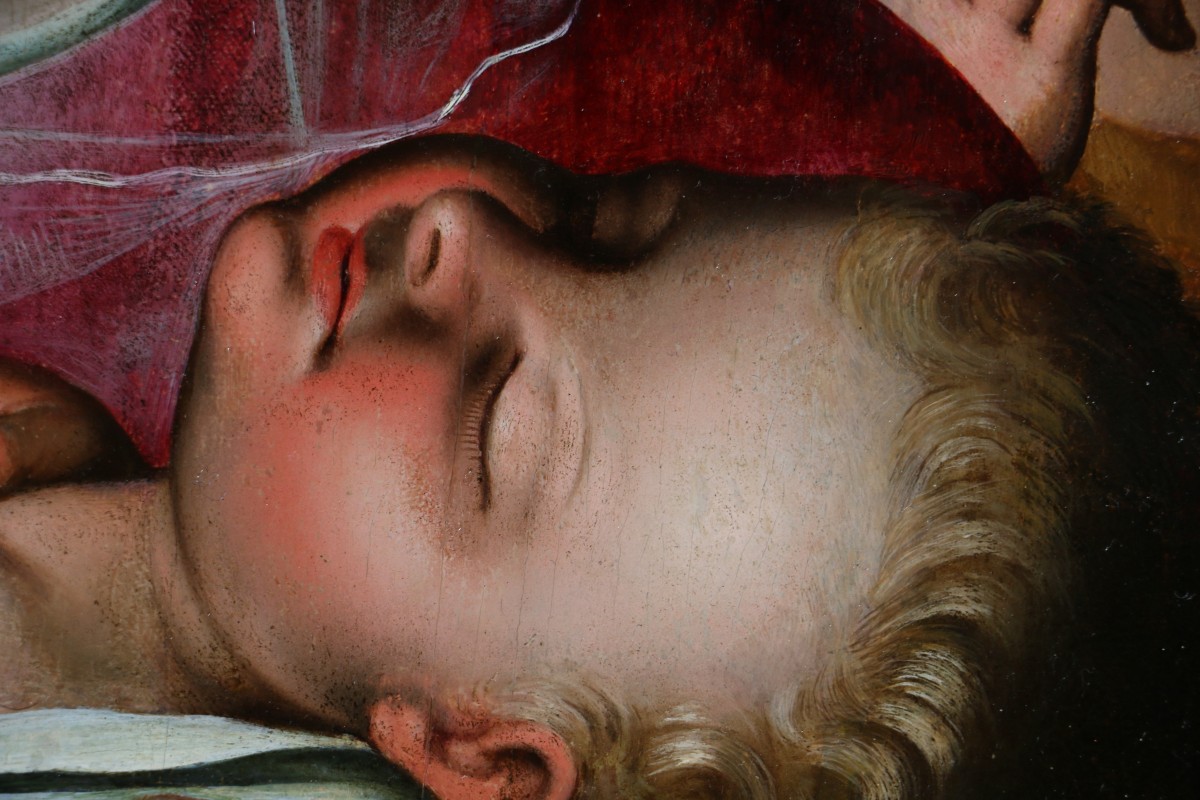
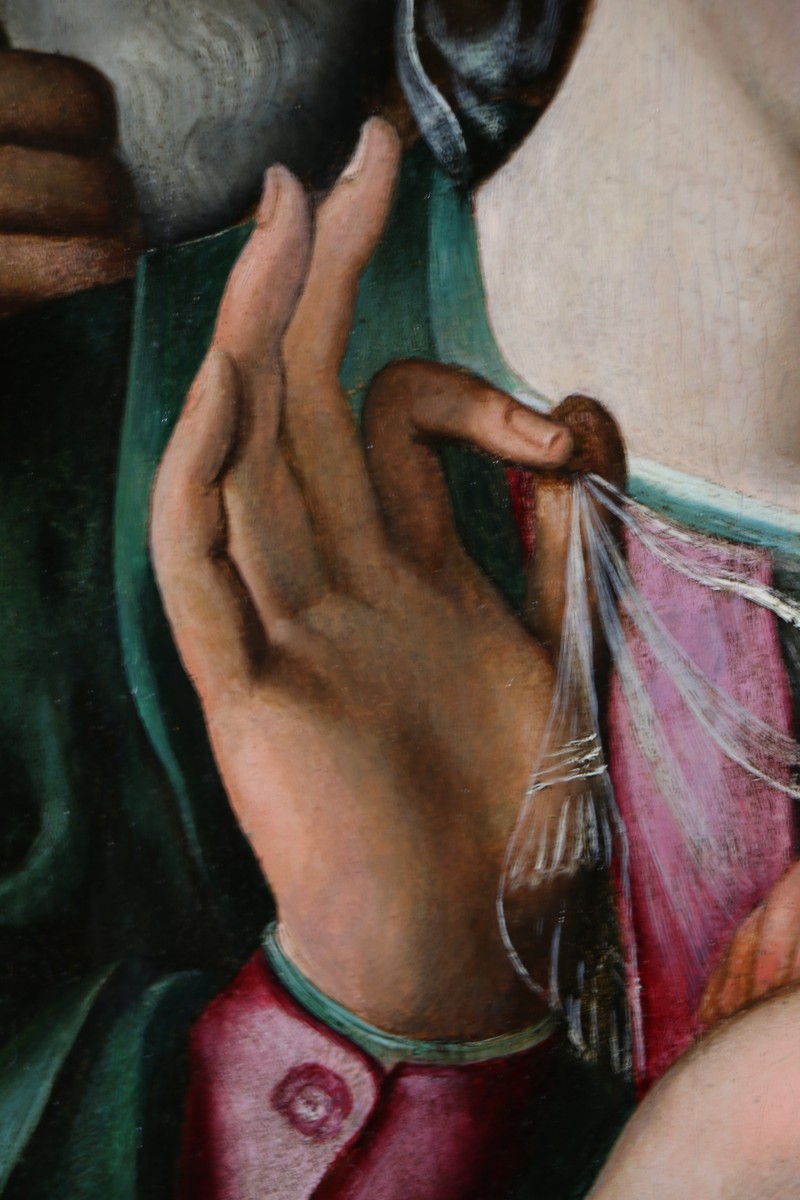
This superb painting, enhanced by a sumptuous frame, presents a Holy Family with the young Saint John the Baptist, a theme particularly prevalent in Italian painting of the first half of the 16th century. The composition shows the Virgin seated, holding the Infant Jesus on her lap, accompanied by Saint Joseph, positioned slightly behind, while the young Saint John stands nearby in a devotional pose. The whole is organized according to a simple and balanced pyramidal structure, inherited from High Renaissance models. The scene is characterized by an intimate and contemplative atmosphere. The faces have regular, oval features with lowered eyelids, giving them a gentle and meditative expression. The modeling of the flesh tones is blended, with subtle transitions between shadow and light. The drapery, rendered with fluidity, and the palette contribute to the overall warm harmony. The technique is oil on wood panel, probably poplar, a support frequently used in Emilia-Romagna during the 16th century. The paint layer displays a network of fine, regular craquelure, indicative of its age. Stylistically, the work clearly belongs to the Emilian tradition, influenced by the circle of Raphael. It shows notable affinities with the work of the Ramenghi family.
Giovanni Battista Ramenghi, known as Il Bagnacavallo (1521-1602)
Giovanni Battista Ramenghi, known as Il Bagnacavallo (1521-1602), was an Italian Renaissance painter born in 1521 in Bagnacavallo, a small town near Ravenna in Emilia-Romagna, and died in 1601 in his hometown. He is sometimes referred to as Giovanni Battista II Ramenghi to distinguish him from his father, who was also a painter. Born into a family of artists, Giovanni Battista was the son of Bartolomeo Ramenghi, known as Il Bagnacavallo, a pupil of Raphael. He thus grew up in an artistic environment steeped in the legacy of the Roman High Renaissance. Trained in the family workshop, he quickly absorbed the principles of Raphael-inspired classicism: harmonious compositions, gentle figures, and balanced colors. Throughout his career, he developed a personal style rooted in the Emilian tradition of the 16th century. His work reflects a transition between the classical ideal inherited from the previous generation and the new Mannerist sensibilities emerging in Italy at the time. His religious compositions—altarpieces, Madonnas and Child, and scenes of saints—are distinguished by their great narrative clarity and meticulous attention to facial expressions. He worked primarily in Emilia-Romagna, particularly in Bologna, Ravenna, and the surrounding towns. His art reflects the cultural vitality of the region during a time marked by the religious upheavals of the Reformation and Counter-Reformation, periods in which sacred imagery acquired renewed importance. Giovanni Battista Ramenghi remains a representative figure of the 16th-century Bolognese school. His work illustrates the continuity of a family and regional artistic tradition, while also participating in the stylistic evolution that led from the classical Renaissance to the more expressive forms of the late 16th century.
Delevery information :
All our paintings benefit from careful and secure packaging. No geographic restrictions.