Offered by Spectandum
REQUEST INFORMATION
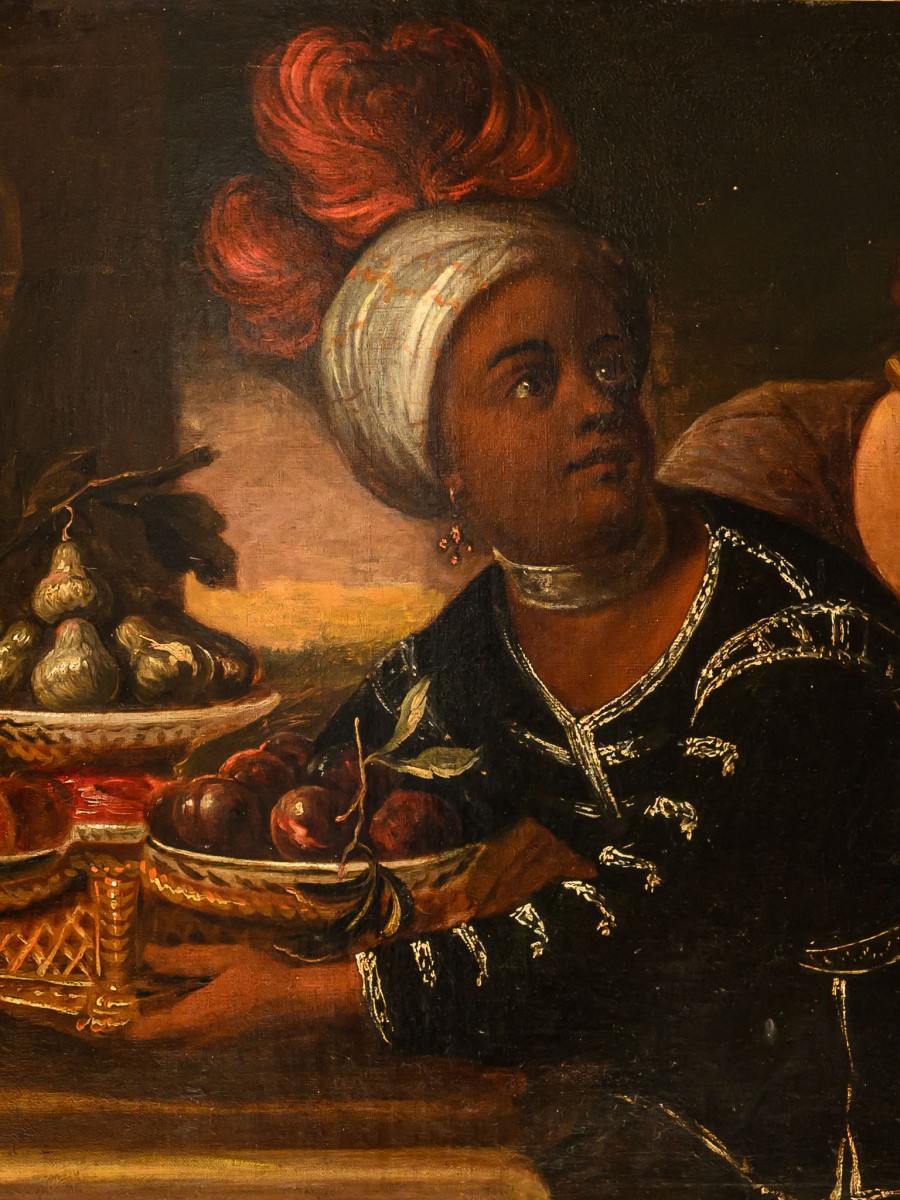

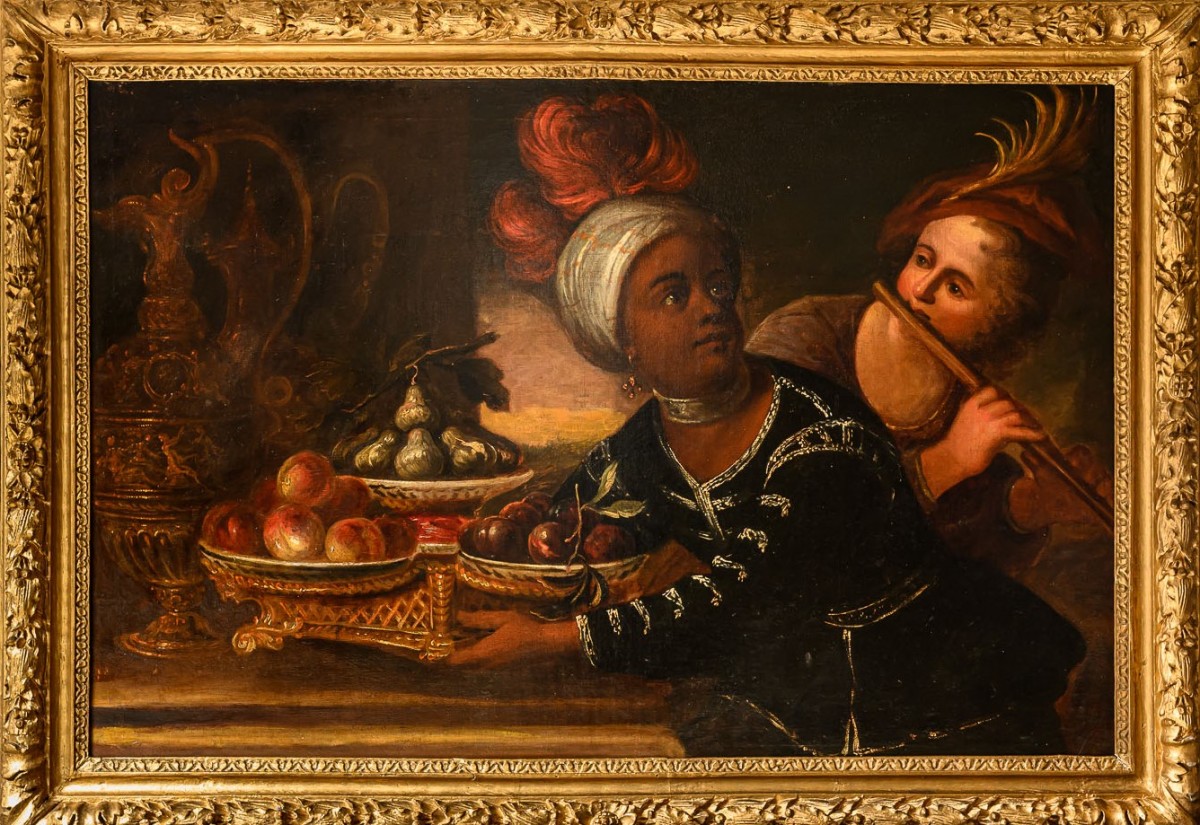
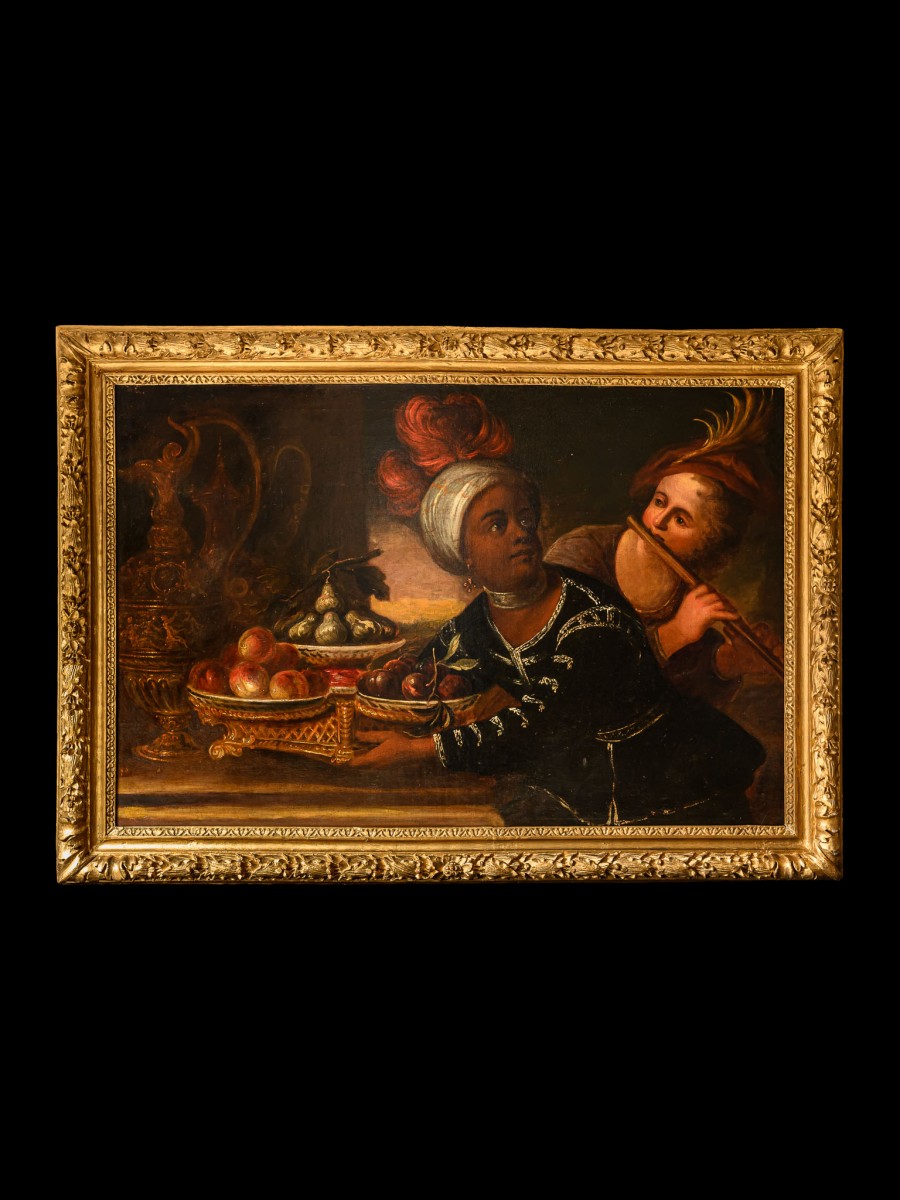
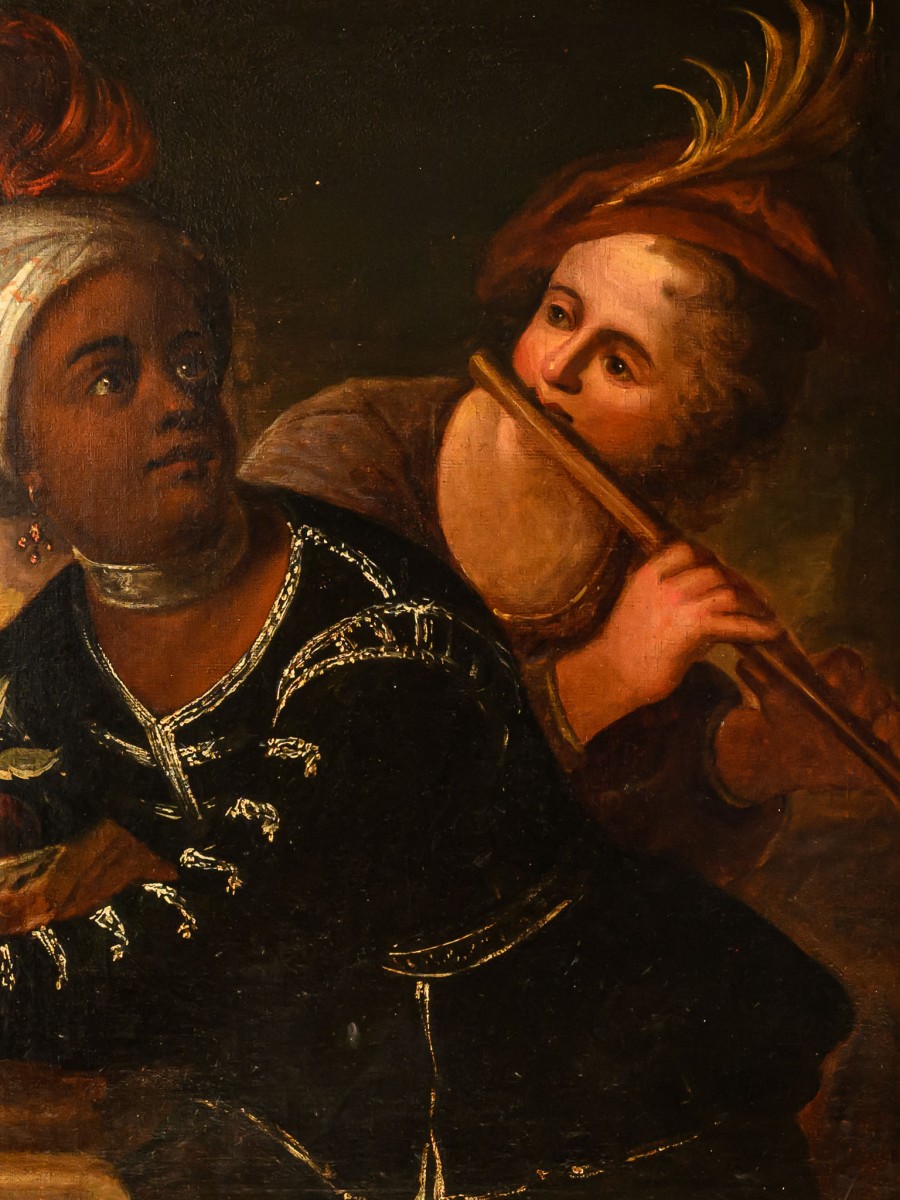
This painting combines a lavish still life with human figures. On the left, large jugs and bowls of fruit are presented by a servant depicted as a “Moor”; on the right, a young boy plays the flute. Such compositions carried multiple layers of meaning in the seventeenth century.The presence of a servant functioned as a status symbol for the wealthy patron and alluded to prosperity, global trade, and international connections during the Dutch Golden Age. At the same time, the figure enhanced the exotic character of the work, alongside luxury objects such as silverware, costly textiles, and imported fruit.Within the artistic conventions of the period, the servant was not portrayed as an individual personality but as a visual and symbolic element emphasizing luxury, power, and a cosmopolitan outlook. This motif is found, among others, in the work of Juriaen van Streeck (1632–1687), whose still lifes follow the tradition of Willem Kalf and explore themes of beauty and transience.