Offered by Sérignan Antiquités
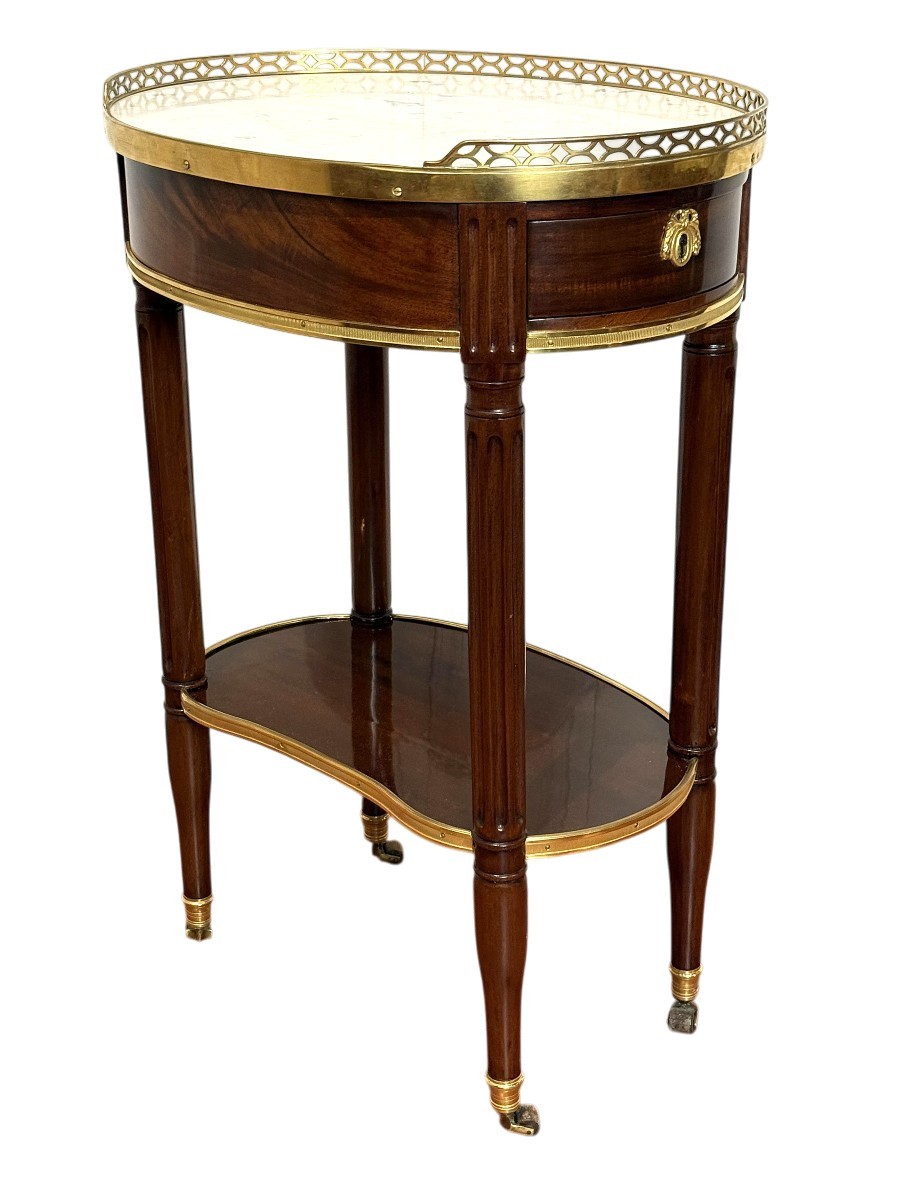
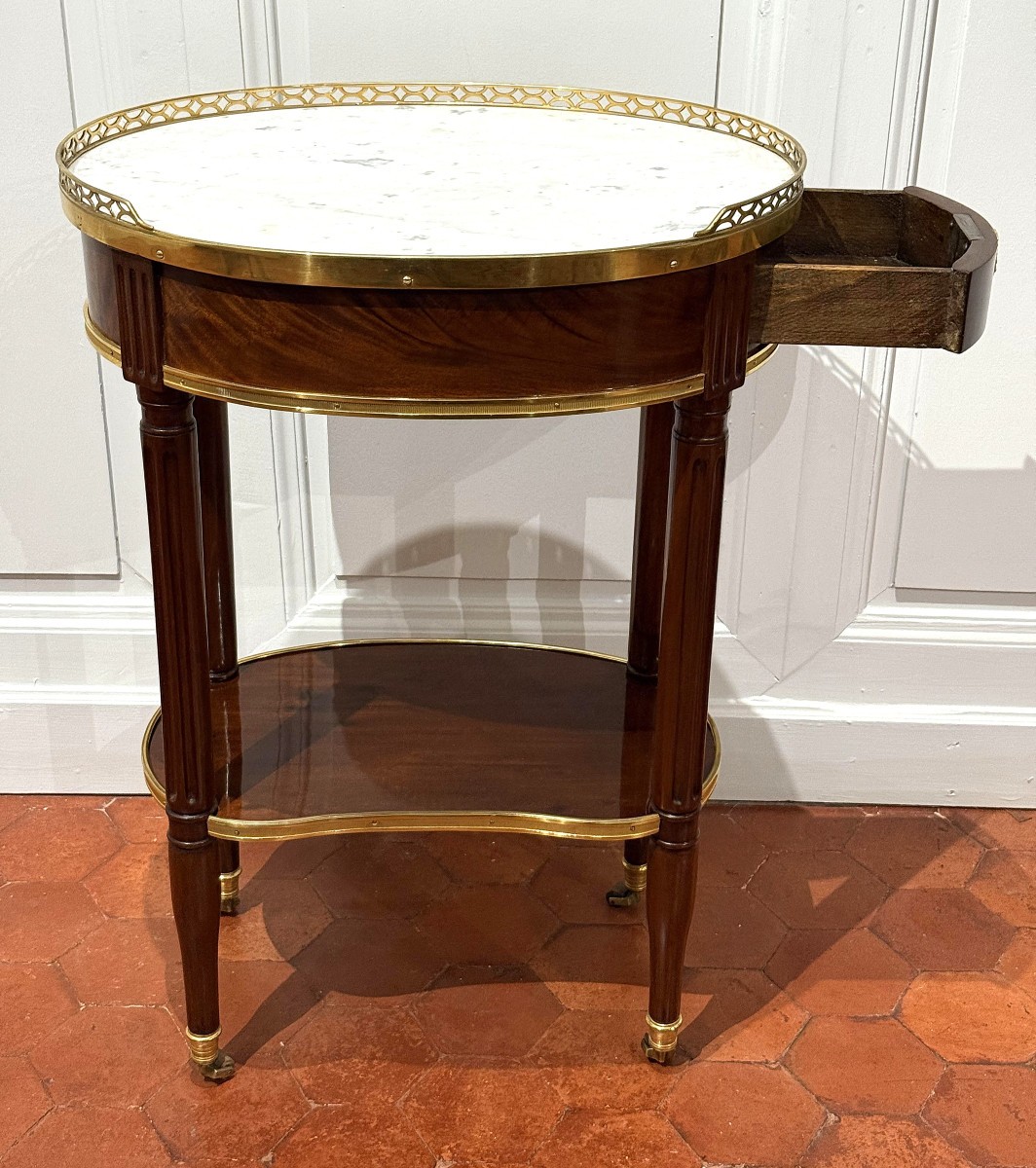
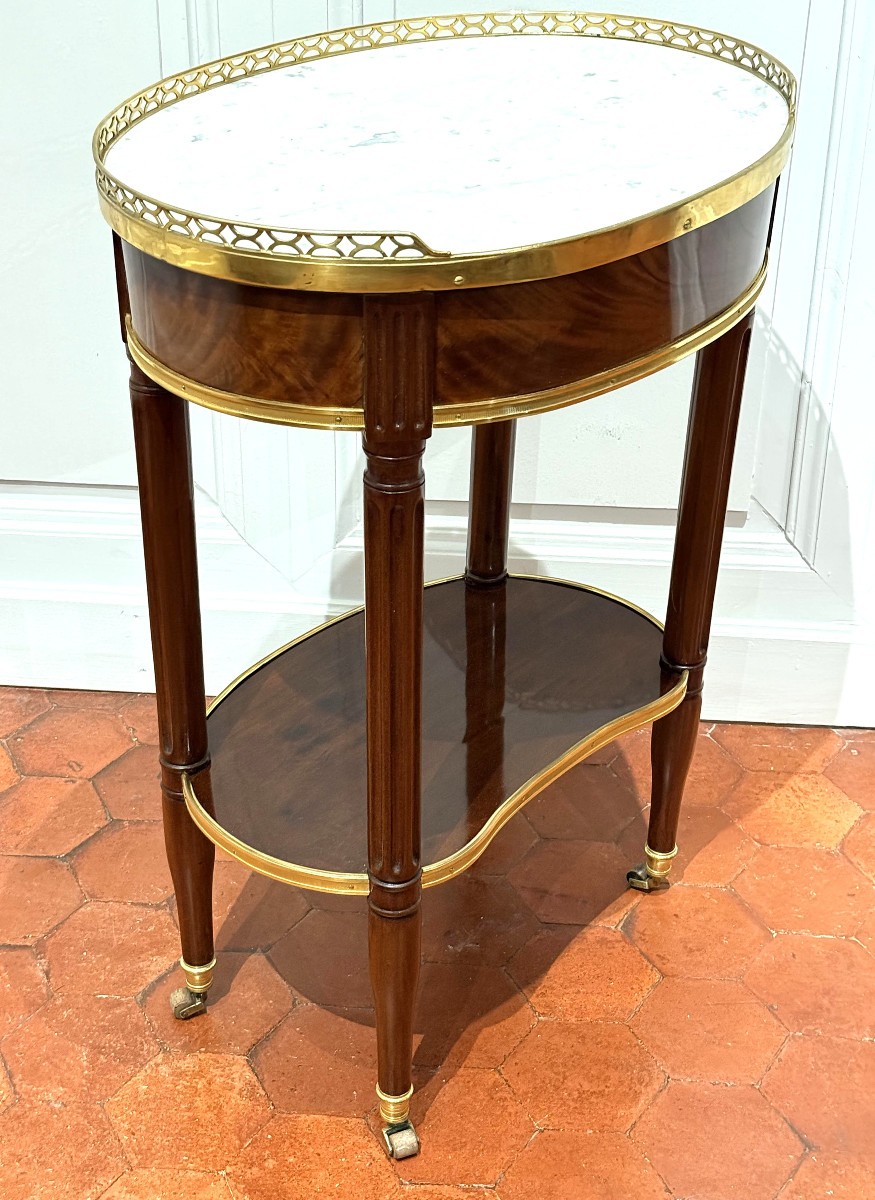
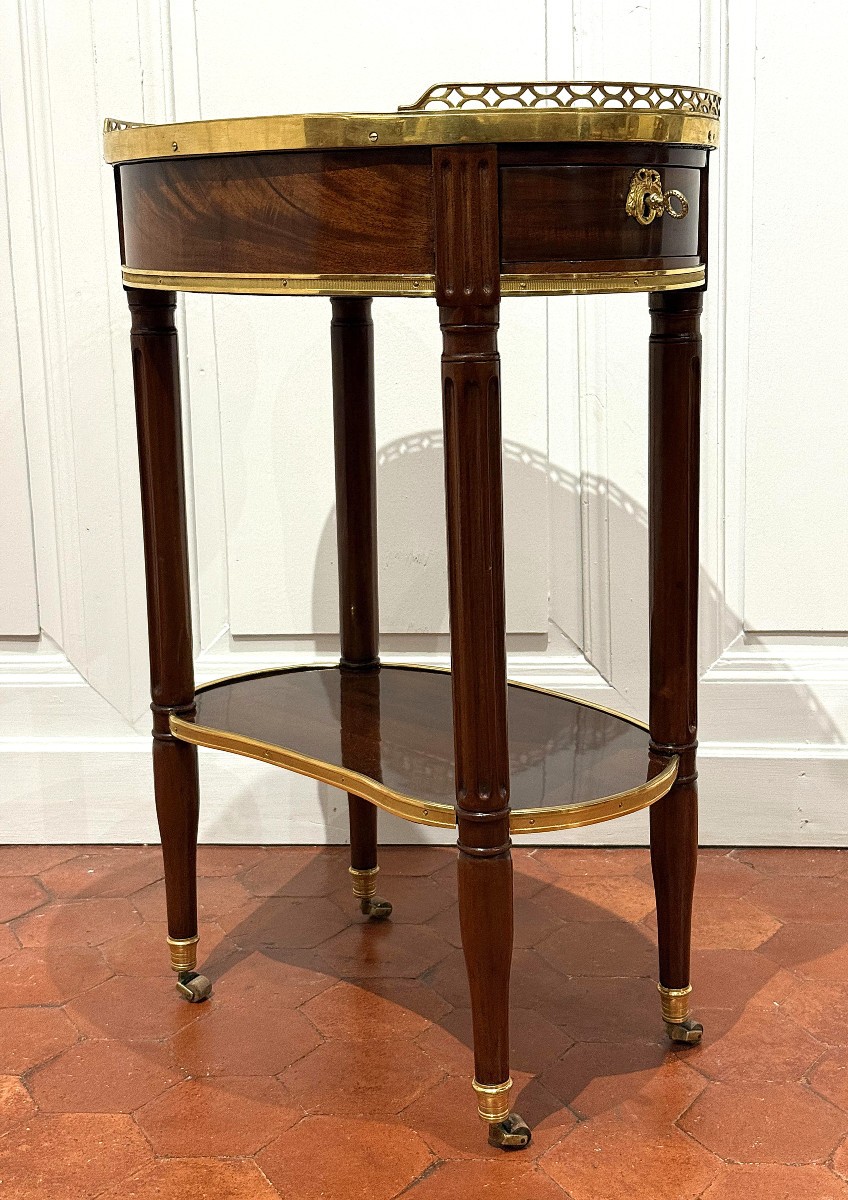
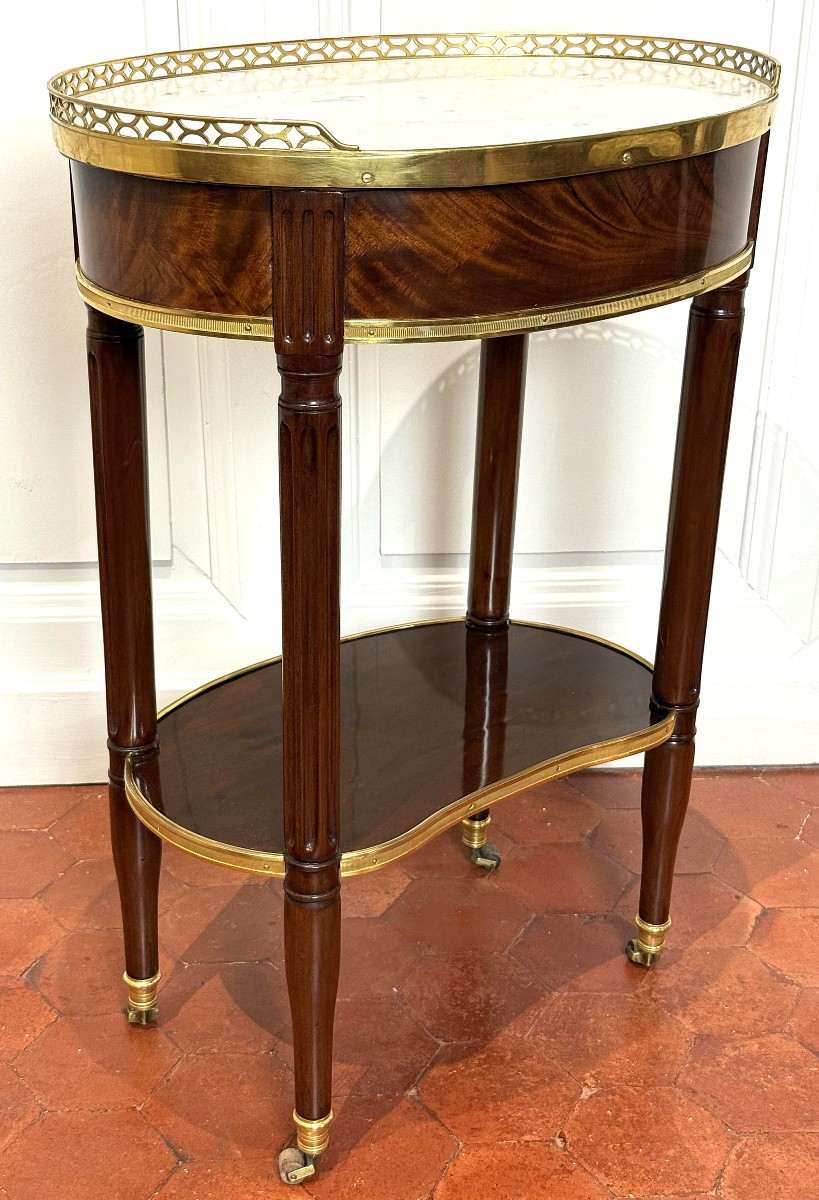

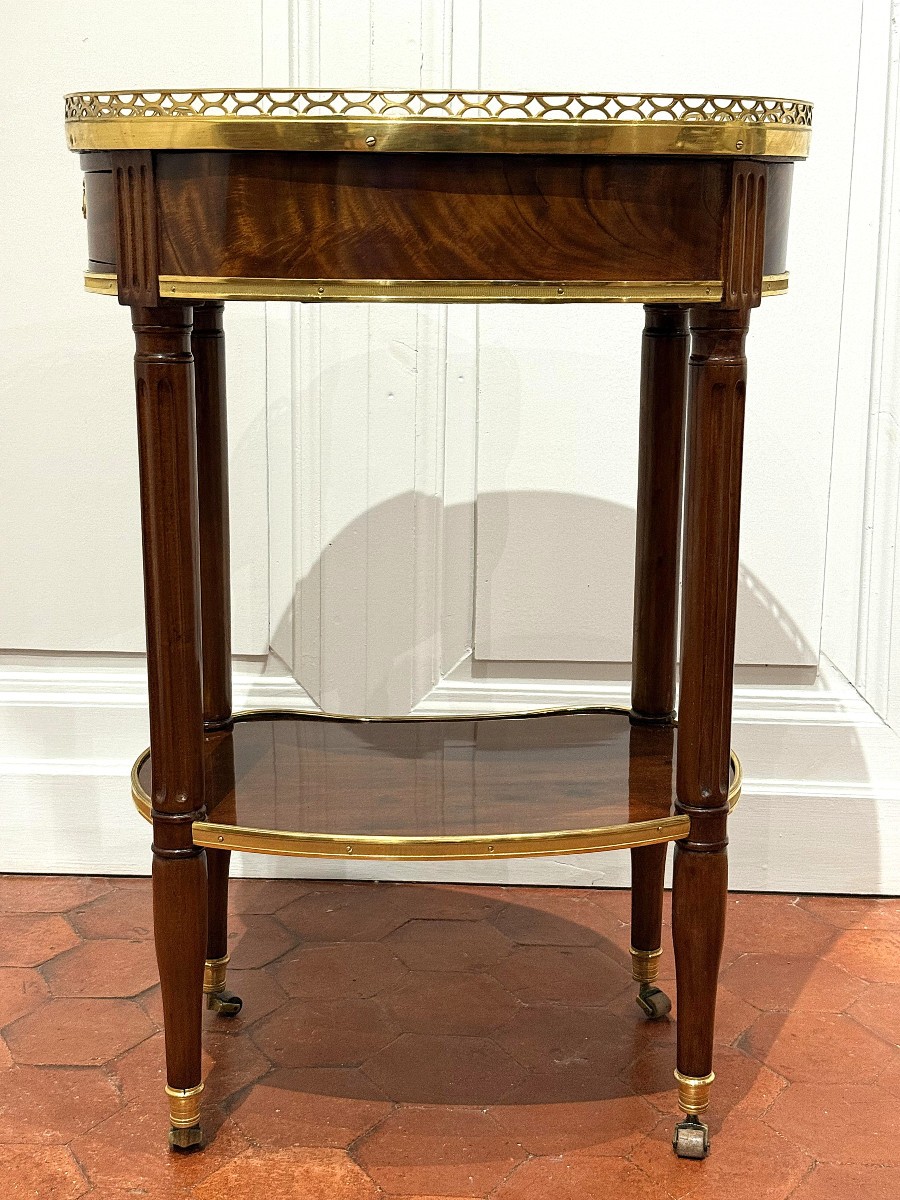
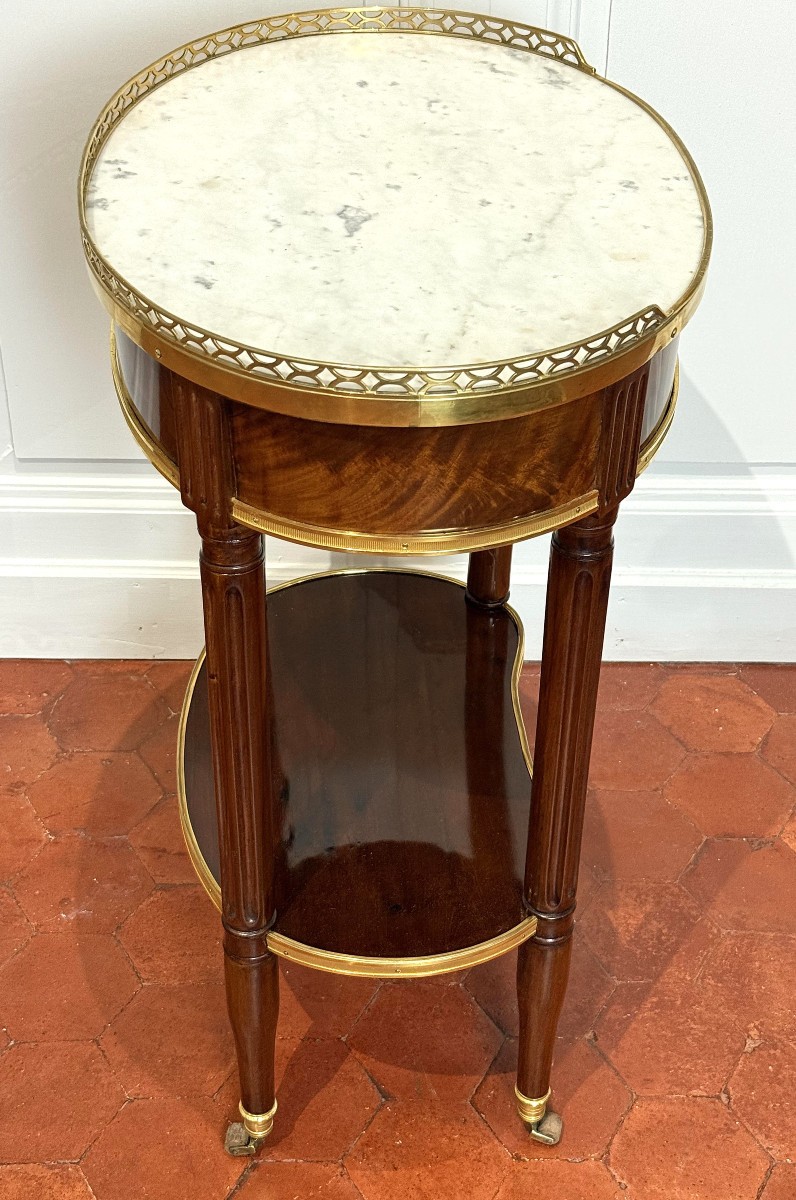
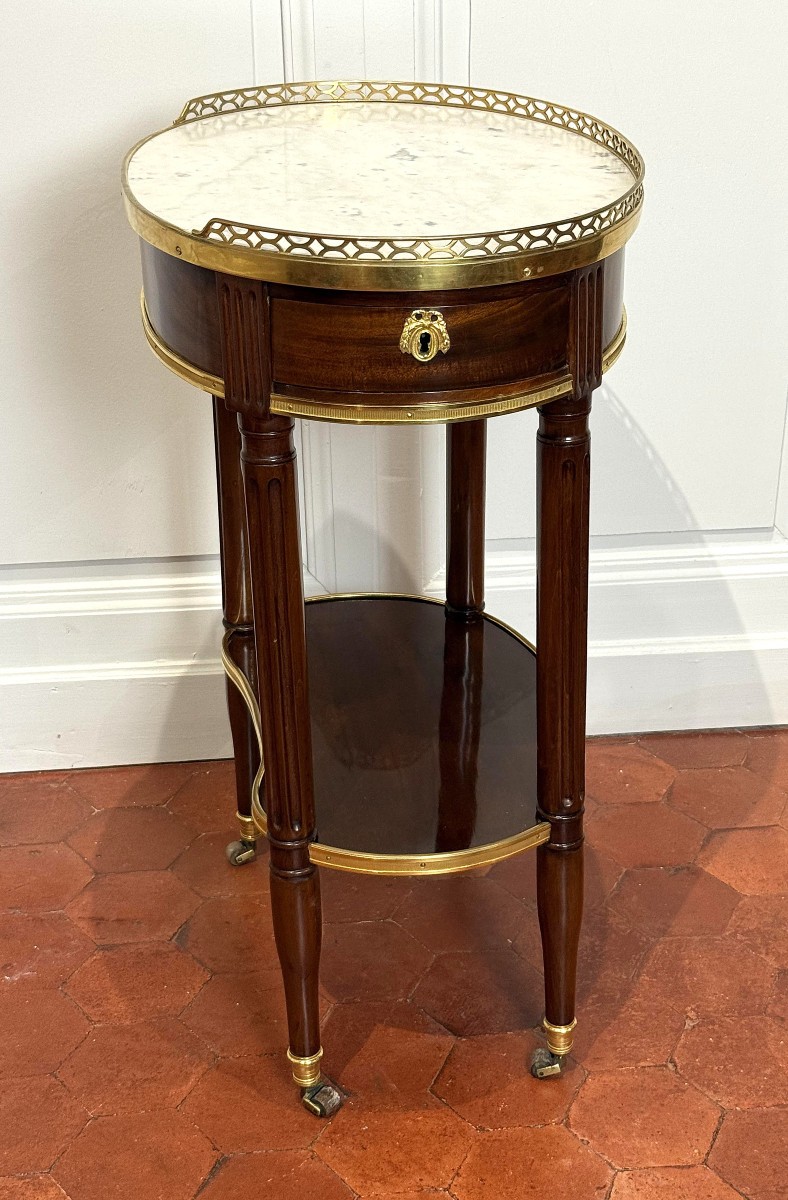
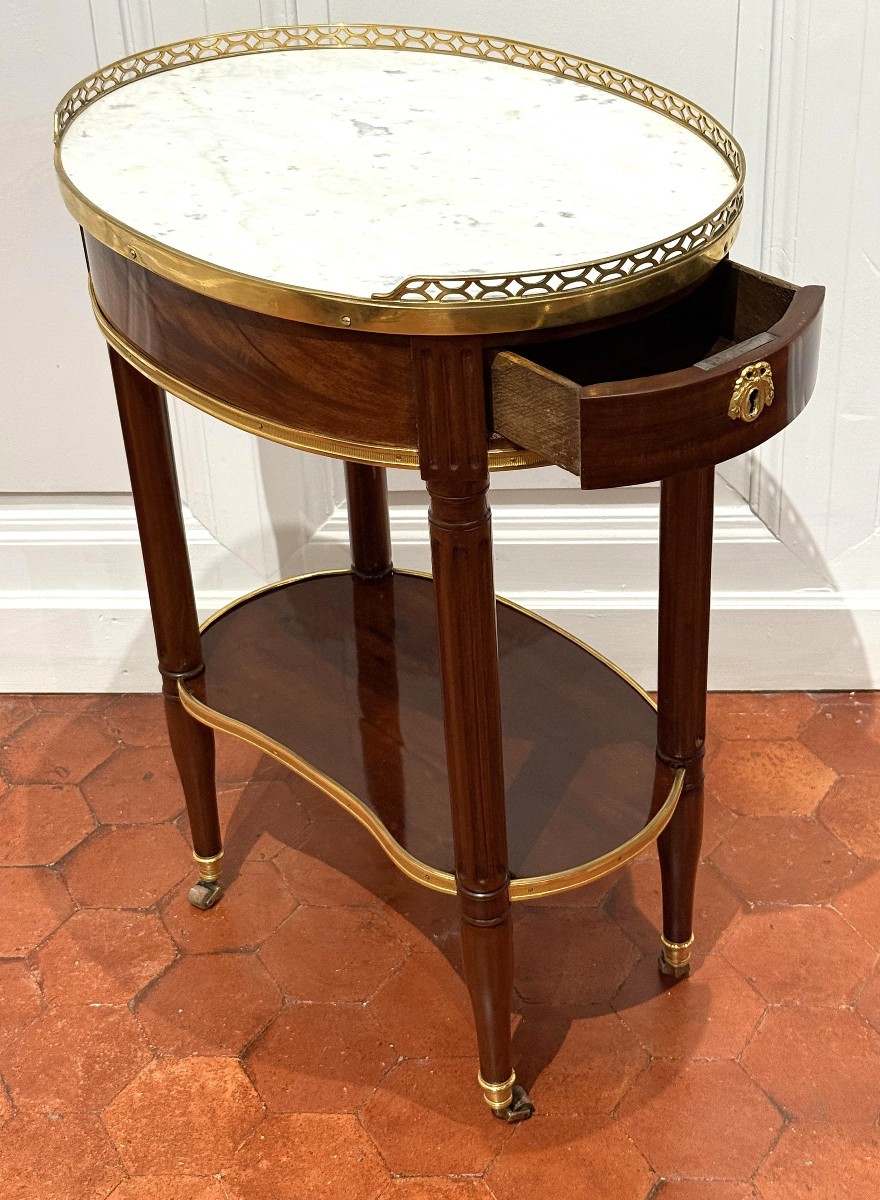
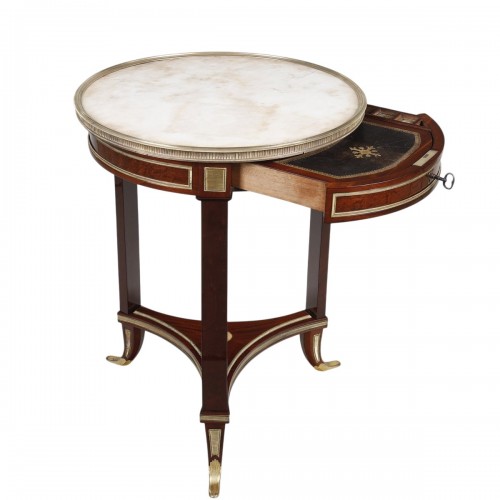
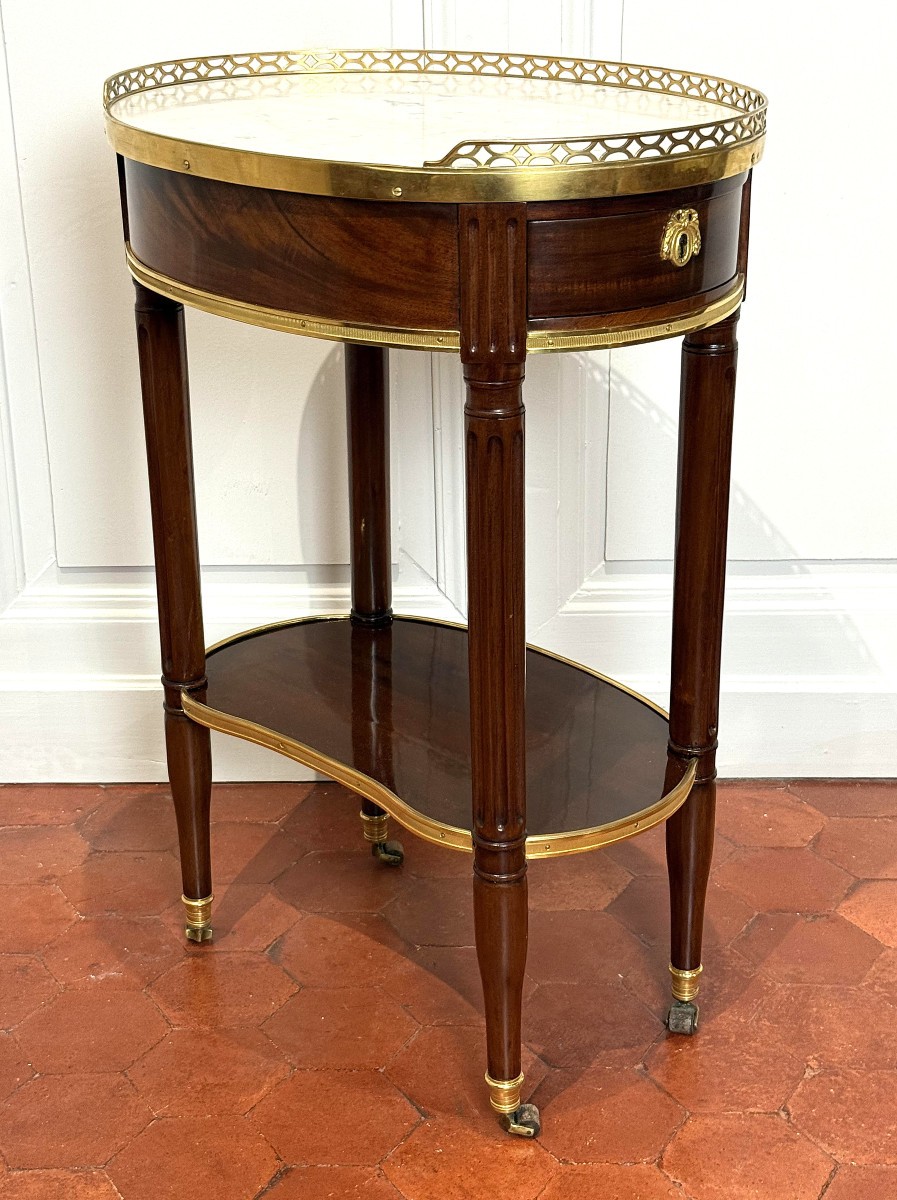
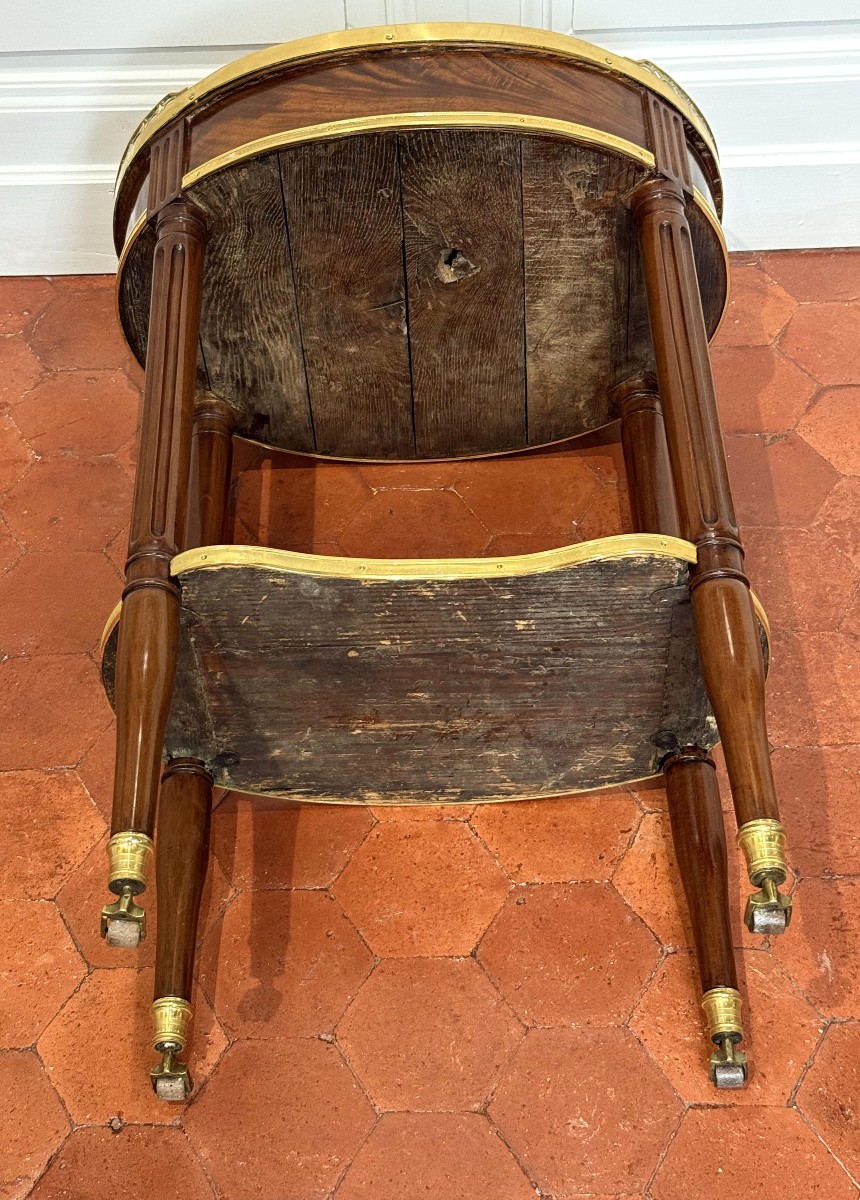
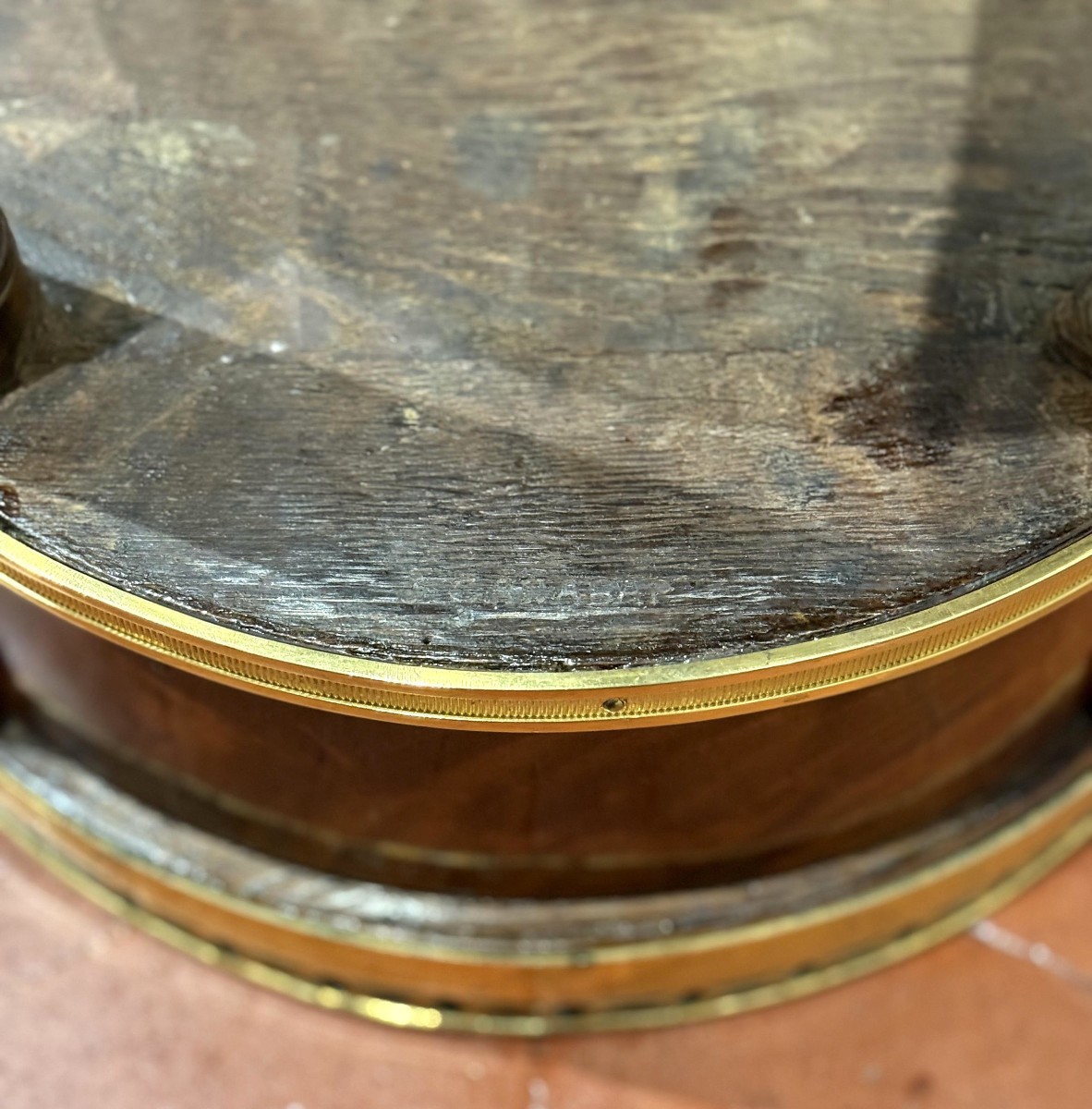
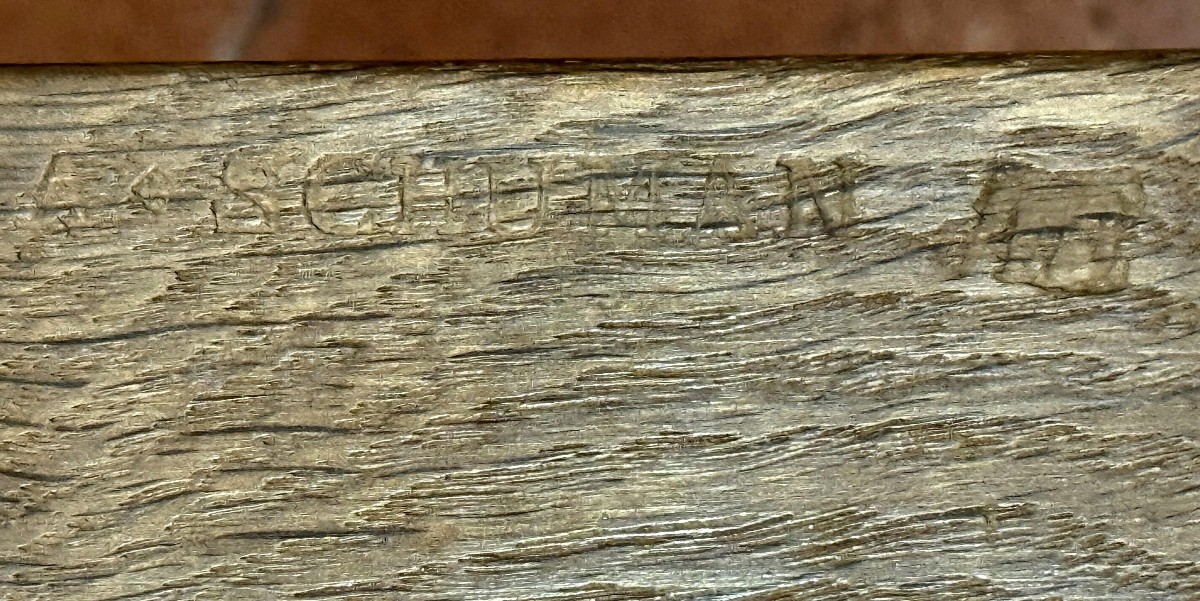
A small Louis XVI period mahogany and Cuban mahogany veneer side table, stamped "Canabas" and bearing the Paris guild mark JME; ellipsoidal in plan, it opens laterally in the apron with a drawer on the right side. A gilt bronze molding with a central hatched recess encircles the base of the apron. The table rests on a base divided into two distinct parts: the lower section, composed of four plain, tapered columns, pinched at their tops, supporting a bean-shaped shelf between the legs, its outline encircled by another molding matching that of the apron; each terminating in a bronze wheeled foot. The upper section extends into four columns, partially carved with deep fluting, constricted at their tops and ringed at each end, nested within the connecting blocks of the apron, which are also deeply fluted. The whole is topped with a slab of slightly veined Carrara white marble, encircled by an openwork gallery. It features beautiful chased bronze ornamentation, including ingots, a keyhole escutcheon with a medallion adorned with a ribboned bow on laurel wreaths, roller feet, and a beaded key head. The Canabas stamp is struck below the frieze. An additional stamp* is found on the far side of one of the drawer bottoms, that of André Schuman and the Paris guild JME.
Dimensions: Height 73.9 cm – Width 51.3 cm – Depth 38.4 cm.
Joseph Gengenbach, known as Canabas (1715-1797) – Master craftsman, April 1, 1766. Joseph Canabas (1712-1797) is among the most important Parisian cabinetmakers of the second half of the 18th century and is considered the grand master of small mahogany furniture. Of German origin, he settled in Paris probably in the late 1730s or early 1740s, and married in 1745. He worked for many years as a privileged craftsman on the rue de Charonne, becoming one of the subcontractors of Jean-François Oeben and Pierre Migeon. After becoming a master craftsman in April 1766, he set up his workshop on the main street of the Faubourg Saint-Antoine and quickly developed his business, building a wealthy private clientele and collaborating with some major dealers such as Bonnemain the Younger and the Presle brothers. In 1769, at the time of his wife's death, the post-mortem inventory lists numerous screens, tables of all types, and pedestal tables in mahogany; while in 1797, the sale organized after the cabinetmaker's death testifies to the workshop's prosperity despite the revolutionary turmoil; the inventory described "secretaries, chests of drawers, pedestal tables, desks, sliding and sliding tables, cylinder bedside tables, consoles, men's and women's dressing tables, chiffoniers, office chairs, and other objects, mostly in solid mahogany, adorned with copper in the finest taste."
André Schuman – cabinetmaker. Master on October 5, 1771. Of German origin, he worked on the rue du Faubourg-Saint-Antoine, where he is no longer recorded after 1788. His work includes meticulously crafted Louis XVI furniture. The Wallace Collection in London owns a highly ornate piece of furniture by André Schuman. A small mahogany cabinet secretary inlaid with an ebony stringing pattern, adorned with a Sèvres porcelain plaque on the drop-front and small Sèvres plaques in the corners.
*This double stamp, discreetly struck on an unusual section, refers to a collaboration between André Schuman, a compatriot and neighbor of Joseph Canabas on Rue du Faubourg-Saint-Antoine, in the latter's workshop.
Delevery information :
General conditions of sale and delivery: The price indicated on the ad includes the delivery throughout the metropolitan France. For Germany, Belgium, Italy or Spain contact us for a quote. For the United States, Europe outside the EU or the rest of the world contact us for a quote but the import taxes applicable in each country remain at your expense. The packing and the follow-up of the transport are insured by ourselves or by professional carriers specialized in works of art.