Offered by Galerie de Frise
REQUEST INFORMATION

Edouard NIEUWENHUYS
(Brussels, 1840 – Paris, 1872)
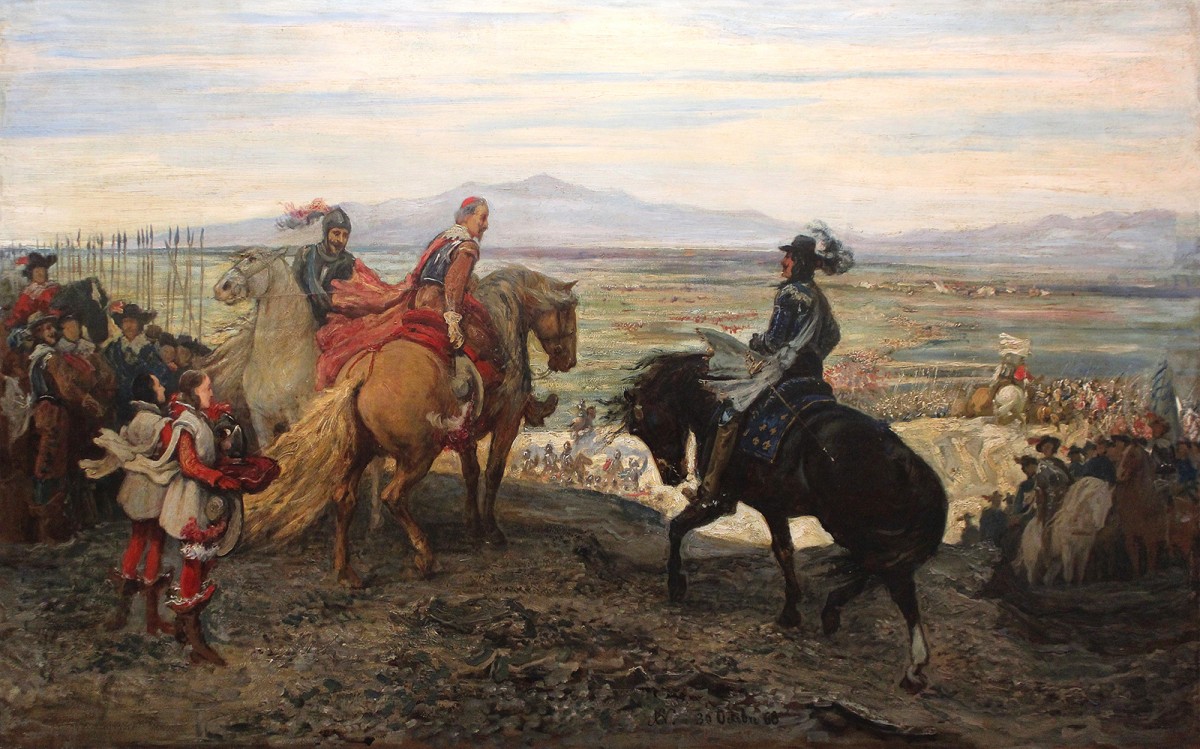
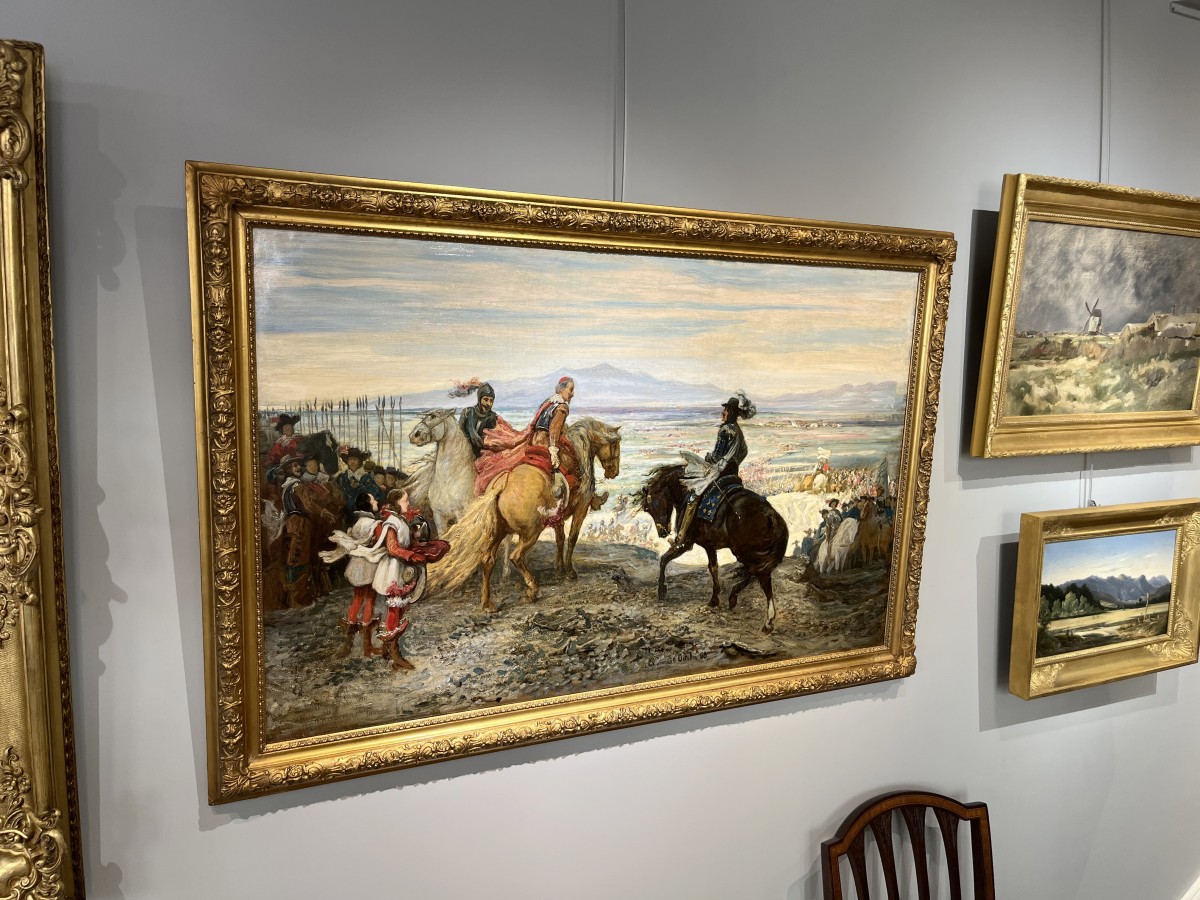
Louis XIII and Richelieu at the Siege of Perpignan, 1641–1642
Oil on paper laid down on canvas
H. 72 cm; W. 114 cm
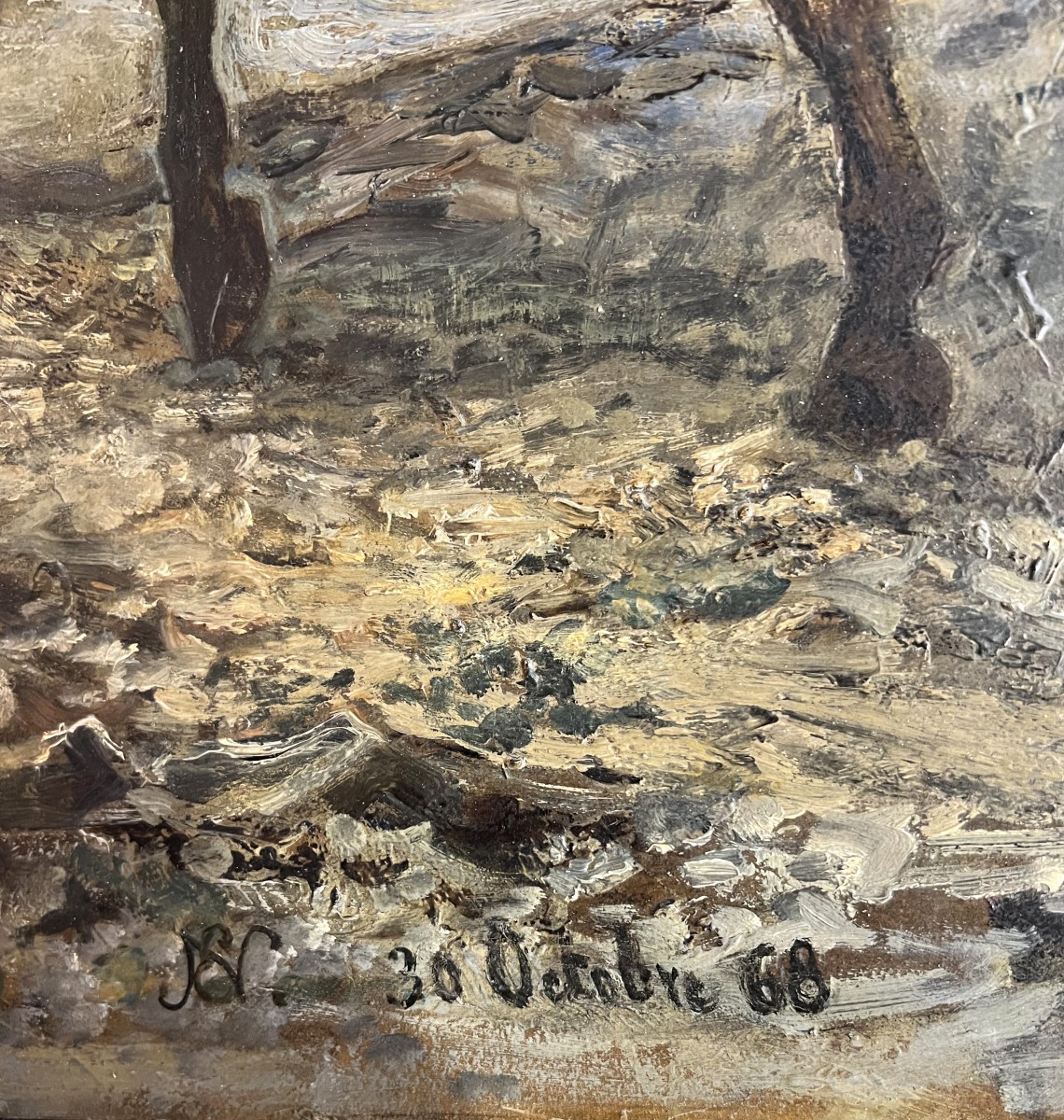
Monogrammed and dated near the lower center: October 30, 1868
Exhibition: Salon de Paris, 1869, under no. 1807
Very little is known about the life of our artist, who came from a Belgian family (of Dutch origin) of major art dealers and collectors, active since the late 18th century with the figure of his grandfather Lambert-Jan (1777–1862), based in Brussels with branches in London and Paris. Edouard was the nephew of Chrétien-Jean (known as John) Nieuwenhuys (Antwerp, 1799 – Wimbledon, 1883), who was primarily active in London, and the son of François Nieuwenhuys (? – Fontainebleau, 1880), more present in Paris, whose collection was dispersed at Drouot in 1881. In 1858, we know that Edouard was in France, notably in Fontainebleau, alongside his teacher and friend, the history painter Pierre-Charles Comte (1823–1895), who was also his brother-in-law, having married his sister Anne-Félicie (Brussels, 1832 – Paris, 1912) in Paris in 1857.
Edouard Nieuwenhuys began exhibiting at the Salon de Paris in 1865 with works on the theme of hunting. Then, under the influence of Pierre-Charles Comte, he presented two history paintings at the Salons of 1869 and 1870, illustrating two episodes from Cinq-Mars, the historical novel by Alfred de Vigny: ours, and The Duel of the Abbé de Gondi. He also took part in several Salons in Belgium, such as that of Ghent in 1868. He died in Paris in 1872, on rue de Clichy, at his parents’ home. Strangely, in 1879 he is still listed in the Annuaire des Beaux-Arts et des Arts Décoratifs, residing at 25 boulevard Rochechouart… an error, or a namesake?
Far less well known than the Siege of La Rochelle, the Siege of Perpignan marks the end of the reign of Louis XIII and allowed France to take possession of northern Catalonia, within the framework of the war against the Spanish that began in 1635. The siege itself began on September 4, 1641, and ended on September 9, 1642, three months before Richelieu’s death. Suffering for several years from numerous and painful ailments (rheumatism, gout, intestinal tuberculosis, etc.), the Cardinal nonetheless went near the theater of operations, to Narbonne, where he was most often bedridden; joined by Louis XIII on March 10, 1642, the two men apparently carried out only reconnaissances on the battlefield in late April.
In Chapter X of Cinq-Mars, Alfred de Vigny gave a far more romanticized and “glorious” version of these historical facts, which inspired Nieuwenhuys to compose his painting:
“He [Richelieu] had placed himself on horseback to the north of the city on one of the mountains of Salces; from this point he could see the plain of Roussillon before him, sloping down to the Mediterranean; Perpignan, with its brick ramparts, its bastions, its citadel and its bell tower, formed there a dark, oval mass upon broad, green meadows, and the vast mountains enveloped it with the valley like an enormous arch bent from north to south, while, extending its whitish line to the east, the sea seemed to be its silvery string. To his right rose that immense mountain called Canigou, whose slopes pour two rivers into the plain. The French line stretched to the foot of this western barrier. A crowd of generals and great lords stood on horseback behind the minister, but at a distance of twenty paces and in deep silence. He had begun by following at the slowest pace the line of operations, and then returned to stand immobile on this height, from which his eye and his thought hovered over the destinies of the besiegers and the besieged. The army had its eyes upon him, and from every point one could see him… That day the Cardinal appeared clad entirely in a warlike costume: it was a leaf-colored coat edged with gold; a cuirass the color of water; a sword at his side, pistols at the pommel of his saddle, and a plumed hat that he rarely placed upon his head, where he always kept the red skullcap. Two pages were behind him: one carried his gauntlets, the other his helmet, and the captain of his guards was at his side…
Louis XIII came to take his place beside him, but he came as an adolescent pupil forced to recognize that his master is right. His manner was haughty and displeased, his words abrupt and curt. The Cardinal remained impassive…
‘I want the attack to be made soon, Cardinal,’ said the prince as he arrived; ‘that is to say,’ he added with an air of nonchalance, ‘when all your preparations are made and at the hour you will have agreed upon with our marshals…’”
We thank Mr. Philippe Nieuwenhuys, related to the artist, for his contribution of information and research, notably the rediscovery of the date and place of the painter’s death.