Offered by Galerie de Frise
REQUEST INFORMATION

Henri SAINTIN
(Ivry-sur-Seine 1846 – Paris 1899)
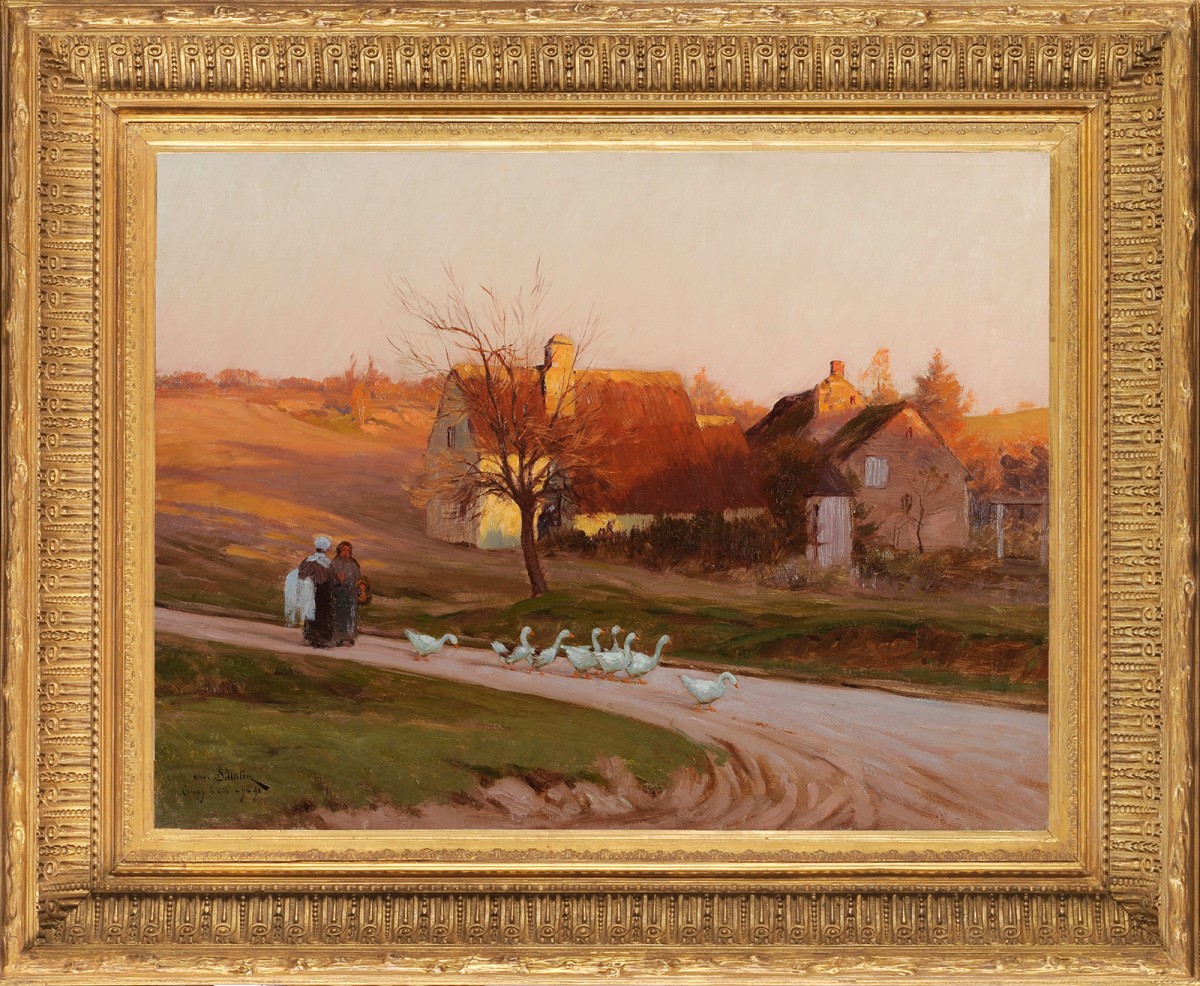
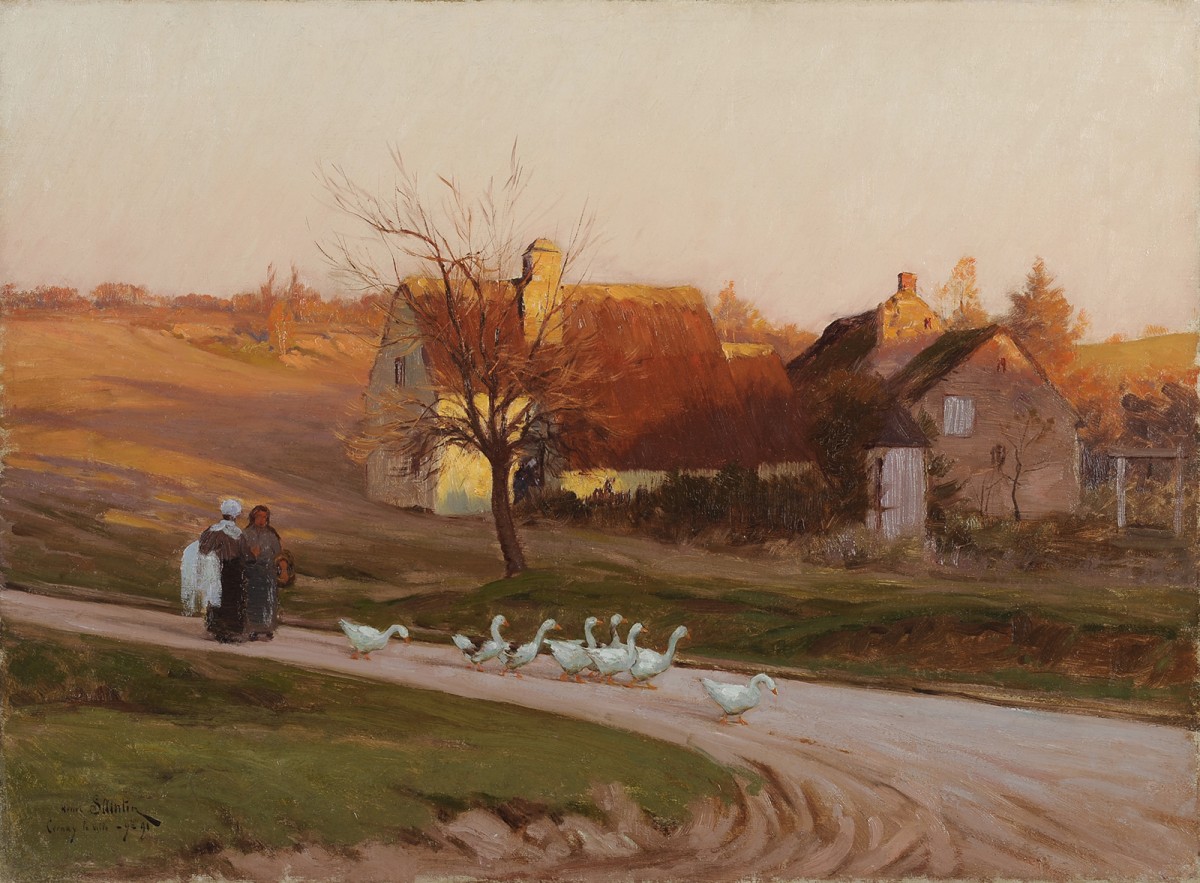
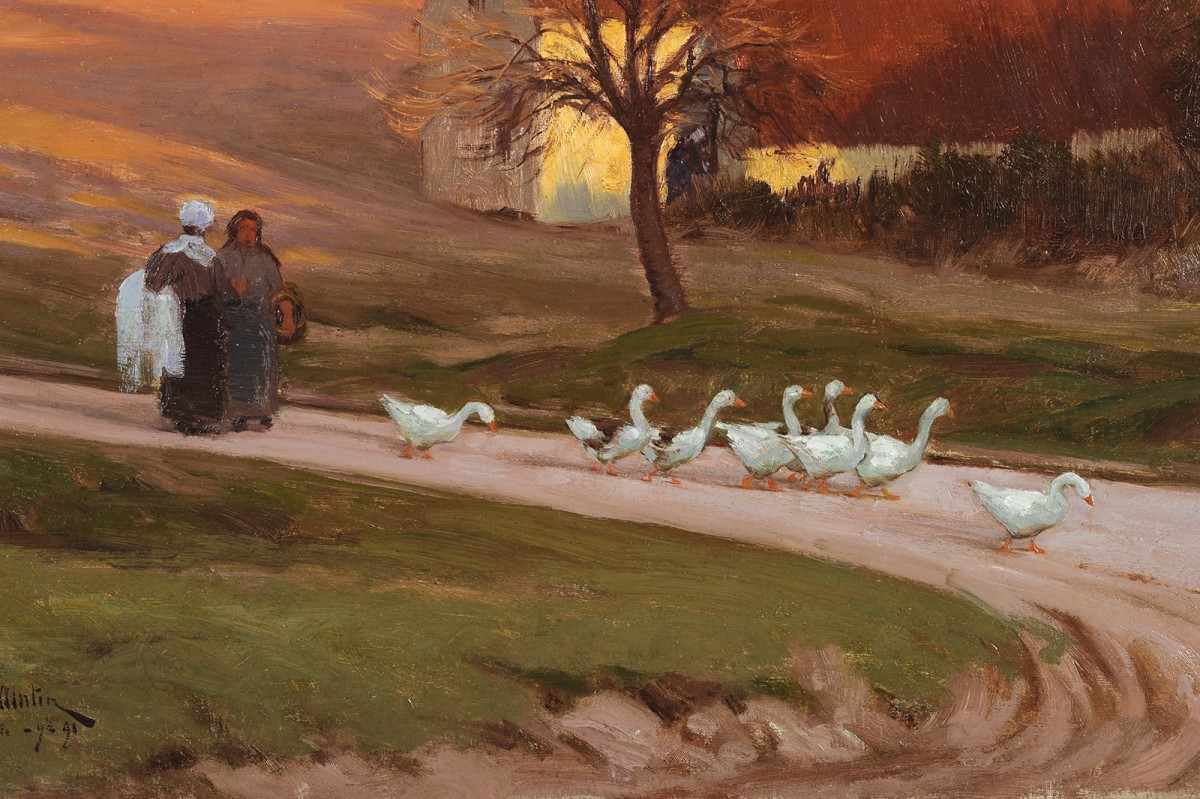
Sunset at Cernay-la-Ville or The Return of the Geese
Oil on canvas
H. 54 cm; W. 73 cm
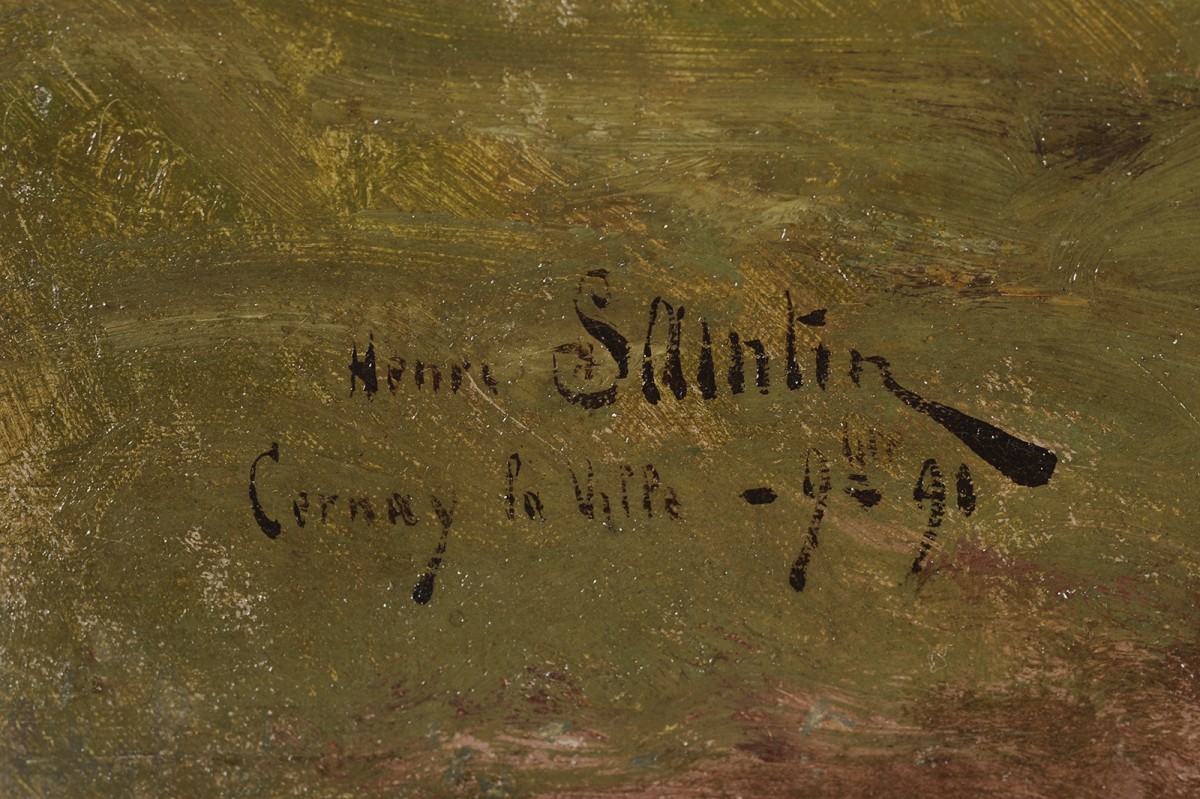
Signed, located, and dated at lower left: “Cernay-la-Ville, November 1891”
Henri Saintin successfully attended the studios of Isidore Pils, Alexandre Ségé, and Charles Saint Marcel at the École des Beaux-Arts, somewhat against his father’s wishes. A family friend, Cointepoix de Blay (a painter and deputy mayor of Paris’s 13th arrondissement), encouraged him, and it took his success at the Troyon competition, where he won first prize in 1871, to overcome the resistance of a prosperous merchant father who could not understand why he would devote his youth to such an uncertain profession.
He made his first appearance as a painter at the Salon in 1867 with the canvas Mare en sous-bois au Val-Saint-Germain en hiver. He went on to paint in the surroundings of Paris and in the Forest of Fontainebleau.
Then, around 1875, under the influence of Francis Blin and Alexandre Ségé, he discovered Brittany, whose landscapes became a recurring subject in his work. There he practiced watercolor, which he used in pure tones. He settled in Plurien, near Cap Fréhel, and often worked in Erquy, Saint-Cast, Paimpol, and also Saint-Quay-Portrieux.
He also stayed in Saint-Quay in 1875.
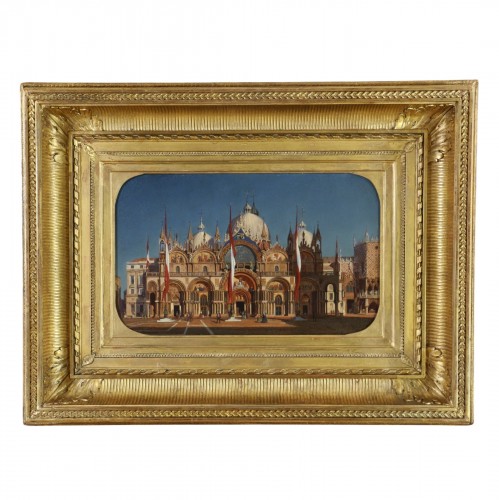
In 1890, Henri Saintin was among the dissident artists behind the split of the Salon institution into two exhibitions, and until his death in 1899 he exhibited at the Salon of the Société Nationale des Beaux-Arts. His final years also saw a diversification of his production: a few portraits, a religious scene, The Flight into Egypt (1893), and the occasional introduction of the human figure into paintings with vague titles such as Autumn Evening (1892). His career remained discreet, even though he received commissions for decorations for the Luxembourg and for the Hôtel de Ville, due to a modesty and a dislike of publicity that led him to keep his works. In the field of urban landscape, a few views of Venice and rare views of Paris are known, including the small panel from the François-Gérard Seligmann donation (“View of the 1889 Universal Exhibition in Paris”). In this canvas, he focuses on a vision of an ephemeral Paris that for a few months saw dozens of palaces with fanciful forms seem to float on the water.
Long stays in Brittany and the Côte-d’Or, studies of Paris and its suburbs, and then a journey to Italy had taught him to appreciate fine lines and clear, colorful light; he truly belonged to the school of Corot, Troyon, Rousseau, and Daubigny. He already possessed accuracy of drawing, which he combined with correctness of tone and the sincere, broad execution of the modern landscape school.
Henri Saintin arrived well prepared for exhibitions and thus fairly quickly obtained mentions and even medals; in Munich, at the International Exhibition of 1883, this was a step toward higher distinctions.
He received the Cross of Knight of the Legion of Honor in 1891.
Henri Saintin produced a substantial body of work that places him in a good position within modern landscape painting, among the ranks of Chintreuil, Desbrosses, Lépine, Paul Guigou, Lansyer, and others. He exhibited for twenty-five years. His modesty and his desire to keep his works limited his reputation and led to the accumulation of his production in his studio. He always sought out and carefully chose a harmoniously composed site, even in his small panels, of which there are many; the drawing is observed with scrupulous care, the color accurate, and the effect happily captured. They give the impression of a true vision of nature.
Text by Jacques Riand
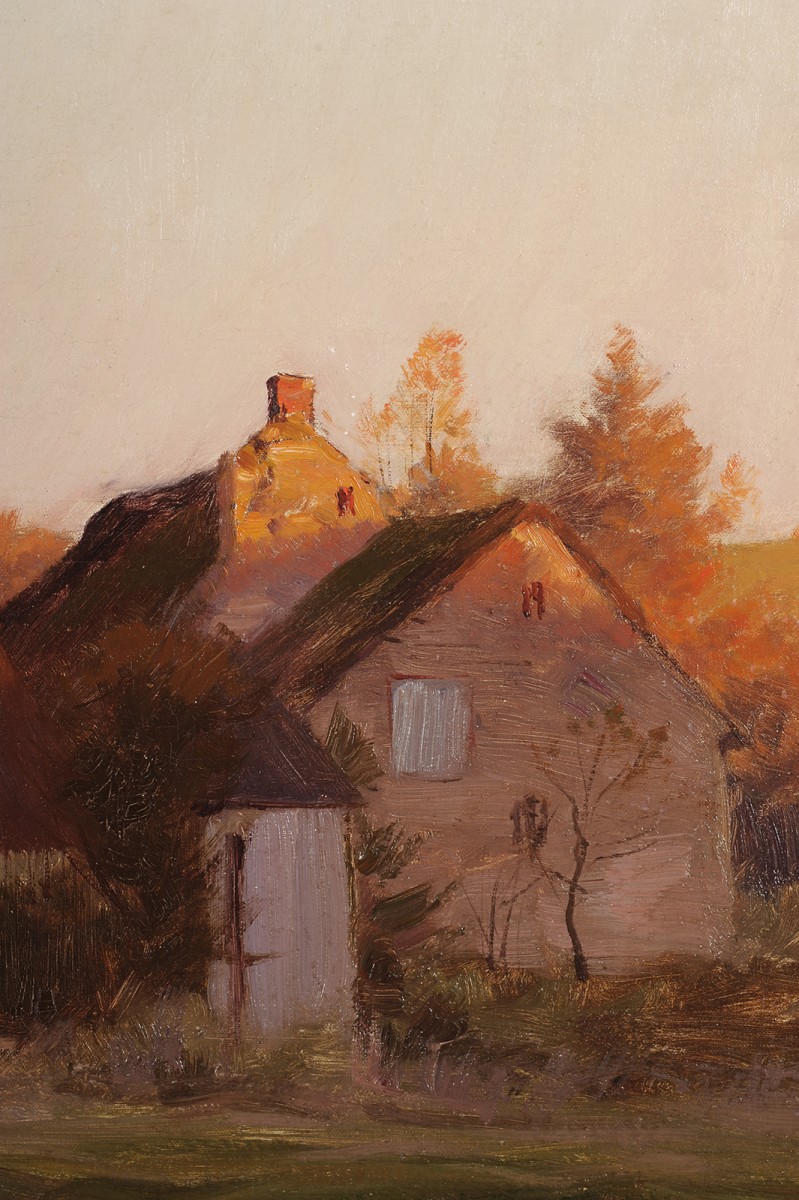
In 1891, Henri Saintin created this very beautiful work with a glowing palette. The geese have been herded back by their keepers and take on bluish hues in this late-year setting sun. The thatched-roof farm in the background is crossed by a leafless tree, creating depth within the composition. This canvas, with its distinctive light, stands among Saintin’s finest works.