Offered by Spectandum
REQUEST INFORMATION

Southern Europe
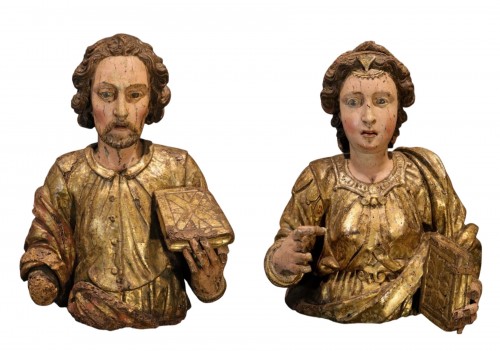
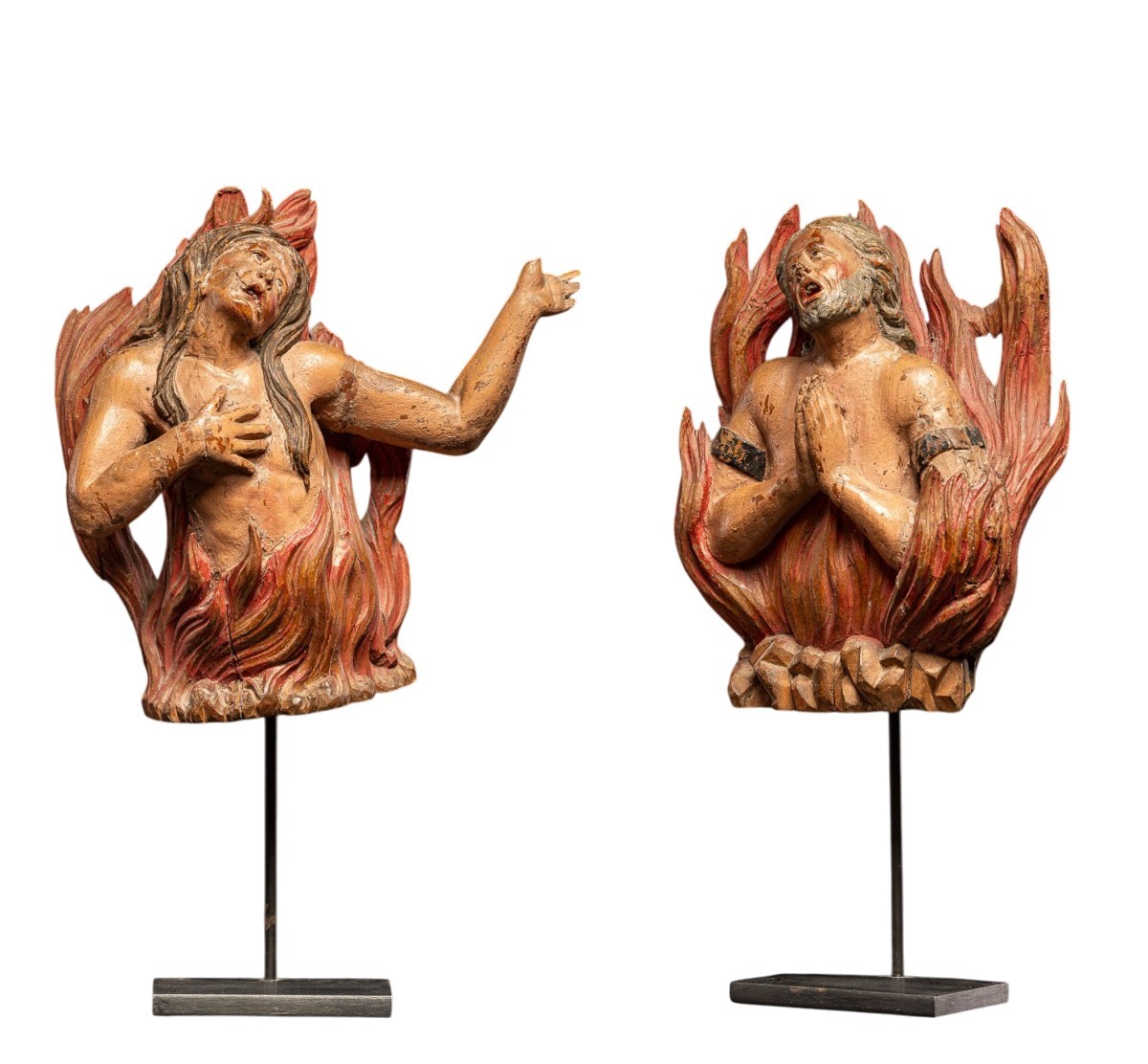
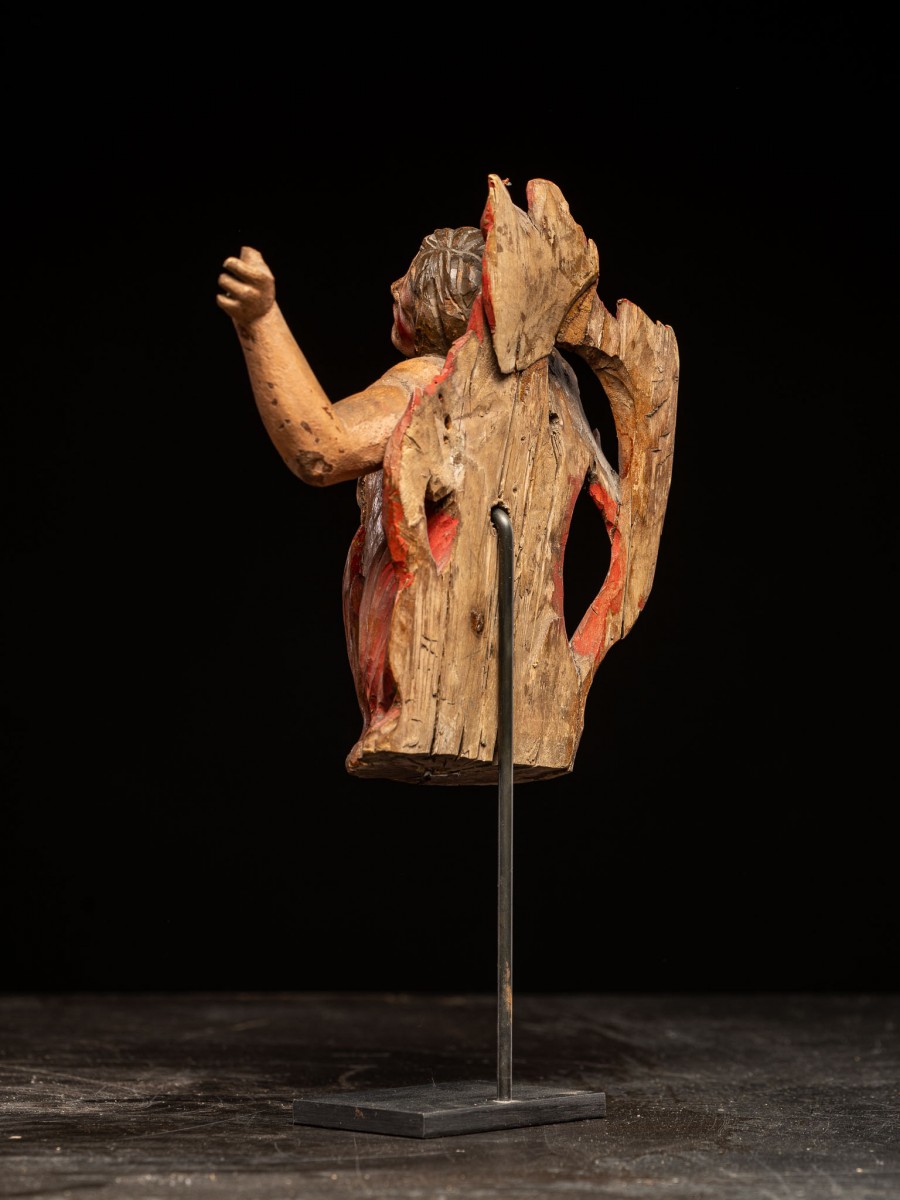
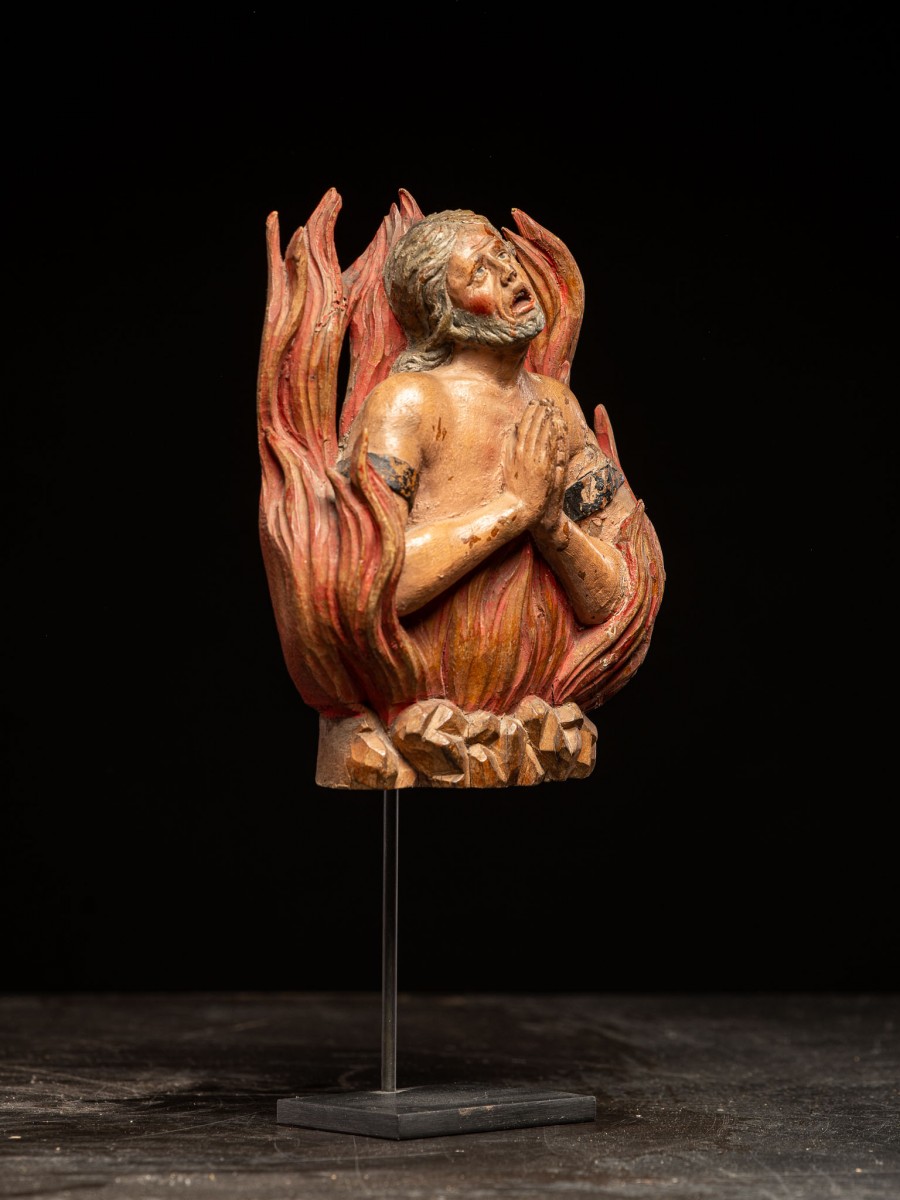
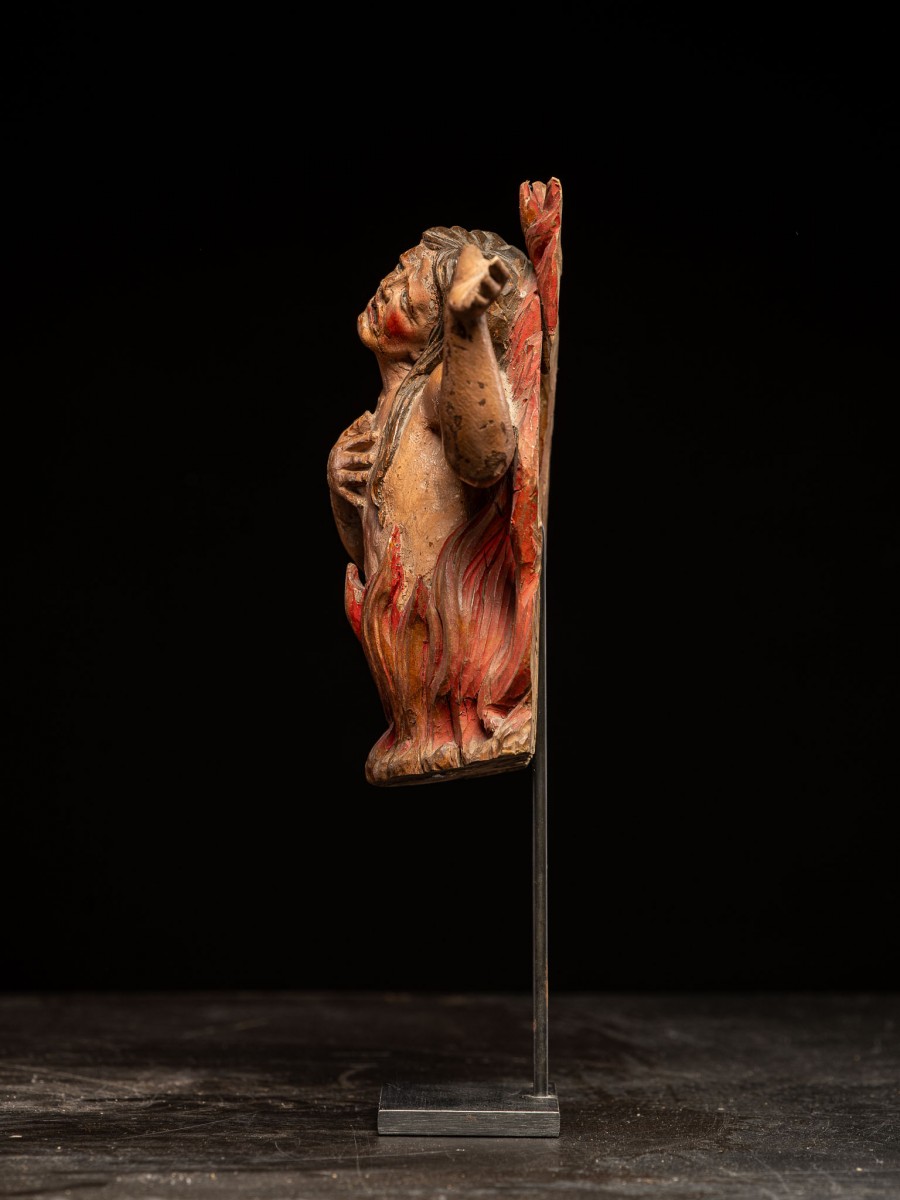
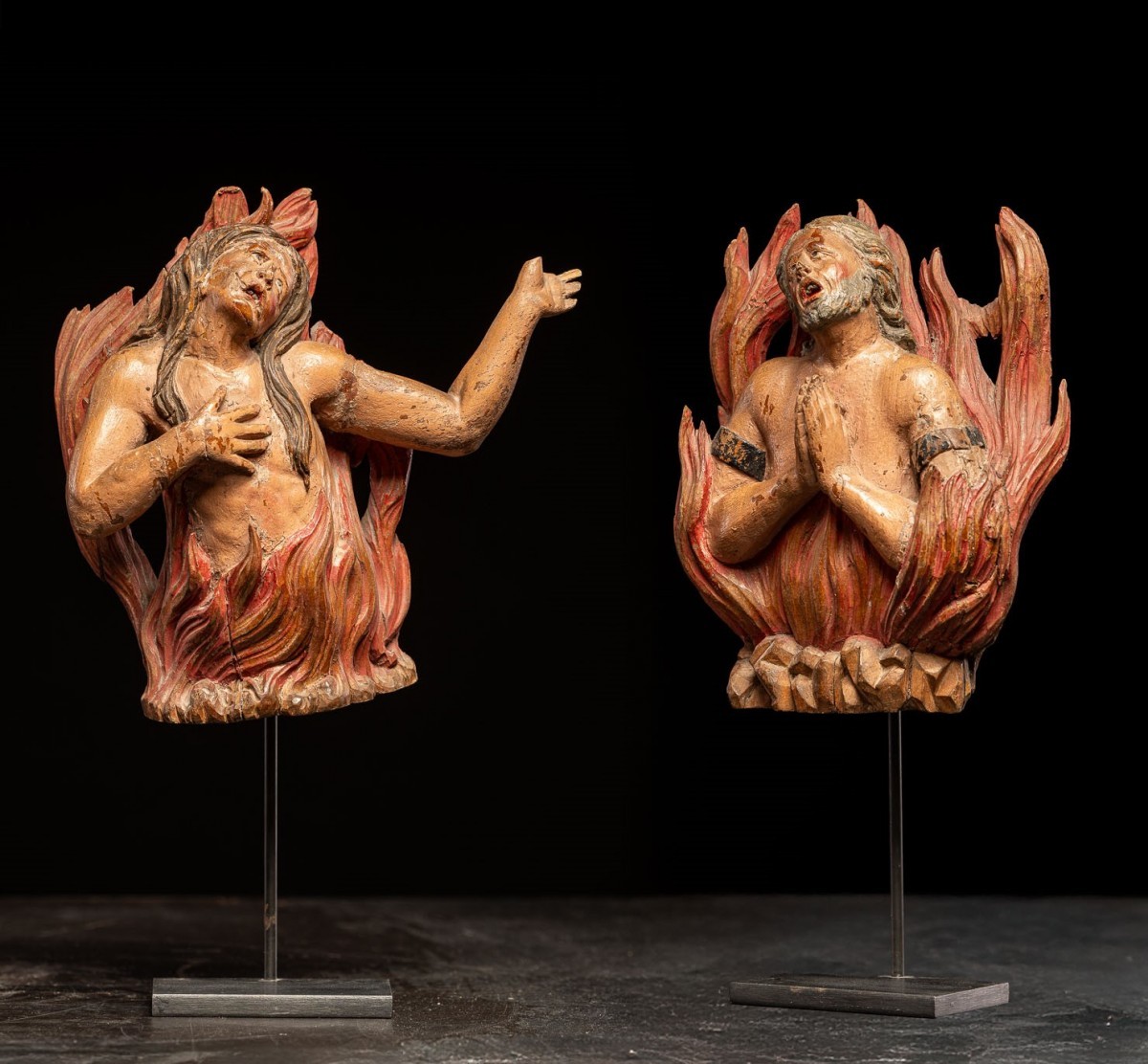
These finely carved polychrome wooden figures represent a rare matched pair of male and female souls in Purgatory, intended to evoke empathy and devotional engagement. They depict a female and a male soul engulfed in the flames of Purgatory. Each half-length figure emerges from stylized tongues of fire painted in vivid red and ochre tones. The female soul raises one arm outward while the other hand touches her chest, her face turned upward in a mixture of supplication and hope. The male soul is shown with clasped hands in prayer, his features conveying penitence and spiritual yearning. Both figures retain traces of their original polychromy, contributing to the emotional intensity characteristic of devotional art.
Seventeenth century representations of suffering souls in Purgatory were especially made in Catholic regions influenced by the teachings of the Council of Trent (1545–1563). As part of the Catholic Counter-Reformation, the Council affirmed that sacred images were essential tools for teaching, inspiring devotion, and reinforcing doctrine. Such images were used in chapels, confraternity altars, and private devotional settings to encourage prayers for the deceased and to illustrate the doctrine of spiritual purification. The dynamic carving, heightened gestures, and expressive facial features align with Baroque sensibilities that sought to move the viewer toward compassion and piety.
Both sculptures show expected signs of age, including surface wear, minor losses, and craquelure to the polychrome layers. Overall, they remain structurally sound and preserve strong sculptural presence and color.