Offered by Galerie Latham
REQUEST INFORMATION
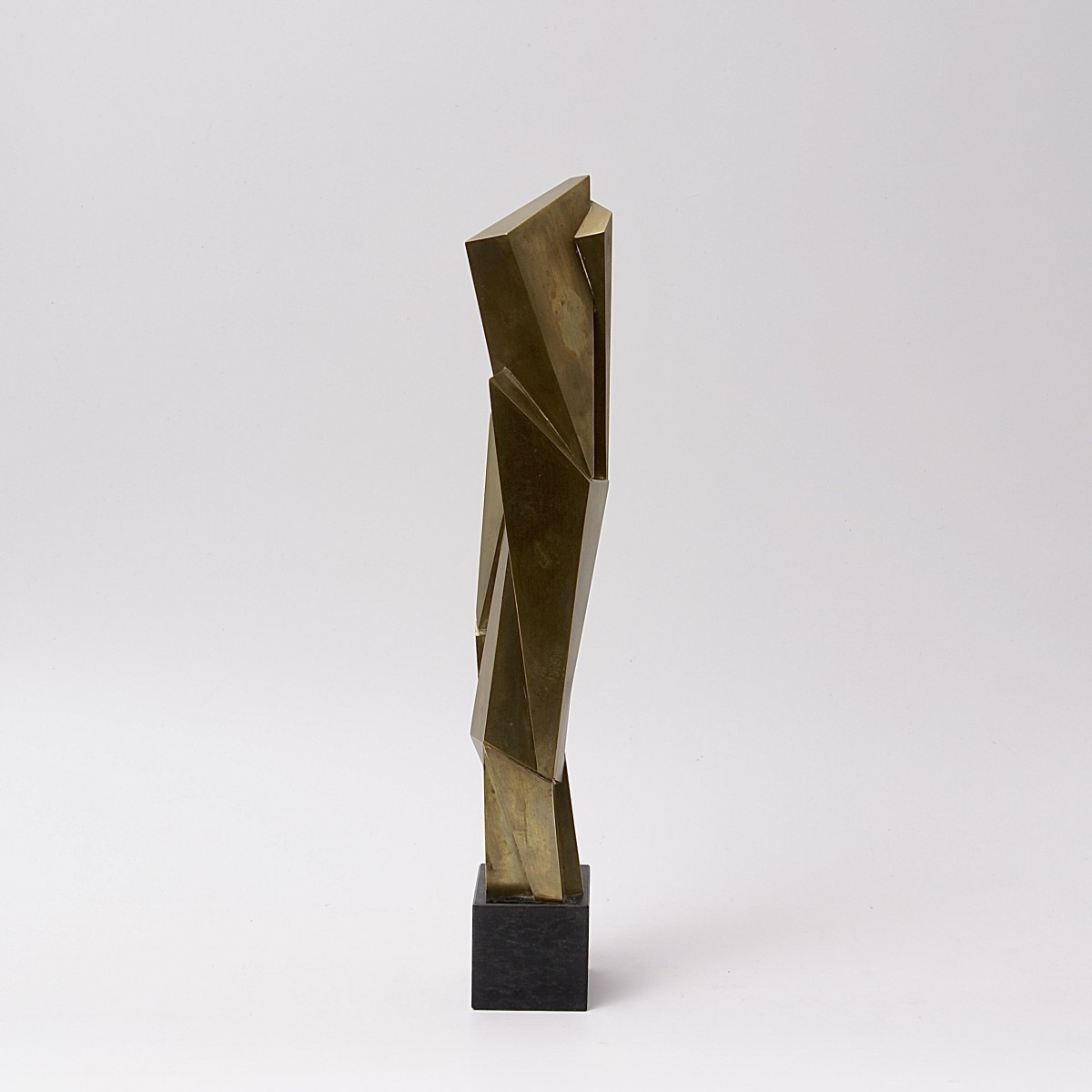
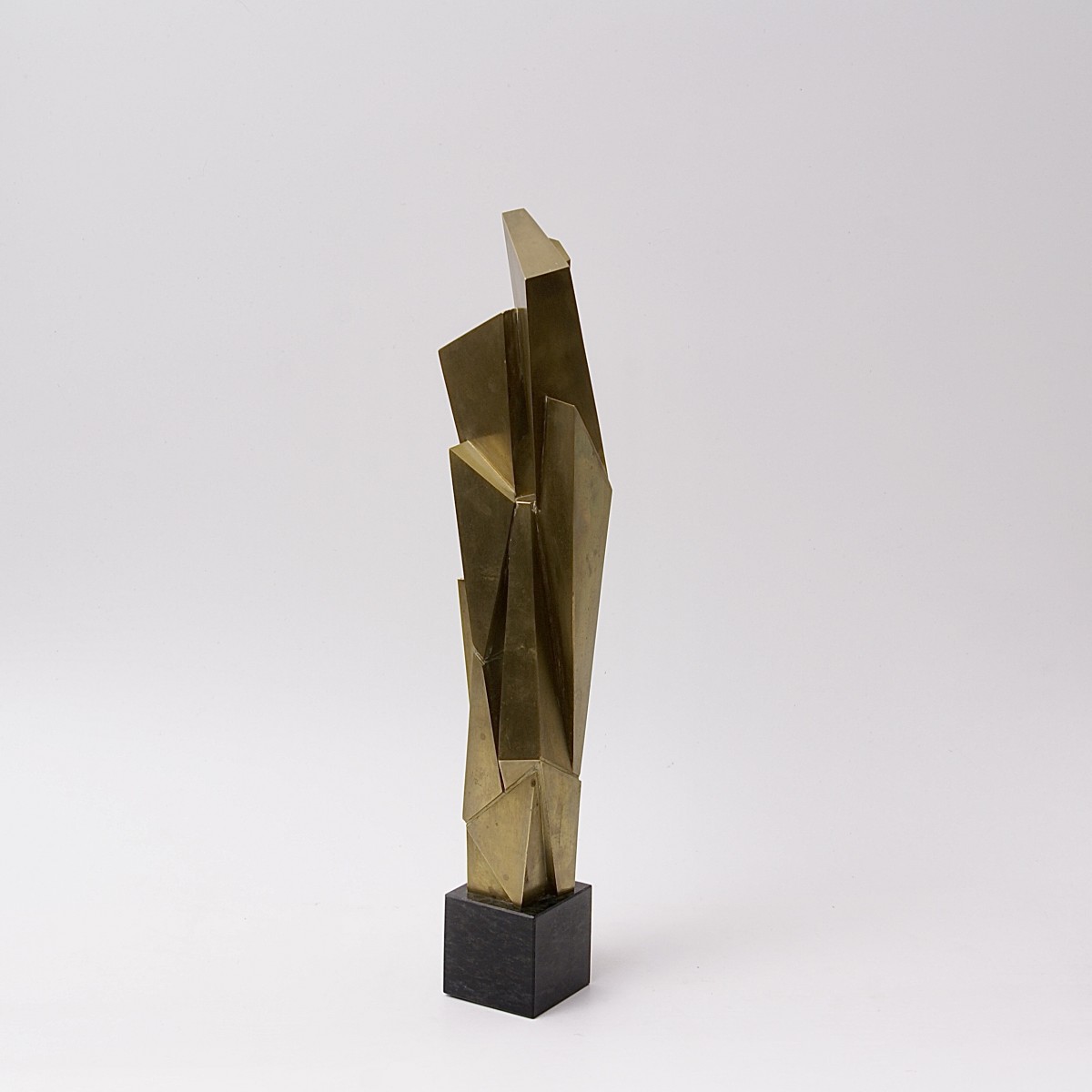
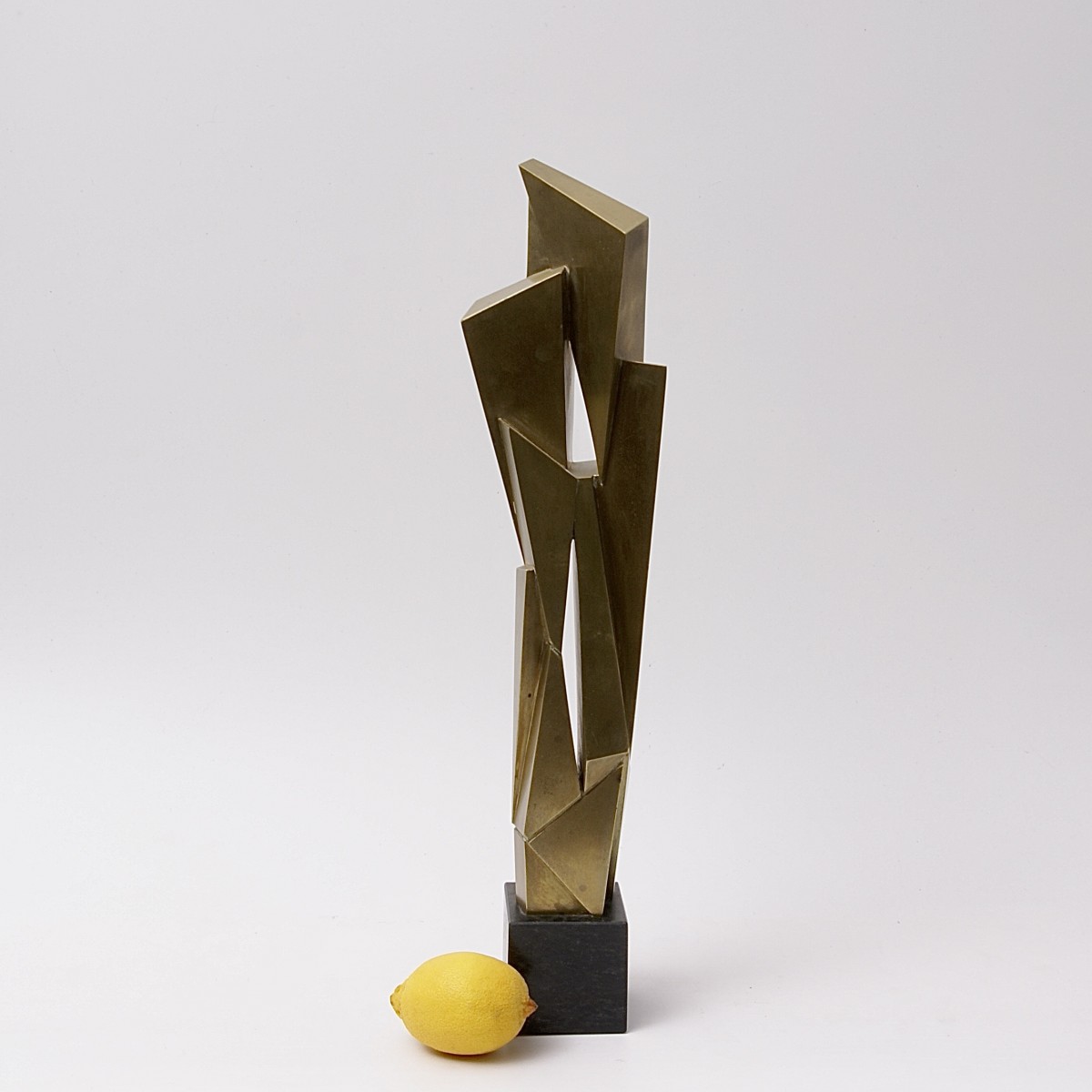

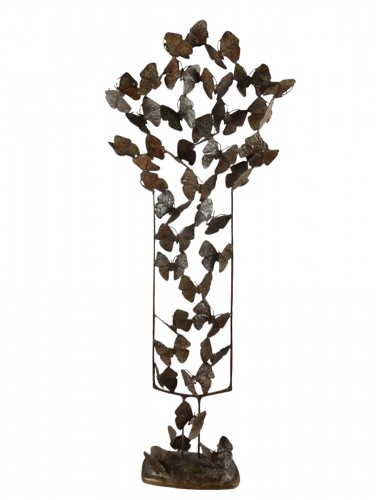
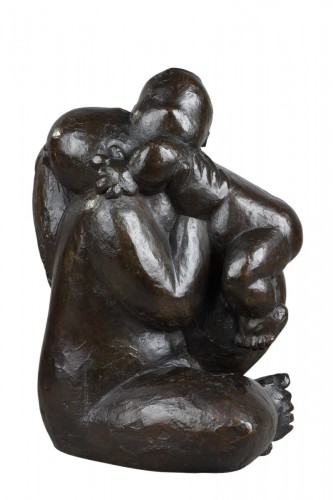
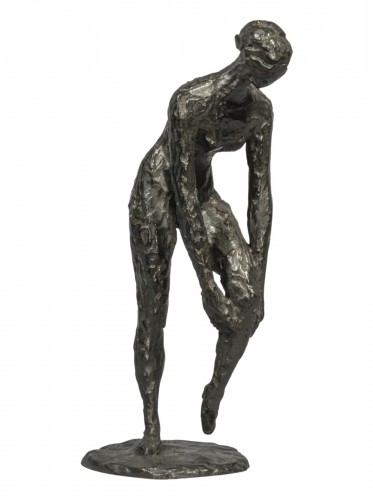
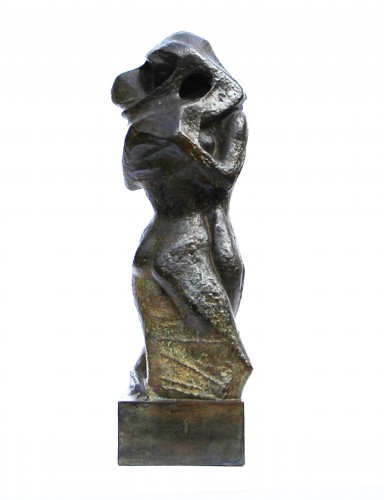
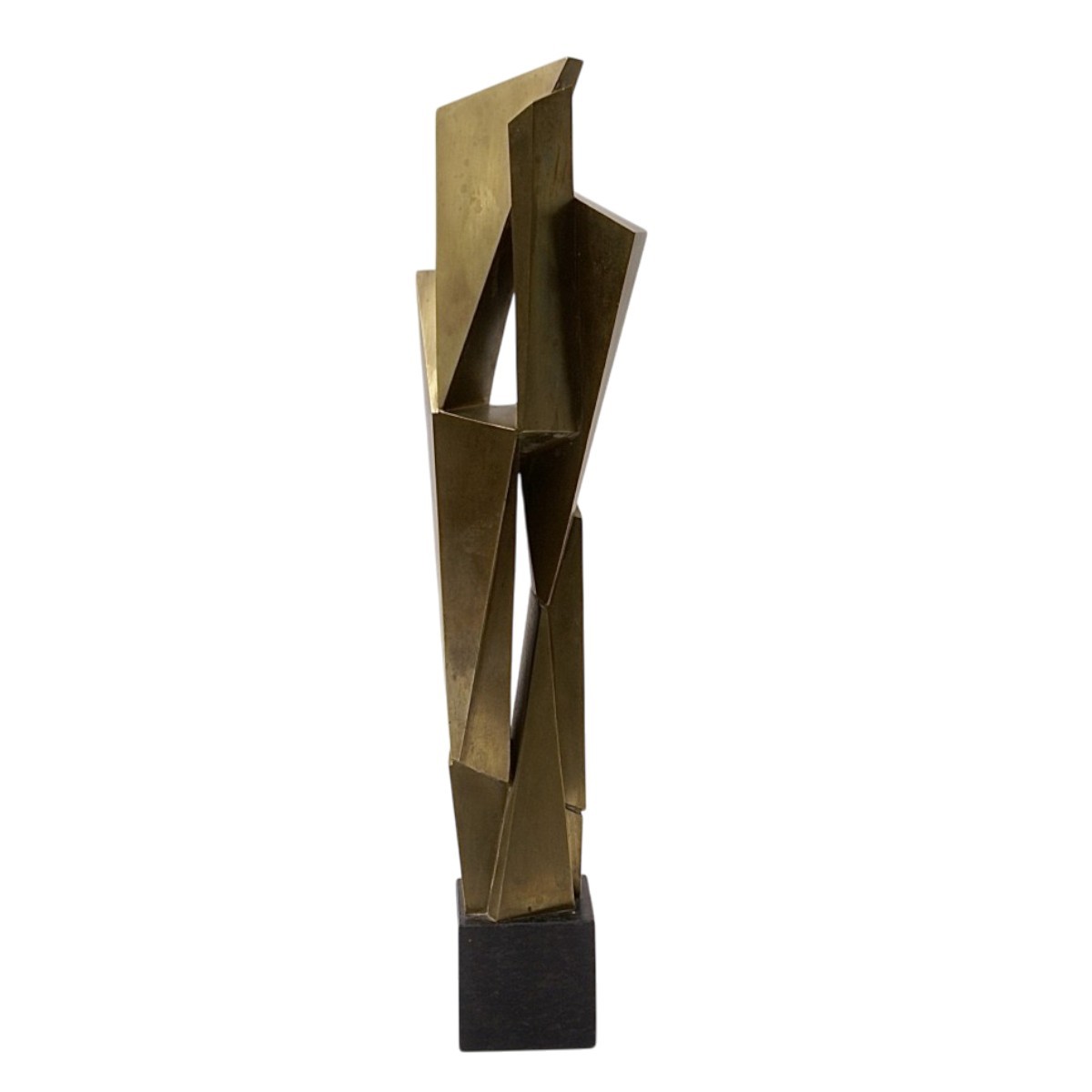
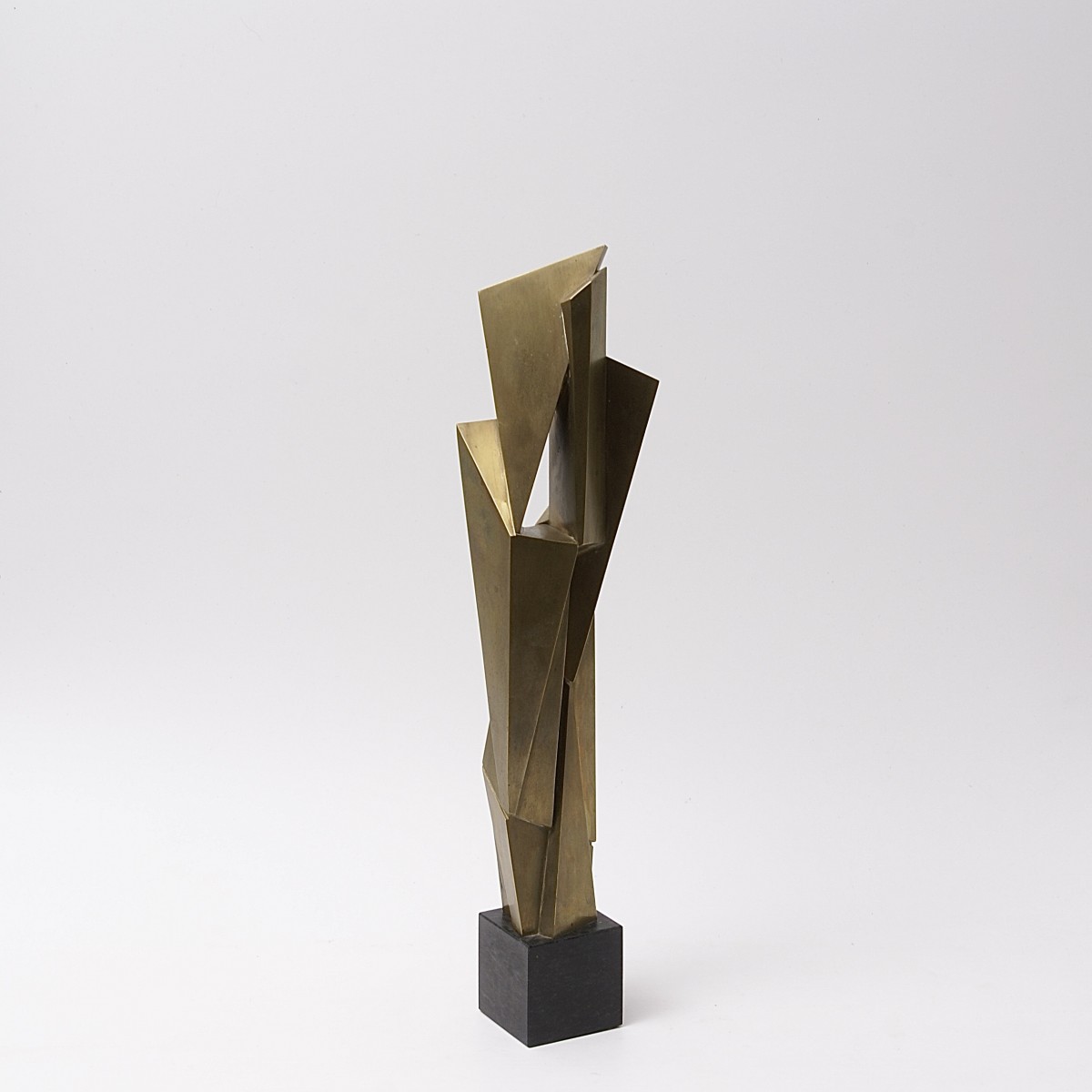
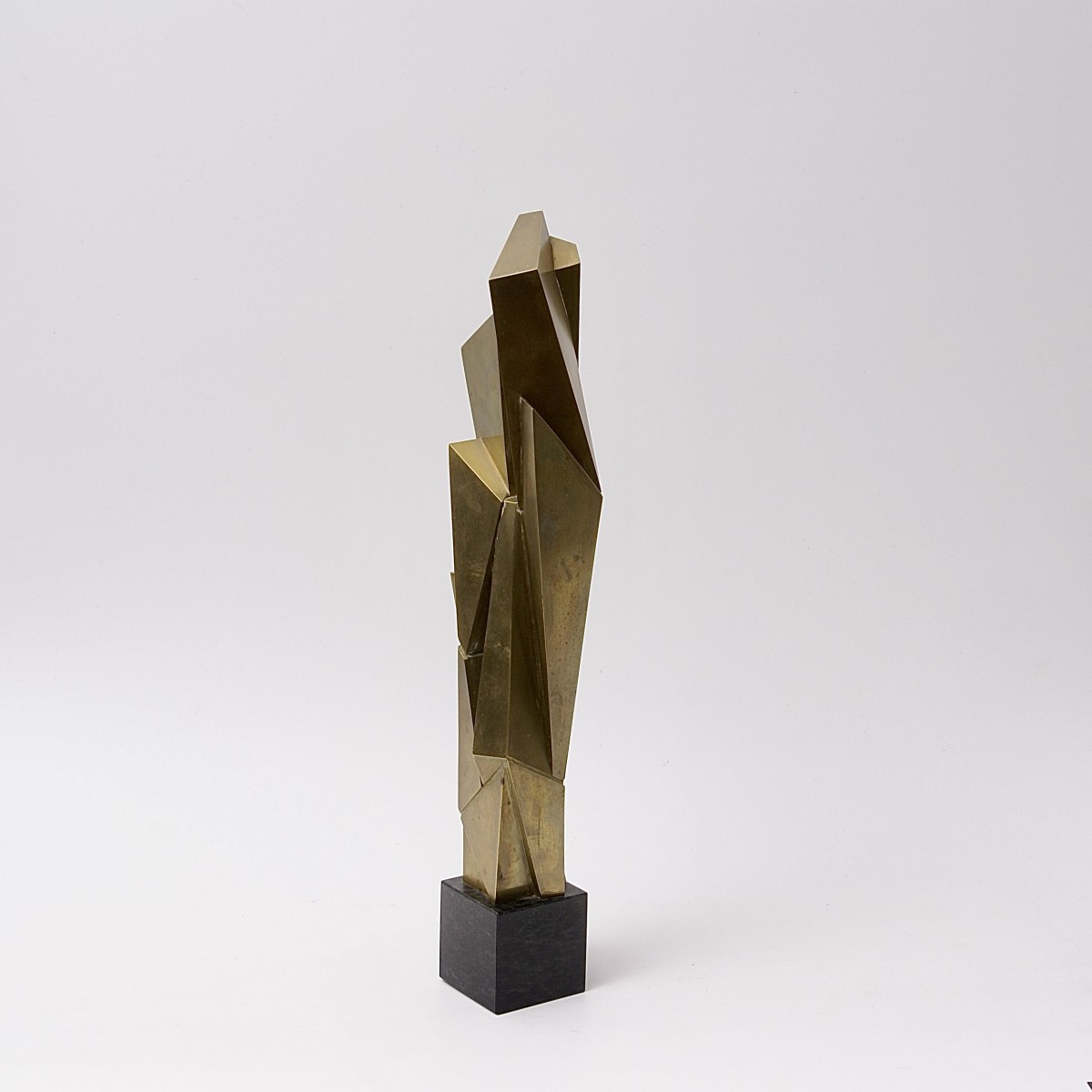
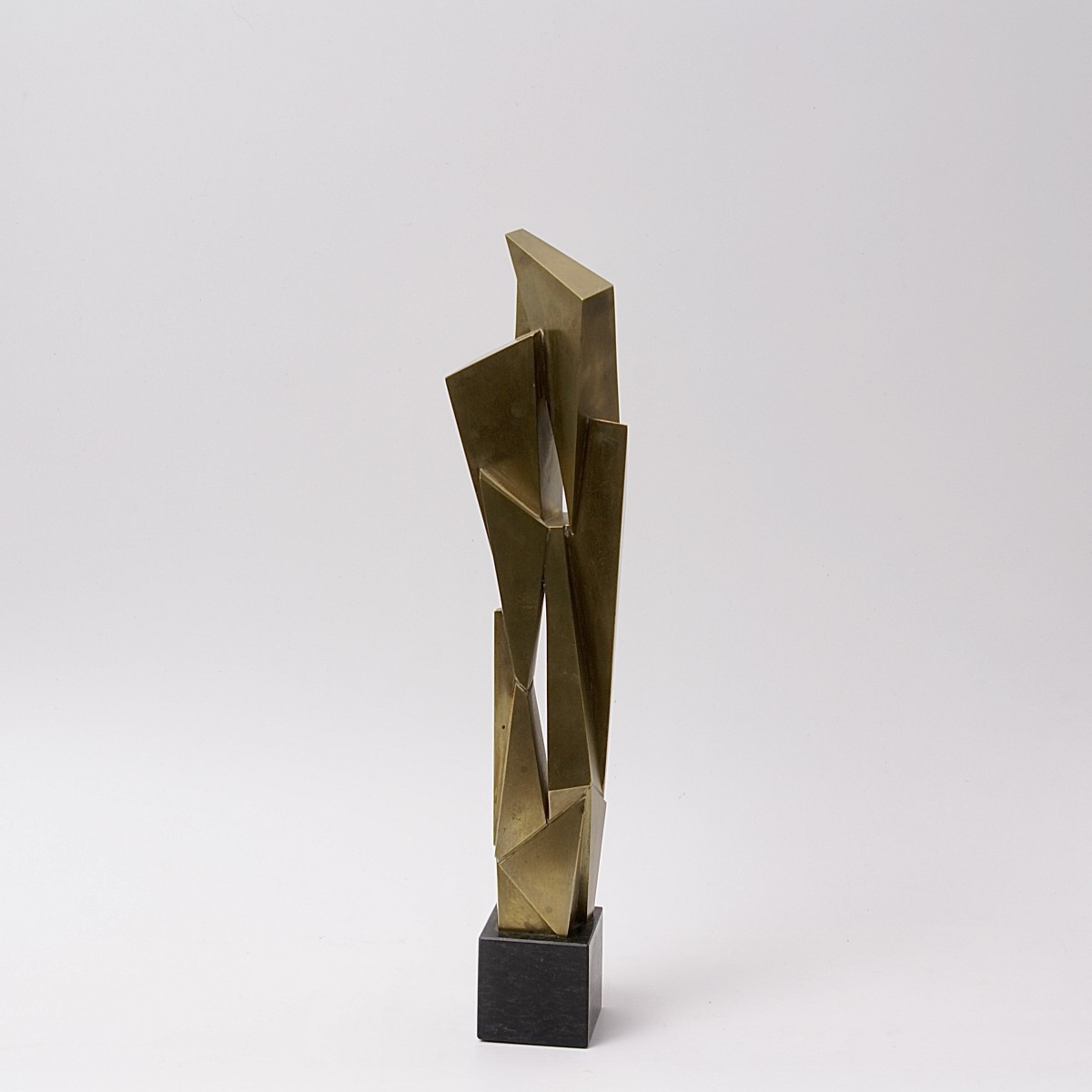
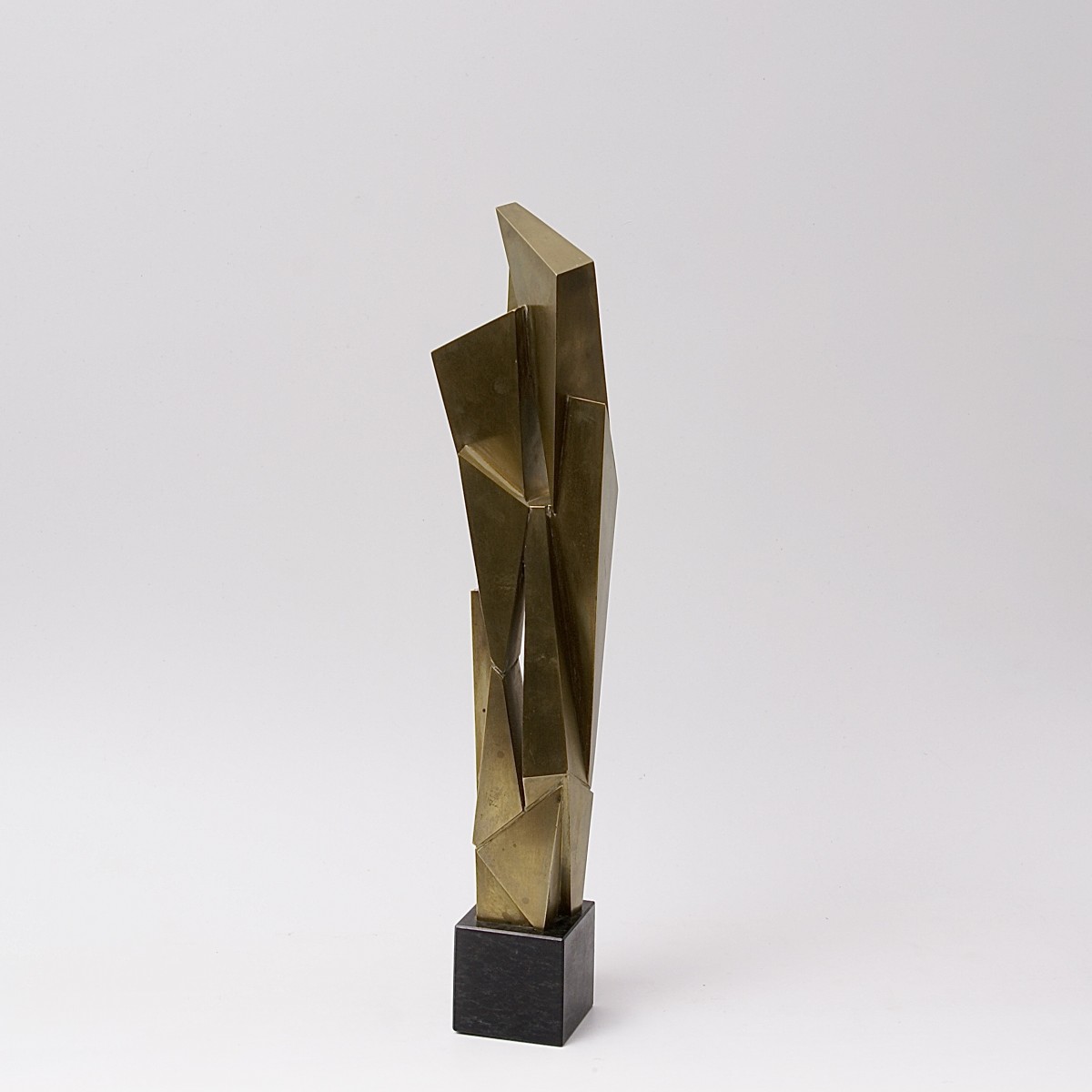
Sculpture VII (1960) Brass sculpture, black marble base Unique piece. Project for a marble sculpture, Figure IV, erected in 1961 in front of the Institute of Exact Sciences at the University of Bern.
Hans Aeschbacher, born on January 18, 1906, and died on January 27, 1980, was one of the most influential
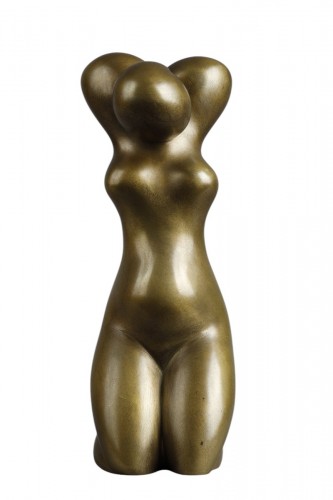
artistic figures in post-war Switzerland. Until the early 1960s, he was, along with Max Bill, one of the country's most important sculptors. His work subtly influenced an entire generation of artists in Switzerland, from Bernhard Luginbühl to Markus Raetz. Aeschbacher created a considerable body of work, which is represented in the collections of all the major Swiss art museums. He underwent an evolution that took him from voluminous nudes (reduced to the essentials) to slender and austere geometric abstractions, and finally to later monumental circular works in concrete and acrylic glass. Hans Aeschbacher shared the entire Swiss Pavilion space with painter Fritz Glarner at the 34th Venice Biennale. A member in 1968, he was awarded the Canton of Zurich Prize in 1973 and the City Prize in 1977... A series of important solo and group exhibitions inaugurated this new “concrete” period, including, among others, an exhibition with Max Bill, Walter Linck, and Robert Müller at the Kunsthalle in Basel in 1959 (the year our two Figures XI and XII were created). In 1960, his sculptures had a notable presence in the vast exhibition “Switzerland, from Ferdinand Hodler to Paul Klee” at the Musée d'Art Moderne de la Ville de Paris.In Germany, Hans Aeschbacher participated in several Documenta exhibitions in Kassel (in 1959 and 1964). His works were also presented at the Venice Biennales in 1958 and 1968. In the catalog for the 1968 Venice Biennale, the writer and art critic André Kuenzi from Vaud wrote enthusiastically about his strict layout of the Swiss Pavilion: "Among the many trends in art today, we
note sculptors who have retained a sense of permanence and universality. Hans Aeschbacher is one of those, and we could apply to him a reflection by Michel Seuphor, that he is much more than a “witness of his time,” he is a “witness of immanence.” This great
sculptor of concrete art worked until shortly before his death in January 1980. His bibliography is full of retrospective monographs: in 1959 (published by Éditions du Griffon, with a foreword by Michel Seuphor), in 1961 at the Kunshalle in Bern, in 1976 (published by
ABC Verlag, Zurich), in 1985 (for his retrospective at the Kunsthaus in Zurich), in 1986 published by Waser Verlag Zurich, and finally a very recent and comprehensive monograph Hans Aeschbacher, Menschen und Steine (“Men and Stones”), published in 2024 by Scheidegger &
Spiess.