Offered by Kolhammer & Mahringer Fine Arts
REQUEST INFORMATION

Specialised with sculptures and old master paintings
Mechelen
Early 16th century
Carved wood, polychrome painted & gilded
Height 22.5 cm
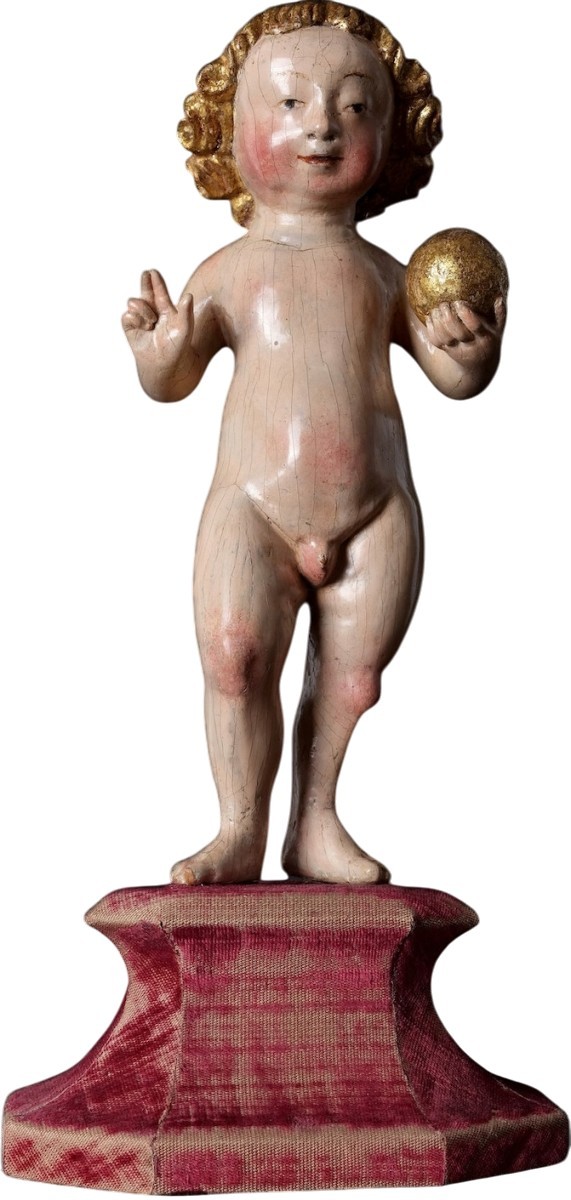
The Christ Child from Mechelen – a popular subject of devotion
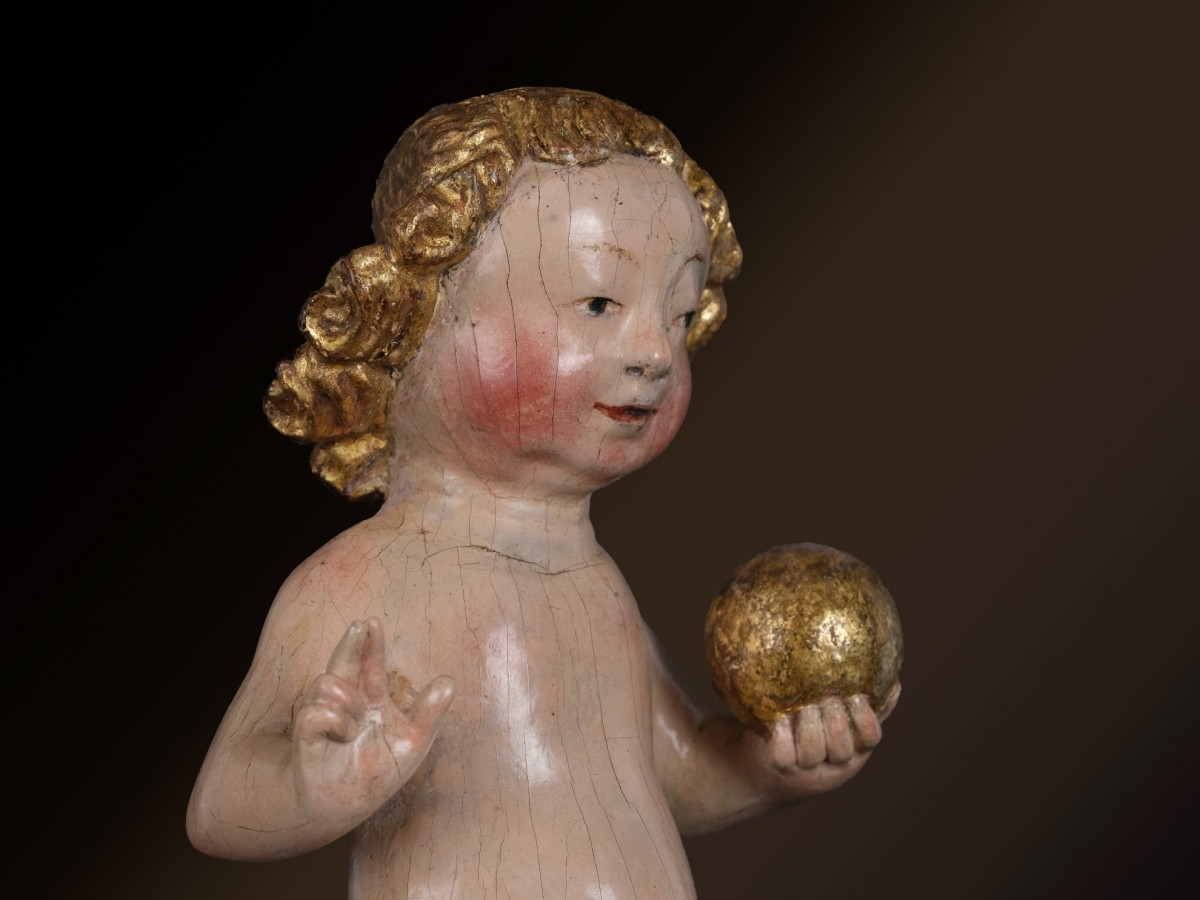
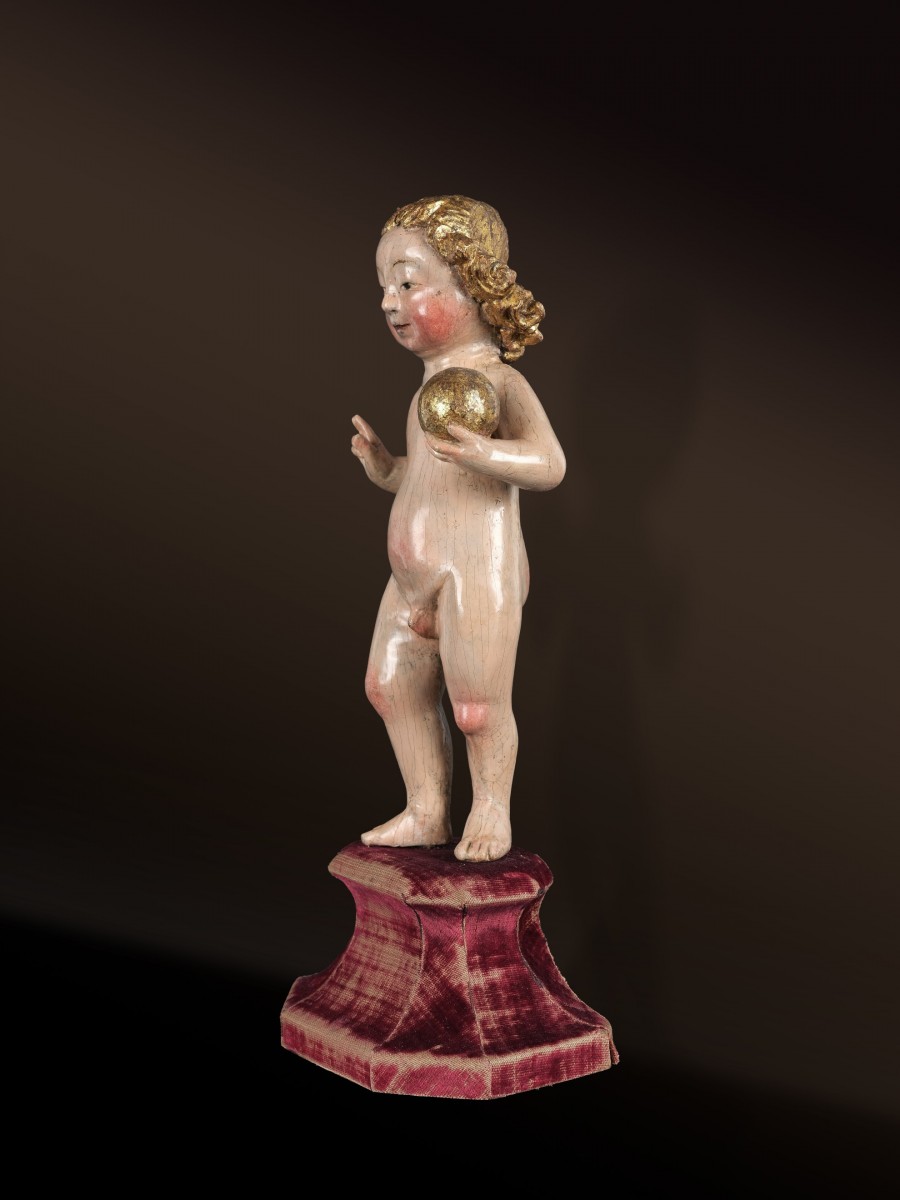
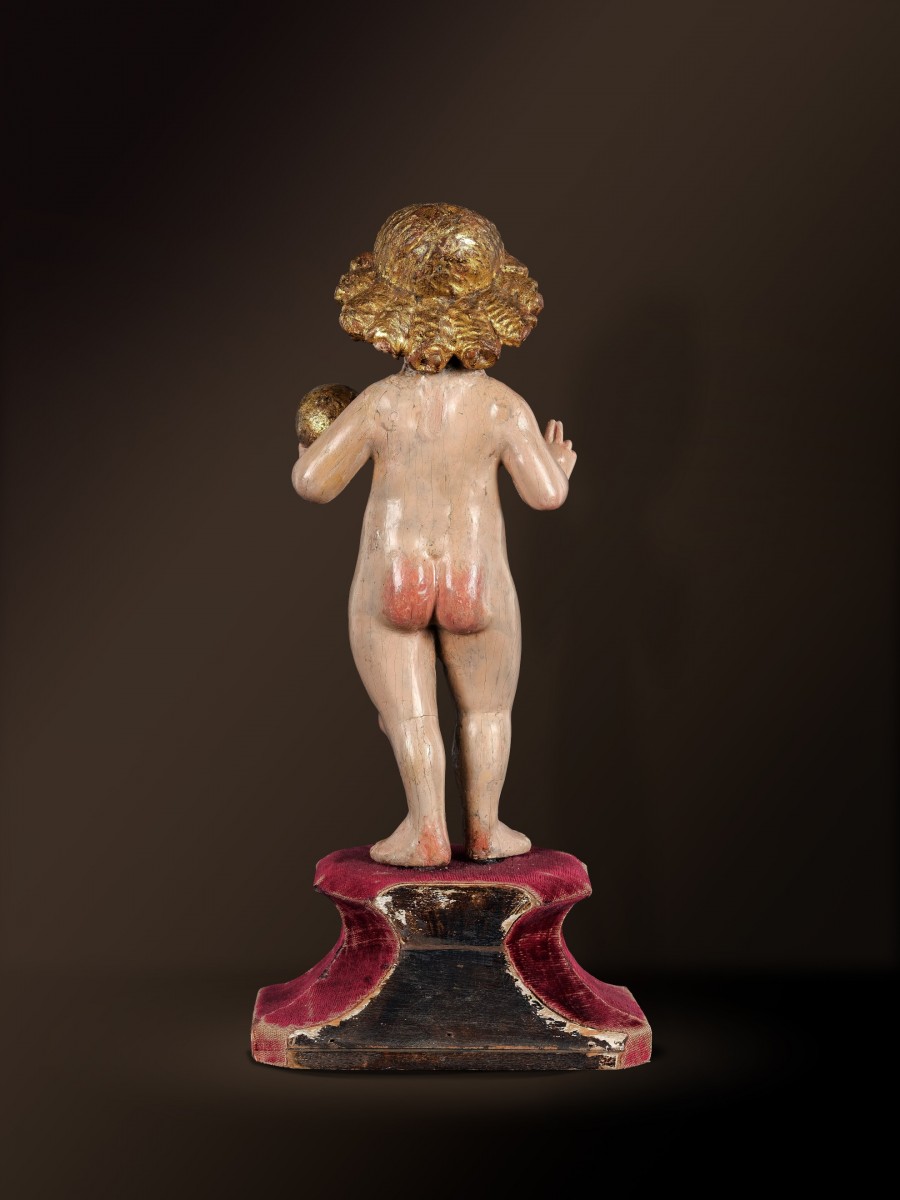
This small, impressive sculpture from the beginning of the 16th century shows the infant Jesus in a form characteristic of Mechelen. The naked child stands upright and combines religious authority with childlike liveliness. The fine painterly accents are particularly remarkable: The incarnate is delicately and warmly painted, with reddened chubby cheeks, chest, tummy and knees. Christ thus appears not only as a divine figure, but also very lifelike. The nakedness emphasizes Christ’s true incarnation; the child is vulnerable, innocent and truly born human. However, this complete openness of his body also refers to his later suffering and crucifixion, where he is also laid bare.
Expression & attributes
With his right hand raised, the child shows the gesture of blessing or speaking – a reference to his divine mission. In his left hand he holds the orbis cruciger, the globe with a cross (this has been lost over the centuries), symbolizing his dominion over the earth and his victory through the cross. The child thus reveals the claim that the salvation of the world comes through Christ in human form. The infant Jesus looks forward openly, a slight smile playing around his lips. The golden curls stand out boldly from his head – a typical feature of the Mechelen figures that further enhances their liveliness.
Mechelen as a center
Mechelen was an important center of religious sculpture in the Habsburg Netherlands in the 16th century. From here, the small figures of Jesus, also known under the French name L’Enfant Jésus de Malines, spread to France and later to Catholic collections worldwide. Usually carved from a single piece of walnut wood, they were used as devotional objects in private homes and monasteries. However, production was particularly aimed at the private market: figures that created a sense of family closeness and emphasized childlike features were in demand. The naked standing infant Jesus thus became a popular type because it created a link between intimacy and theology. Their handy size made them transportable and their touching depiction encouraged a personal devotion to Christ.
An important comparable piece is now in the Louvre in Paris (inv. no. RF 2009.05). There, too, the child is depicted unclothed and standing in contrapposto, with a gesture of blessing and a globe. The close stylistic relationship can be seen in particular in the flatly laid calotte hairstyle and the curls that stand out at the sides in volutes.
Iconographic context
This depiction is part of the long tradition of depictions of the infancy of Jesus, which experienced a new heyday in the course of late medieval devotion. The infant Jesus was no longer shown merely as a helpless newborn, but also as a blessing ruler of the world – at once divine and human, sublime and yet approachable. The “realistic” and childlike appearance facilitated access to worship: Jesus could not only be worshipped as God, but also as a small child in an emotionally “tangible” way.
Effect
This Mechelen Infant Jesus thus embodies the theological and emotional depth of his time – as a visible sign of Christ’s presence and at the same time as an expression of personal, comforting piety. It impressively combines childlike grace and sacred meaning.
Literature
Fanny Cayron – Delphine Steyaert, “Made in Malines. Les statuettes malinoises ou poupées de Malines de 1500-1540”, Étude matérielle et typologique, Brussel 2019.
Sophie Guillot de Suduiraut – Christine Lancestremère, “La production de statuettes à Malines”, in: Michele Tomasi (ed.), L’art multiplié. Production de masse, en série, pour le marché dans les arts entre Moyen Âge et Renaissance, Rome 2011, 89-103.