Offered by Dei Bardi Art

REQUEST INFORMATION


Sculptures and works of art from the Middle Ages and the Renaissance
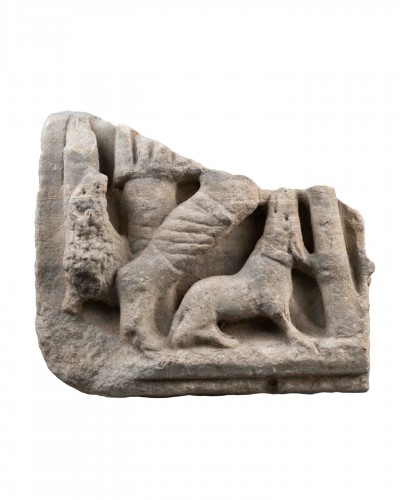
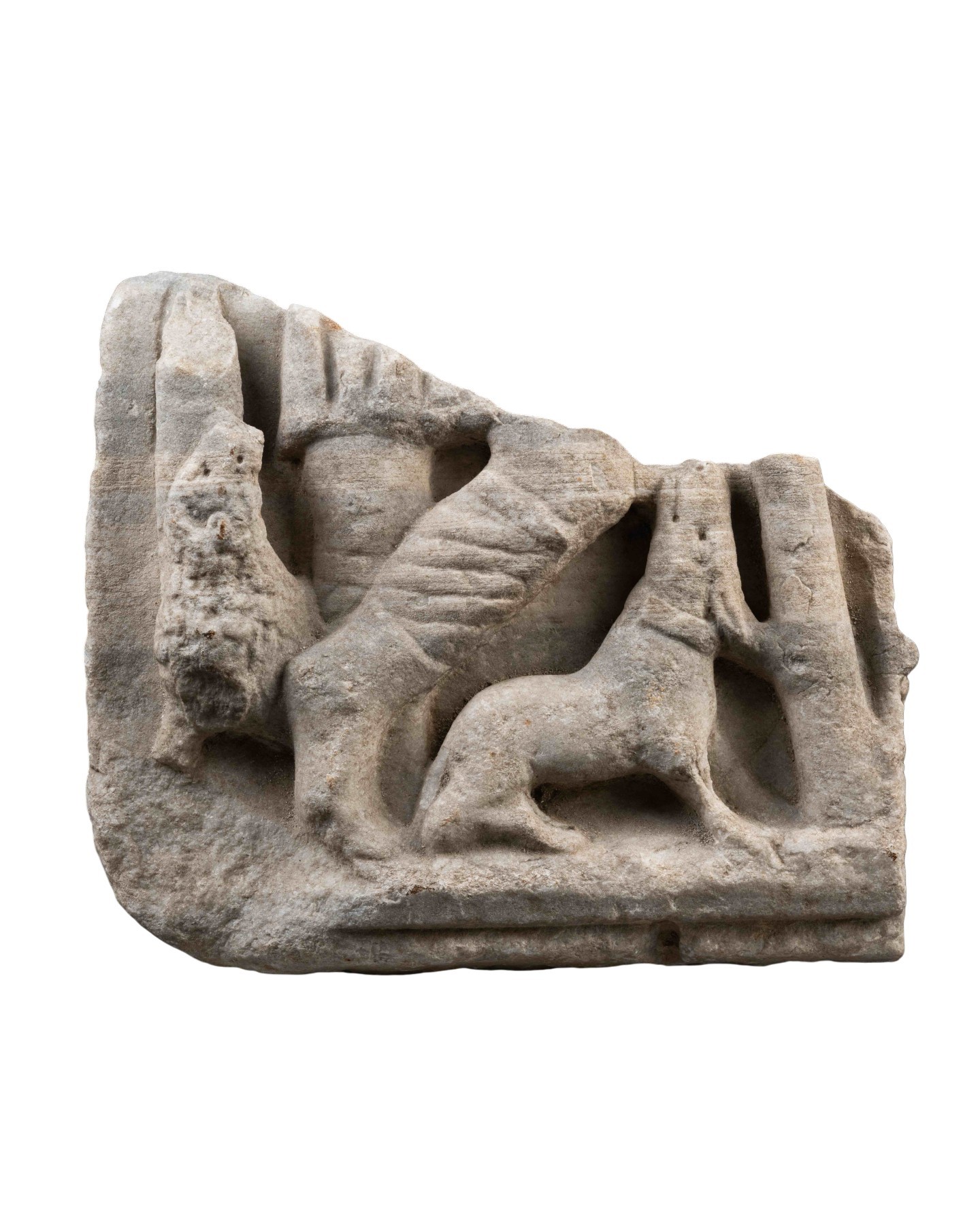
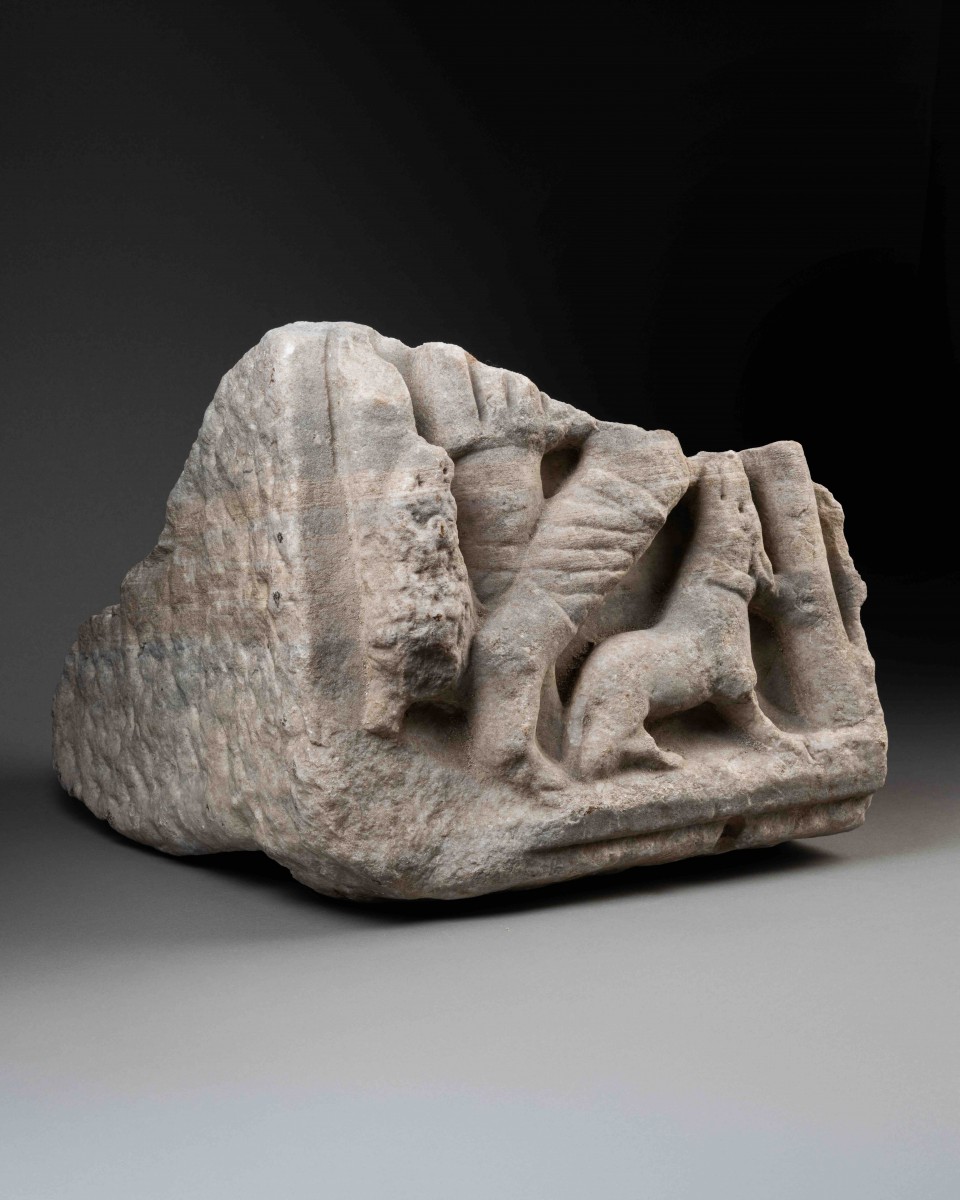
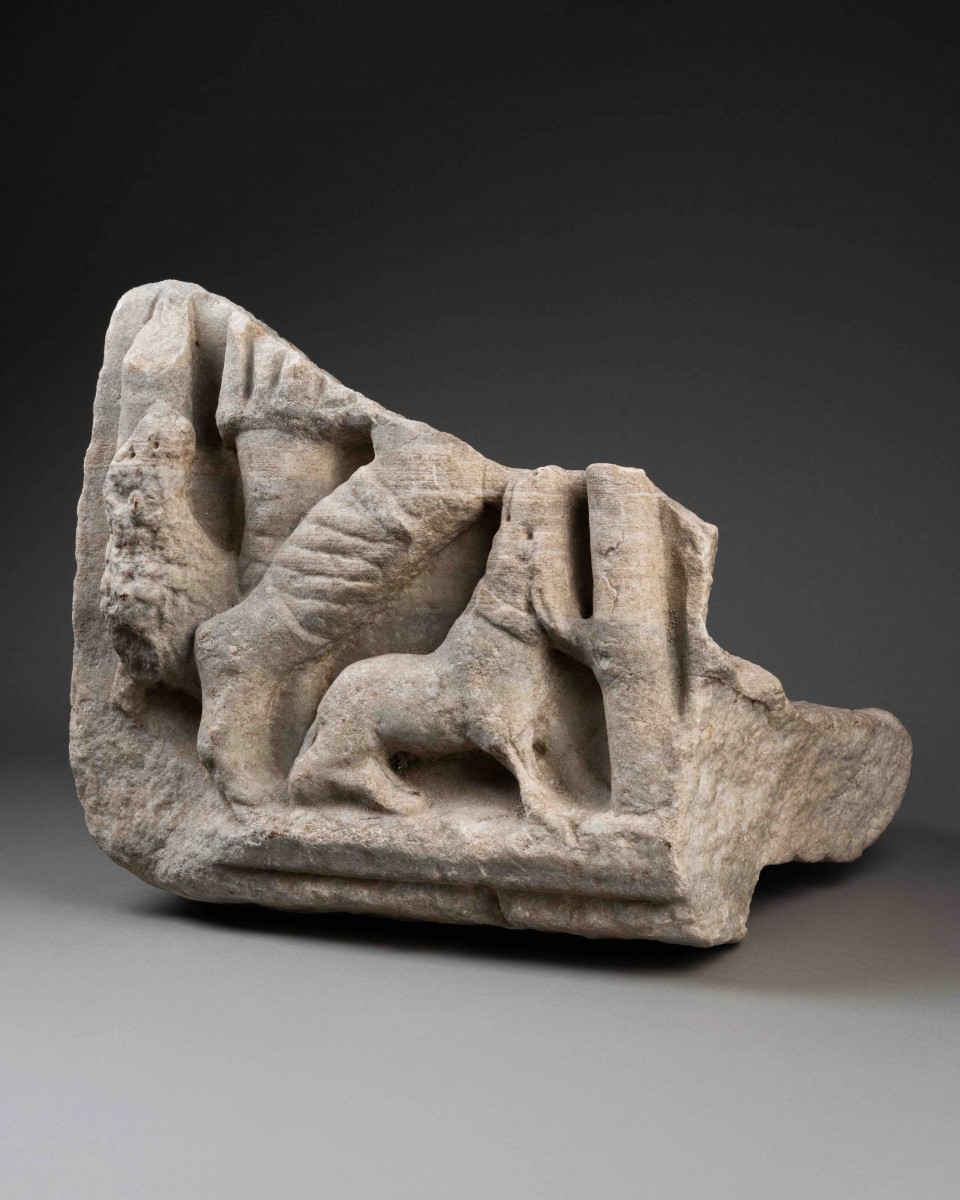
Fragment of a Sarcophagus with the Judgment of Paris
Roman Period, 3rd century AD
Stone
26 × 31 × 30 cm
This fragment of a Roman sarcophagus preserves part of a relief depicting the Judgment of Paris, one of the most celebrated episodes of Greco-Roman mythology. The surviving section shows the lower body of a shepherd rendered in a relaxed contrapposto. The presence of a sheep at his right side and a recumbent hound at his feet identifies him as Paris.
Behind him, a cluster of vertical rocky and arboreal forms evokes the wooded slopes of Mount Ida, the traditional setting of the divine contest.
The Judgment of Paris was a foundational myth in the Greco-Roman imagination, foreshadowing—and ultimately precipitating—the Trojan War. According to the story, Eris, goddess of discord, cast a golden apple inscribed “To the Fairest” among the gods. Hera, Athena, and Aphrodite each claimed it. Unwilling to judge, Zeus appointed Paris—then living as a shepherd on Mount Ida—to decide the matter. His choice of Aphrodite set in motion the chain of events that would culminate in the abduction of Helen and the outbreak of the Trojan War.