Offered by Dei Bardi Art
REQUEST INFORMATION

Sculptures and works of art from the Middle Ages and the Renaissance
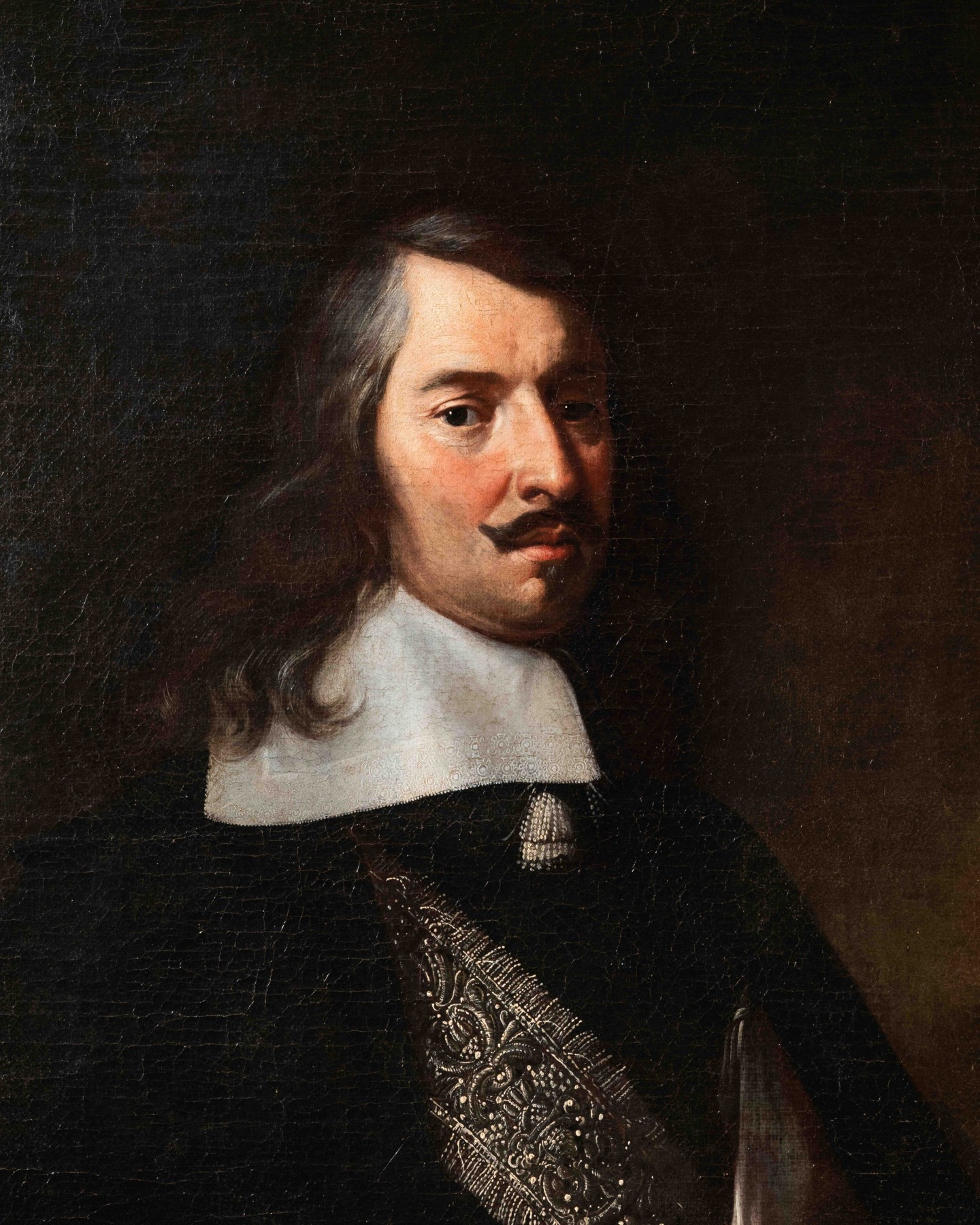
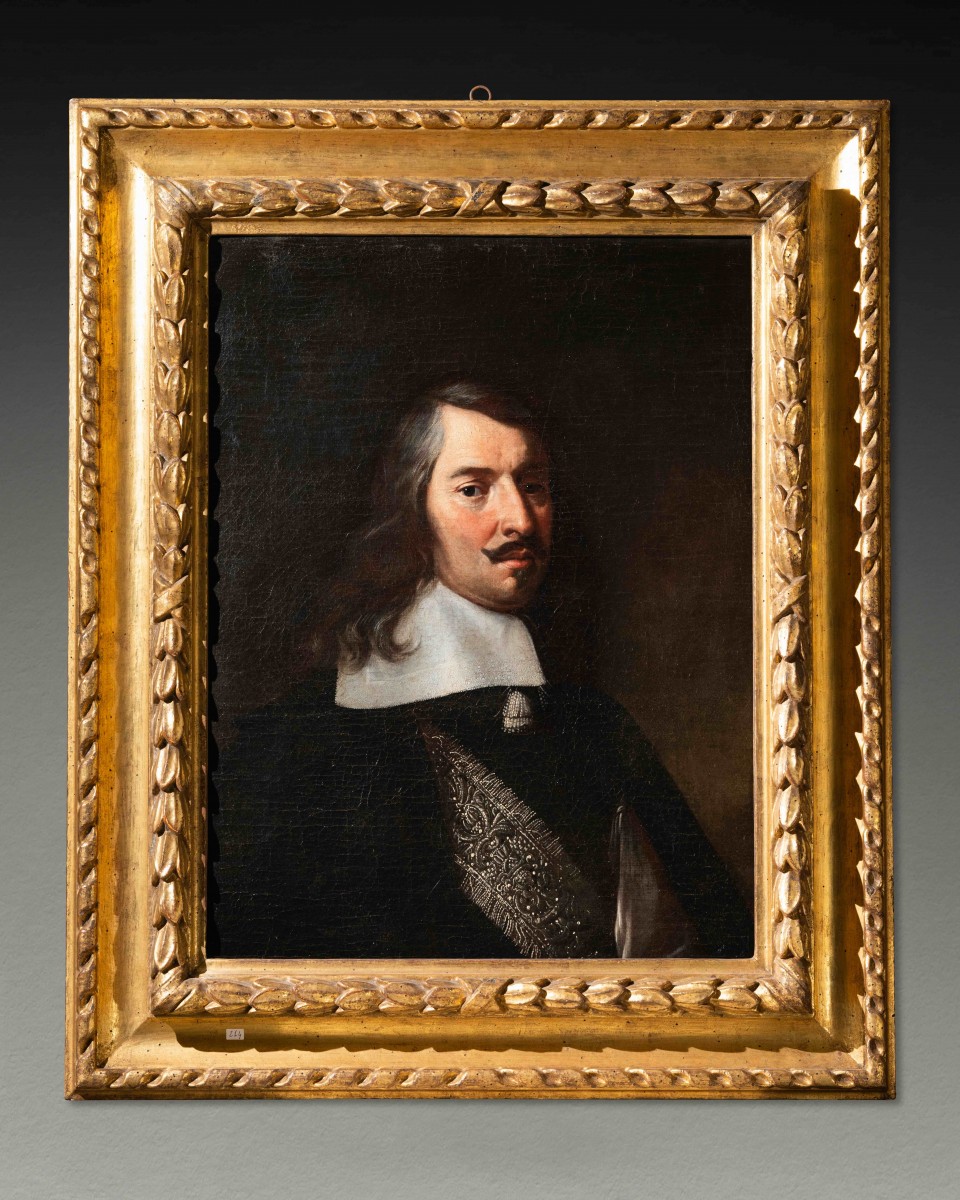
Antonio Domenico Gabbiani (Florence 1652 – 1726)
Portrait of a Nobleman
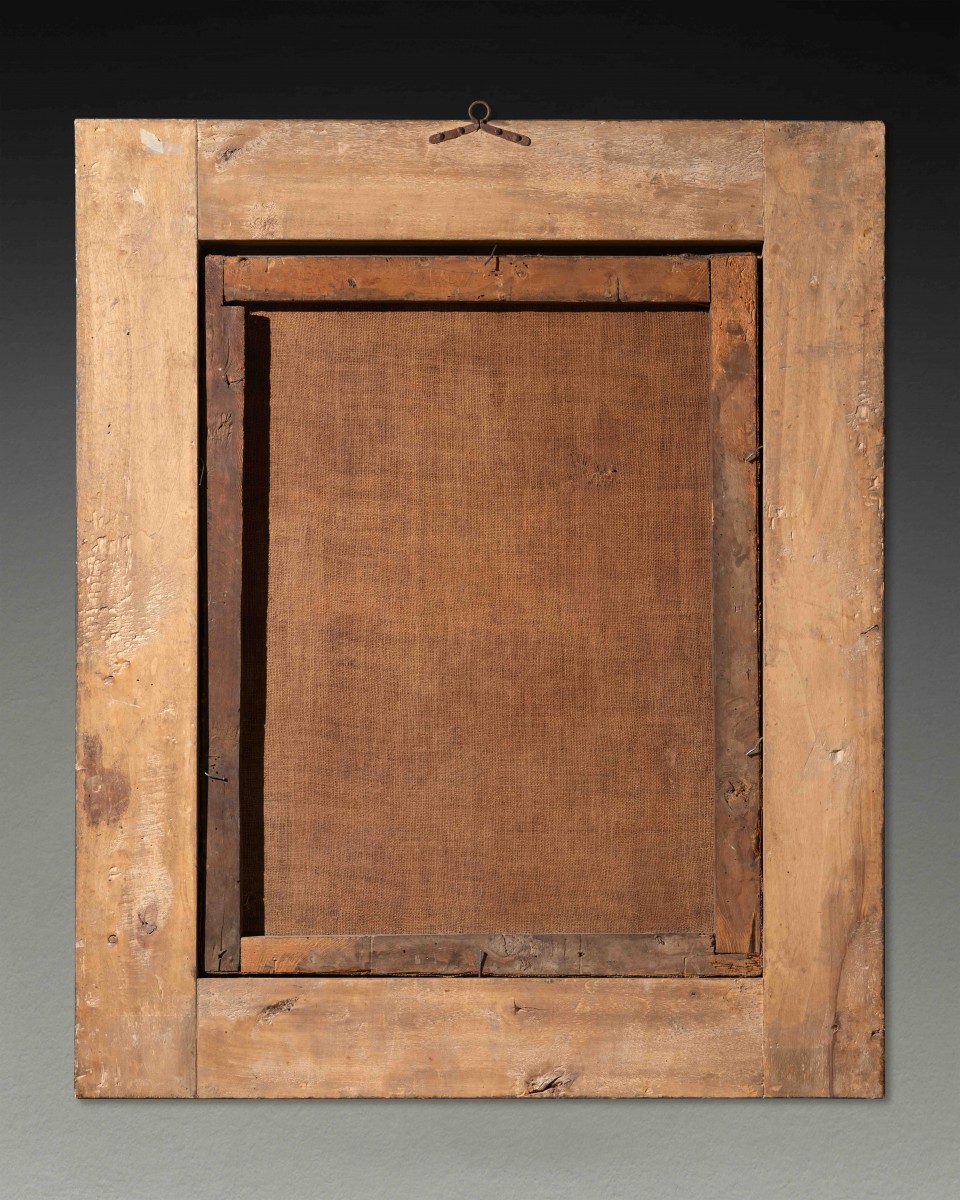
Oil on canvas
89 × 52.5 cm
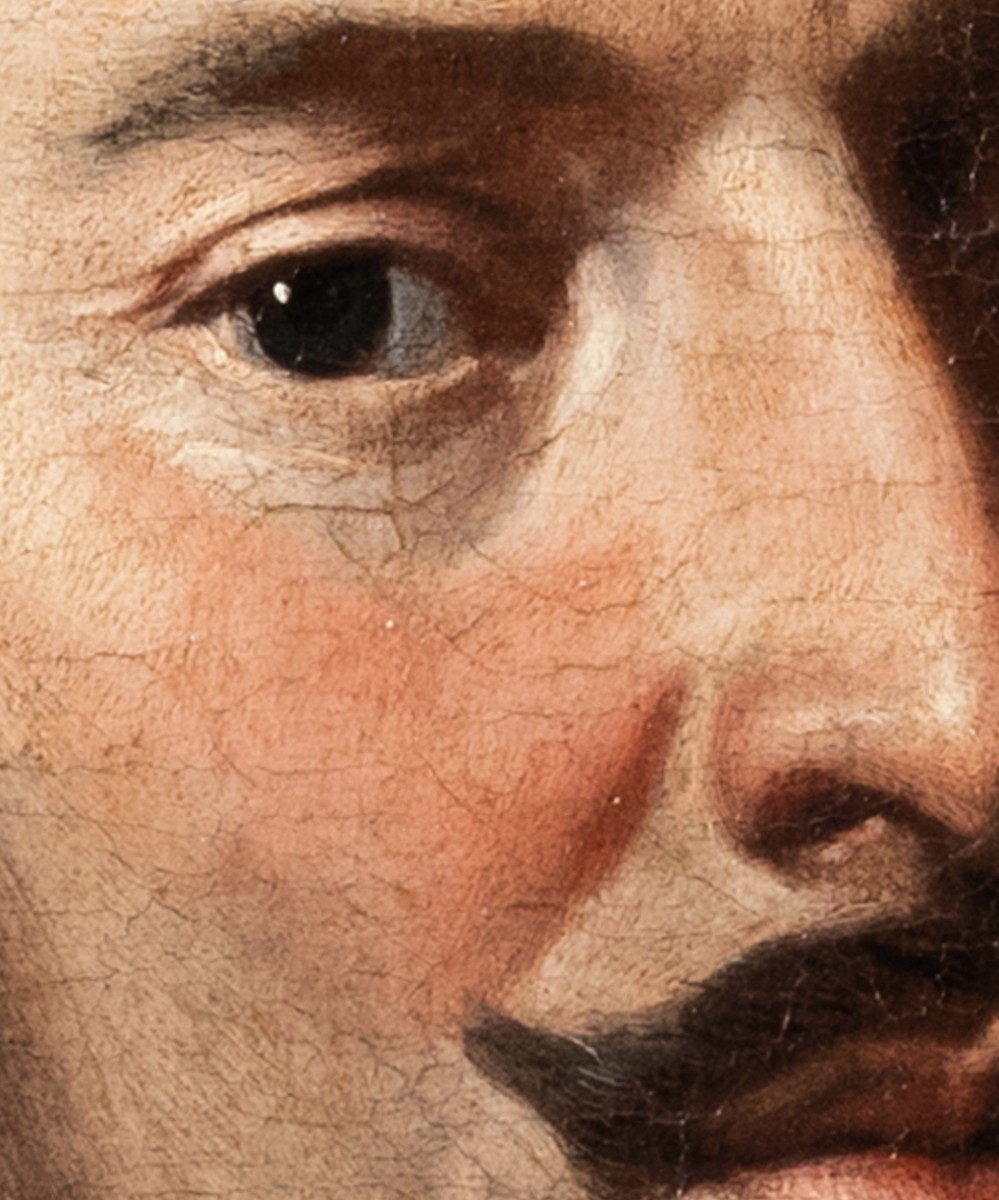
This refined half-length portrait exemplifies Antonio Domenico Gabbiani’s mature approach to portraiture, combining psychological acuity with sober elegance. The sitter is depicted turned slightly to the right, yet his gaze meets the viewer directly, establishing a subtle tension between movement and stillness. His facial features—accentuated by a narrow moustache and temples lightly touched with grey—suggest a man of experience and authority.
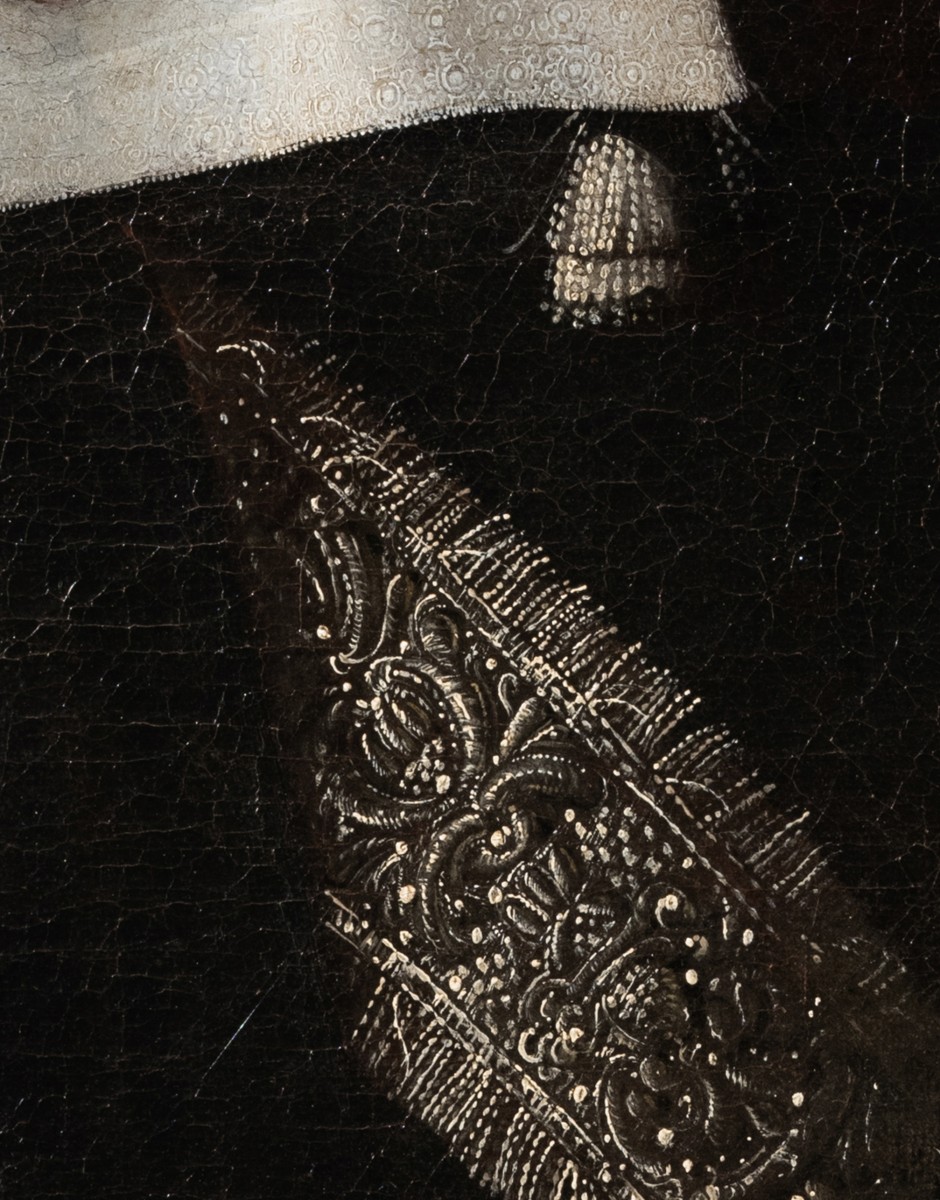
The nobleman wears dark attire set against a deep background that gradually lightens to a greenish tone on the right, a chromatic transition that enhances the sense of depth and volume. A broad white collar contrasts sharply with the black garment, from which emerges a finely rendered silver tassel. Across the chest runs a silver-embroidered sash, delicately executed and serving as a discreet sign of rank or office.
Trained in Florence and later active in Rome, Gabbiani developed a pictorial language that combines Florentine disegnowith the softened naturalism of late Baroque painting. Strongly influenced by his contact with Ciro Ferri and Carlo Maratta, his work is characterized by balanced compositions, controlled lighting, and a refined modelling of flesh tones. In his portraits, Gabbiani privileges psychological presence over ostentation, favoring sober settings and restrained gestures that lend his sitters an air of dignity and introspection. This measured elegance, tempered by classical clarity, is fully evident in the present work.
The handling of light remains restrained yet effective, modelling the face through subtle transitions and reinforcing the sitter’s introspective expression. The overall sobriety of the composition, combined with the controlled richness of the accessories, situates this portrait firmly within Florentine portraiture of the late seventeenth and early eighteenth centuries.
The identity of the sitter remains unknown; however, the costume and bearing suggest that he may have been a Dutch envoy active in Italy. The painting thus potentially reflects the international milieu in which Gabbiani operated, responding to the expectations of an elite and cosmopolitan clientele.