Offered by Antiquités Philippe Glédel

REQUEST INFORMATION

18th Furniture, country french furniture
“Hunting table, château table, Provençal table, or even Vendéan table”… these are the kinds of descriptions under which this model has been—and still is, unfortunately—misidentified (or “relooked”).
In truth, it is none of these. This type of table does not originate from Provence (where walnut, not cherrywood, is traditionally used), nor from Vendée. It did not belong to a château, nor was it used as a hunting table.
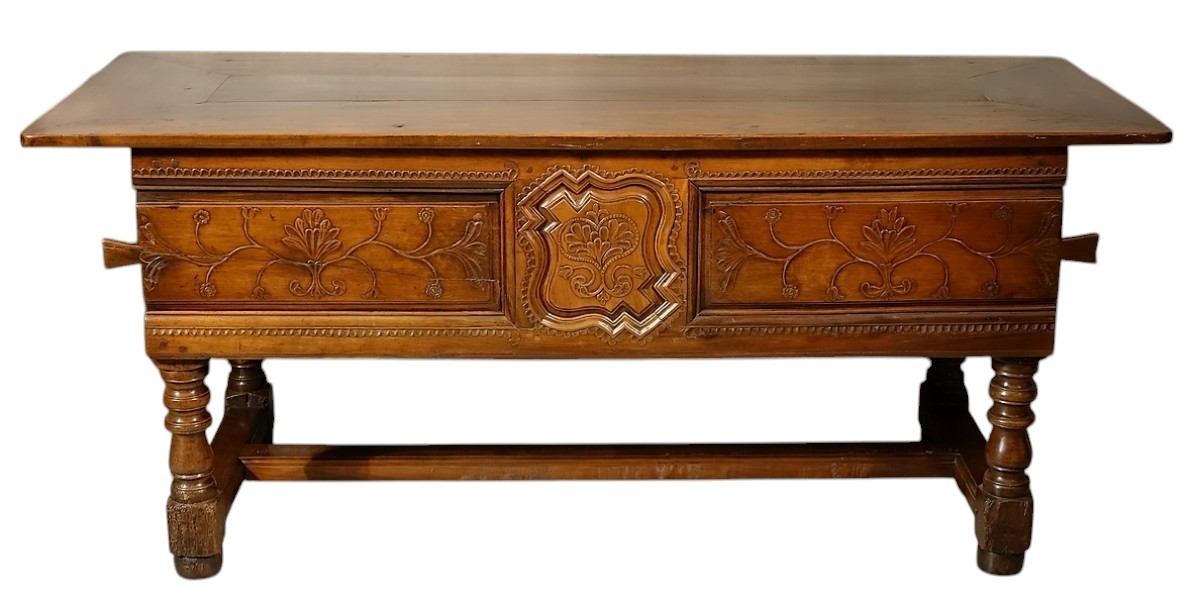
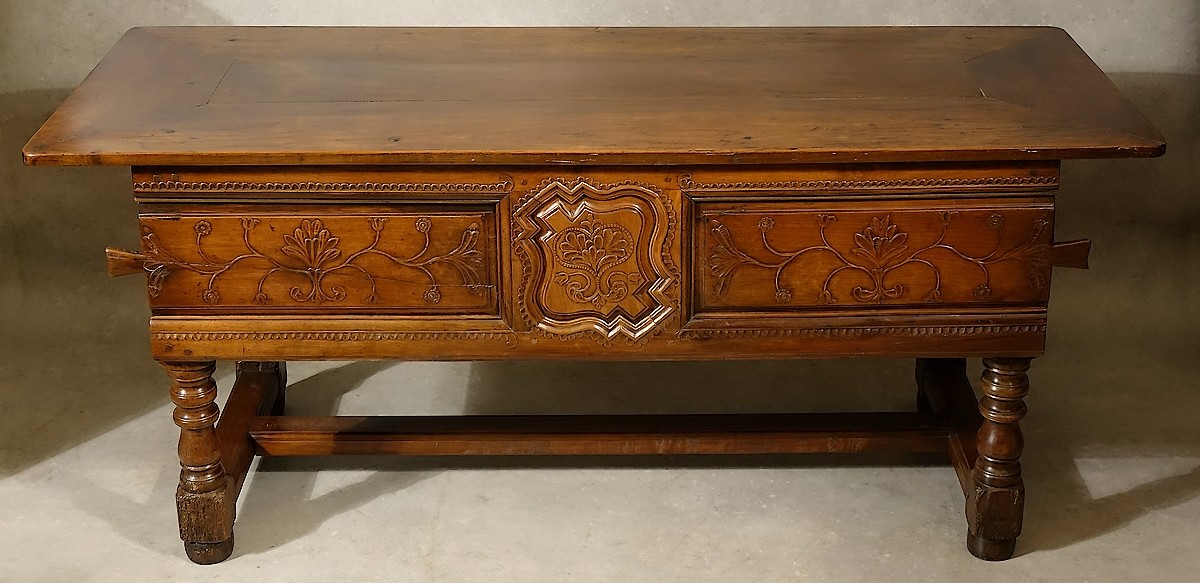
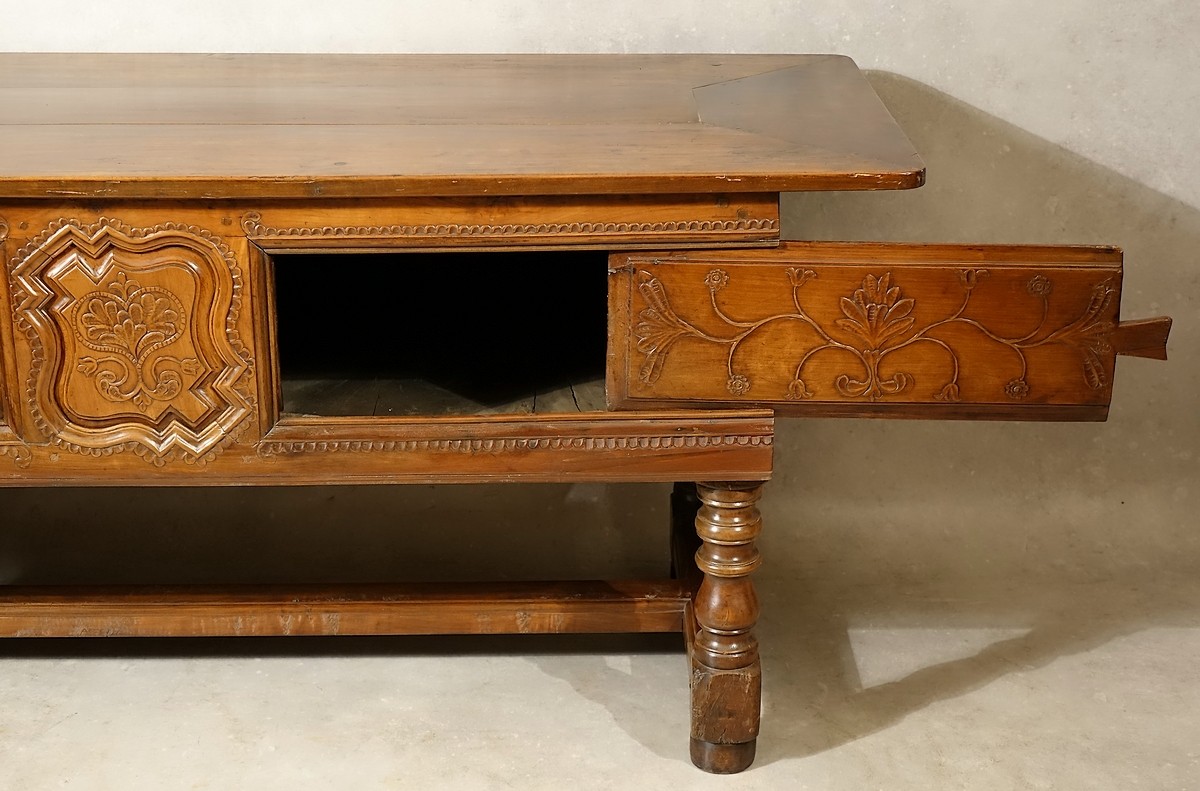
It is in fact a wedding table from the Rennes region, a very distinctive model characterized by its wide, carved pull-out slides and its turned baluster base. These tables were used for dining purposes, but also served to store tableware and certain foodstuffs such as bread (hence the term table huche). One scarcely sat at them, and when one did, it was on a bench.
While certain so-called Rennes furniture—such as double-body cupboards or armoires—were widely adopted by the local bourgeoisie, these pull-out tables were exclusively made to order for farms in the Rennes area. Like the armoire, this type of table formed part of the bride’s dowry and was commissioned by her parents.
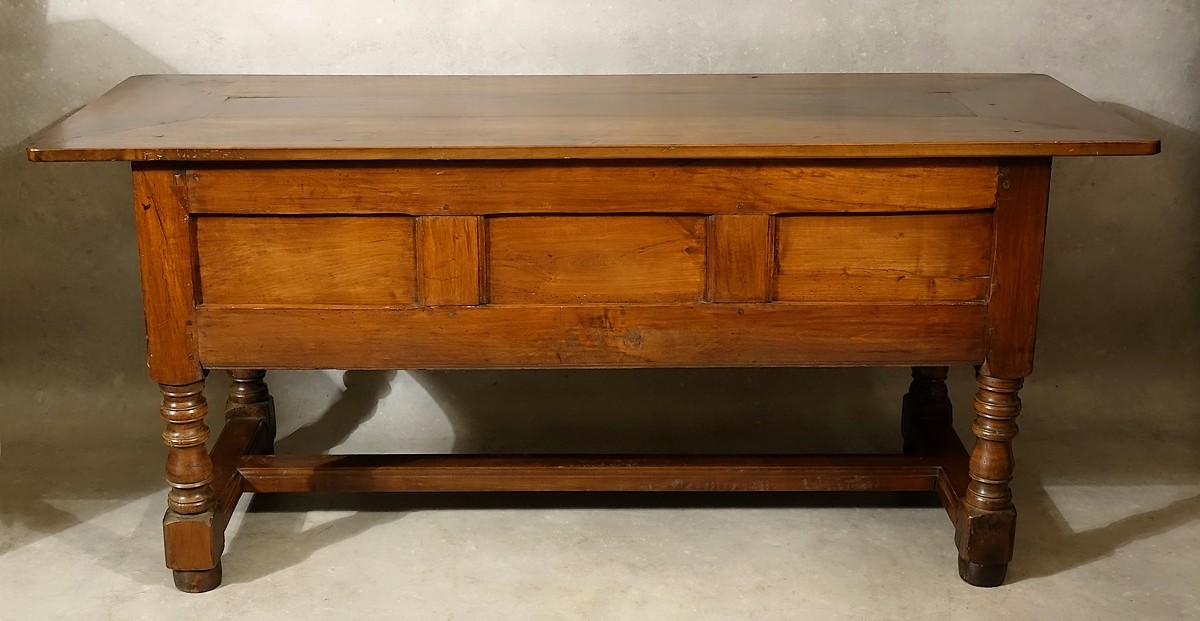
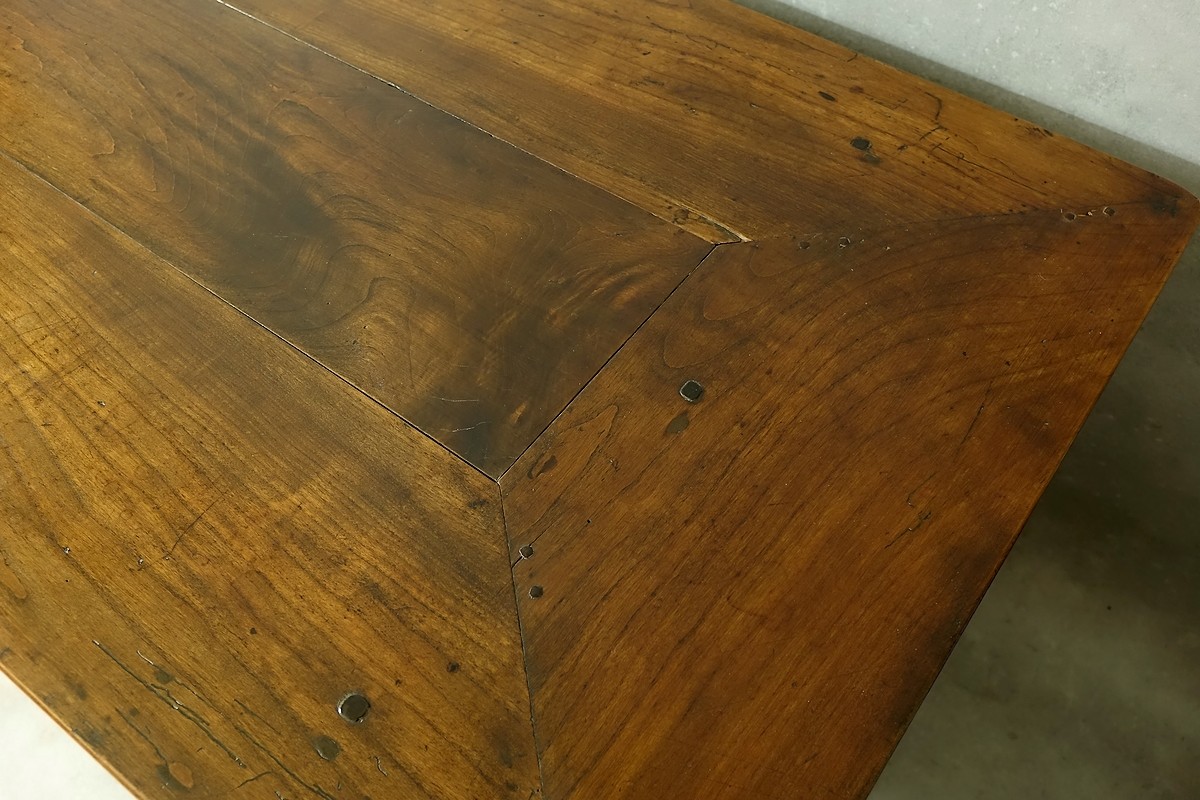
This example is made from a single wood species (apart from the interior base in chestnut): wild cherrywood (badier, as it was known locally). Particularly substantial—especially in the width of its storage section—and richly carved, it undoubtedly comes from a prosperous farm in the surroundings of Pacé, once the central hub of the “fertile crescent” of the Rennes countryside.
Such tables are illustrated in the highly documented work by Dr. Jambon, Les beaux meubles rustiques du vieux pays de Rennes. One reads there (the edition dating from 1927):
“The oldest, which are also the finest and most typical, relate to the Louis XIII and Louis XIV styles. These are the pull-out tables, the true wedding tables… Many of these charming tables have been mistreated, and it is rare today to find examples with their original bars intact.”
Indeed, having fallen out of fashion quite early (such is fashion!), and notably due to their low apron height, many disappeared entirely—often replaced by Formica tables, so much more… practical. It is quite possible that more examples survive today in the United States than in France.
This table may now be used as a console or serving table, or placed behind a sofa.
Work from the Rennes region, second half of the 18th century.