Offered by Antichità di Alina
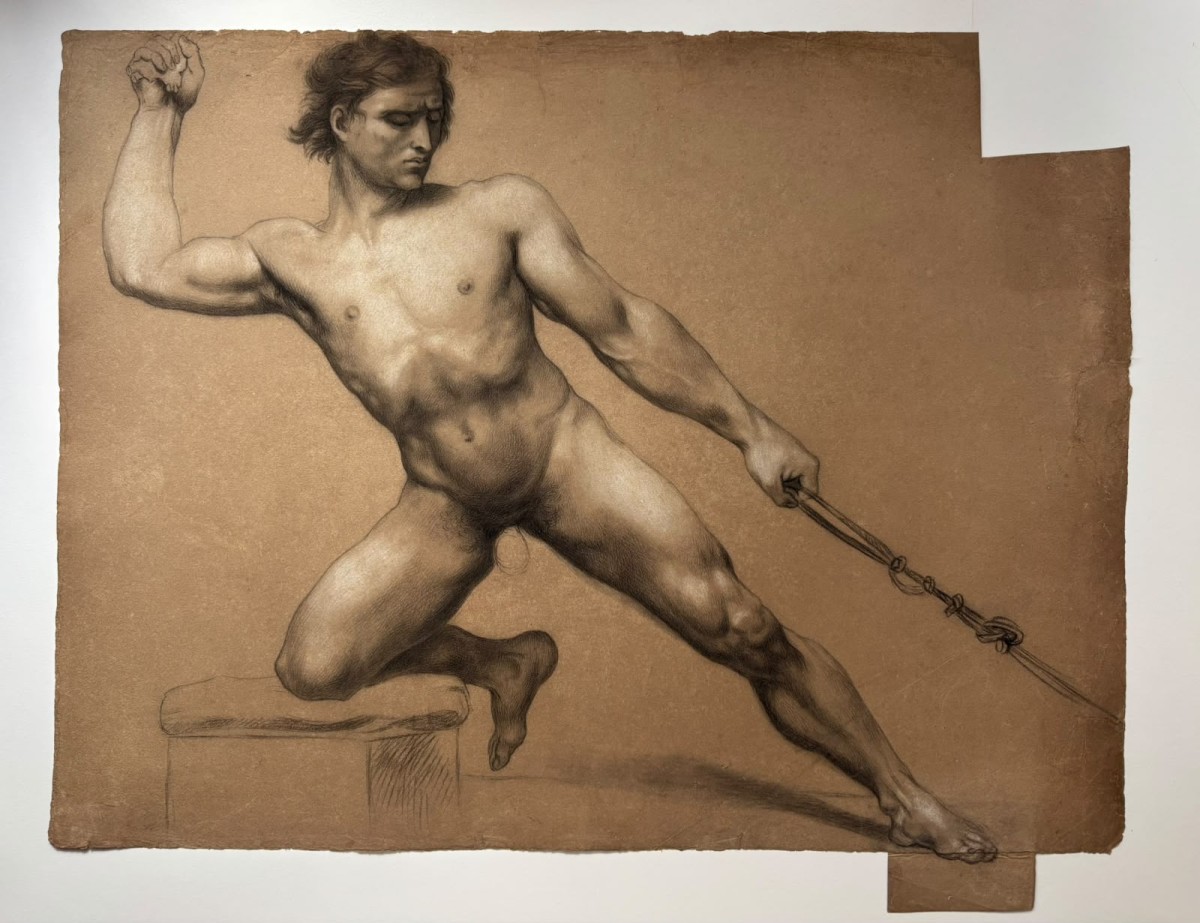
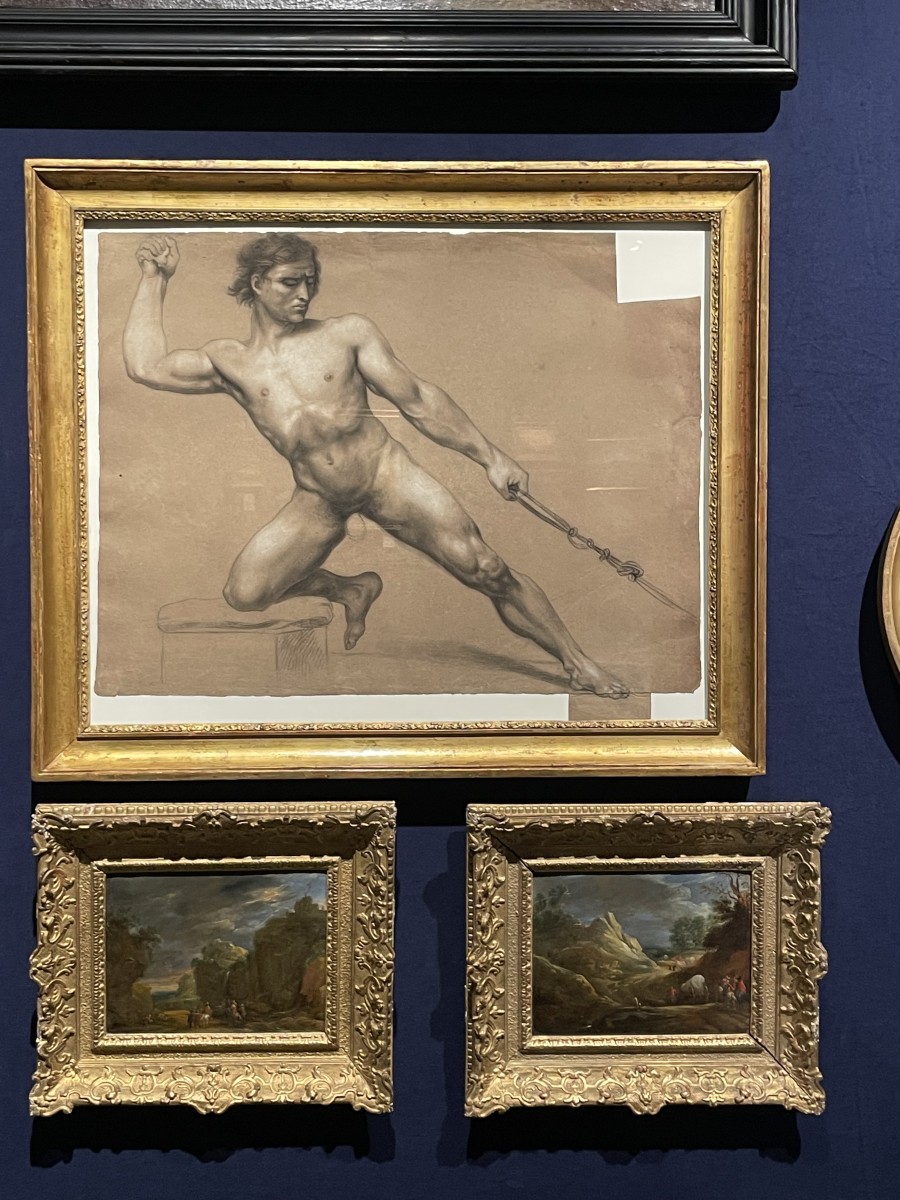
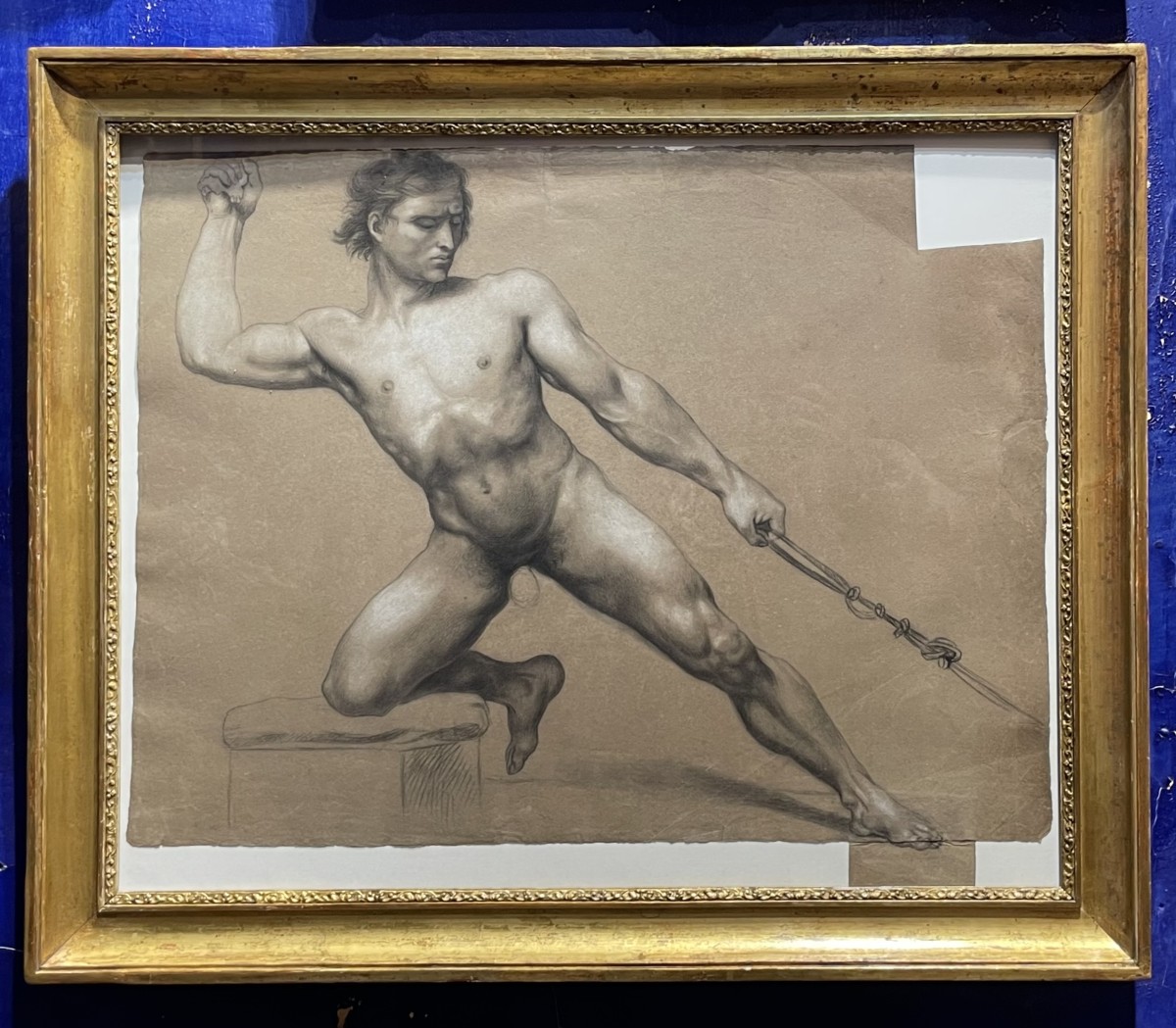
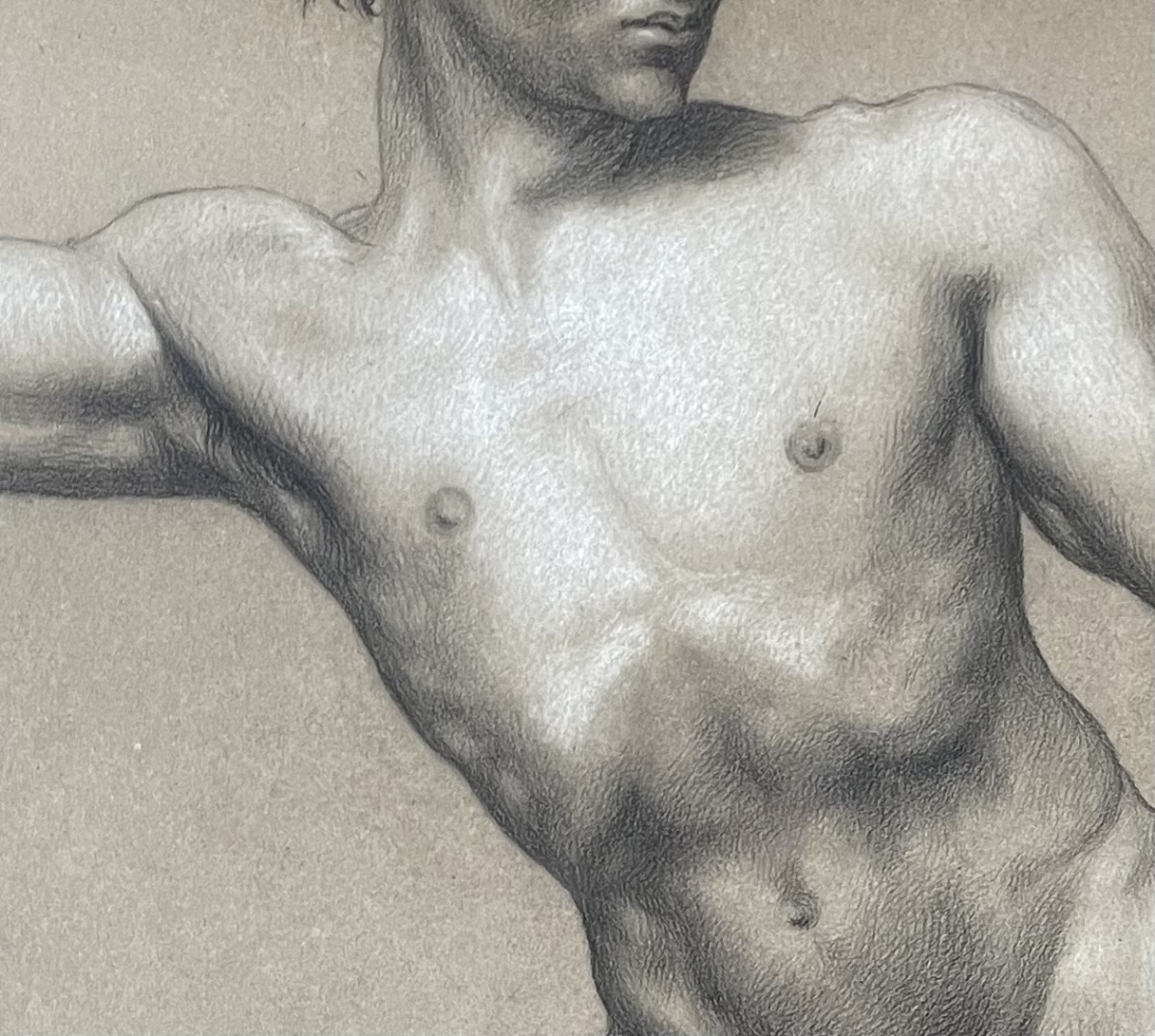

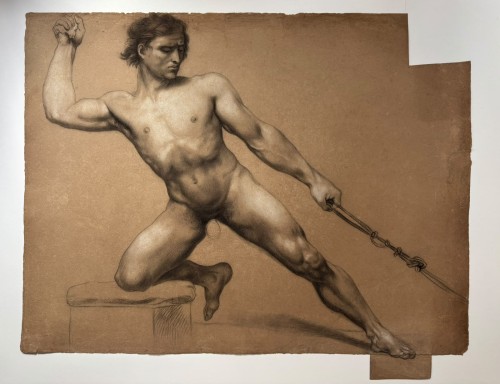
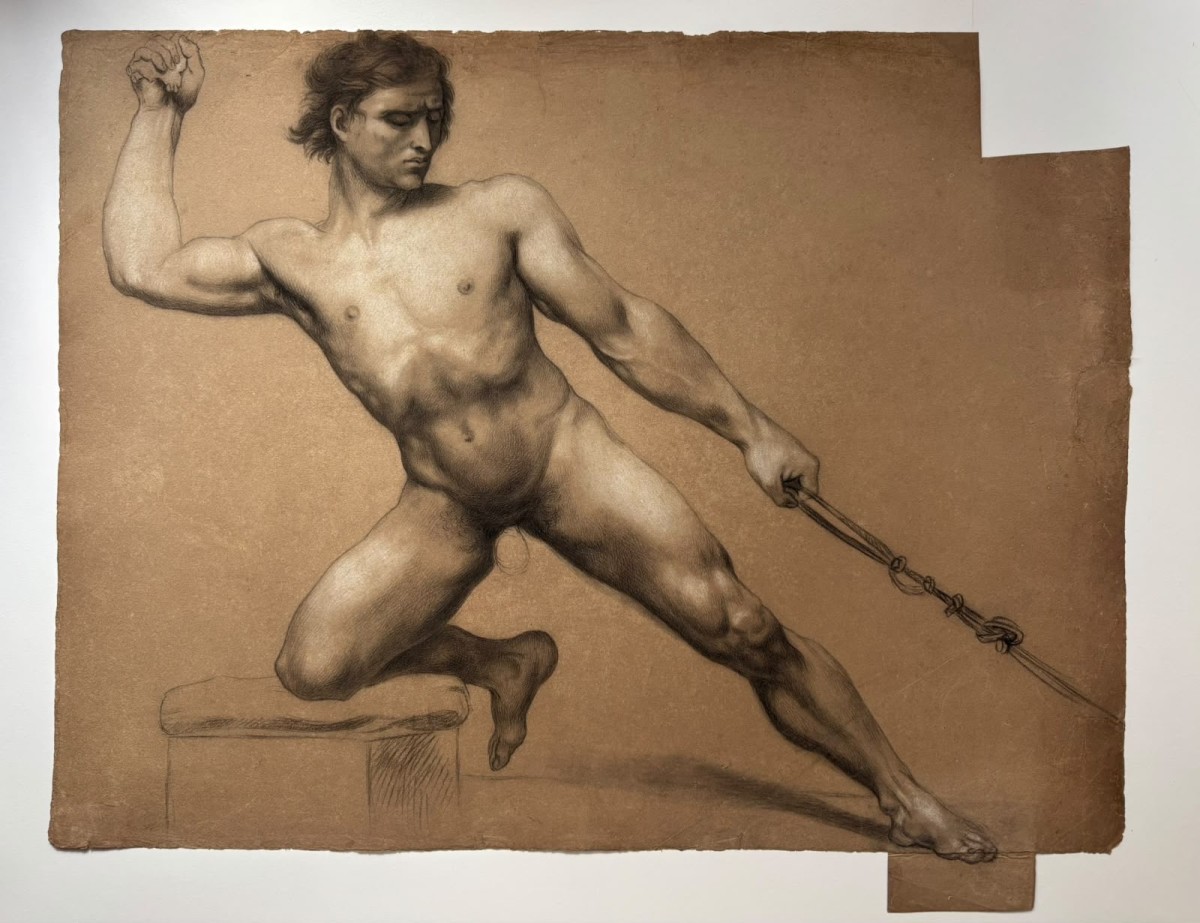
Male Nude Pulling a Rope, Italian Academic Drawing, First Half of the 19th Century
Italian School, first half of the 19th century.
Black chalk or charcoal, heightened with white on handmade brown paper.
Sheet dimensions: 49.5 × 60.5 cm.
Dimensions with frame: 72 × 60 cm.
“JW” watermark, English Whatman paper mill.
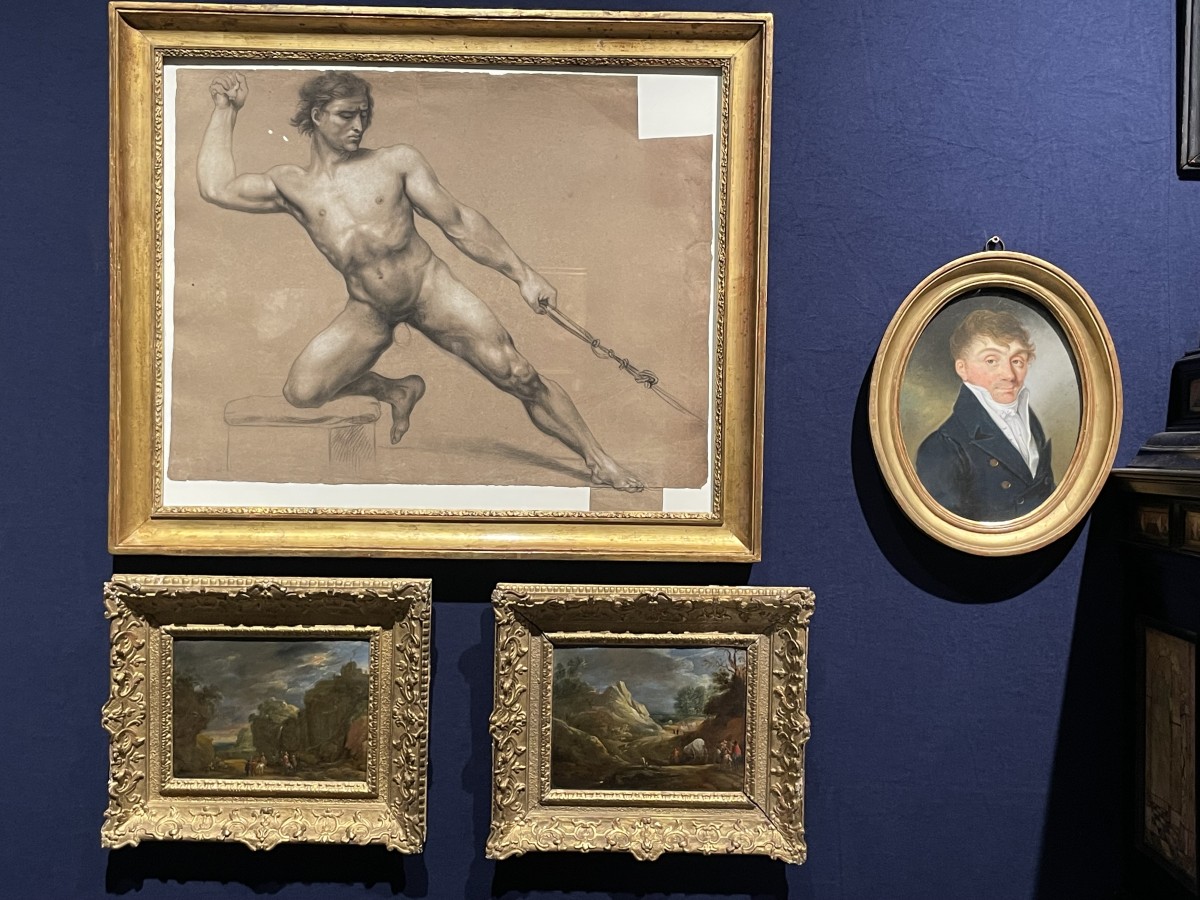
19th-century gilt frame.
Provenance: historic Tuscan residence.
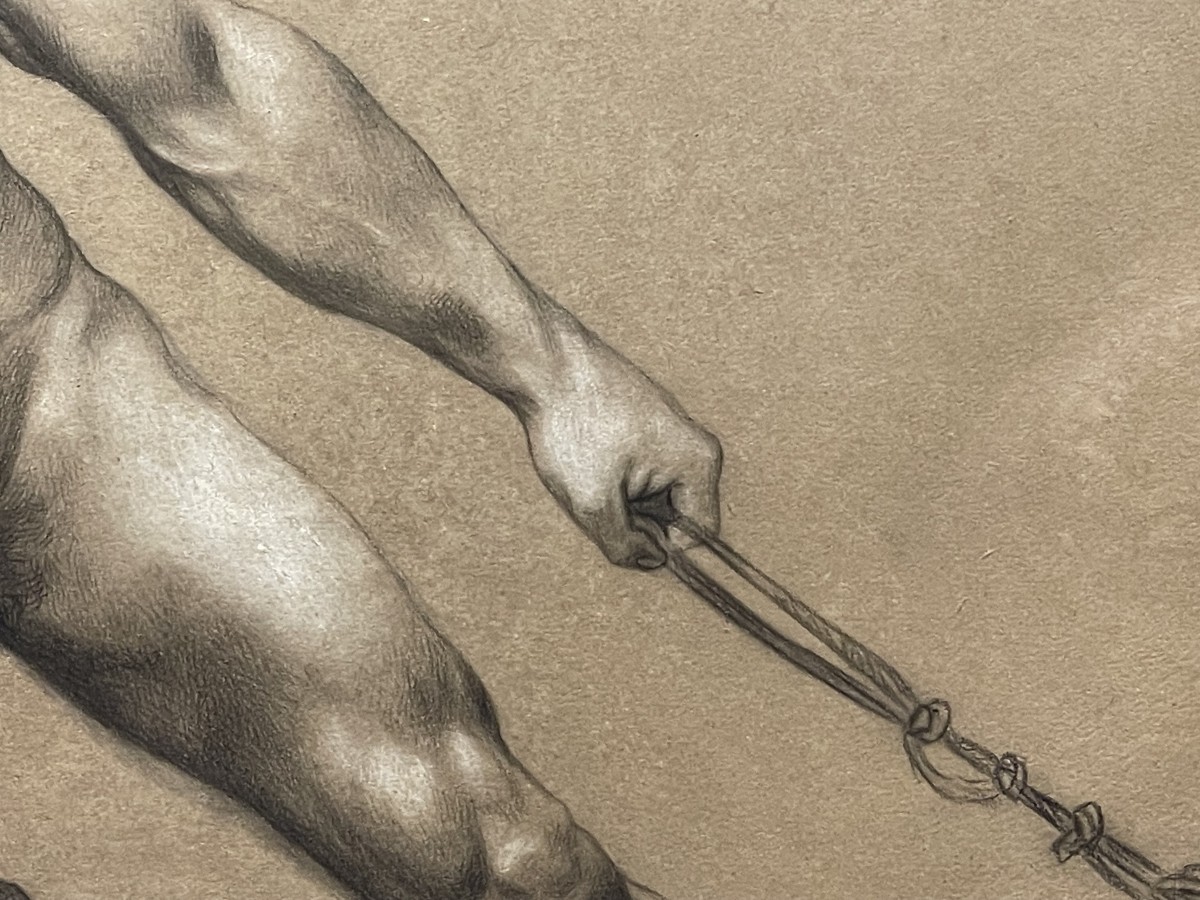
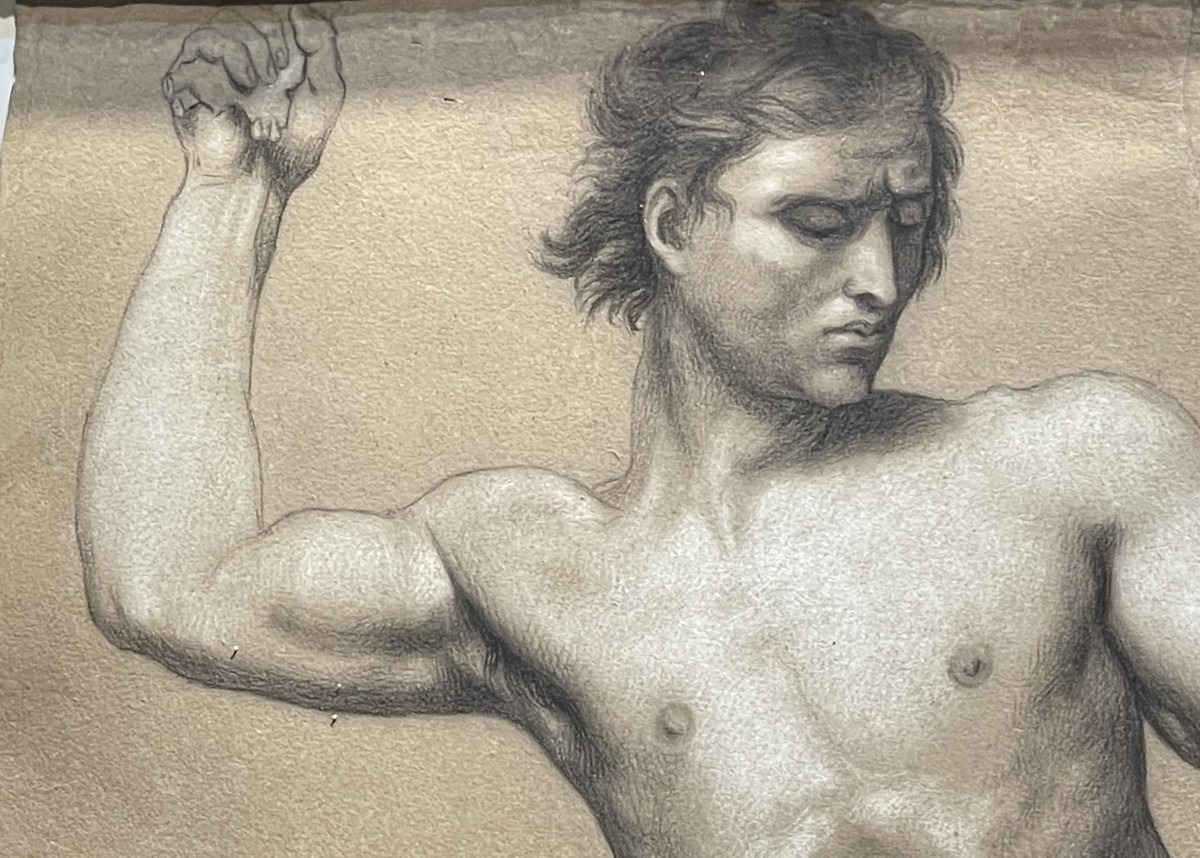
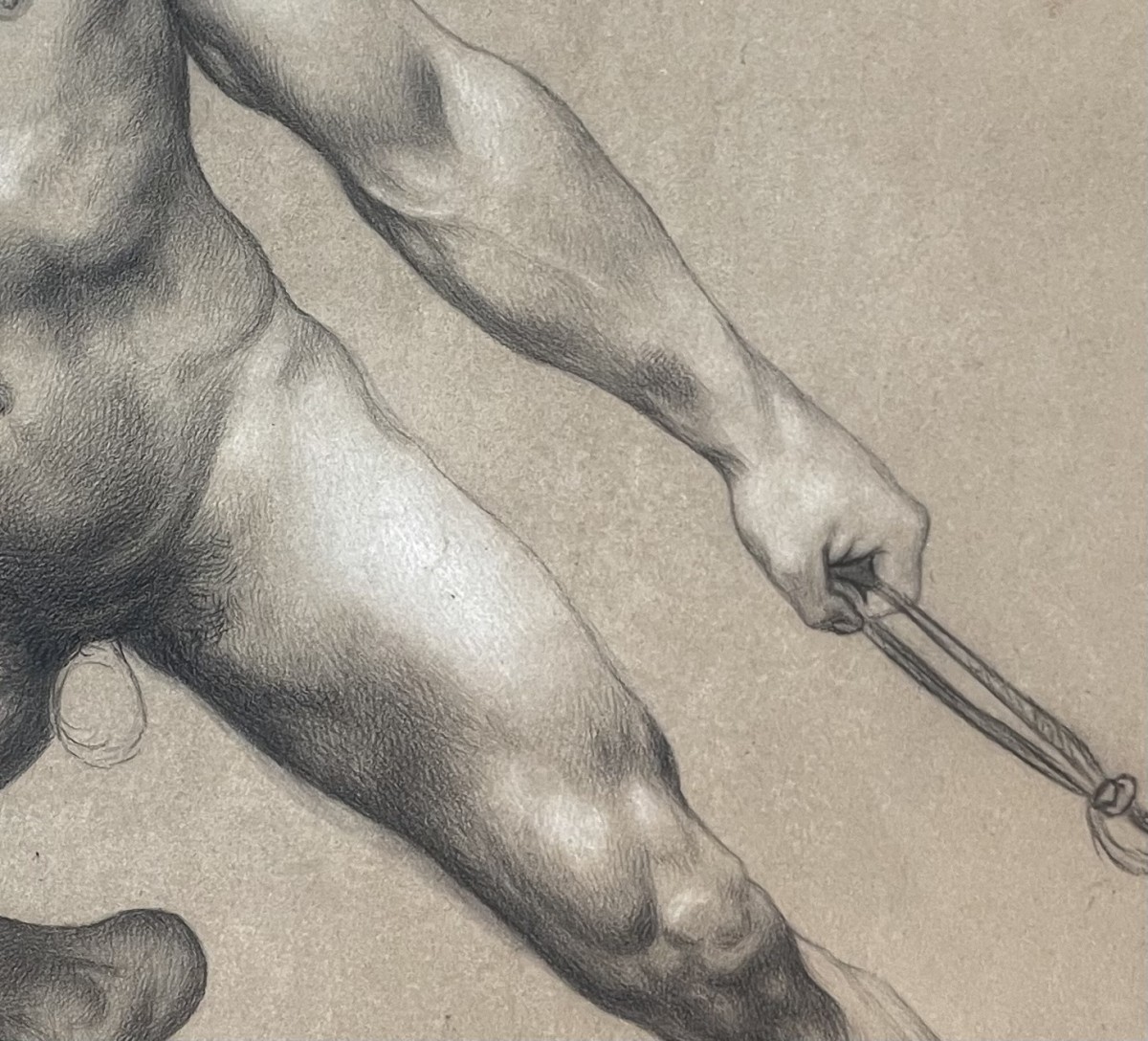
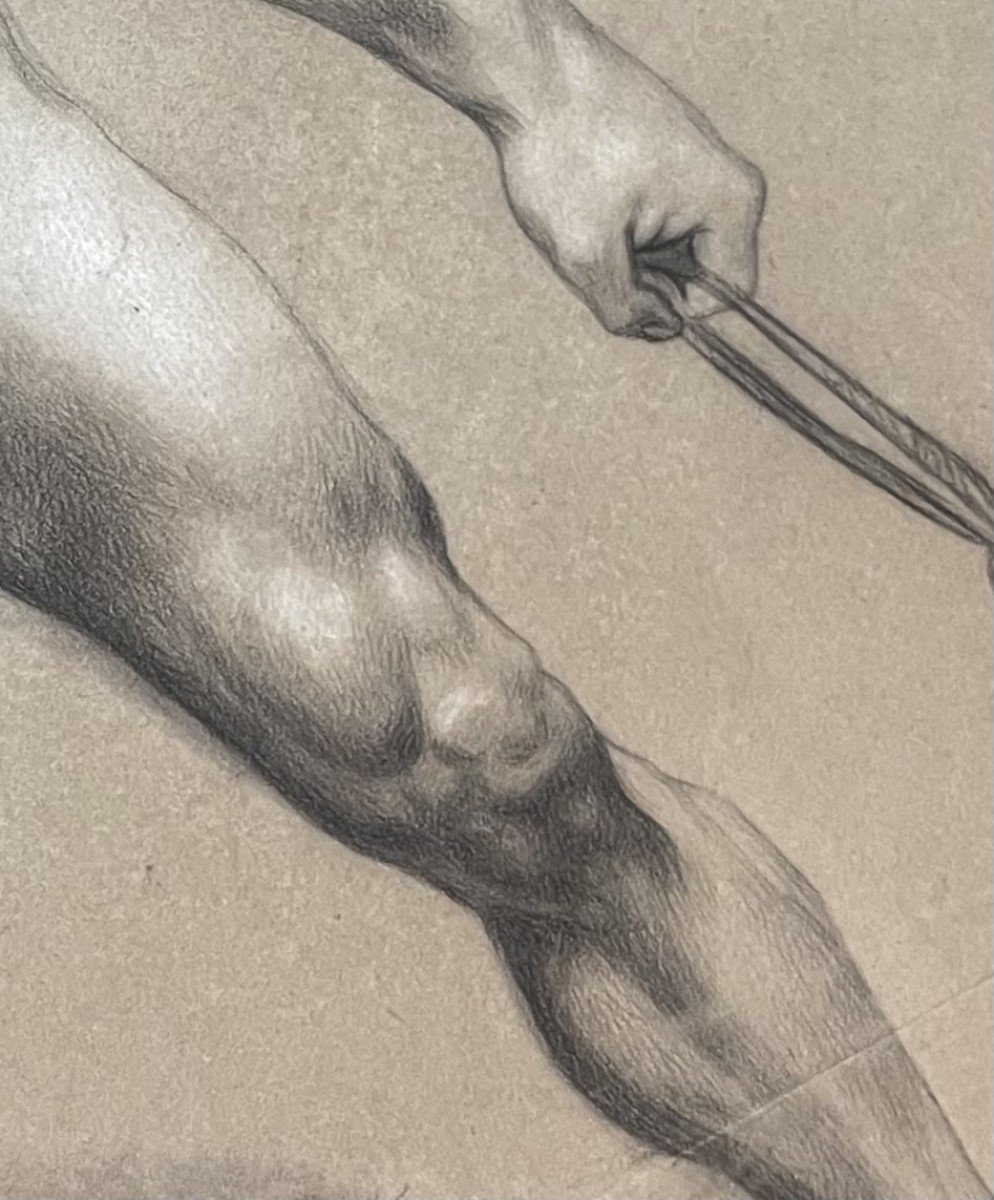
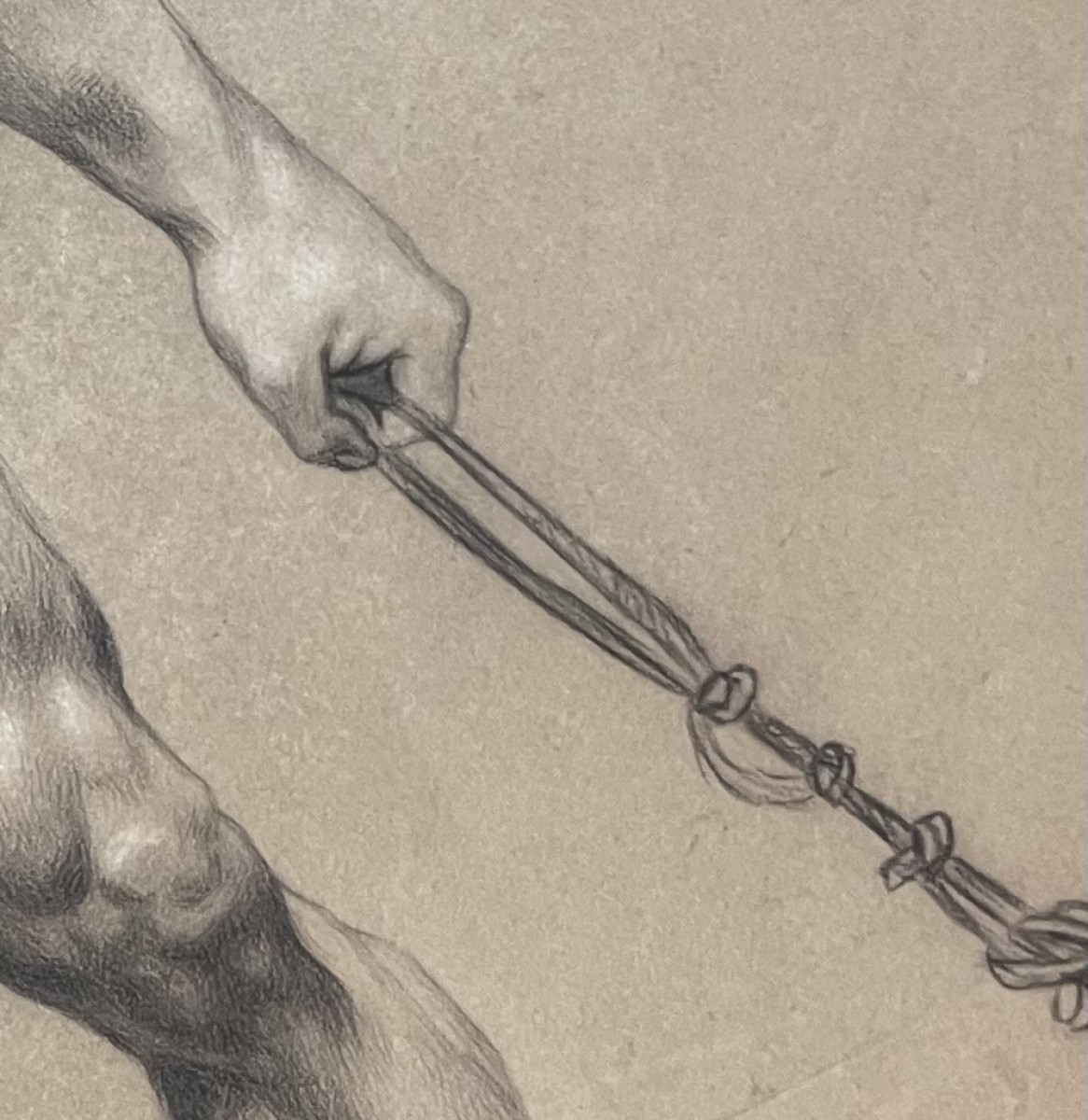
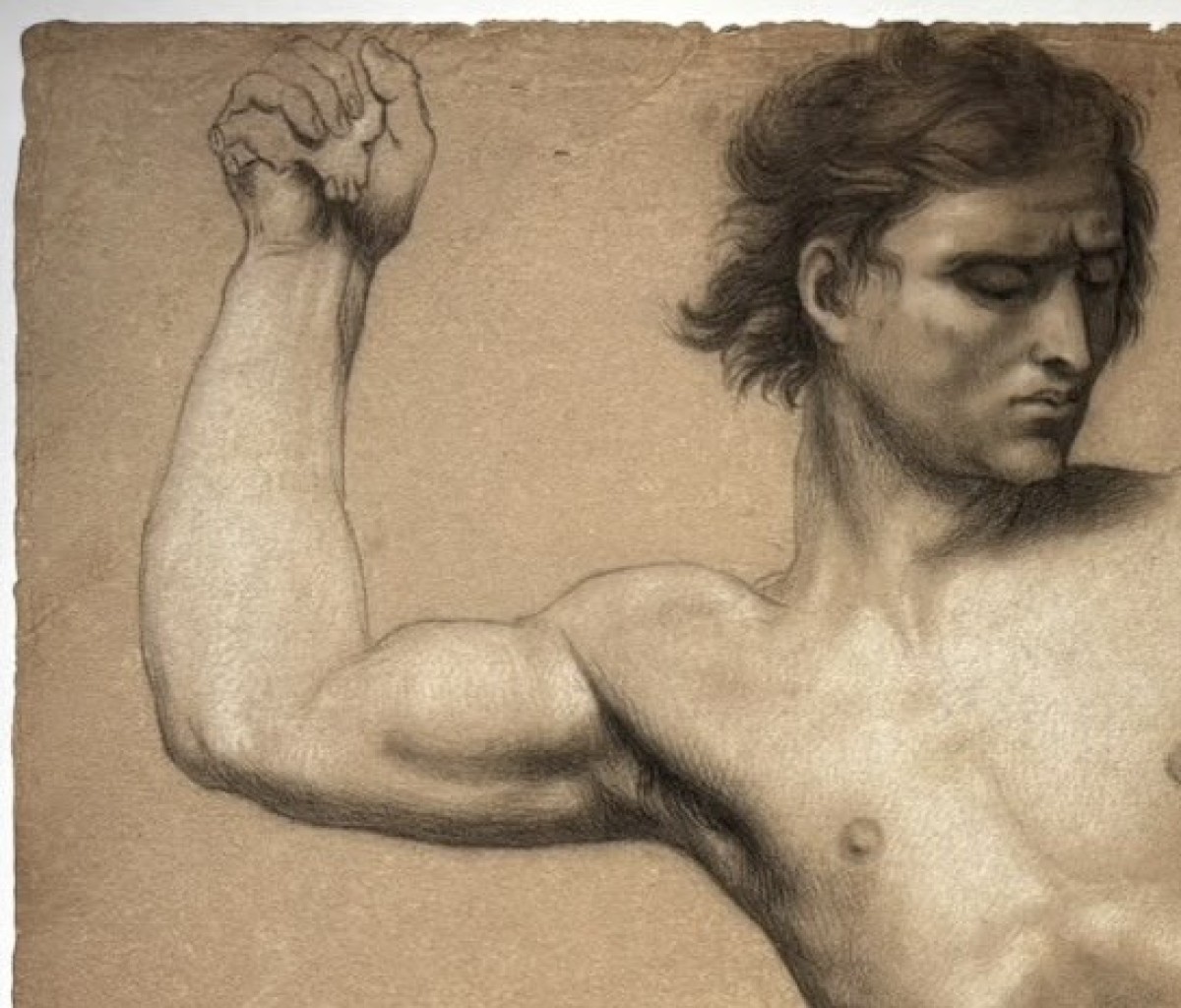
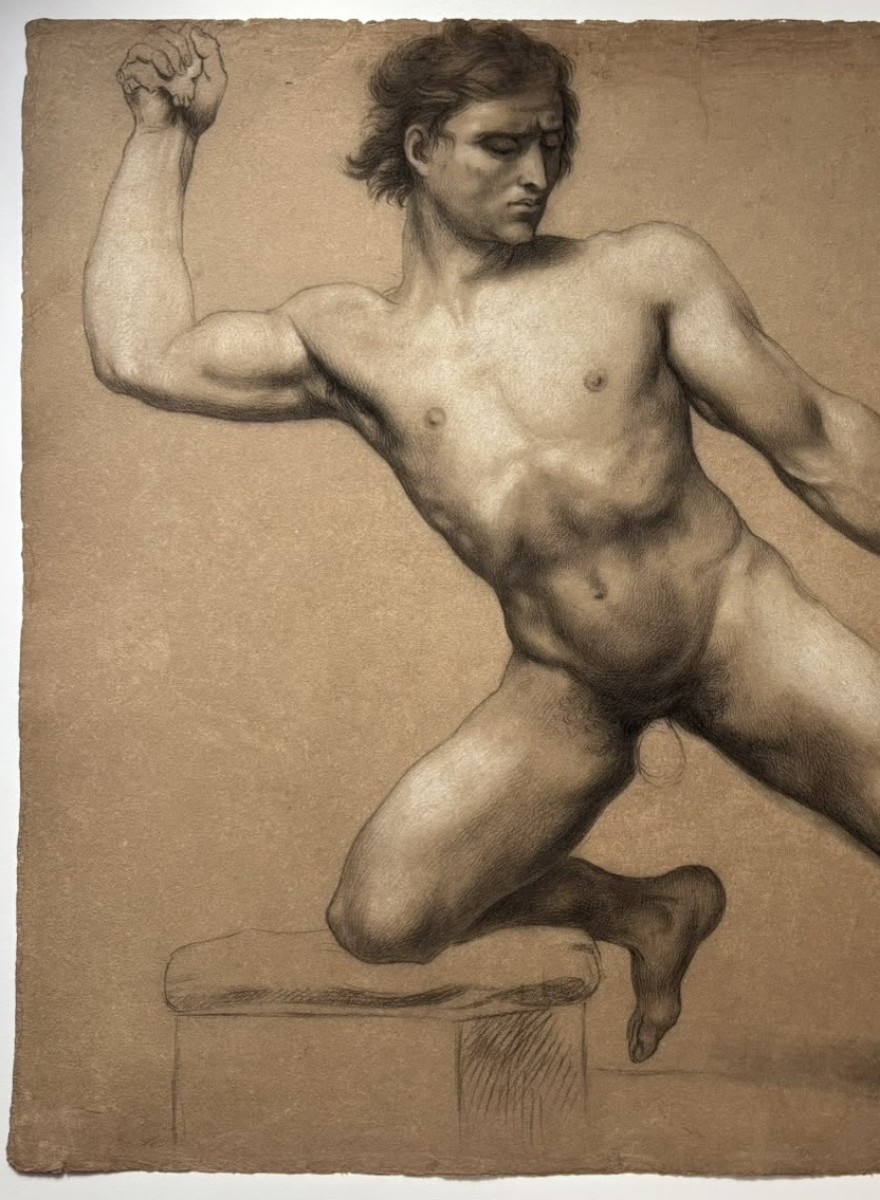
Academic study of a male nude pulling a rope. The torsion of the torso, the position of the legs and the tension of the arms allow the artist to explore the anatomy of the human body under physical strain.
This heroic pose, inspired by classical art, belongs to the Italian academic tradition of the first half of the 19th century, when life drawing from the male nude was a fundamental part of a painter’s training.
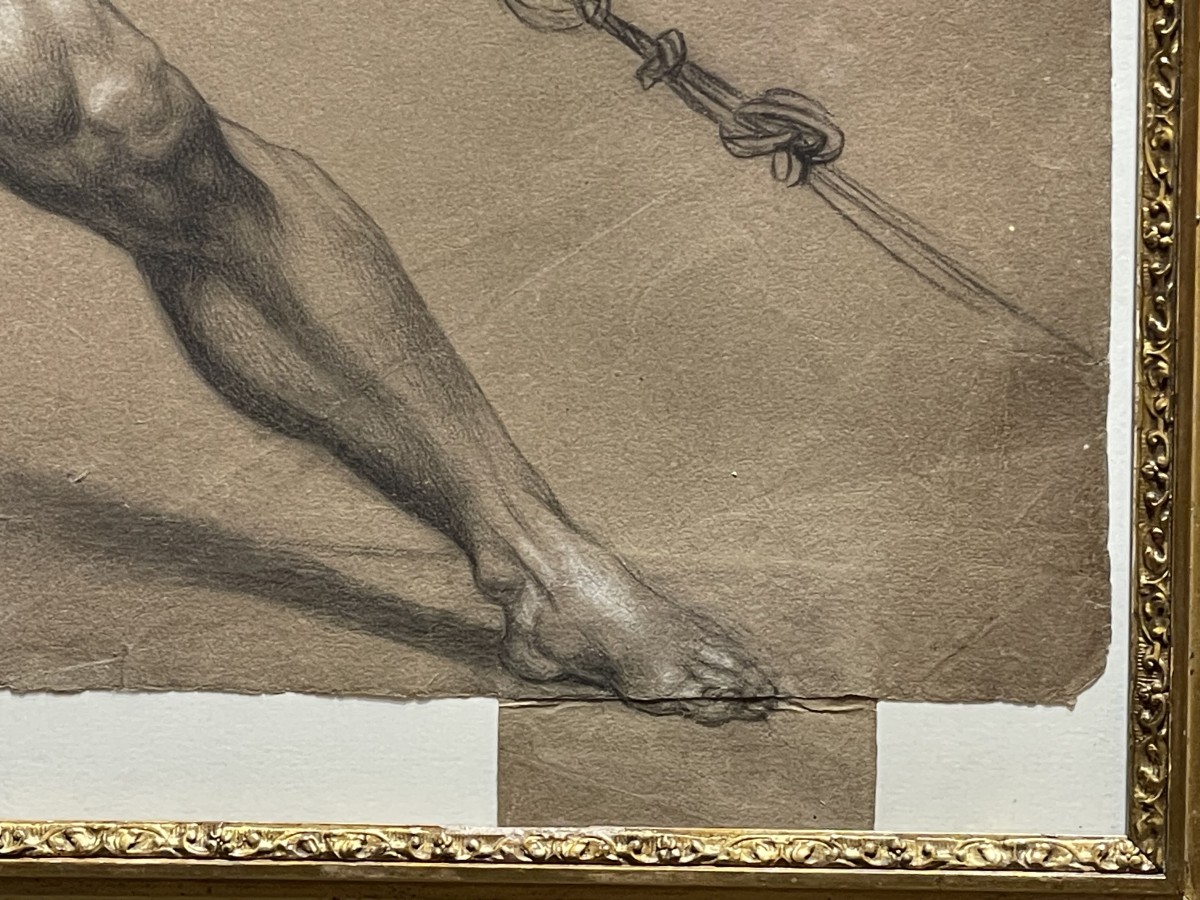
The drawing preserves an interesting detail of its creative process: a small piece of paper added along the lower edge of the sheet to complete the drawing of the foot. This addition illustrates how the artist adapted the support to the requirements of the composition.
The paper bears the “JW” watermark of James Whatman, the renowned English papermaker who took over Turkey Mill in Maidstone, Kent, in 1740. Whatman papers were particularly sought after by European artists during the 18th and 19th centuries.
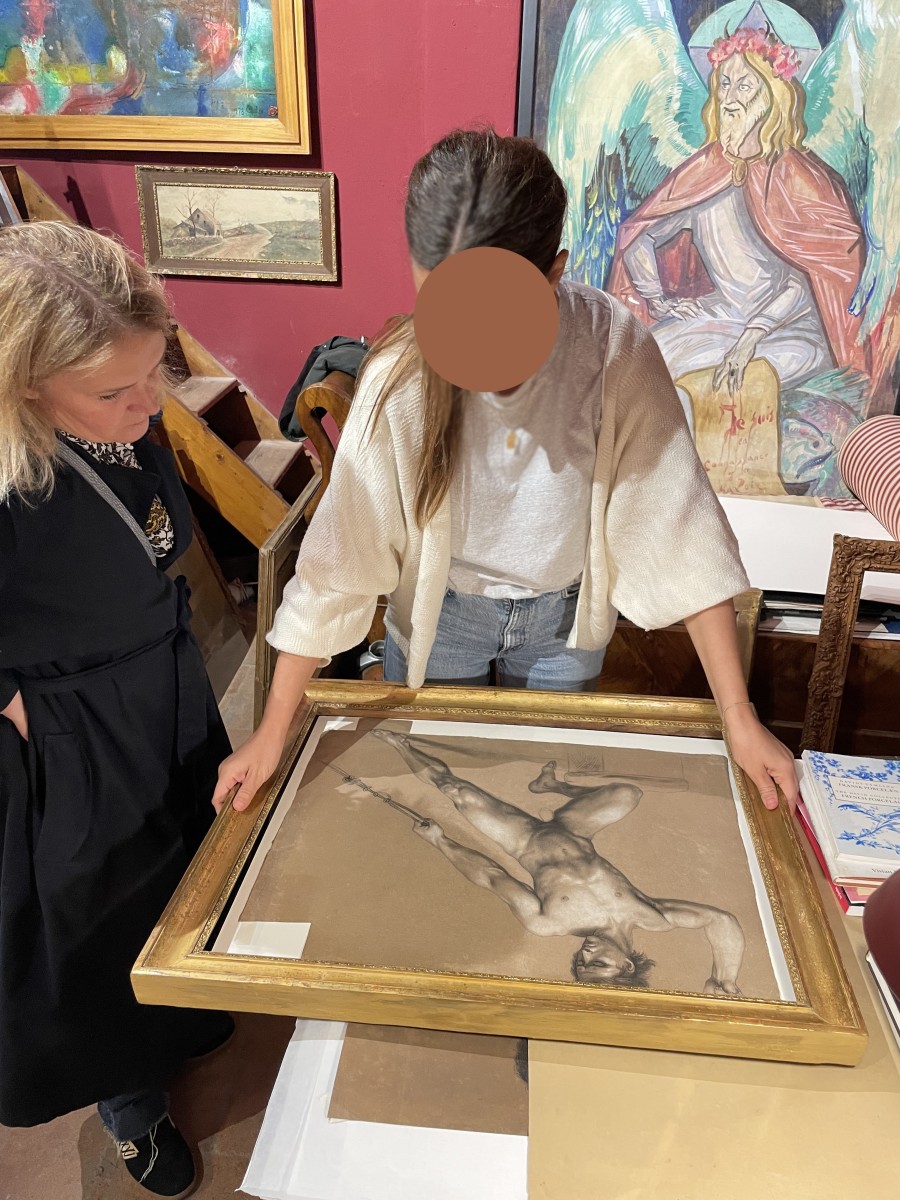
The drawing is presented in a 19th-century gilt frame, with the original edges of the sheet left visible.
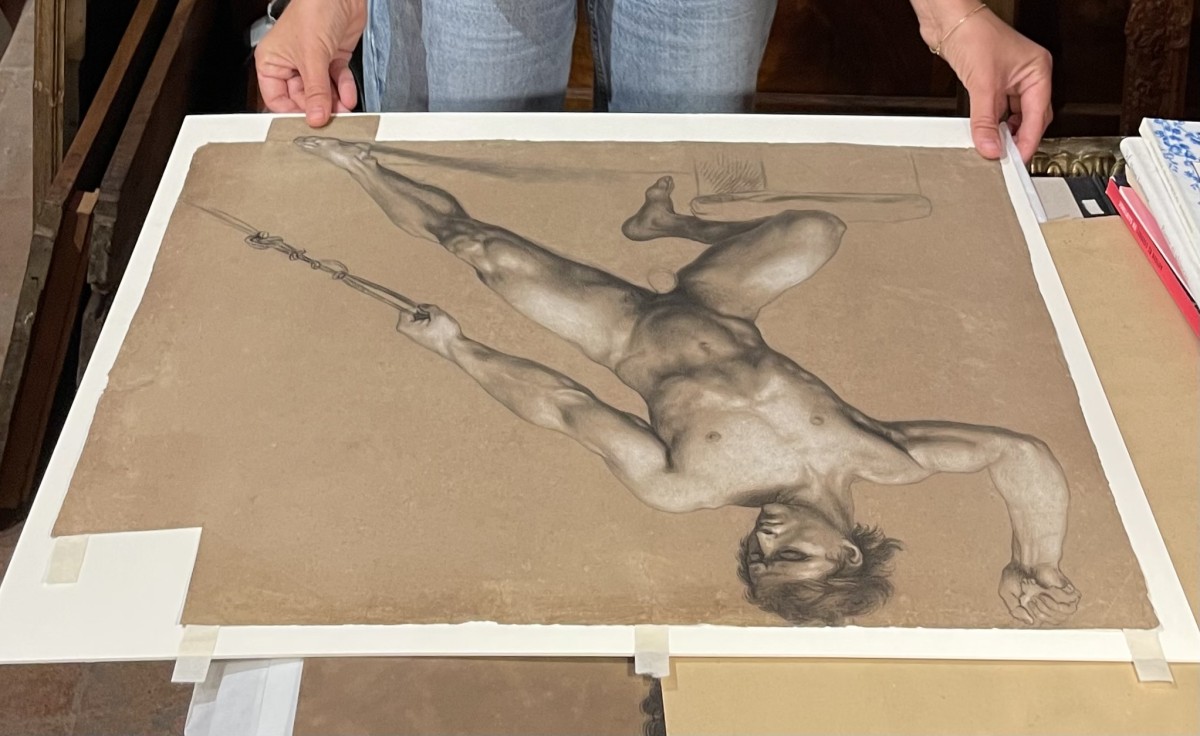
The conservation mounting uses acid-free board, Japanese paper hinges and a reversible adhesive. This method reduces the risk of deterioration and contact-related foxing. The L-shaped mounting also allows examination of the reverse of the drawing.