Offered by Antiquités Biau
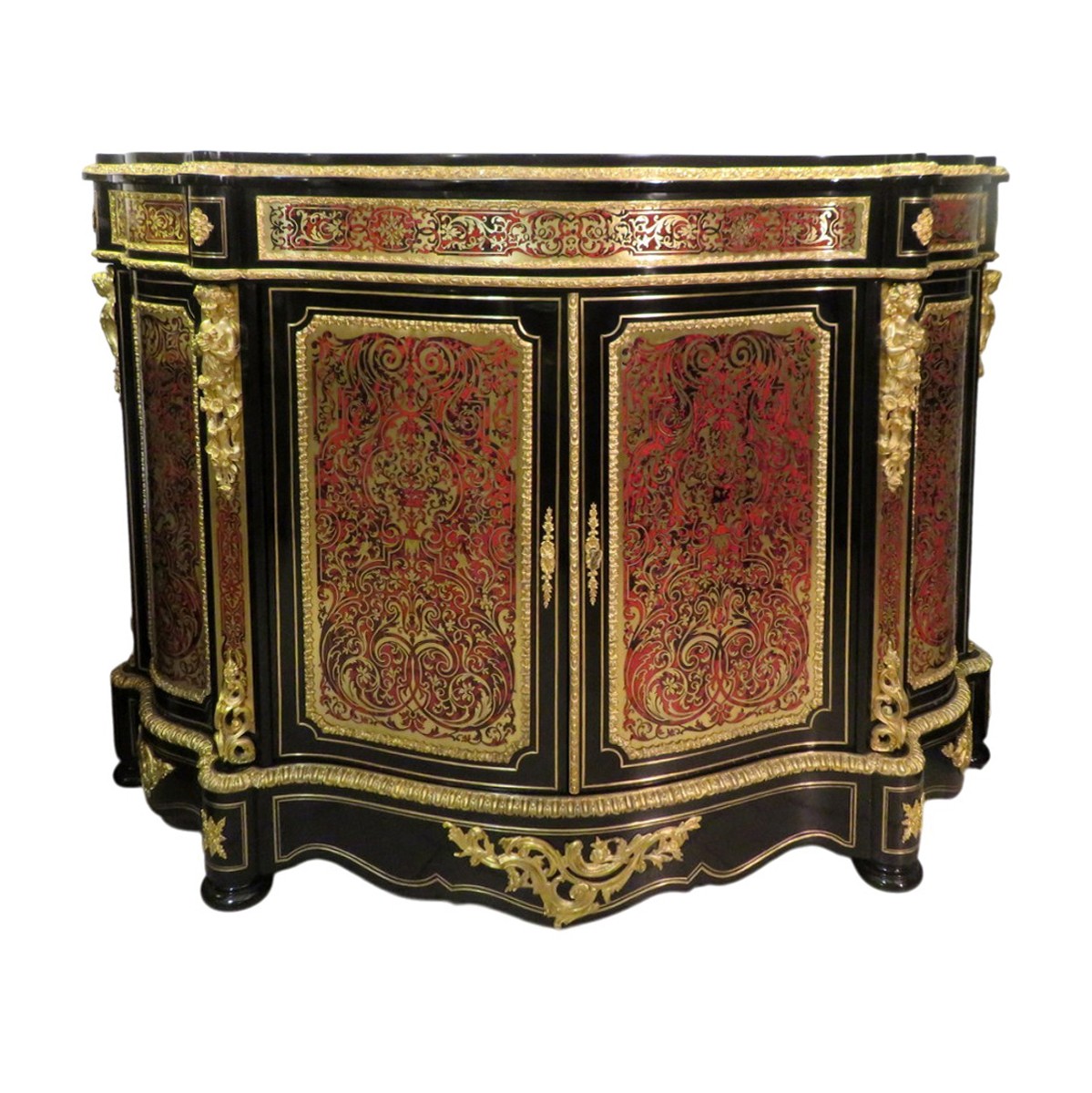
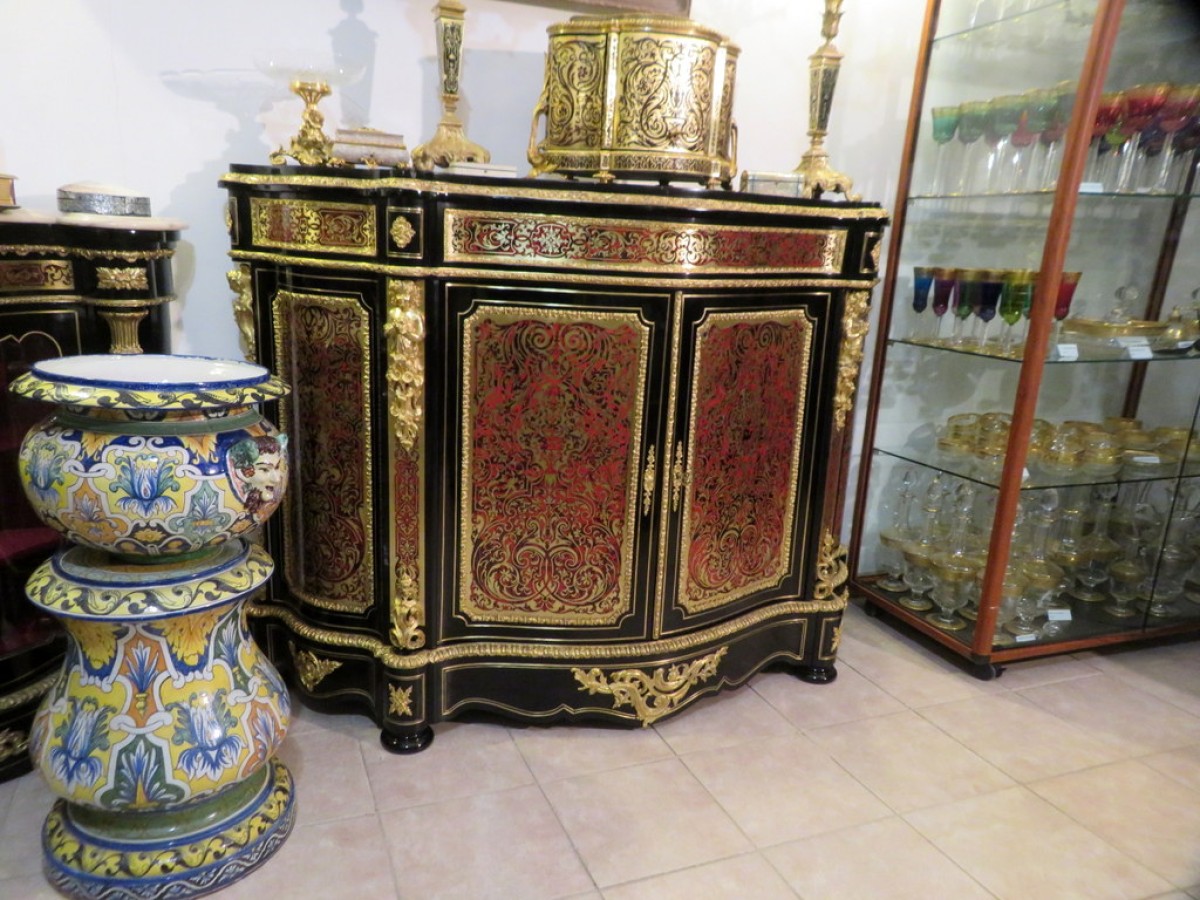

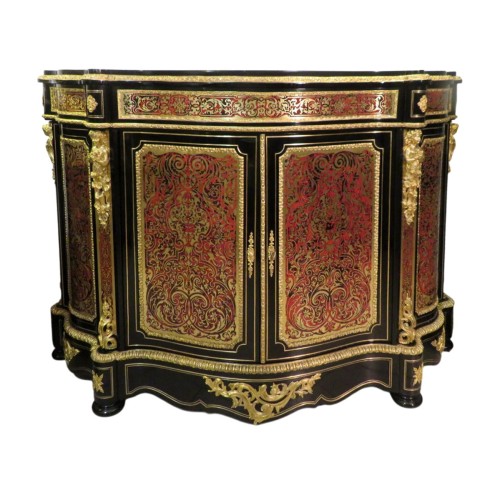
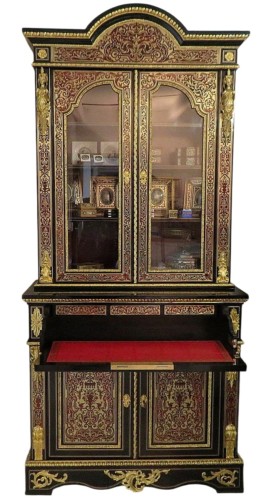
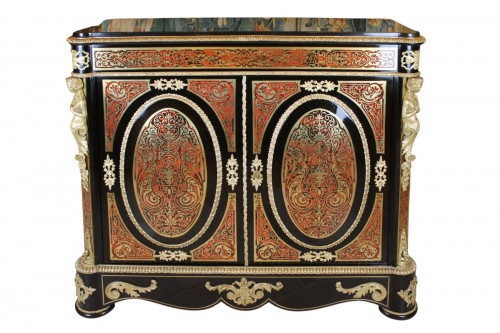
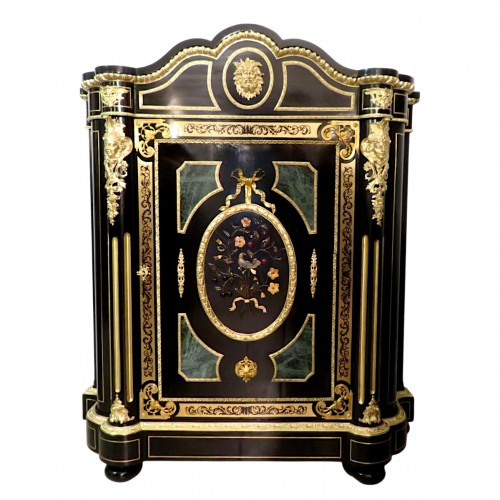
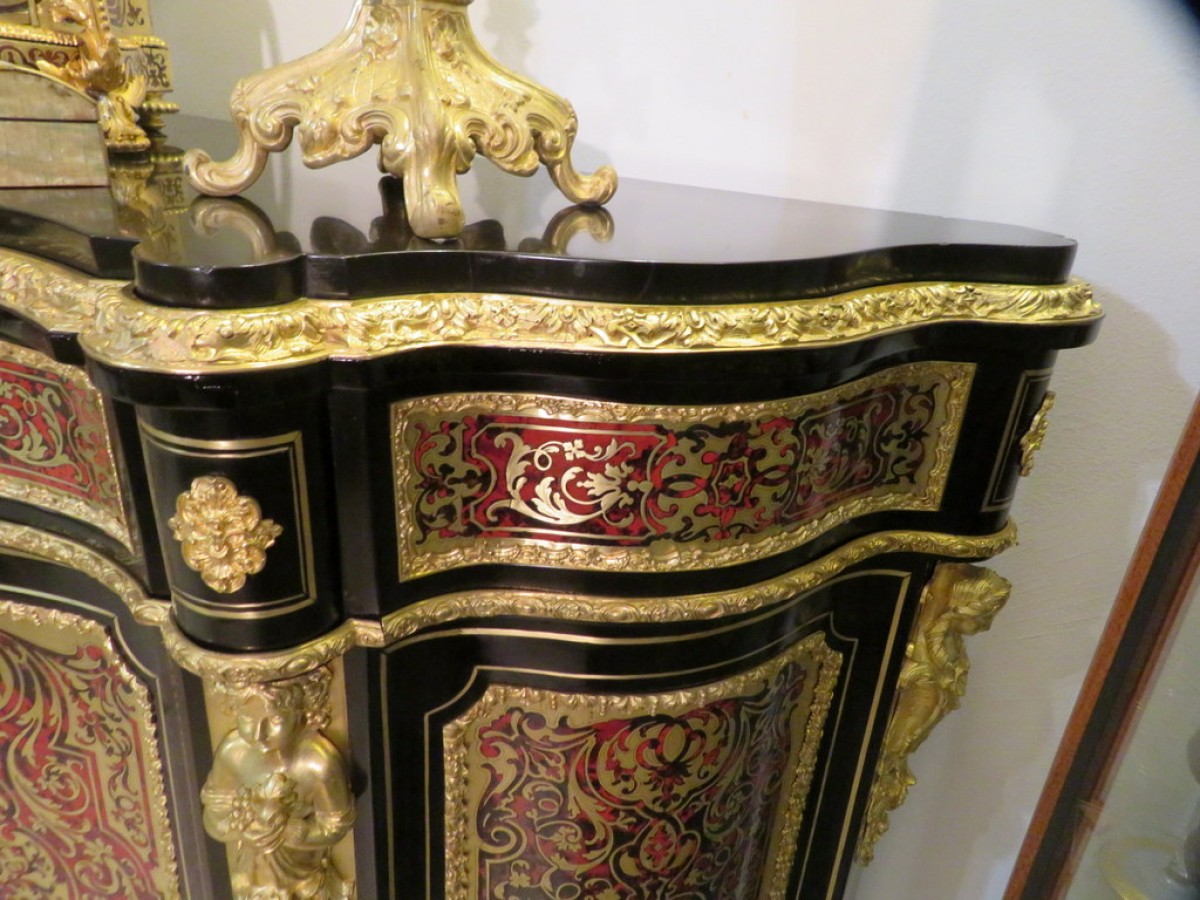
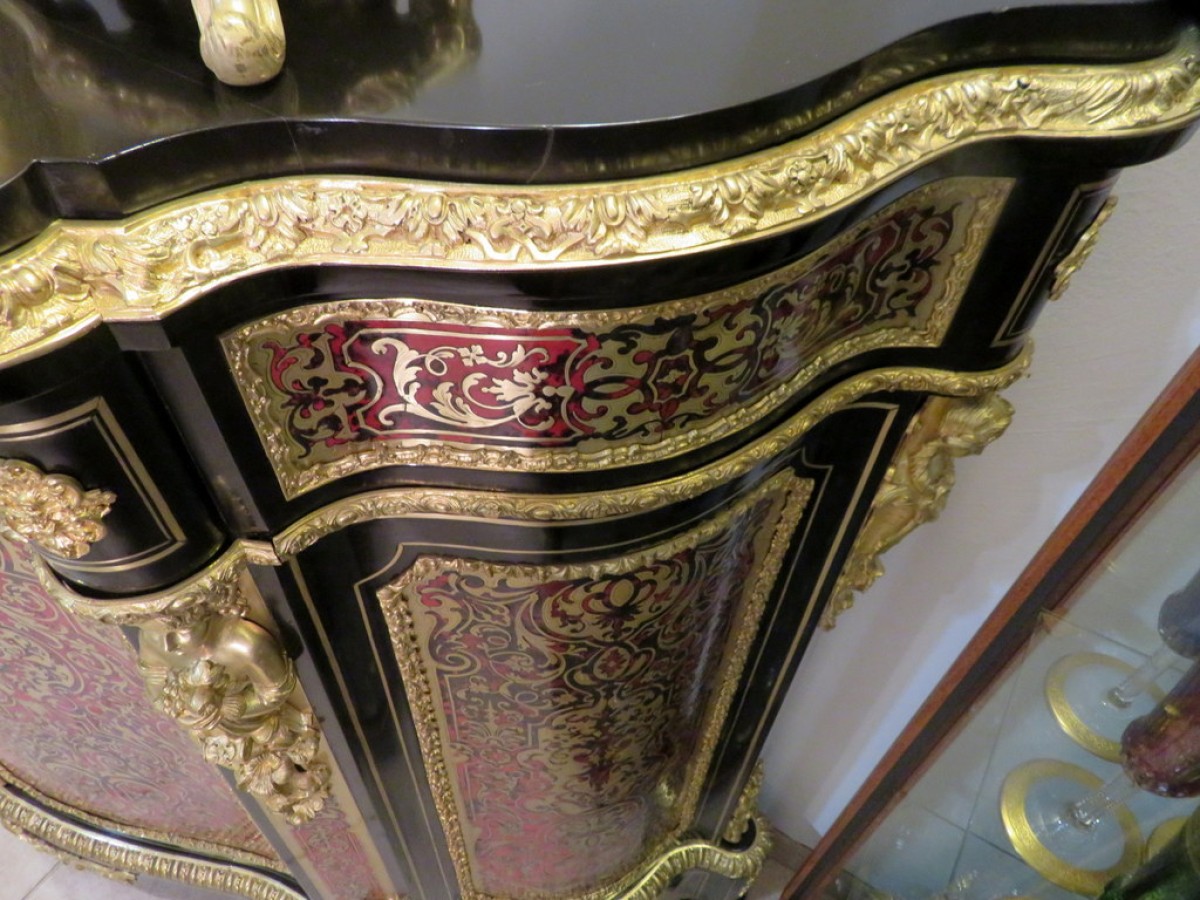
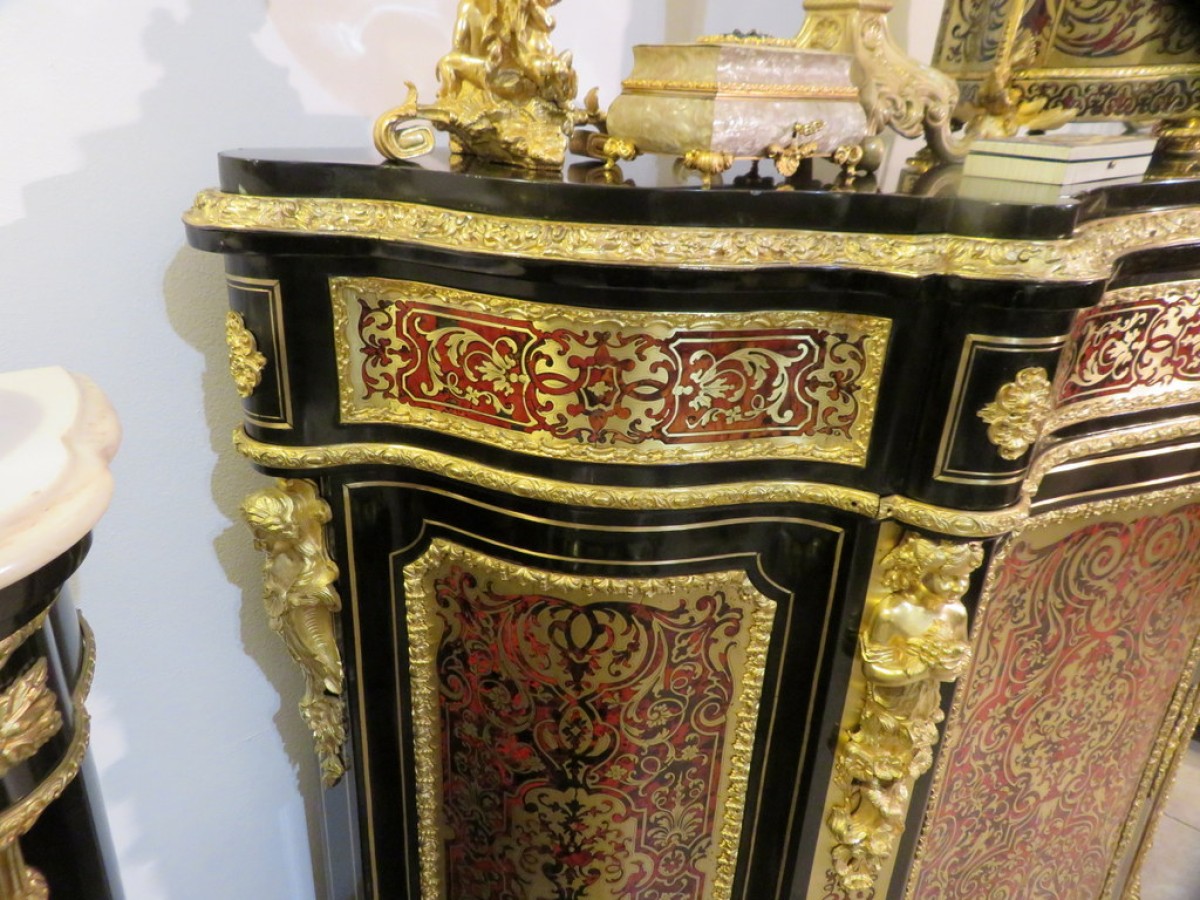
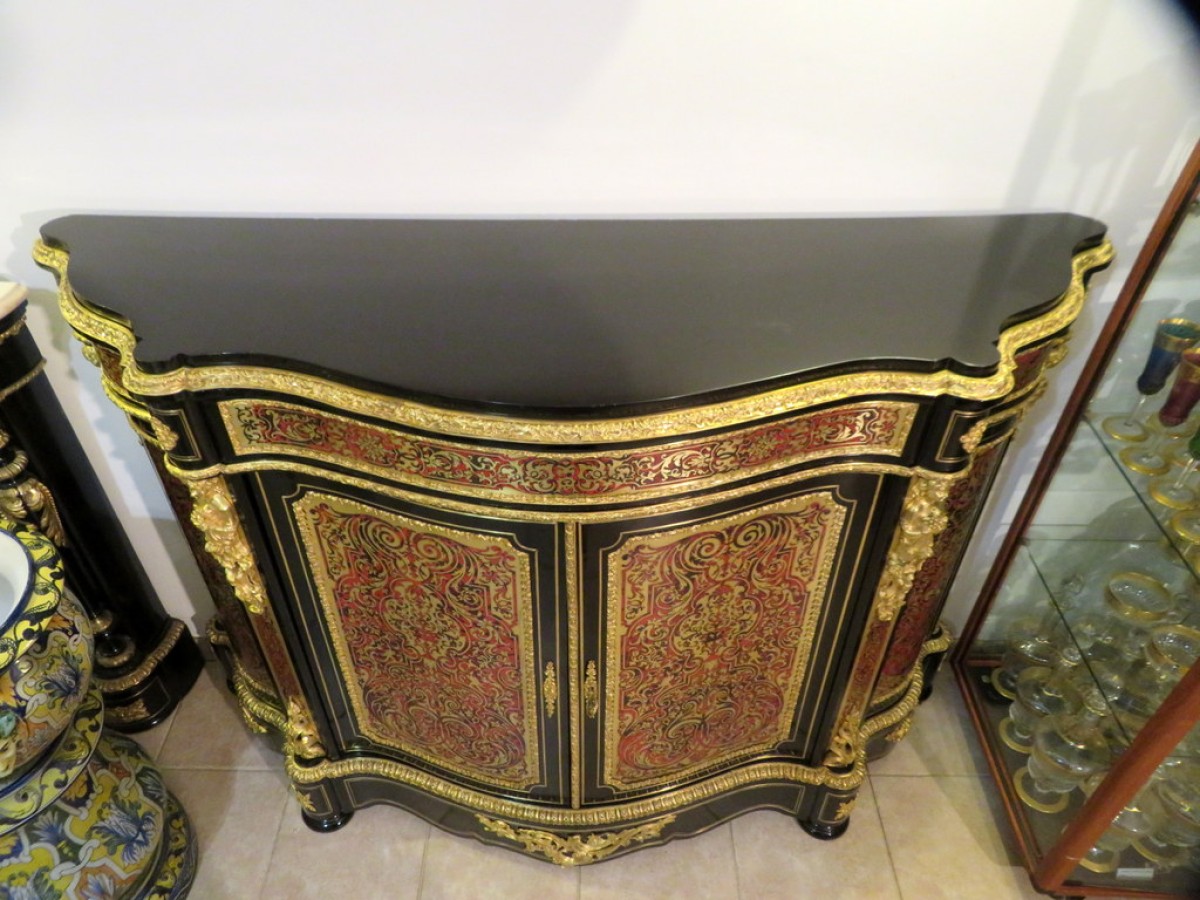
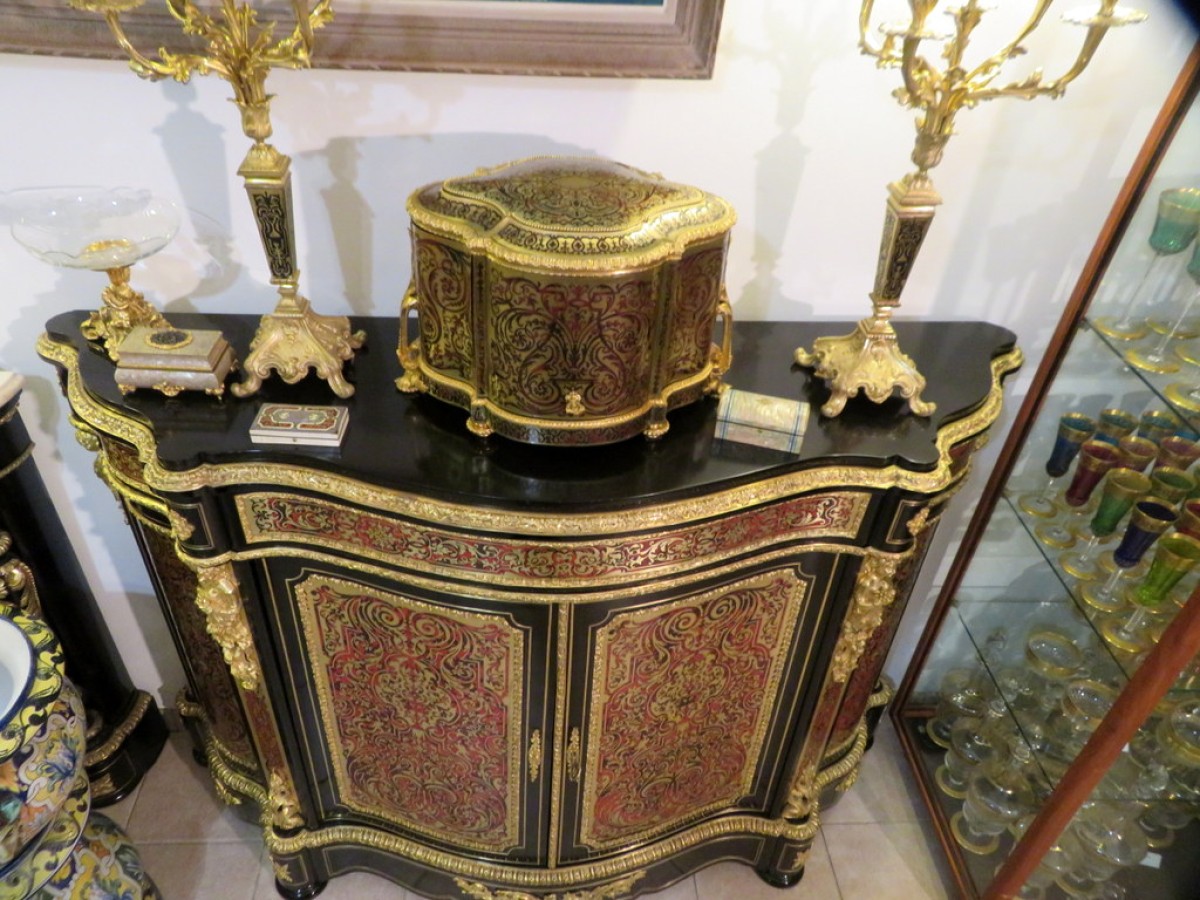
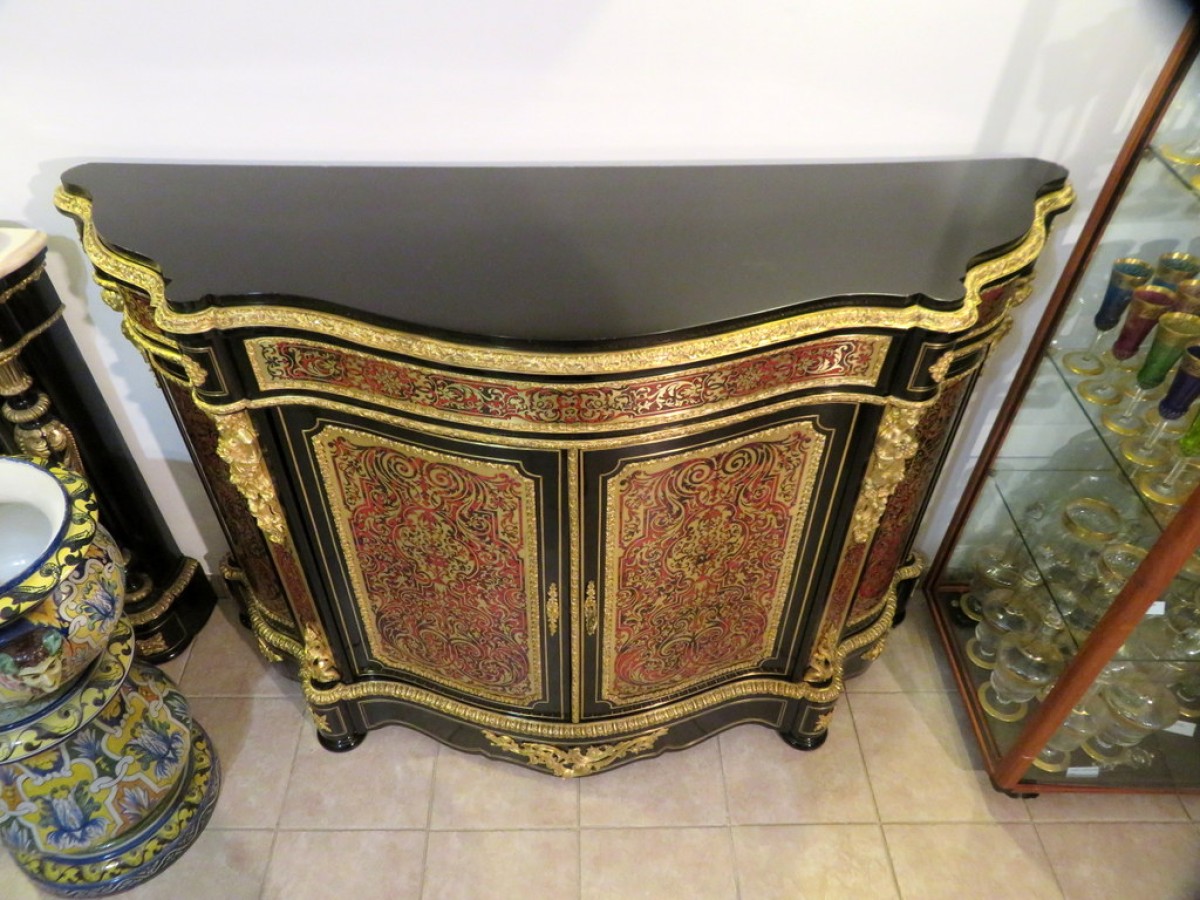
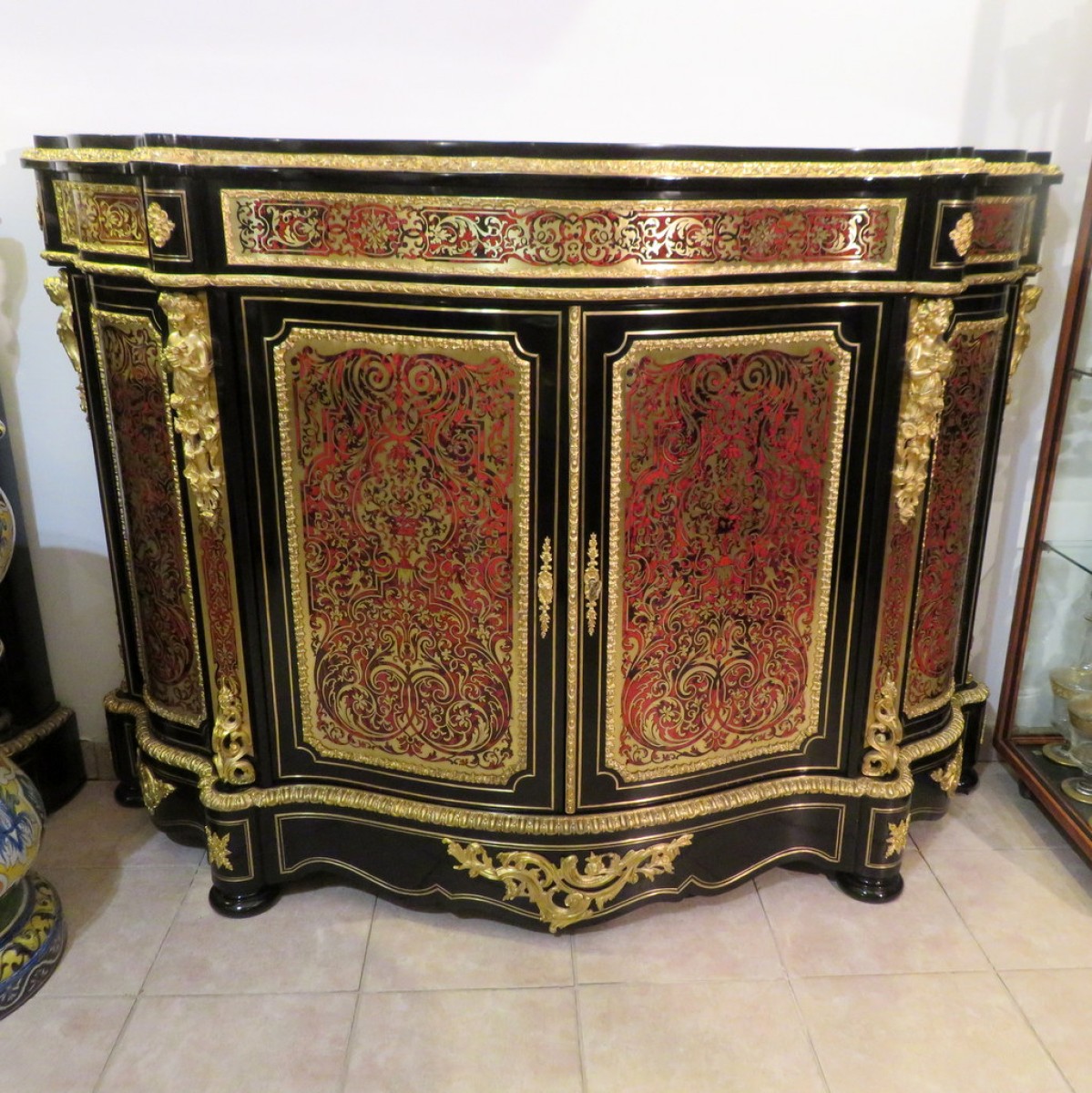
Cabinet with 2doors
Inlay all sides with Belgian Royal Black marble, in perfect condition
Napoleon III period, in perfect condition
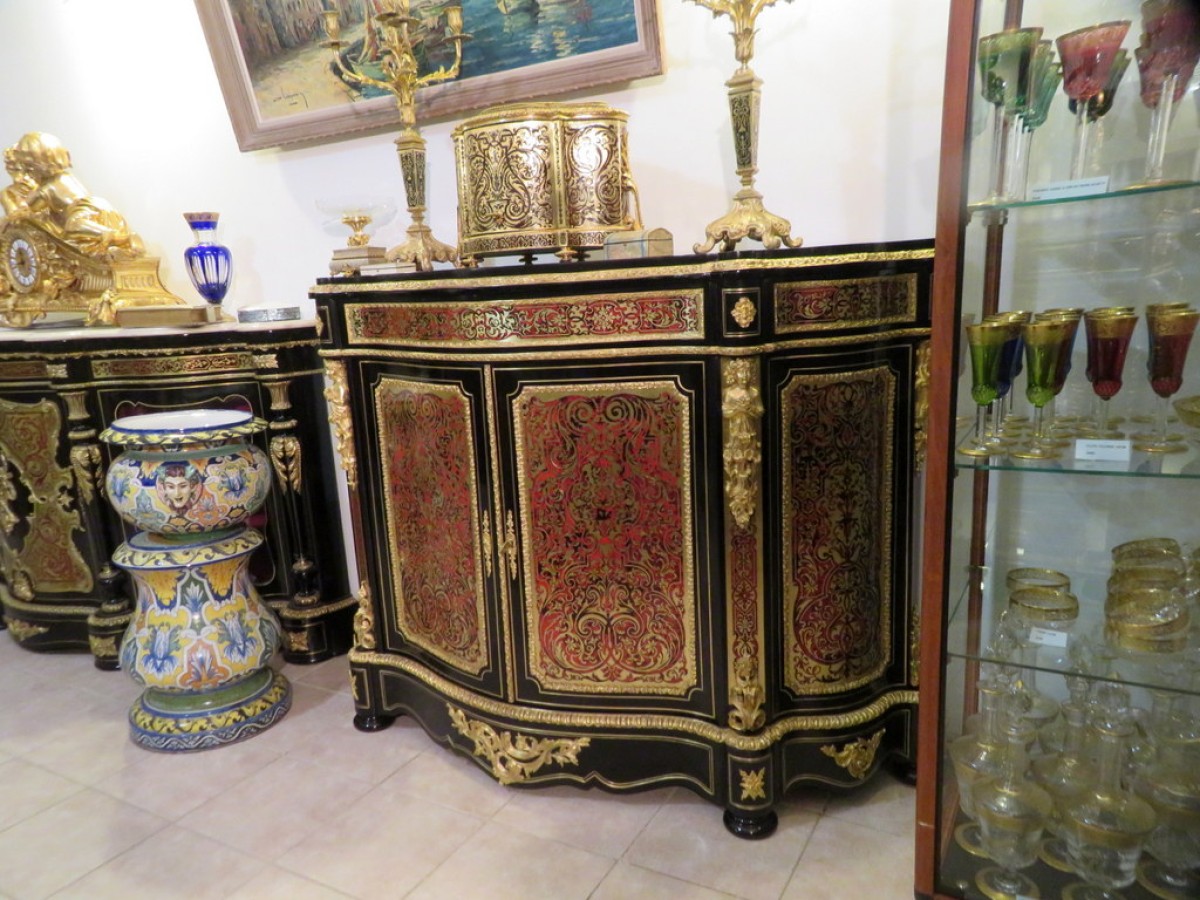
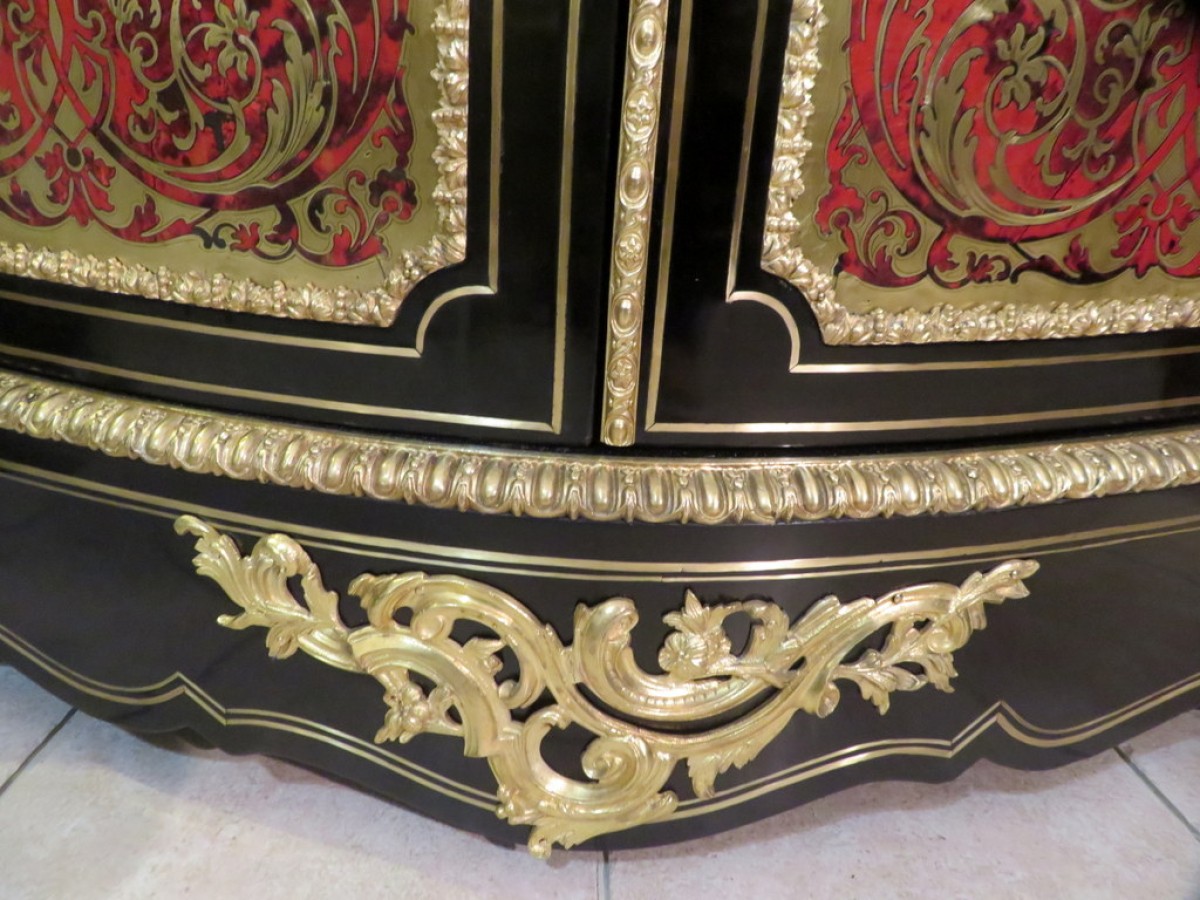
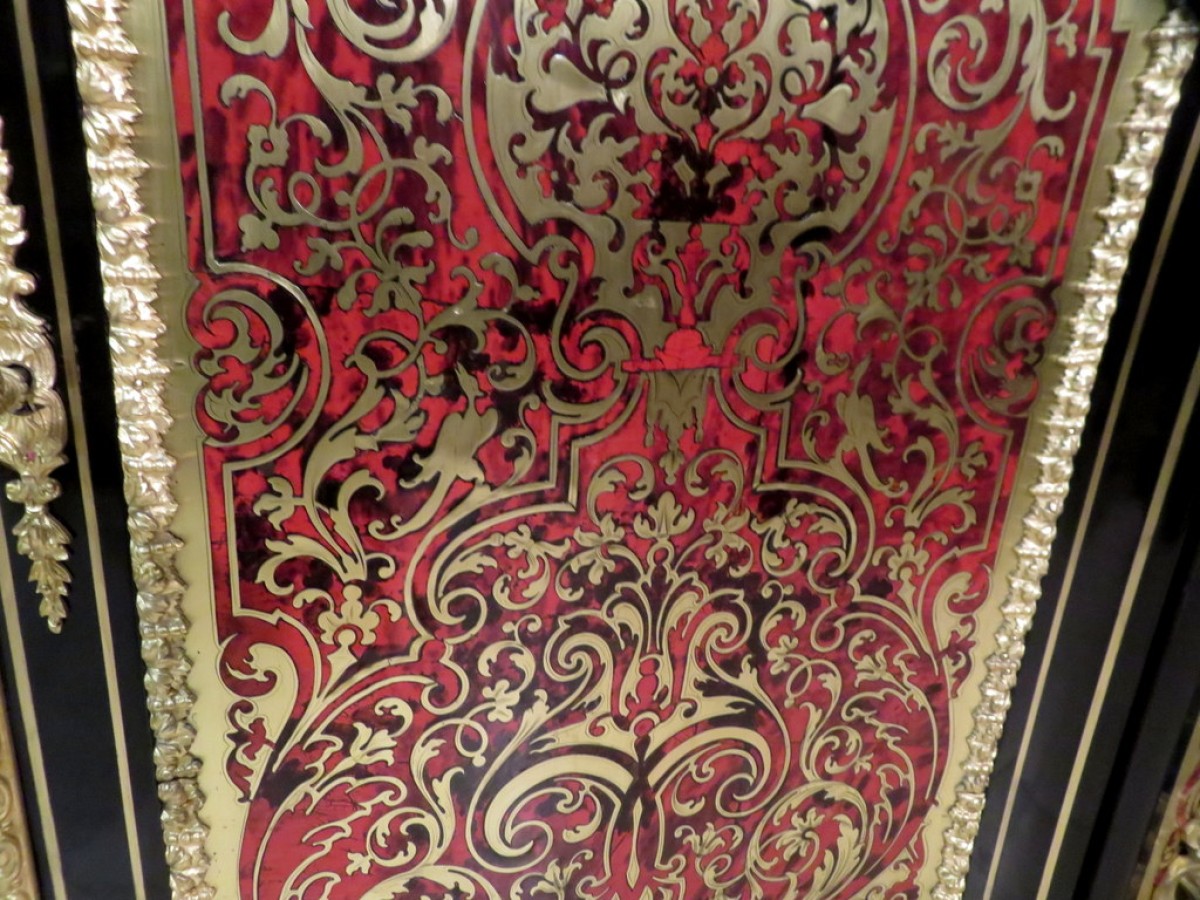
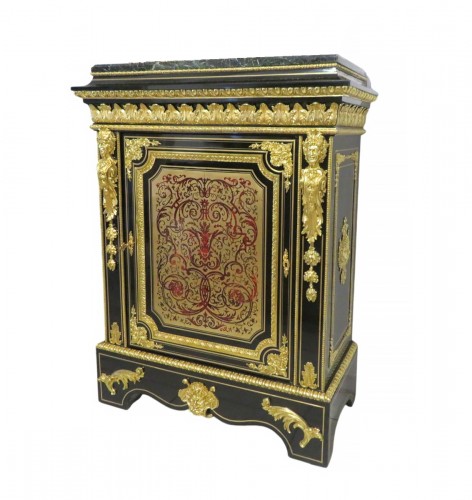
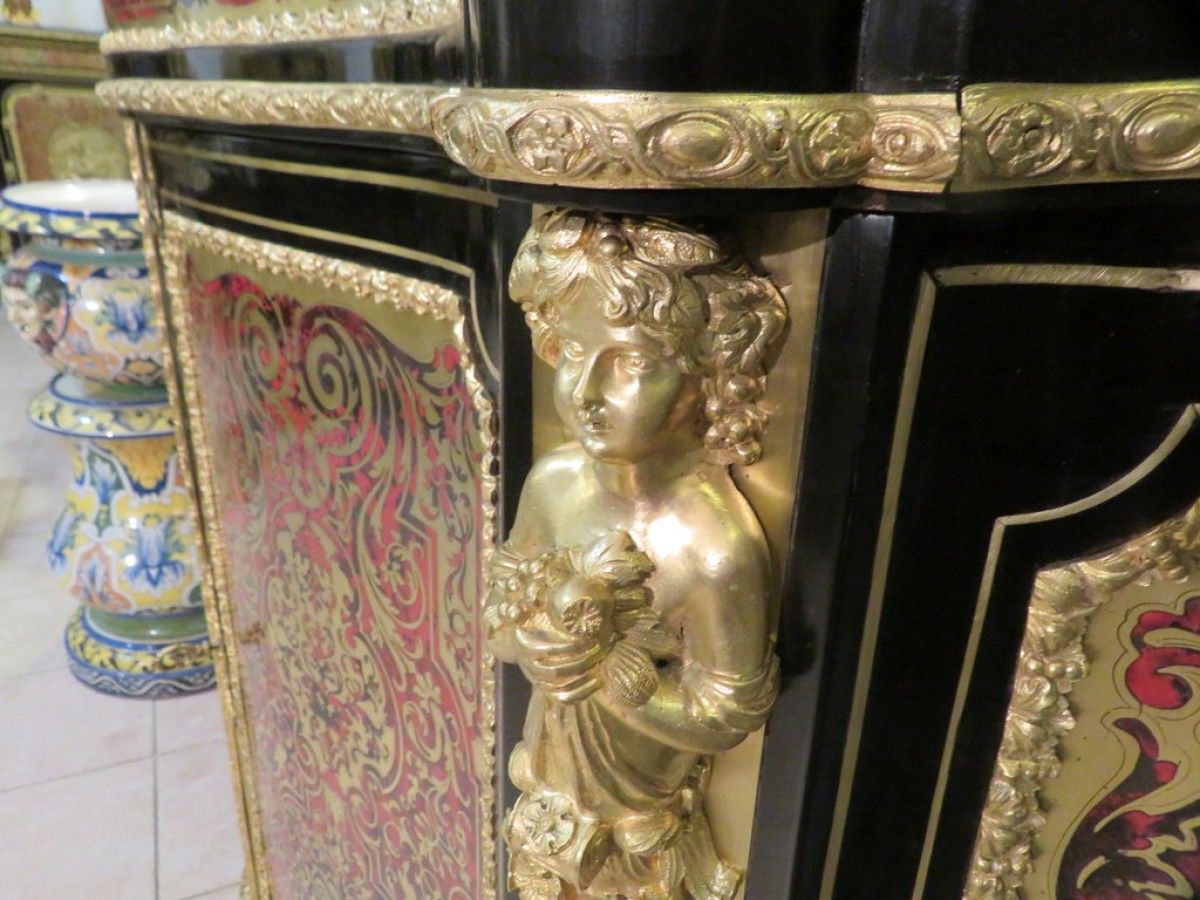
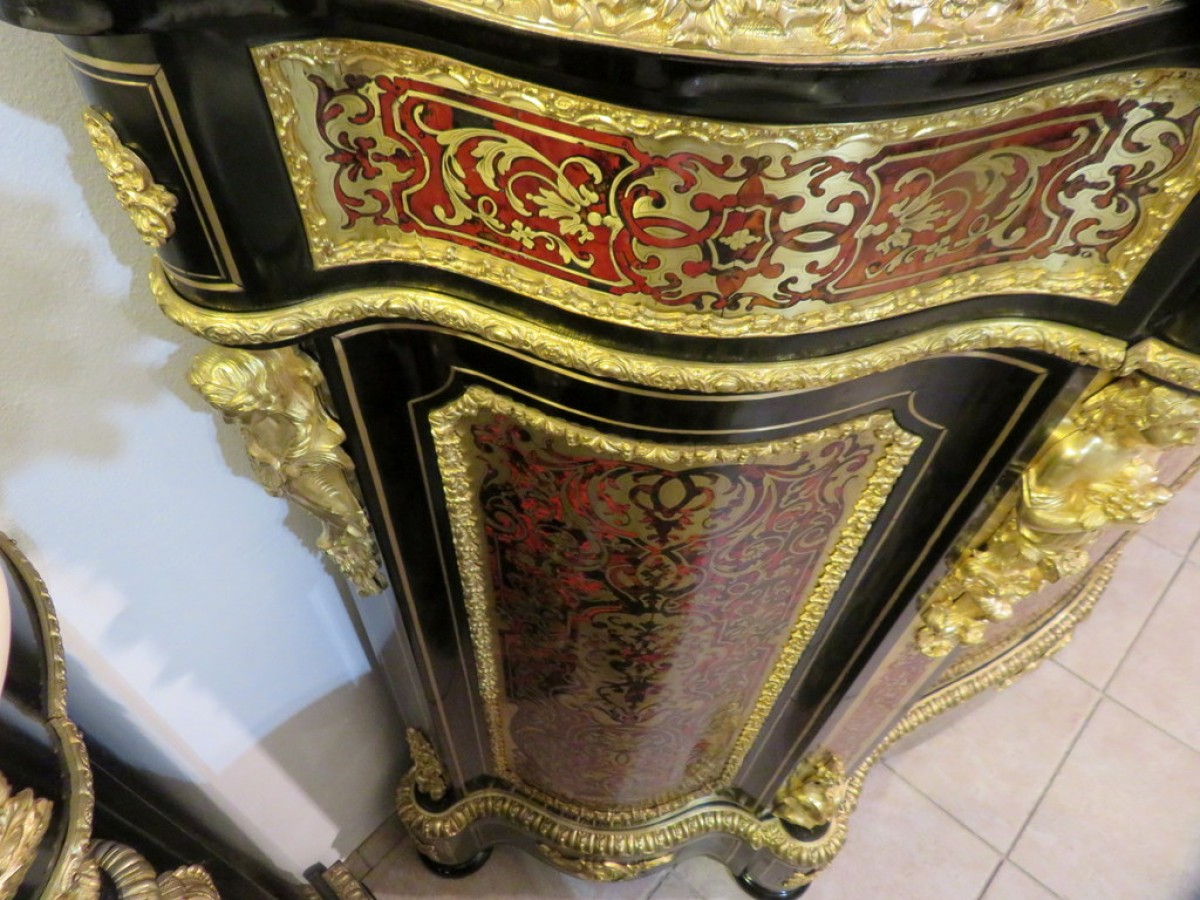
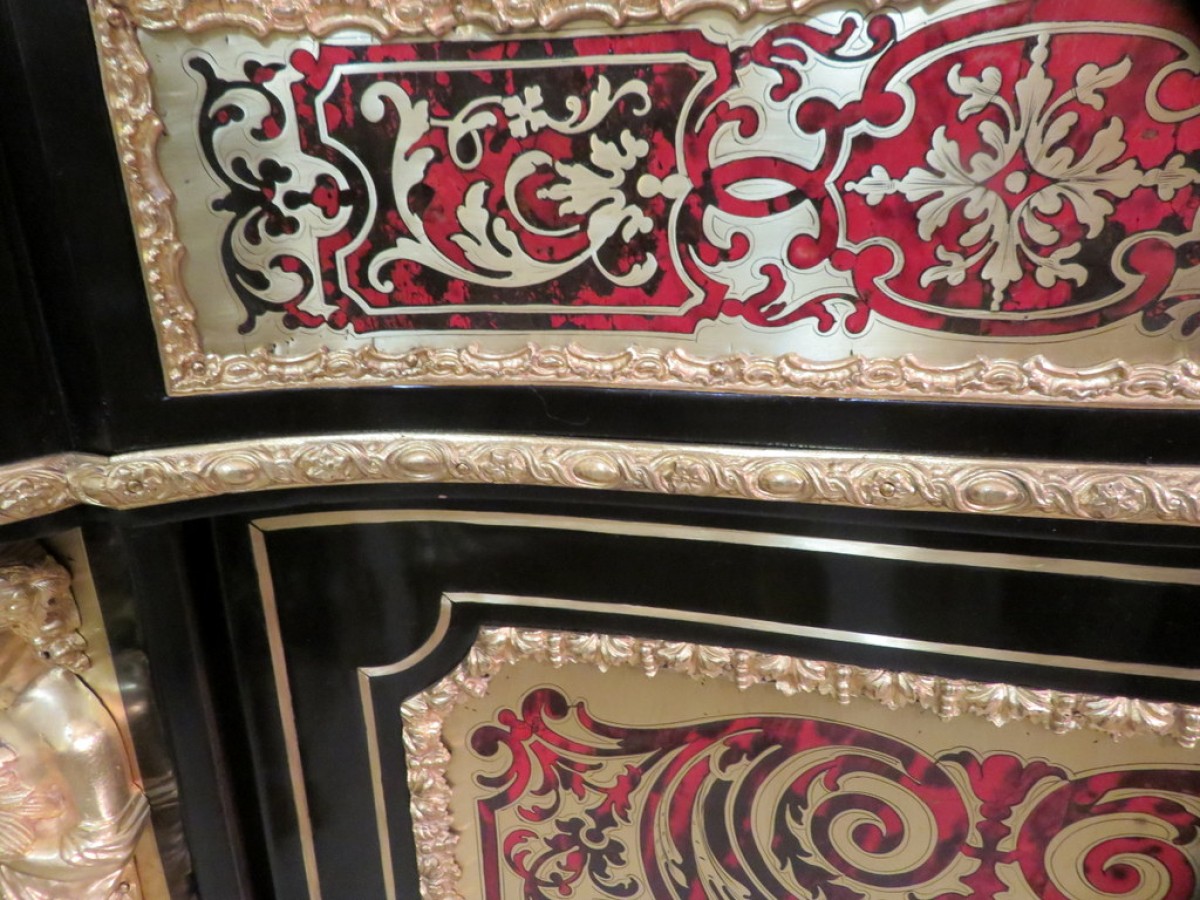
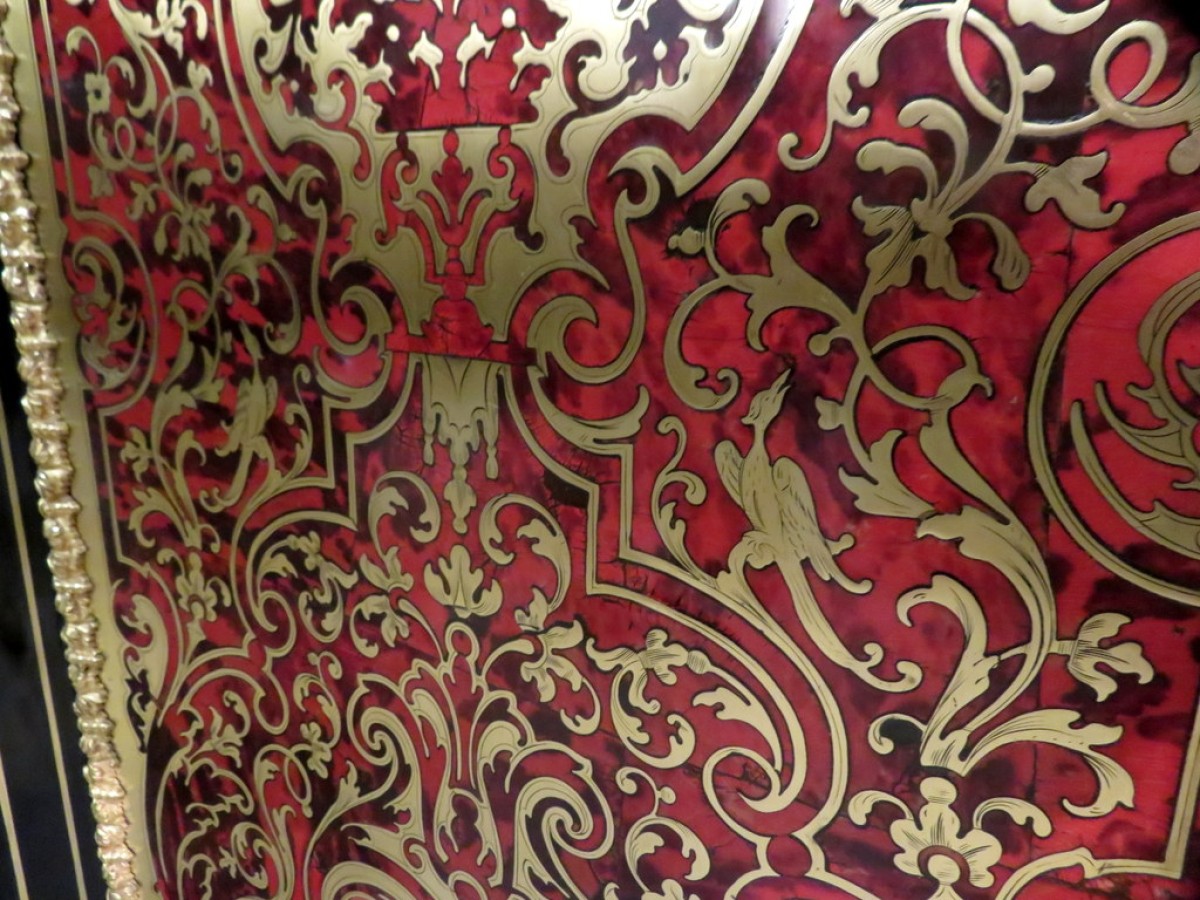
This is a high-quality piece, featuring pronounced curves and delicate tortoiseshell-and-brass marquetry.
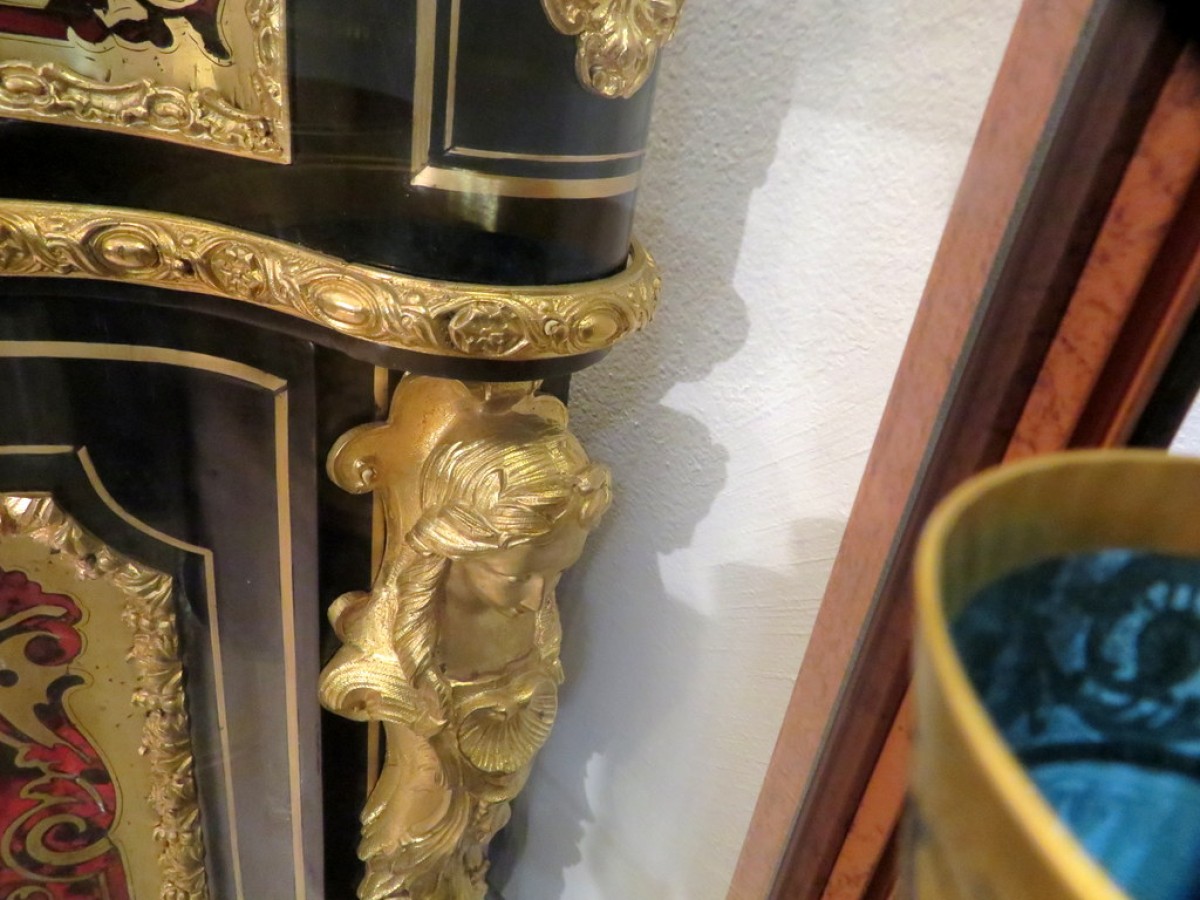
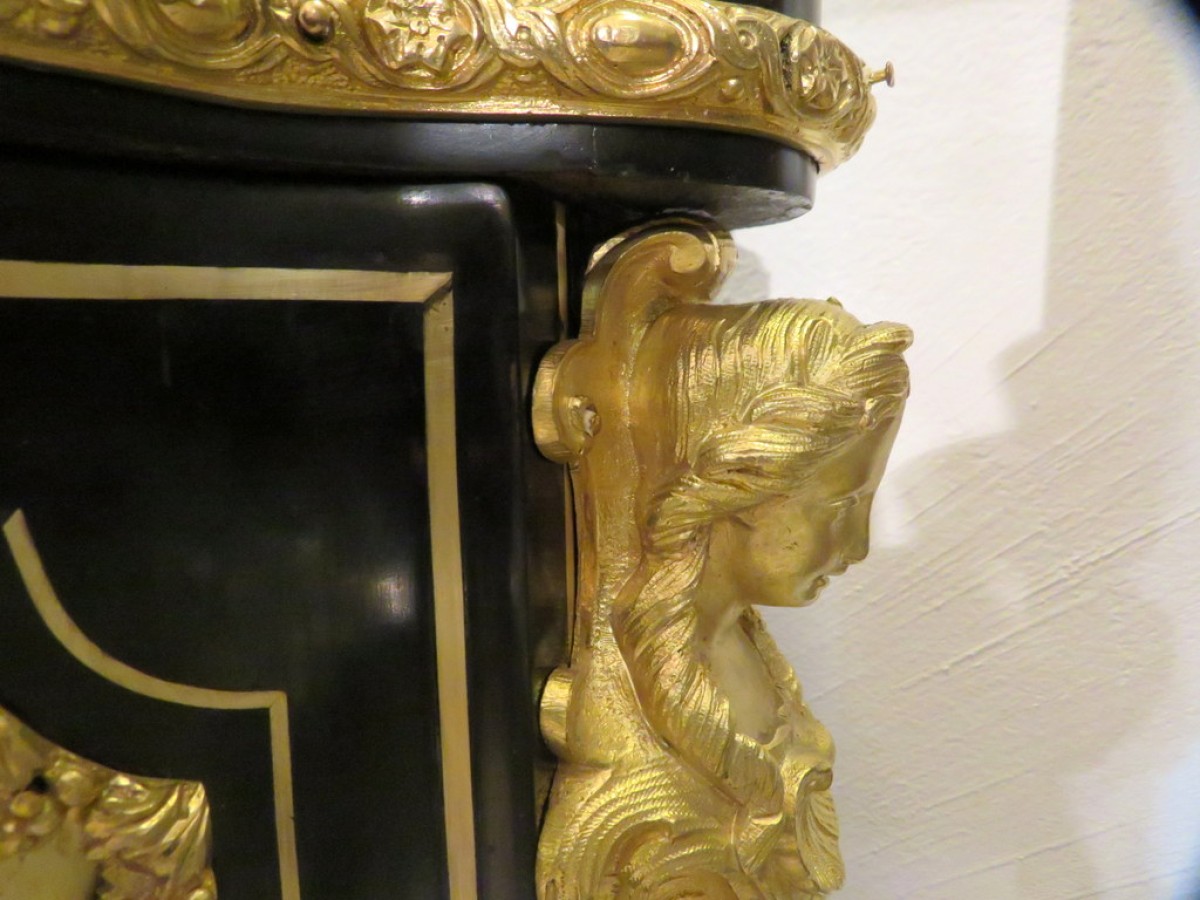
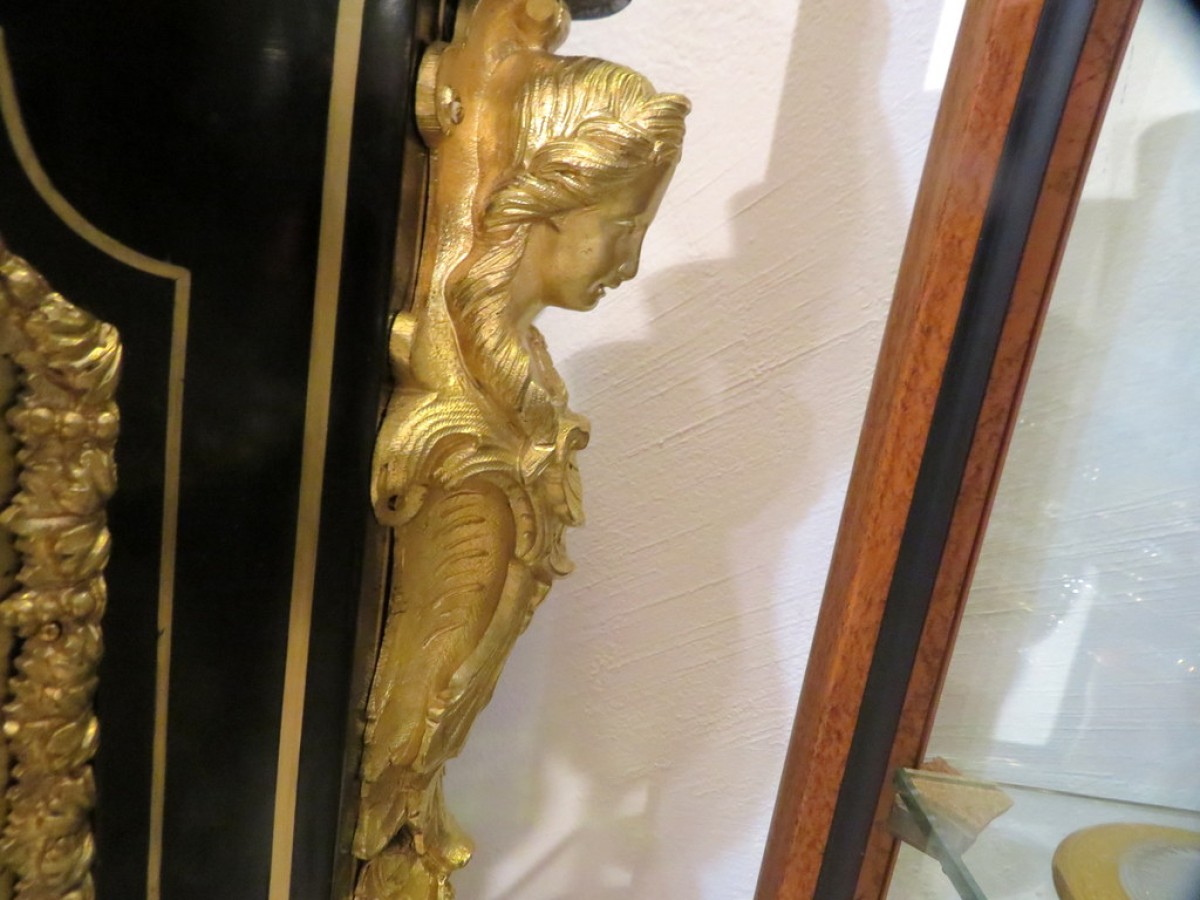
It is adorned with numerous finely chased, gold-gilt bronze mounts.
big dimensions : 160 cm wide, 111 cm high, and 50 cm deep.
Magnificent caryatids grace all four uprights (both front and back).
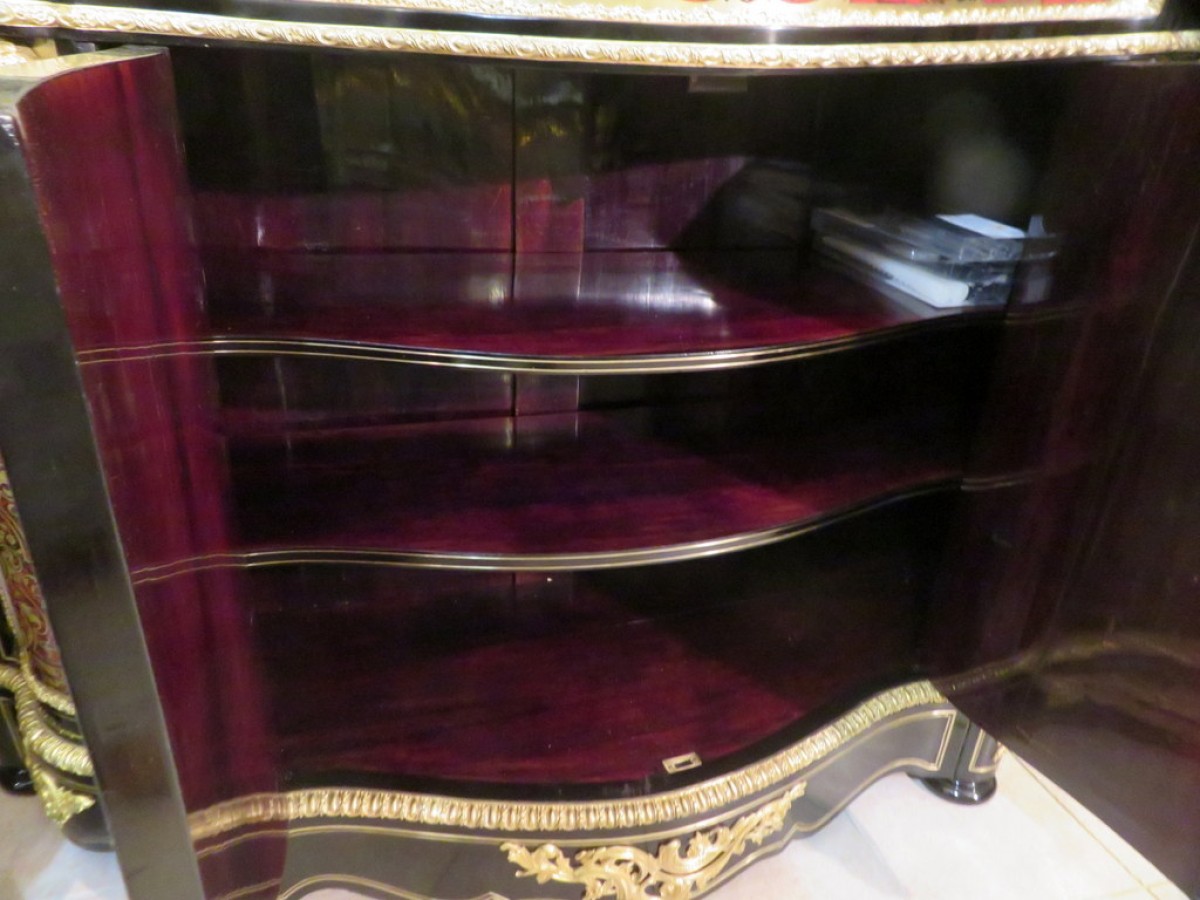
The two doors open to reveal an interior lined in red mahogany, featuring two shelves with brass-edged fronts.
It comes with its functional key.
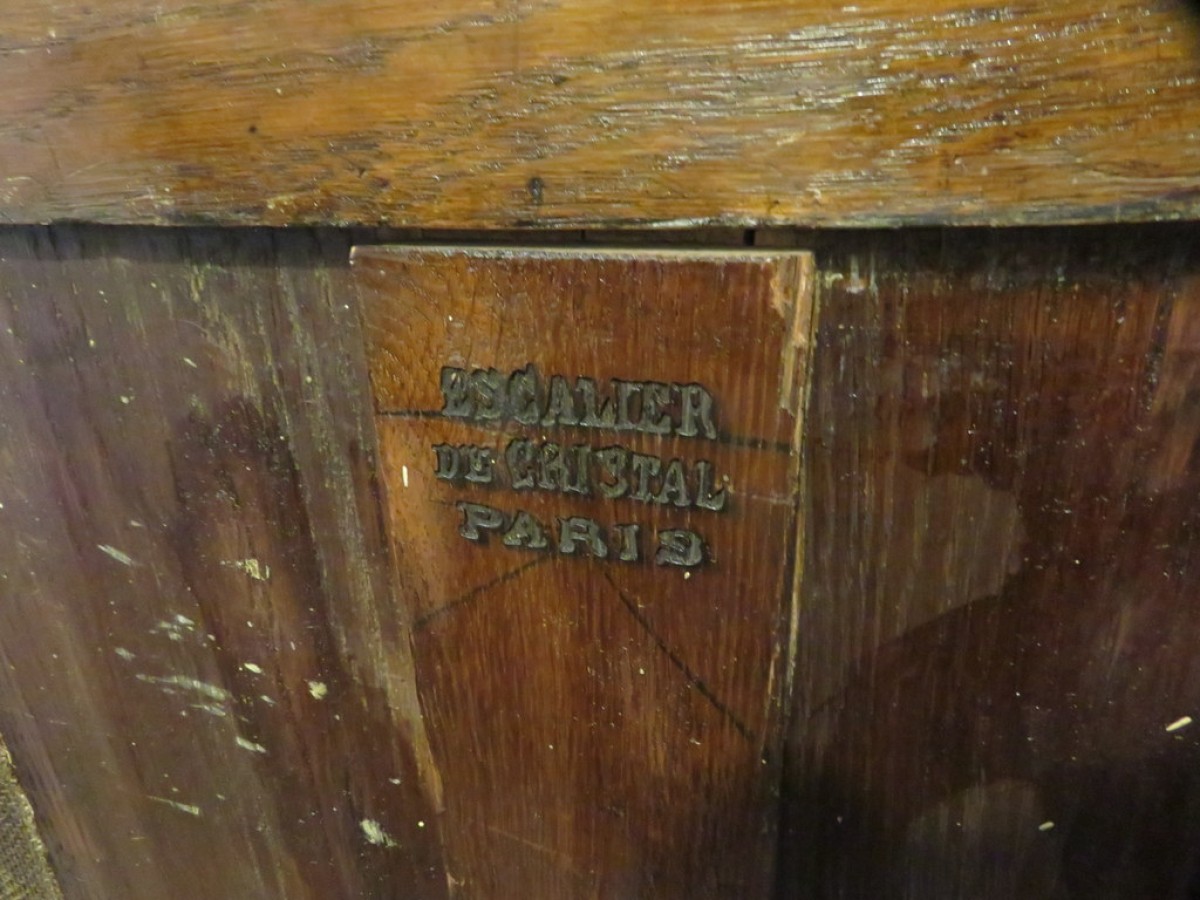
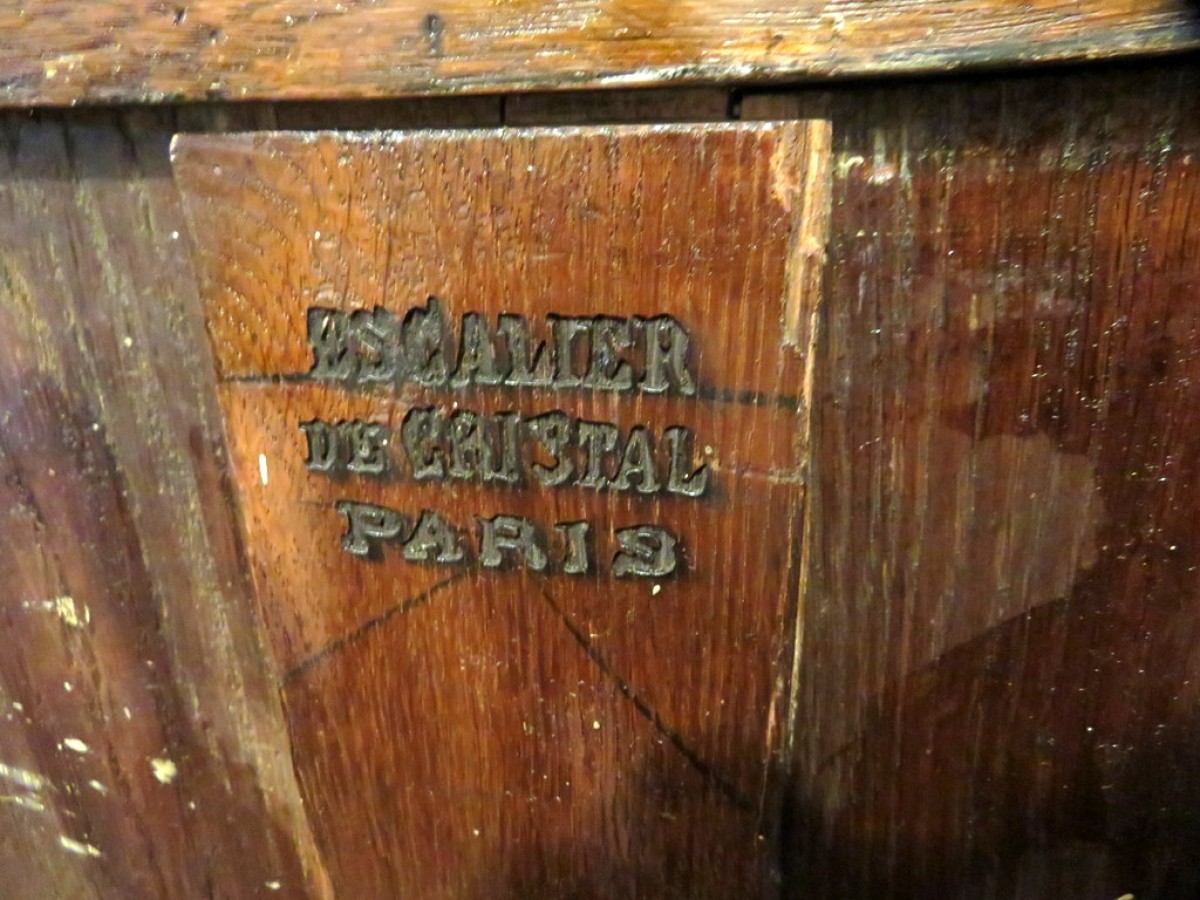
The back bears the stamp of "L'Escalier de Cristal"—a hallmark of quality and authenticity.
L’ESCALIER DE CRISTAL
LAHOCHE, 162 & 164 PALAIS-ROYAL, PARIS
Around 1808, Marie Jeanne Rosalie Désarnaud (1775–1842) opened her shop in the galleries of the Palais-Royal garden. The business quickly gained prestige and renown.
In 1812, the firm began specializing in the creation of objets d’art and furniture that combined cut crystal with gilt bronze. That same year, a striking staircase featuring crystal balusters was installed, which would go on to become the shop’s emblem. The Widow Désarnaud participated in the 1819 exhibition at the Louvre, where she was awarded a gold medal for her crystal pieces adorned with bronze. In 1829, Marie Désarnaud sold her business to Jacques Boin, a crystal cutter and engraver who also operated in the Palais-Royal. In 1840, Boin entered into a partnership with another merchant, Pierre-Isidore Lahoche. Together, they took part in the 1844 Exhibition of Industrial Products. In 1852, Pierre-Isidore Lahoche decided to form a partnership with Emile Pannier. Eager to reach an ever-expanding international clientele, Lahoche and Pannier crossed the Atlantic to showcase their wares in New York, where they were awarded a silver medal in 1853. They also received a silver medal at the 1855 Exposition Universelle in Paris, as well as a commission from Napoleon III—who purchased a bowl made of cut ruby ??crystal, fitted with a gilt-bronze mount. At the 1867 Universal Exposition in Paris, Émile Pannier was once again awarded a bronze medal and received widespread acclaim. After nearly 70 years in business and having passed through the hands of four different owners, the *L’Escalier de Cristal* shop relocated in 1872 to Baron Haussmann’s new district—specifically to 6 Rue Scribe and 1 Rue Auber—opposite the grand opera house, which was still under construction at the time. It was not until toward the end of the reign of Louis-Philippe, at the initiative of the Pannier brothers, that the firm expanded into the furniture trade. By around 1870, it began manufacturing its own cabinetwork, offering both original designs and reproductions of 18th-century furniture. *L’Escalier de Cristal* became particularly specialized in the replication of 18th-century pieces. The quality and craftsmanship of these items were such that they were occasionally mistaken for the originals; their true origin was only discovered during restoration work, when the process of dismantling the pieces revealed the "Escalier de Cristal Paris" stamp.
In 1923, *L’Escalier de Cristal* closed its doors—a closure brought about by the tumultuous events that reshaped the early 20th century (including war) and the sudden death of the primary heir.
Delevery information :
Delivery France and worldwide by specialized carriers.