Offered by Galerie Philippe Guegan
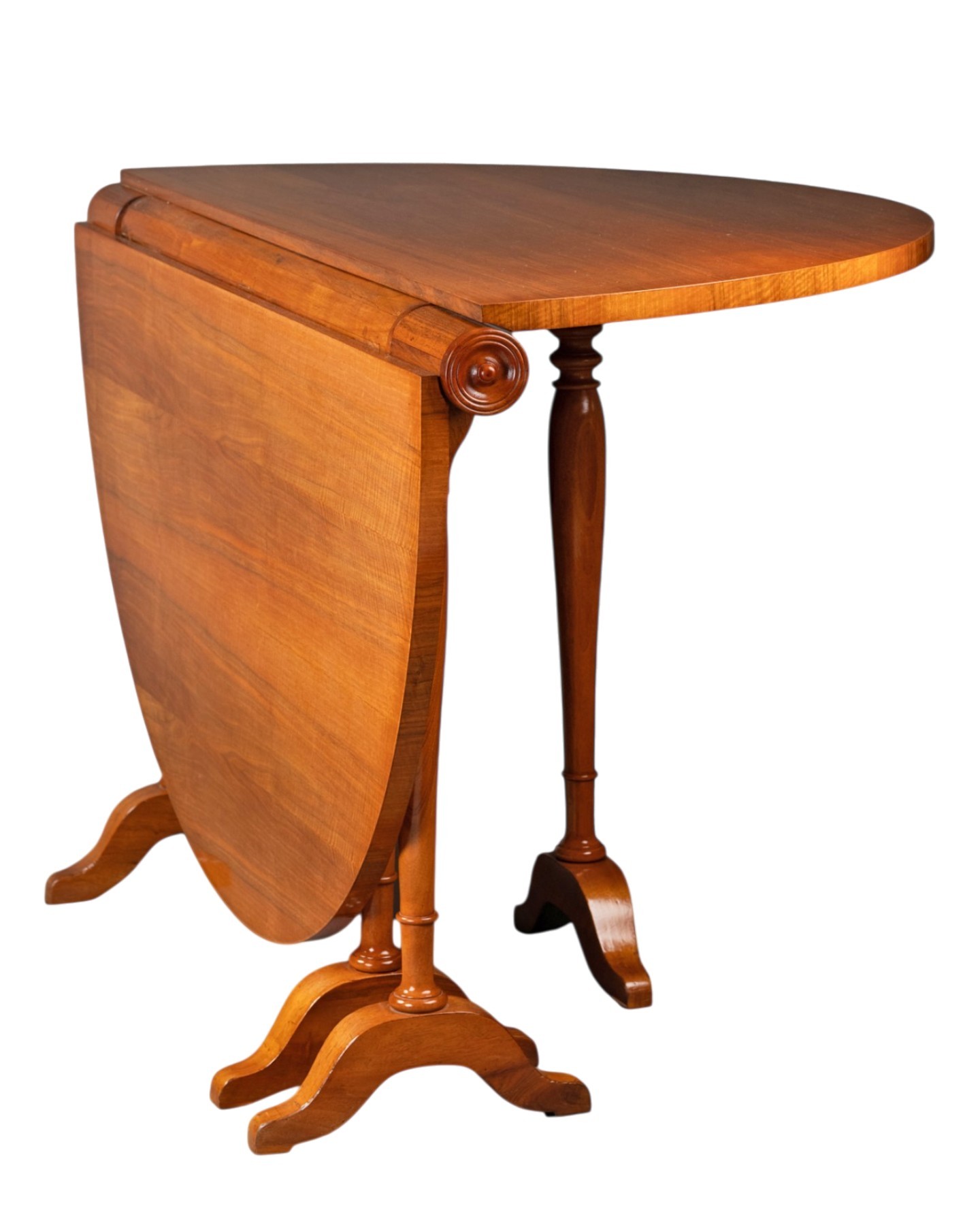
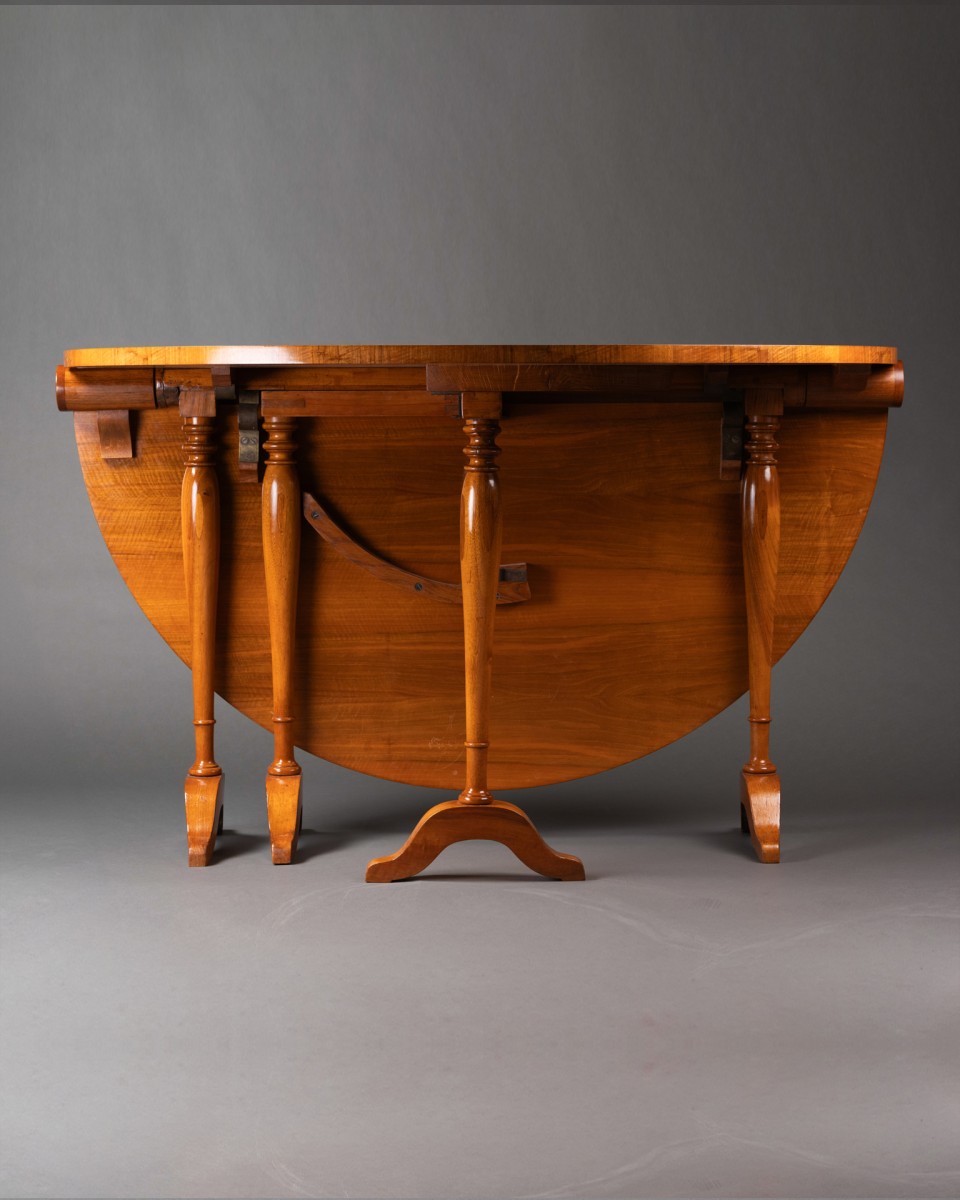
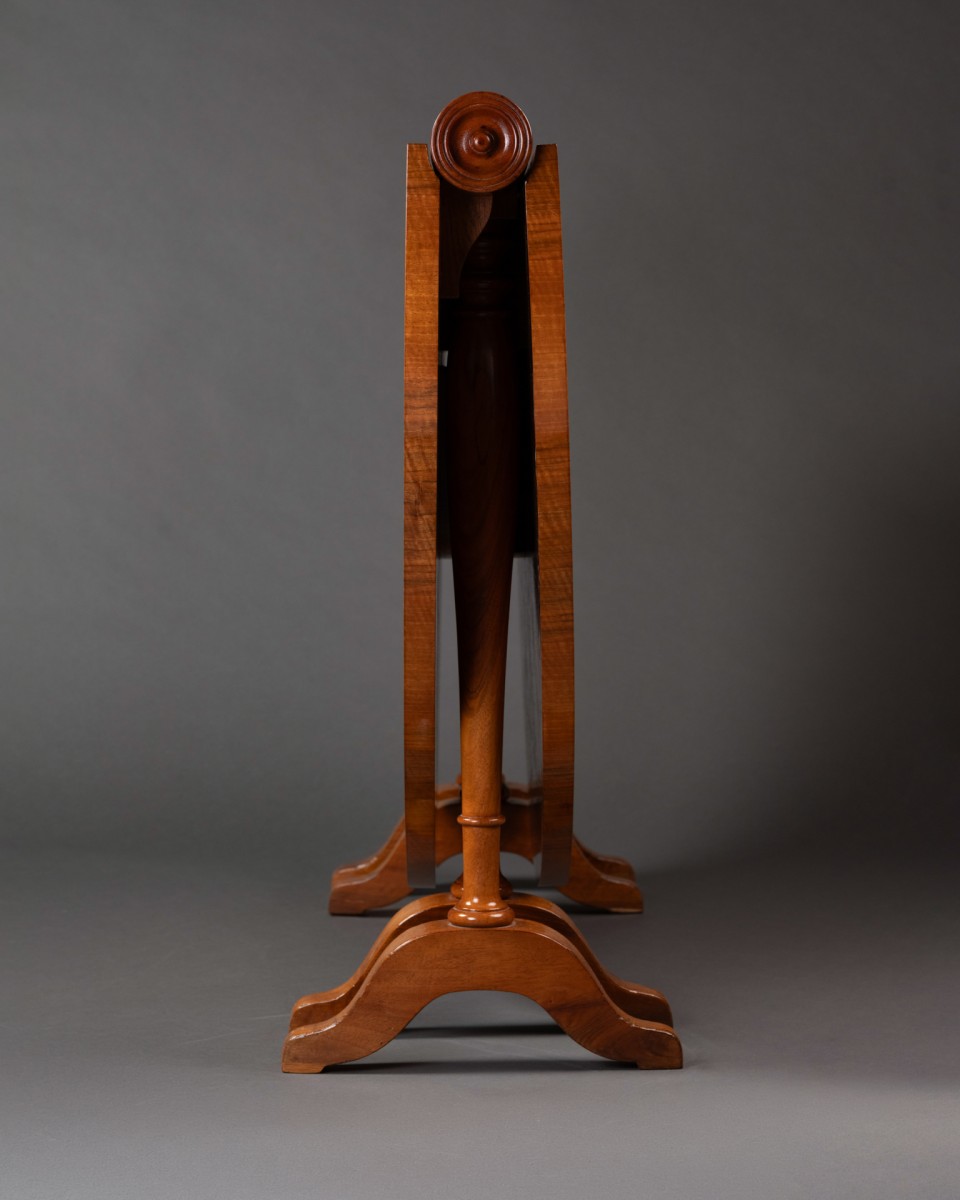

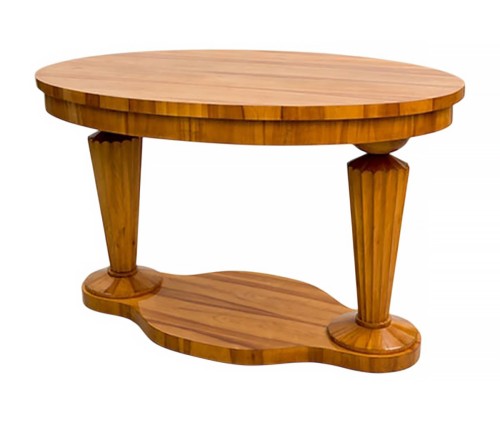
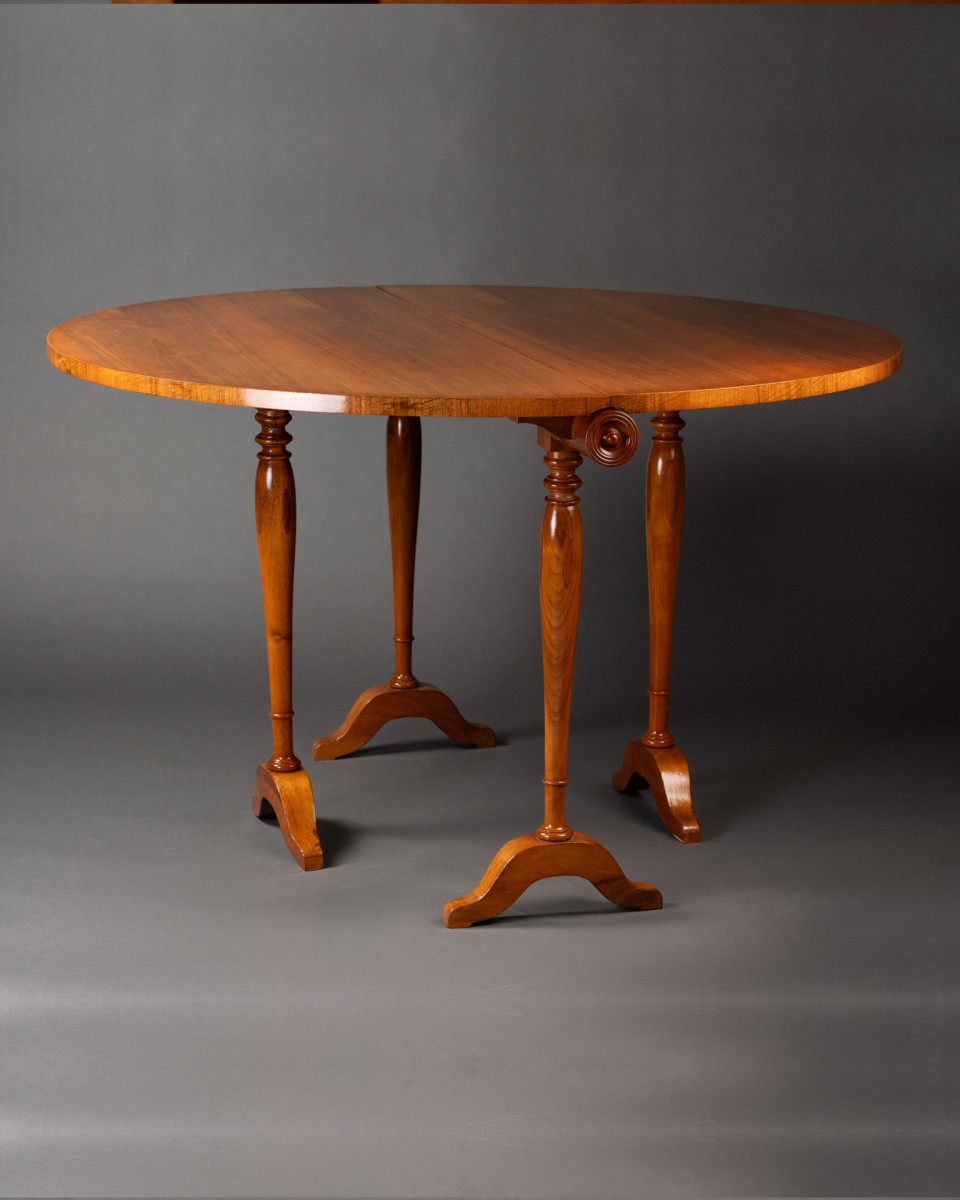
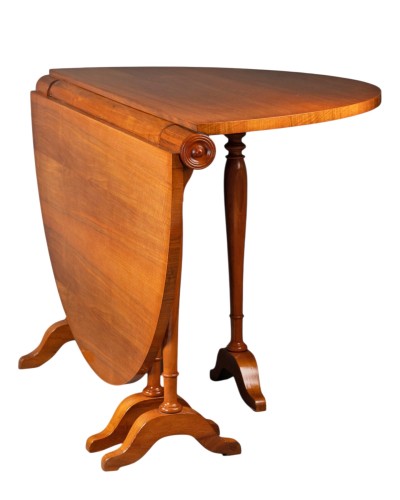
A rare round table in cherrywood, entirely foldable and collapsible, attributable to Joseph Ulrich Danhauser (1780–1829).
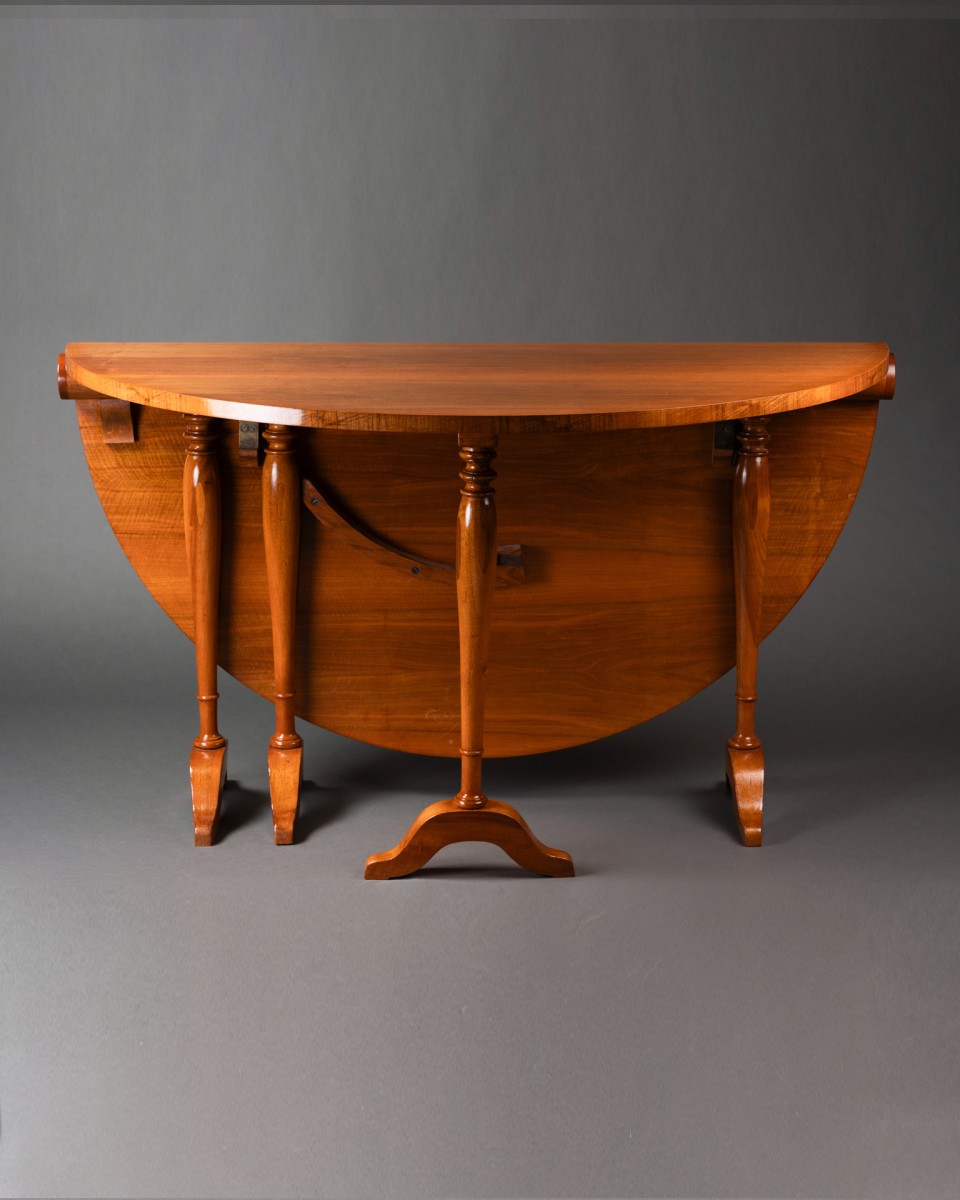
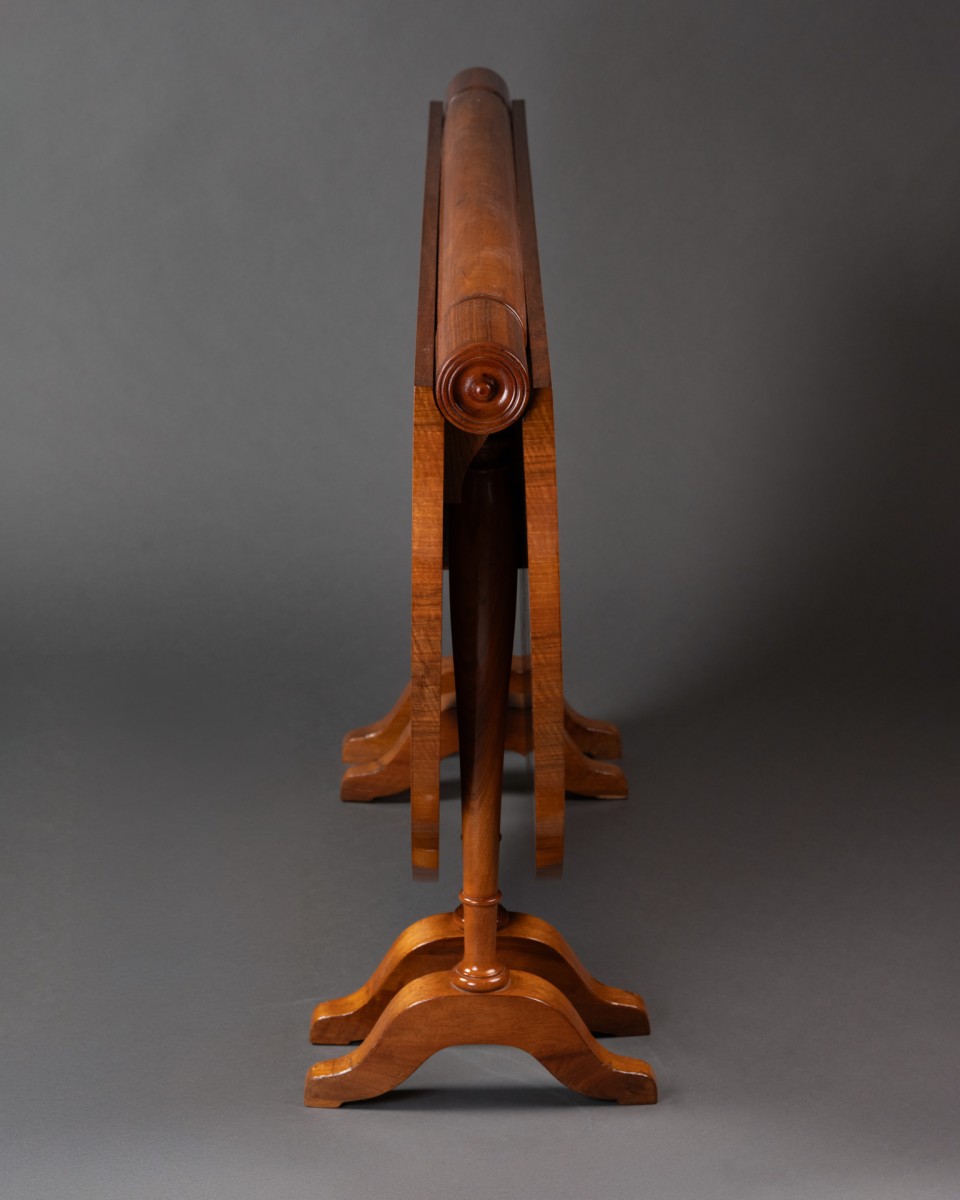
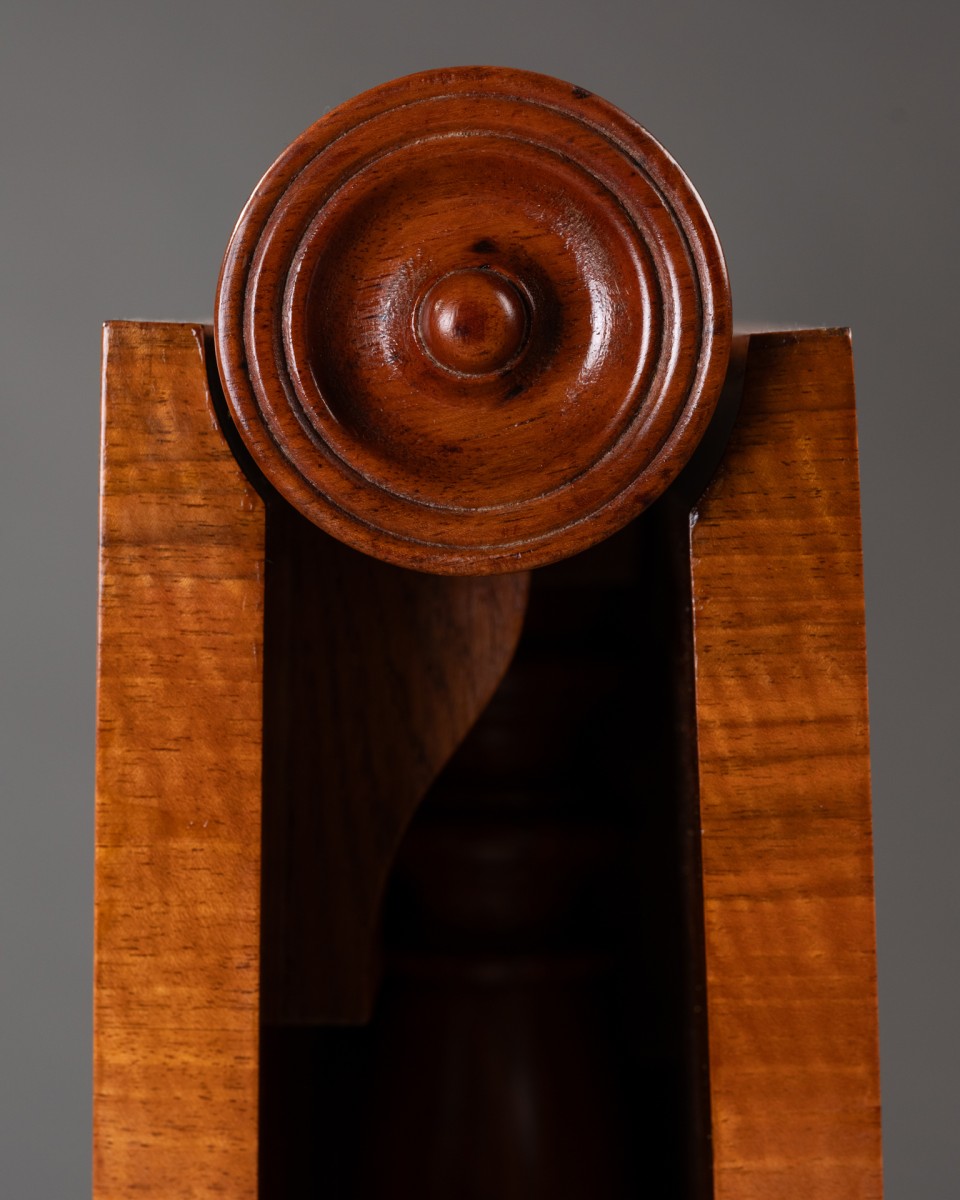
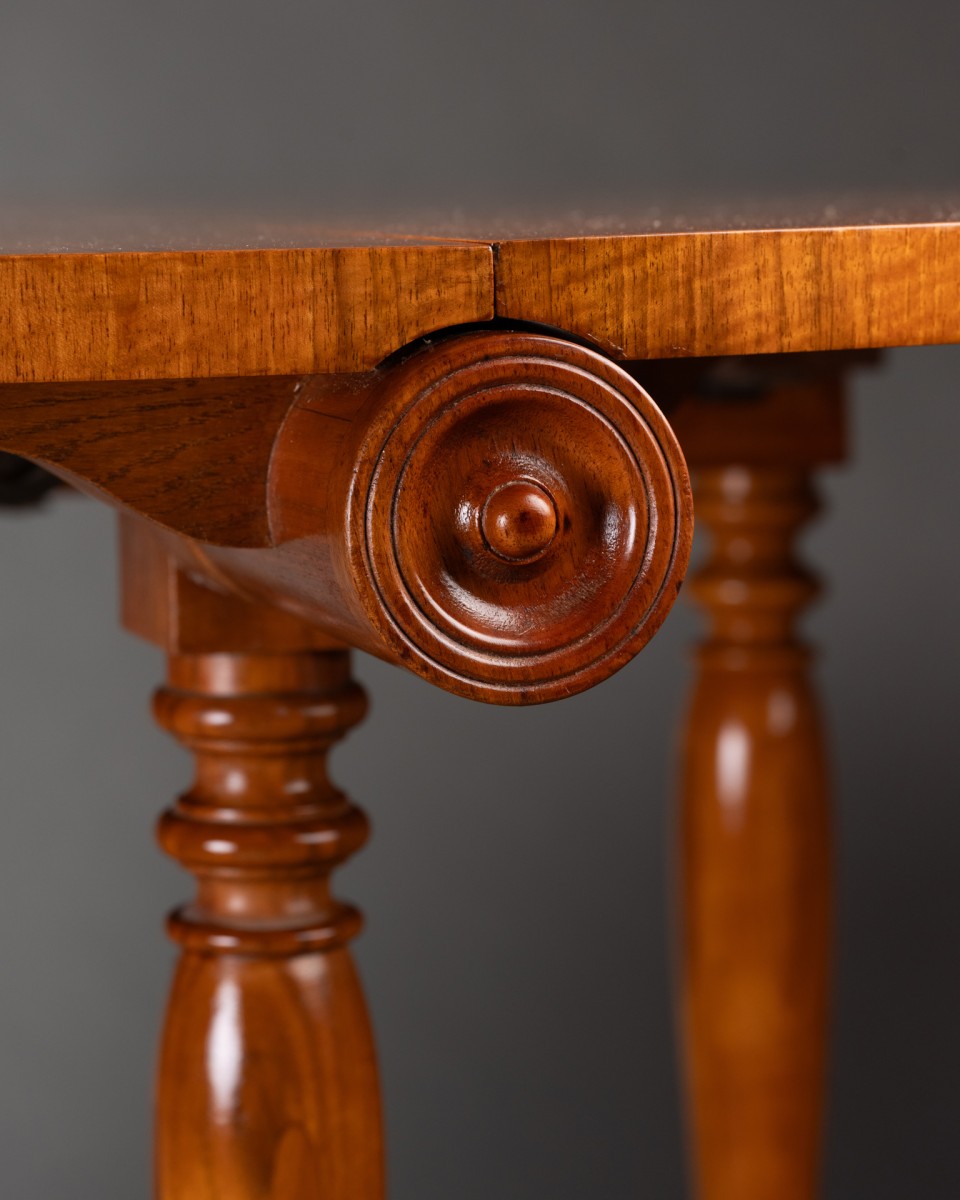
Each semicircular leaf of the tabletop pivots around a horizontal axis, marked at either end by a turned wooden rosette with a central boss.
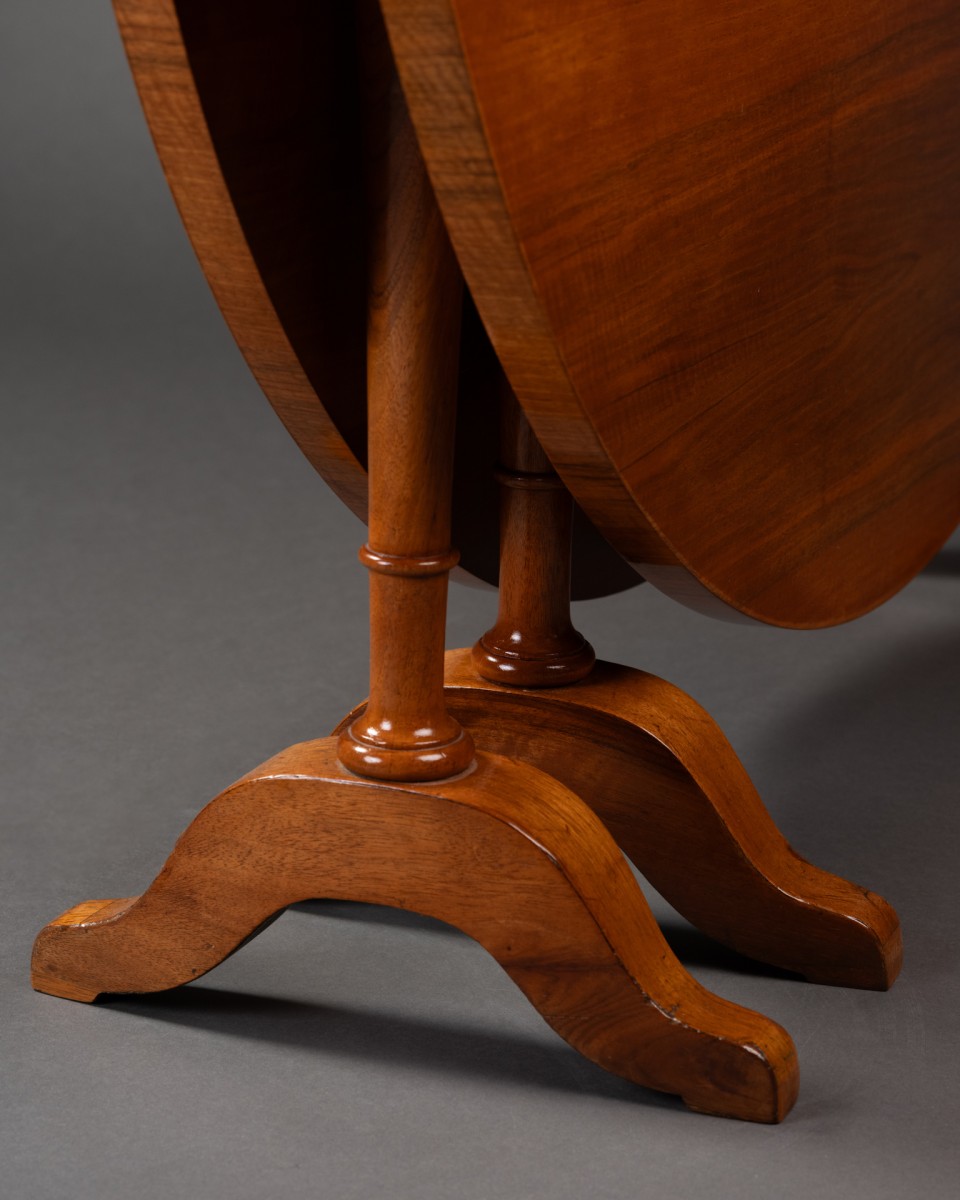
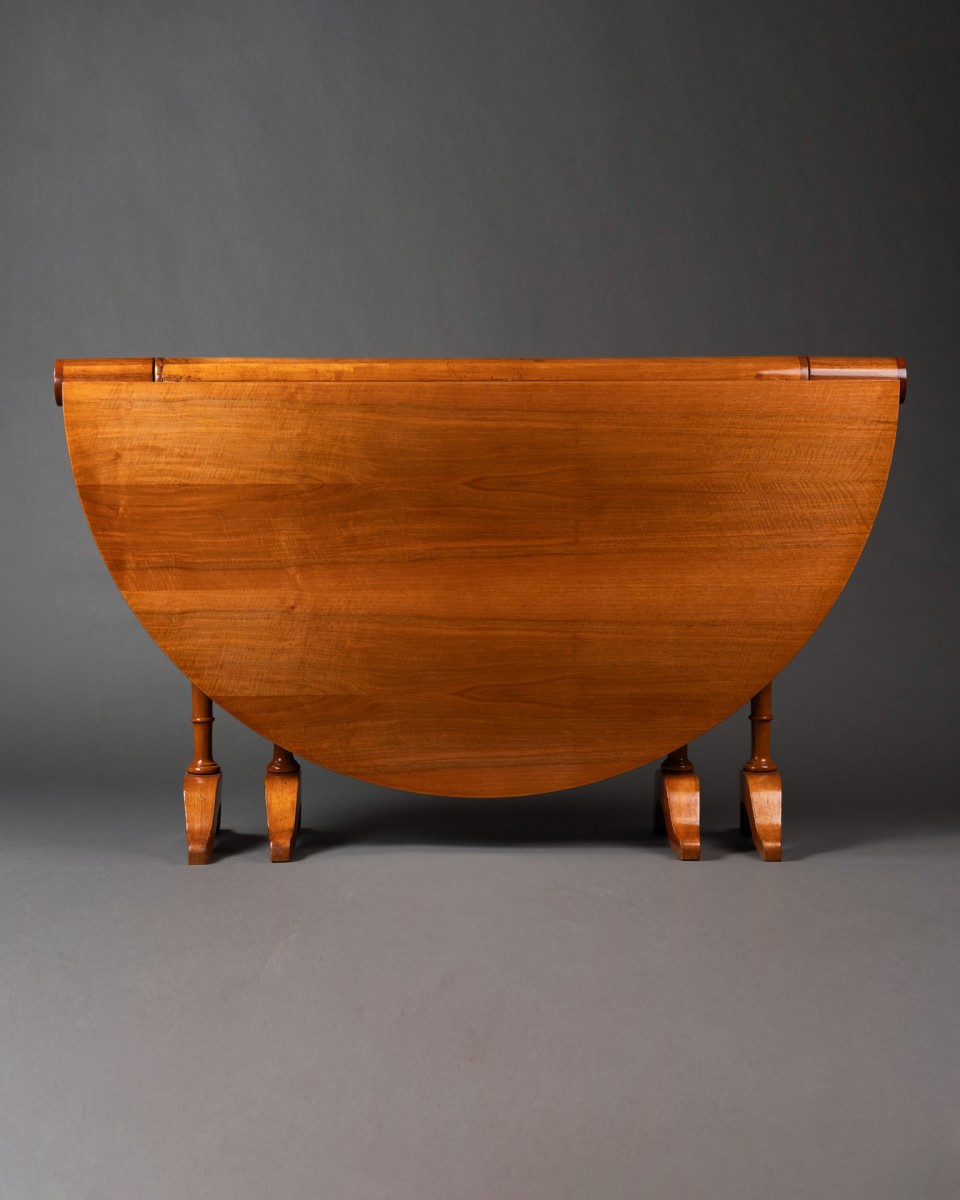
When closed, the table occupies a particularly compact volume, which does not exceed the width of its legs. Two of these legs are movable and pivot to support each of the tabletop leaves independently.
When fully opened, the table measures 130 cm in diameter and seats six to eight guests. Half-folded, it forms an elegant console table.
Biedermeier furniture developed in German-speaking countries, primarily in Austria and the German states, between 1810 and 1848. Rooted in European Neoclassicism, it coexisted with the Empire style, with which it shared certain references to classical antiquity, while favouring greater simplicity of form and particular attention to domestic comfort. Far from being exclusively bourgeois, it originated in part in the private apartments of princely courts before becoming more widely adopted.
Two major centres of production stand out: Berlin, where the architect Karl Friedrich Schinkel (1781–1841) designed furniture ensembles for the Prussian court, executed notably by cabinetmakers Karl Wanschaff and Johann Christian Sewining; and Vienna, where the manufactory founded in 1804 by Joseph Ulrich Danhauser (1780–1829) played a major role in the development of new forms and the dissemination of designs.
Furniture from this period is characterised by clearly defined volumes, graceful lines, the use of veneers with expressive grain patterns, and ornamentation often reduced in favour of the natural qualities of the wood, foreshadowing contemporary design.
Joseph Ulrich Danhauser (1780–1829) was one of the leading figures in Viennese furniture design in the early nineteenth century. Trained as a sculptor, he founded a workshop specialising in decorative ornaments in Vienna in 1804, which by 1814 had become a major furniture manufactory. Intended for an aristocratic and bourgeois clientele, its production included chairs, tables, secretaries and lighting fixtures.
Drawing on Neoclassicism and the Empire style, Danhauser contributed to the rise of Biedermeier furniture, characterised by the purity of its lines, elegance of proportion and emphasis on the natural beauty of wood. His manufactory was distinguished by the diversity and inventiveness of its models, disseminated through illustrated catalogues.
More than 2,500 drawings and designs are now preserved at the MAK in Vienna. Following his death, his son, the painter Josef Franz Danhauser (1805–1845), took over the business, extending its influence on Austrian furniture design.
Delevery information :
Please contact us upon this matter. For delivery abroad, we will ask door to door transportation to be quoted by independant shipping companies,