Offered by NewAGG Raritet Antique Gallery
REQUEST INFORMATION
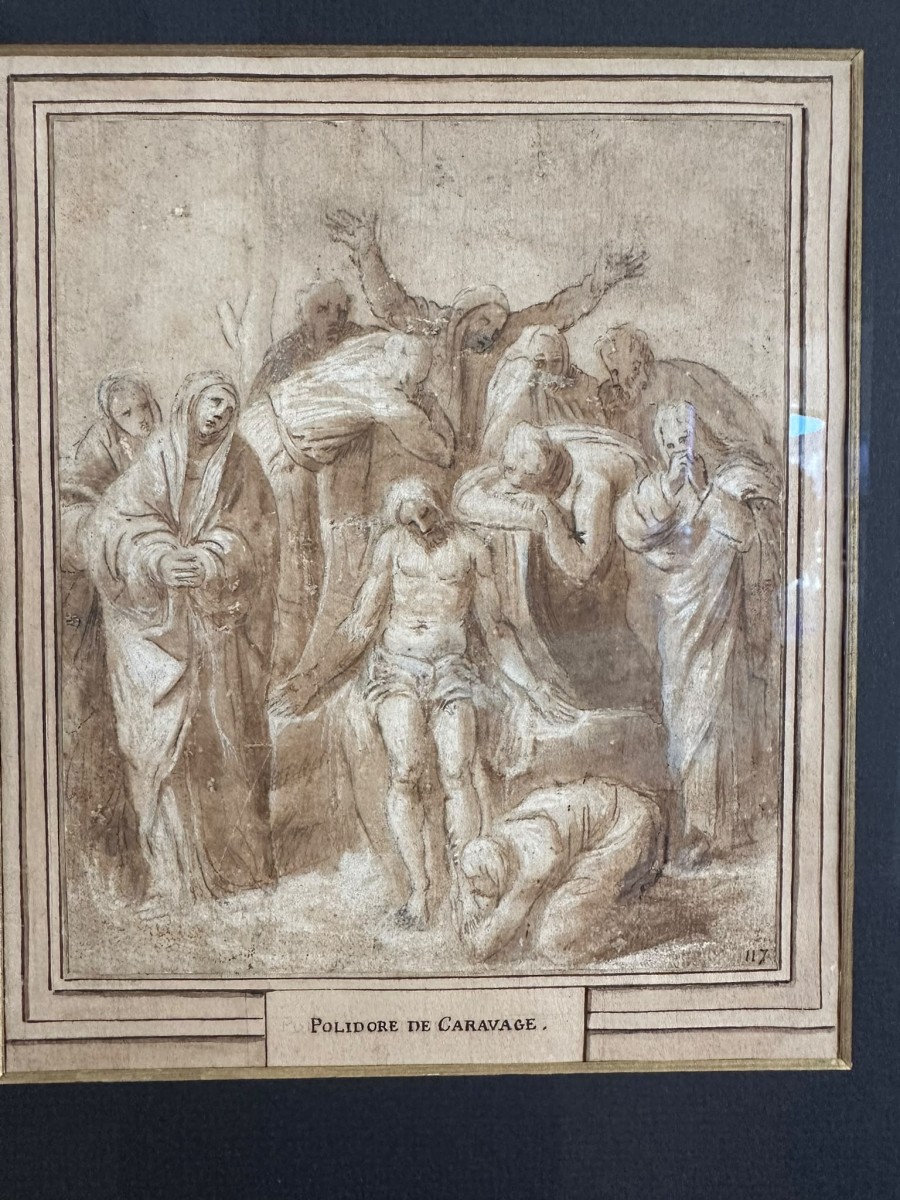
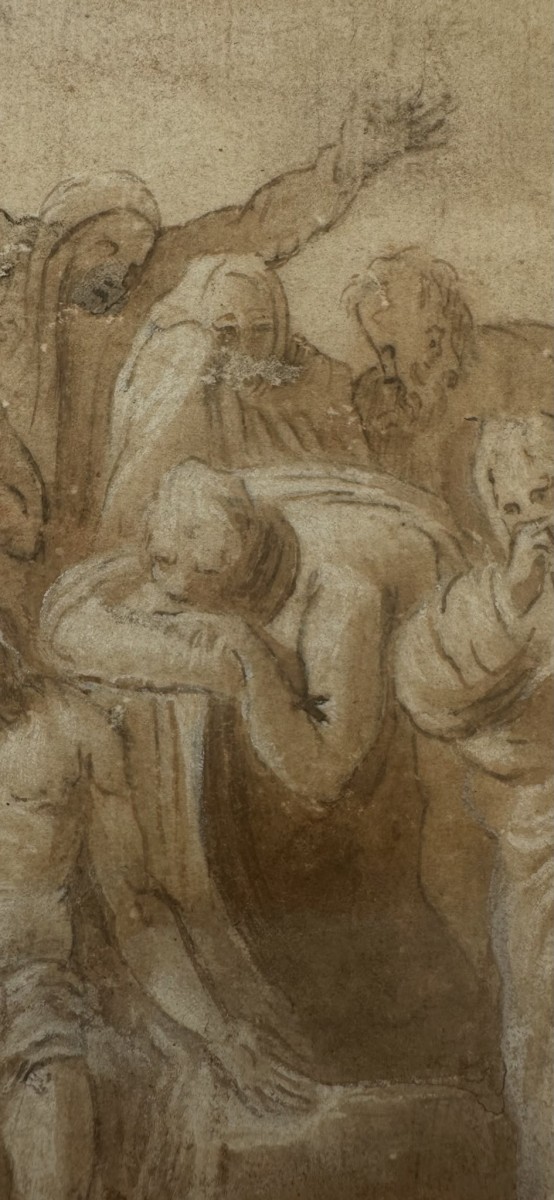

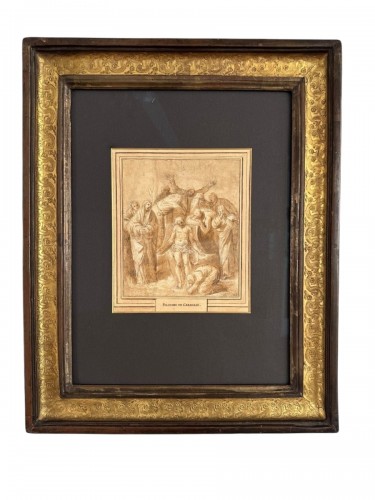
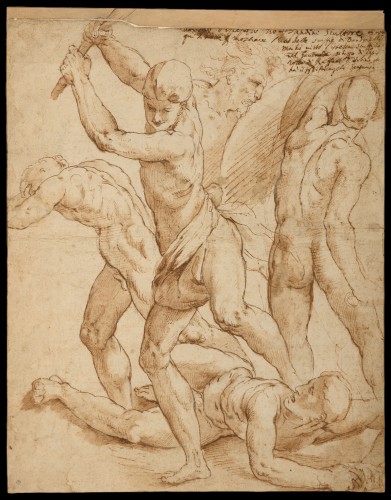
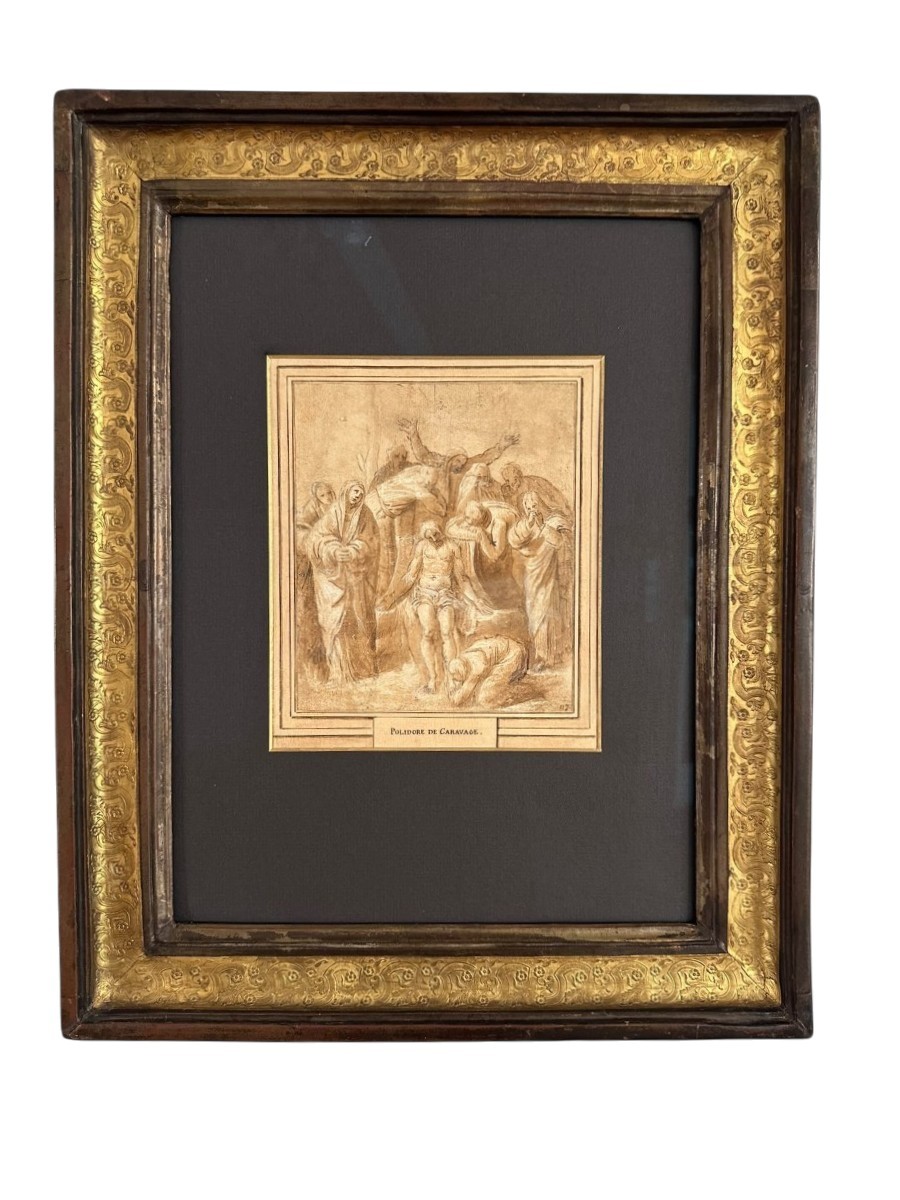
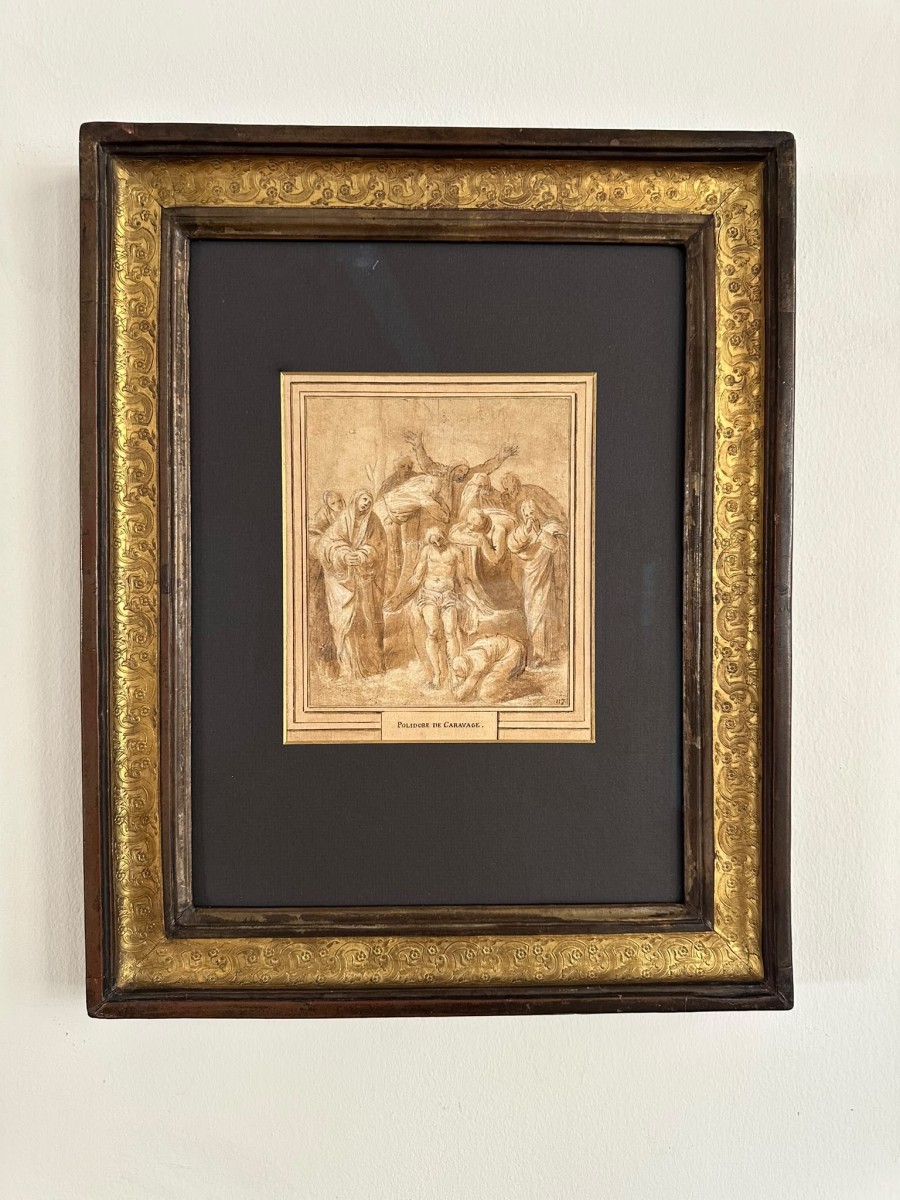
Attributed to Polidoro da Caravaggio (1499-1543) - The Lamentation of Christ. Preparatory drawing for a fresco, 16th century.
An exceptional graphic work of high artistic and historical value from the Italian High Renaissance and Mannerist period. Based on stylistic analysis, historical inscriptions, and archival research, this drawing is attributed to the prominent master of the Roman school, Polidoro Caldara, known as Polidoro da Caravaggio.
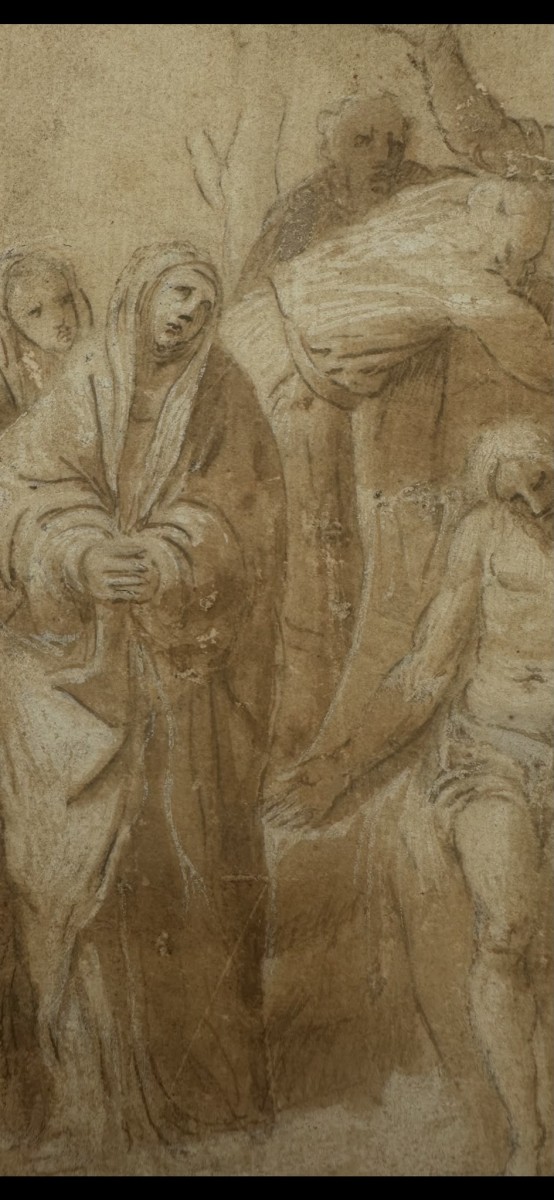
The composition depicts an expressive, deeply dramatic scene of The Lamentation of Christ. The work is executed in a virtuoso manner characteristic of the Roman circle of the first half of the 16th century: pen and brown ink, exquisitely toned bistre wash, and delicate white heightening on prepared paper. This sheet holds the status of a modello (preparatory drawing) for a monumental fresco composition on a religious subject.
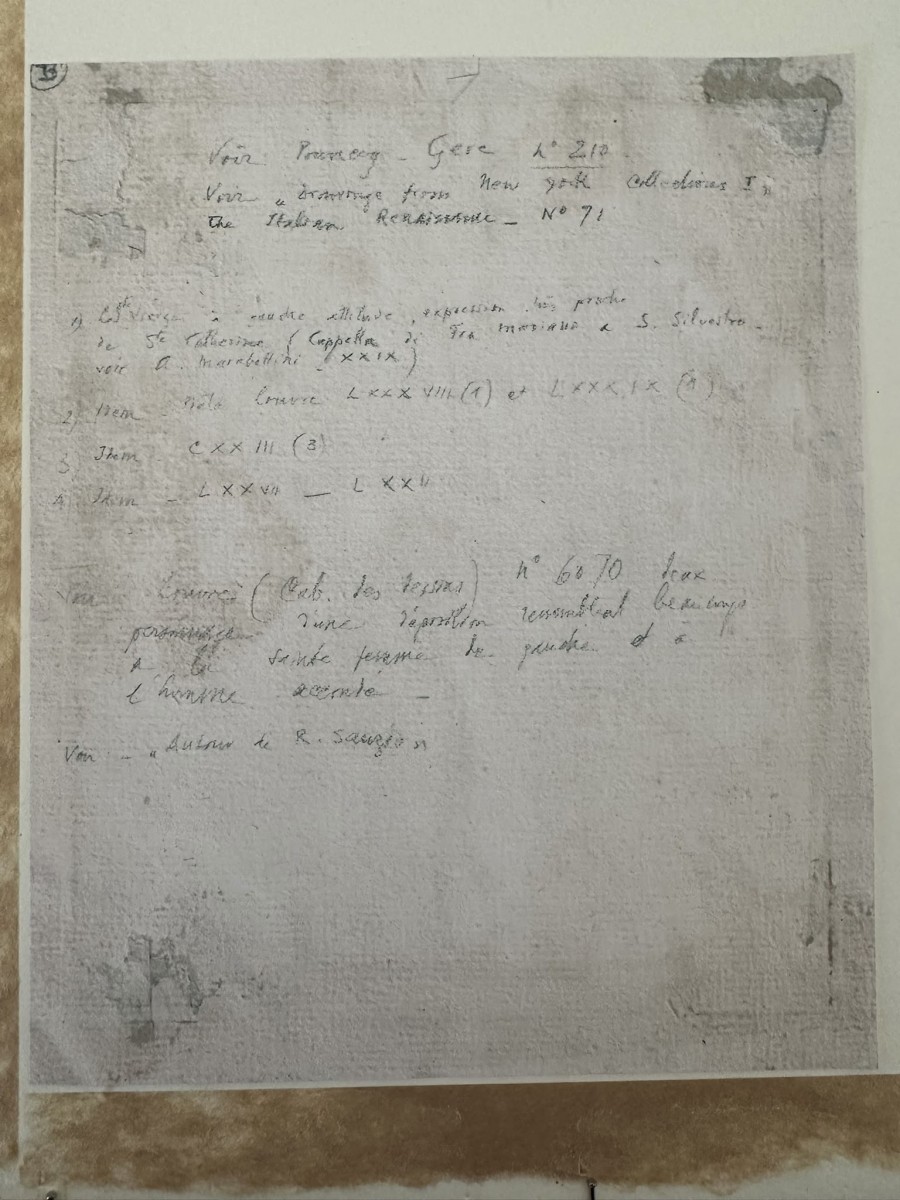
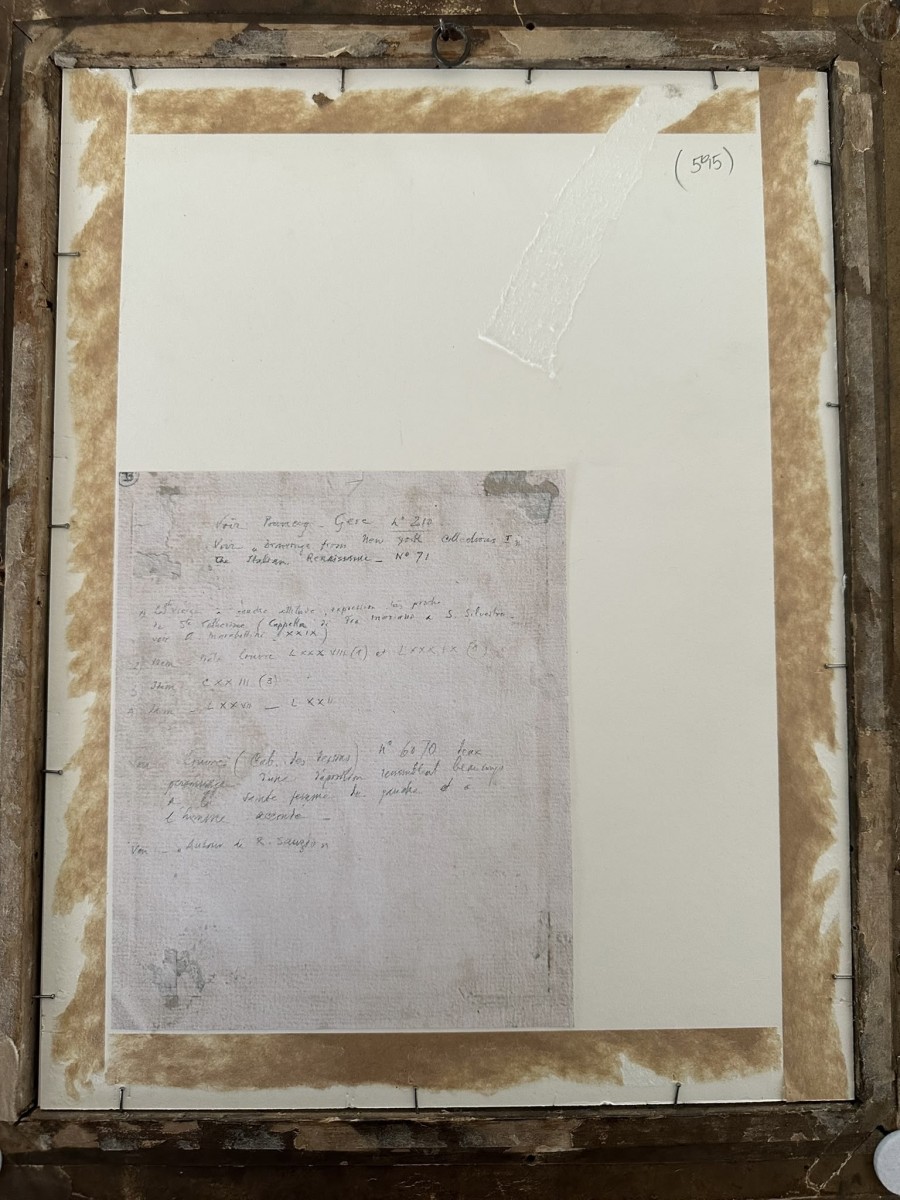
Scholarly Provenance and Research Notes (on the reverse):
The reverse side of the backing sheet features a detailed, authentic research apparatus in French and English, linking this drawing to key publications on Old Master drawings and supporting its attribution:
1. A direct reference to the expertise of the preeminent British art historian and Keeper of the British Museum, John Gere.
2. A citation of the fundamental catalogue of a landmark exhibition in the US: Drawings from New York Collections I: The Italian Renaissance (Metropolitan Museum of Art / Pierpont Morgan Library, 1965, edited by J. Bean and F. Stampfle), where a benchmark example of Polidoro's graphics is published under No. 71 for comparative analysis.
3. References to the authoritative monograph by Professor Alessandro Marabottini (1969) - the world's leading scholar on Polidoro's oeuvre - with precise indications of volumes and plates analyzing the artist's Roman decorations (including the frescoes of the Cappella di San Silvestro al Quirinale).
Framing and Condition:
The sheet has survived on an antique collector's multi-layered mount (passe-partout) with a calligraphic inscription of the French school: Polidore de Caravage. The drawing is housed in a magnificent, heavy antique frame with deep relief gilding (pastillage technique), perfectly enhancing the Renaissance character of the artwork. The condition is excellent for a graphic work from the first half of the 16th century.