Offered by Antichità Castelbarco
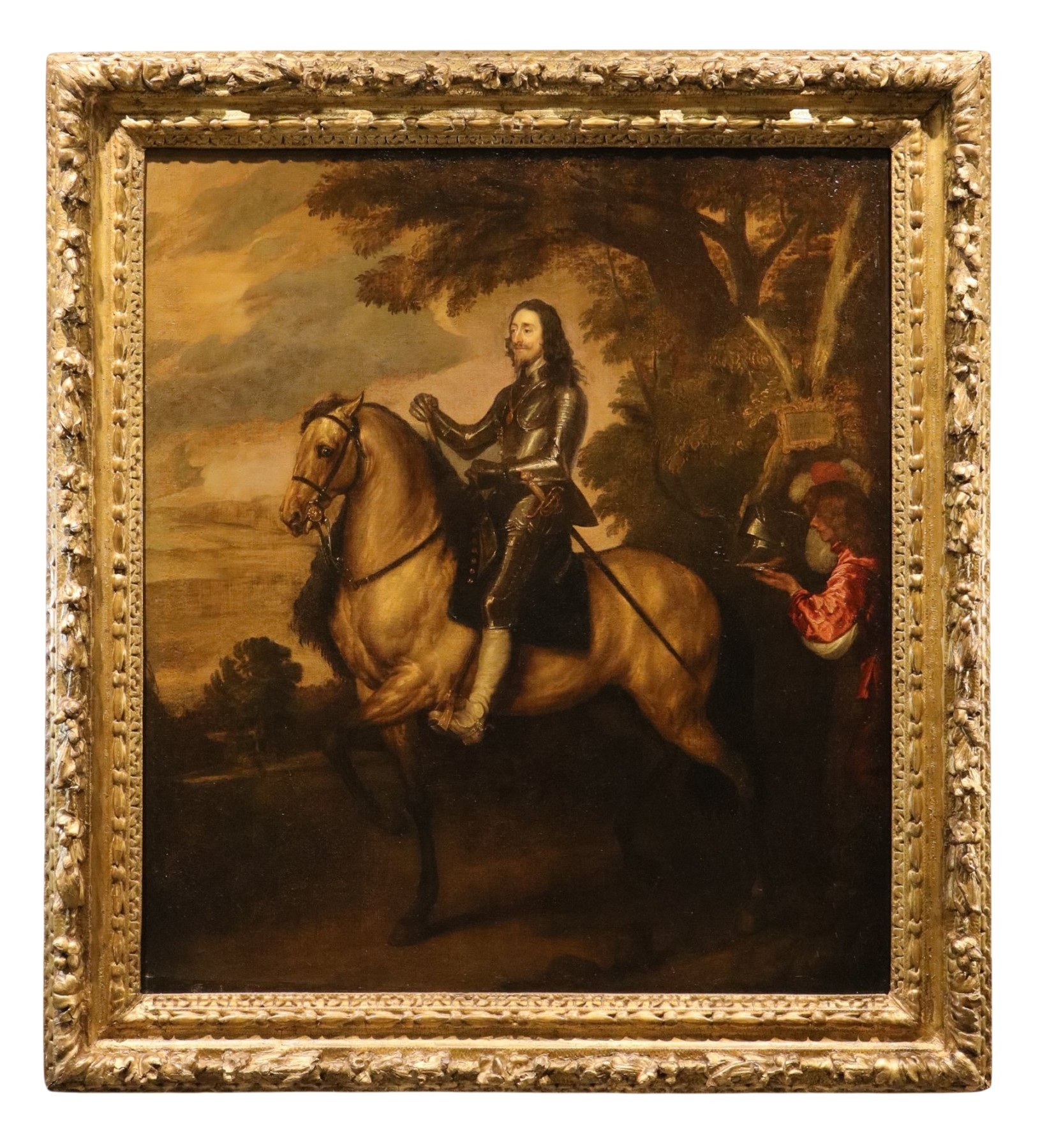

Portrait of Charles I, King of England (1600–49)
Anthoon van Dyck (Antwerp 1599–London 1641) Follower of
Oil on canvas 99 x 89 cm. In an antique frame, 118 x 106 cm.
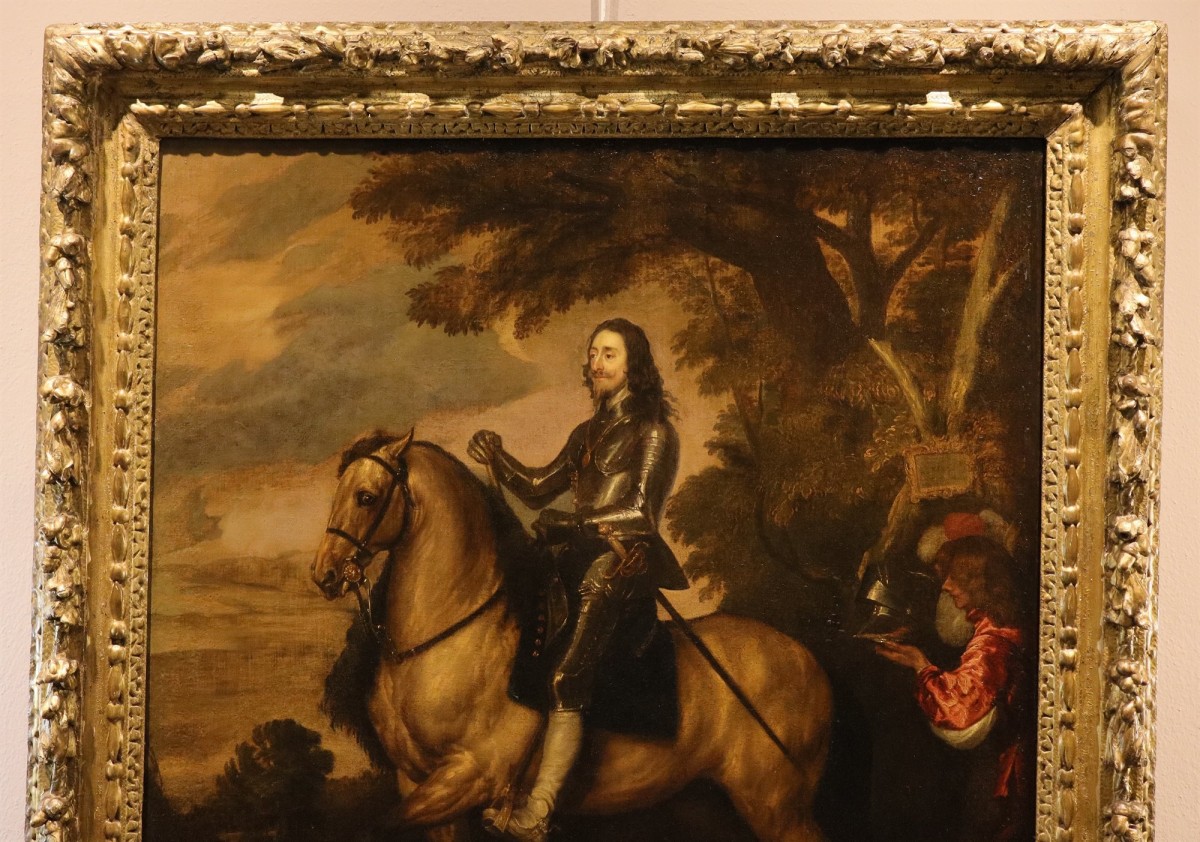
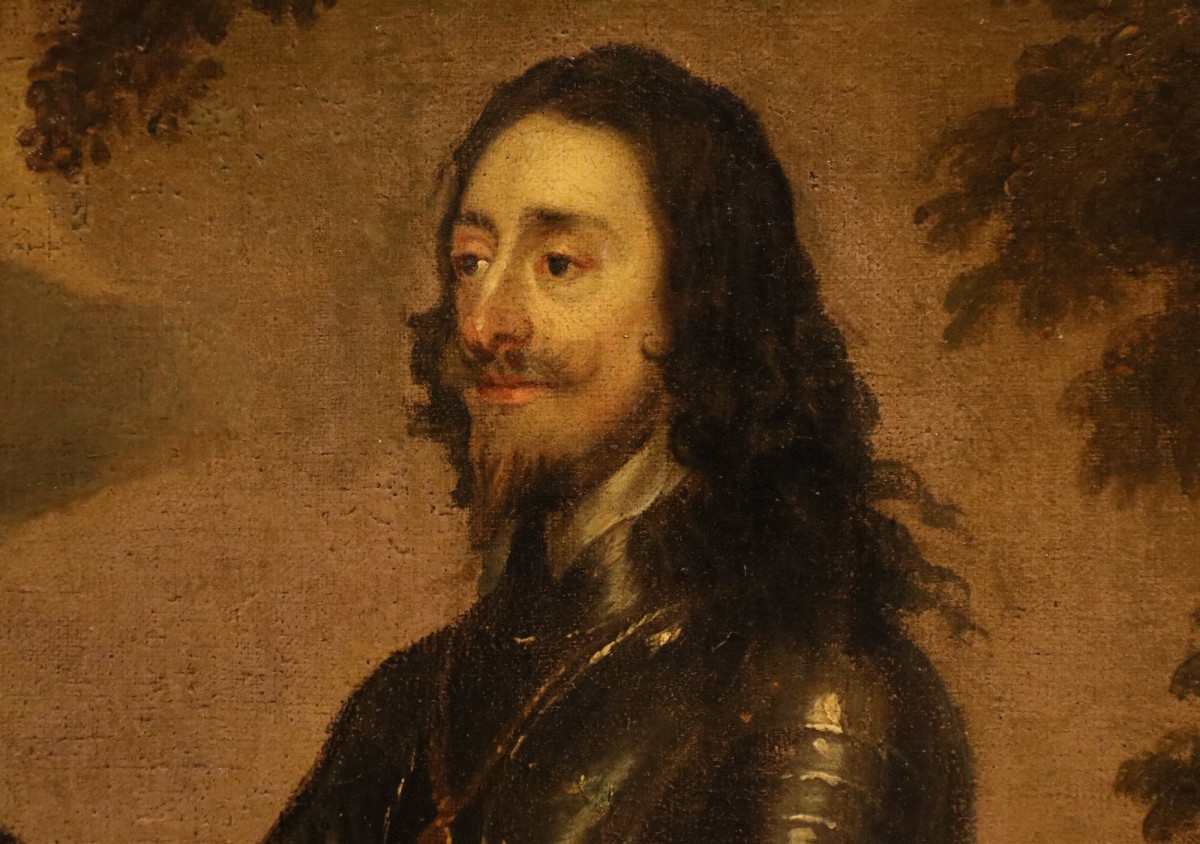
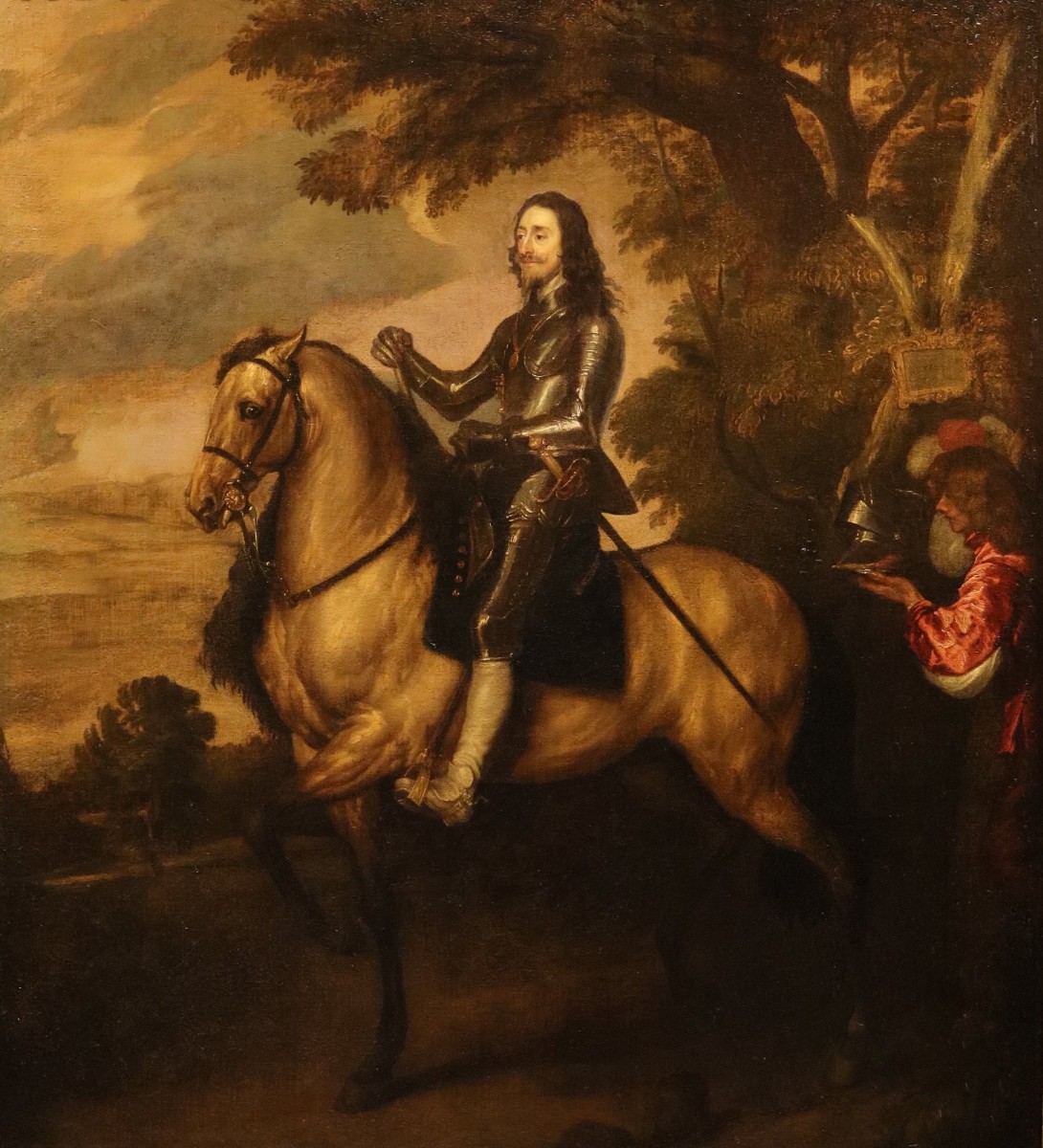
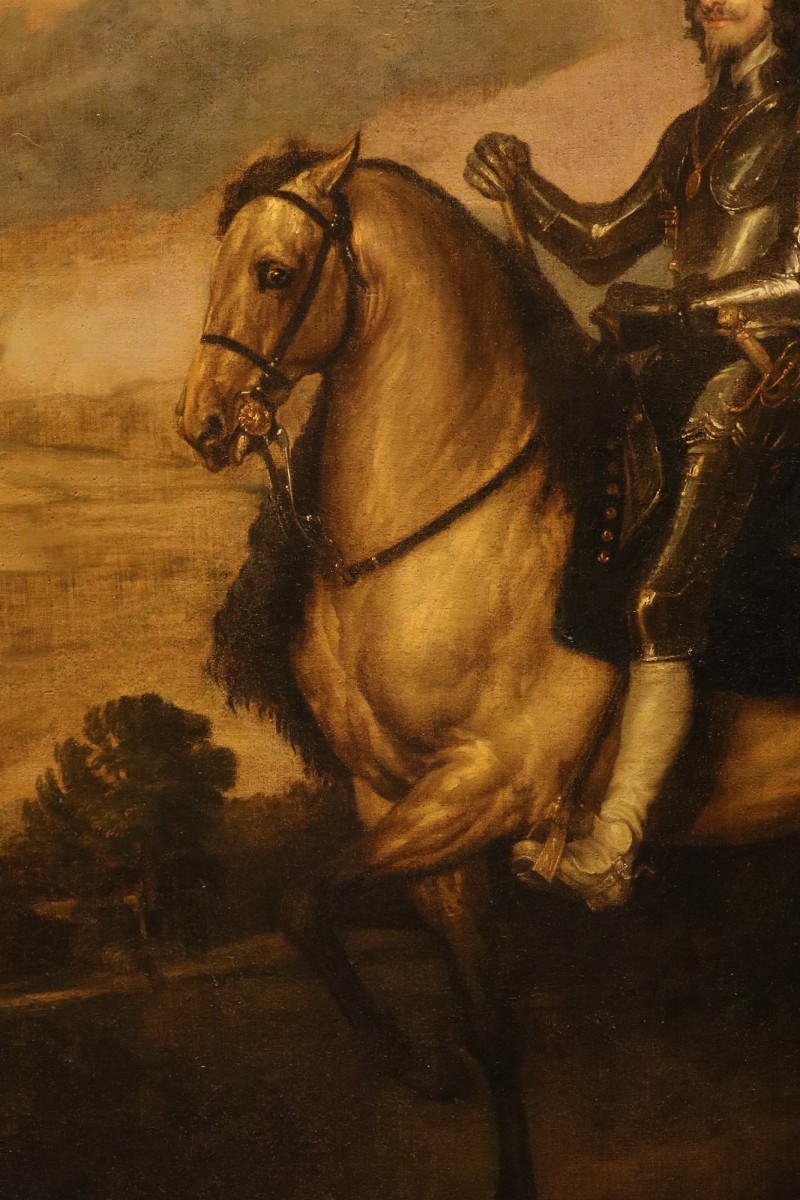
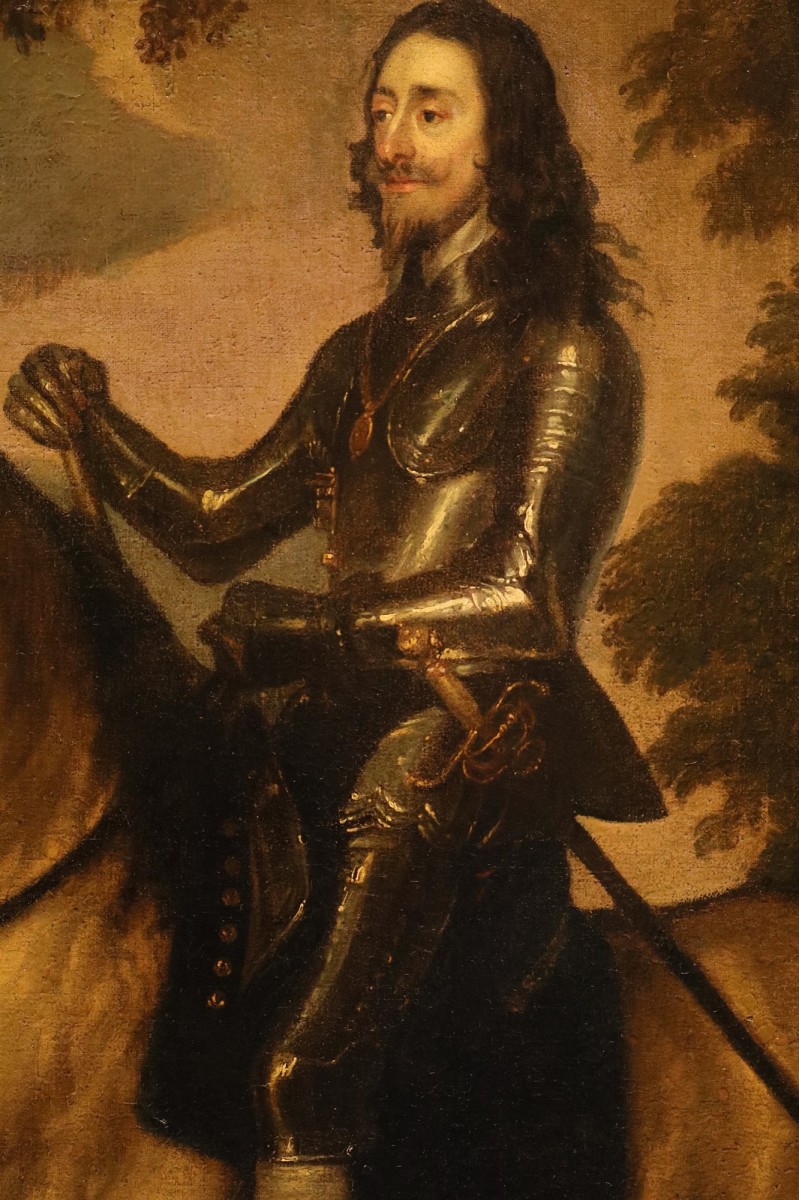
We present a valuable work of art, an oil painting on canvas that reinterprets the famous “Portrait of Charles I of England on Horseback” by Anthony van Dyck (Antwerp 1599 – London 1641) around 1636 and now on display at the National Gallery in London: it is a masterpiece of Baroque portraiture distinguished by its majestic composition (Fig. 1).
There is a smaller-scale version, likely its preparatory “study,” which is still part of the Royal Collection (Windsor Castle), painted by Van Dyck between 1635 and 1636 with slight retouches and anatomical variations or changes in the position of the armor (Fig. 2).
Van Dyck arrived in London a few years earlier, in 1632, where he was appointed court painter to King Charles I Stuart of England, his principal patron and, at the same time, a great collector.
The monarch understood that art possessed incredible power as a means of political propaganda, and for this reason he had Van Dyck paint his portrait on numerous occasions, both surrounded by his family—including his wife Henrietta—and alone.
The most ambitious and fascinating portraits, however, are those of the “equestrian series,” in which the artist presented a proud and majestic image of an absolute monarch: we see him immortalized on horseback, on an unprecedented scale, as a sovereign, warrior, and knight, in the long tradition of ancient and Renaissance equestrian monuments.
In addition to the painting mentioned, Van Dyck painted two other important portraits of the king on horseback: the “Portrait of Charles I with M. de Saint-Antonie, His Riding Instructor” (1636, Windsor Castle, Windsor) and “Le Roi à la Chasse” (c. 1635, Paris, Louvre).
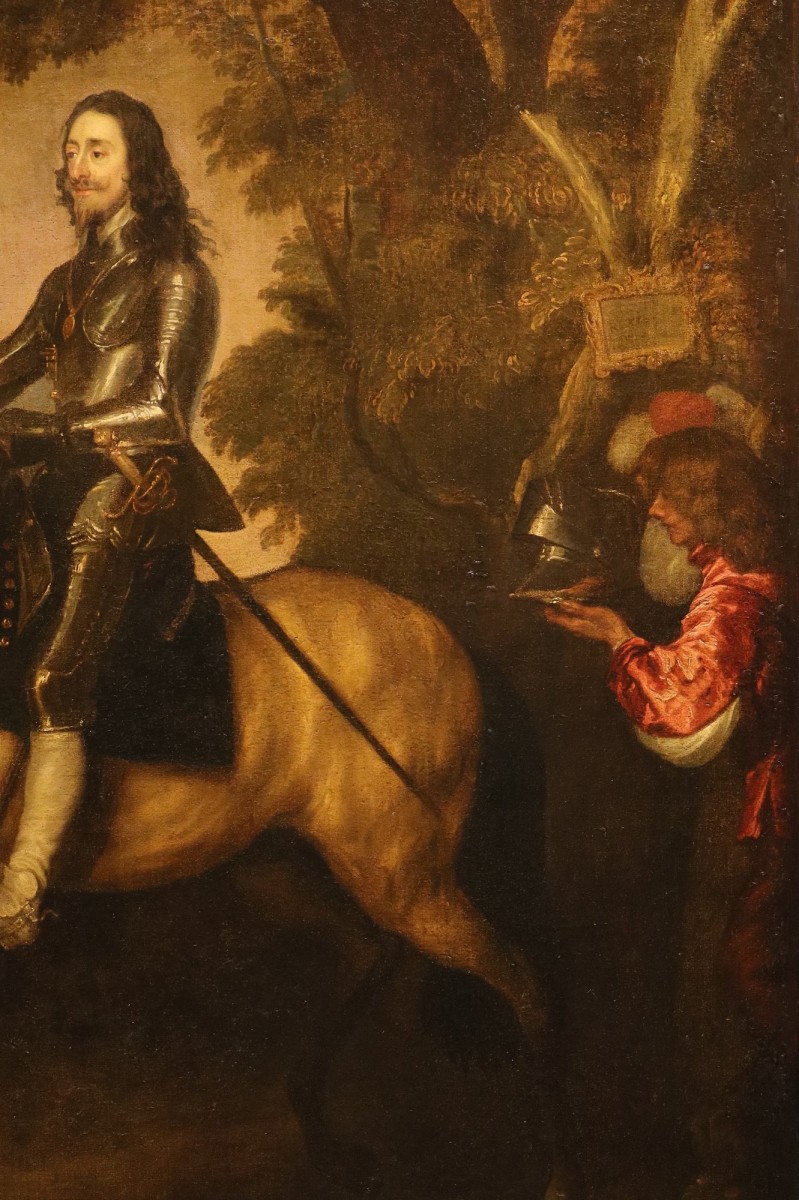
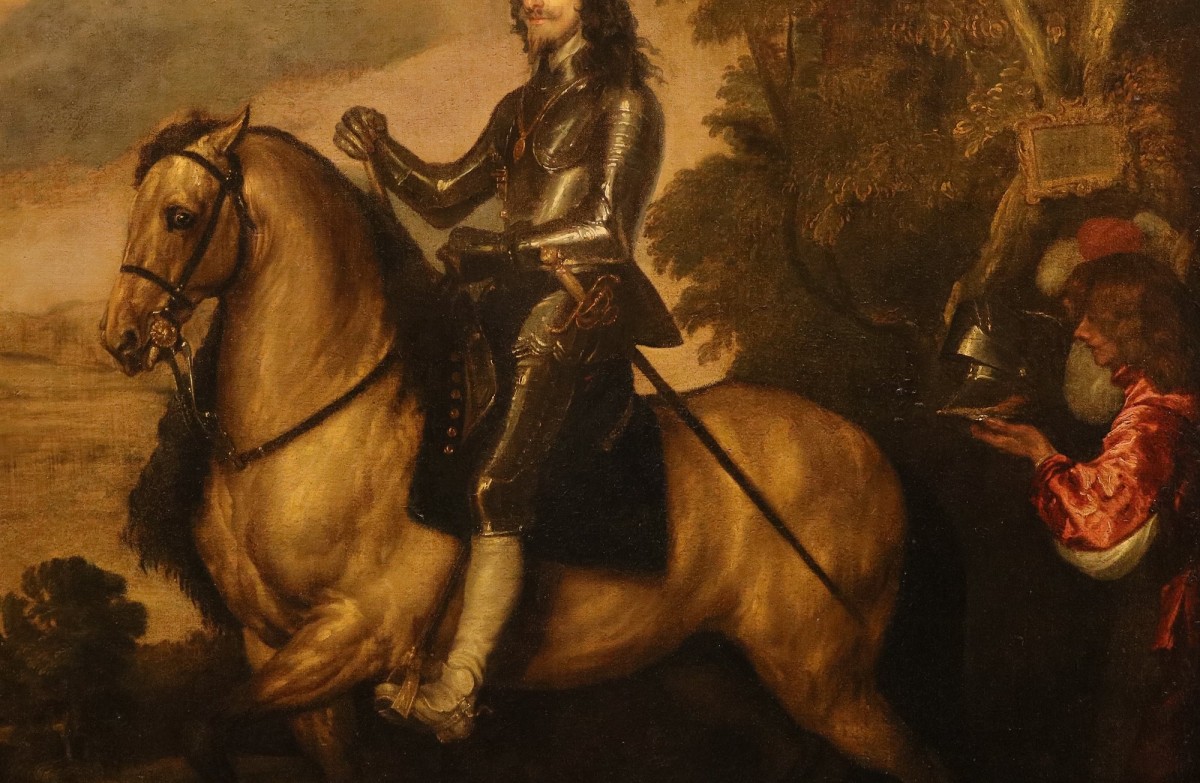
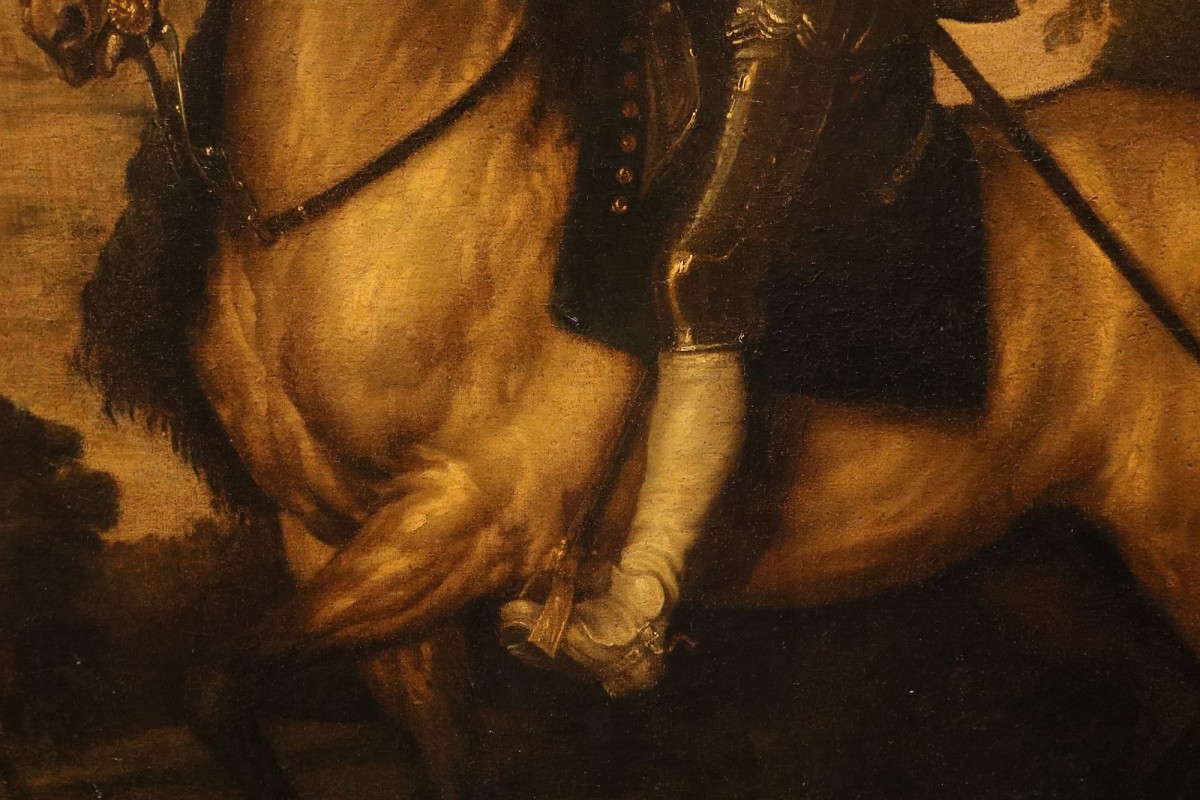
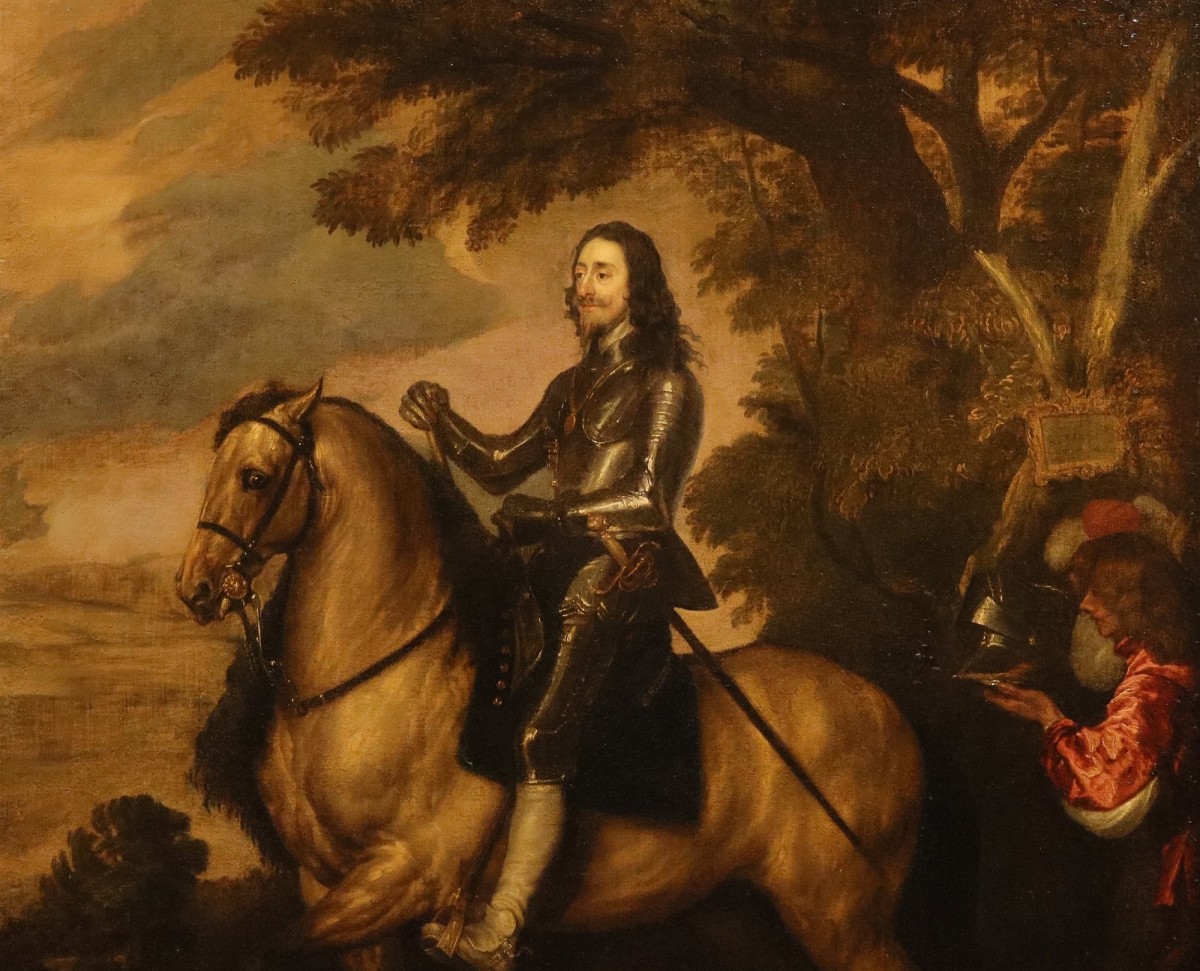
In this case, Van Dyck, drawing inspiration from Titian’s “Portrait of Charles V on Horseback” (1548, Museo del Prado, Madrid), depicted the king in his ceremonial armor, holding the baton of command and wearing the medallion of the Order of the Garter around his neck, as if he were taking his place at the head of his knights.
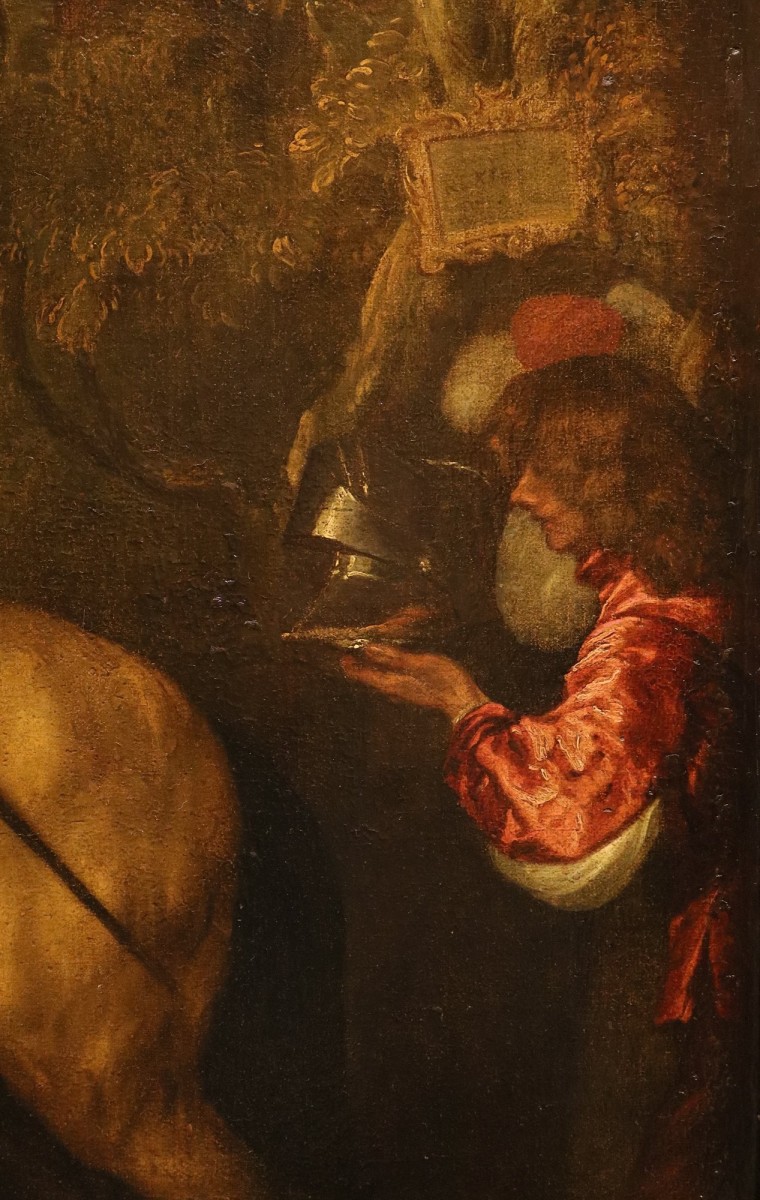
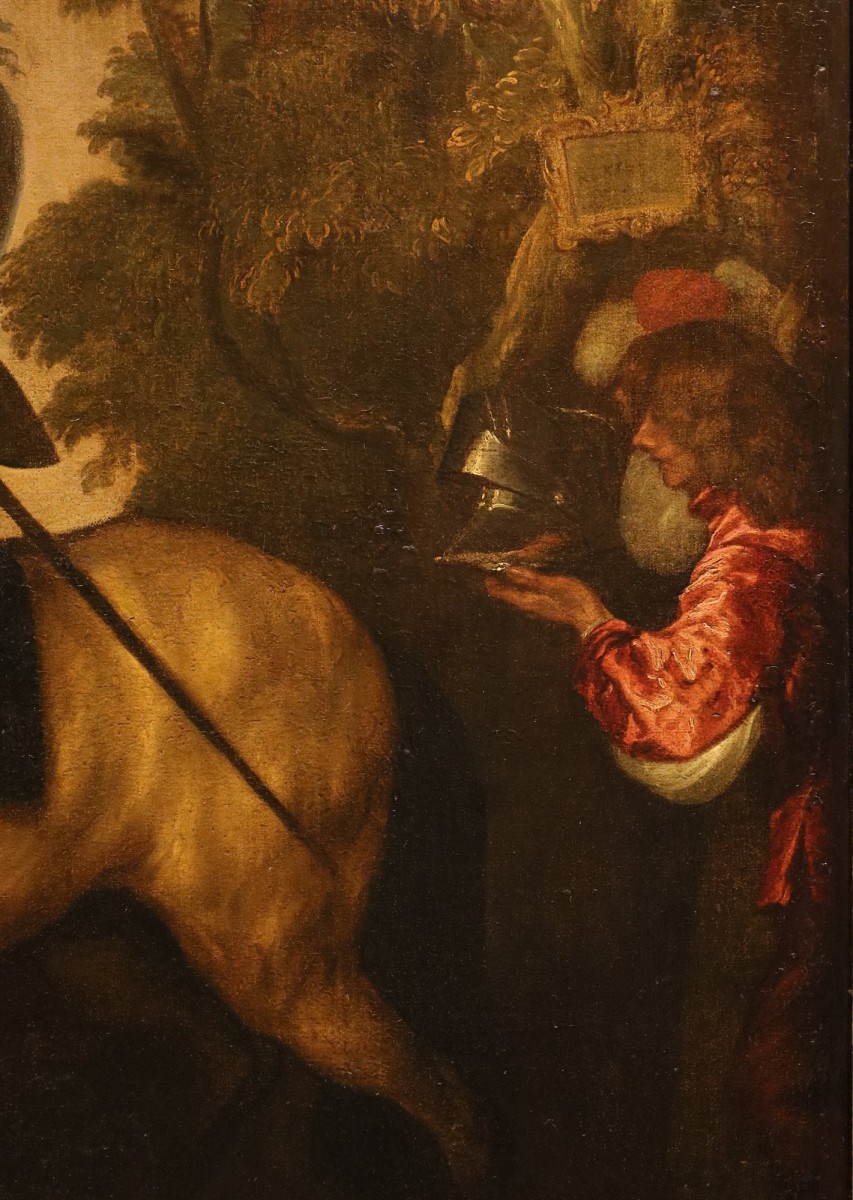
Following behind is a page holding the helmet. On the pole is a plaque which, although the inscription is now barely legible in our painting, bore the king’s name: ‘Carlvs Rex Magnae Britanniae’.
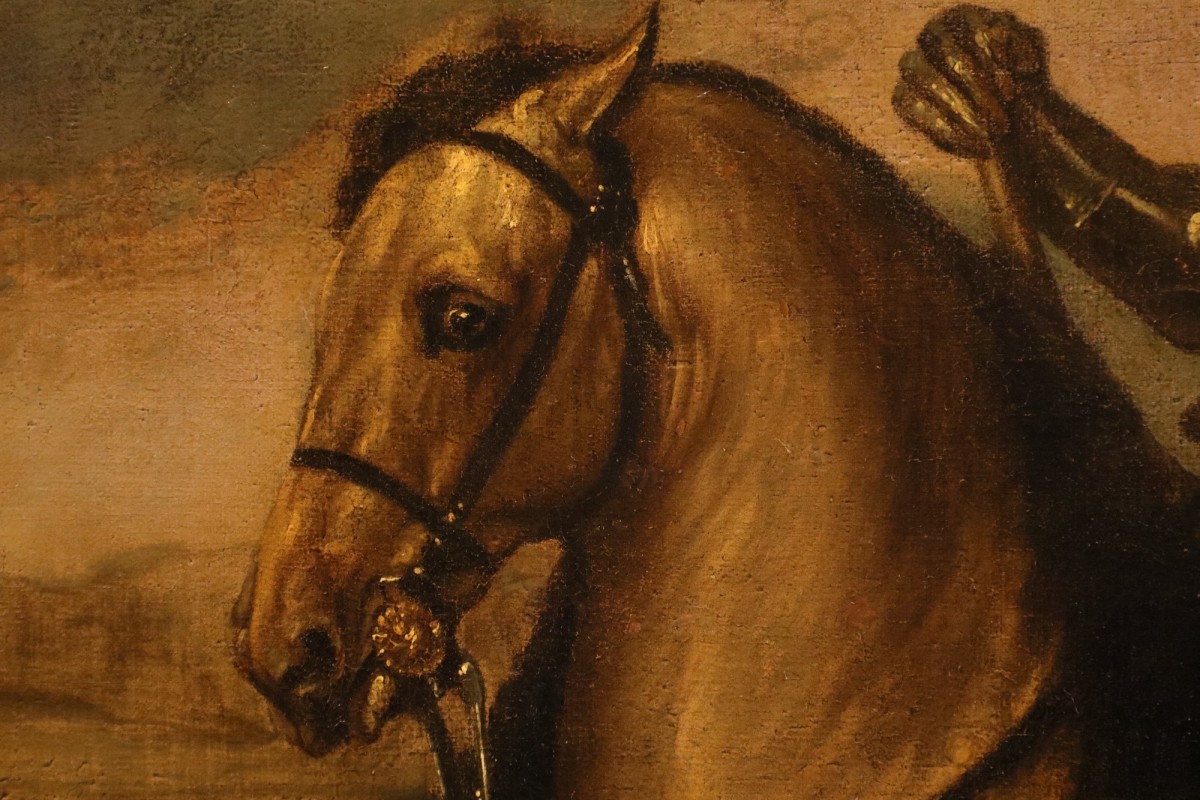
The magnificent horse, with its powerfully muscled frame clearly accentuated, serves as a worthy mount for the king, depicted at a walk, with one hoof raised and its gaze firmly directed in the same direction as the rider.
The distinctive composition, with the trees in the background, places the sovereign’s gaze at the center of the scene, directed toward the opening in the landscape, symbolizing his foresight.
These elements reinforce his image as the sovereign of Great Britain, while his refined features, flowing hair, and gentle, thoughtful expression convey the impression of a chivalrous knight.
Delevery information :
We take care of and organise the transport of the purchased works, both for Italy and abroad, through professional and insured carriers.
We take great care We personally take care of the packaging, to which we devote a great deal of care: each work is carefully packed, first with arti- cle material, then with a custom-made wooden box.
Should you have the desire to see this or other works in person, we would be happy to welcome you to our gallery in Riva del Garda, Viale Giuseppe Canella 18, we are always open by appointment only.