Offered by Spectandum
REQUEST INFORMATION
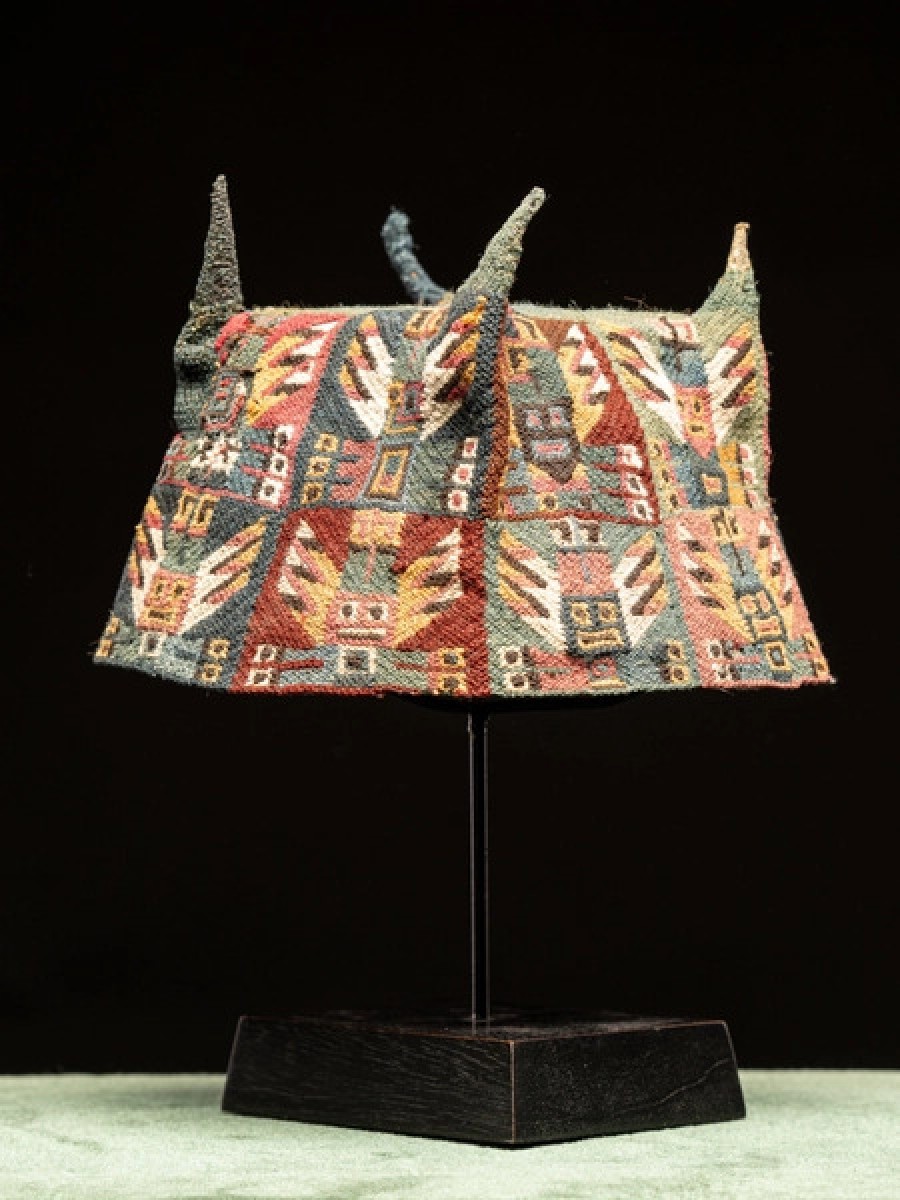

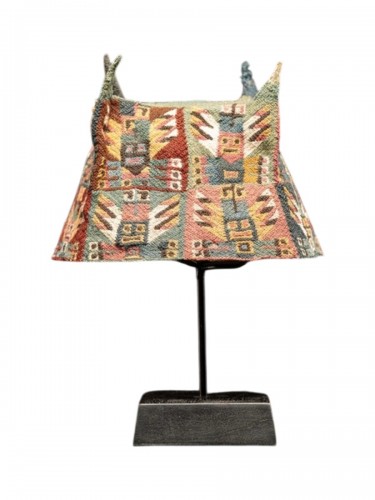
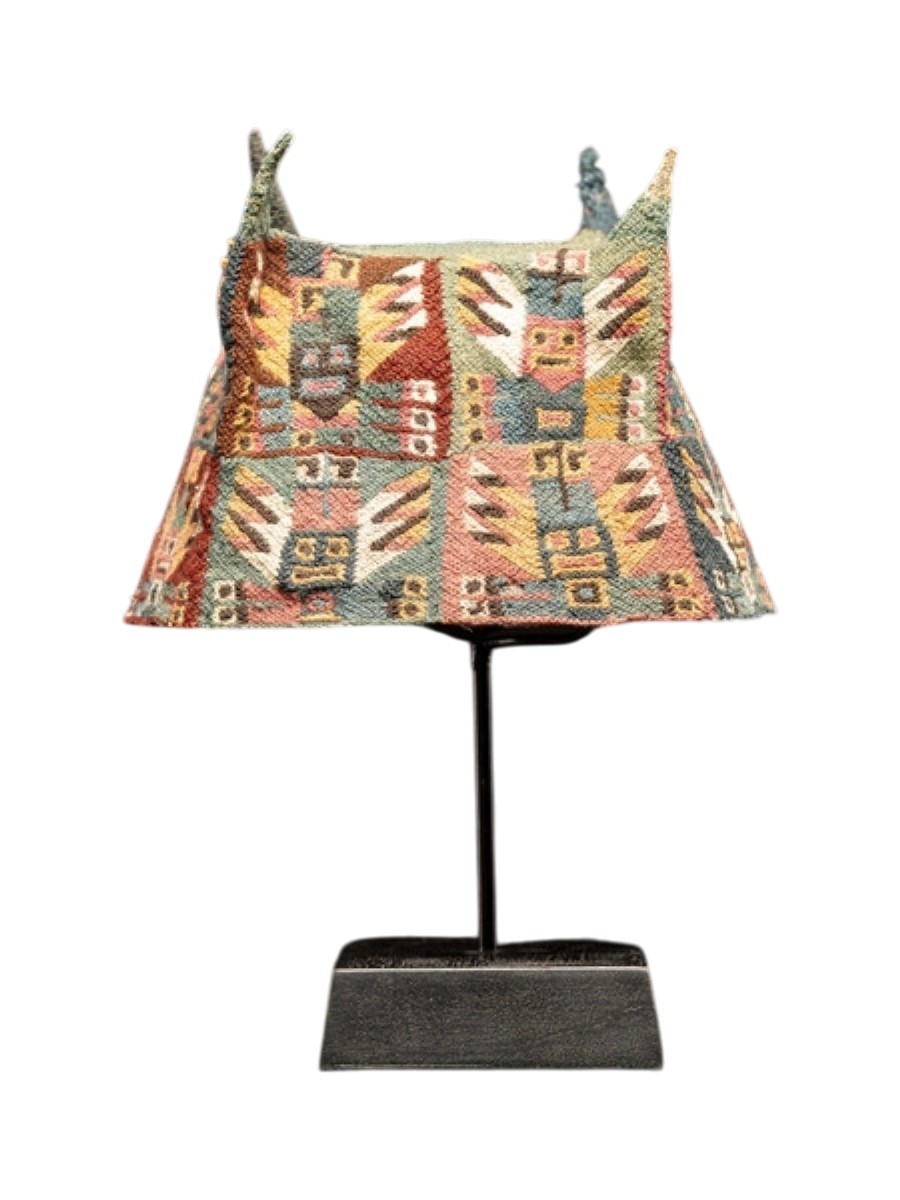
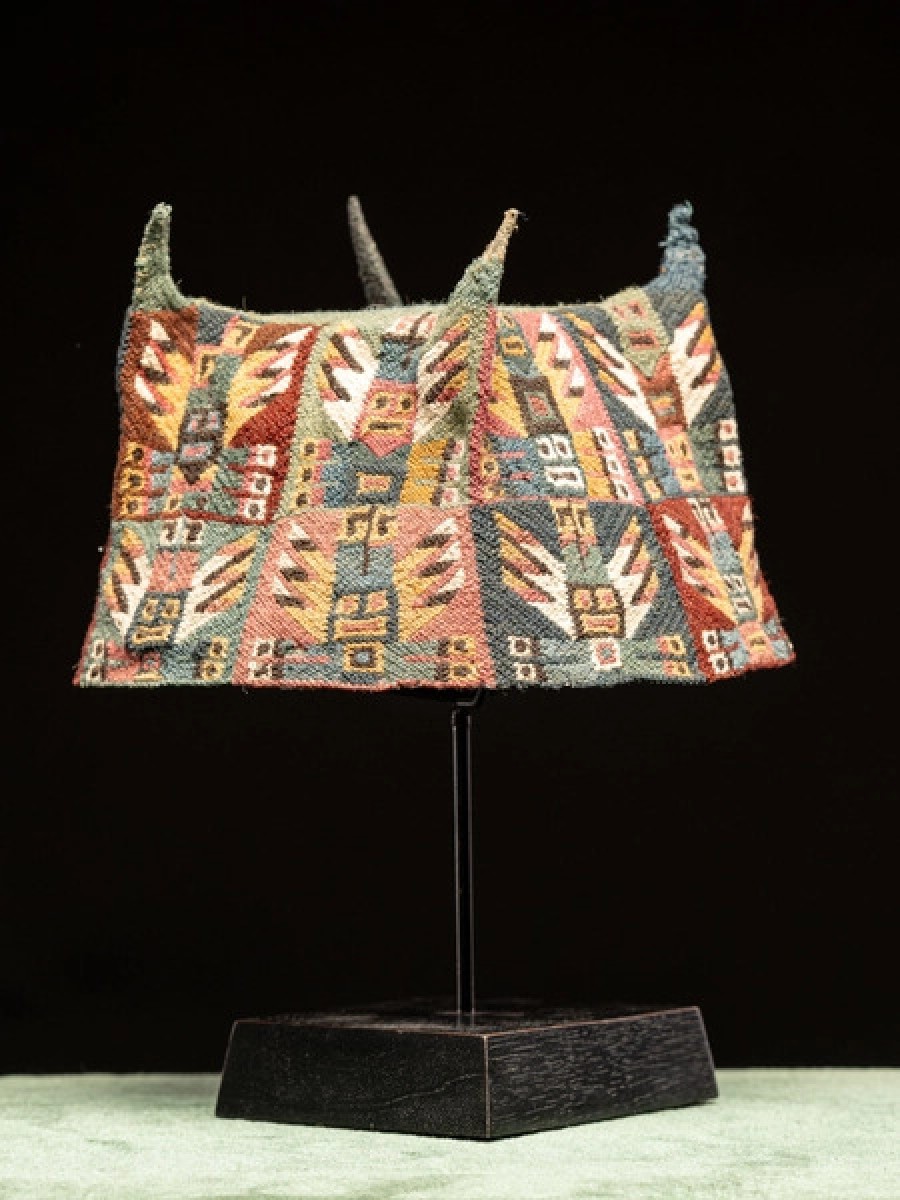
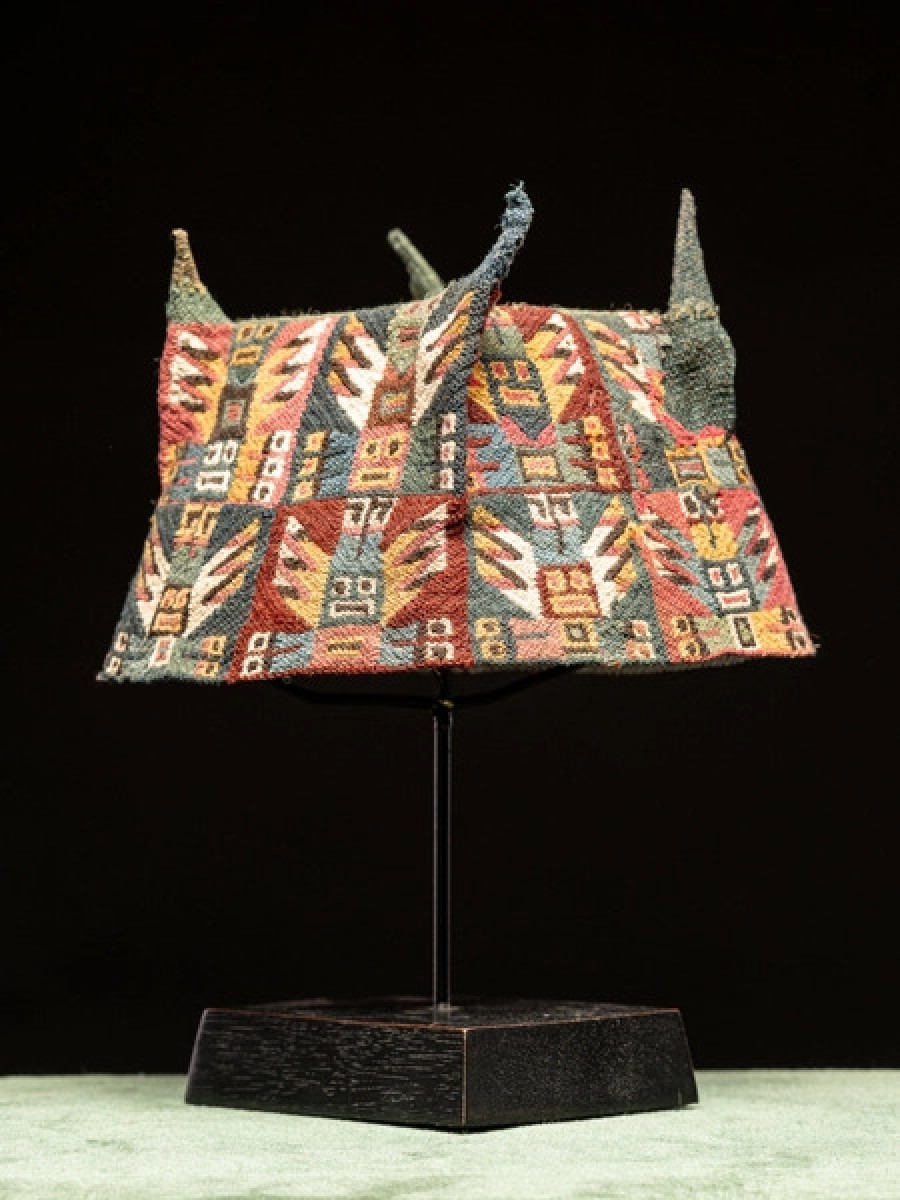
Finely woven, brightly colored four-pointed hats, typically featuring a square crown, four sides, and pointed tips, are most commonly associated with two ancient Andean cultures: the Wari and the Tiwanaku. The Wari Empire, which dominated the south-central highlands and west coastal regions of what is now Peru, flourished from 500 to 1100 AD. The Tiwanaku, occupying the high plains directly south of Wari territory in what is now Bolivia, coexisted with the Wari and thrived in adjacent lands for nearly four centuries.
These four-cornered hats were predominantly found in burial sites as funerary offerings. In both Wari and Tiwanaku societies, such hats were likely worn by high-ranking men as symbols of power and status, both in life and death. Figures adorned with these hats are frequently depicted on ceramics from both cultures, often alongside other elite regalia like intricate textiles, featherworks, and beaded collars.
Made from camelid fibers (llama or alpaca), these hats were expertly crafted, with the fibers carefully spun into yarns and dyed. Artists from both cultures shared similar geometric designs, such as diamonds, crosses, and stepped triangles, as well as stylized imagery. These comparable visual motifs suggest a shared religious foundation and common symbols between the Wari and Tiwanaku. However, despite these artistic parallels, scholars believe the two cultures maintained distinct socio-political practices, especially in terms of governance and architectural development.
Though they shared some technological traditions, the Wari and Tiwanaku employed different methods for constructing their four-pointed hats:
Wari artists typically constructed the top and corner peaks as separate components before assembling them. Tiwanaku artists, on the other hand, typically knotted the hat from the top down, starting with the crown and four peaks to create a single, unified piece.
Additionally, four-cornered hats knotted with pile are primarily found at Wari sites, while those knotted without pile are typically discovered in Tiwanaku burials. These distinct techniques help scholars differentiate between the two cultures’ works.