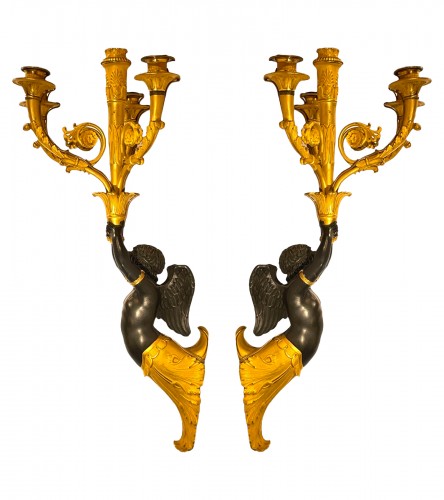
Offered by Galerie Lamy Chabolle
REQUEST INFORMATION

Decorative art from 18th to 20th century
Gilt bronze
Moscow
1810-1815
25 x 15 x 23 cm (9.84 x 5.9 x 9 in.)
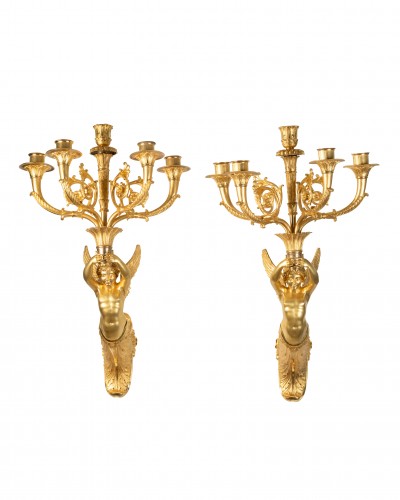
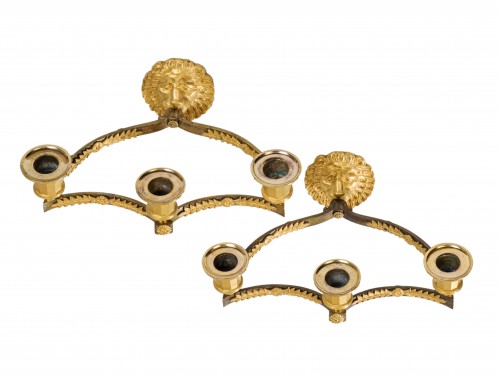
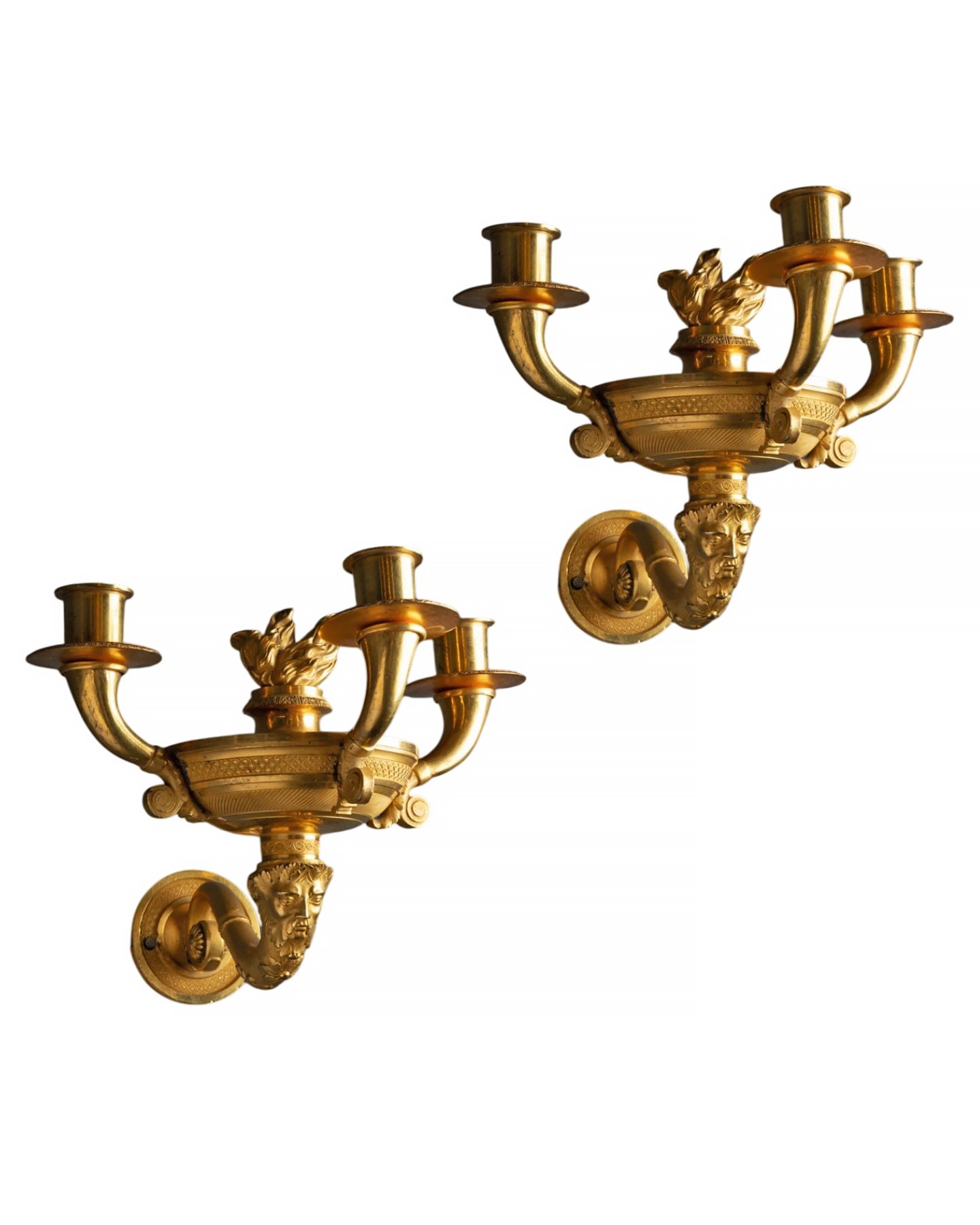
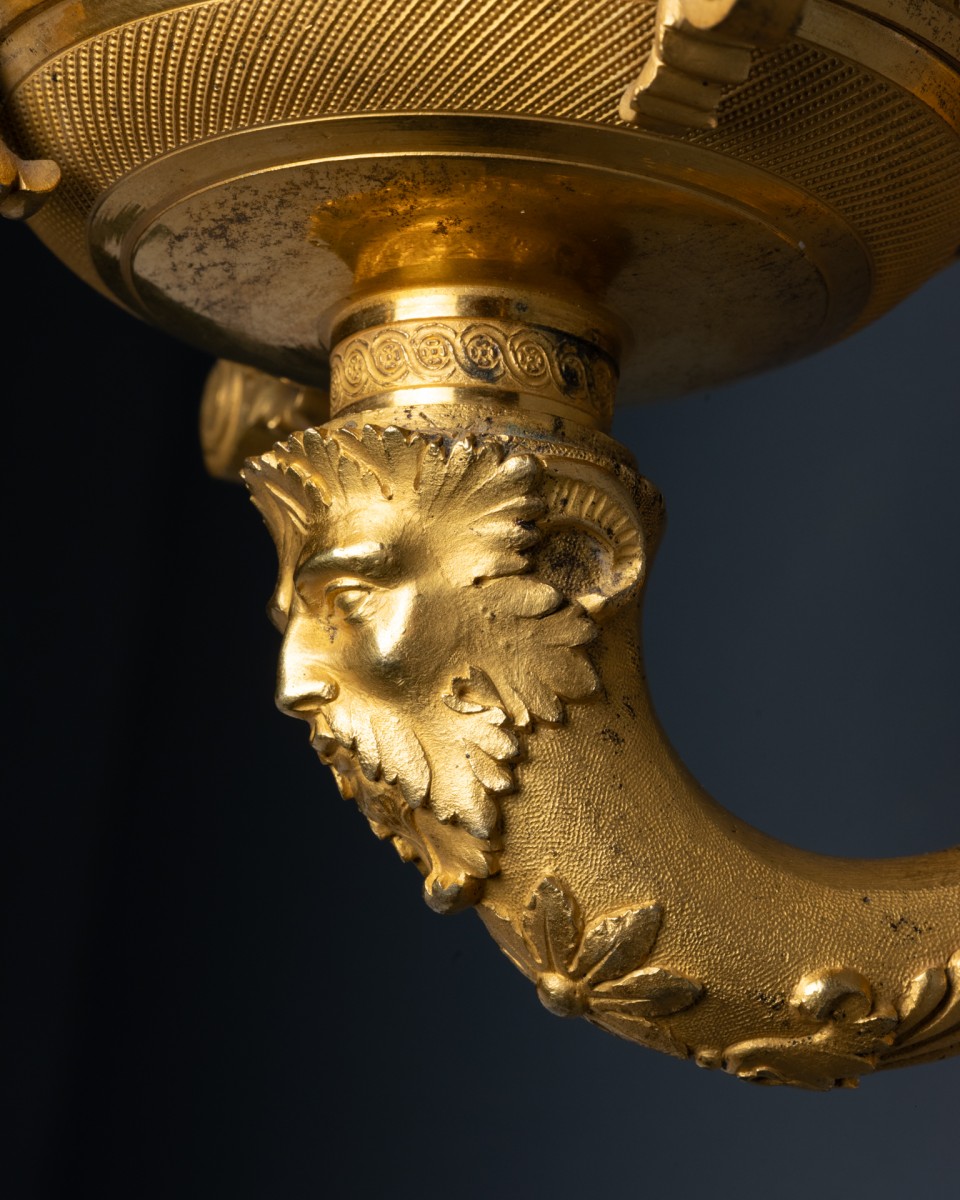
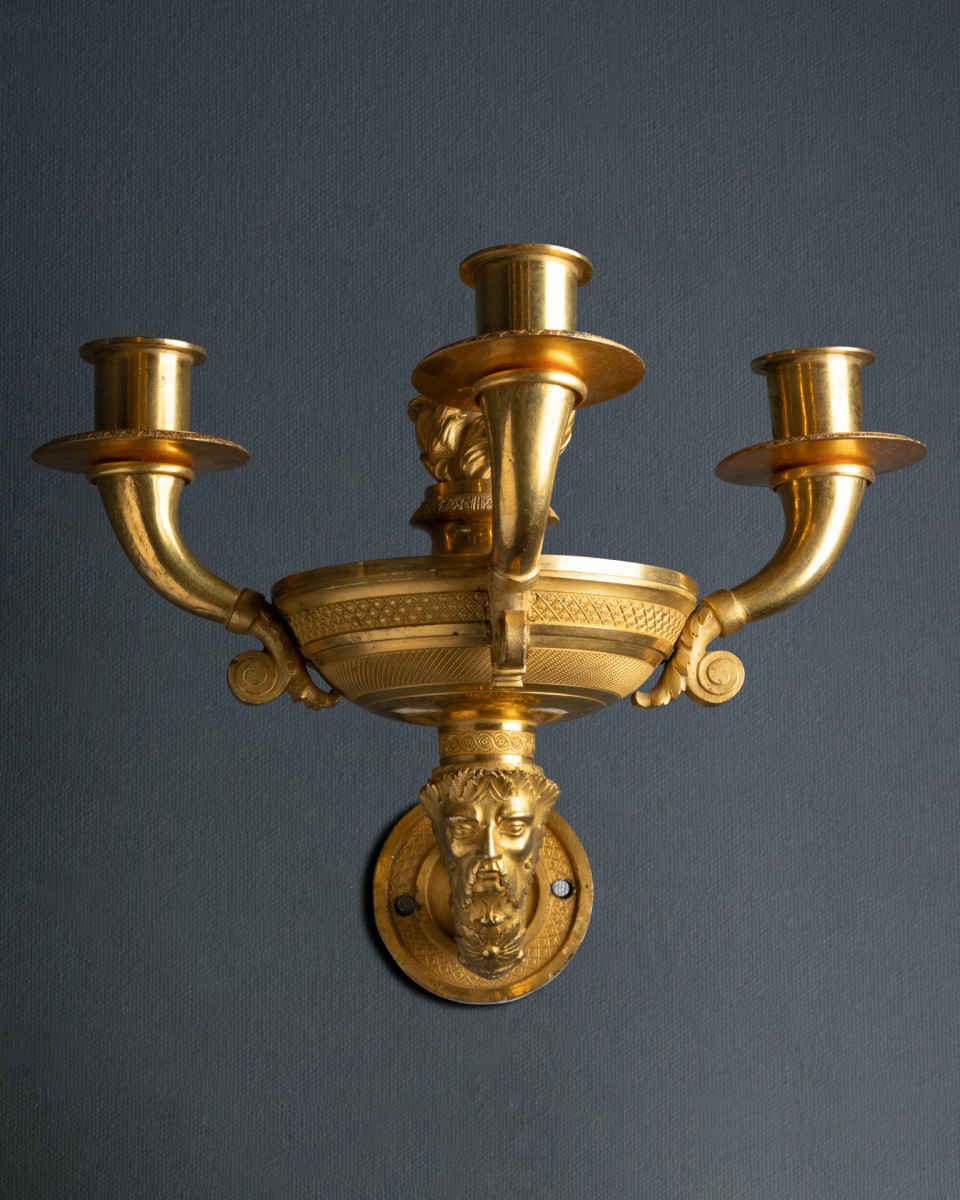
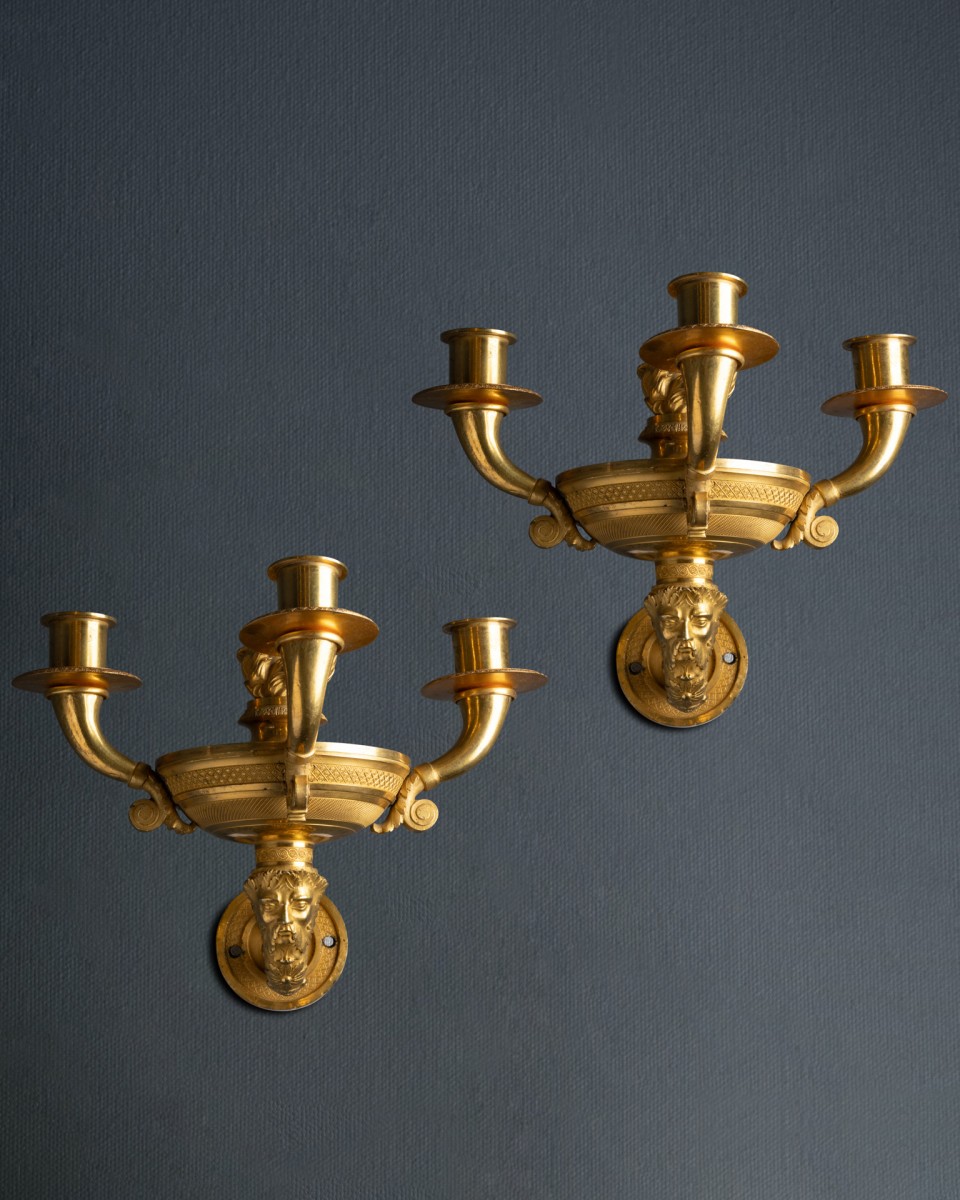
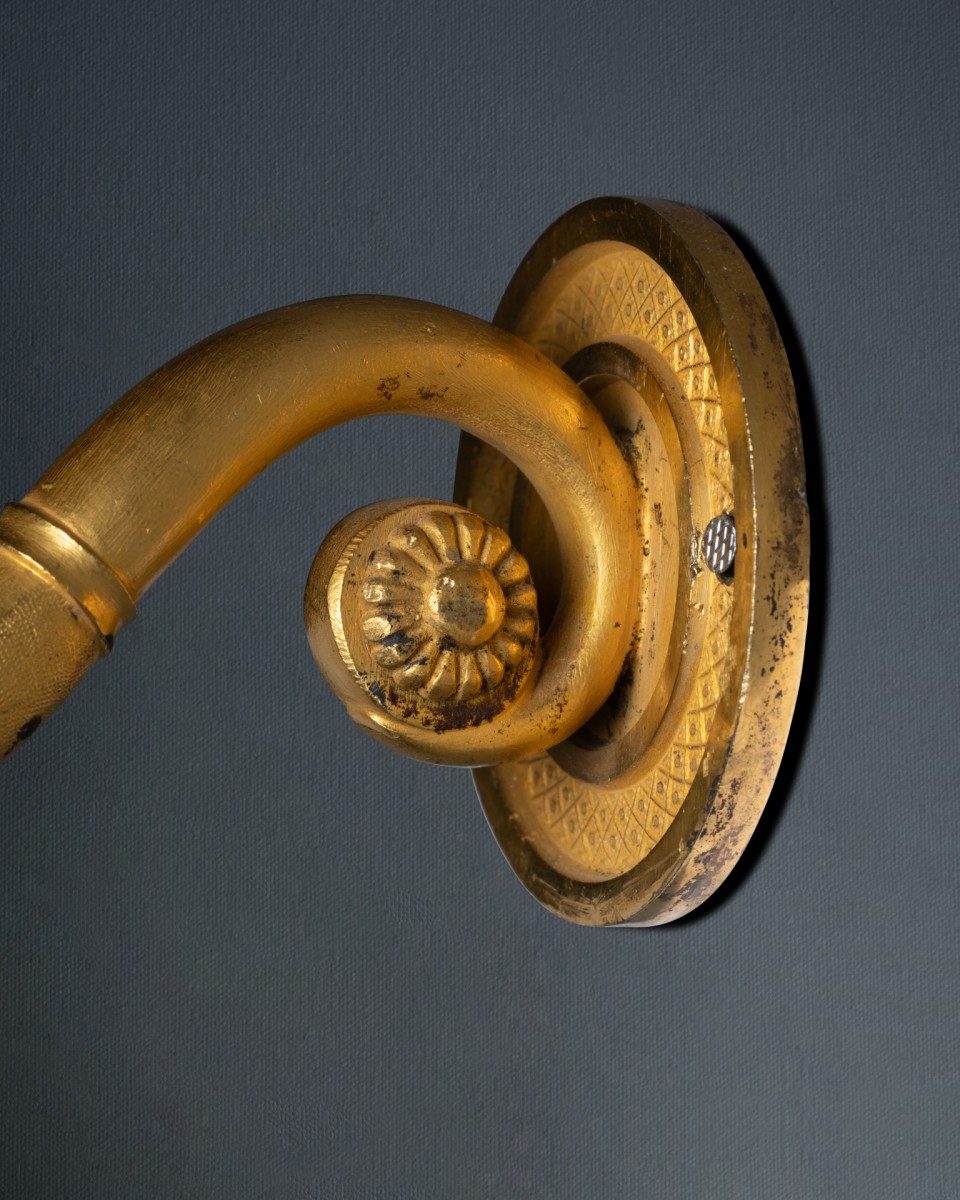
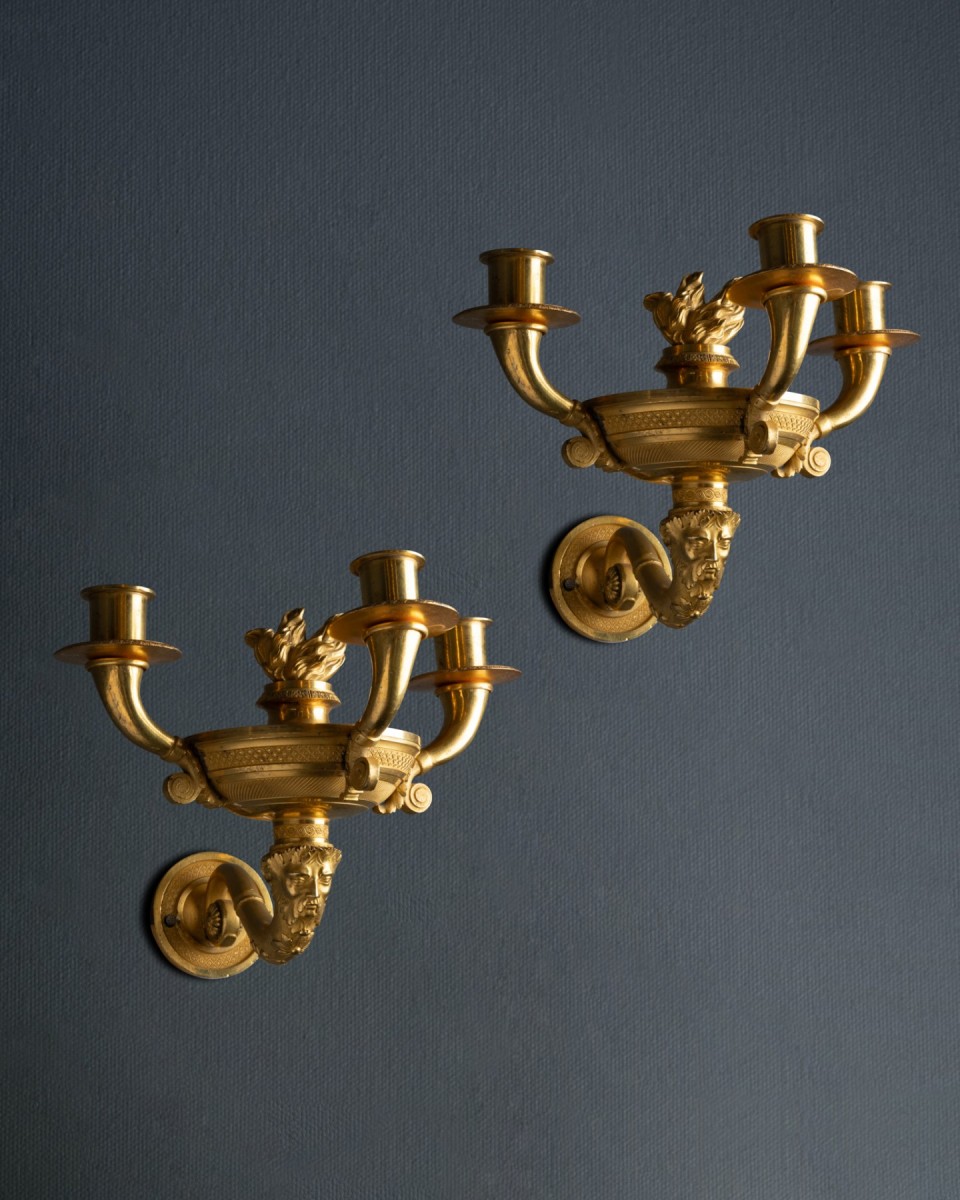
The scrolled arm of each wall-light, featuring an skillfully chased faun-head, consists of a pot-à-feu connected to three nozzles by scrolled stems. The same faun-head motif, whose beard turns into acanthus leaves and serves as a mascaron or telamon on a light branch, seems to appear for the first time on wall sconces once attributed to Jean-Louis Prieur, a pair of which is in the Musée Nissim de Camondo in Paris. Moreover, the sobriety of the composition, and the numerous parts only burnished and devoid of any ornament, suggest that it could be a work from the Directoire period.
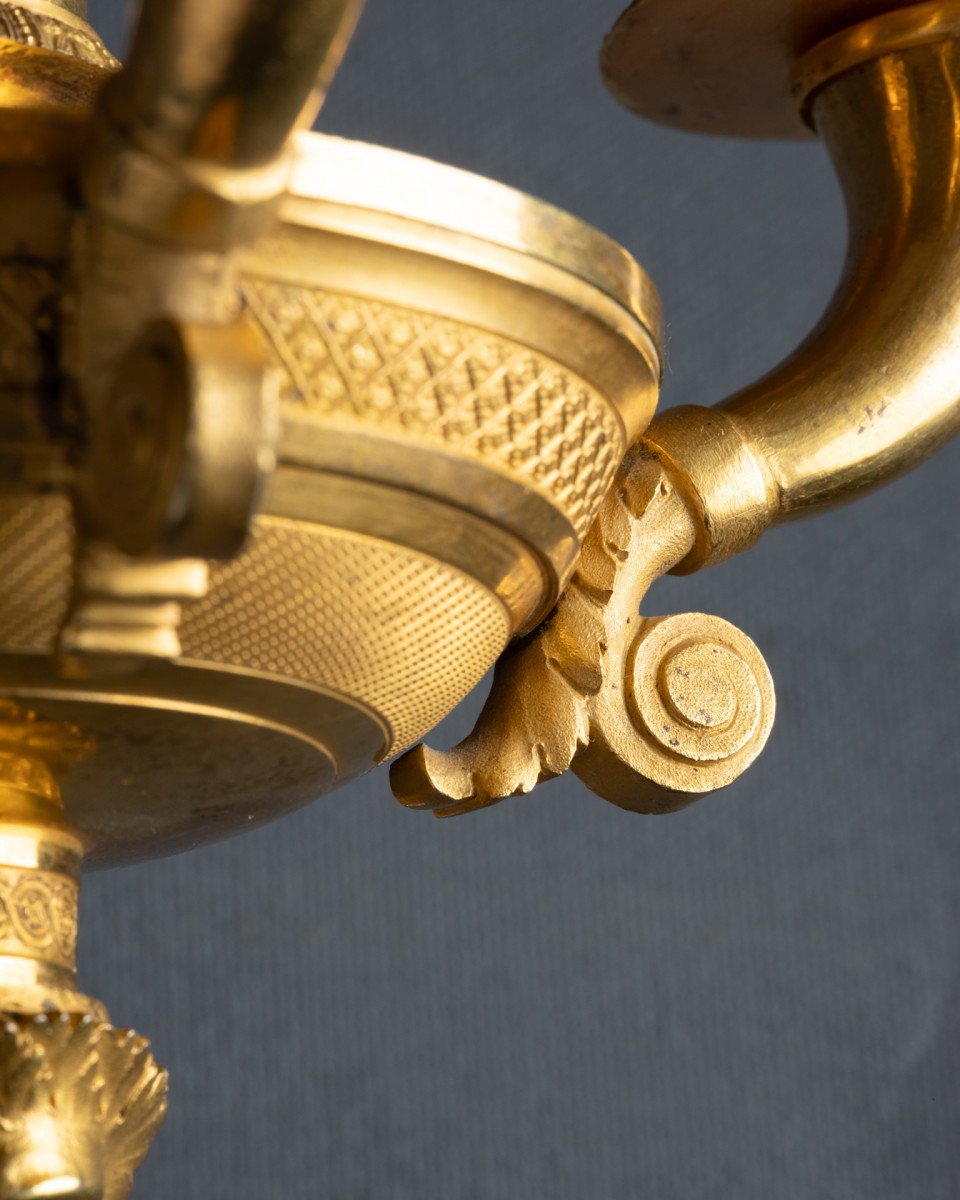
The belly of the pot-à-feu, however, is adorned with two knurled friezes, one with beaded gadroons and the other strewn with lozenges, which are characteristic of Muscovite decorative arts, although they seem partly inspired by the “diamond“ cut glass motifs of the Imperial Glassworks in Saint Petersburg. Similar knurled ornaments are found on several candelabra and candlesticks produced in Moscow in the first decades of the 19th century, the best documented of which are kept at the Muranovo Estate near Moscow and at the Hermitage.
See Asharina et al., Russian Glass of the 17th–20th Centuries, New York, 1990; Gaydamak, Russian Empire: Architecture, Applied Arts, and Interior Decoration 1800–1830, Moscow, 2000; and especially Sychev, The Russian Chandeliers 1760–1830, Saint Petersburg, 2003. For the faun head motif, see Musée Nissim de Camondo, Paris, 1990.