Offered by Blue Antique - Enzo Gironi

Jules Leleu (1883–1961)
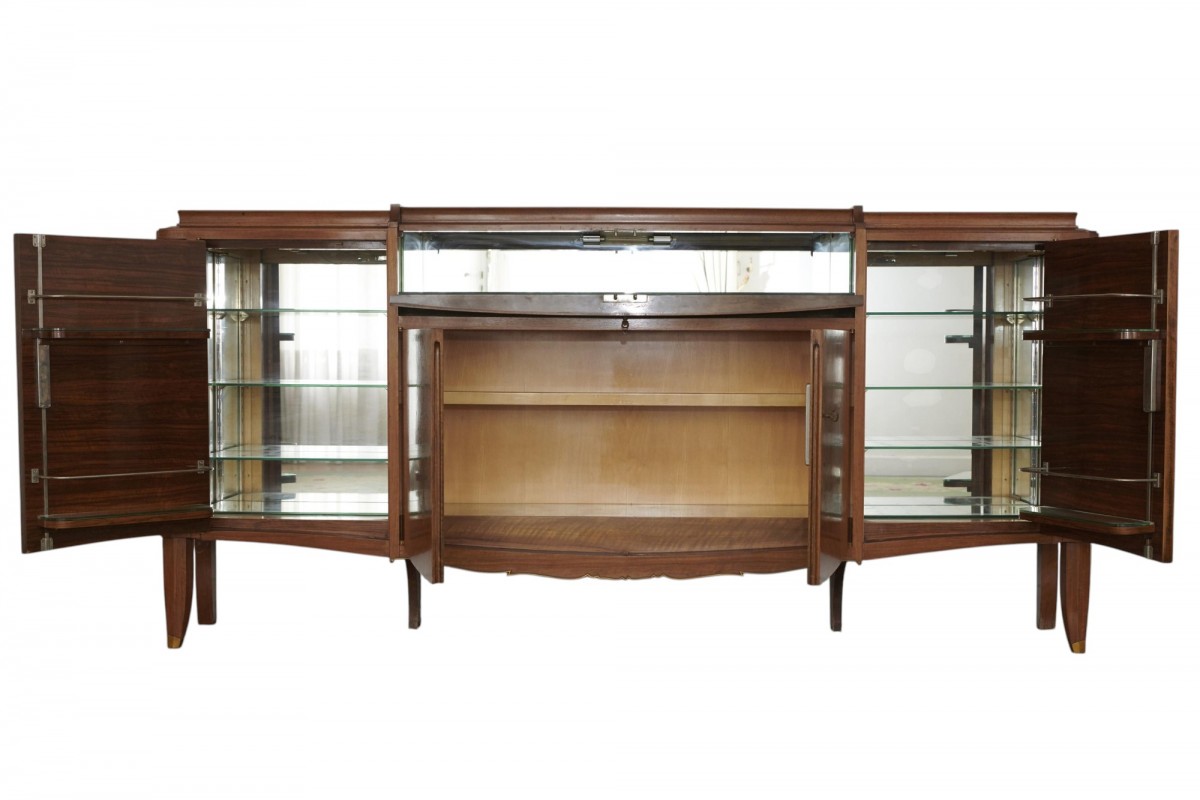
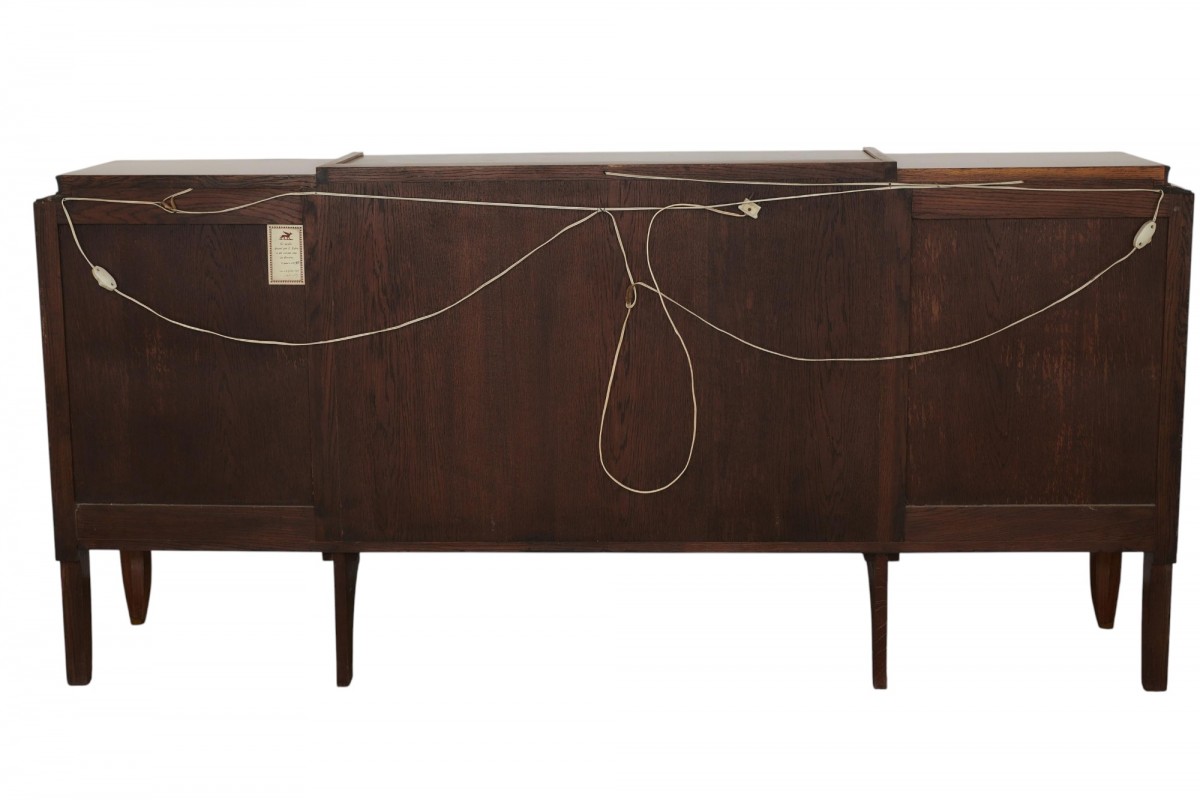
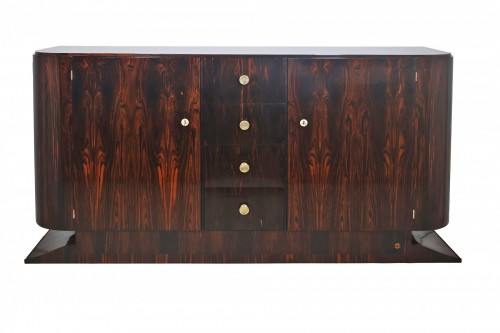
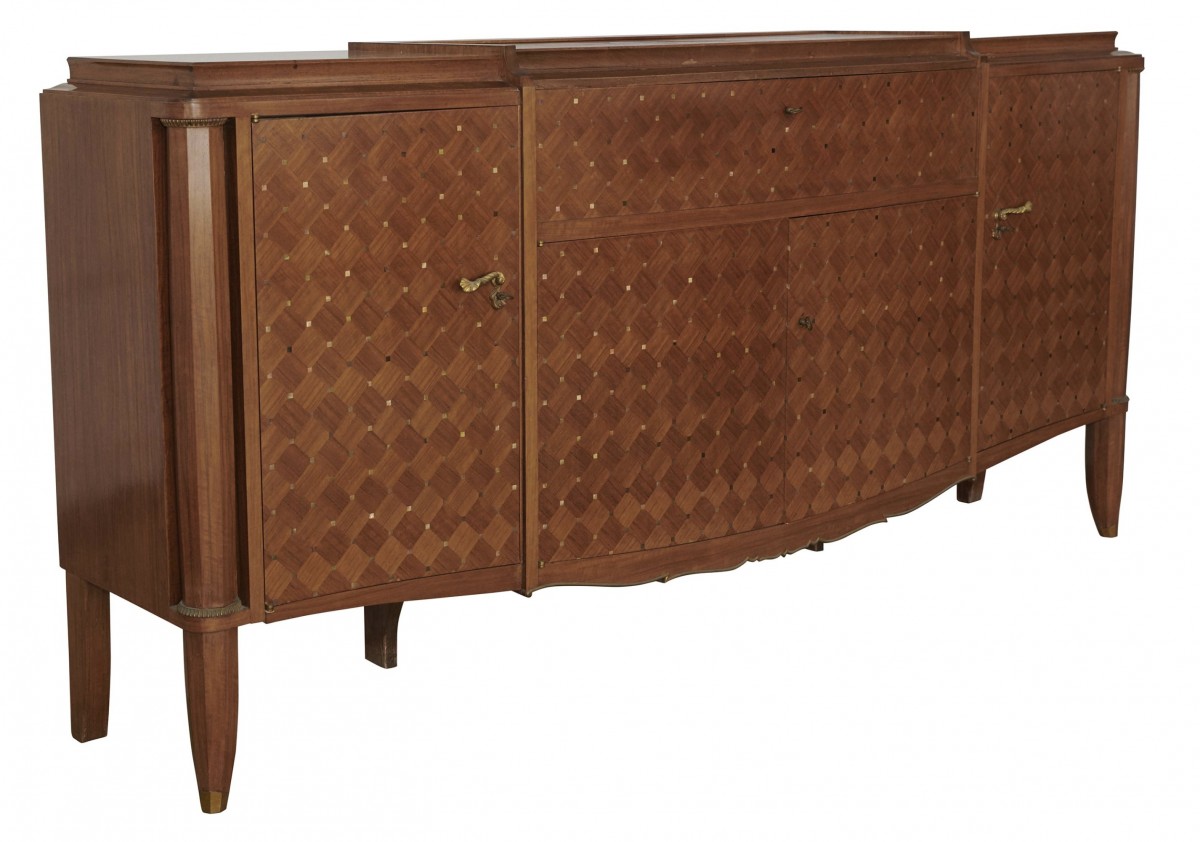
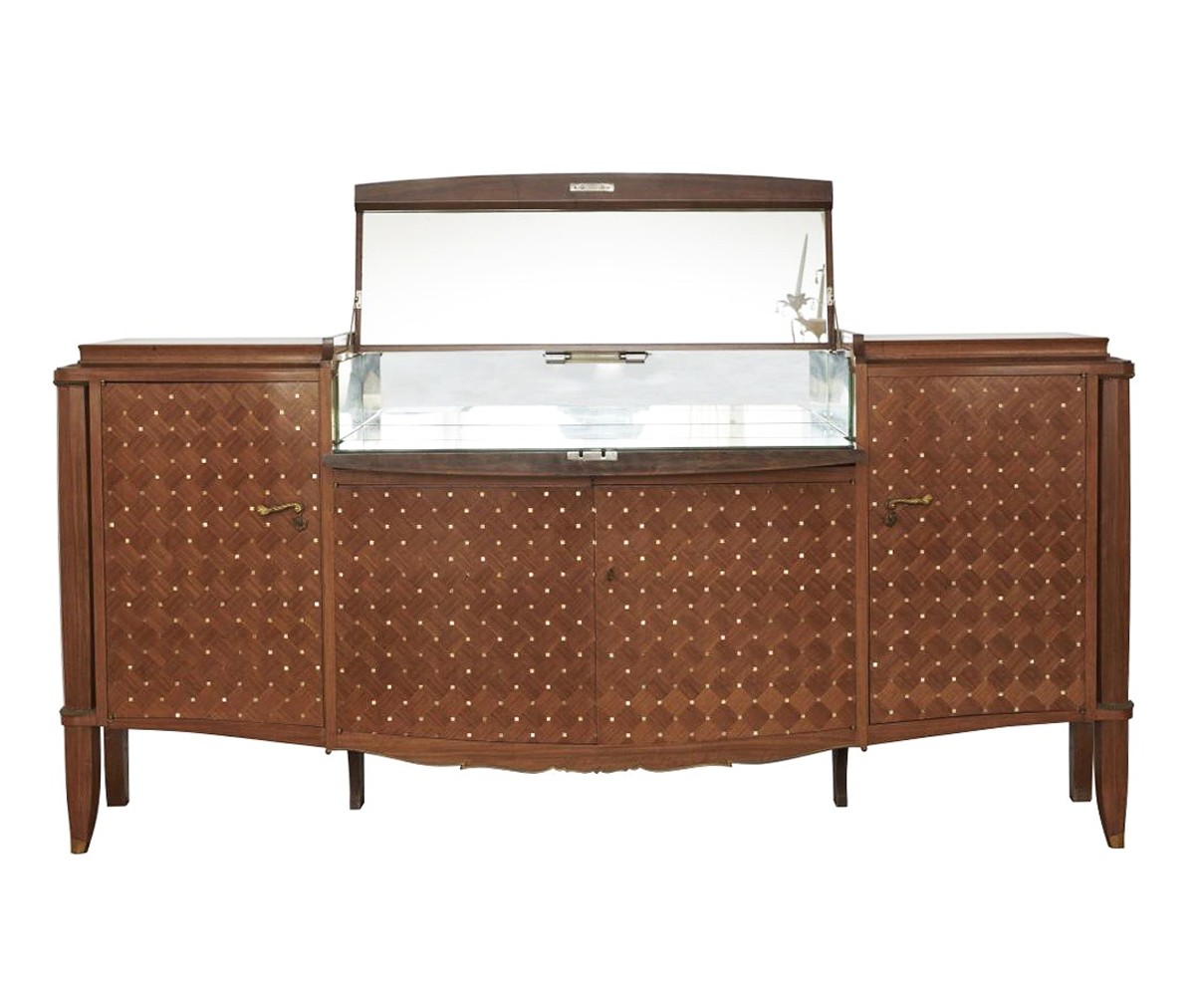
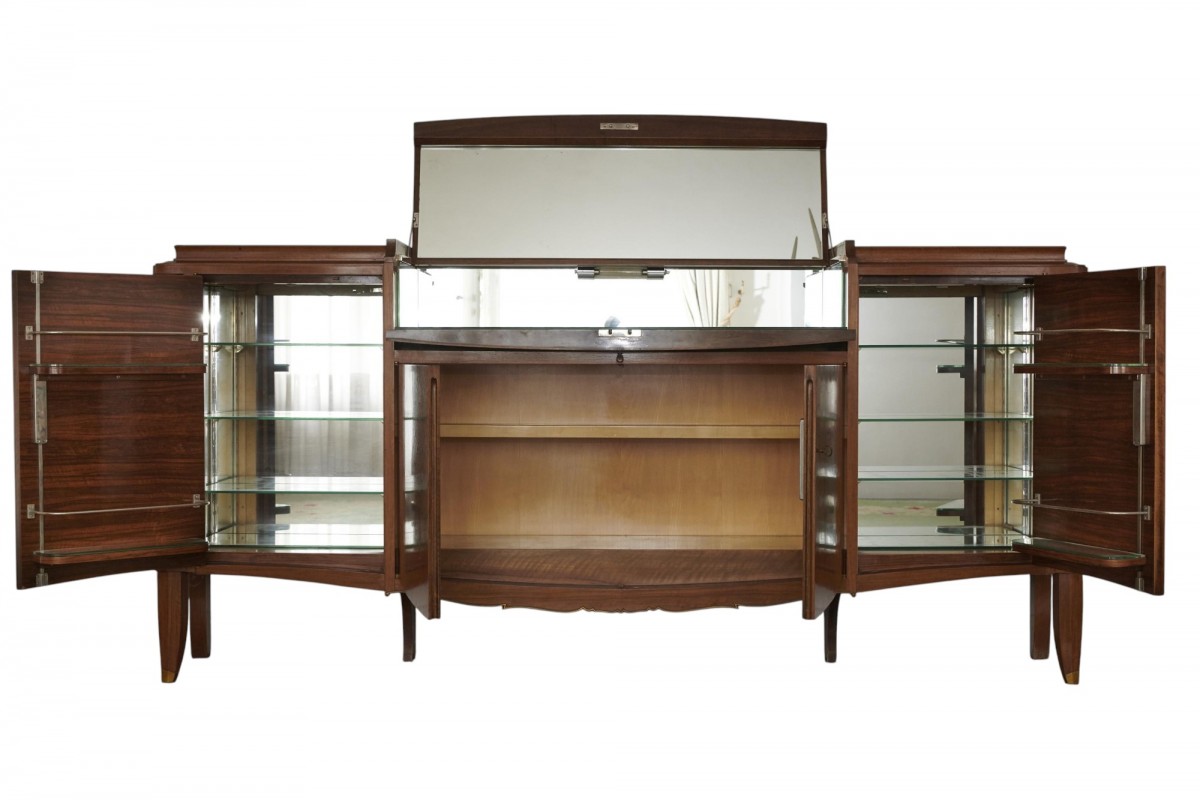
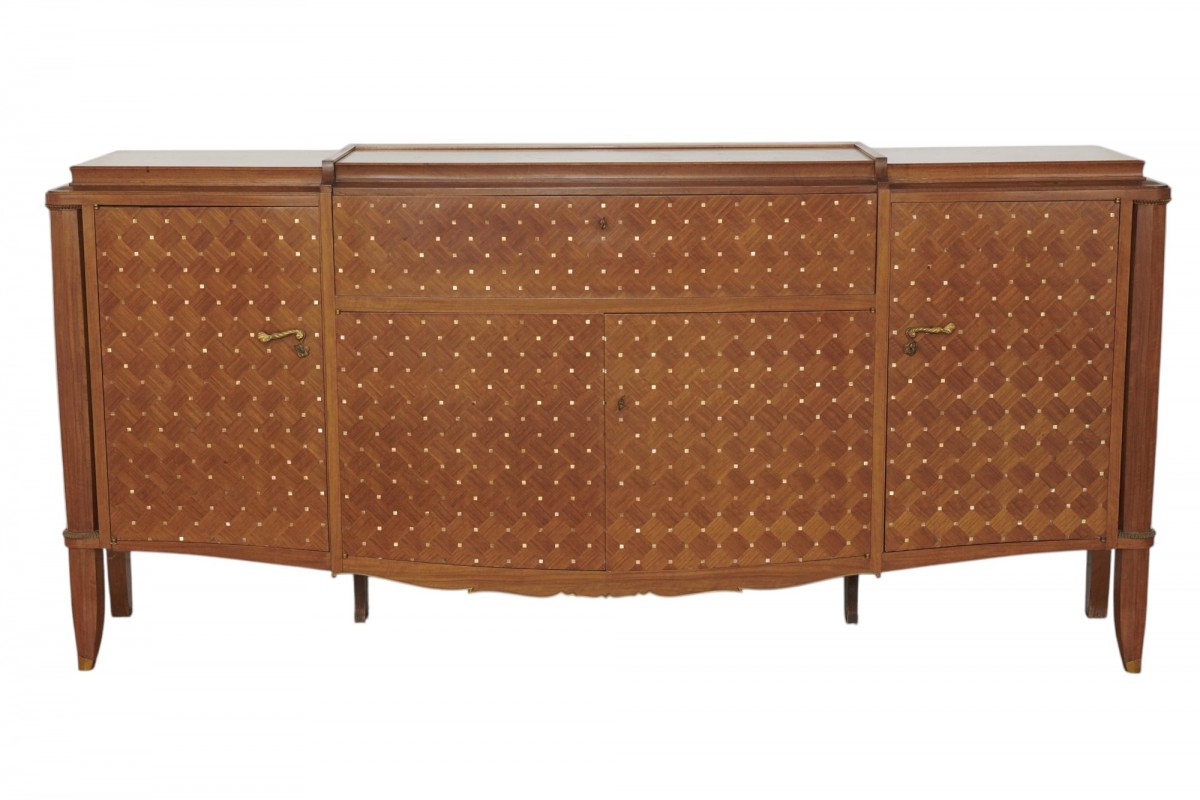
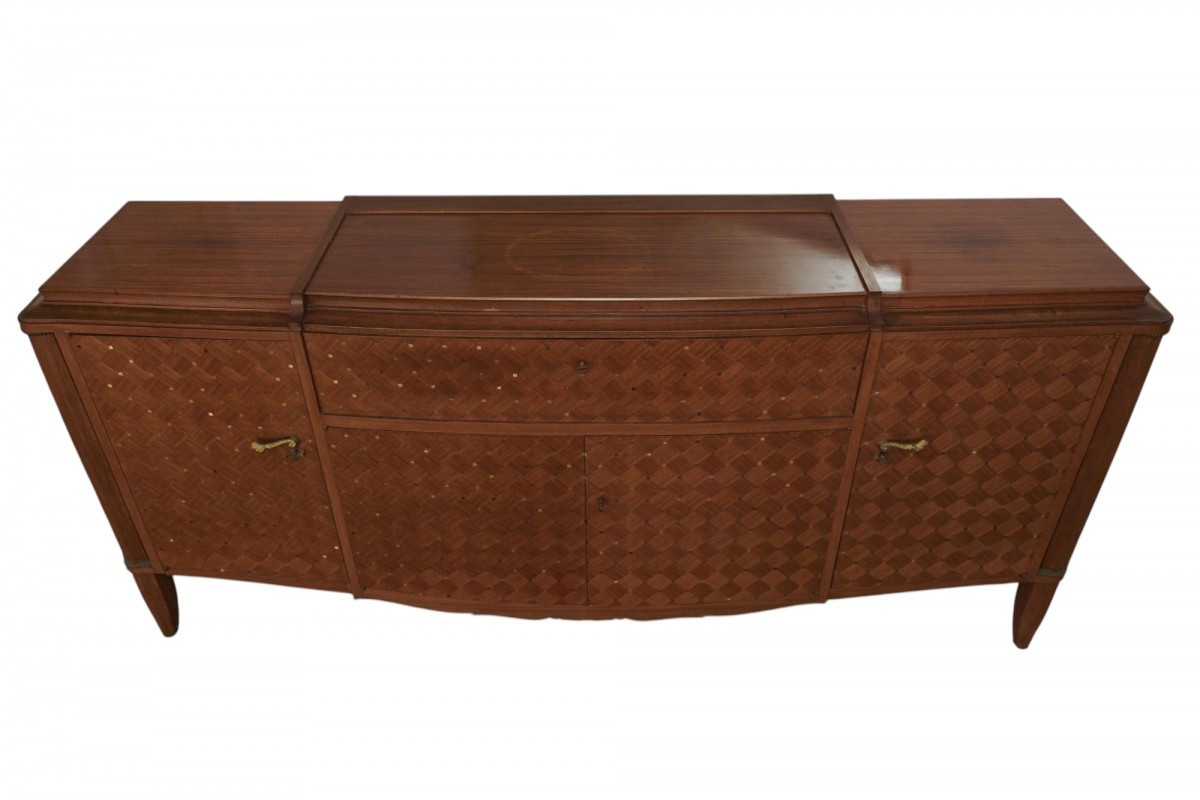
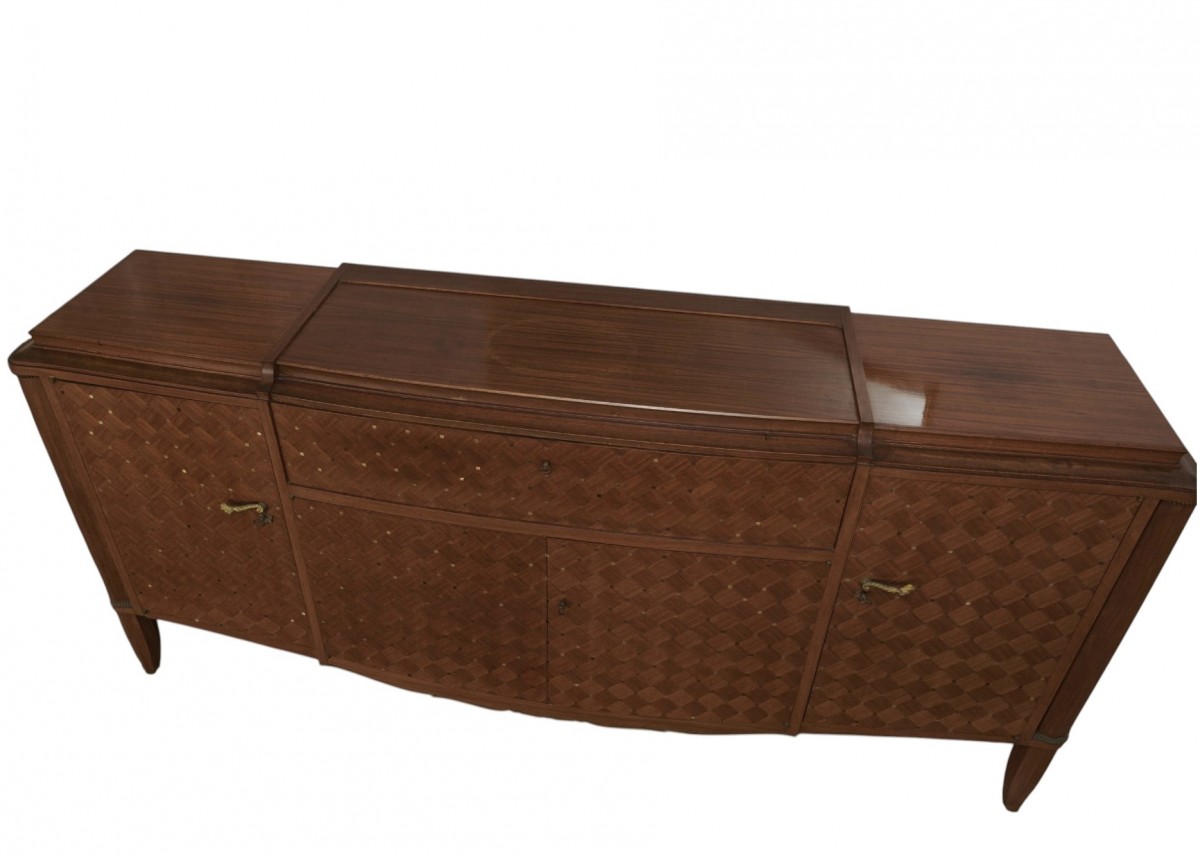
Important apartment bar cabinet in walnut, inlaid with square mother-of-pearl elements, opening with four doors on the front and a fall-front revealing shelves lined with mirrors.
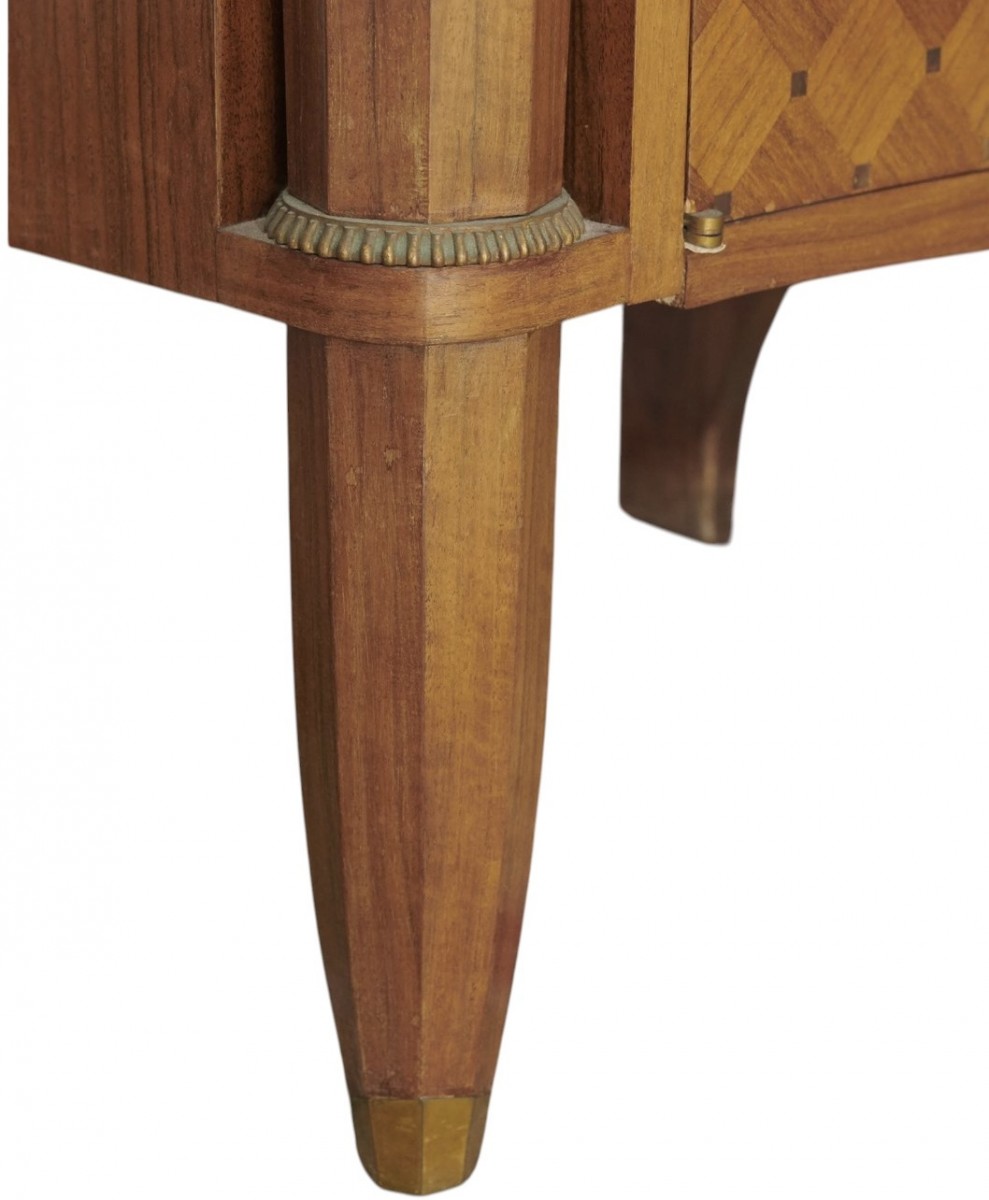
It stands on sabre legs.
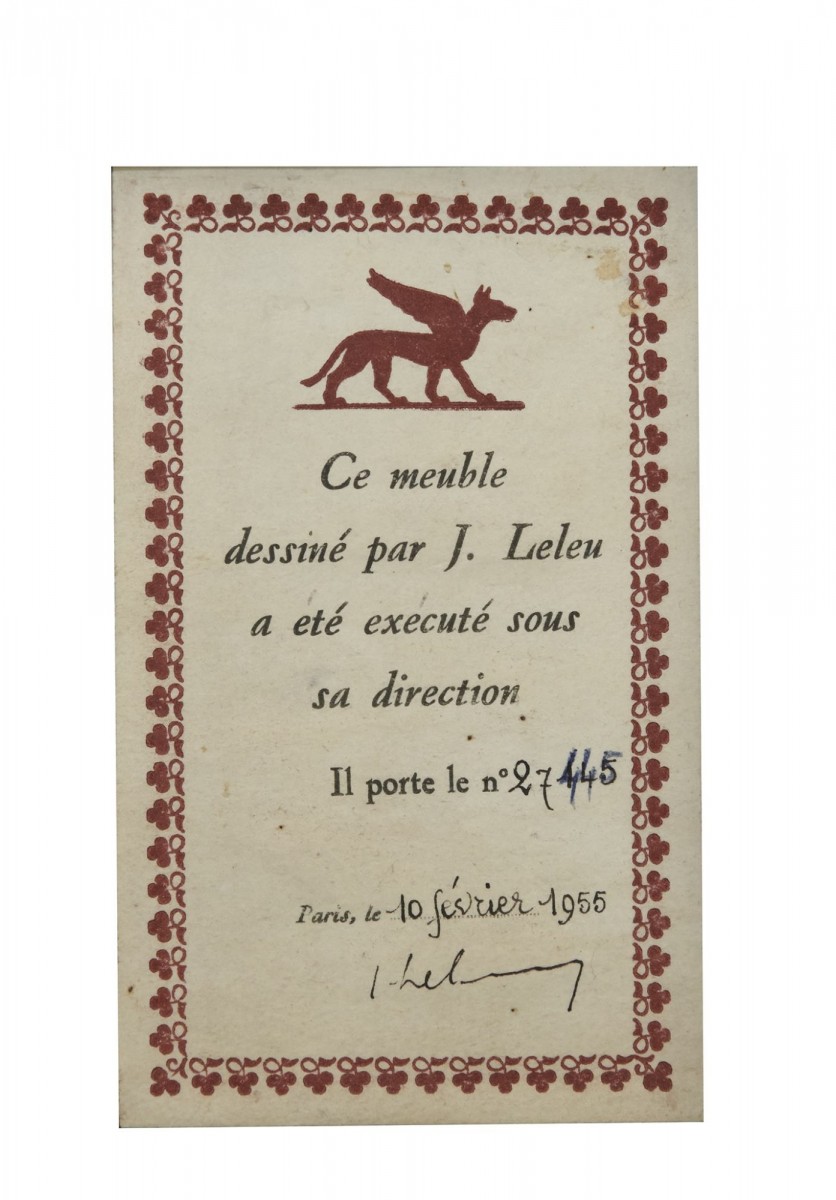
Invoice from the Maison Leleu (15/07/1955).
Dimensions:
Height: 106 cm
Width: 220 cm
Depth: 46 cm
Jules-Émile Leleu, born in Boulogne-sur-Mer on June 17, 1883, and died in Neuilly-sur-Seine on July 11, 1961, was a French designer, decorator, draughtsman, and painter who distinguished himself during the Art Deco period.
At the Exposition Internationale des Arts Décoratifs et Industriels Modernes, he exhibited a dining room that earned him a Grand Prix. Among the pieces shown was a commode now held in the collections of the Metropolitan Museum of Art.
Leleu carried out interior schemes for French and foreign embassies, and worked for figures such as Prince Pierre of Monaco, Prince Takamatsu of Japan, and the King of Romania. He designed the French salon at the Palais des Nations for the League of Nations in Geneva—now the United Nations Office—which remains preserved in its original state.
Together with his son André, he also worked on the furnishing of the Martin de Janville sanatorium for the French Air Force. The furniture, initially conceived in wood, was produced in folded and lacquered sheet metal by the workshop of Jean Prouvé, who contributed his technical expertise to the creation of economical furniture.
After the war, the Maison Leleu expanded further, undertaking major commissions such as the interiors of ocean liners and the private dining room of the Palais de l'Élysée (at the request of President Vincent Auriol). In 1951, Leleu was consulted for the construction of the cruise liner Flandre. In 1954, the SNCF entrusted him with the design of the presidential train inaugurated by President René Coty. Mamie Eisenhower personally selected furniture from Leleu for her French residence.
At that time, Leleu also established himself in New York, on the Upper East Side, near Baccarat, with whom the Maison Leleu collaborated.