Offered by Antiquités Biau

Perfect condition
Empire Style
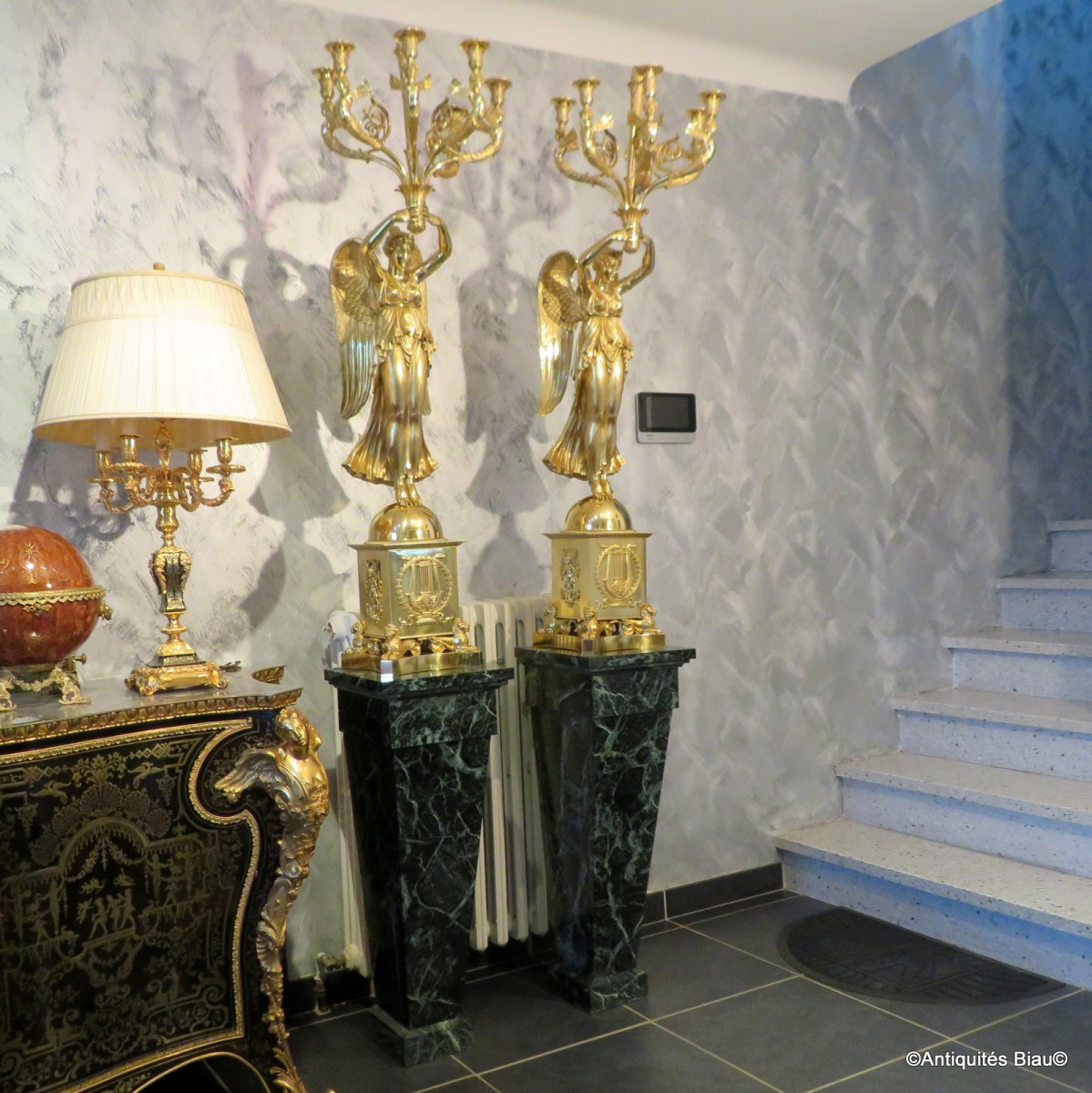
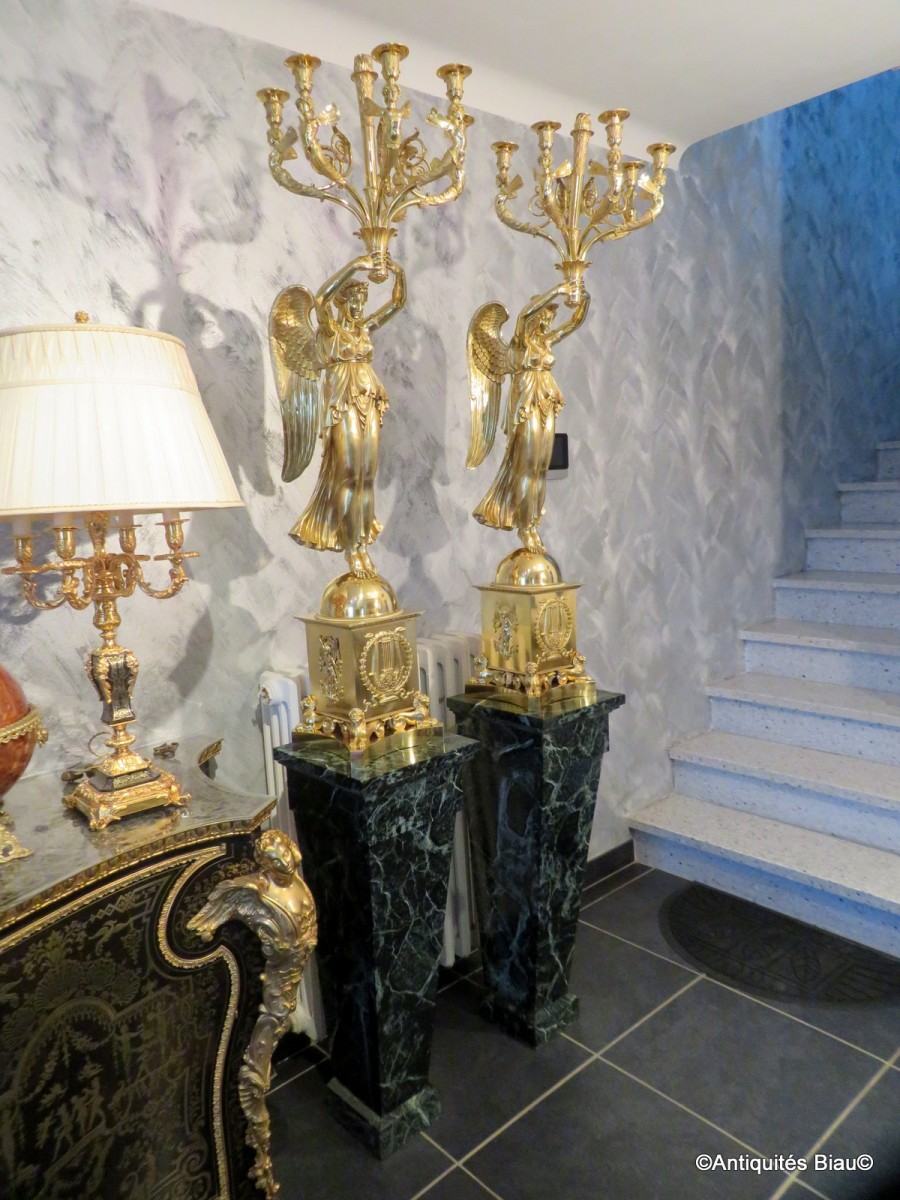
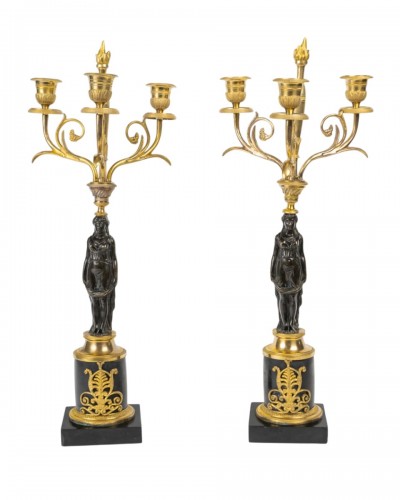
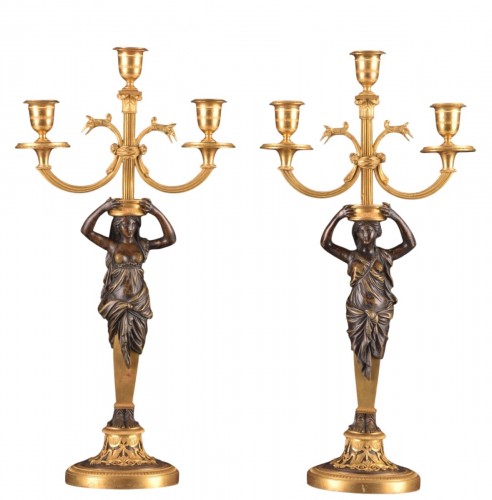
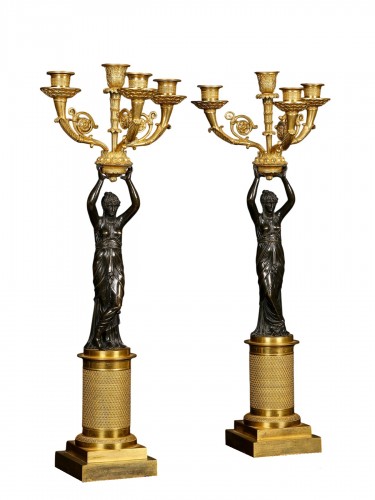
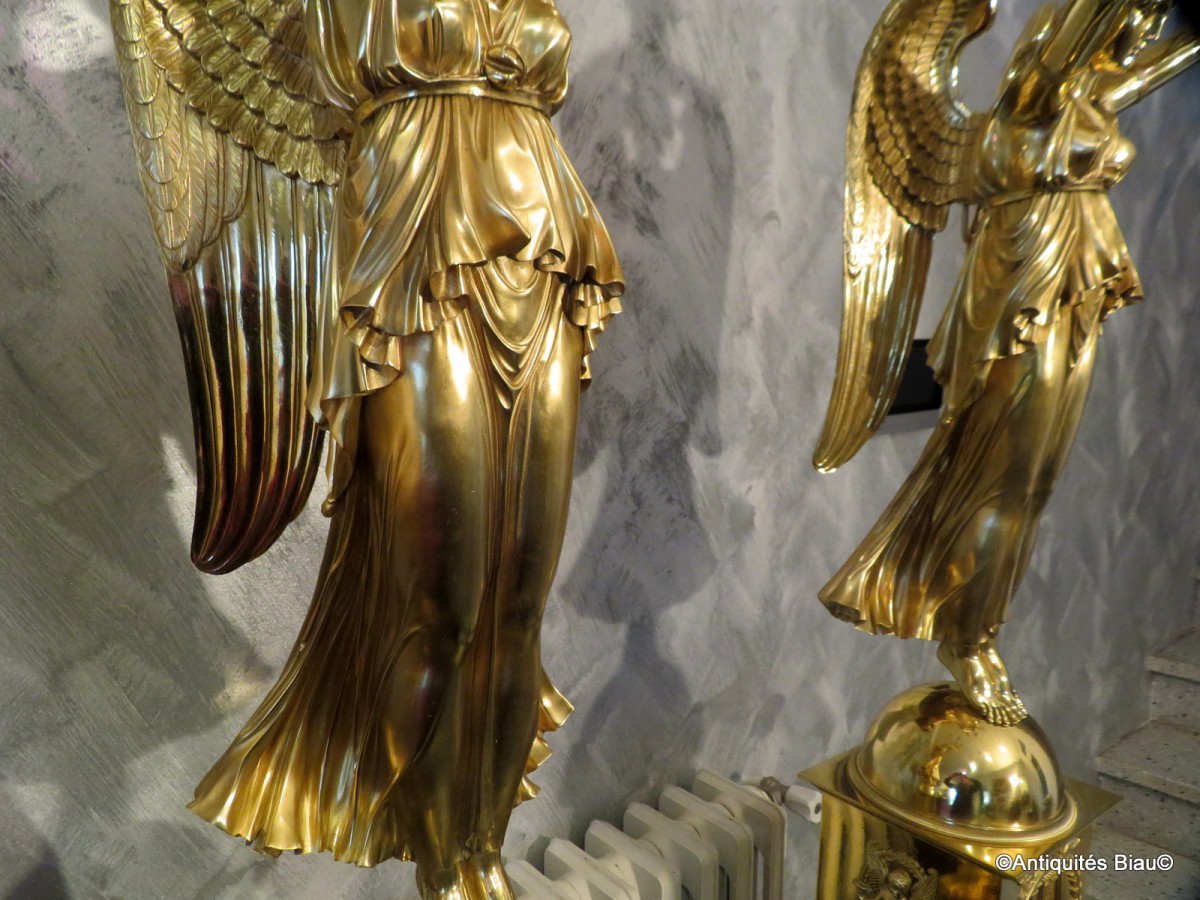
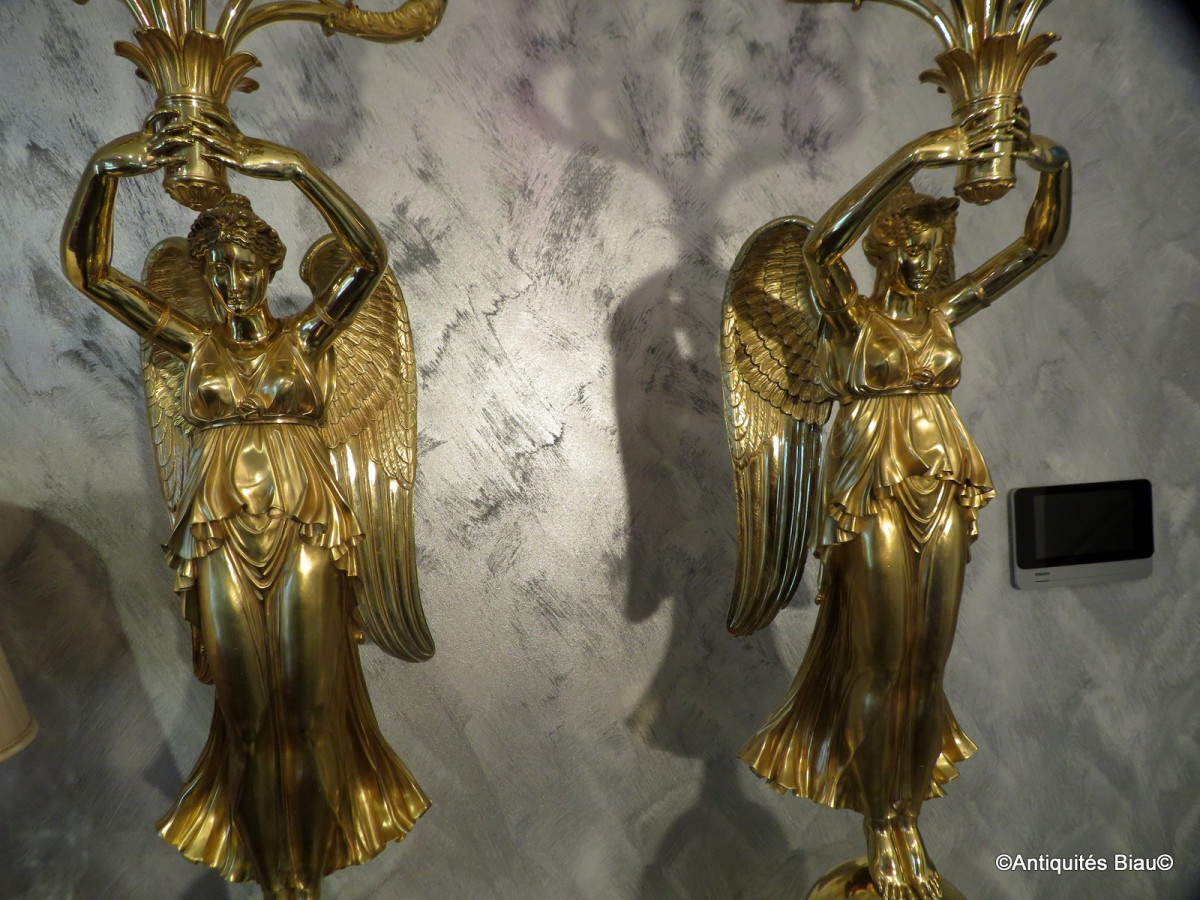
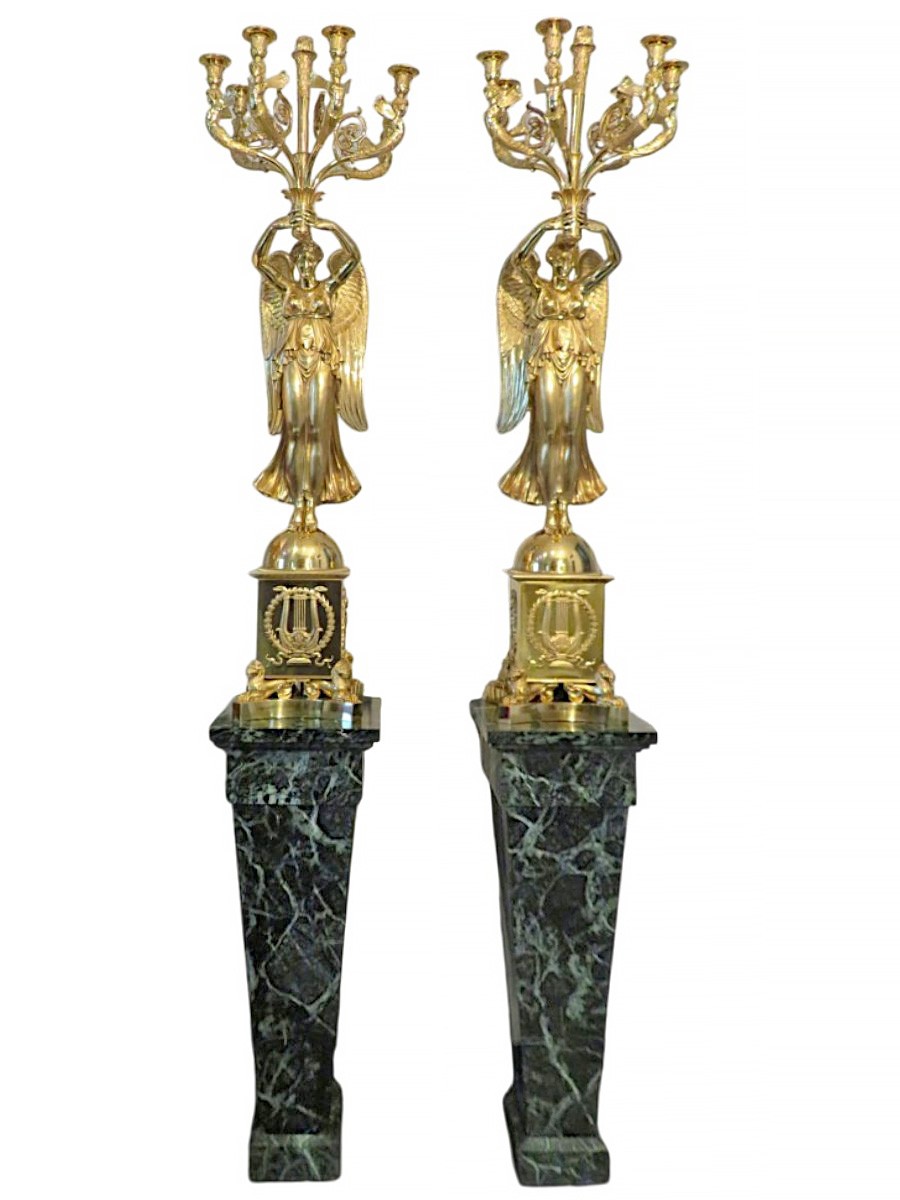
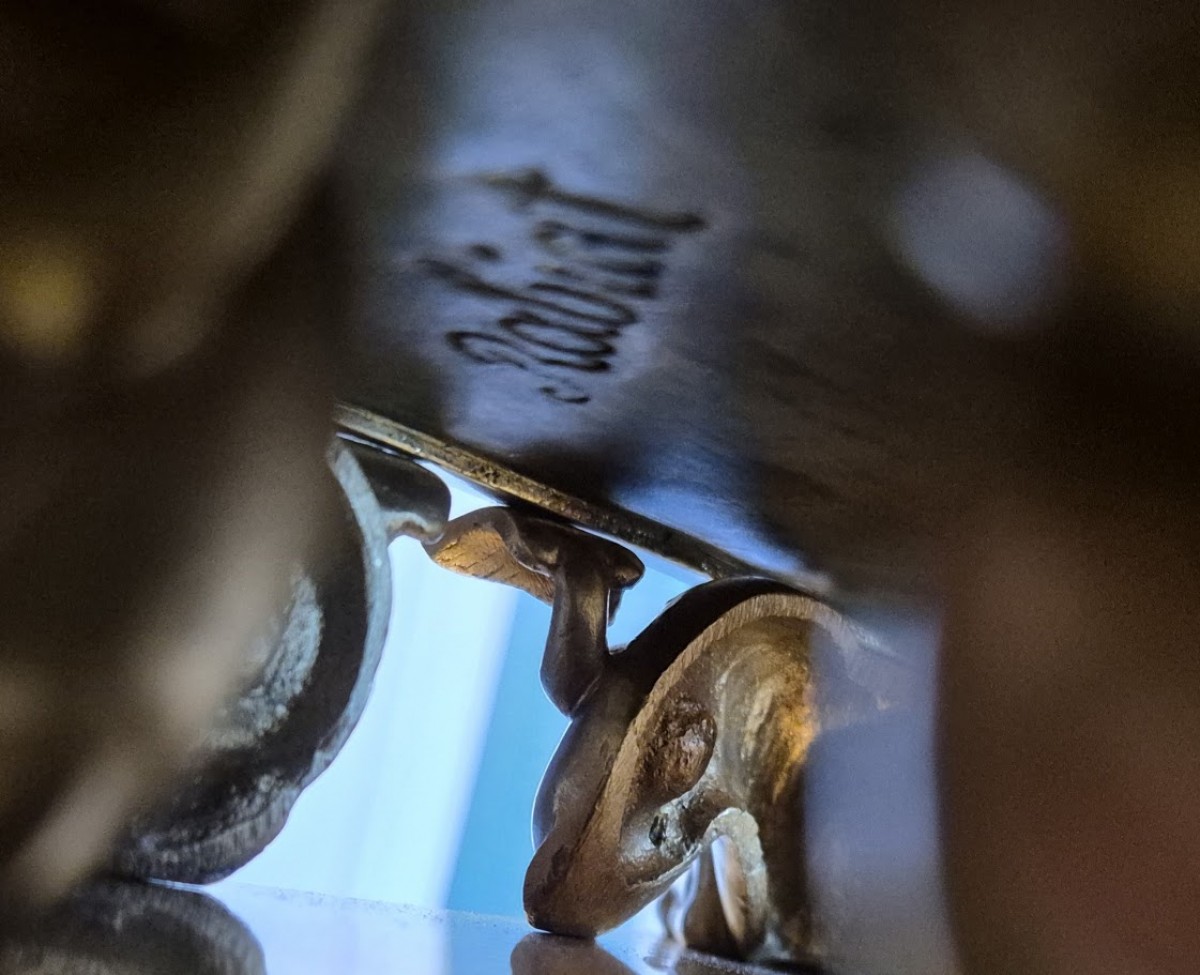
Pair of Bronze Candelabras with Gilt Patina, Signed RABIAT
Empire period
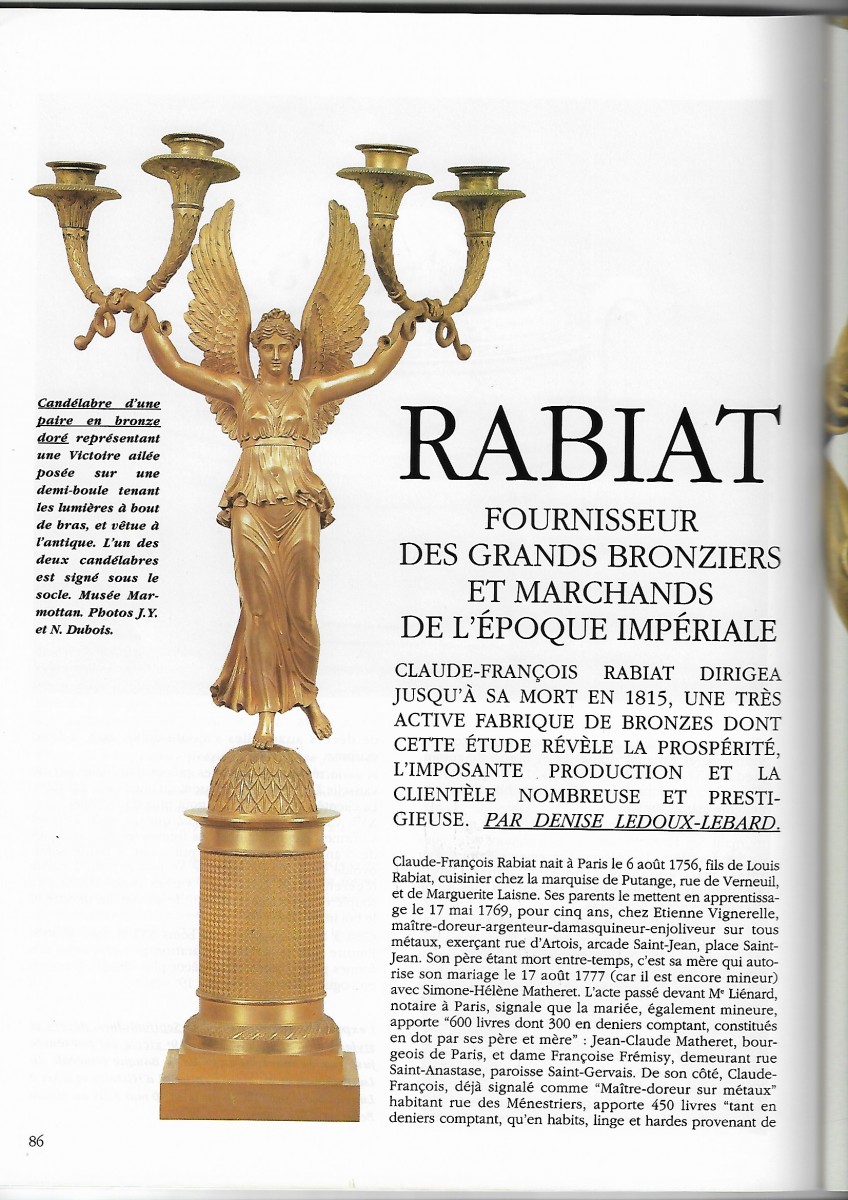
Claude-François Rabiat (1756-1815) was a distinguished Parisian bronze sculptor and gilder whose expertise made a significant contribution to the decorative arts in the late 18th and early 19th centuries. Born in 1756, Rabiat began his apprenticeship with Étienne Vignerelle in 1769 and became a master craftsman in 1778, establishing himself as a master gilder.
In his workshop on Rue Beaubourg, Rabiat became renowned for producing exceptional works in gilt and patinated bronze, including clocks, candelabra, and other decorative objects. His creations were highly sought after by the leading bronze casters and clock makers of the time, such as Pierre-Philippe Thomire, Claude Galle, and Pierre-Victor Ledure. Rabiat’s collaboration with these artisans often involved supplying finely crafted bronze elements that became integral parts of their celebrated pieces.
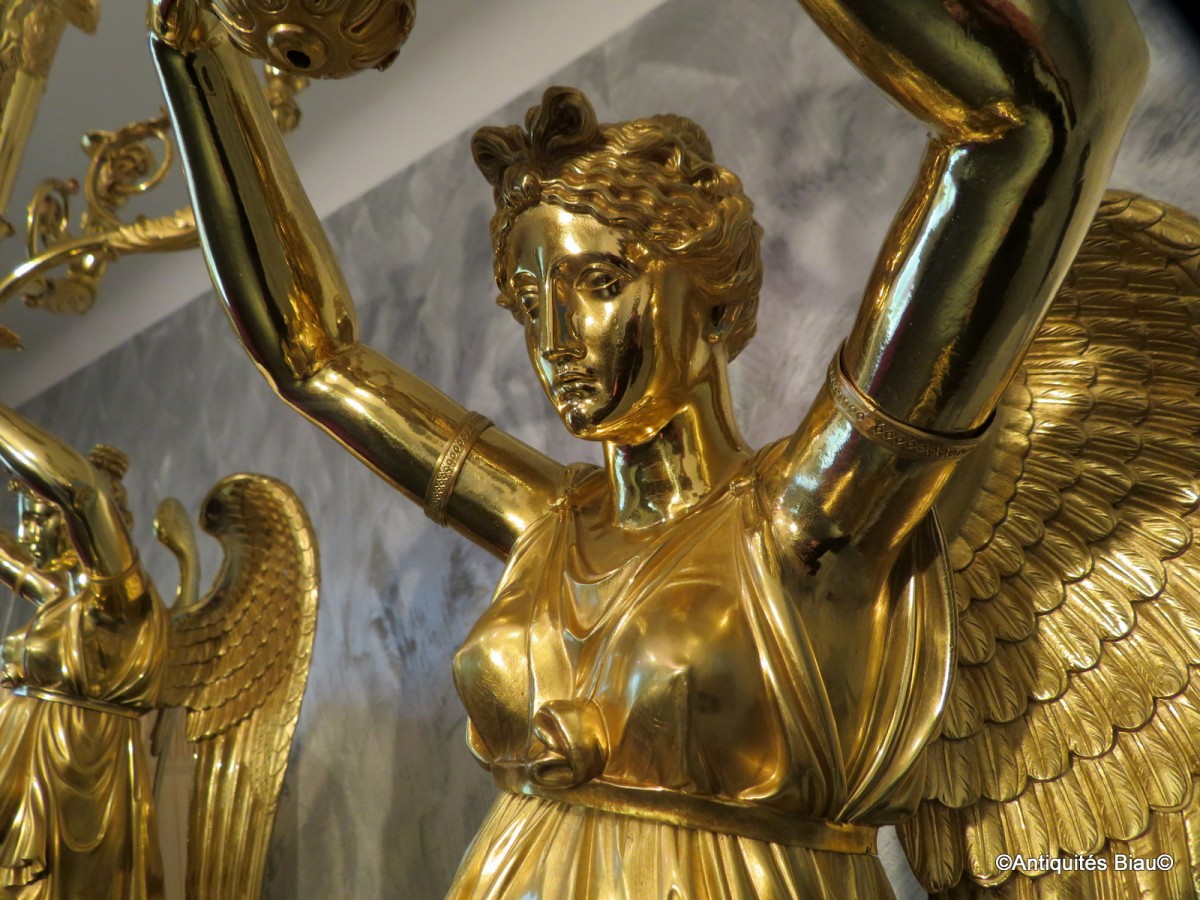
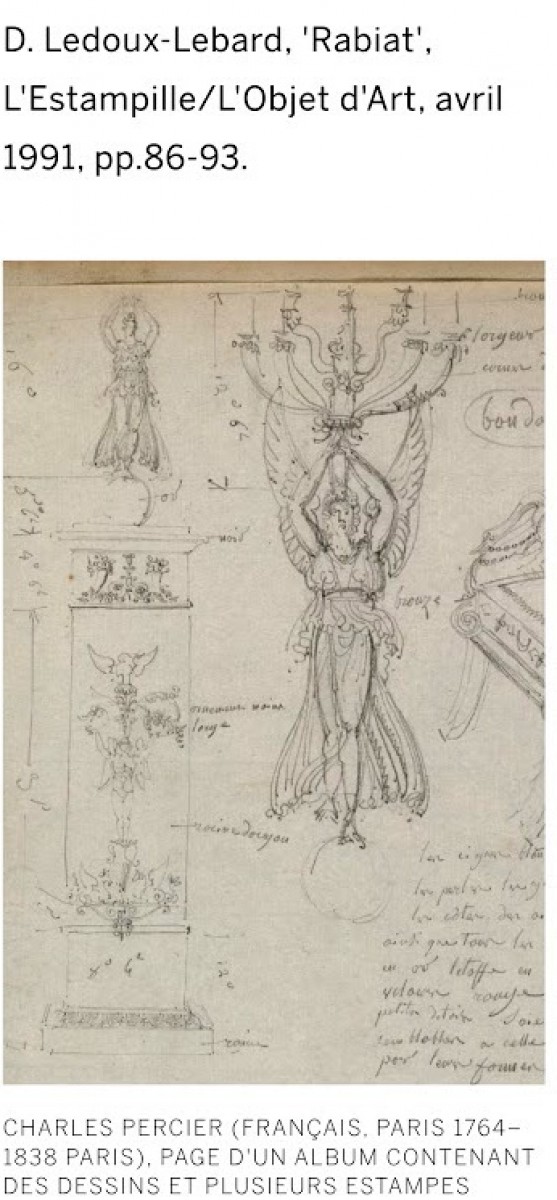
Rabiat’s work is characterized by meticulous attention to detail and an adherence to the Neoclassical aesthetic that defines the Empire style. Among his most remarkable creations is a pair of Empire candelabra depicting winged female figures of Victory, which exemplify the harmonious blend of classical inspiration and refined execution. Similar pieces are held in esteemed collections, including the Musée Marmottan Monet in Paris and the Château de Valençay.
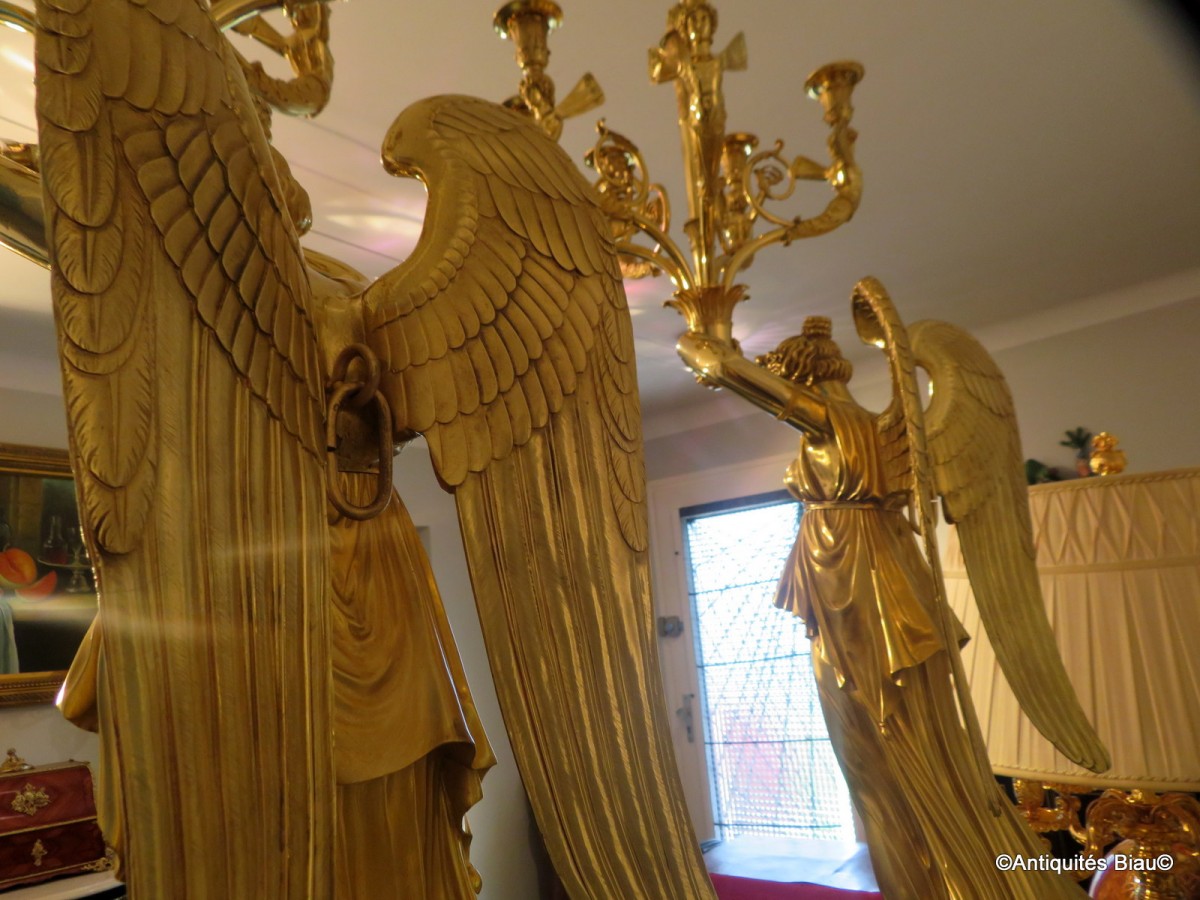
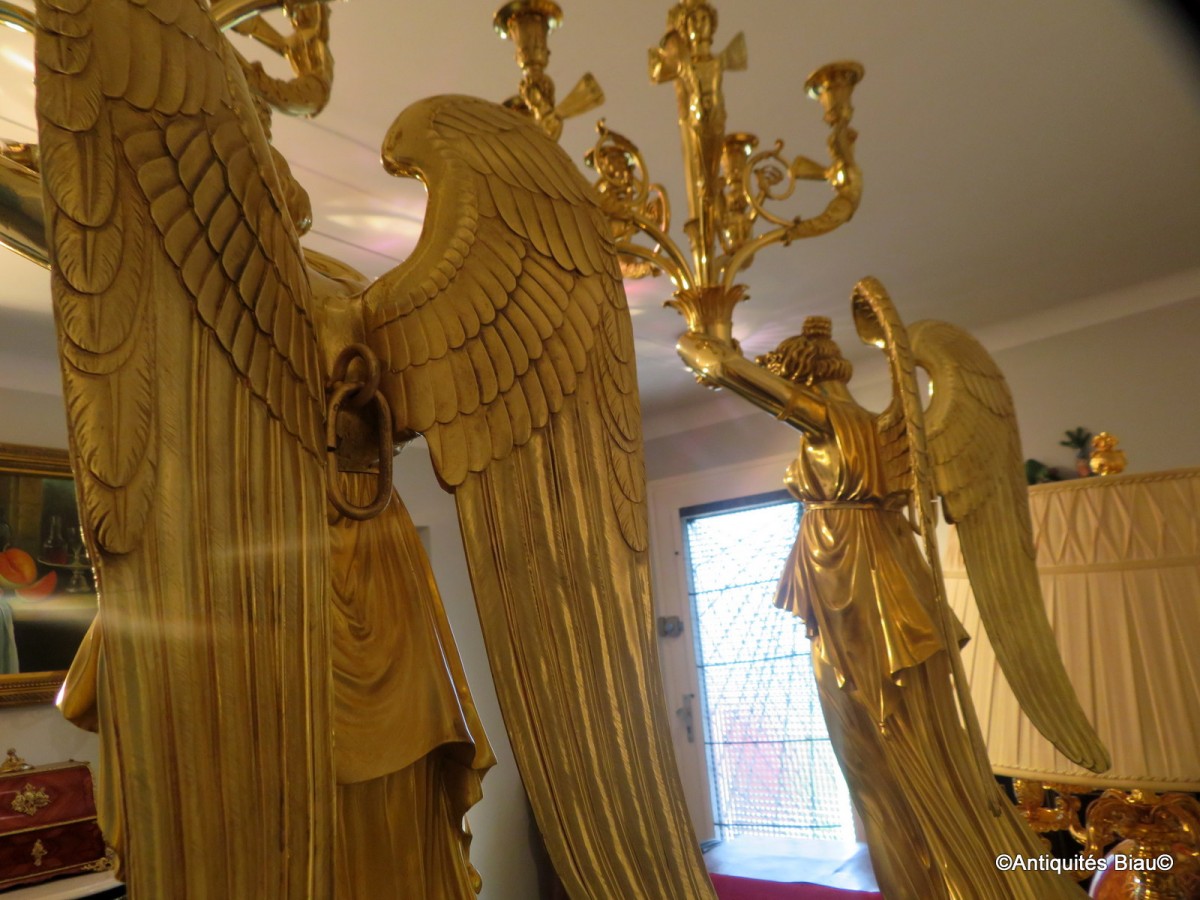
A set of two candelabra, each light rising from a basket held above by winged and draped Victories in the classical style.
Height 130 cm, base 26 cm.
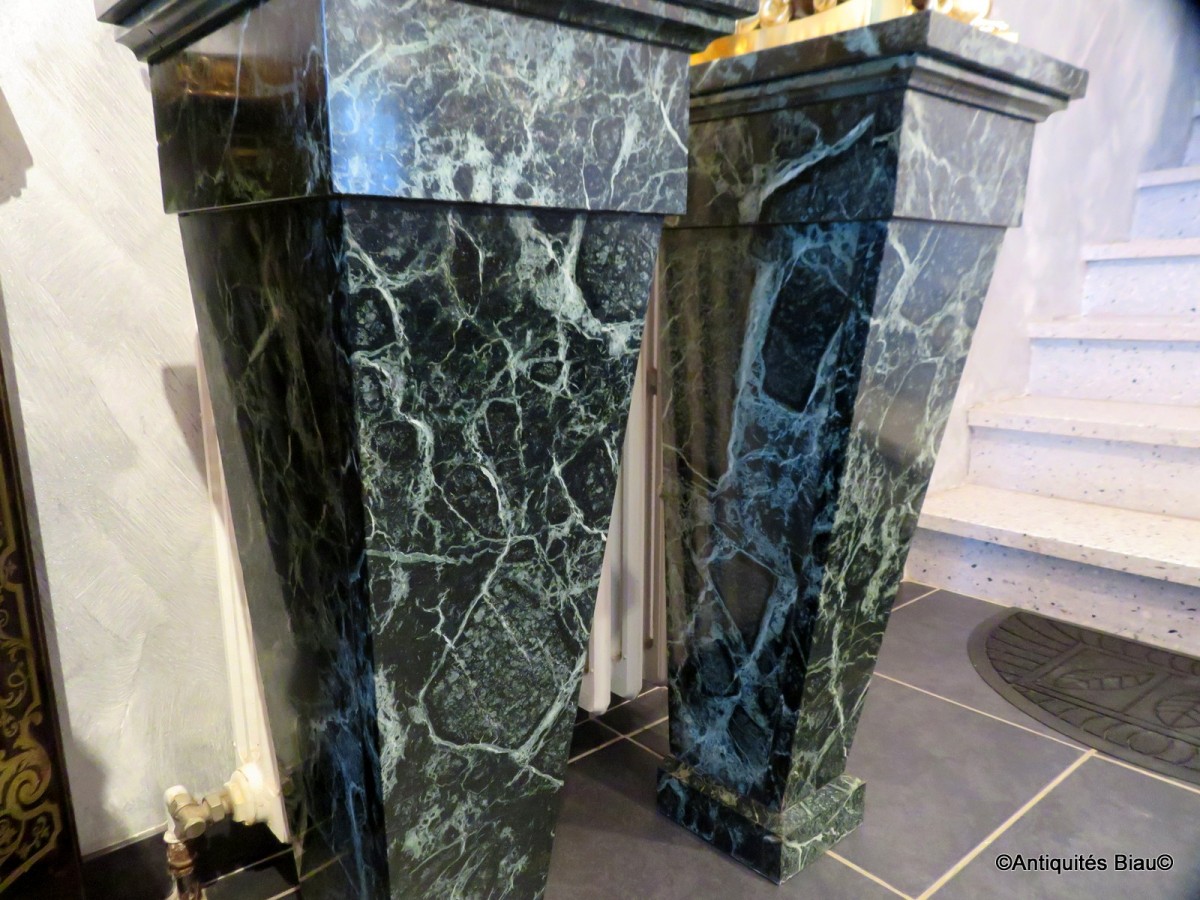
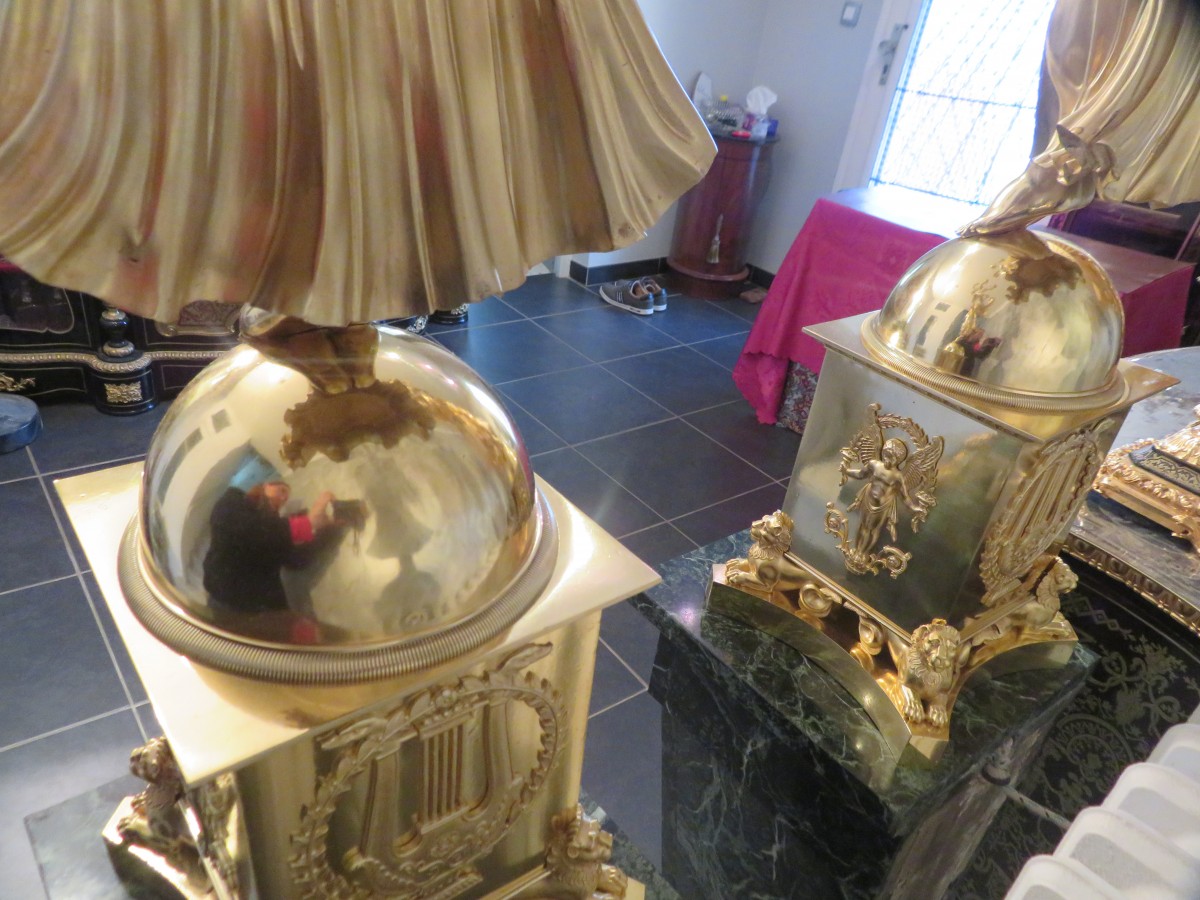
The candelabra rest on a sea-green marble base.
<<
Height 85 cm, base 31 cm, foot 17 cm.
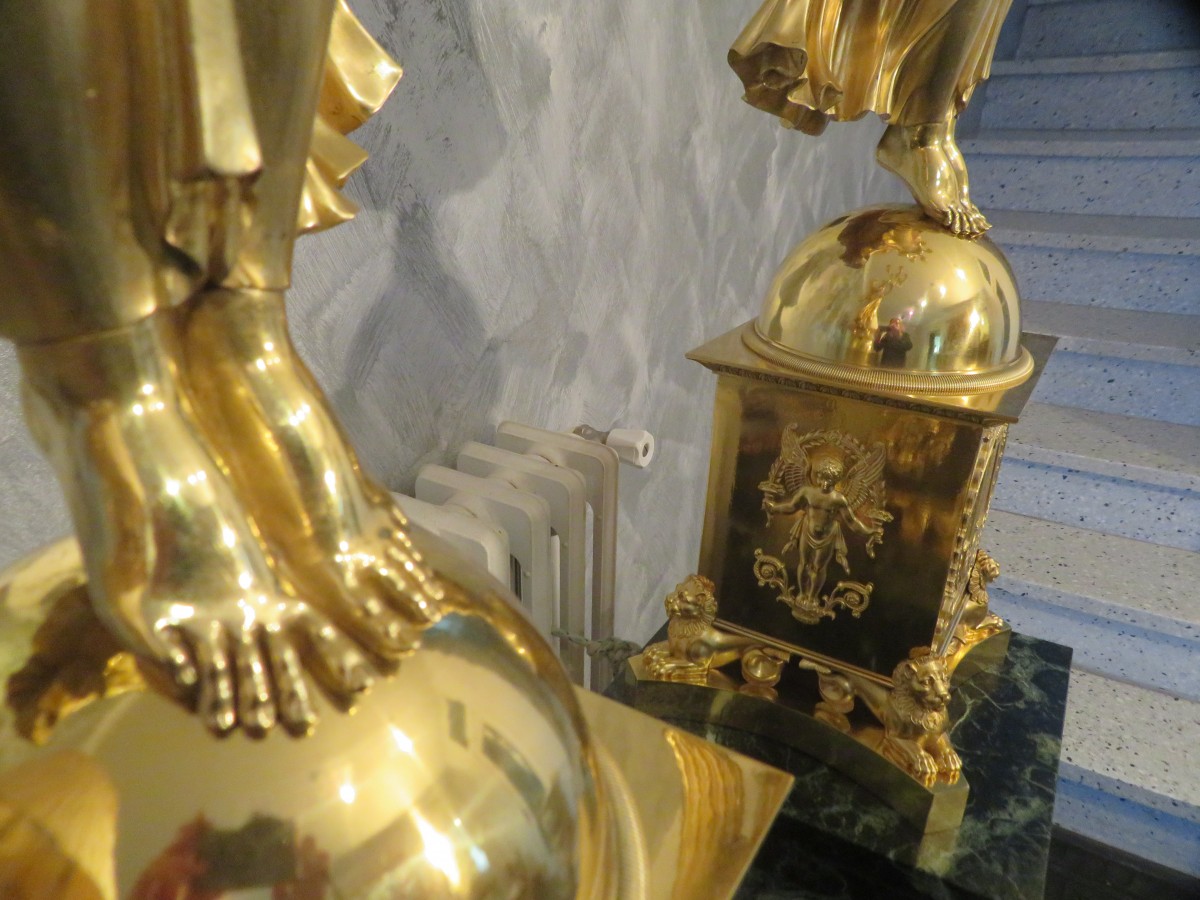
Incredible work in finely chased gilt bronze.
The lampposts and their conduits have retained their original hooks.
They can be electrified; the holes are pre-drilled.
TOTAL HEIGHT: 2.15 m
Victoire ailée :
<<
The Romans made statues of her to decorate their monuments and commemorate their victories. This style of depicting Victory was adopted by sculptors and painters from the 16th century onward, and especially in the 18th century under the Empire. In her various forms, Victory received statues, altars, and temples throughout the Empire. Many of the dedications have been preserved, particularly along the borders, in regions occupied by troops
Delevery information :
Delivery France and worldwide by specialized carriers.