Offered by Desmet Galerie
REQUEST INFORMATION
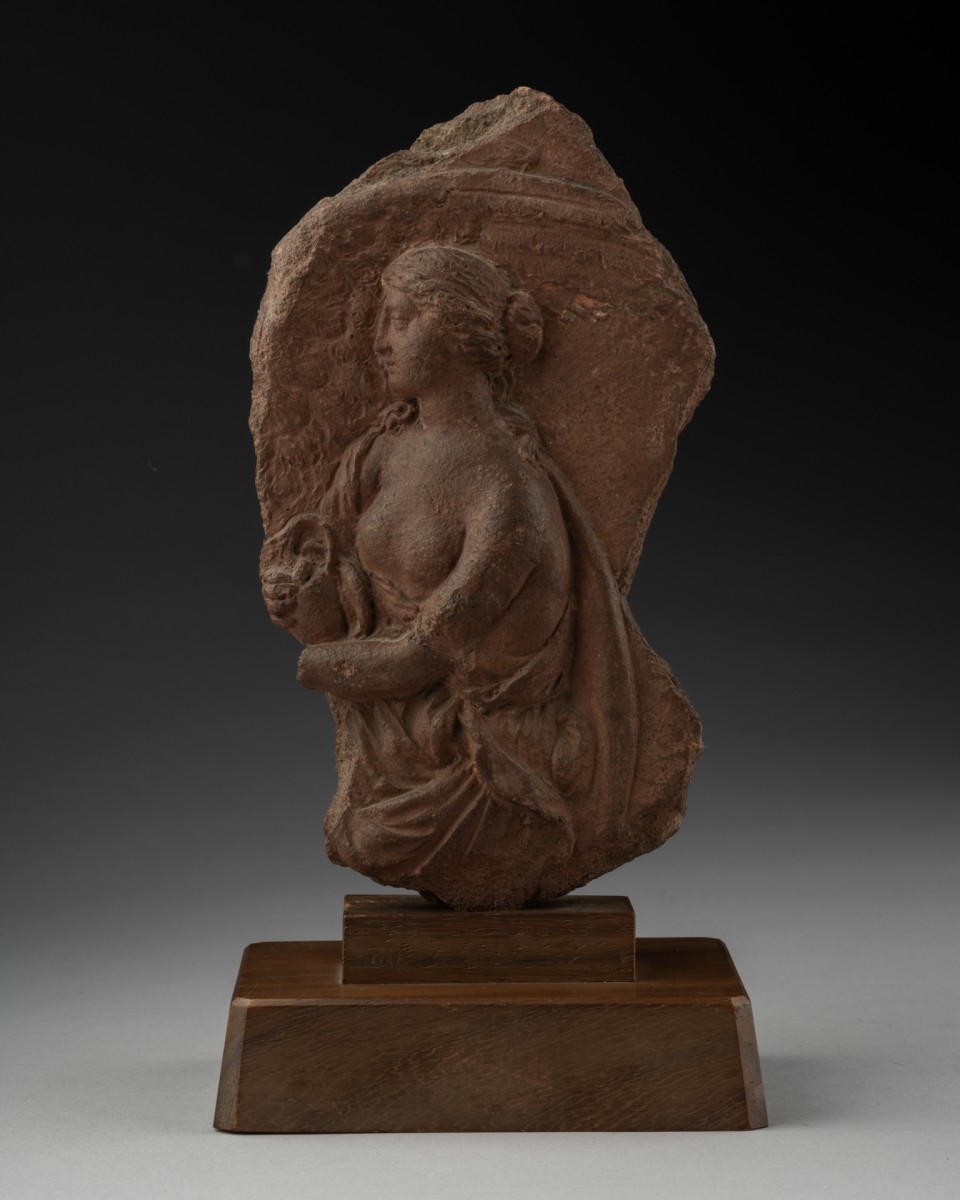
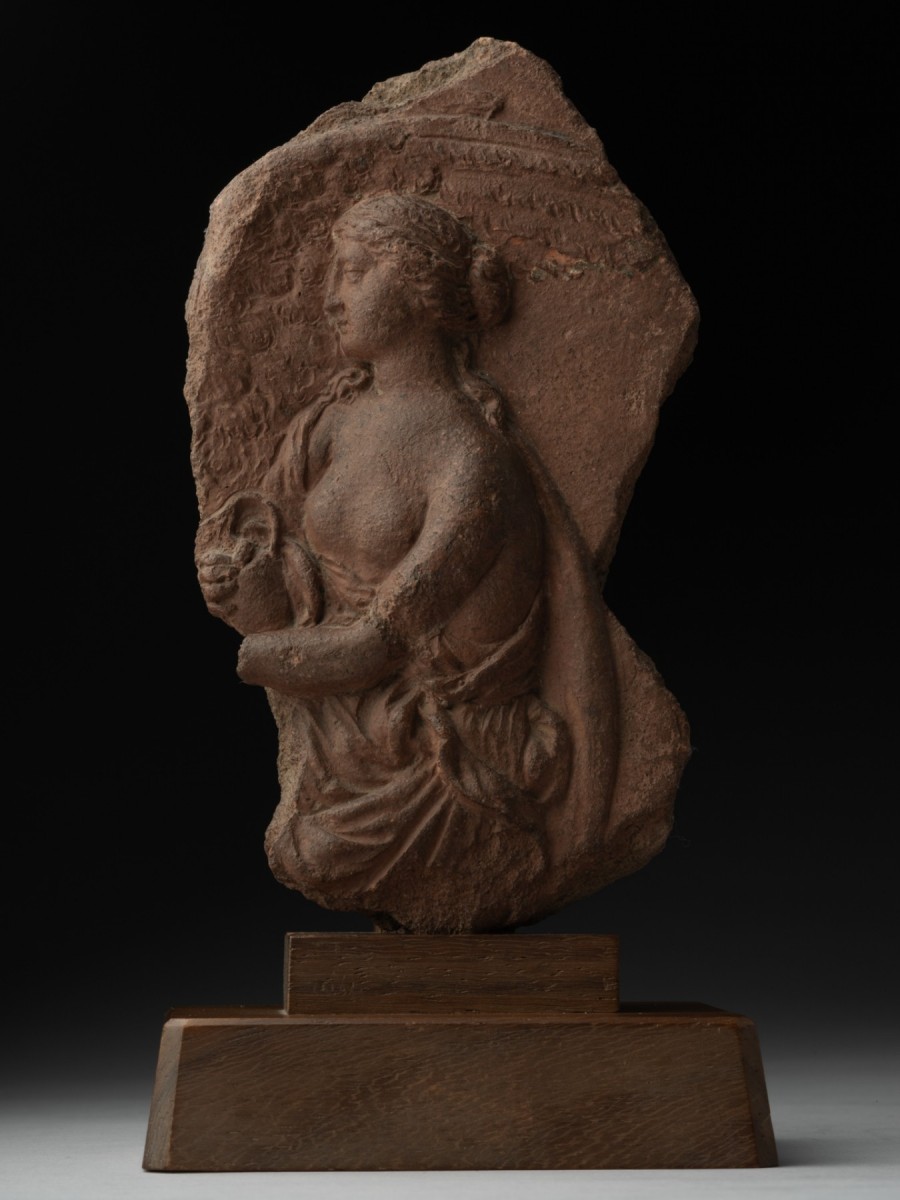

Terra Cotta
Ancient Roman, 1st Century B.C. – 3rd Century A.D.
Probably Latium (Grand-Rome)
Thermoluminescence test: R 145707B (Re.S.Artes 4 III 2025)
CBC-document and write up by Dr Ascanio Modena Altieri to follow
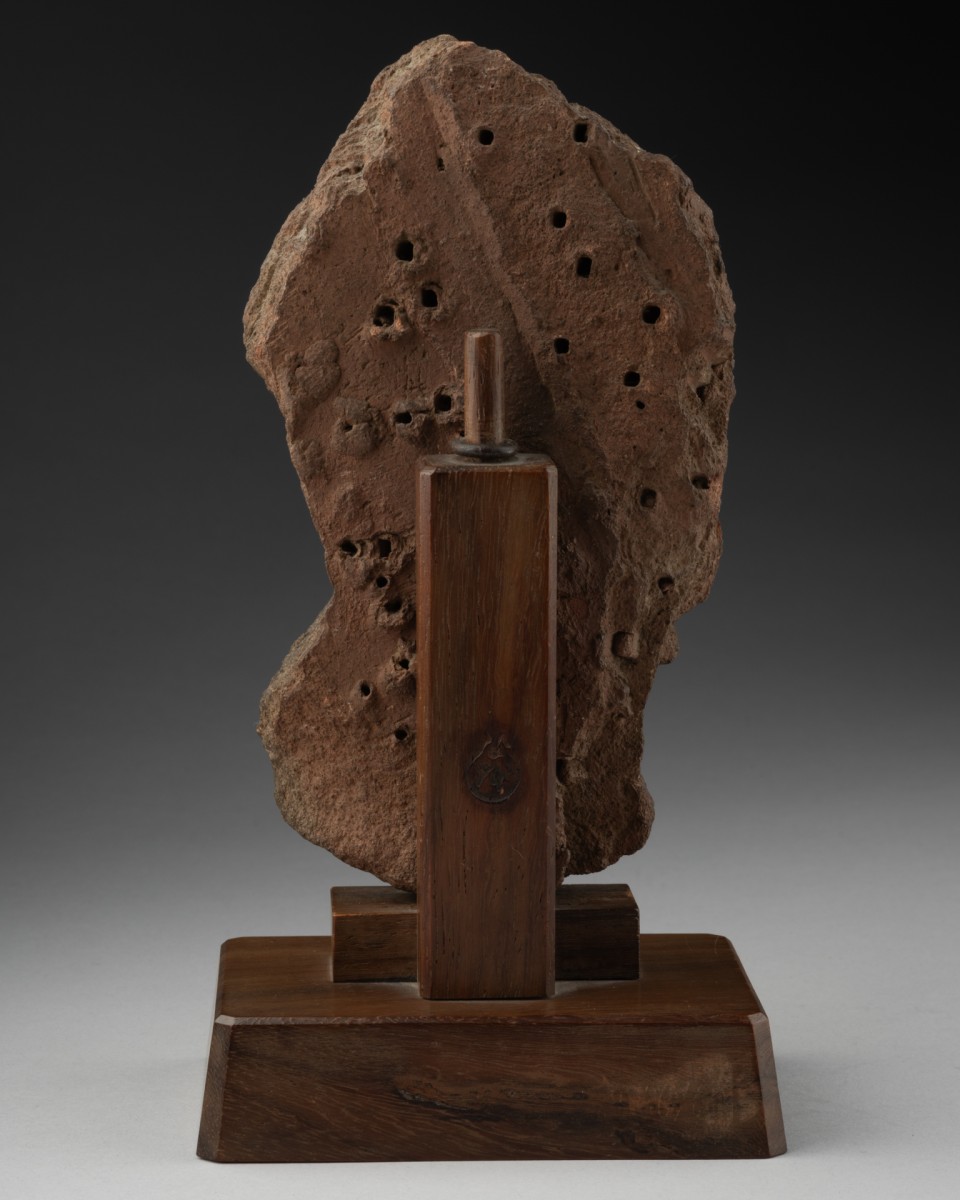
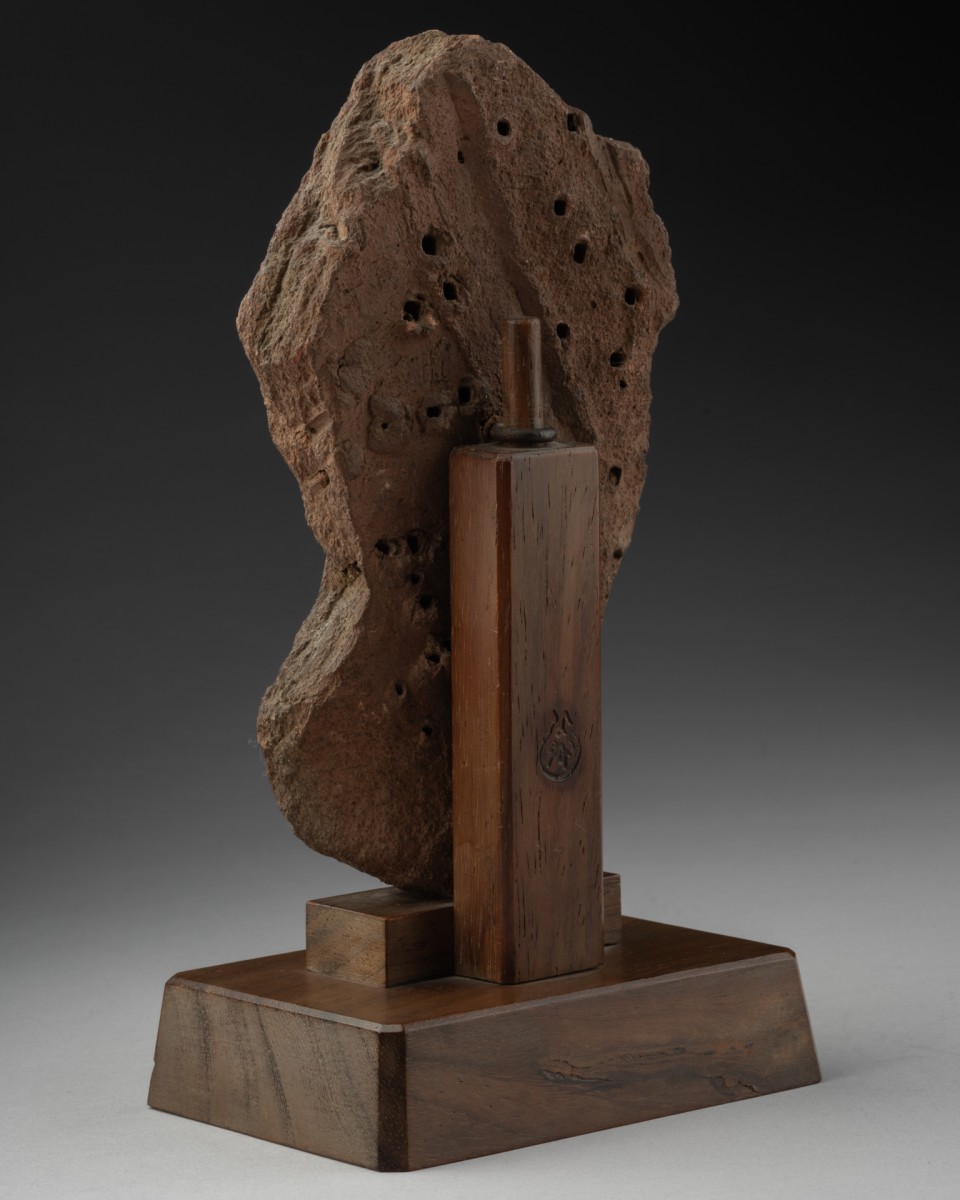
Custom wooden base by Inagaki Kichiz? (1876-1951)
H 16 x W 9 cm
H 6 1/3 x D 3 1/2 inch
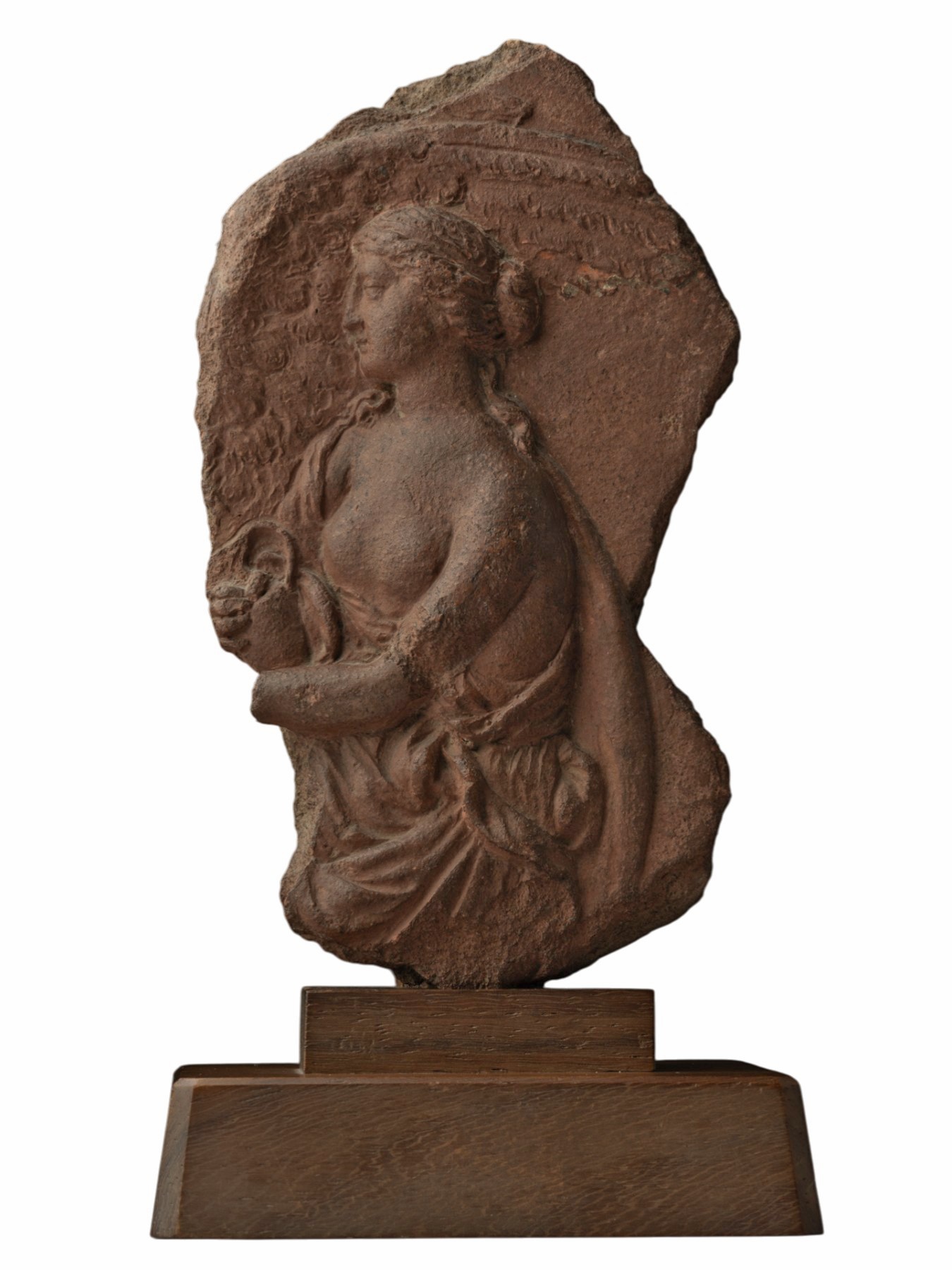
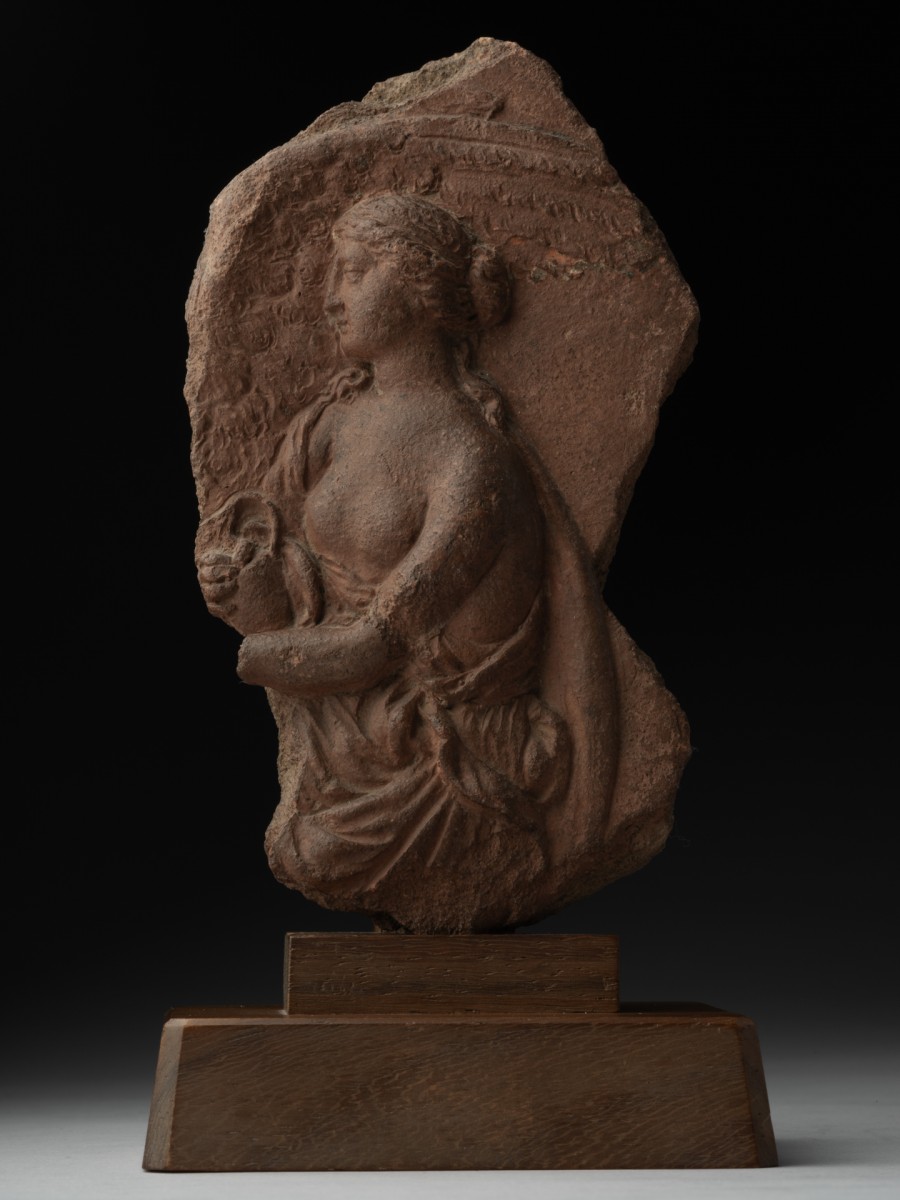
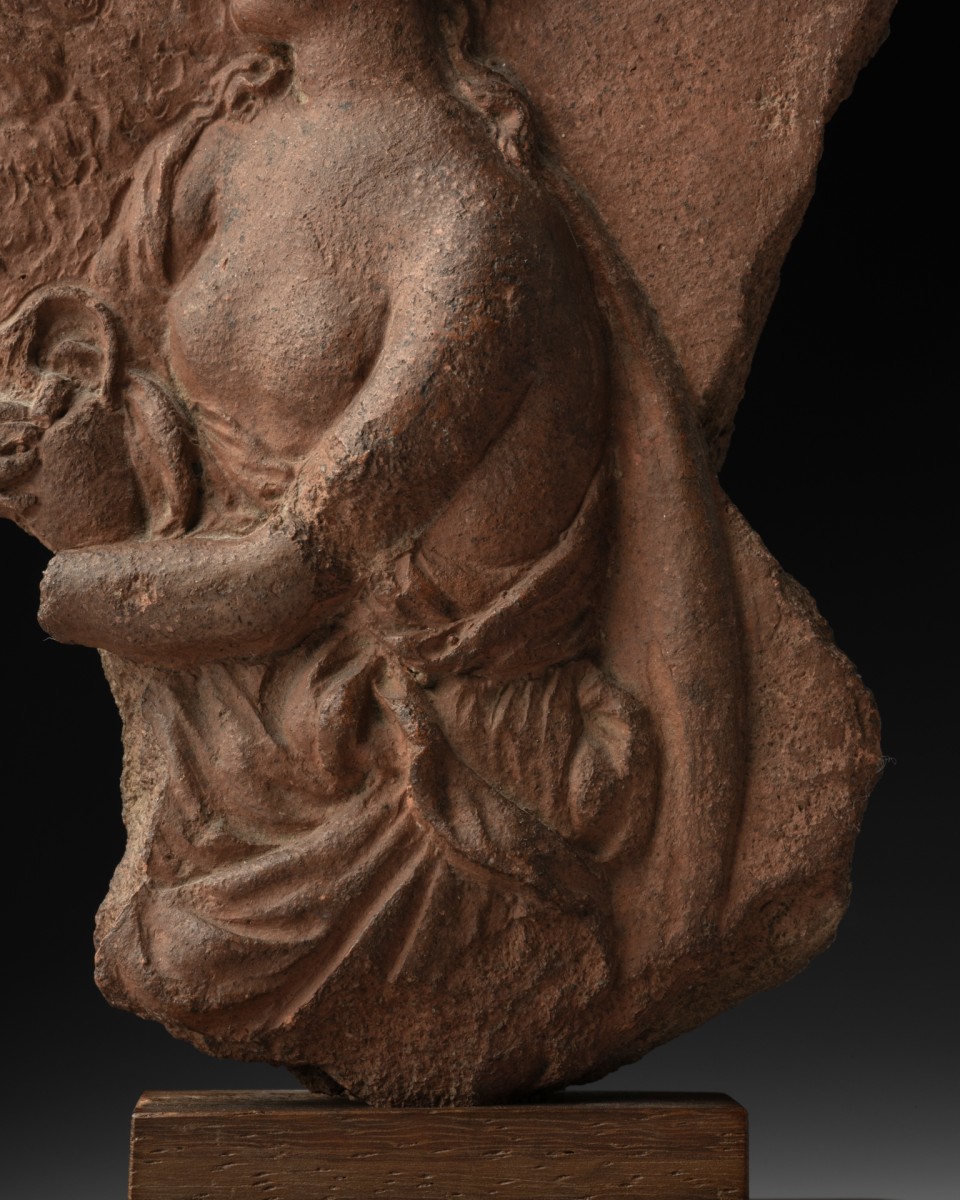
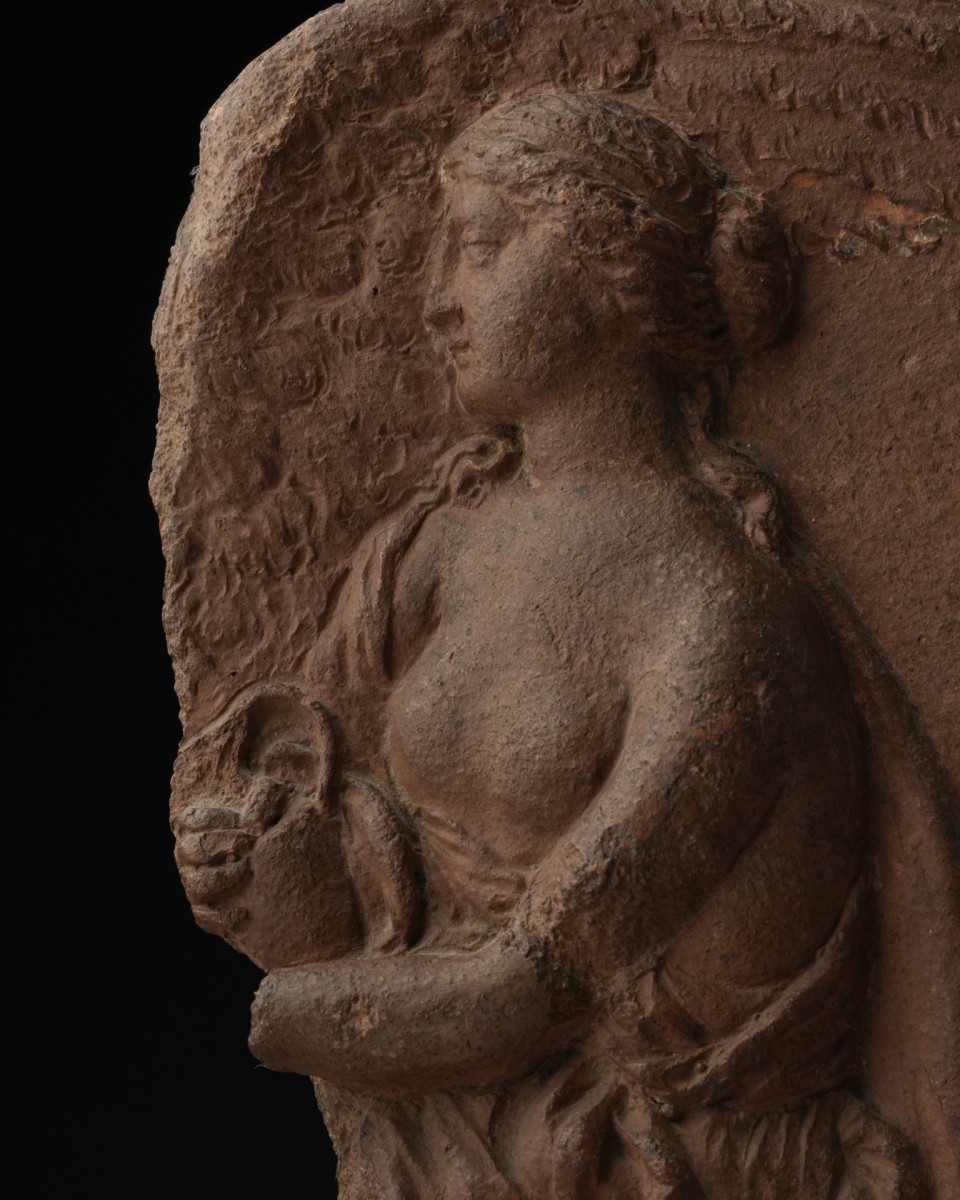
This modelled fragment of a Roman Campana relief depicts a draped female figure in high relief, holding a handled vessel - perhaps a hydria or small jug -against her body with both arms. Her hair is styled in an elegant chignon with falling strands, and she gazes serenely leftward. Though fragmentary, the figure’s frontal pose and delicate modelling suggest the original plaque belonged to a decorative frieze.
These terracotta plaques - named after Giampietro Campana, the 19th-century Roman collector - were widely used to decorate domestic and funerary architecture from the 1st century BC through the 2nd century AD. They were produced from molds and occasionally painted, then affixed to walls of villas, baths, or columbaria. Their iconography often drew from mythology, Dionysiac cult scenes, or allegorical personifications, blending Hellenistic invention with Roman symbolism.
In the present example, the vessel held by the woman and the large wing in the background likely suggest mythological association. Terracotta reliefs from this period frequently portray scenes from the myth of Cupid and Psyche, a narrative made popular by Apuleius’ Metamorphoses in the 2nd century AD. As detailed in academic parallels from the British Museum and Art Institute of Chicago, winged companions - often interpreted as Eros or as genius spirits - regularly accompany female figures bearing libation jars, perfume vials, or offerings.
Several interpretative pathways exist for this relief. The female figure may represent:
Psyche, shown in her mythic trial with a vessel - perhaps the jar of divine beauty entrusted to her in the Underworld. In this view, the absent companion would be Eros, the allegorical figure of love guiding the soul.
Venus, if we interpret the vase as an oil vessel or bathing implement, a common attribute in Pompeiian wall paintings and marble statuary of the goddess.
A more generic funerary personification, perhaps a mortal woman shown making an offering or performing a rite, attended by a winged genius. This motif - pairing a noble woman with a divine or winged companion - was widespread in funerary contexts as a symbol of transcendence or apotheosis.
The modeling technique, the fragment’s curvature, and its scale (modest and domestic) point to a Campana-type frieze originally embedded in a domestic or commemorative setting - rather than part of a monumental public program. The fine, red fabric of the clay and well-preserved surface further suggest a Roman central Italian production.
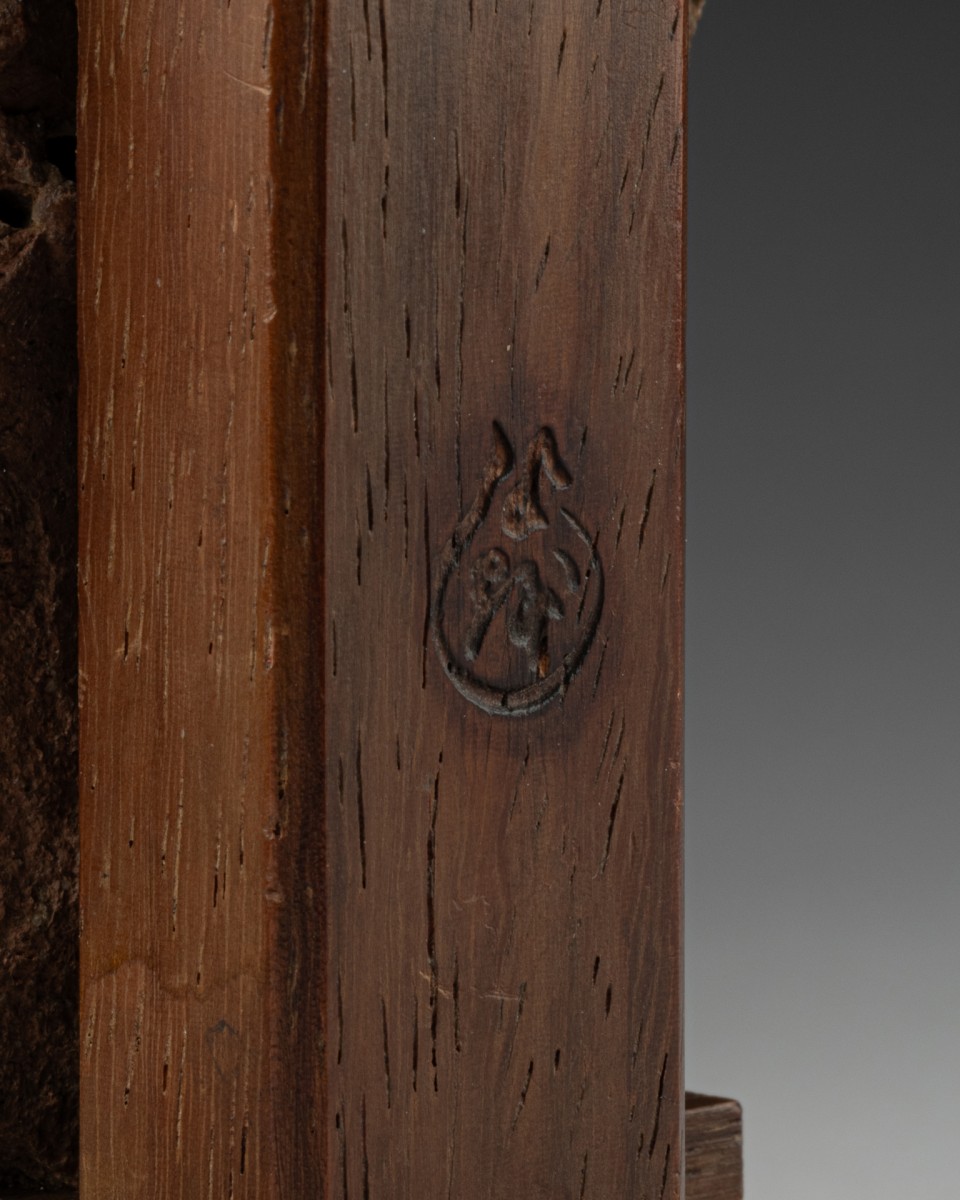
The fragment is presented on an elegant hardwood base bearing the impressed monogram of Inagaki Kichiz? (1876–1951), a renowned Japanese wood craftsman. Inagaki is celebrated for his collaborations with leading art collectors and dealers in Europe, notably Sadajir? Yamanaka, C.T. Loo, and Henri Vever, during the early 20th century. His carved hardwood bases - typically in hinoki, keyaki, or walnut - are distinguished by their refined minimalism, sensitivity to form, and the discrete branded seal with stylised flame motif (visible on the rear post of this piece). His mounts were particularly sought after for presenting Chinese and Greco-Roman antiquities in a way that harmonised with both Western and Japanese aesthetic sensibilities. (Oikawa 2012, Kichiz? Inagaki and the Global Art Trade).
Such a pairing reflects the collecting practices of cosmopolitan European connoisseurs between 1920 and 1950, who increasingly integrated Japanese craftsmanship into the display of Mediterranean antiquities - contributing to a broader, transcultural aesthetic dialogue. This base is not merely functional: it transforms the Roman fragment into a discreet objet d’art, foregrounding its sculptural presence and bridging ancient form with modern taste.
Delevery information :
We can arrange shipping.