Offered by Franck Baptiste Paris
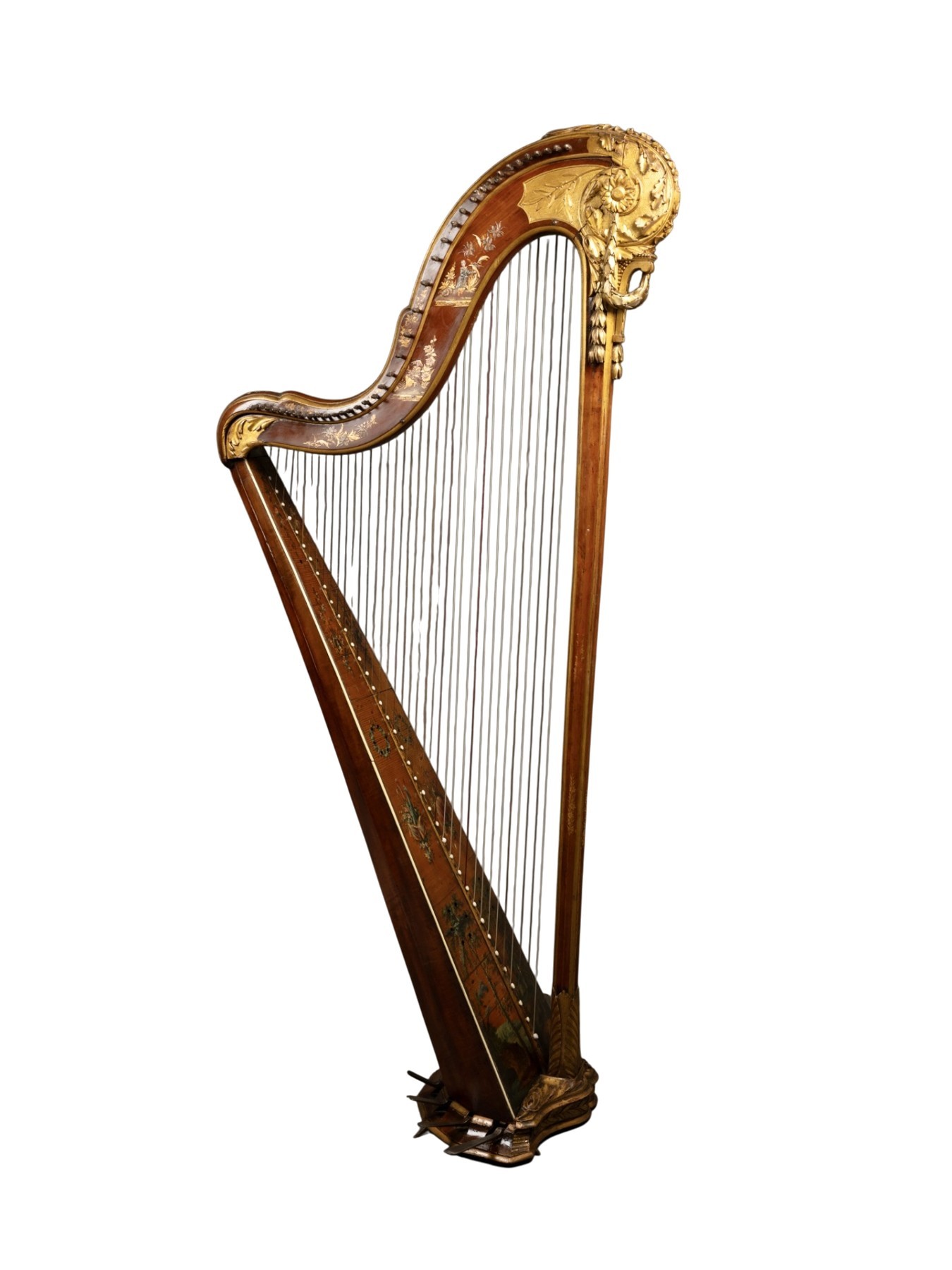
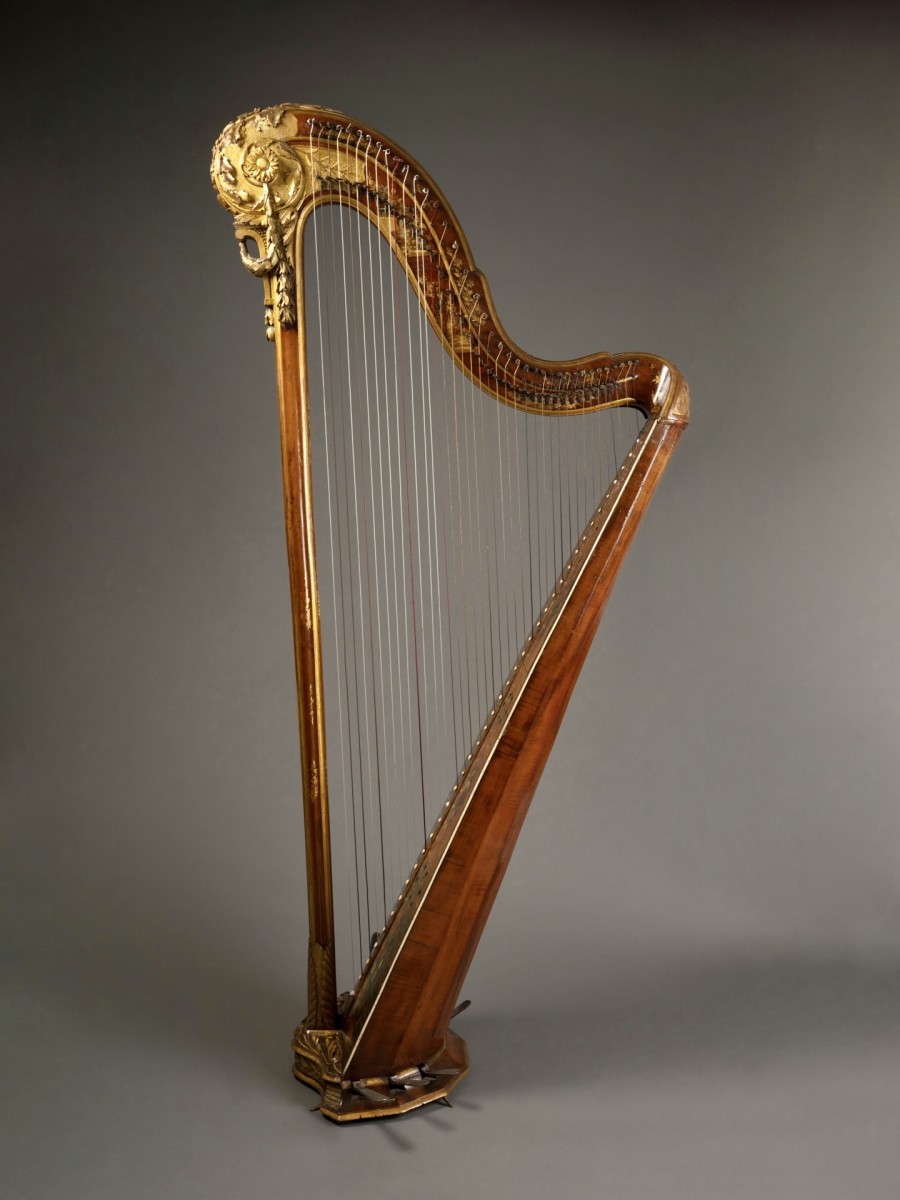

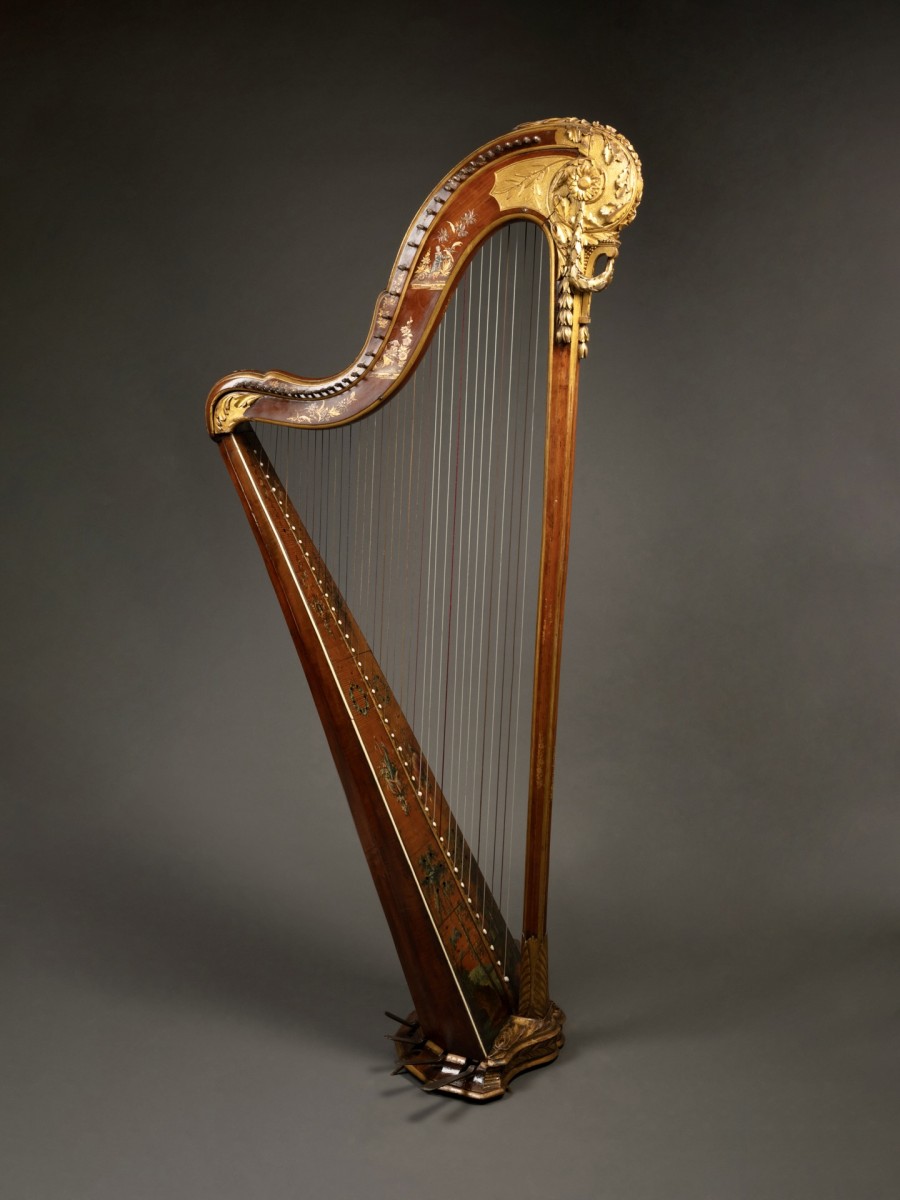
A rare thirty-six-string, seven-pedal, single-action harp with a Martin varnish finish.
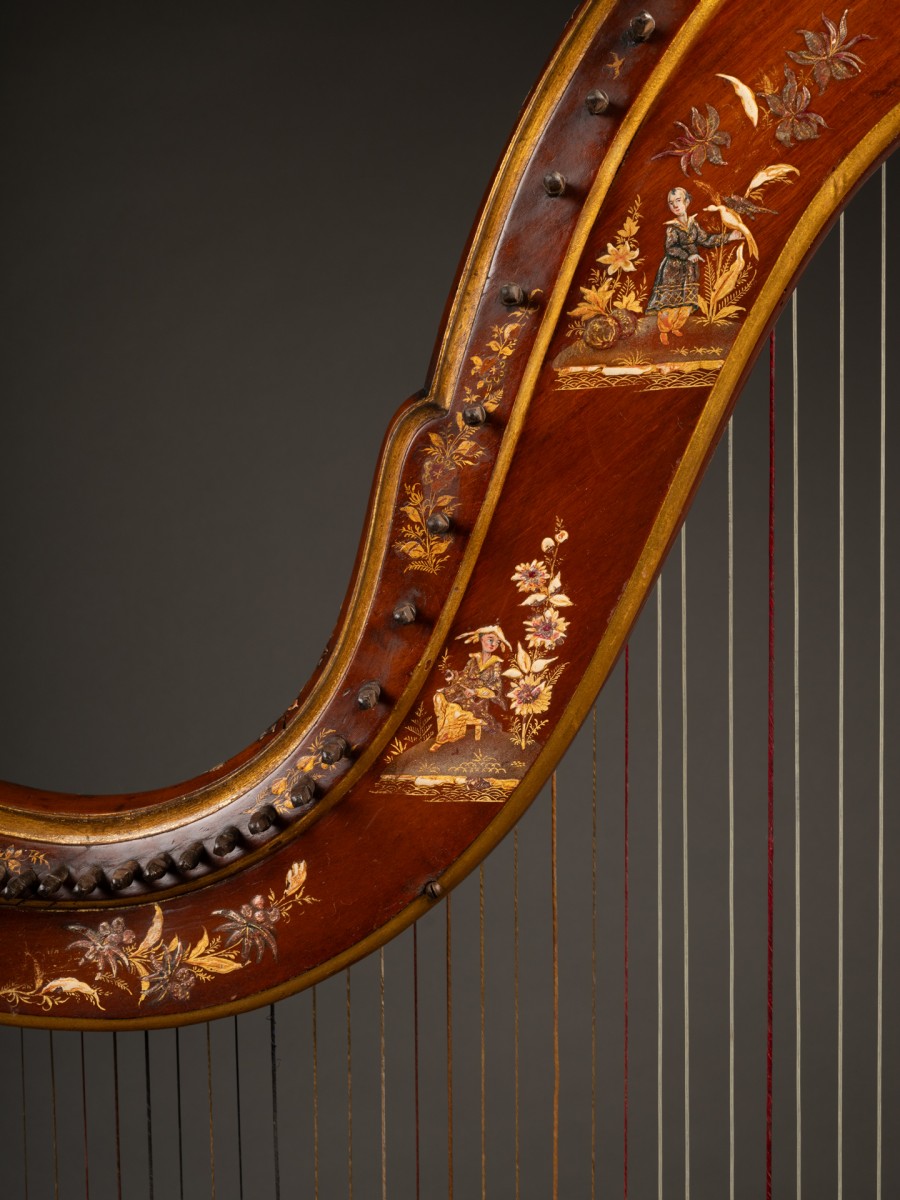
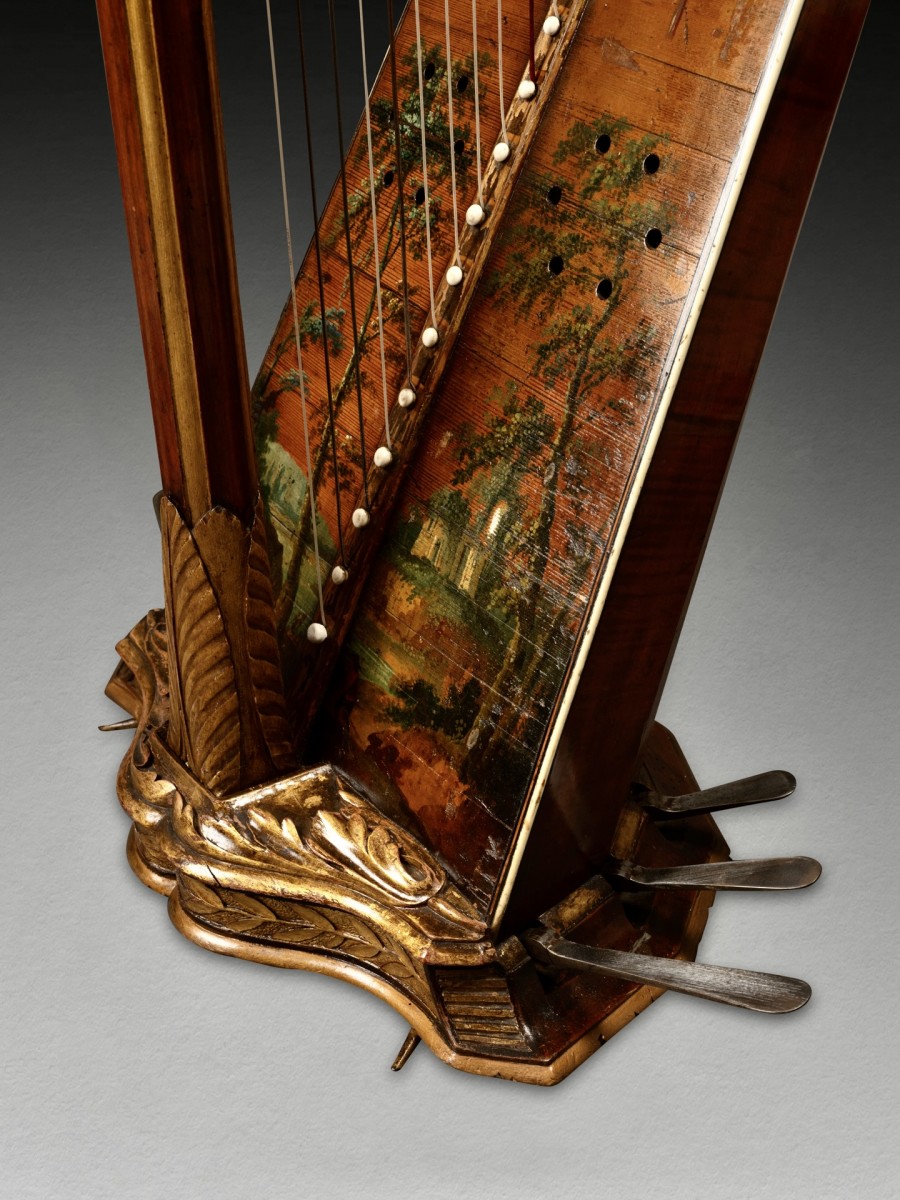
The six-sided soundbox, console, and column are made of flamed maple.
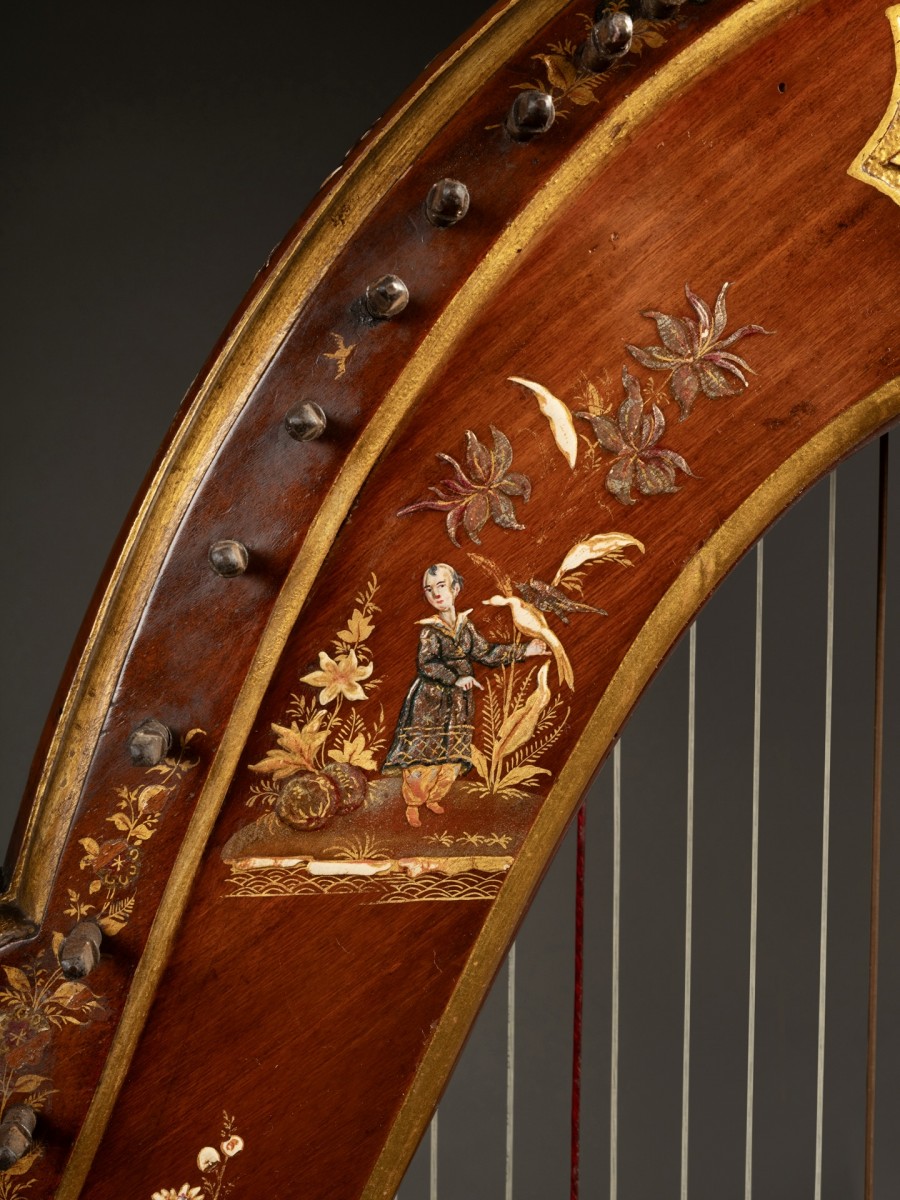
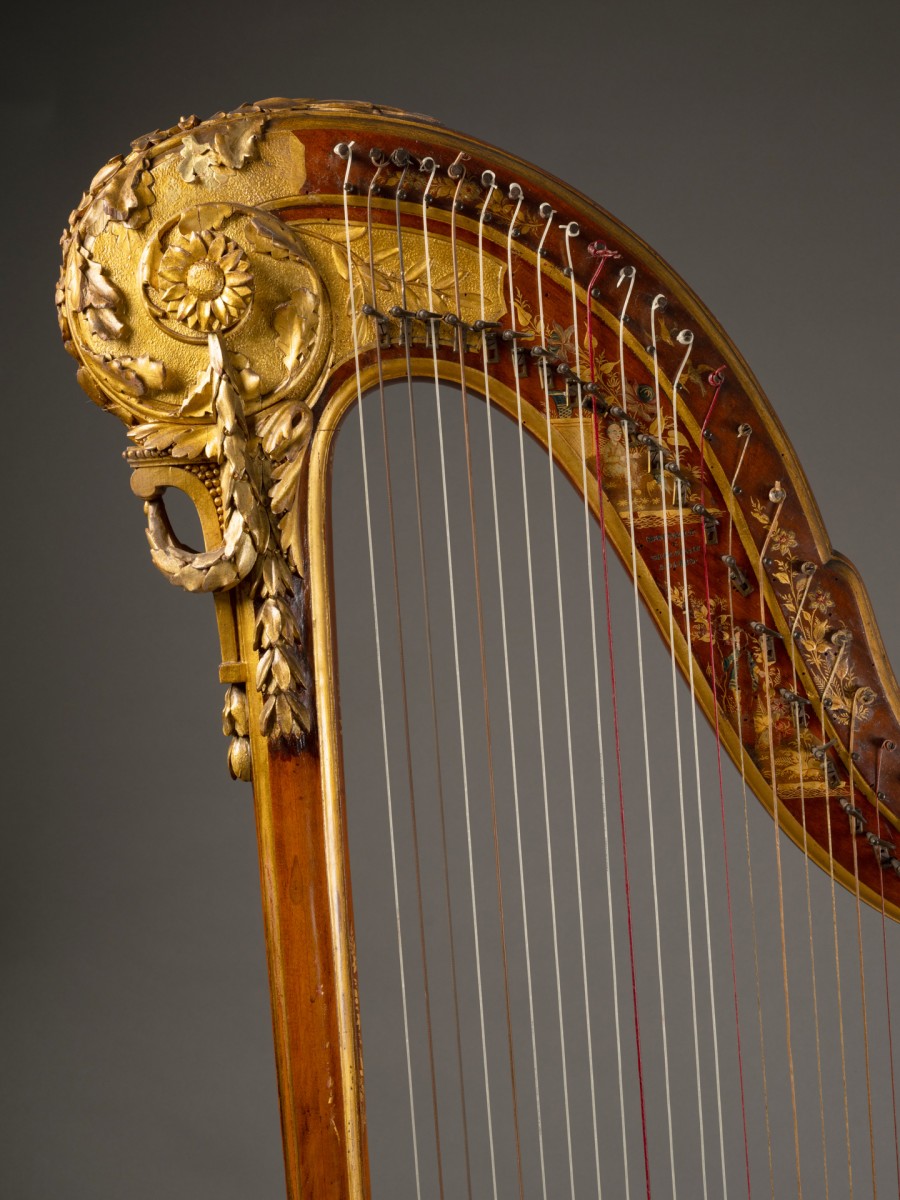
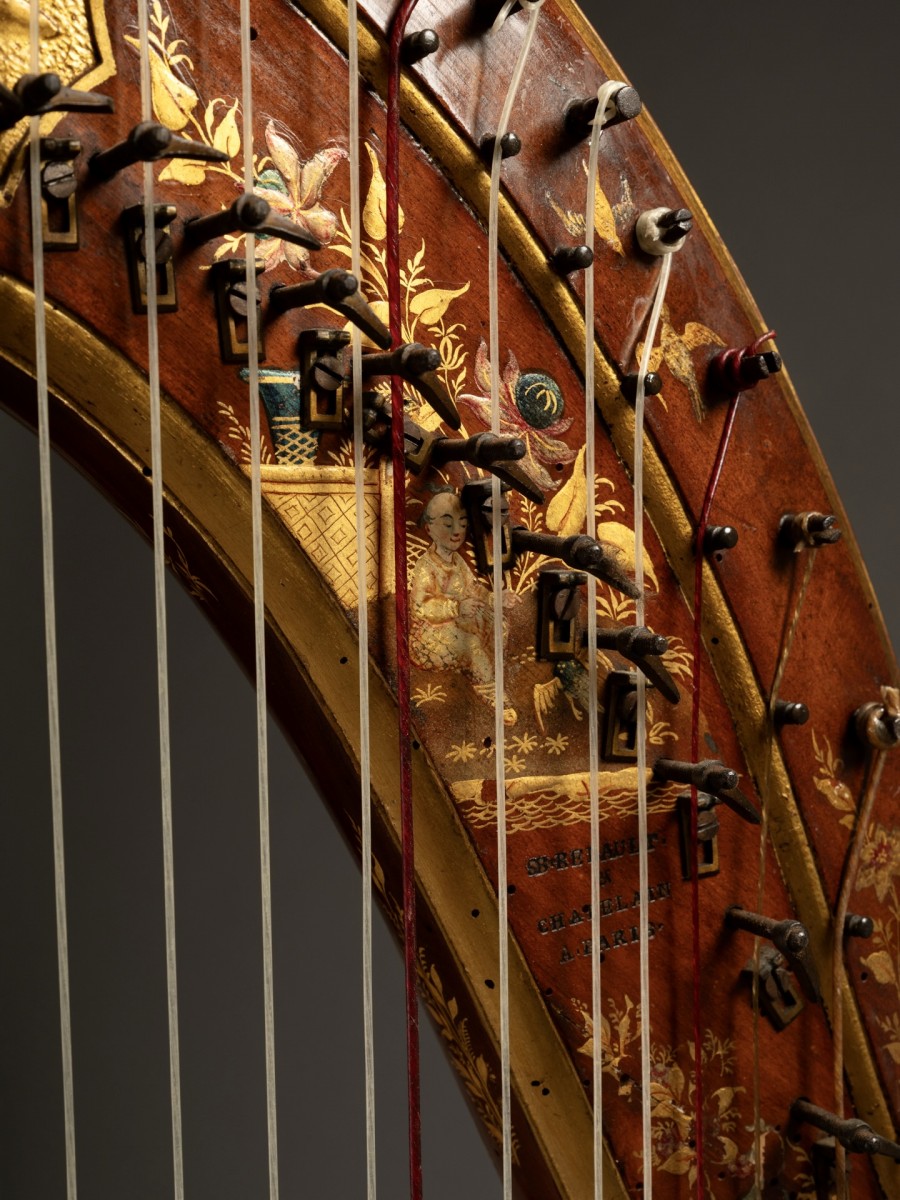
Delicate chinoiserie scenes are decorated in polychrome Martin varnish on the console and the crook.
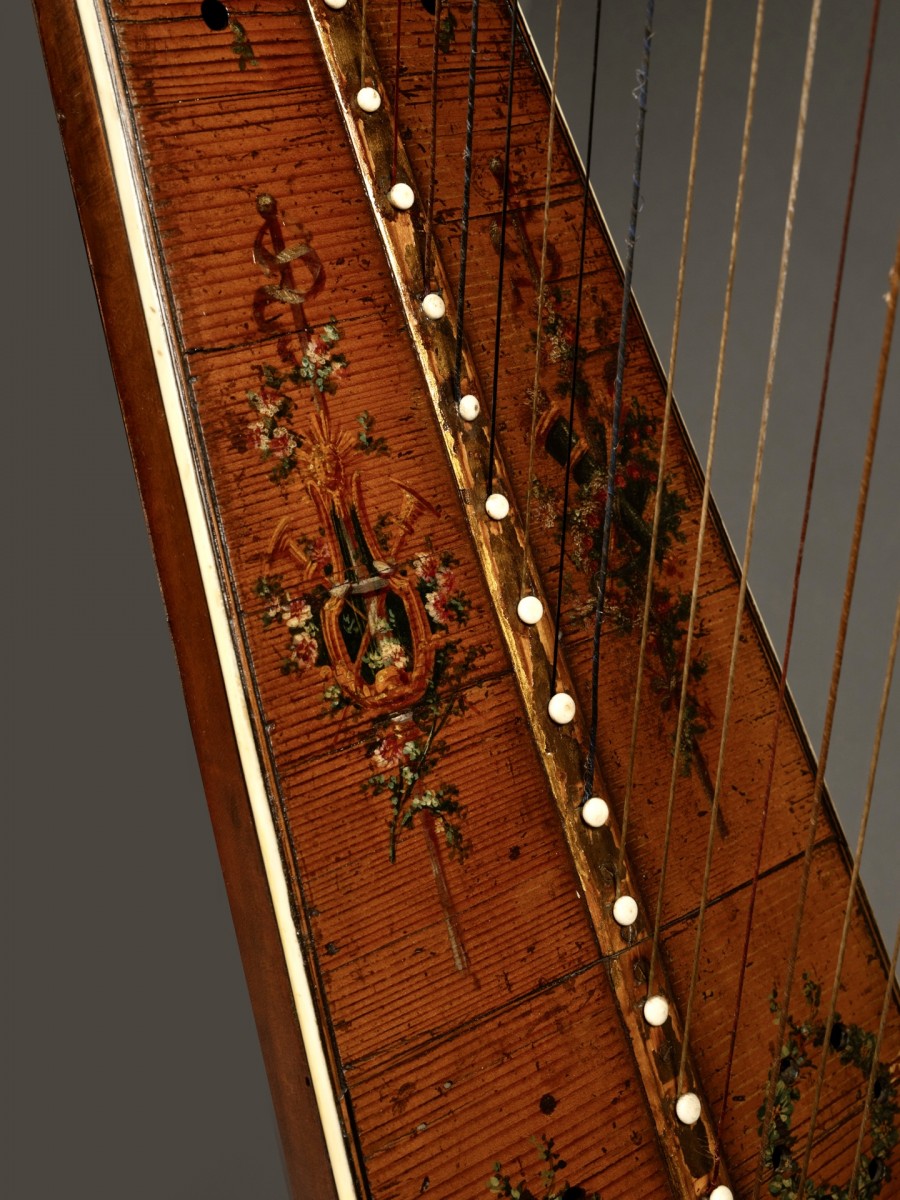
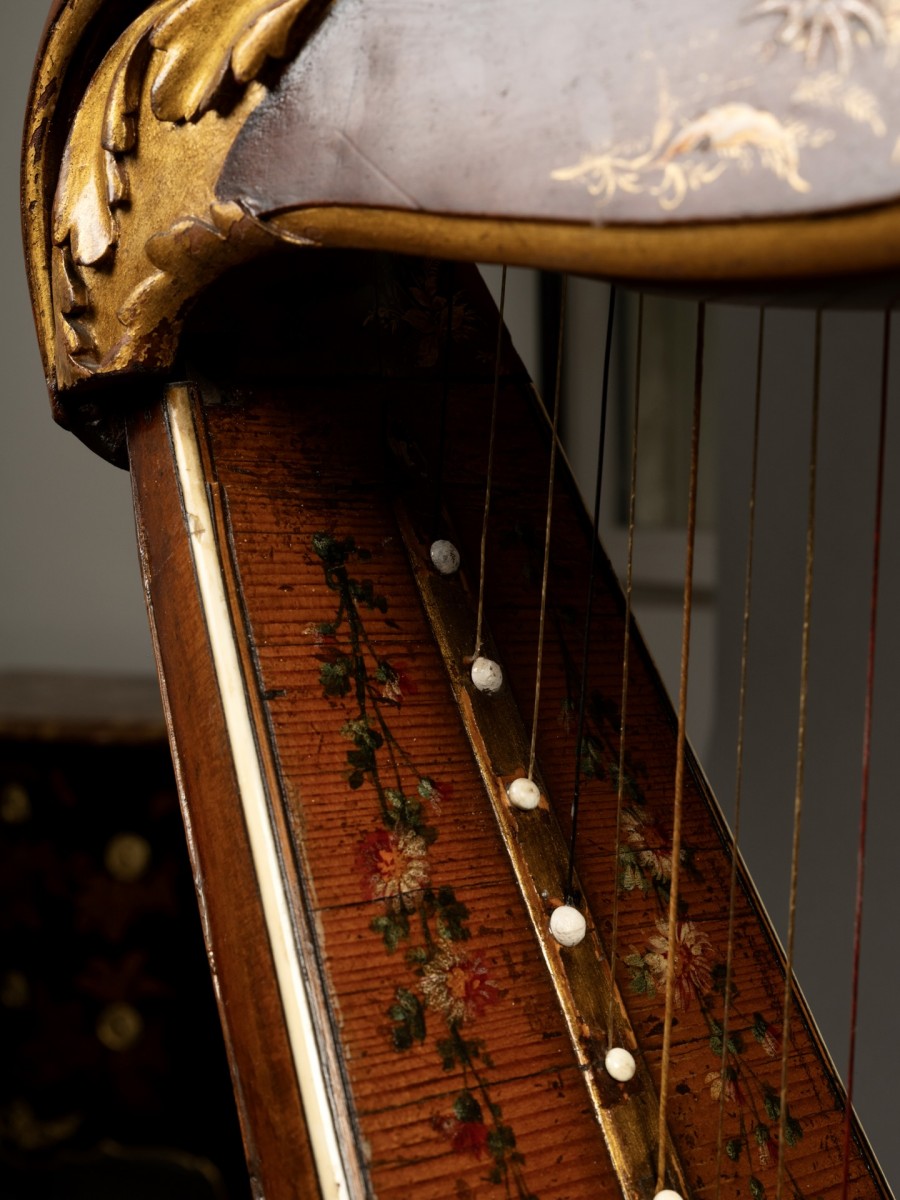
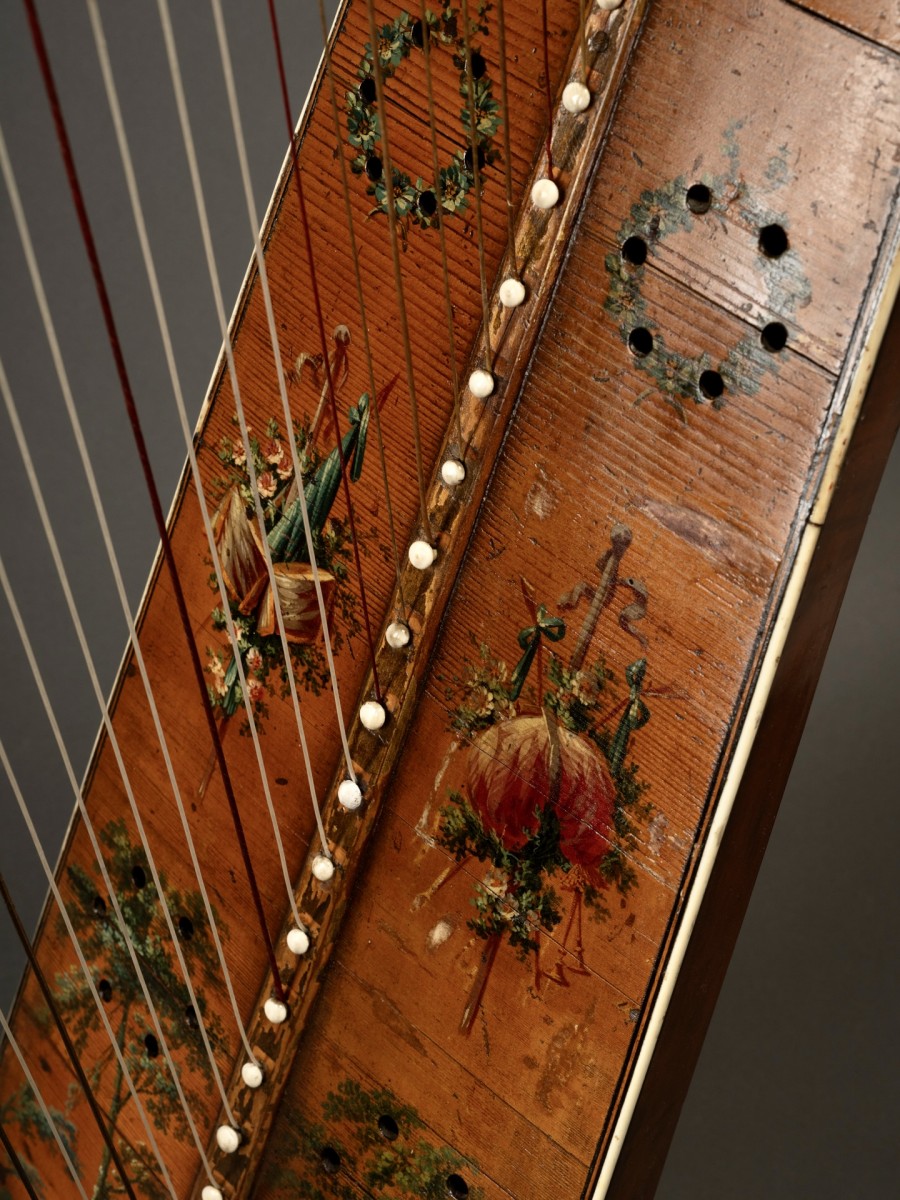
The fir soundboard is decorated in Martin varnish with musical trophies, war trophies, laurel wreaths, and bucolic landscapes.
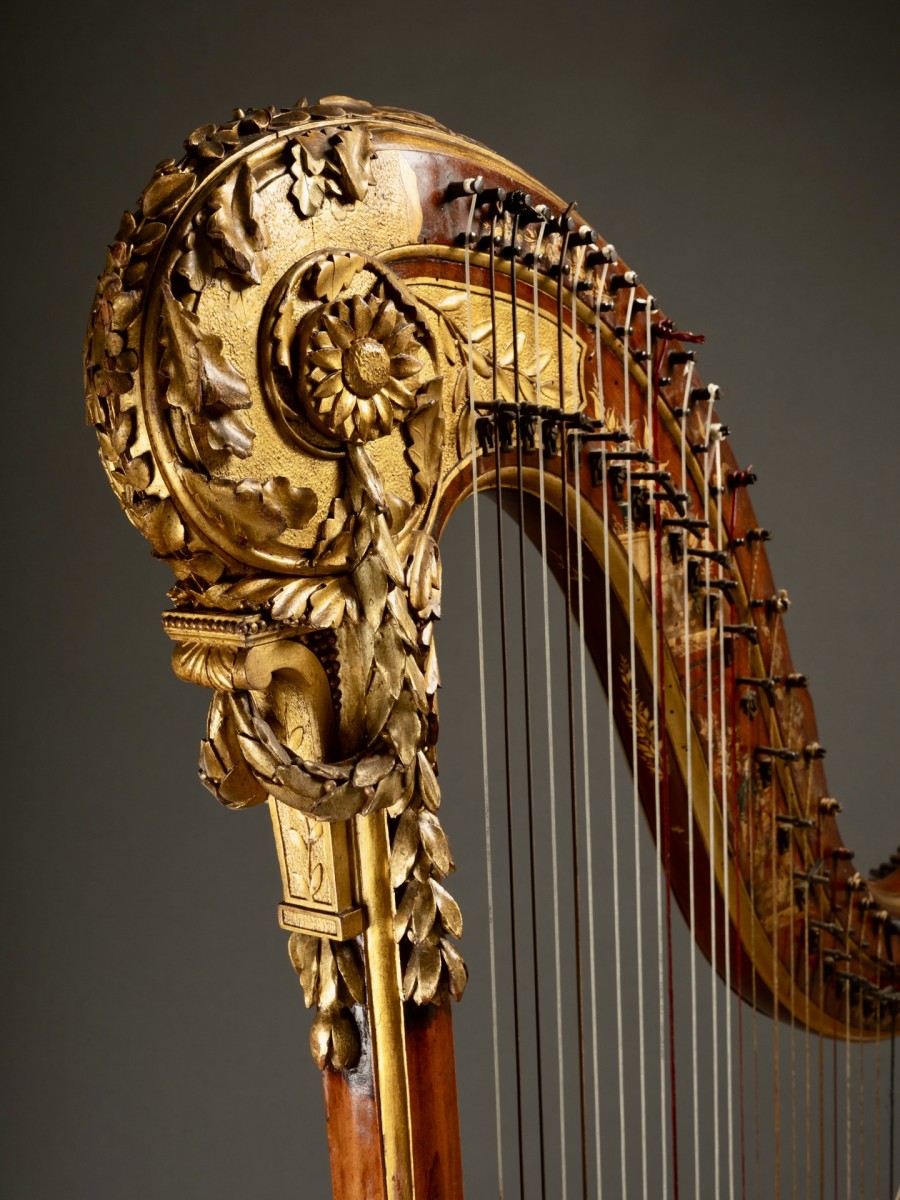
The maple column features gilded wood fluting and Martin varnish scrolls.
The carved and gilded wooden crook, shaped like acanthus leaves, is adorned with sunflowers and garlands of oak leaves.
Ink signature at the top of the soundboard: "Renault et Chatelain, rue de Braque, Paris" and branded "SB Renault & Chatelain à Paris" on the console.*
Parisian work from the late Louis XVI period, circa 1780-1790.
Dimensions:
Height: 160 cm; Width: 69 cm; Depth: 43 cm
A similar model, but on a black background, by Renault & Chatelain, is in the Musée de la Musique in Paris (Inv. No. E 1511).
*Sébastien Renault, along with François Chatelain, master luthier, founded the firm "Renault et Chatelain" in 1760.
They operated in Paris on Rue de Braque, at the corner of Rue Sainte-Avoye, under the name "À la Renommée" until 1792, before passing on the business, which was still in existence in 1811.
Our opinion:
The harp is an ancient instrument known since antiquity and was already present at Versailles at the beginning of the 18th century.
But it was the young Marie Antoinette who revived the instrument's popularity when she arrived from Vienna in 1770 with her personal harp. An excellent musician, she took a lesson every morning and gave private concerts at the palace.
The image of the queen playing the harp, like a vestal virgin in her muslin dress, would transcend borders.
From this would emerge a true golden age, with over two hundred harp shops coexisting in Paris, vying with each other in imagination to decorate, sculpt, gild, and adorn with mother-of-pearl or ivory instruments that became veritable works of art, gracing any self-respecting music room.
While the queen was a fashion icon, she was also a great collector, particularly of oriental objects such as Japanese porcelain and lacquerware.
She favored lacquers with light backgrounds, in keeping with the fashion of her time. Harp makers would follow this trend, gradually abandoning red and black backgrounds in favor of lighter ones.
The soundboard of our instrument features a Martin varnish decoration on a fir wood background similar to that of the queen's harp, which is preserved at the Vendôme Museum. As for the console table, adorned with chinoiserie motifs directly onto a background of figured maple, it incorporates rare Japanese lacquers from the Izu Islands, applied directly to light, figured wood.
This erudition and mastery of technique represents the quintessence of Martin varnish and marks the pinnacle of French lacquerers, who now rivaled the most prestigious Japanese workshops.