Offered by Galerie Lissier
REQUEST INFORMATION

Artist: Flemish Tapestry Manufactory, 17th Century
Period: 17th Century
Style: Other Style
Condition: Excellent Condition
Material: Wool and Silk
Width: 370 cm
Height: 245 cm
Depth: 1 cm
This magnificent tapestry has undergone a thorough cleaning, hand-lined with 100% linen fabric, and meticulous inspection by our experts in our workshop. It is now ready to adorn your home.
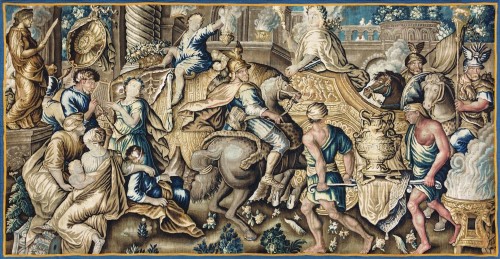
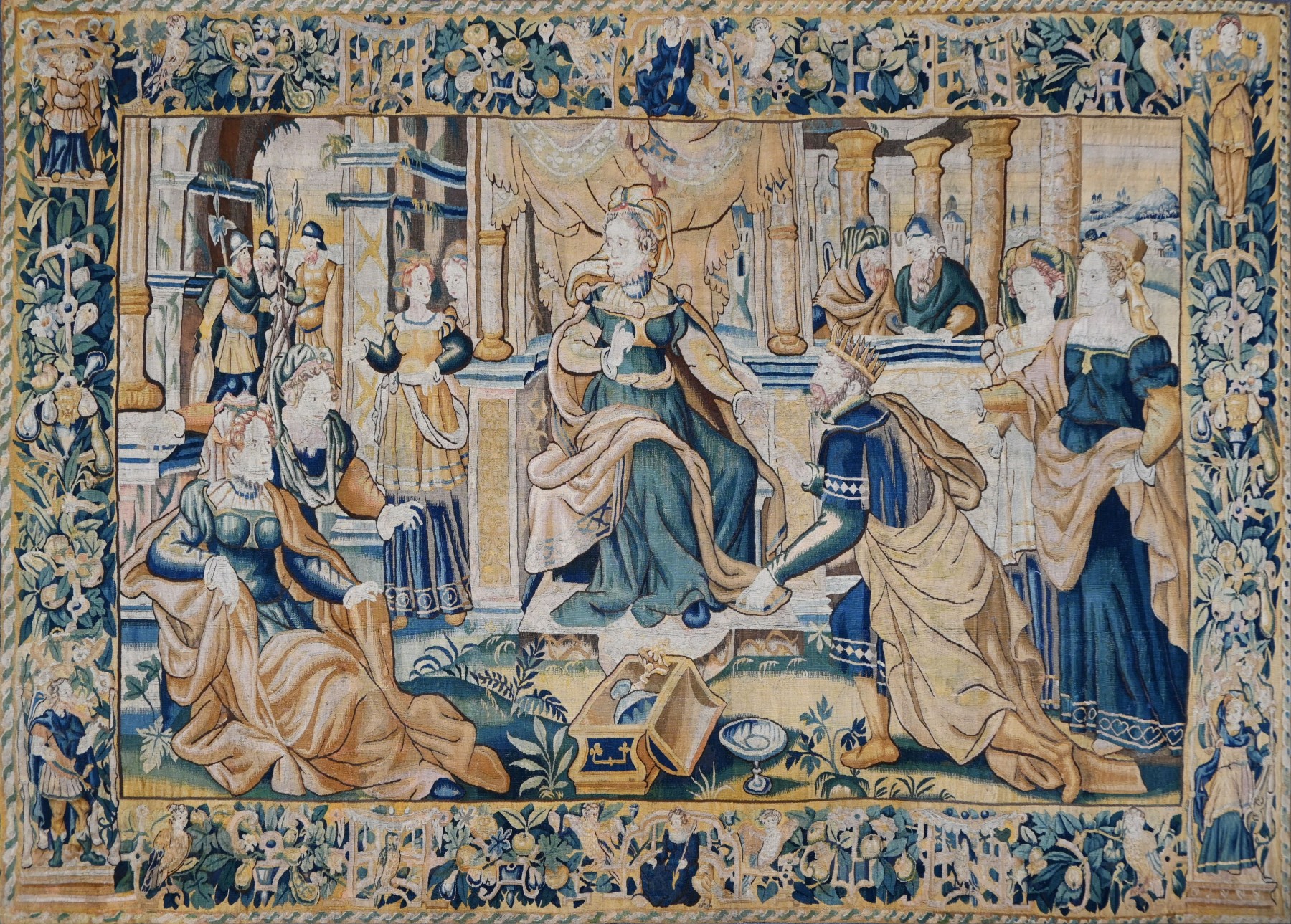
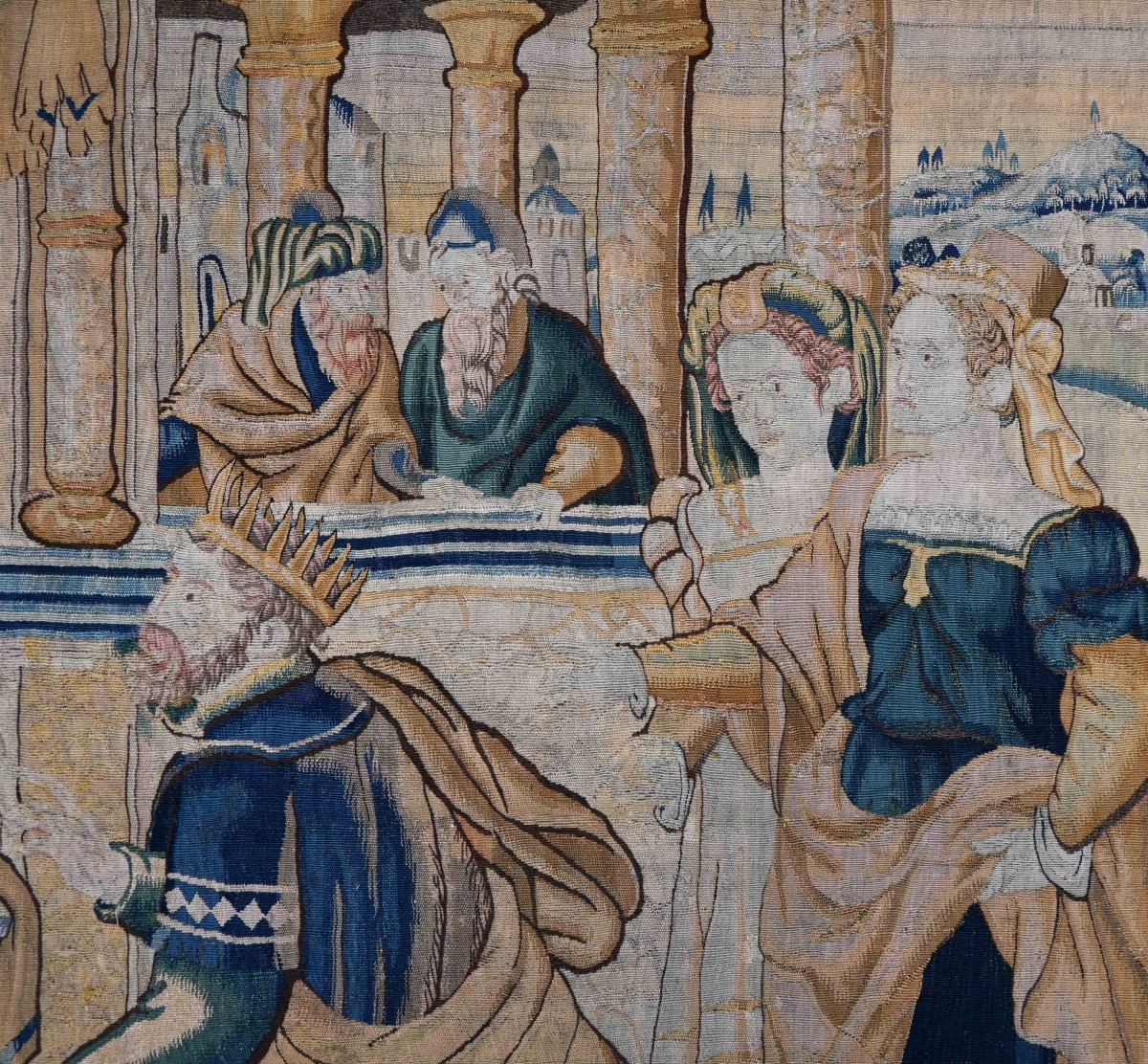
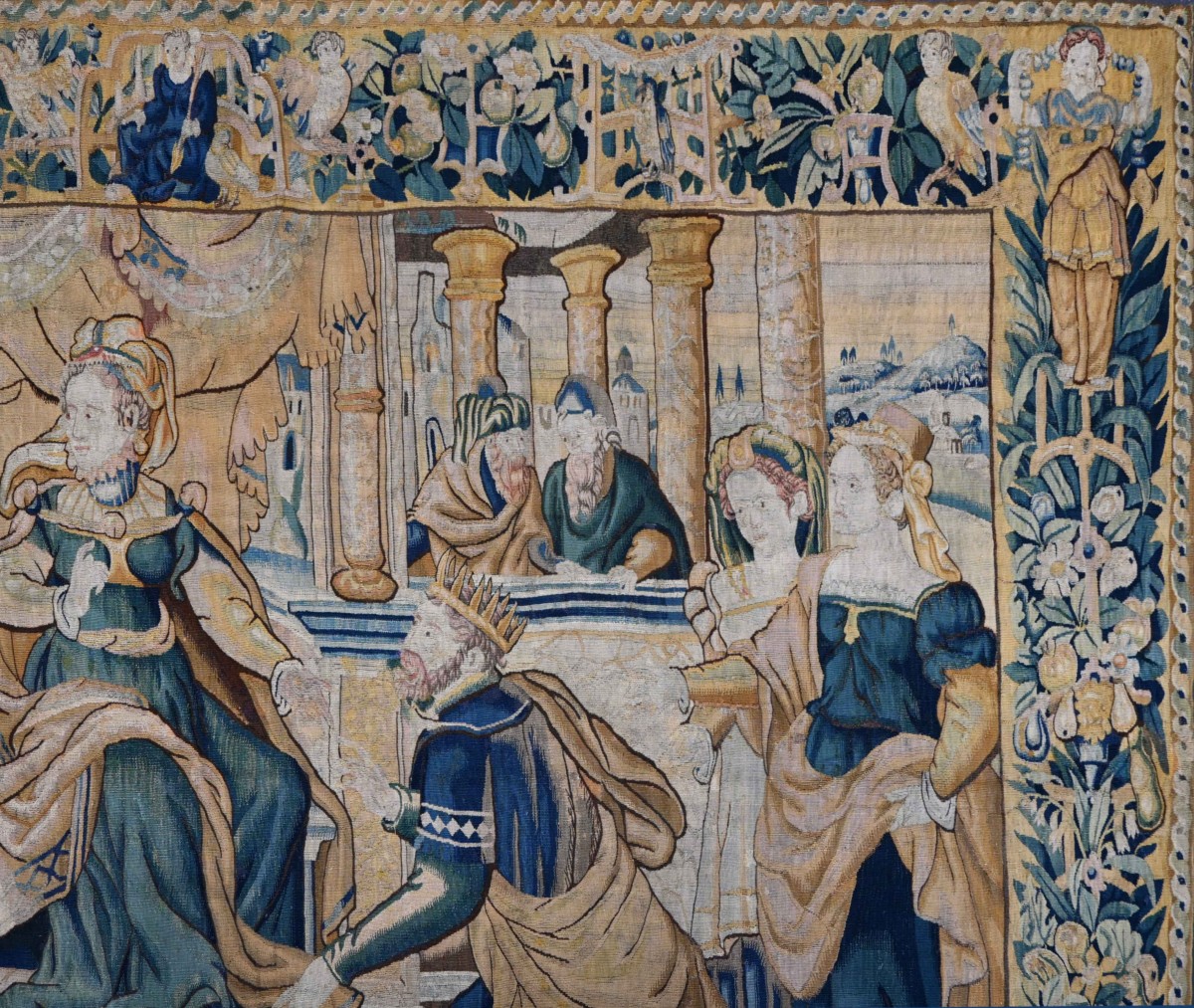
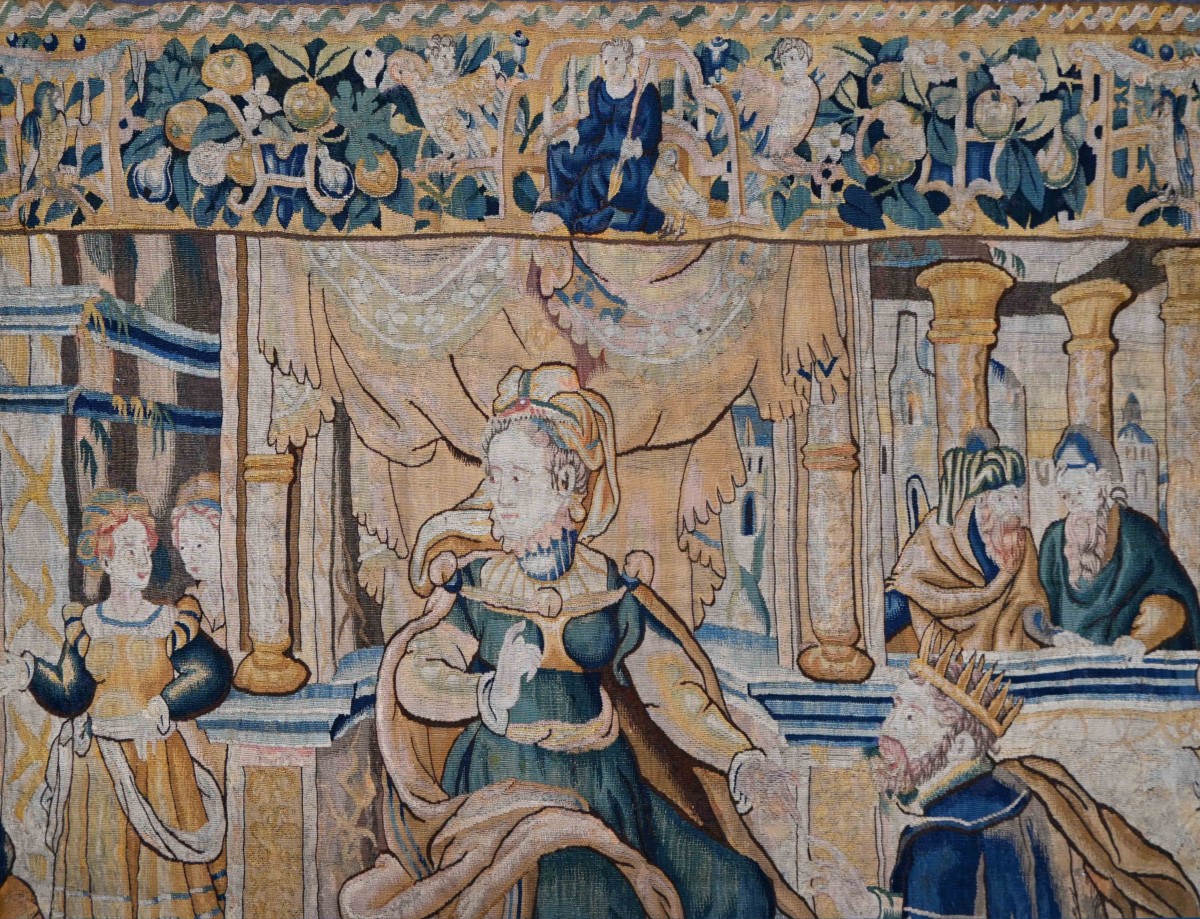
This 17th-century Flemish tapestry, entitled "The Rejection of Vashti and the Ascent of Esther," illustrates a biblical episode from the Book of Esther, recounting the fall of Queen Vashti and the ascension of Esther to the court of King Ahasuerus (Xerxes I).
Visual Description
General Composition:
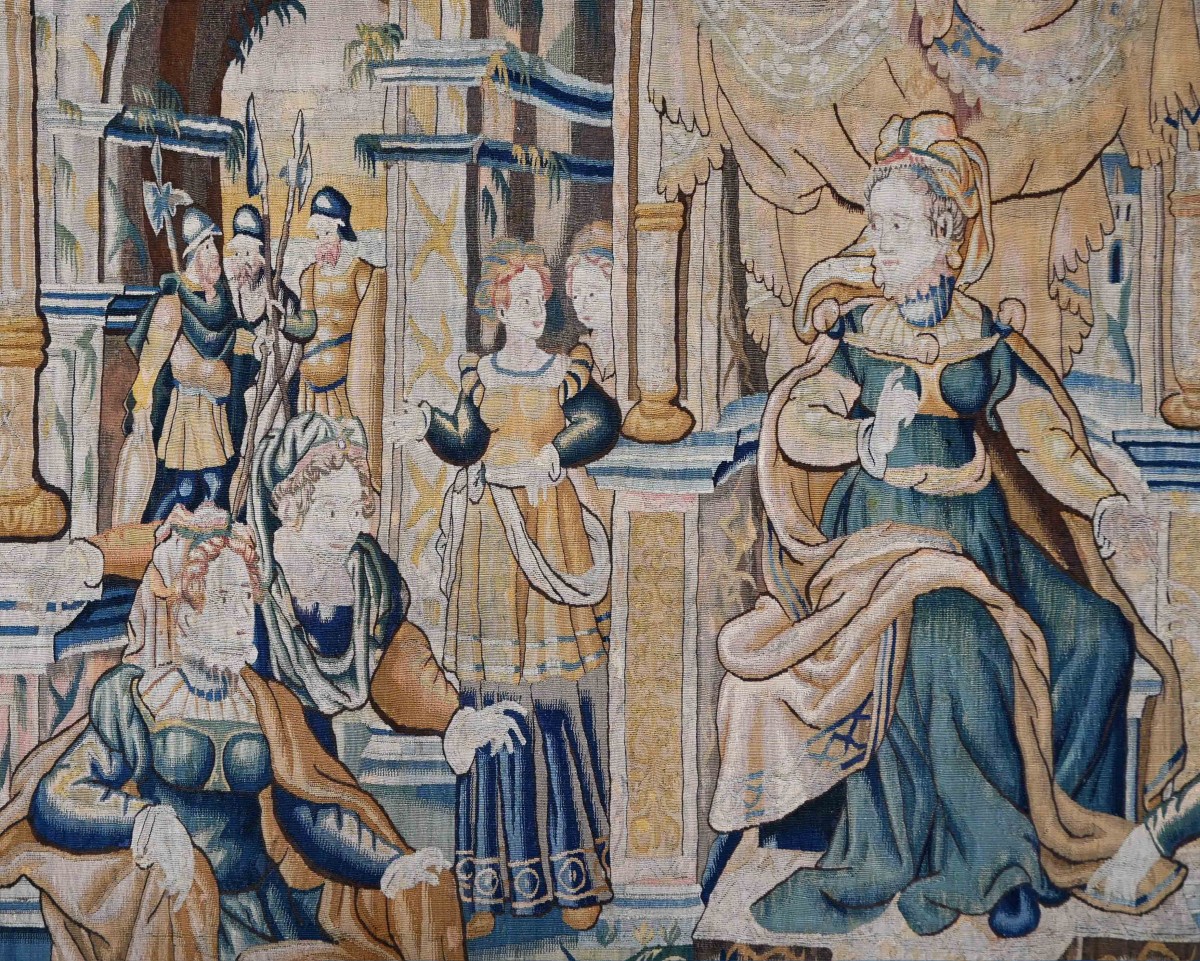
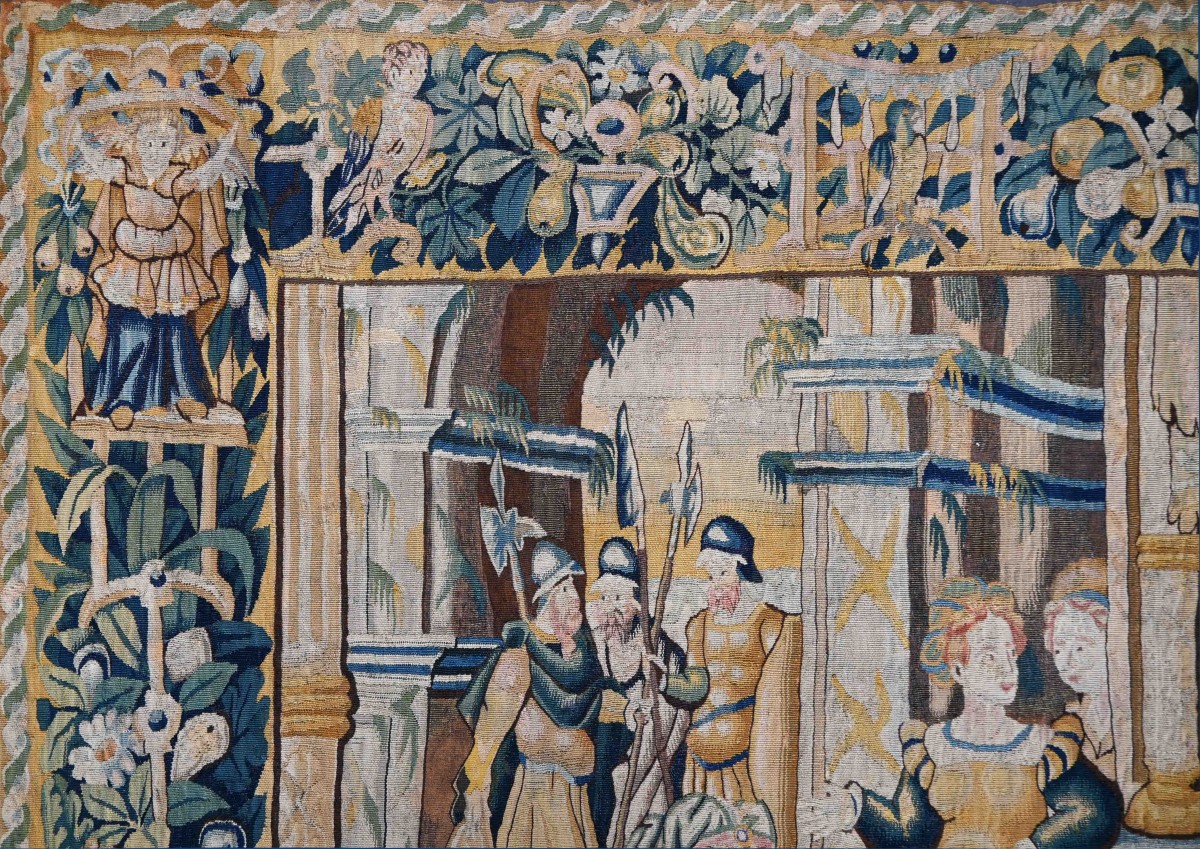
The scene takes place in a sumptuous interior, typical of Flemish tapestries of the Baroque period, with columns, gilded draperies, and monumental architecture. At the center sits a queen—likely Esther—surrounded by richly dressed ladies-in-waiting and servants.
Main Figures:
The central figure, seated on a throne beneath a canopy, represents Queen Esther, a symbol of virtue and courage.
At her feet, a kneeling, crowned man presents her with homage or a supplication: this is King Ahasuerus, acknowledging Esther's noble lineage.
Other figures in the background participate in the scene: courtiers, guards, and ladies of the court.
Decorative Details:
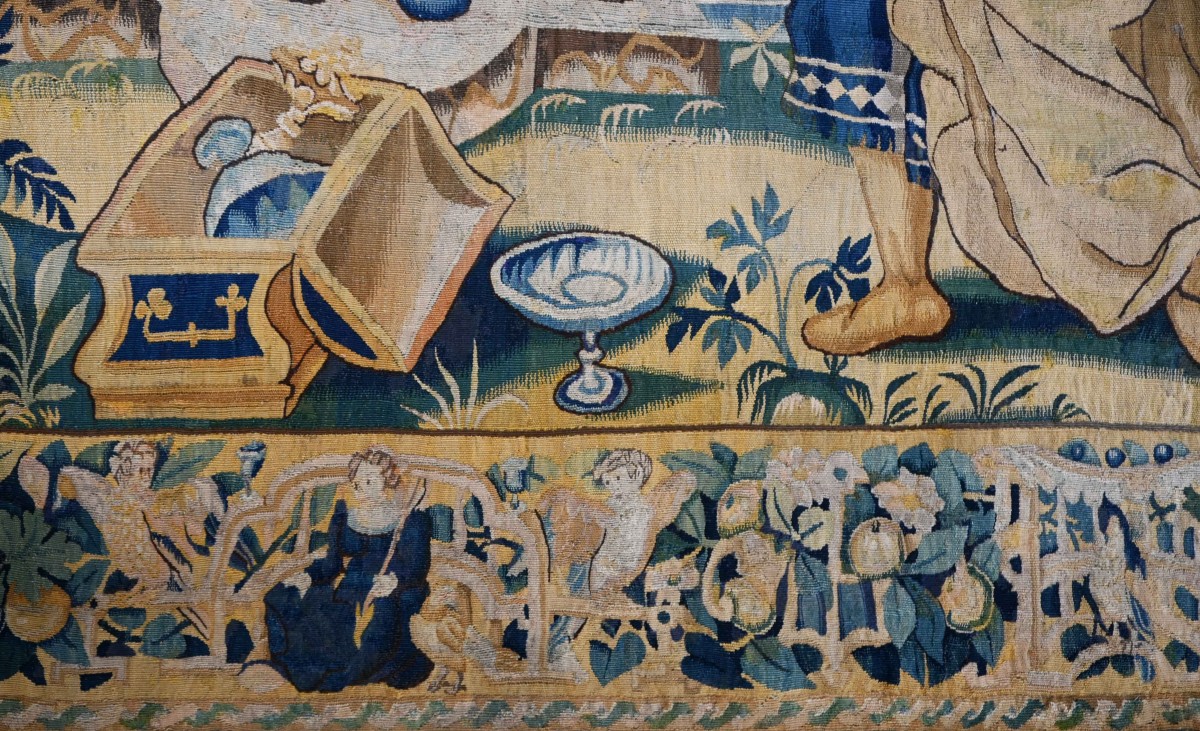
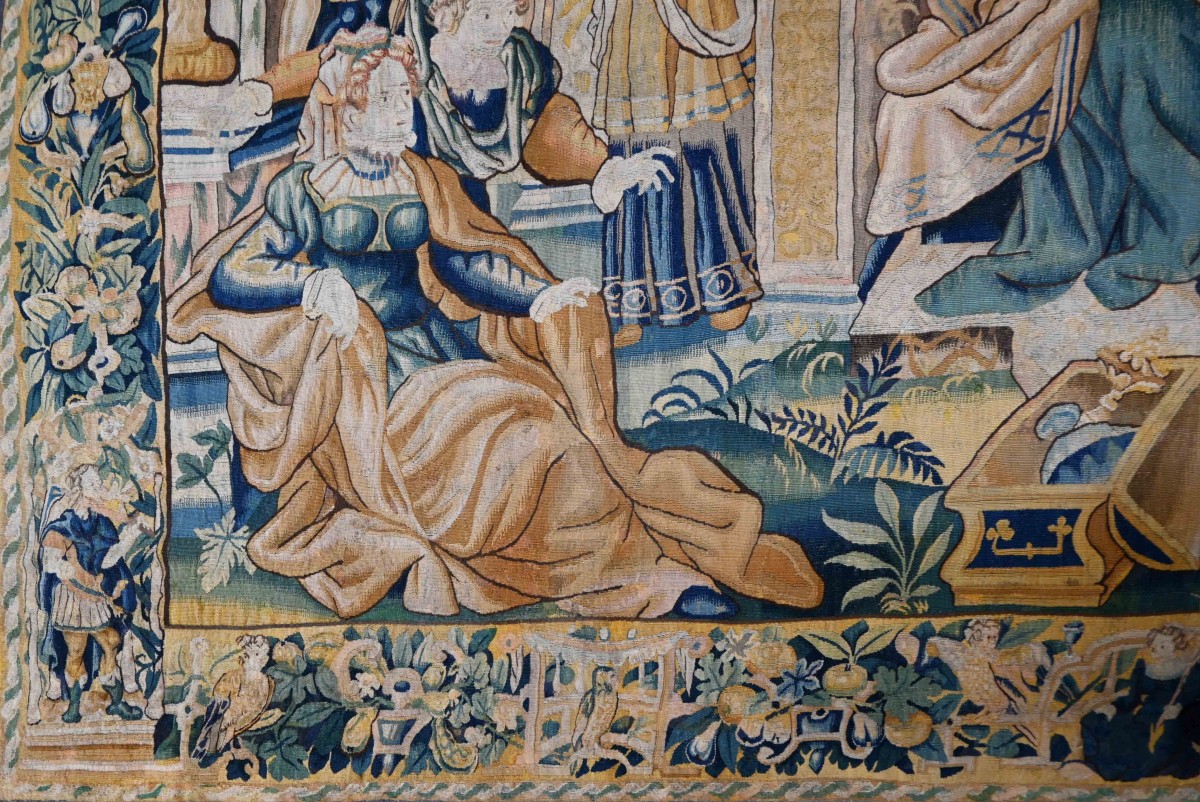
The border is richly decorated with floral motifs, fruit, birds, and putti, typical of 17th-century Flemish workshops.
The dominant colors are green, deep blue, gold, and ochre, harmoniously blended to create an impression of richness and depth.
Below, symbolic objects (an open chest, jewelry, cups) evoke wealth and the transfer of power or royal favor.
Iconographic Context
The subject illustrates the transition between two queens:
Vashti, the former queen, located on the left side of the scene, is deposed for refusing to obey the king's order to appear before him.
Esther, a young Jewish woman, is chosen for her beauty and wisdom, and will become the heroine who saves her people.
The tapestry thus depicts a moment of humility and divine grace, where Esther's virtue is rewarded.
Style and Provenance
School: Tapestry Manufactory of Flanders (Oudenaarde)
Period: 17th century
Technique: Wool and silk weaving, rich in nuances and figurative details
Dimensions: 370 cm (width) × 245 cm (height)
Interpretation
This work illustrates both a moral and religious message (the reward of feminine virtue) and is a masterpiece of Flemish decorative art, combining biblical narrative and princely splendor.
It would have adorned a state room or a noble gallery, serving both as a moral lesson and a symbol of prestige.
Delevery information :
Delivery Terms at Galerie Lissier :
We take great care to ensure that every work of art purchased on Anticstore reaches you safely and in the best possible condition.
Delivery:
All our merchandise is shipped free of charge via renowned carriers such as UPS or DHL, with full tracking, worldwide. We ensure that each tapestry or rug is delivered in secure packaging, guaranteeing its protection and integrity.
Customs Fees:
For deliveries outside the European Union, any customs duties, import taxes, or fees related to customs formalities are the responsibility of the buyer. We recommend consulting local authorities to understand the specific requirements in your country.
Our goal is to provide you with a serene and prestigious shopping experience, from our gallery to your space. Every acquisition reflects our commitment to quality, safety, and impeccable service.