Offered by Dei Bardi Art
REQUEST INFORMATION

Sculptures and works of art from the Middle Ages and the Renaissance
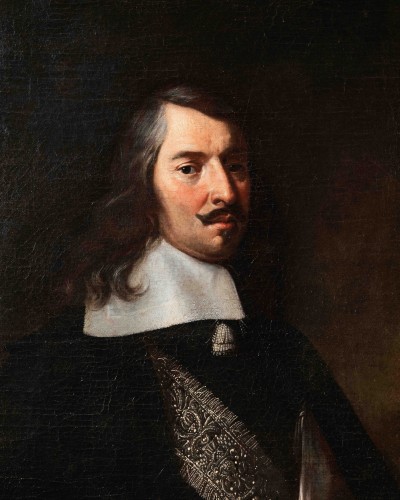
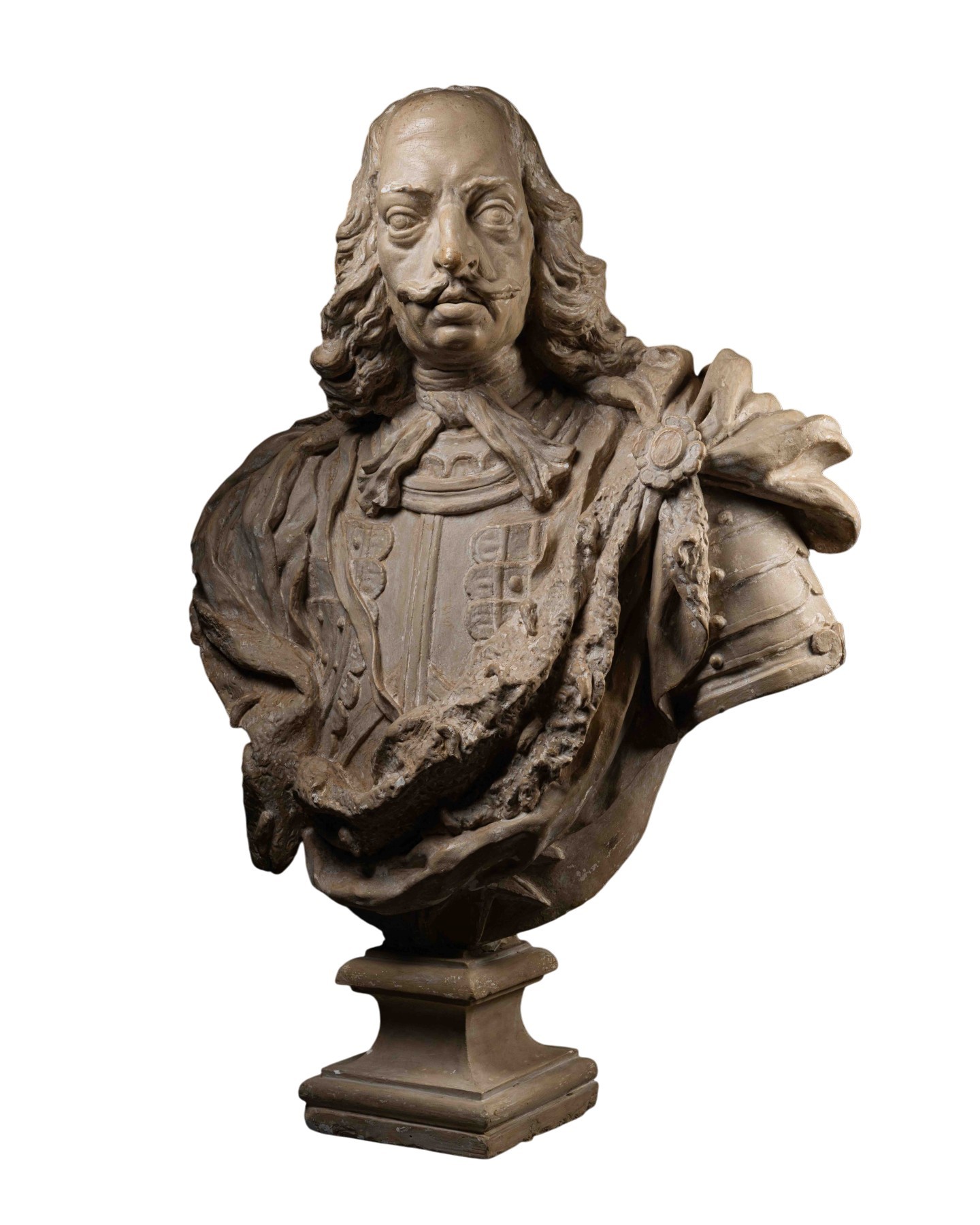
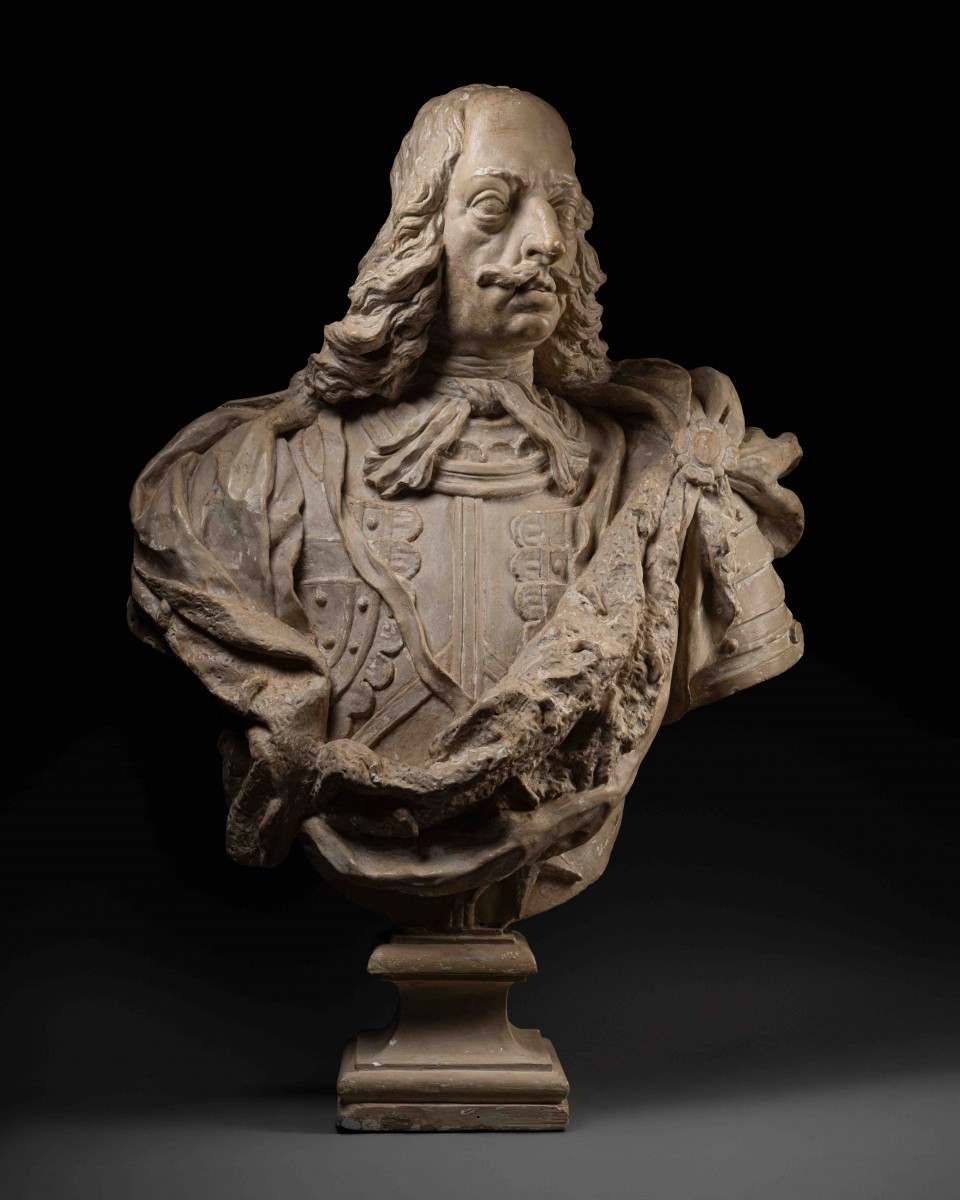
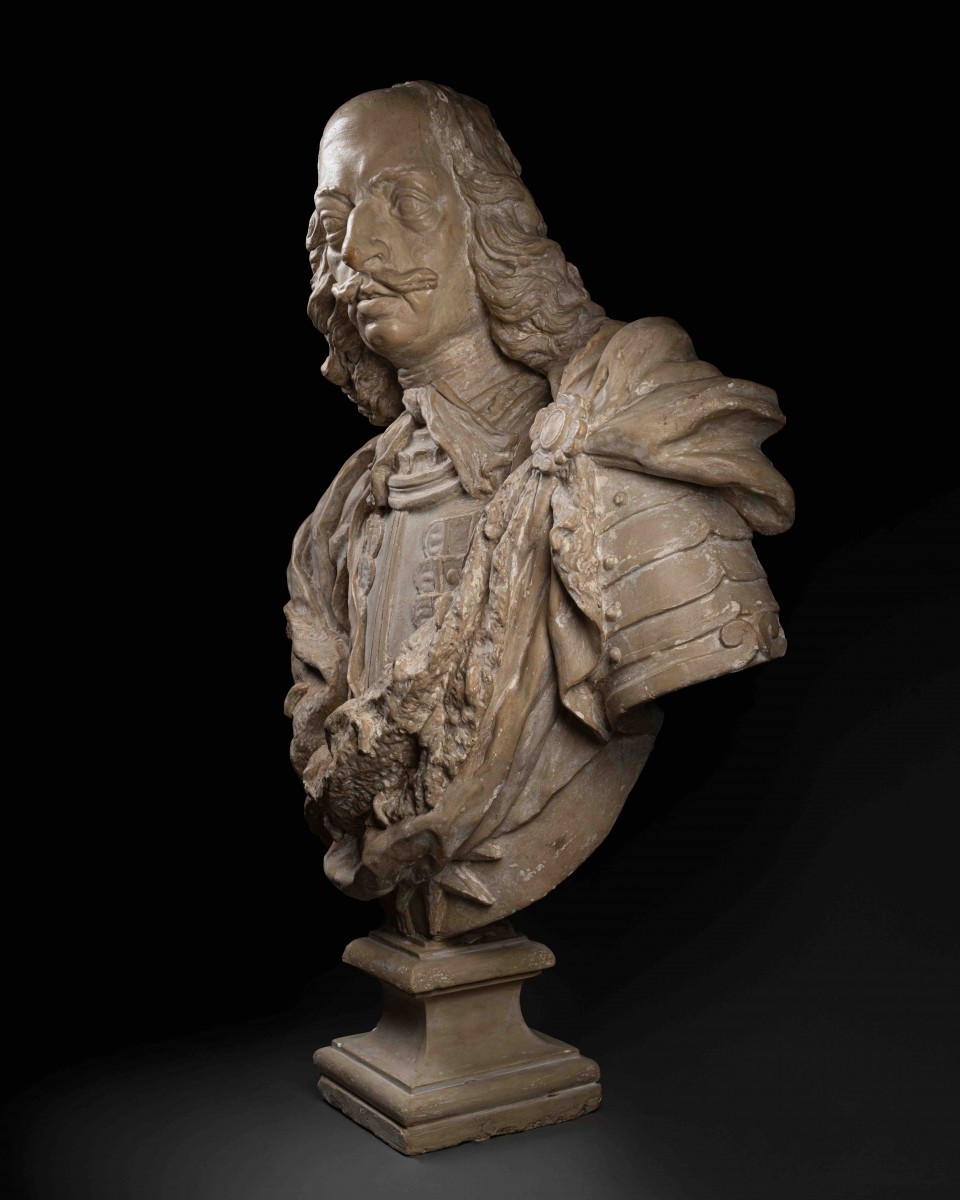
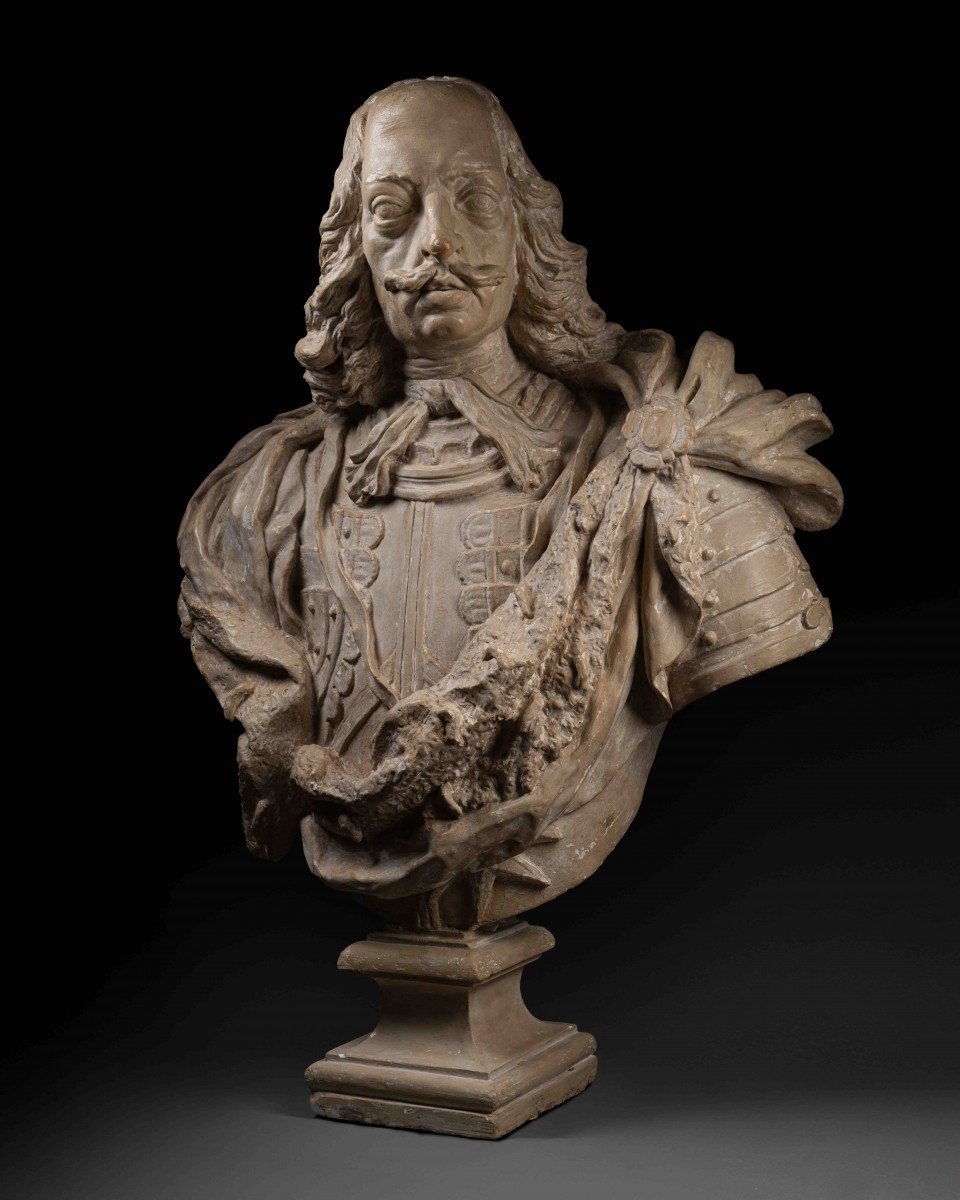
Ferdinando II de’ Medici (1610–1670)
Bust, mid-17th century
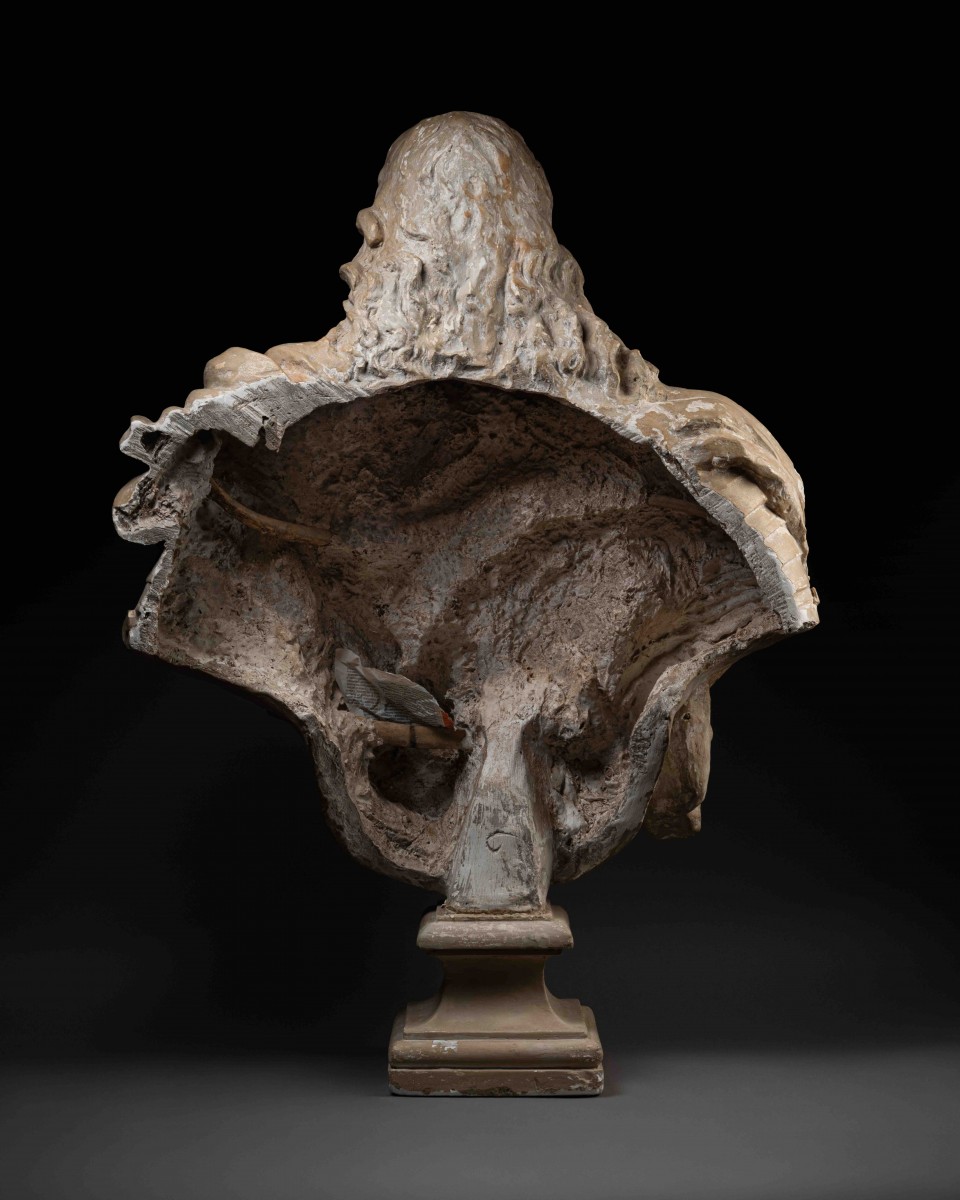
Plaster
107 x 78 x 32 cm
This finely modelled plaster bust represents Ferdinando II de’ Medici, Grand Duke of Tuscany, shown at half-length in ceremonial armour and draped with a sash fastened at the shoulder by a rosette. Depicted with long flowing hair and a thin moustache, the sitter turns his head slightly, conveying both dignity and alertness—hallmarks of Baroque Medicean court portraiture.
The bust closely follows the established iconography of Ferdinando II disseminated from the 1630s onward, notably through the painted portraits of Justus Sustermans, such as those in the Galleria Palatina, Palazzo Pitti, Florence. The composed authority of the expression, the handling of the hair, and the subtle psychological presence recall Sustermans’s influential court portraits, which shaped contemporary sculptural representations. In sculpture, comparisons may be drawn with marble busts produced in Florence during Ferdinando II’s reign by artists such as Giovanni Battista Foggini, as well as by sculptors of the preceding generation influenced by Giovan Battista Pieratti and Francesco Mochi.
The work reflects the Florentine tradition of official portrait busts developed in the mid-17th century. The sensitive modelling of the face, rhythmic treatment of the hair, and careful rendering of armour and drapery suggest familiarity with contemporary marble prototypes, here translated into plaster, likely for workshop use, presentation, or as a modello. Plaster busts of Medici rulers were widely produced for courtly and diplomatic dissemination, as well as for artists’ studios. The present example retains a strong sense of monumentality and a beautiful patina, attesting to its historical function and age.