Offered by Schoppmann Art and Antiques

Flowerpot
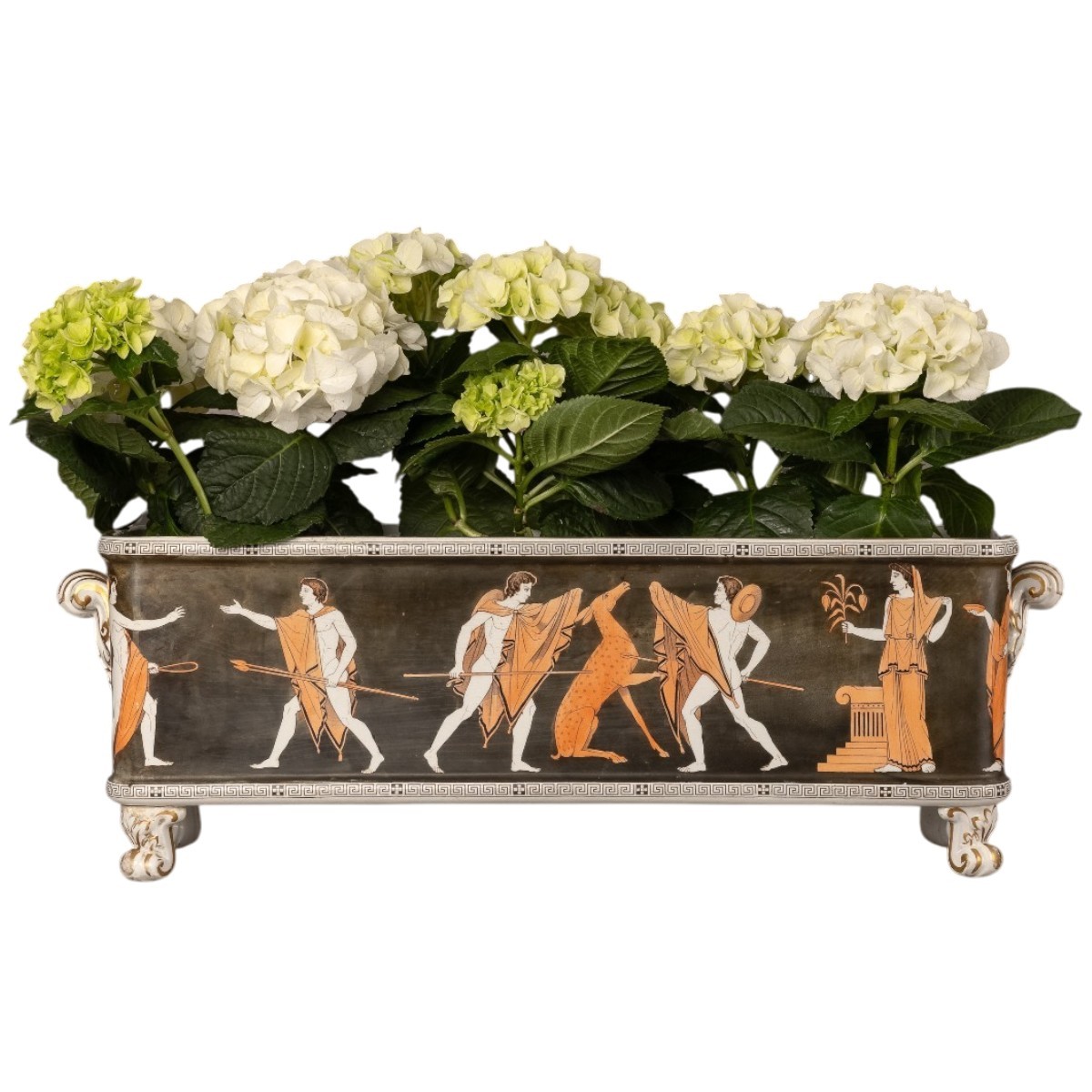
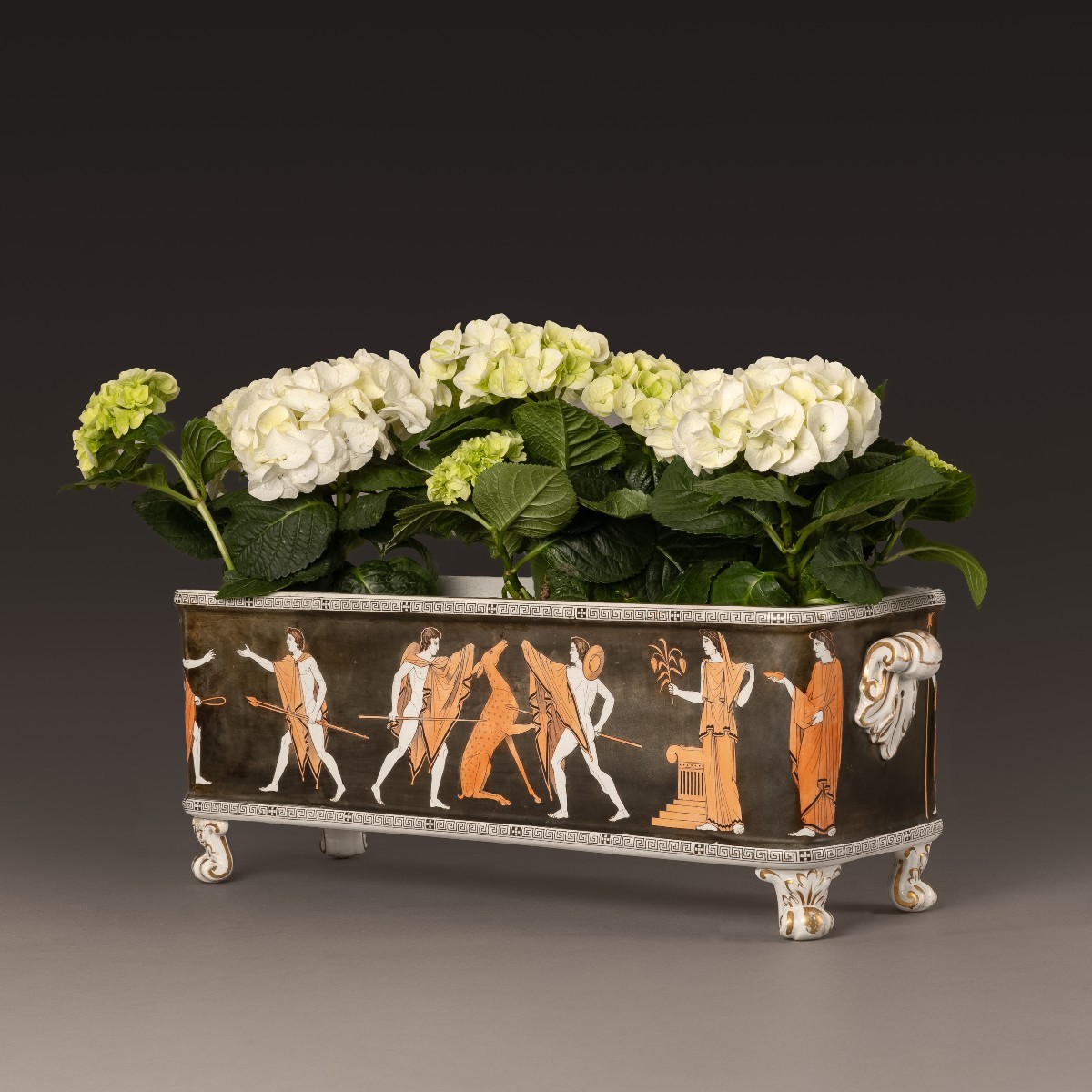
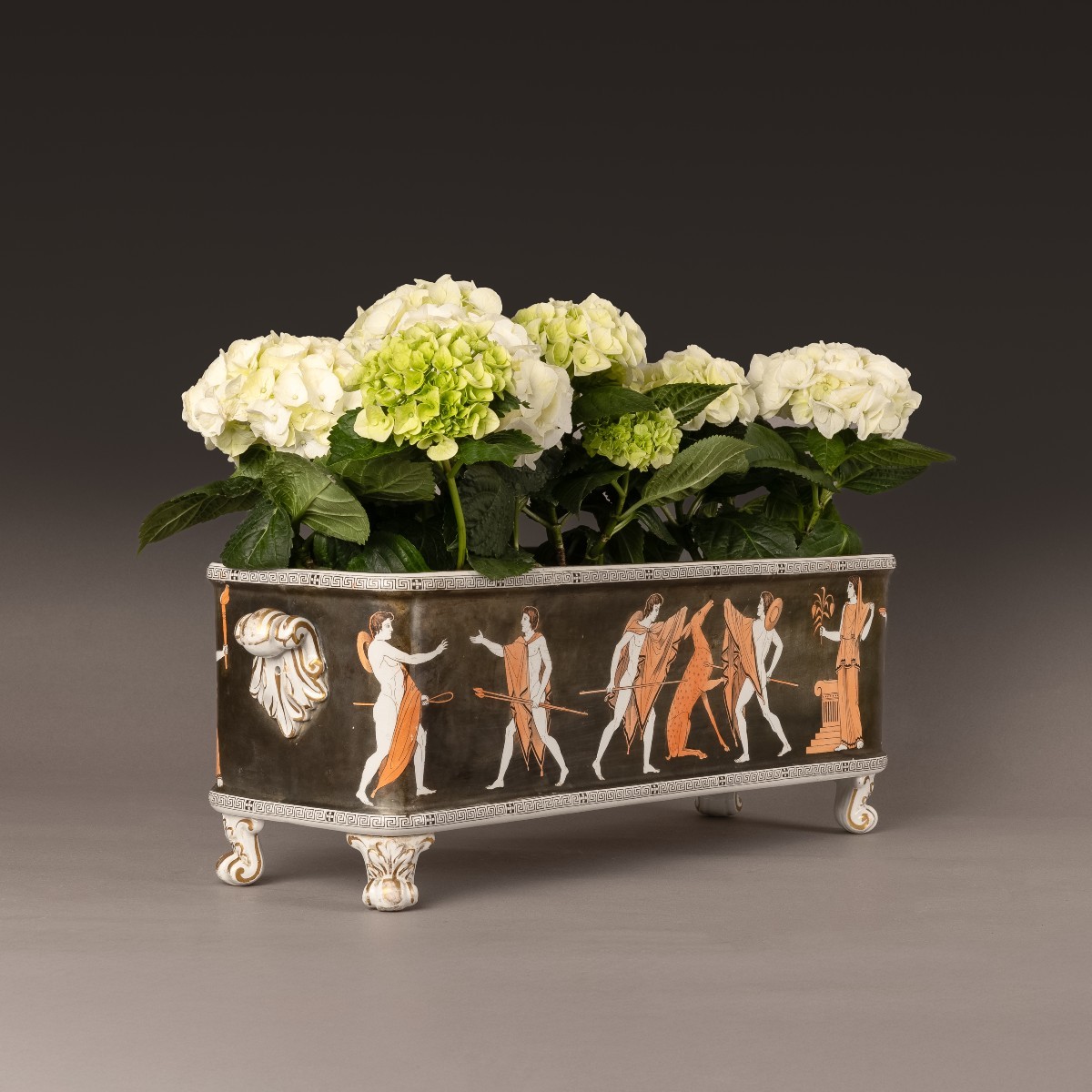
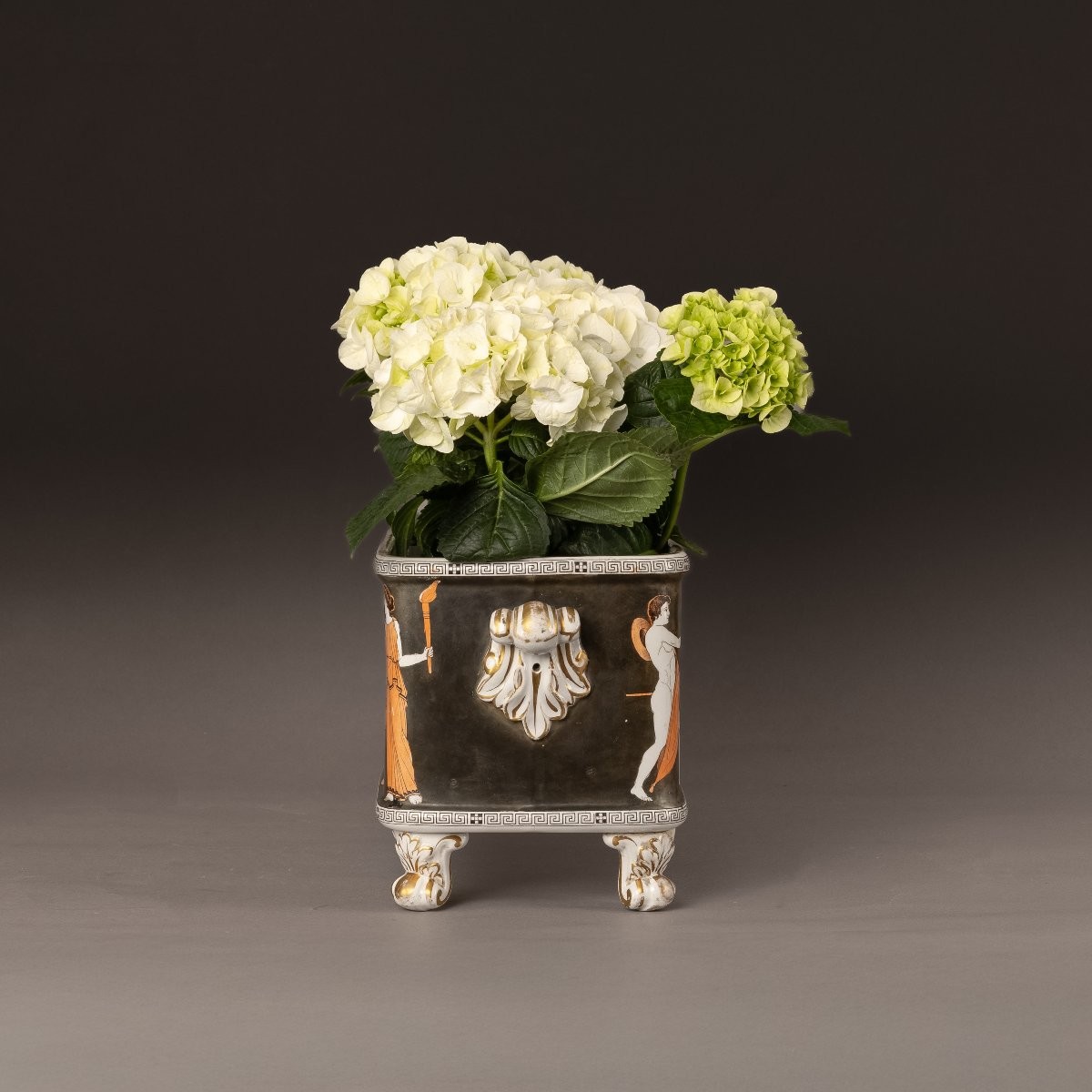
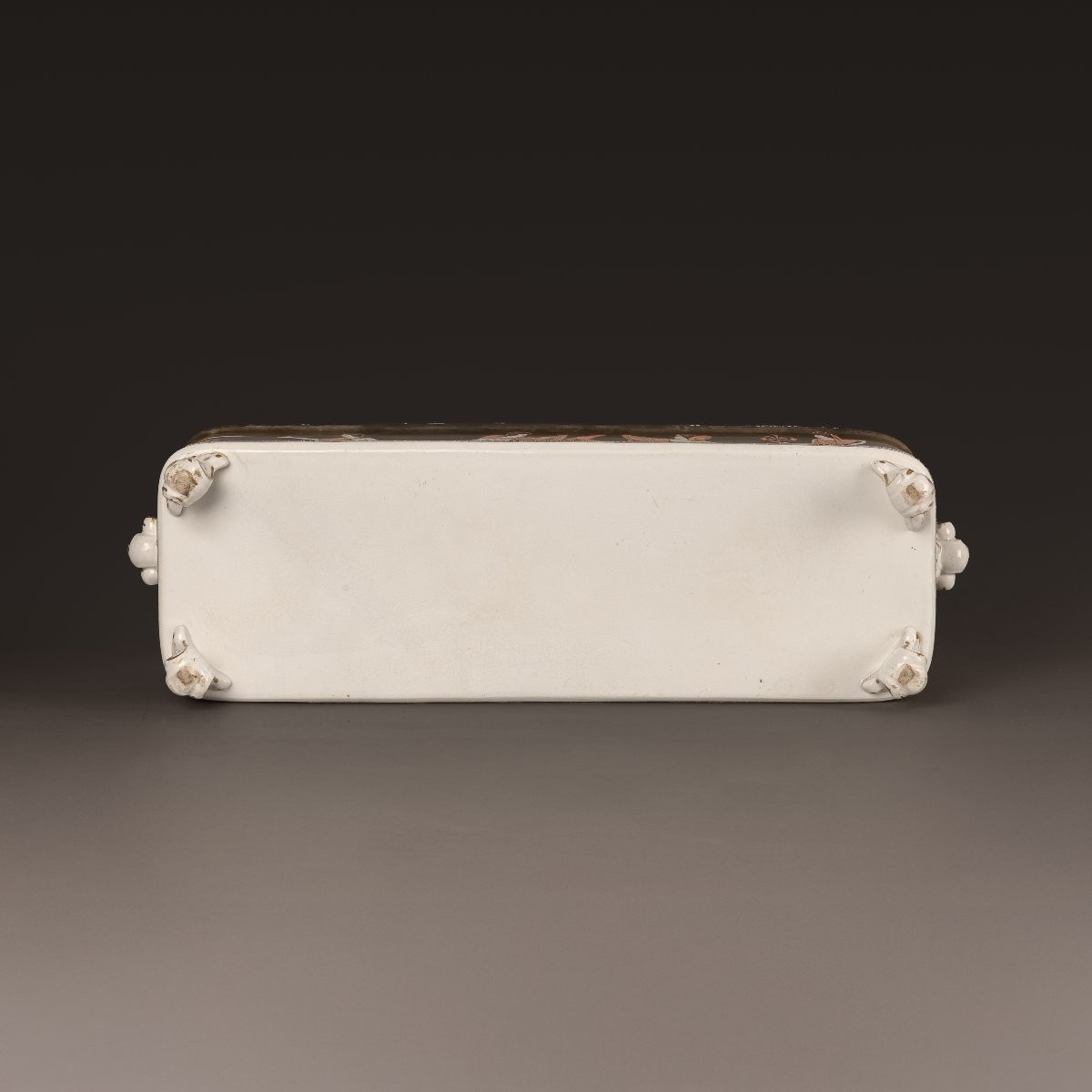
Faience ''creamware'' painted and enhanced with gilding
Dimensions : H. 20 ; W. 60 ; D. 18(cm.)
Staffordshire, circa 1861-1867
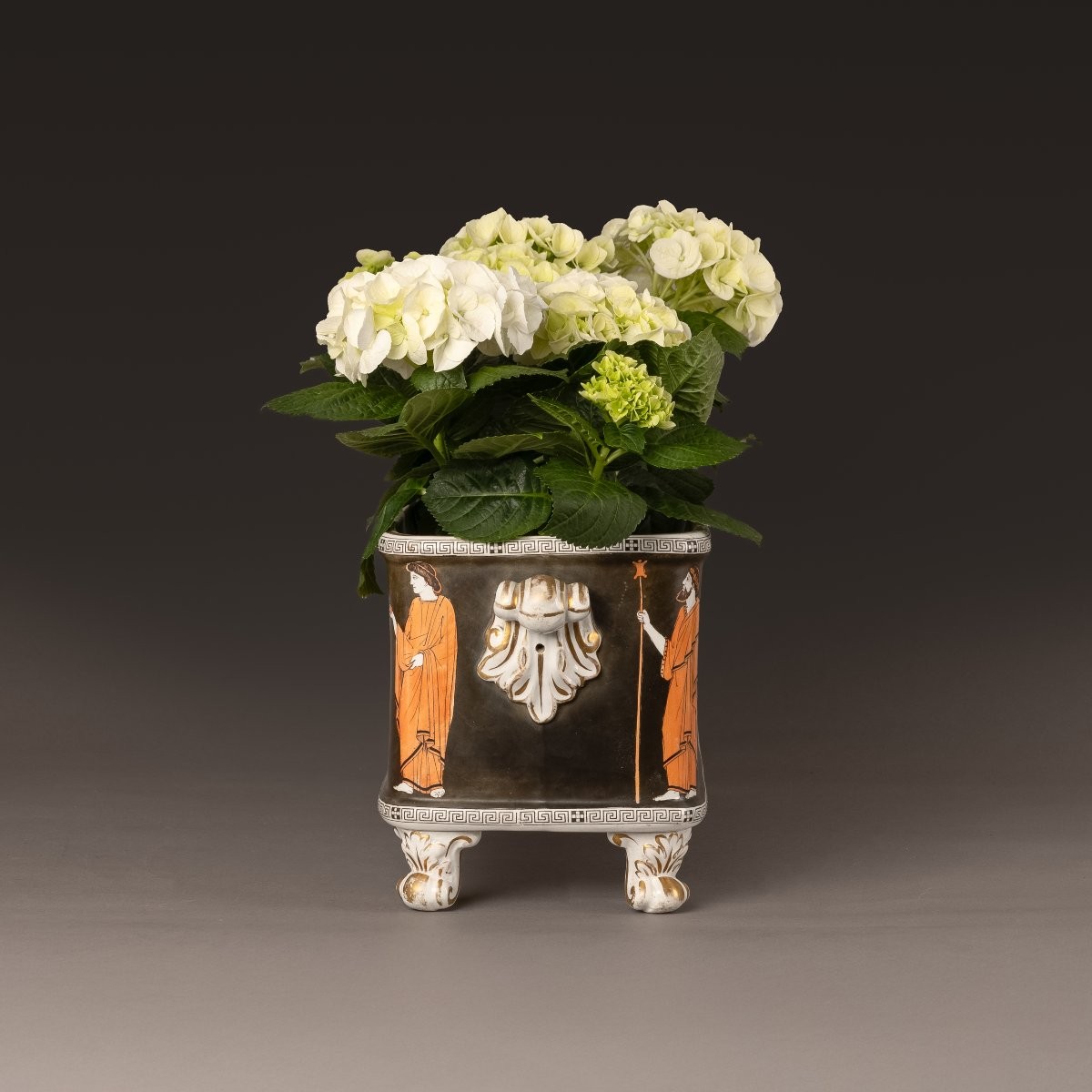
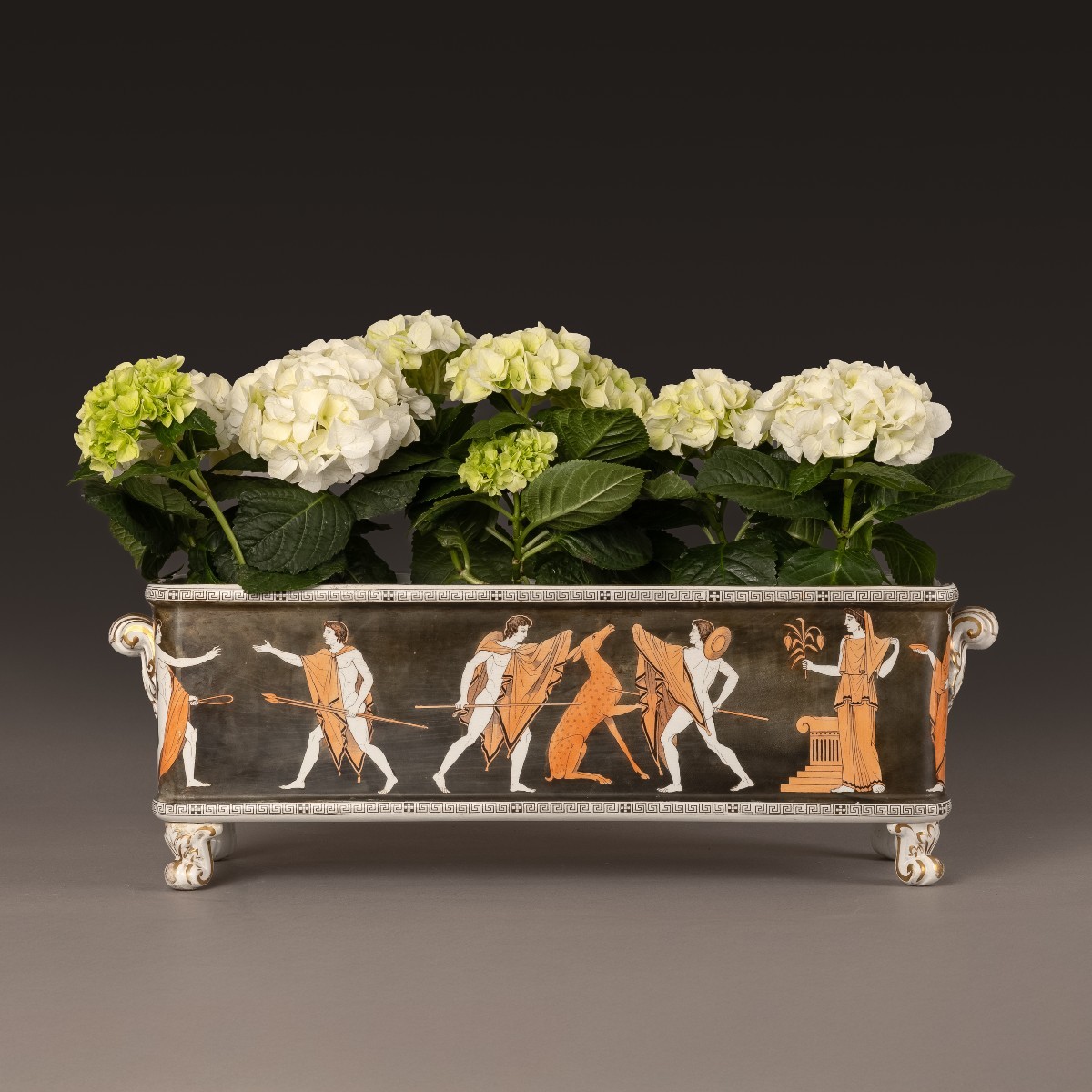
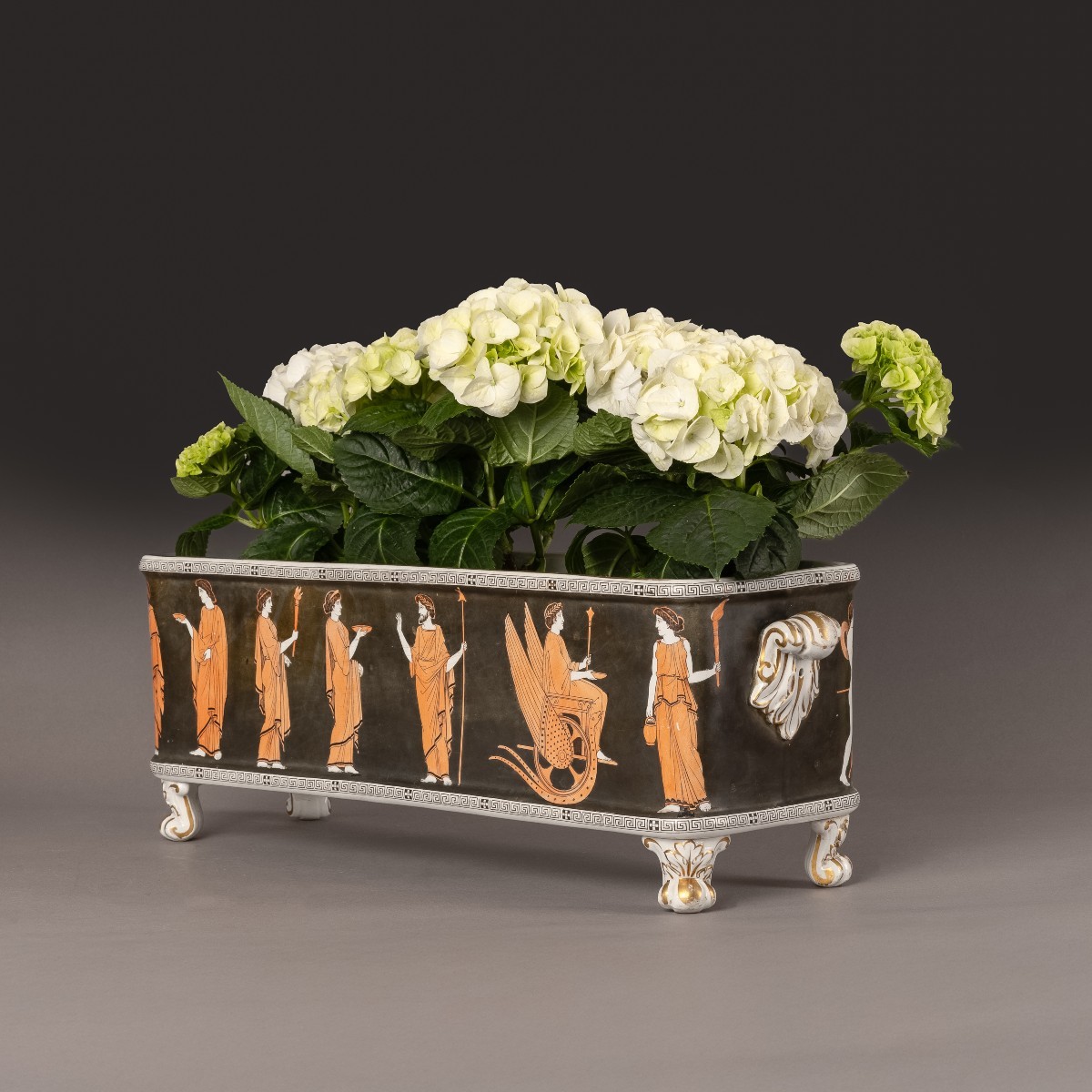
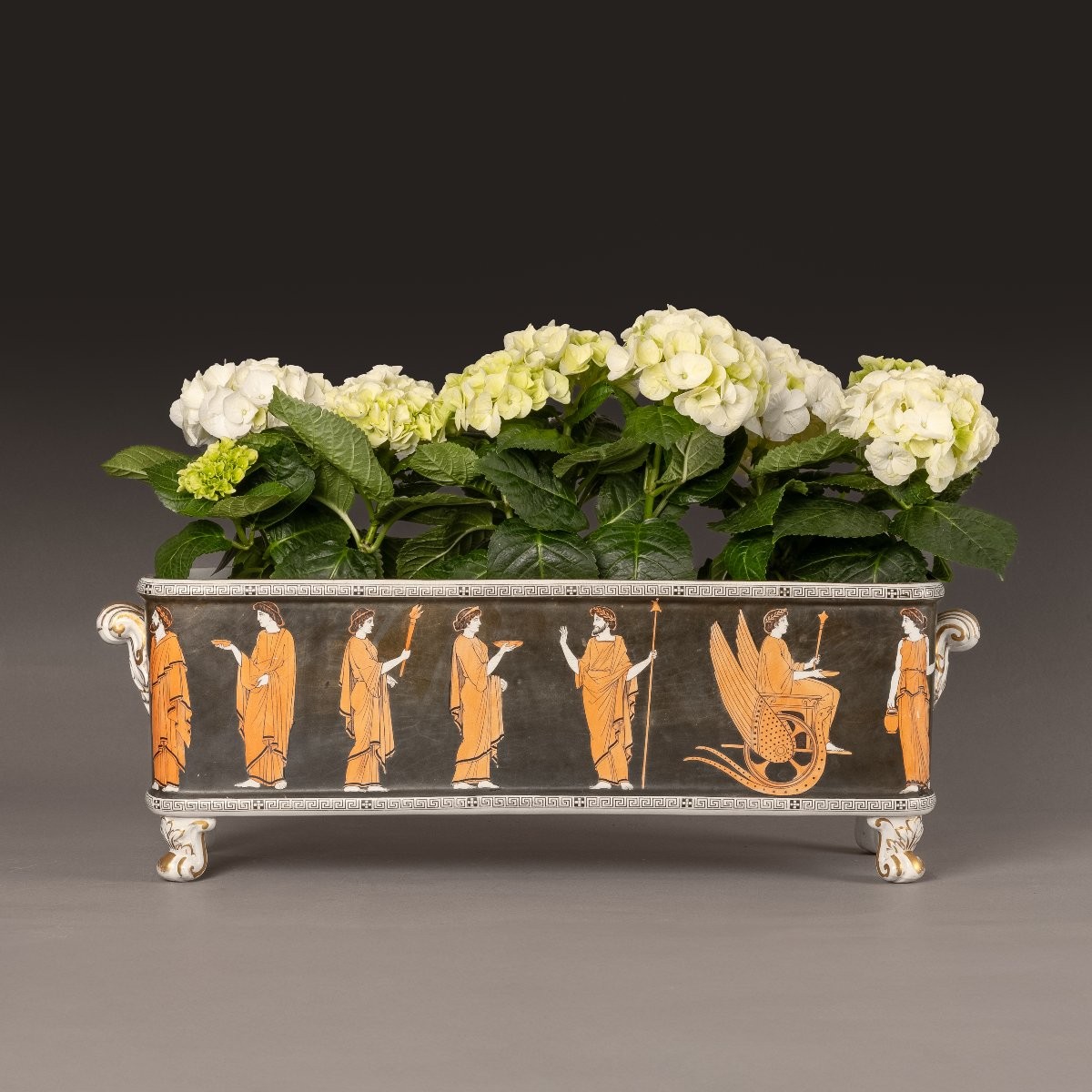
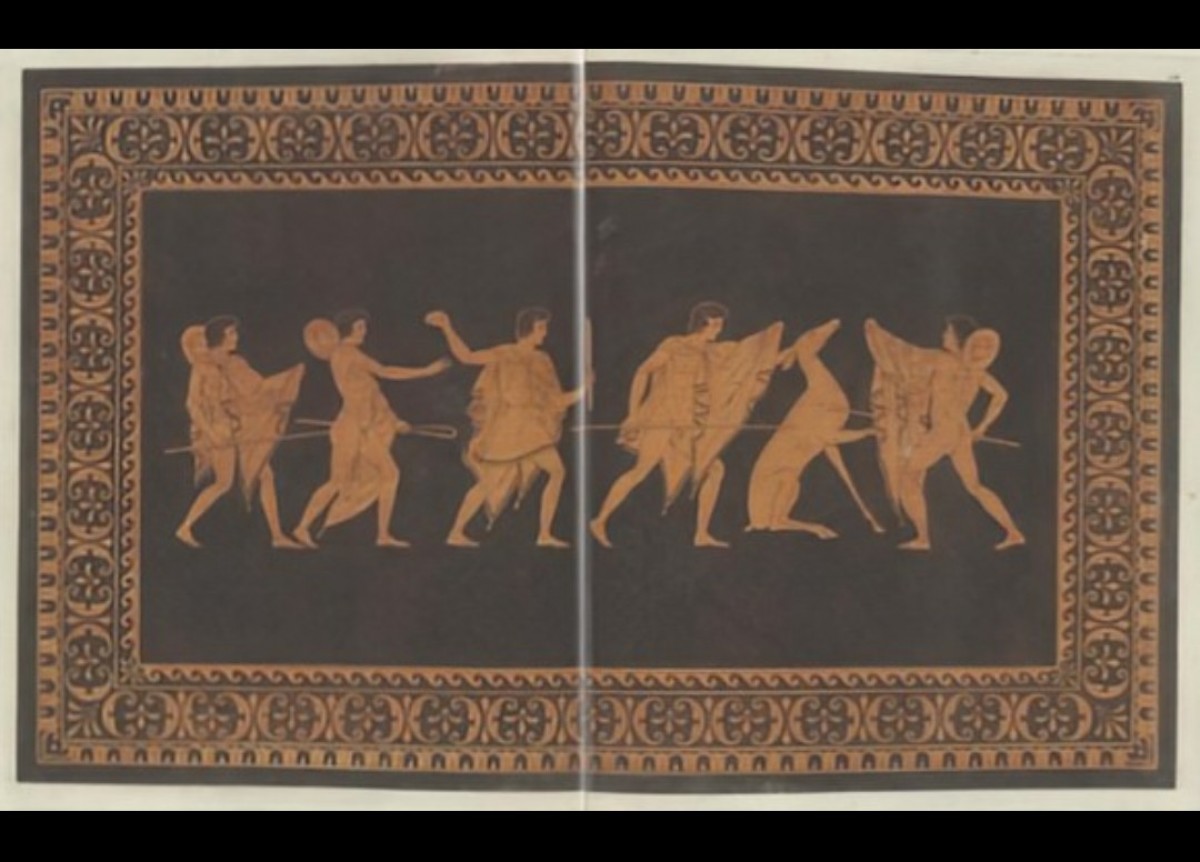
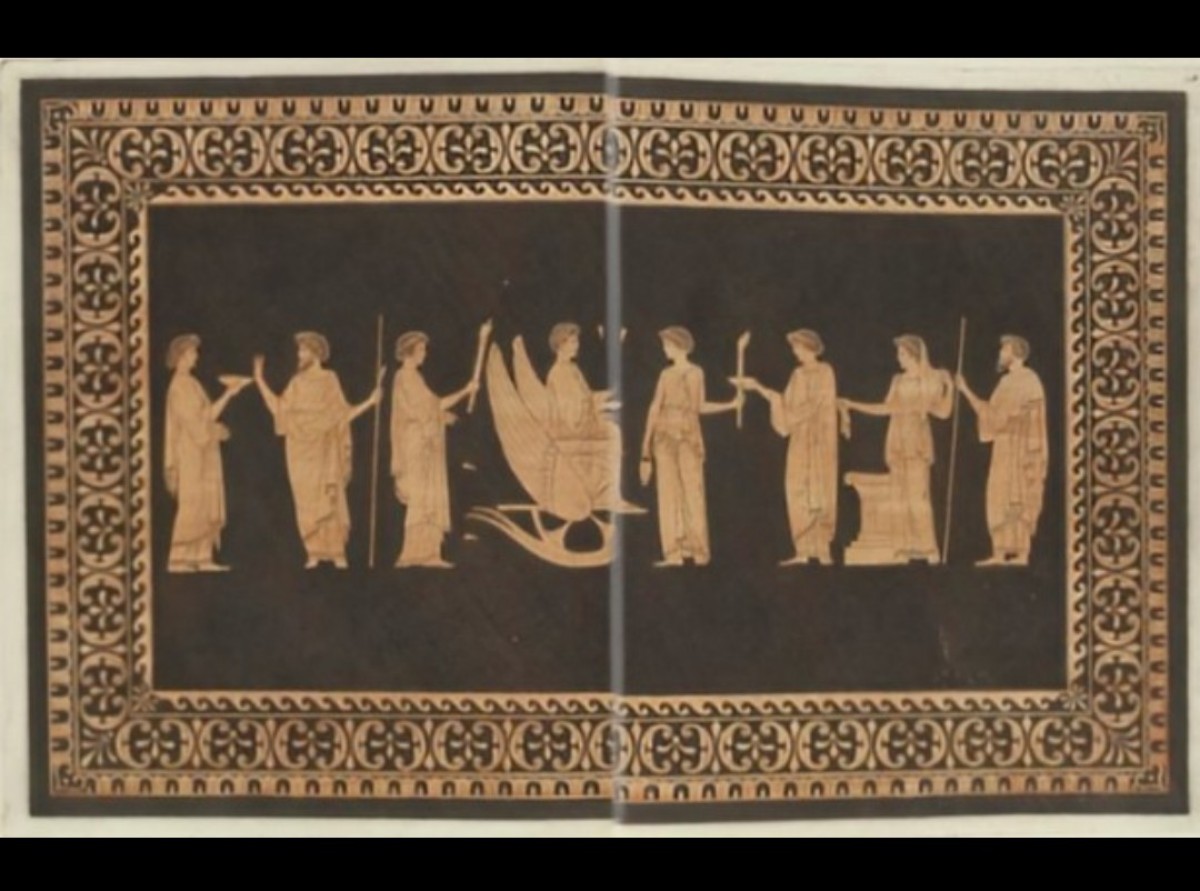
Very large earthenware piece, parallelepiped shape, resting on four feet at the corners. Decorated with red figures on a black background, with two scenes, one on each side, taken from Pierre d'Hancarville's "Collection des antiquités grecques, étrusques et romaines, du cabinet de Sir William Hamilton", volume III, 1767.
The first side reproduces the deer-hunting motif, plate 110, page 430; while the second reproduces Triptolemus on a winged chariot, hero of the Eleusian Mysteries, plate 128, page 472.
Anticomania and Staffordshire earthenware
It was Samuel Alcock who, through his factory in Burslem, promoted forms and decorations taken from Greco-Roman antiquity. He began this activity in the 1820s, joining several other shareholders. In 1826, the factory was renamed Samuel Alcock & Co.
He expanded his activities in 1828, taking over Hill's facilities, which enjoyed a certain posterity. The shapes of the pieces, the decorations and even the building, erected in the 1830s, all reflect latines modeles appreciation...
With his artistic and industrial success behind him, Alcock left his wife and two children a company with 700 employees. Unfortunately, the company went bankrupt in 1859.
In early 1861, the Alcock-owned factory was reopened, in the hope of providing a lucrative showcase for the 1862 World's Fair. It proved a great success, and a number of pieces were even reproduced in the journal of the international event. Many of the scenes and shapes that made the firm so successful were in fact taken from S. Alcock's collection. The short-lived business model failed to save the company financially from bankruptcy again in 1864.
Condition report: excellent condition, minor wear.
Delevery information :
All our objects are visible in Paris. Worldwide delivery by DHL.