Offered by Desmet Galerie
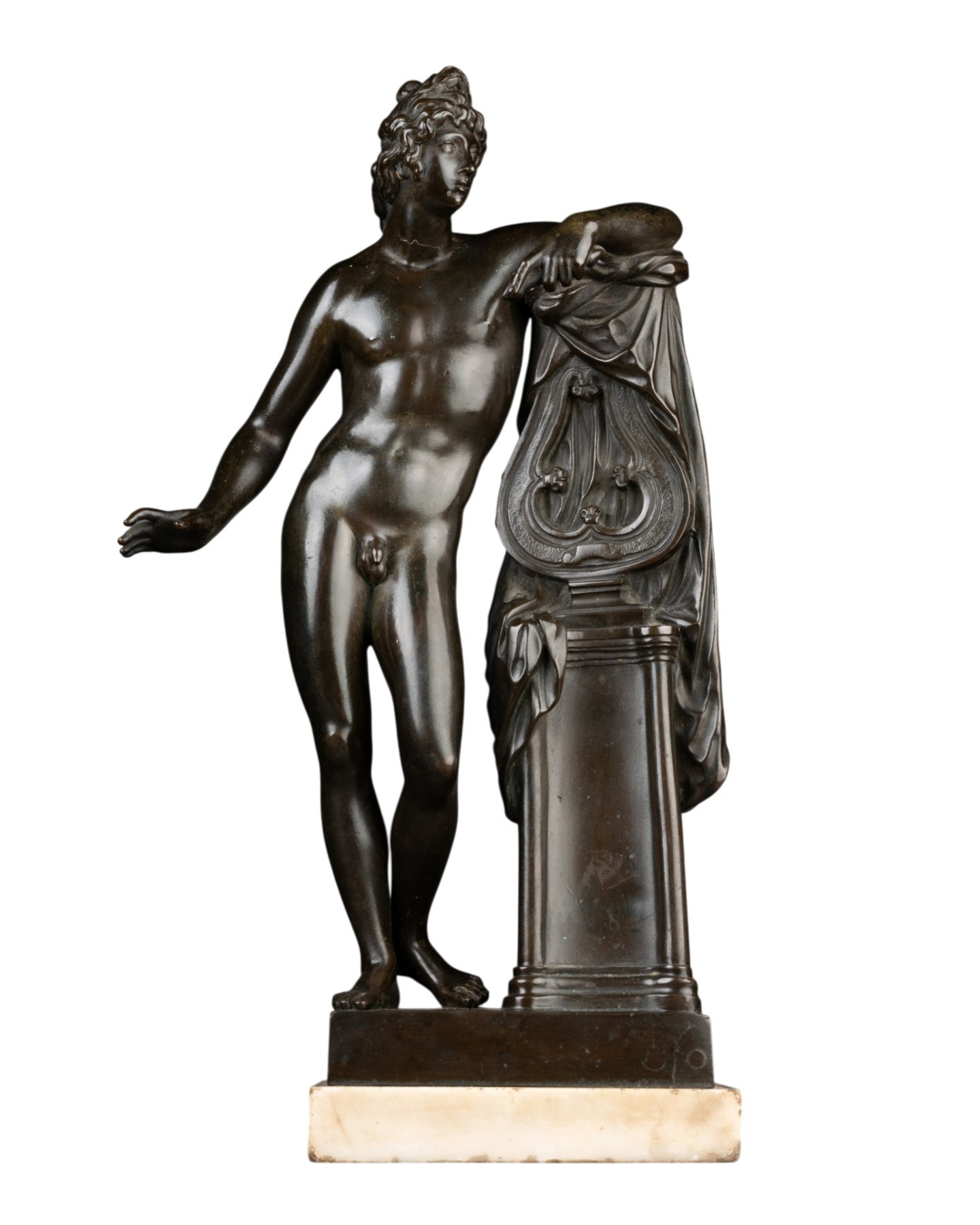
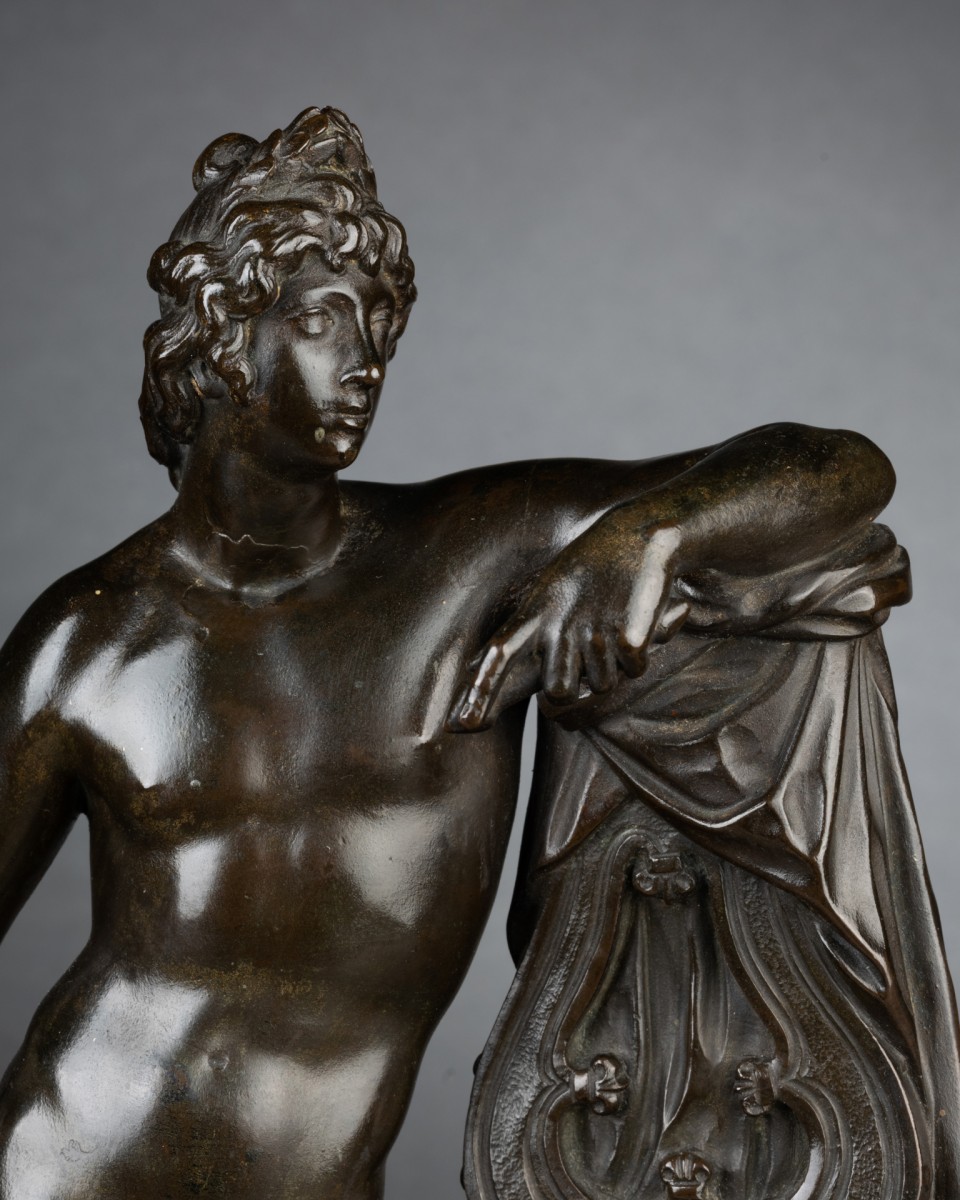
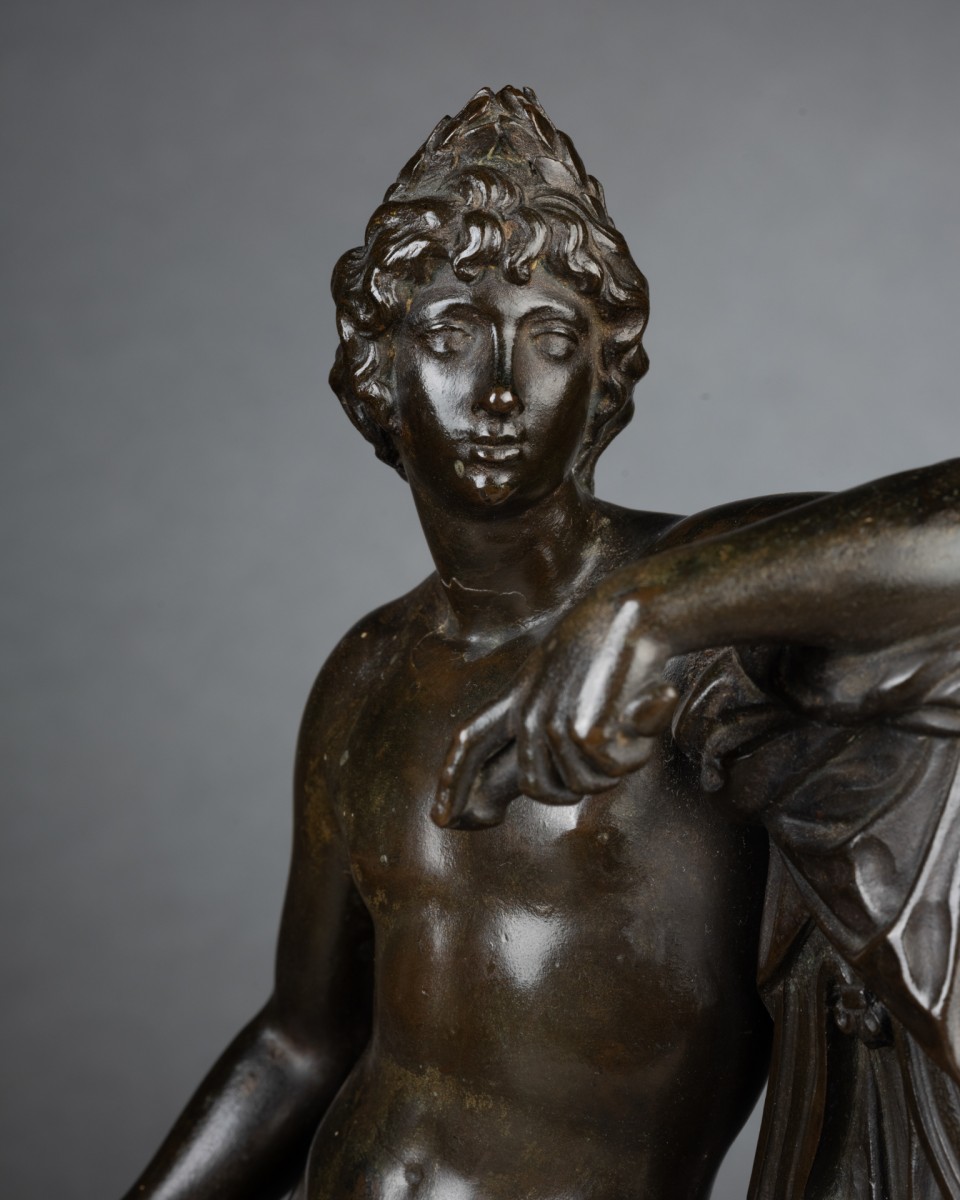
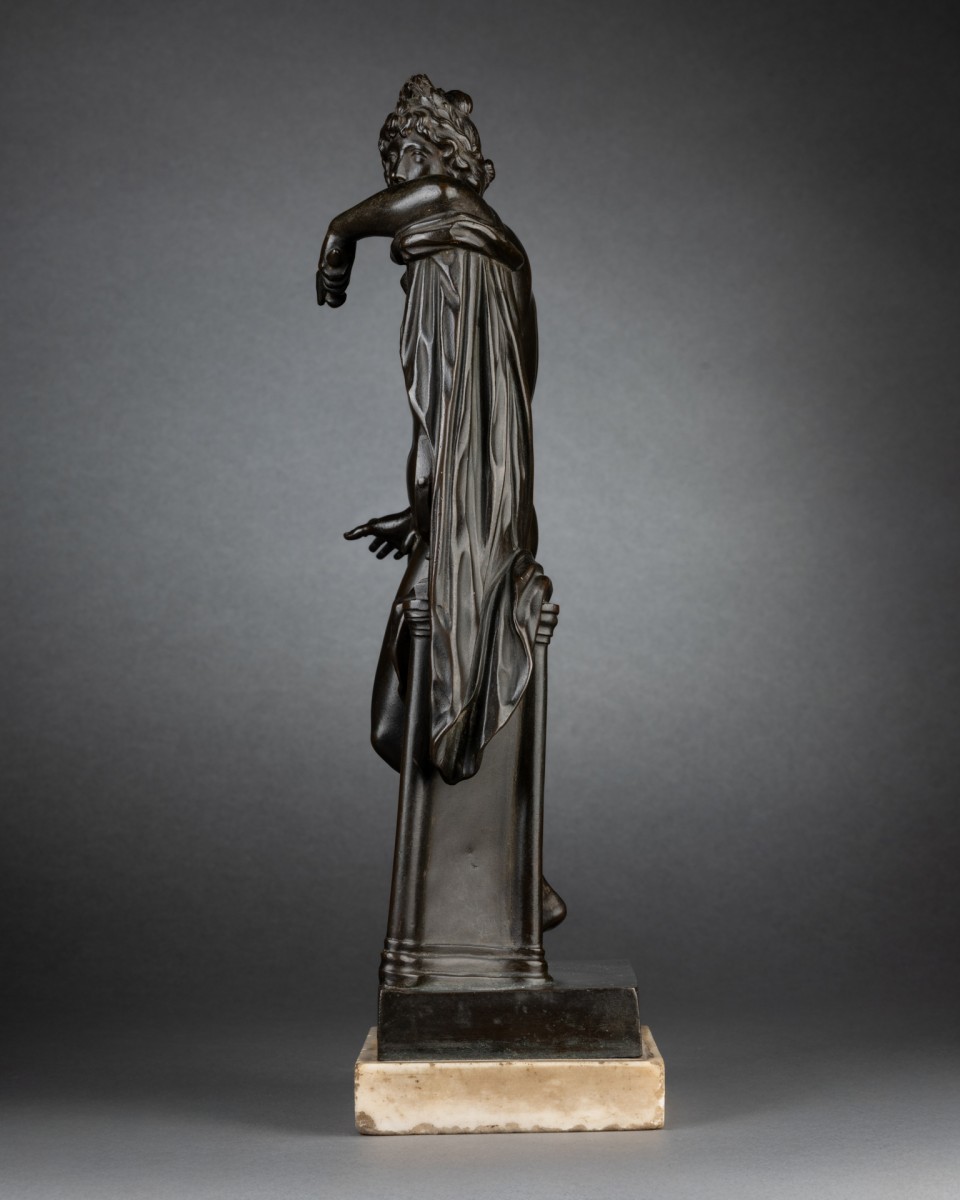
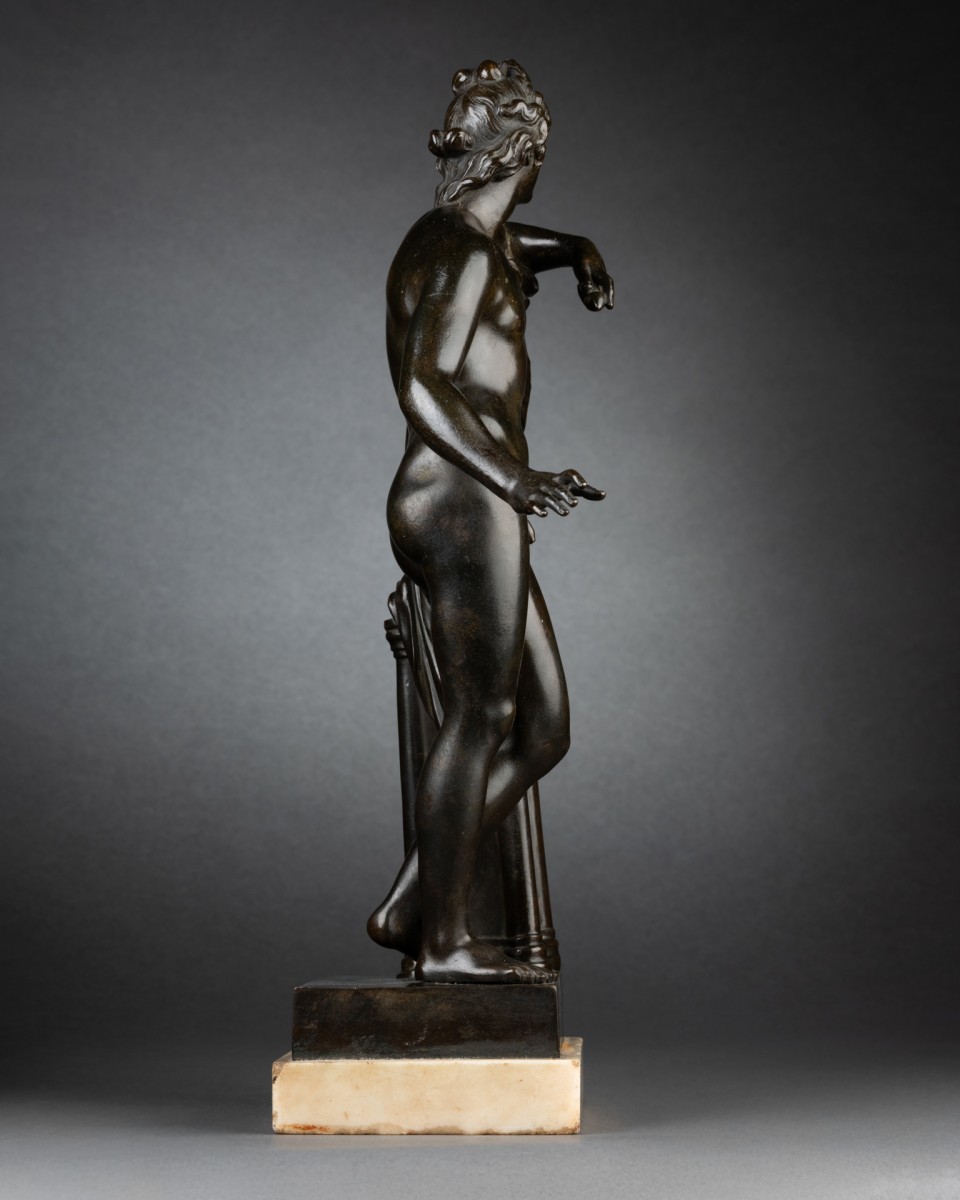

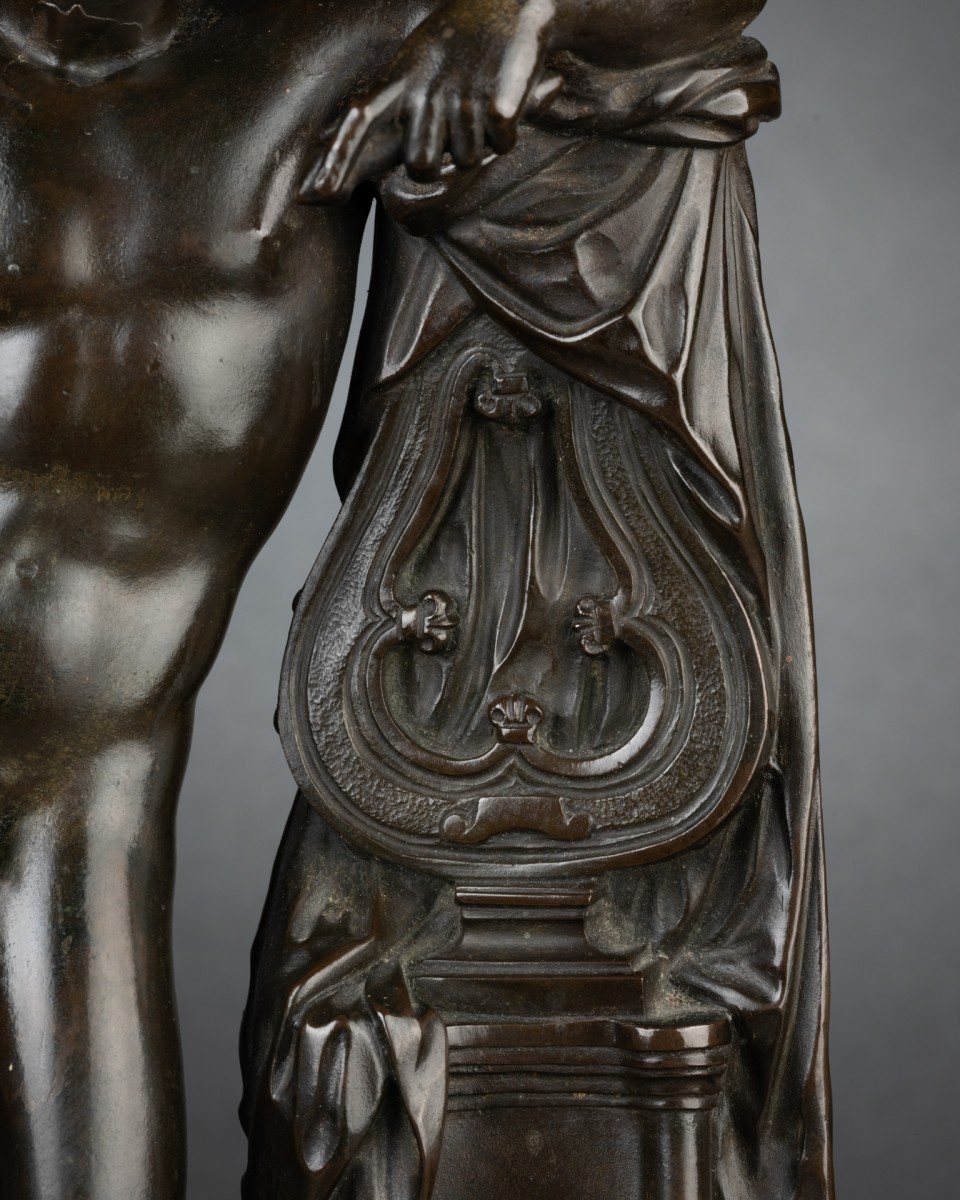
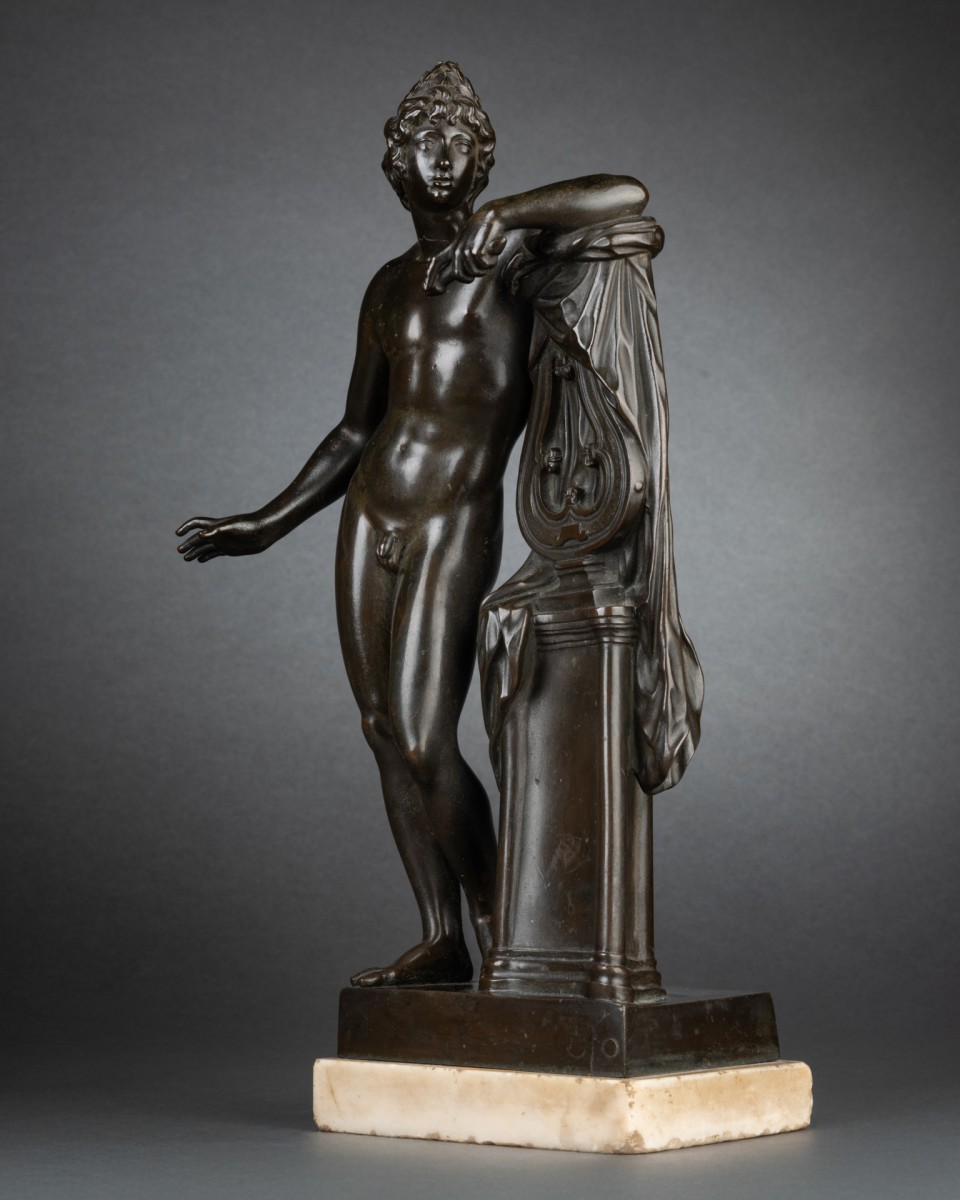
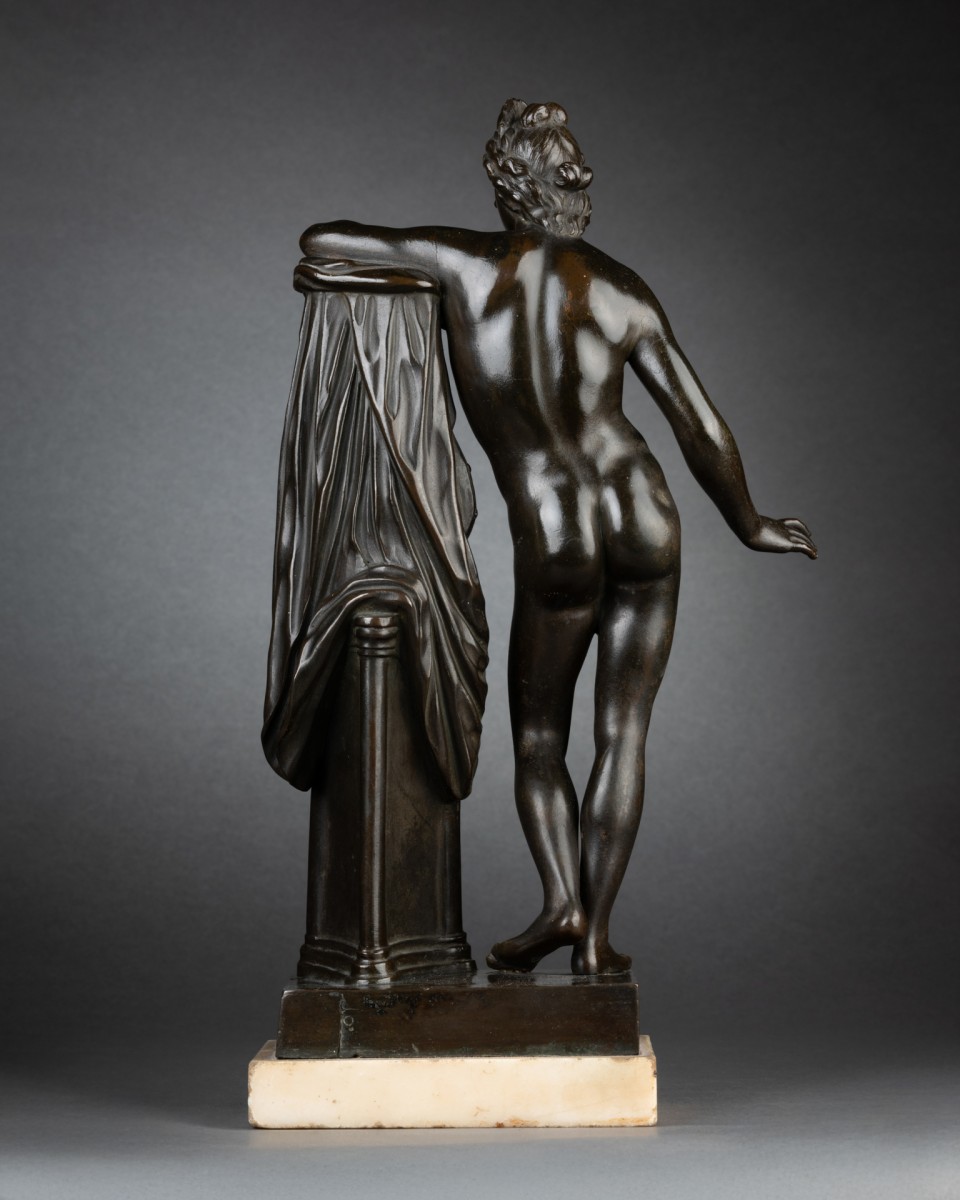
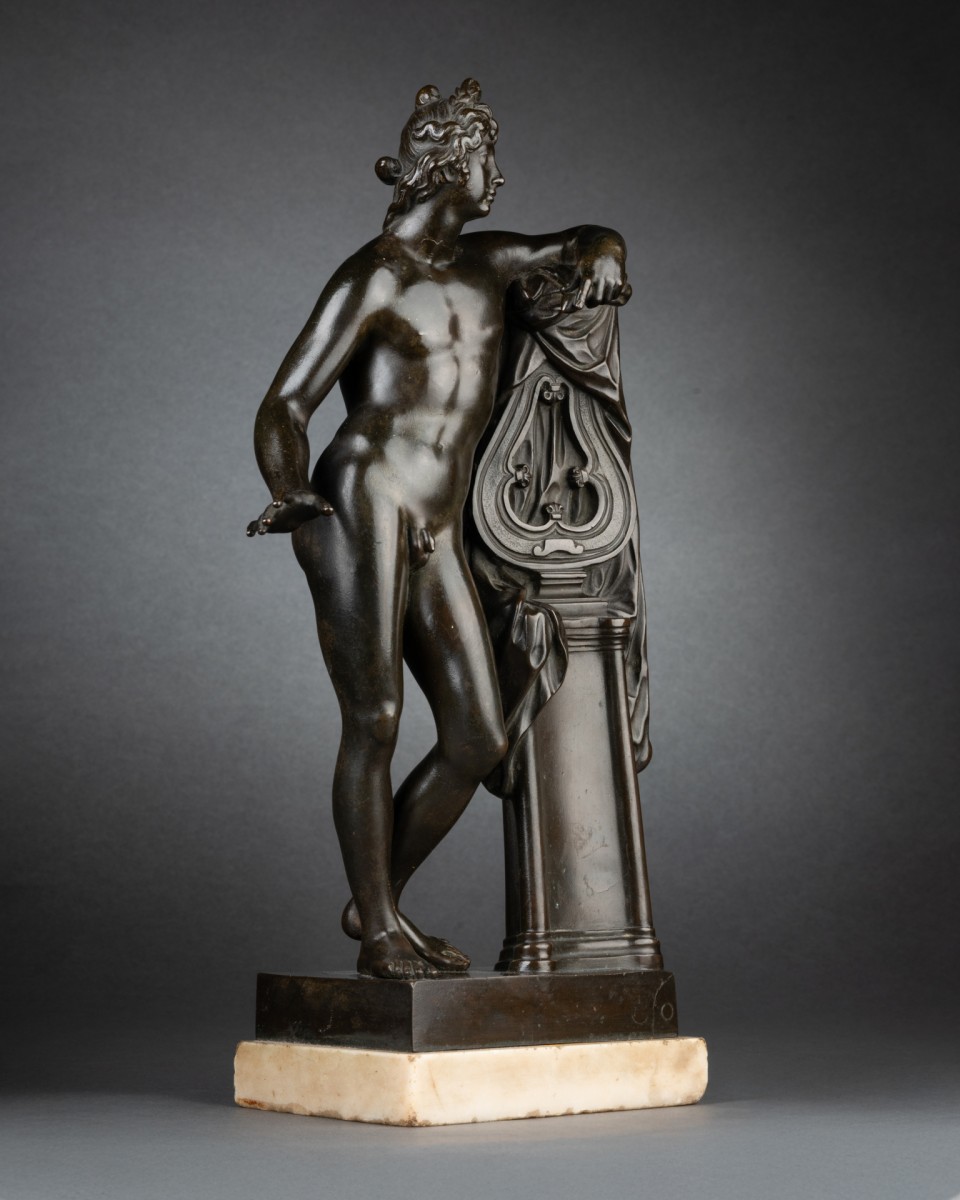
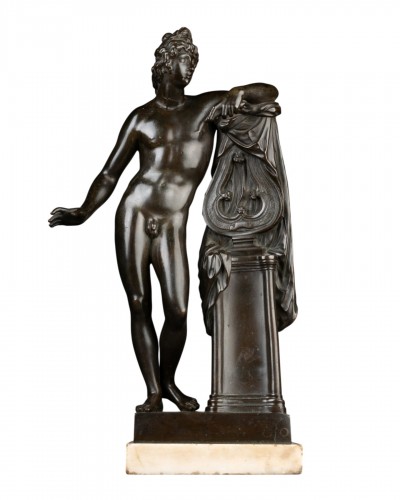
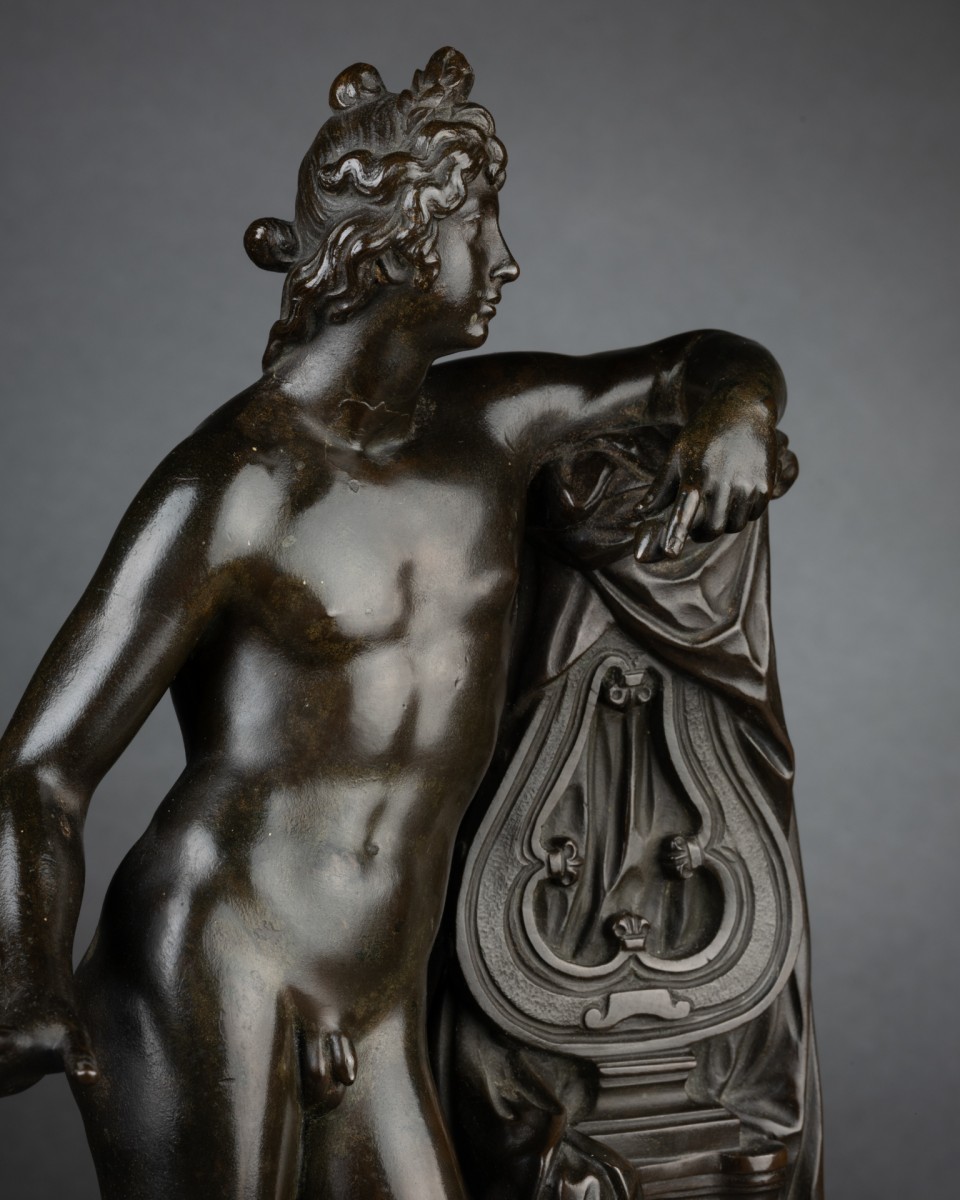
Apollo with a Lyre, after the Apollo in the Uffizi
This bronze statuette follows the Apollo preserved in the Uffizi Gallery in Florence, a composition derived from Praxiteles’ celebrated Apollo Sauroctonos, or “Lizard-Slayer.” Created around 350 BC, the lost Greek original is known through ancient texts and numerous Roman copies. It depicted the youthful god leaning against a tree, poised to strike a lizard. The supple pose, gentle contrapposto and soft modelling of the body exemplify the grace associated with Praxitelean sculpture.
The Uffizi marble, a Roman work of the second century AD, has been in the Medici collections since 1565. Its present appearance, however, owes much to a restoration undertaken in 1586 by the sculptor Giovanni Battista Caccini. Working from the surviving ancient torso, pelvis and thighs, Caccini reconstructed the missing parts and transformed the figure into Apollo Citharoedus, the god of music. The addition of a lyre and an ornamental support replaced the original narrative with a musical subject. This reinterpretation illustrates the creative role of restoration during the Renaissance, when ancient fragments were completed according to contemporary knowledge and taste.
The bronze reduction of this model belongs to the tradition of statuettes after the Antique developed by Massimiliano Soldani-Benzi in Florence in the early eighteenth century. Based on the most admired sculptures in the Medici collections, these works allowed European collectors to assemble, on a scale suited to private cabinets, the masterpieces encountered on the Grand Tour.
Soldani’s correspondence documents this activity as early as 1702, when he sent Prince Johann Adam of Liechtenstein twelve wax figurines intended as models for garden sculptures. In 1706, he offered the same prince a series of twelve bronzes after Florence’s most celebrated statues. Further sets were subsequently acquired by distinguished patrons, including Lord Burlington and Clemens August of Bavaria, Elector of Cologne.
This model of Apollo thus brings together three chapters in the history of taste: the ideal beauty of Greek antiquity, its reinterpretation in Renaissance Florence, and its dissemination among European collectors during the age of the Grand Tour.
Delevery information :
We can arrange shipping.