Offered by Daatselaar The Collection
REQUEST INFORMATION

Henriëtte Ronner-Knip (1821-1909)
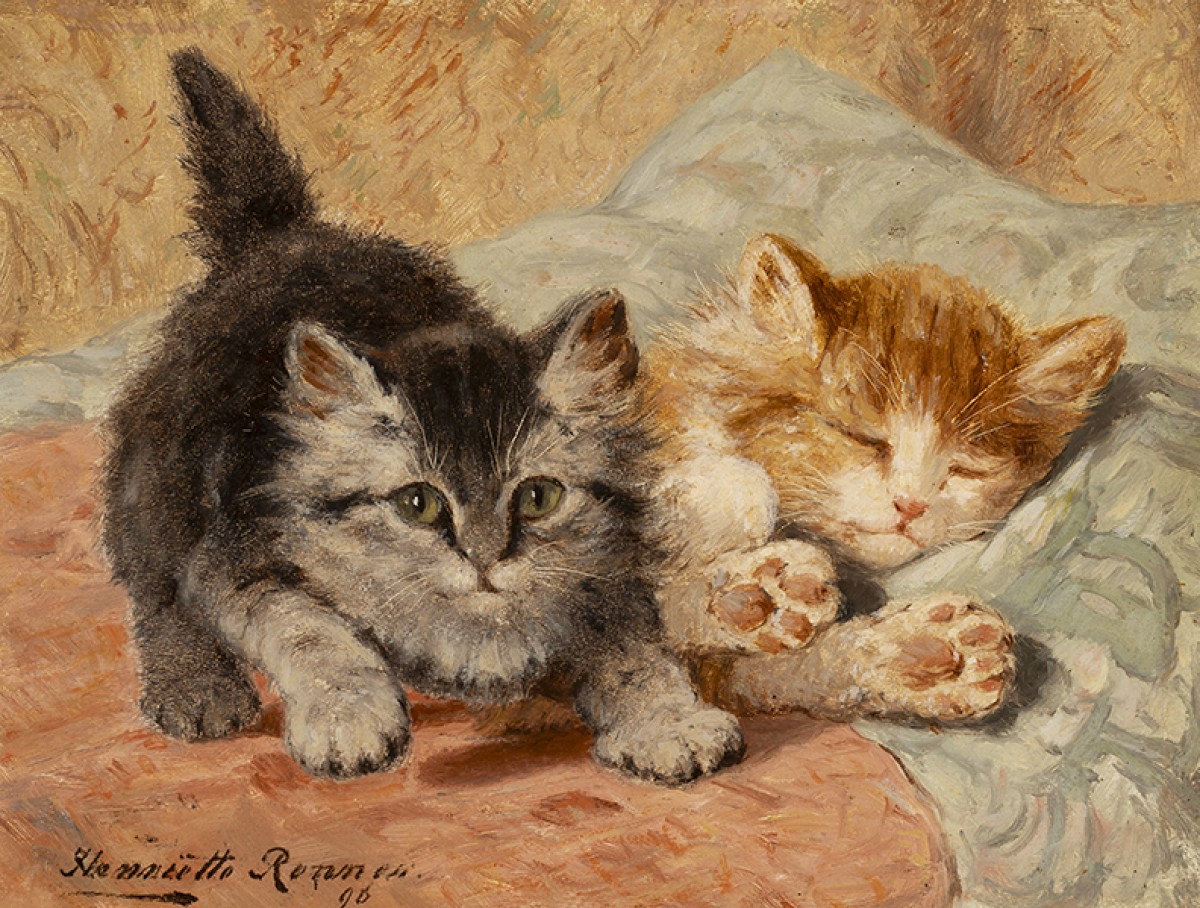
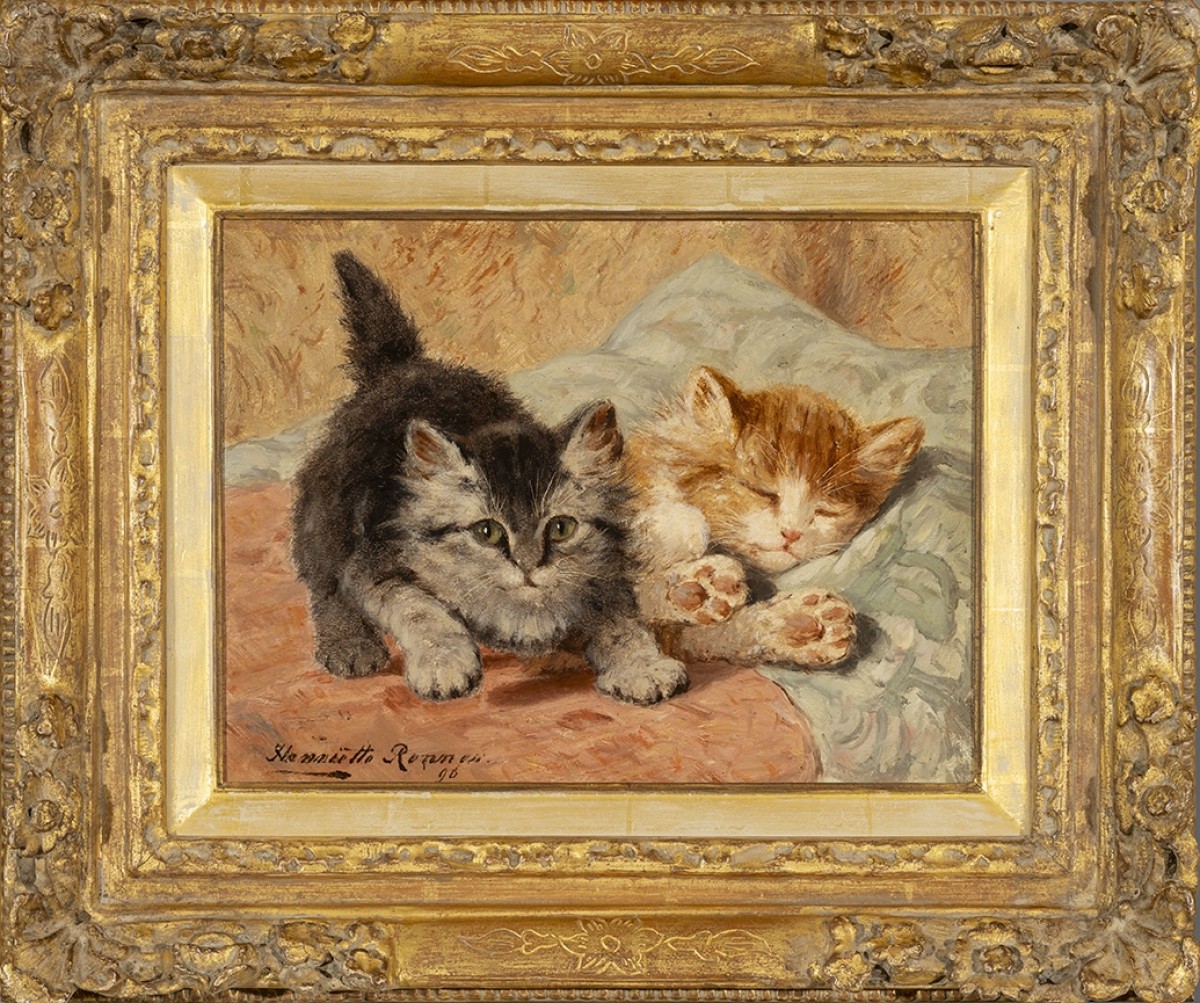
Two best Friends
Provenance: Dutch private collection
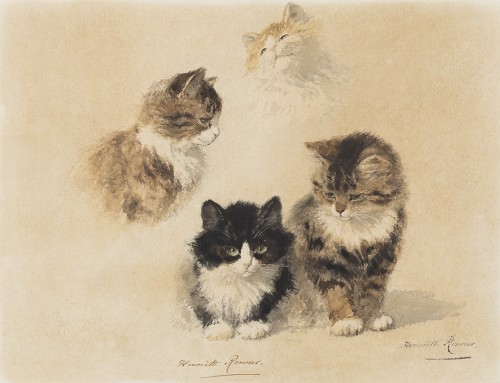
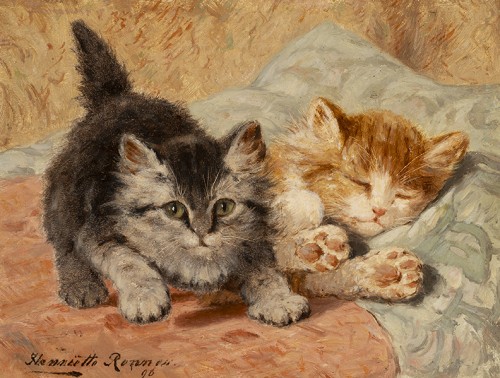
Two Best Friends is a charming and intimate painting by the Dutch-Belgian artist Henriëtte Ronner-Knip, who was especially famous for her paintings of cats and dogs. The painting shows two young kittens resting closely together on a soft surface. One kitten has dark grey and black fur, while the other has beautiful orange-and-white fur.
The grey kitten looks directly at the viewer with bright, curious eyes, while the orange kitten seems to be sleeping peacefully. This contrast gives the scene a warm and natural feeling.
Ronner-Knip pays great attention to the kittens’ fur, expressions, paws, and delicate details. Her loose, visible brushstrokes give the painting a lively and almost tactile quality. The warm earthy colours of the background create a cosy atmosphere and make the kittens stand out.
Henriëtte Ronner-Knip was born in Amsterdam in 1821 into a distinguished family of artists. Her father, Josephus Augustus Knip, was a painter, and he was an important early teacher. She began her artistic career with landscapes, still lifes and other subjects, but gradually became increasingly devoted to animal painting.
During the second half of the nineteenth century she established an international reputation, particularly for her paintings of dogs and cats. From around the 1870s, cats and kittens became her principal subject. Her works appealed strongly to the prosperous Victorian and Belle Époque middle and upper classes, for whom domestic animals had increasingly become cherished companions and symbols of refinement.
Ronner-Knip was exceptionally skilled at capturing the character, movement and texture of animals. Her cats are rarely merely decorative: they play, sleep, investigate, quarrel and gaze at the viewer with distinctly individual expressions. This quality helped make her one of the most successful animal painters of her generation. The Rijksmuseum holds several examples of her work, including both oil paintings and watercolors.
Her achievement is particularly noteworthy because nineteenth-century women artists often faced considerable obstacles in establishing independent professional careers. Ronner-Knip nevertheless developed a long and successful career and became widely collected.
This painting celebrates the simple idea of companionship. Rather than showing the animals in an active scene, Ronner-Knip captures a quiet moment of trust, comfort, and affection between two best friends. It is a tender and heartwarming example of her ability to give animals personality and emotion.
?