Offered by NewAGG Raritet Antique Gallery
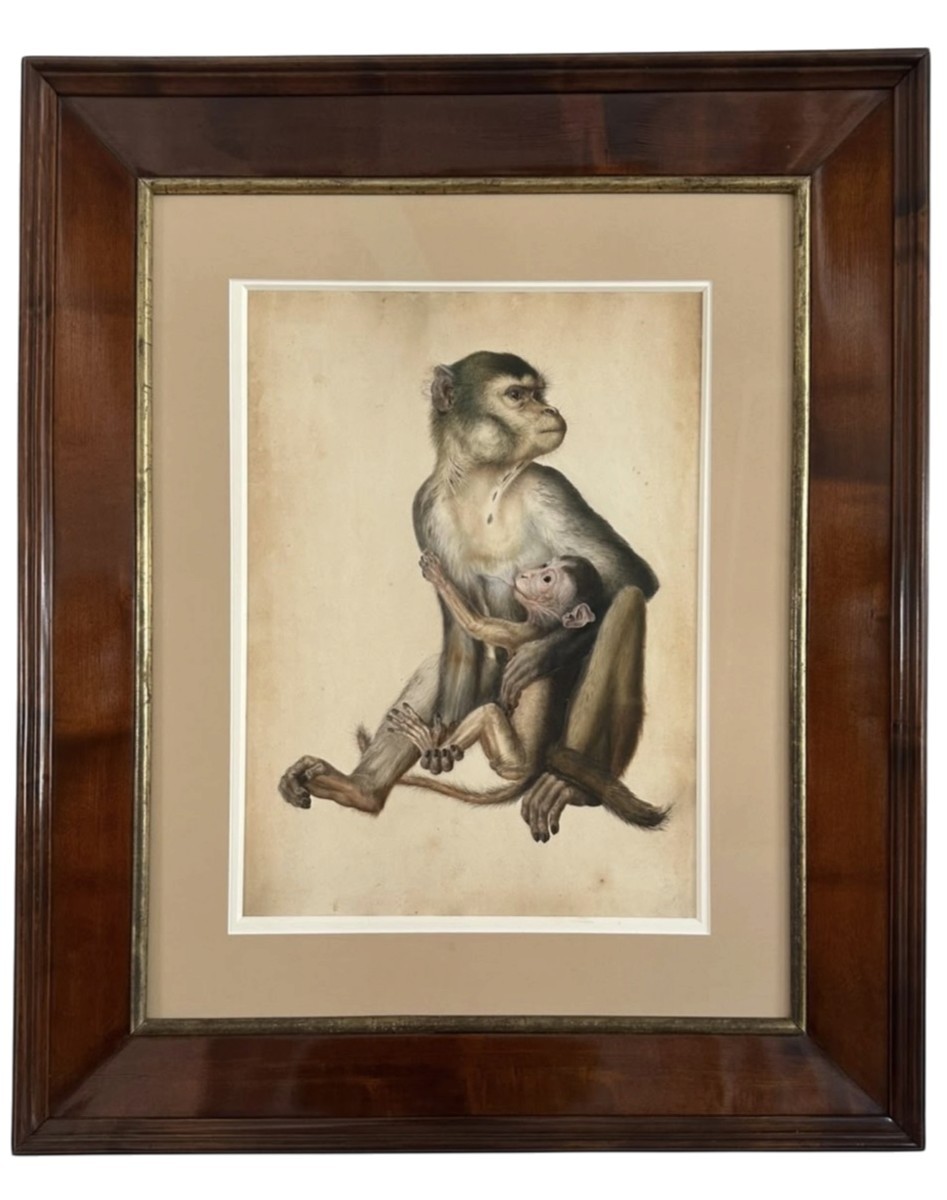
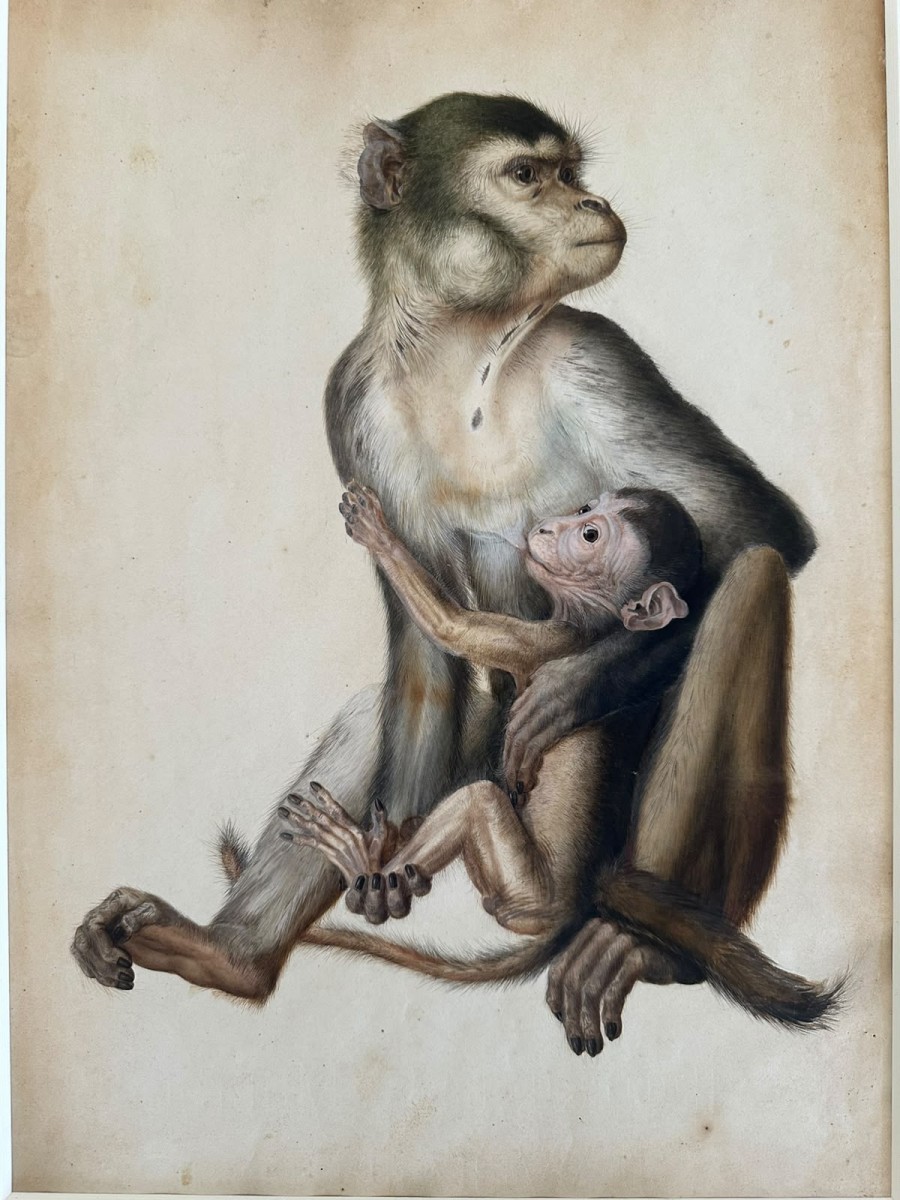
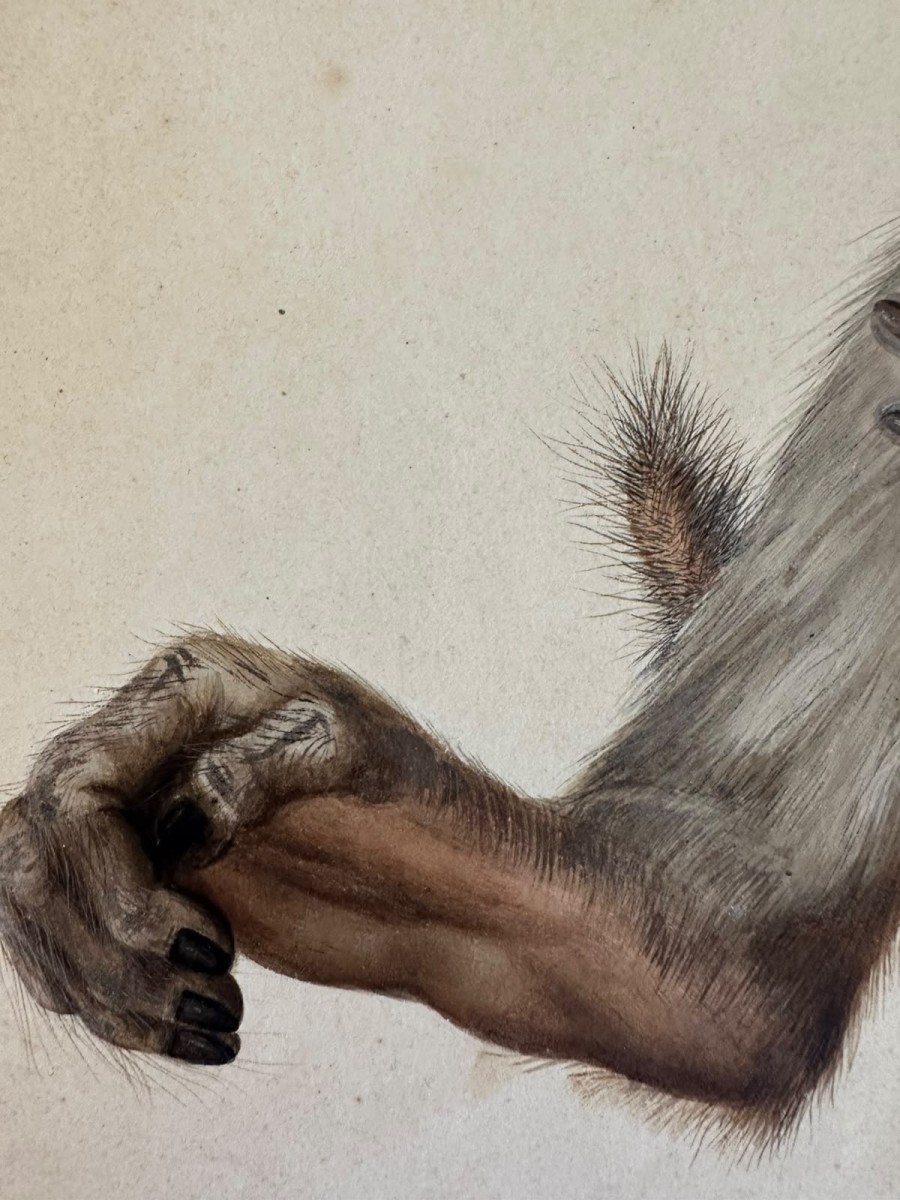

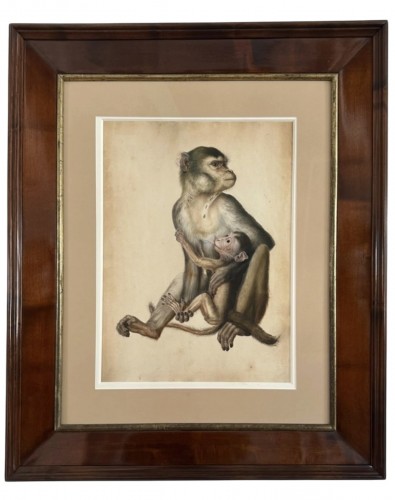
This magnificent work is by the hand of the famous 19th-century Austrian artist Eduard Gurk.
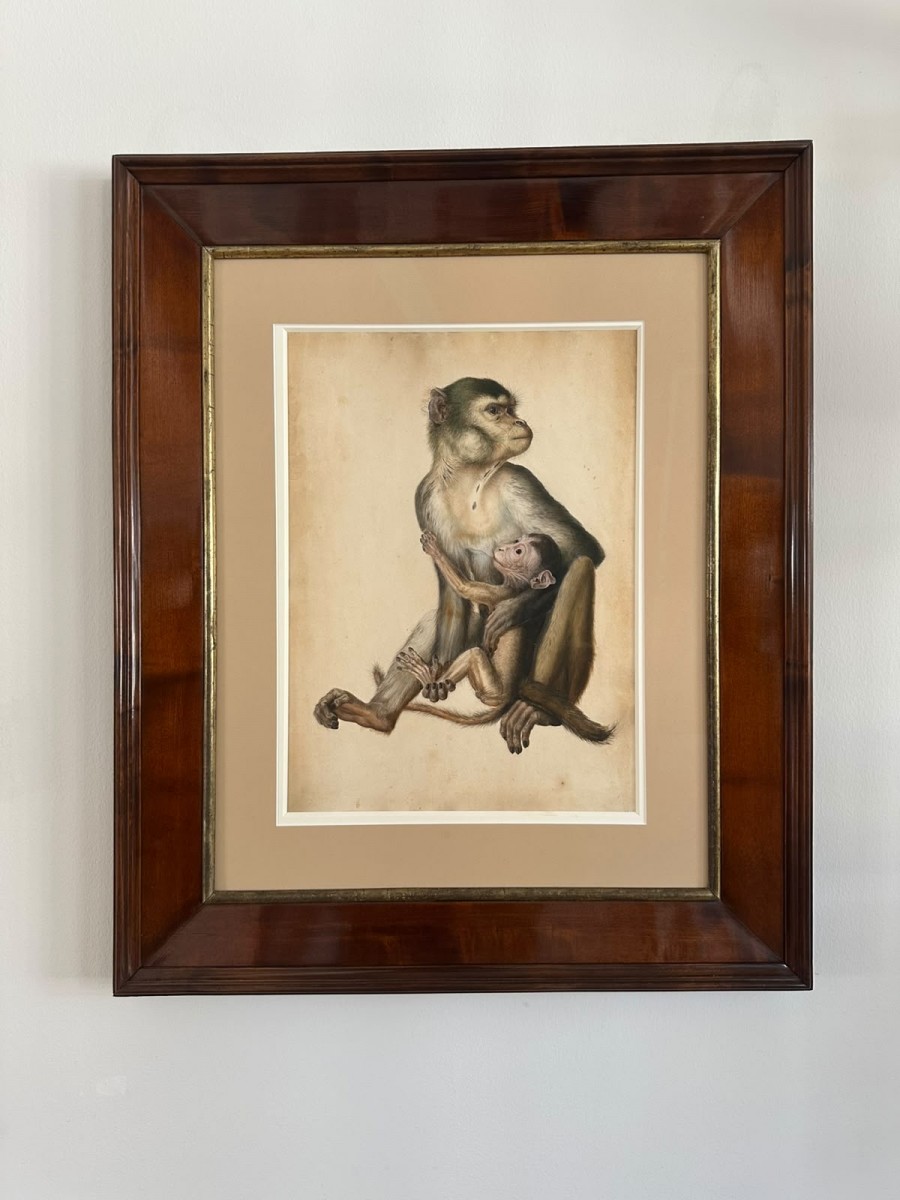
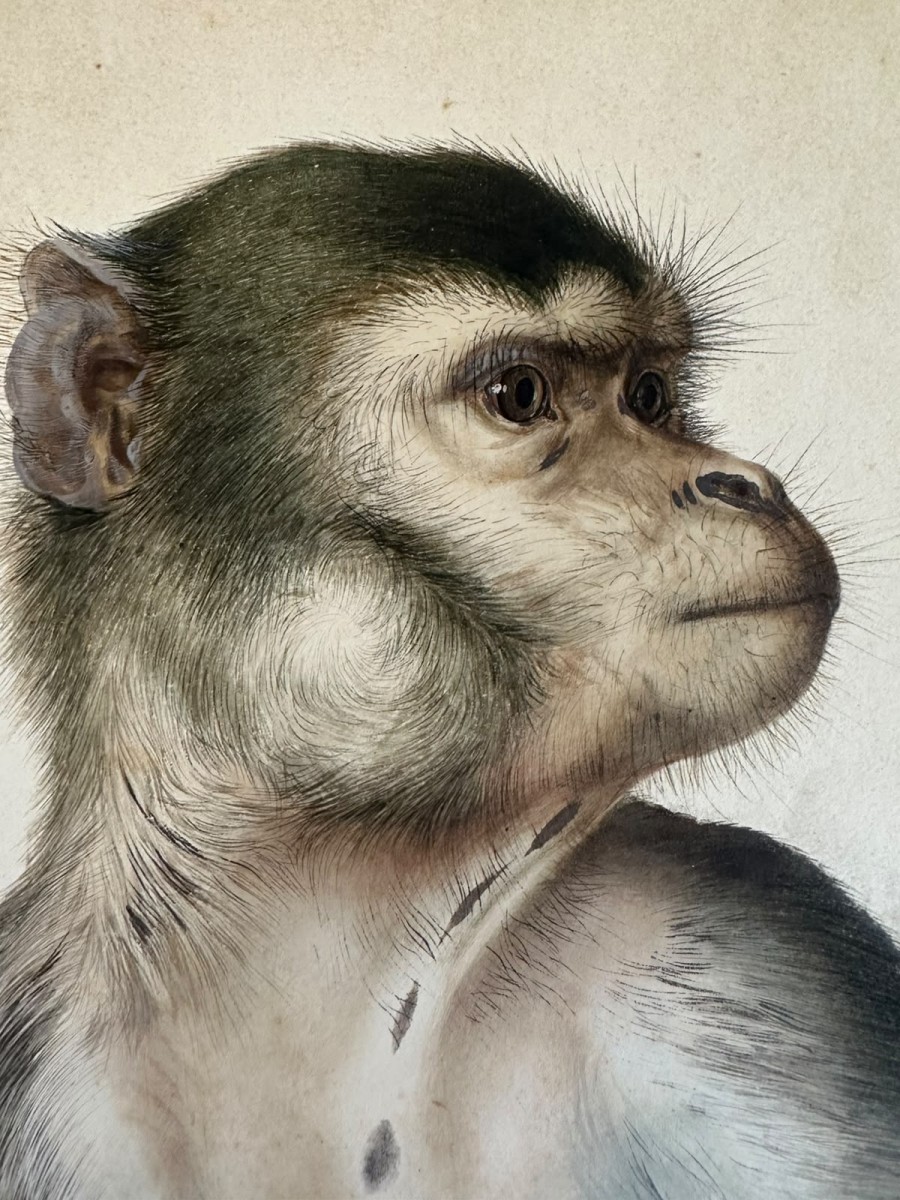
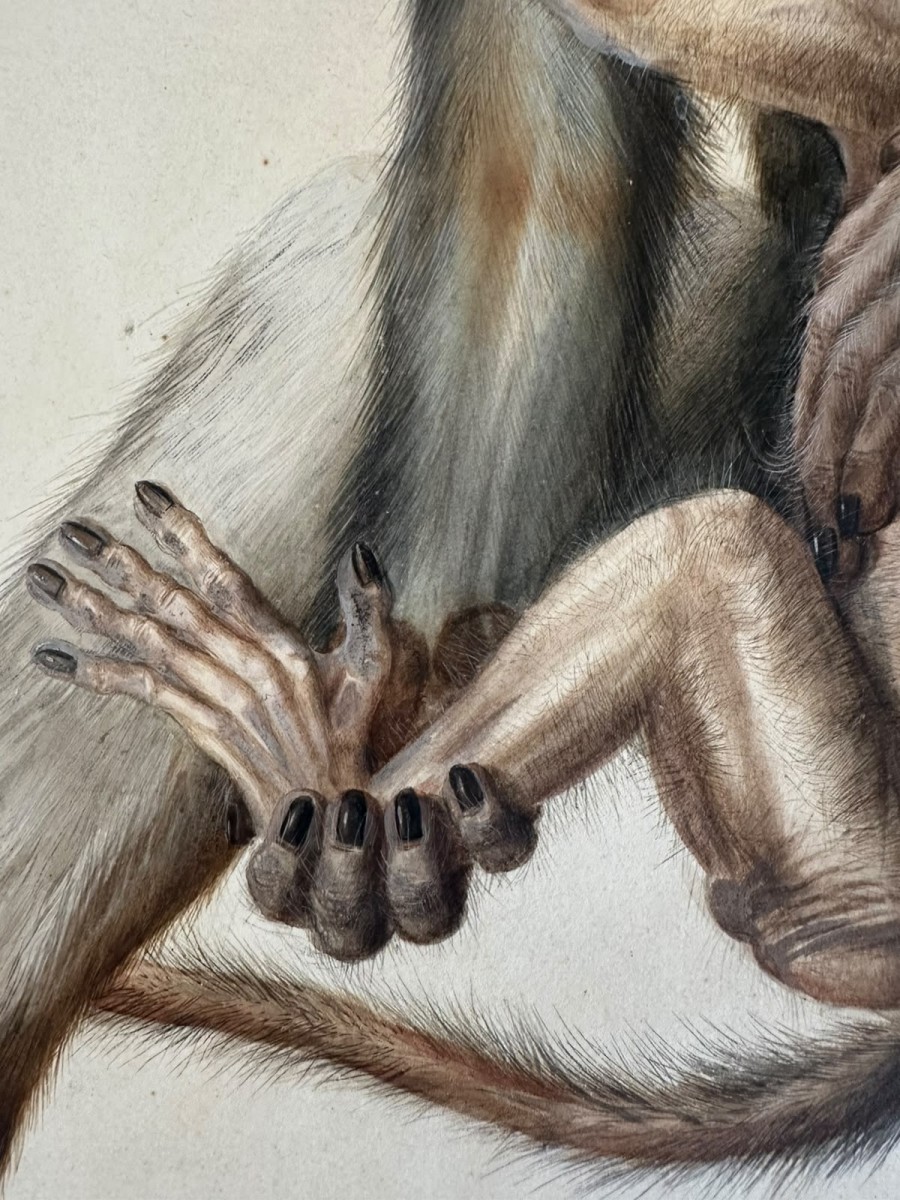
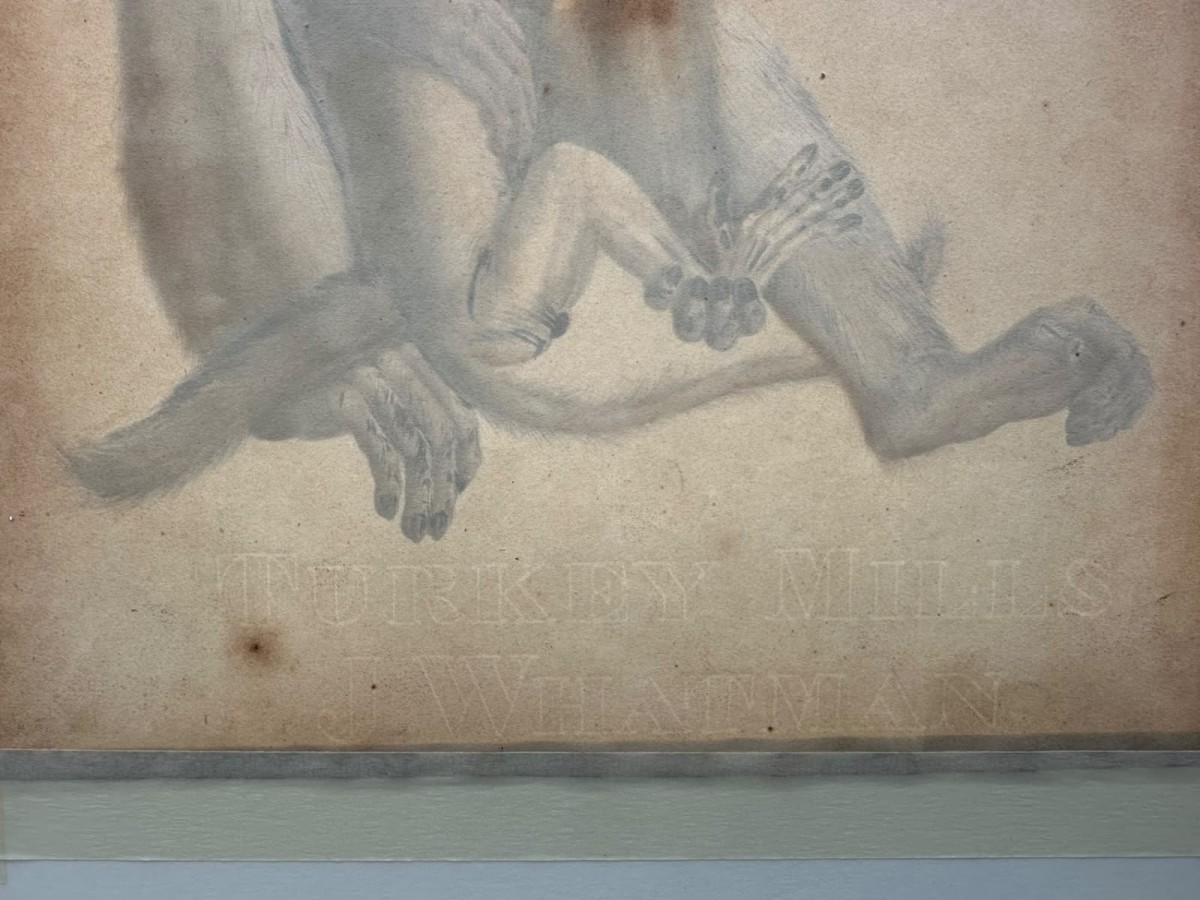
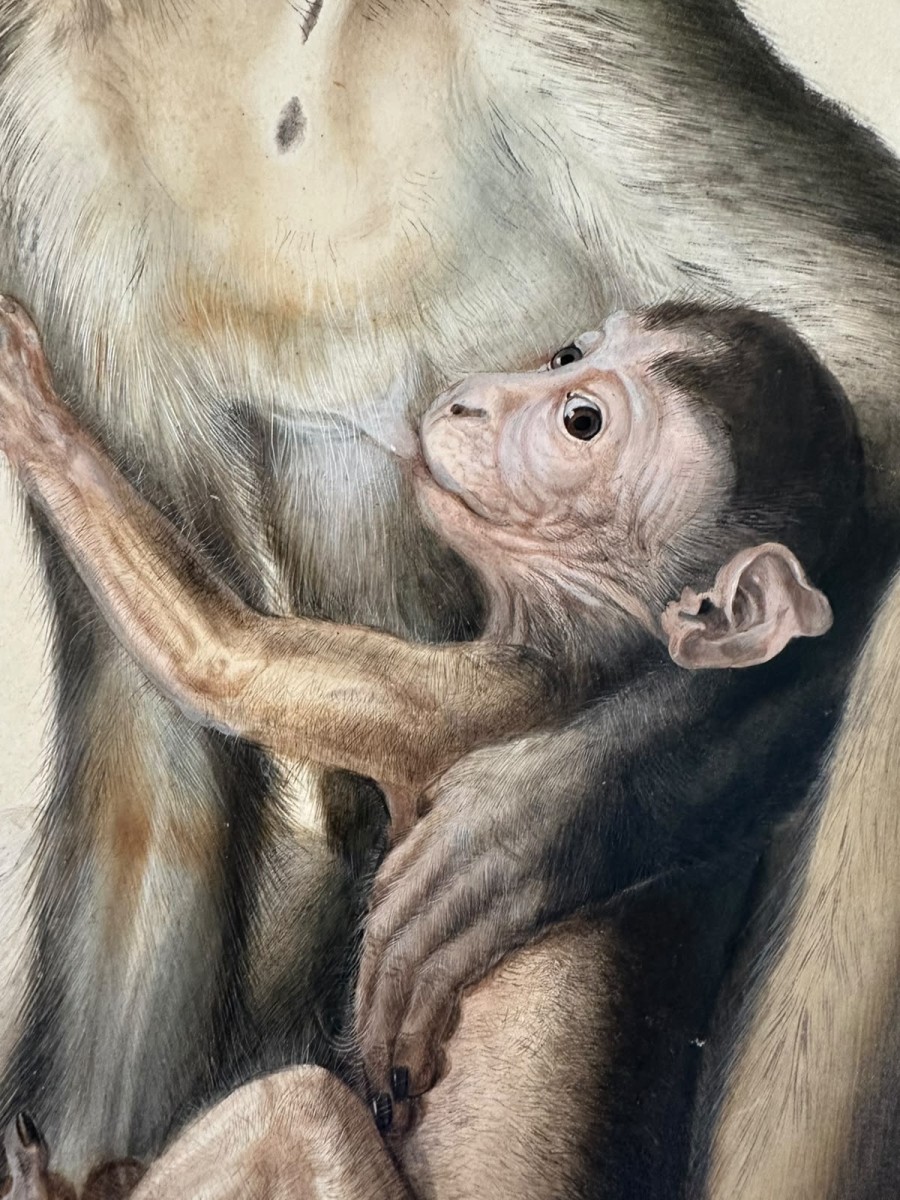
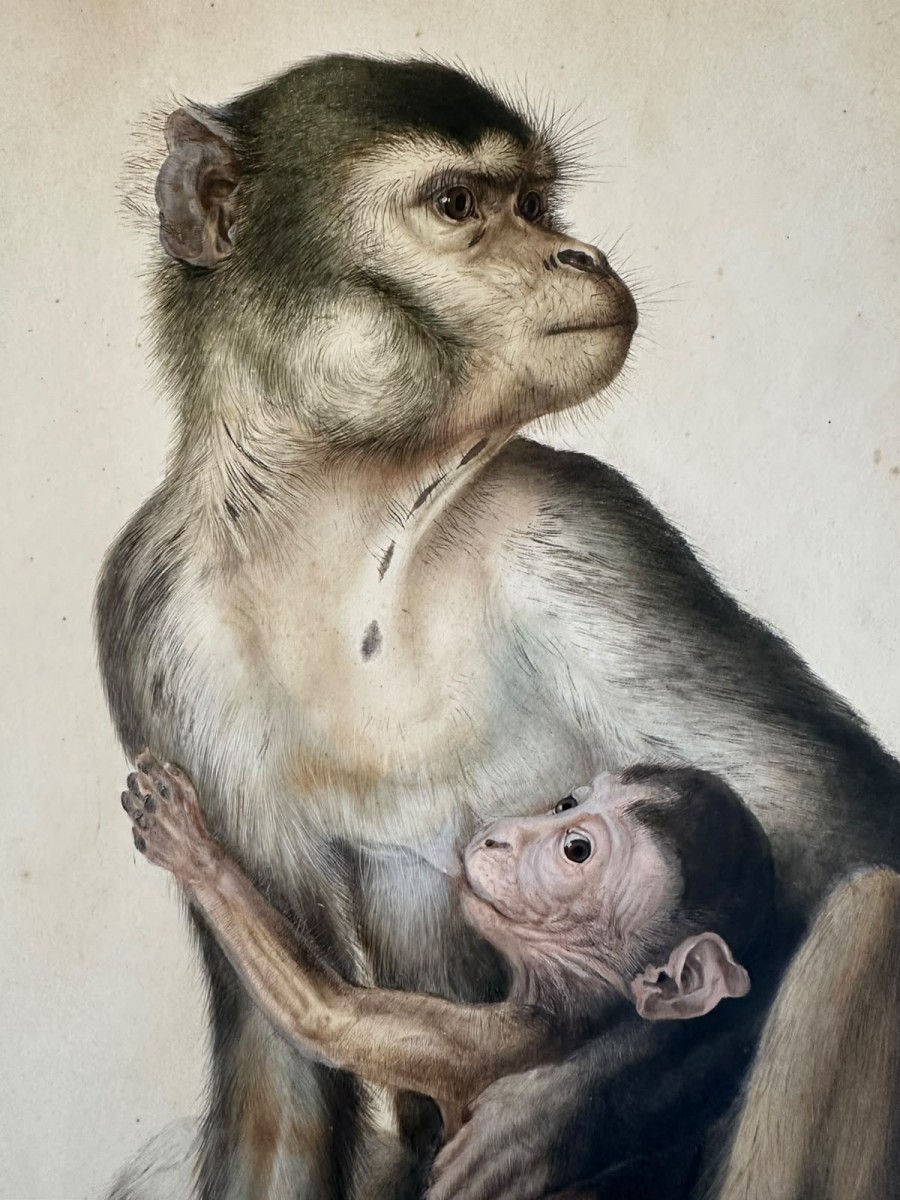
Titled "Maimon-Affe", the watercolor depicts a female pig-tailed macaque with her infant and is part of the celebrated Habsburg natural history collection.
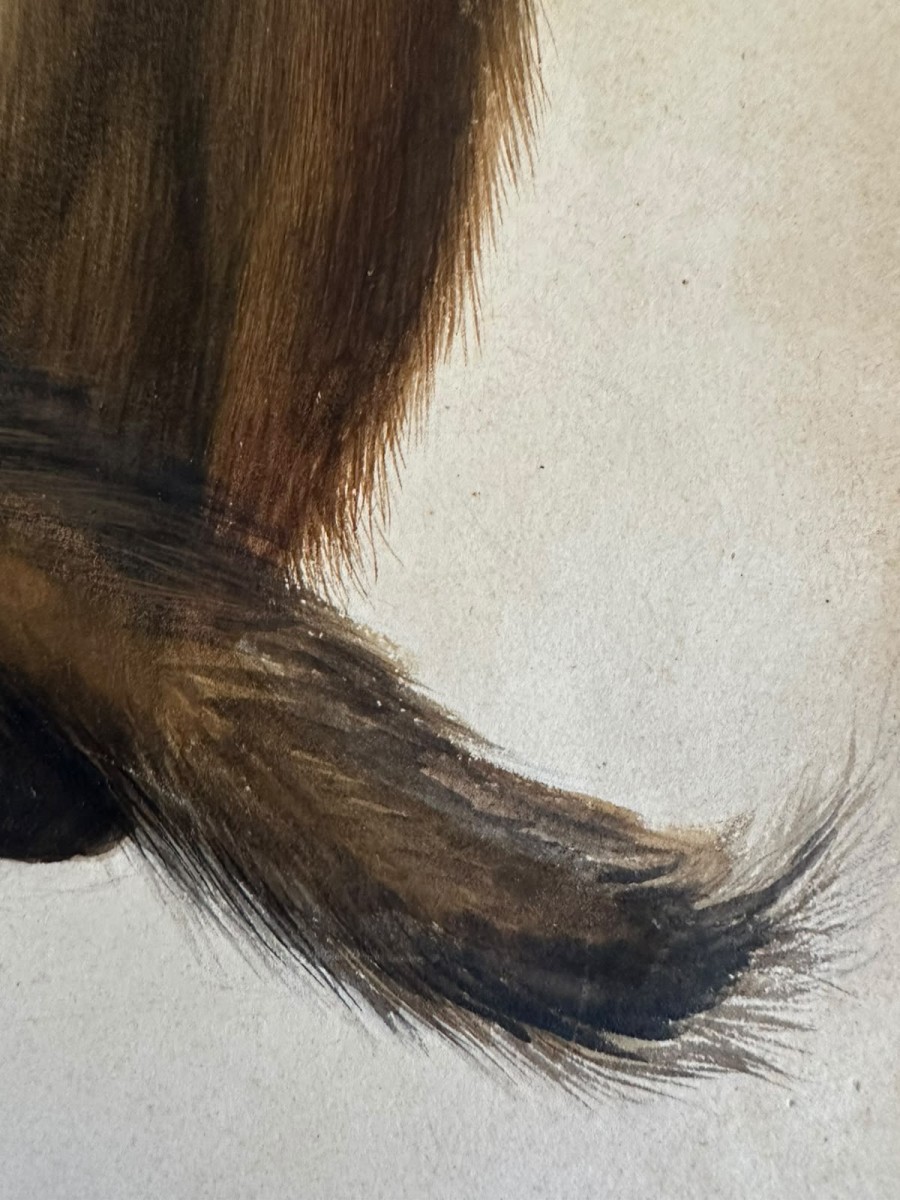
With incredible precision, the artist documented the exotic inhabitants of the Schönbrunn Imperial Menagerie well before the advent of photography.
The drawing features an original "Whatman Turkey Mill" watermark—a legendary English high-quality wove paper handmade by James Whatman in the late 18th century, which was considered the global standard for artists.
The combination (J. Whatman / Turkey Mill) dates back to 1818. This proves that the paper was manufactured precisely during the period when Gurk was creating his famous zoological collection for Emperor Ferdinand I. The sheet size of 34.5 cm x 46.5 cm shares the exact format as other watercolors in this series.
In that era, artists often did not sign the front of watercolors created for imperial portfolios, as authorship was recorded in the palace inventories.
Lithographs were made from these watercolors for the famous atlas by Johann Christian Mikan, “Delectus Florae et Faunae Brasiliensis” (1820).
The fact that our watercolor is not locked away in museum archives makes it an exceptional find.