Offered by Galerie Saint Martin
REQUEST INFORMATION
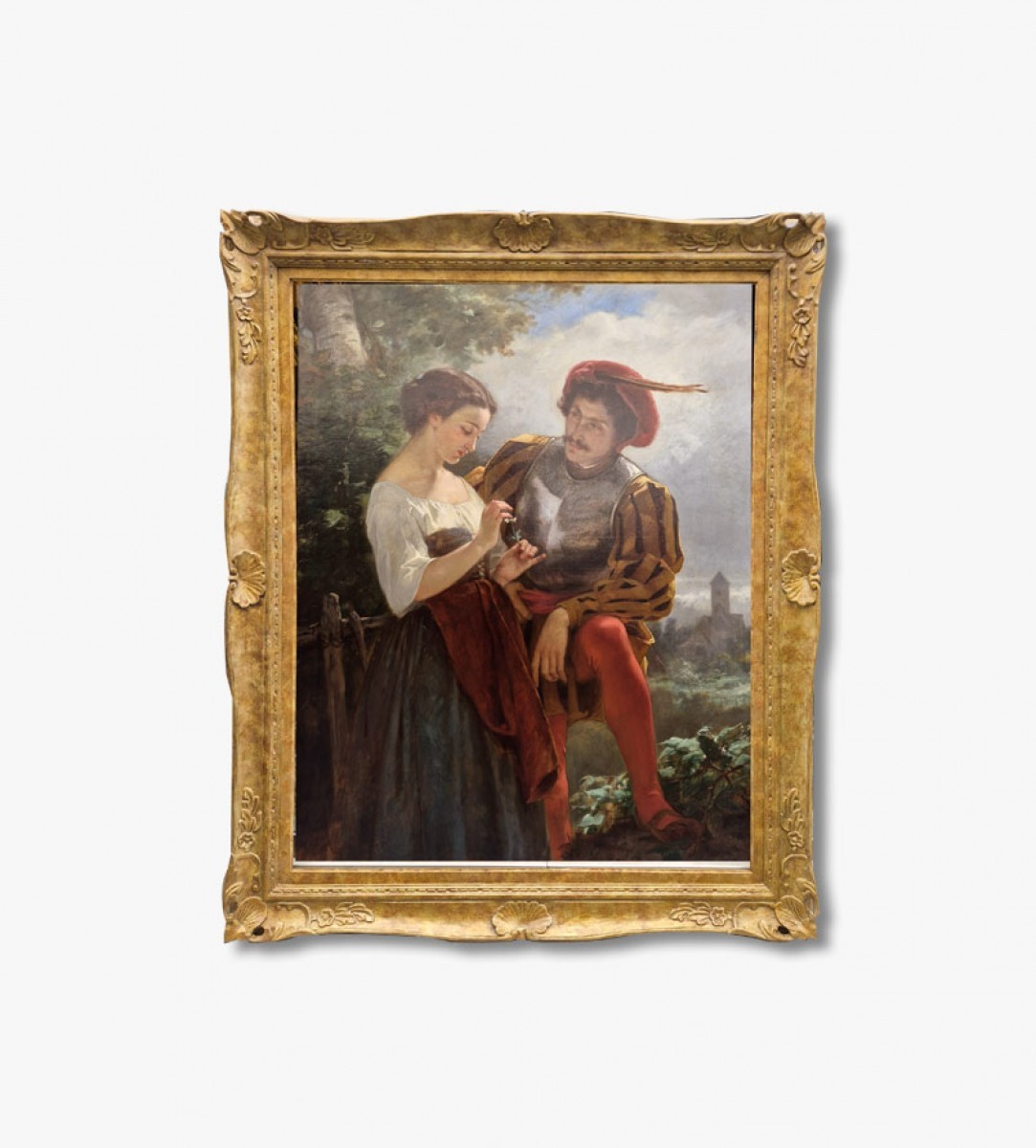

Charles Louis MULLER 1815–1892
As the heir to the great tradition of history painting established by Jacques-Louis David and later revitalized by Antoine-Jean Gros, Charles-Louis Müller embodies the excellence of French academic training at a time when history painting was considered the noblest and most prestigious artistic genre.
Drawn to painting from a very young age, Müller enrolled at the École des Beaux-Arts in Paris, where he studied under two great masters: Antoine-Jean Gros and Léon Cogniet.
In 1834, at just eighteen years old, Müller made a remarkable debut at the Paris Salon, where he would go on to exhibit almost without interruption until his death in 1892.
His talent was quickly recognized at the Salon: he won a third-class medal in 1838, a second-class medal in 1846, and then a first-class medal in 1848. In 1855, he received a second first-class medal for his famous painting *Vive l’Empereur*.
This artistic recognition was accompanied by prestigious official honors. Müller was named a Knight of the Legion of Honor in 1849, then a Knight of the Order of Leopold of Belgium in 1860.
In 1864, he was elected to the Academy of Fine Arts, where he succeeded Hippolyte Flandrin.
Beginning in the 1850s, Charles-Louis Müller became one of the leading decorative painters of the Second Empire, thanks to prestigious public commissions.
Working under the direction of architect Hector Lefuel, who had been commissioned by Napoleon III to oversee the completion of the New Louvre, Müller participated in some of the decorative projects.
Among his most significant works is the monumental ceiling of the Salon Denon, created between 1863 and 1866 and still on display today at the Louvre Museum. He also contributed to the decoration of the Salle des États and the Salon Mollien.
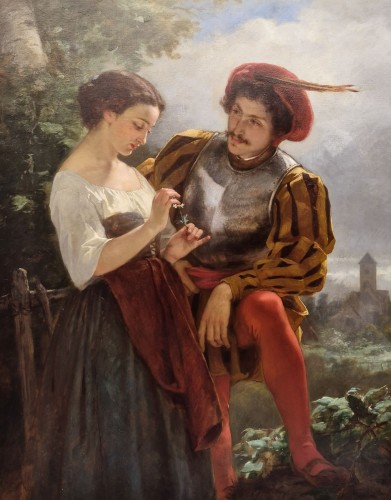
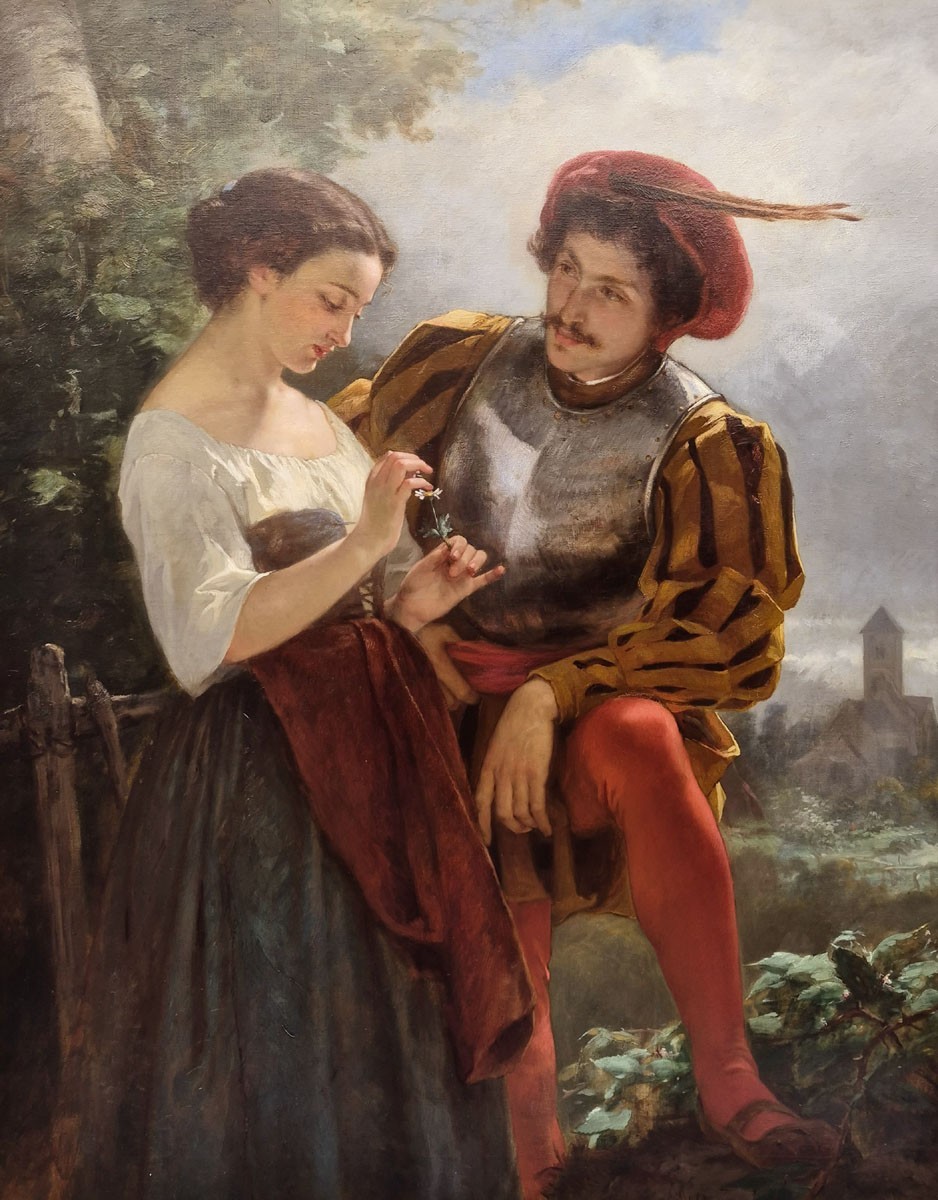
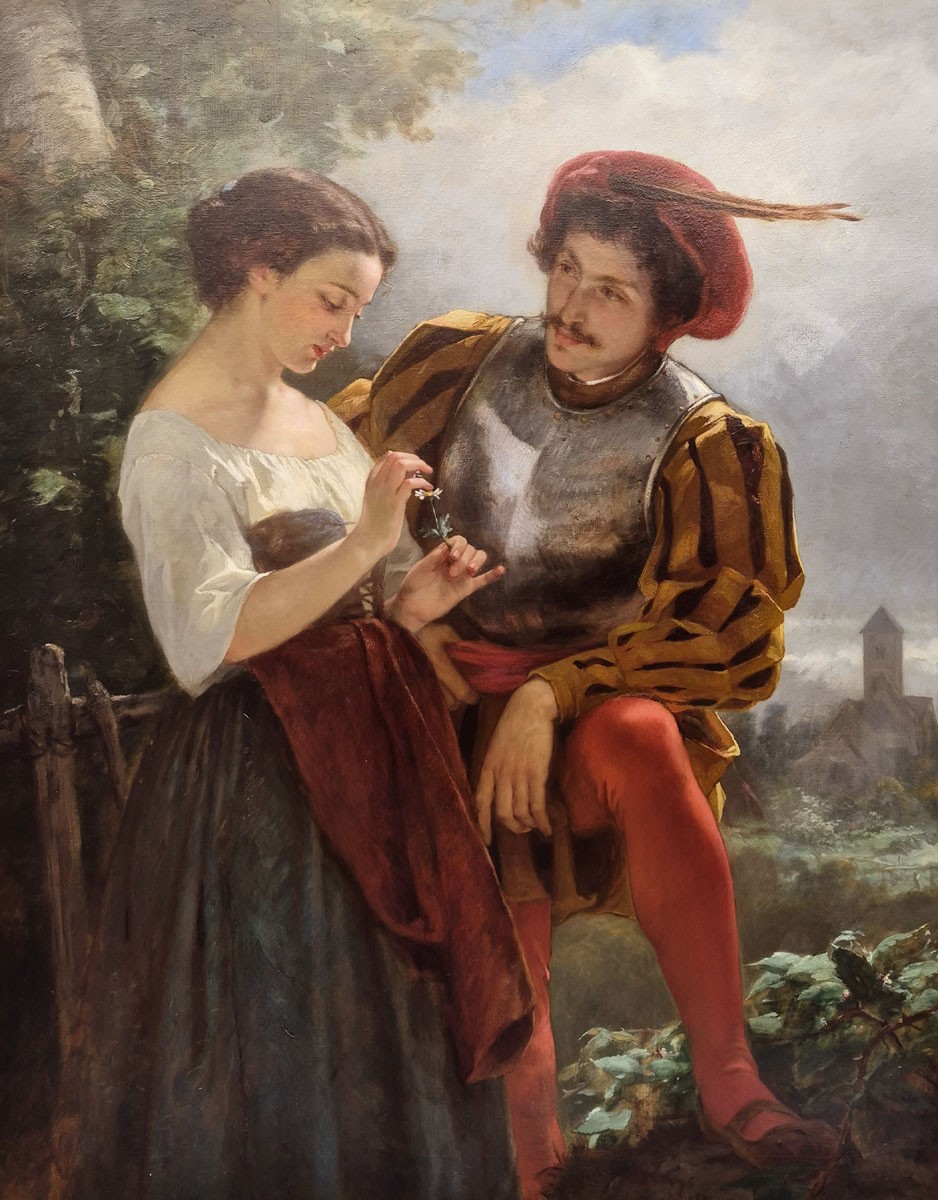
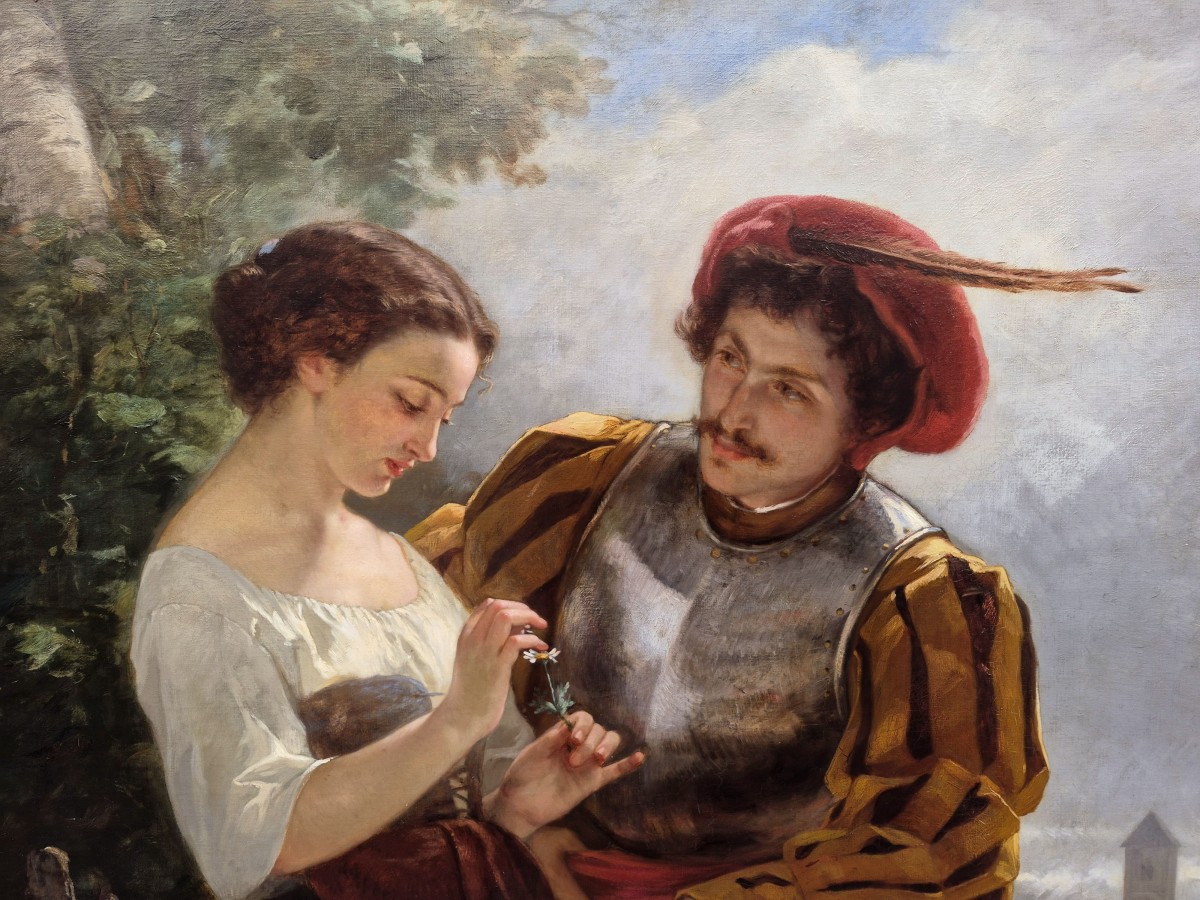
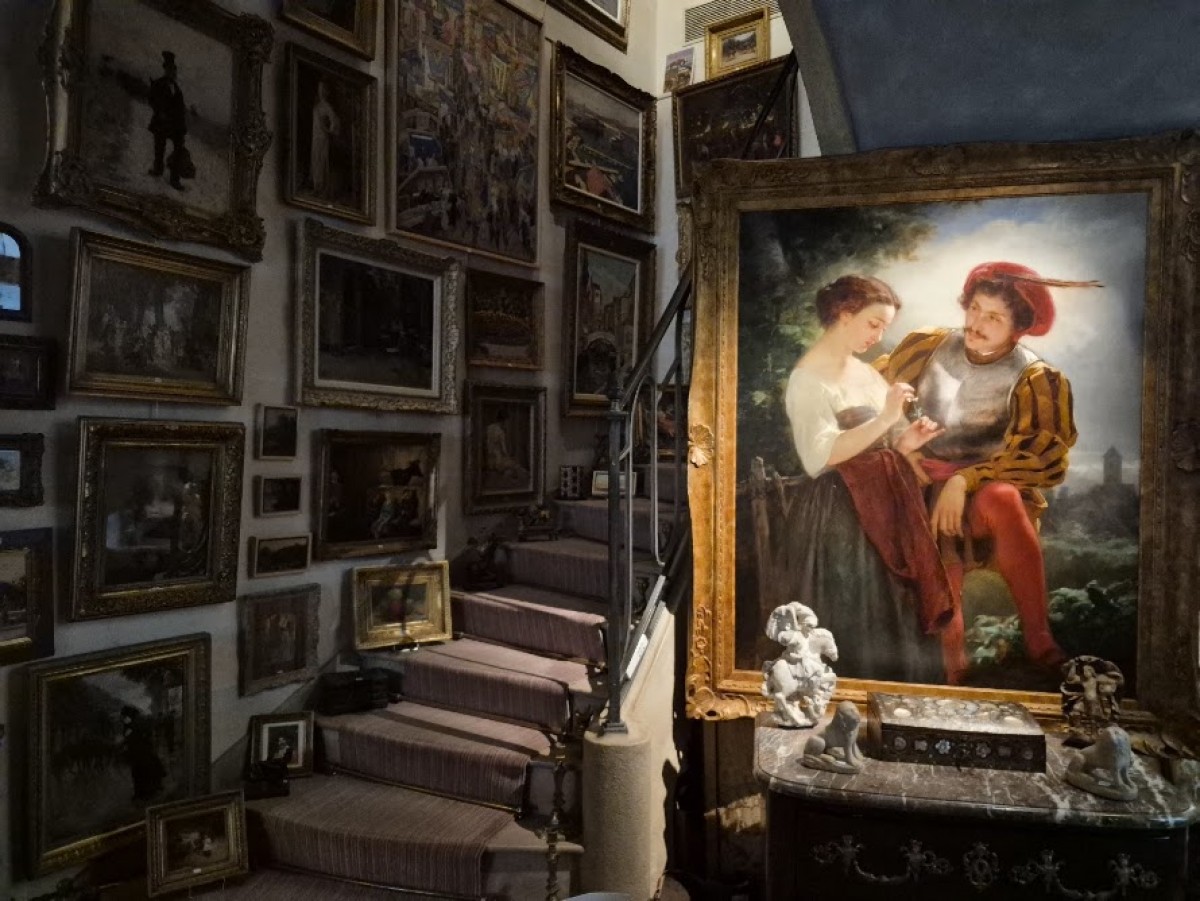
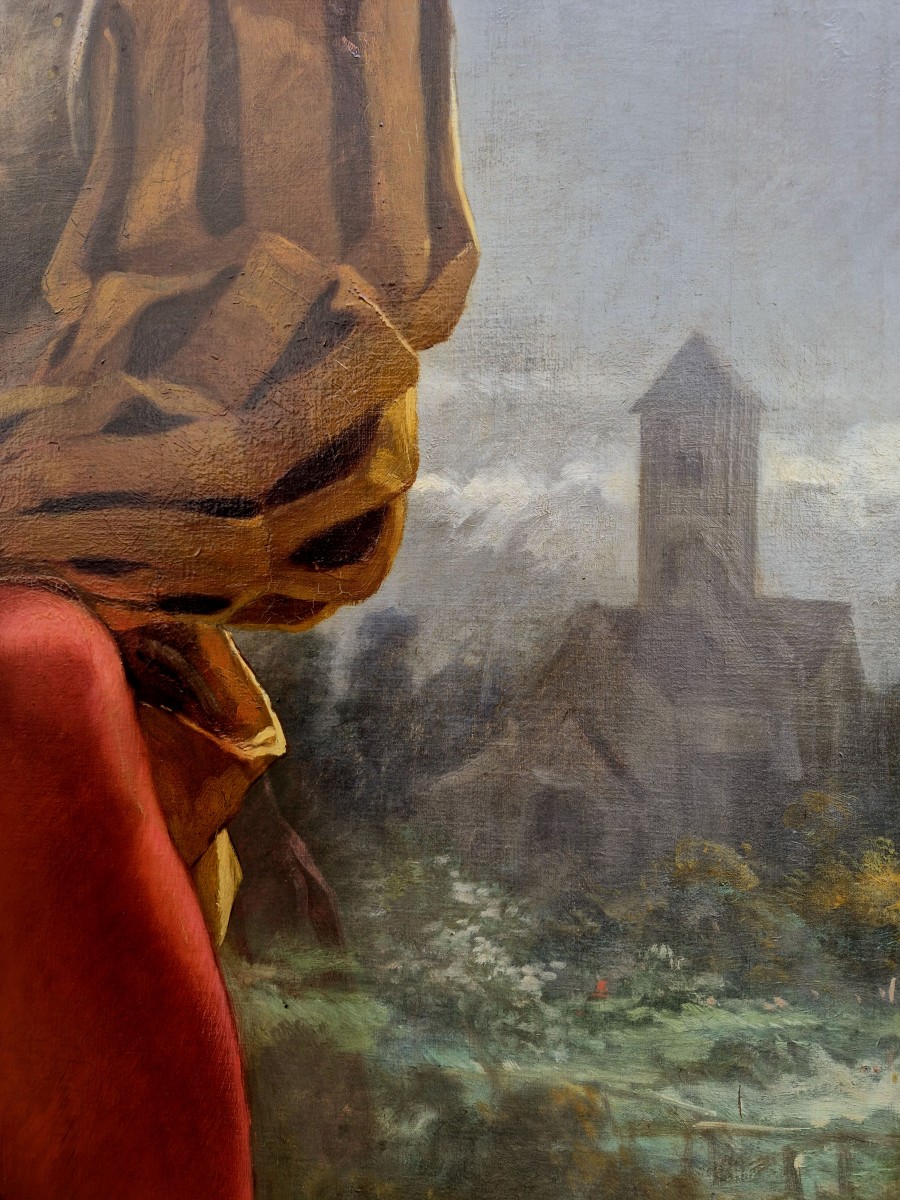
The painting depicts a young couple of troubadours in the heart of a rural landscape.
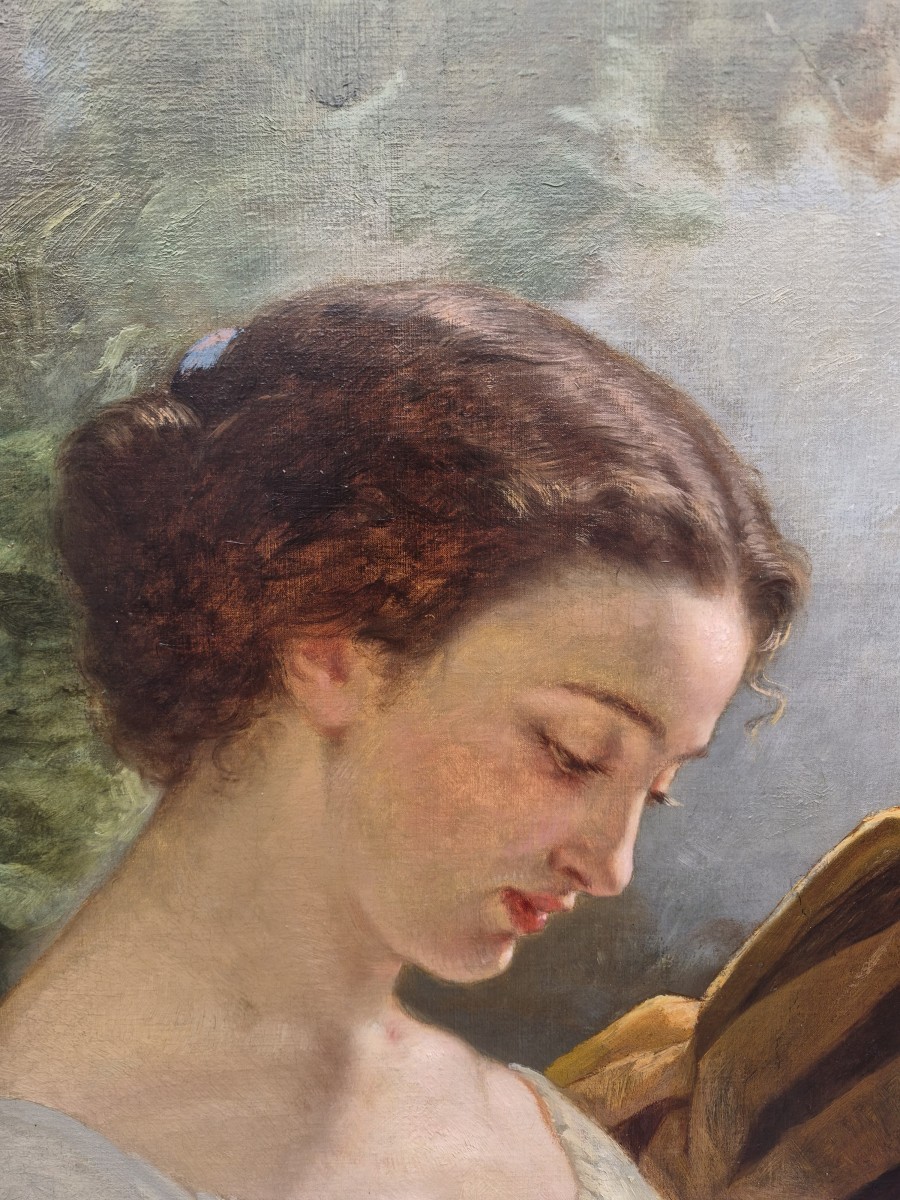
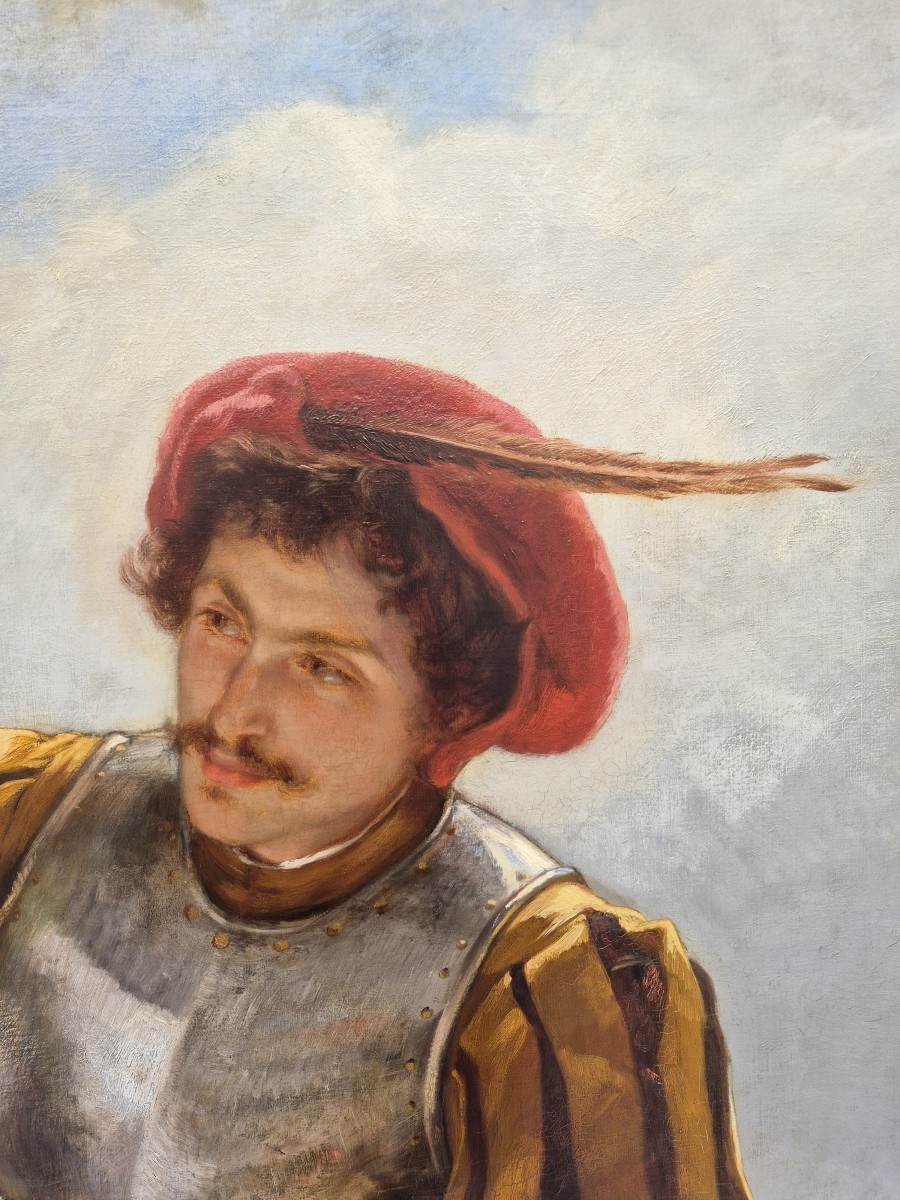
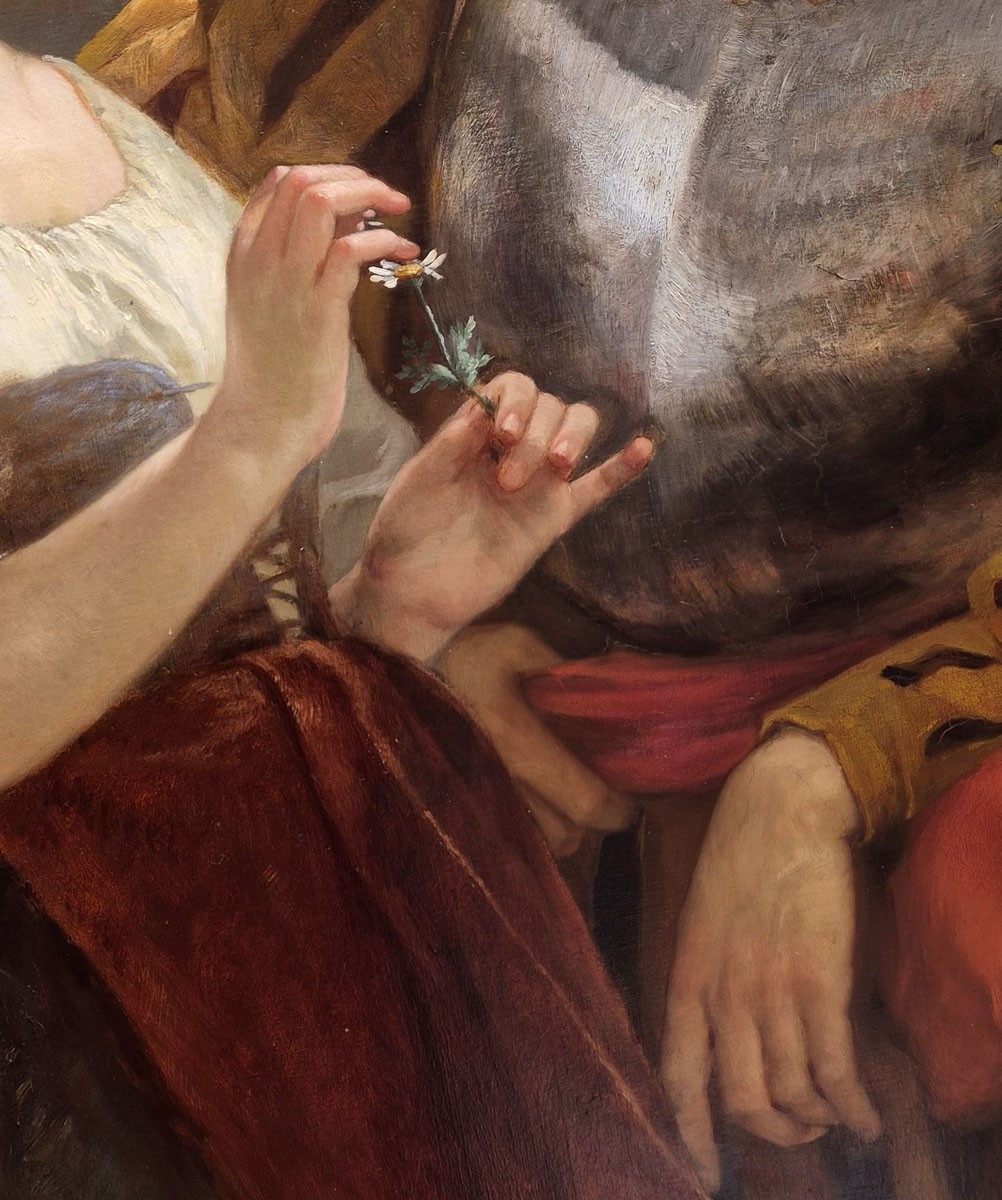
Clad in sumptuous damascened armor and the elegant attire of a 16th-century gentleman, the young nobleman gazes admiringly at the young woman, who delicately holds a flower between her fingers.
This simple gesture is the focal point of the composition. The flower here evokes the first stirrings of love.
Emotion is conveyed through the exchange of glances, the grace of their movements, and the eloquent silence that unites the two protagonists.
The work is firmly rooted in the tradition of troubadour painting, a genre that enjoyed immense popularity in France from the Restoration through the Second Empire.
Inspired by the Middle Ages and the Renaissance, these compositions depict imagined historical scenes celebrating courtly love, fidelity, and the refinement of bygone customs.
Delevery information :
Shipping all destinations