Offered by Segoura Fine Art

Painting, furniture and works of art from the 17th, 18th and early 19th century
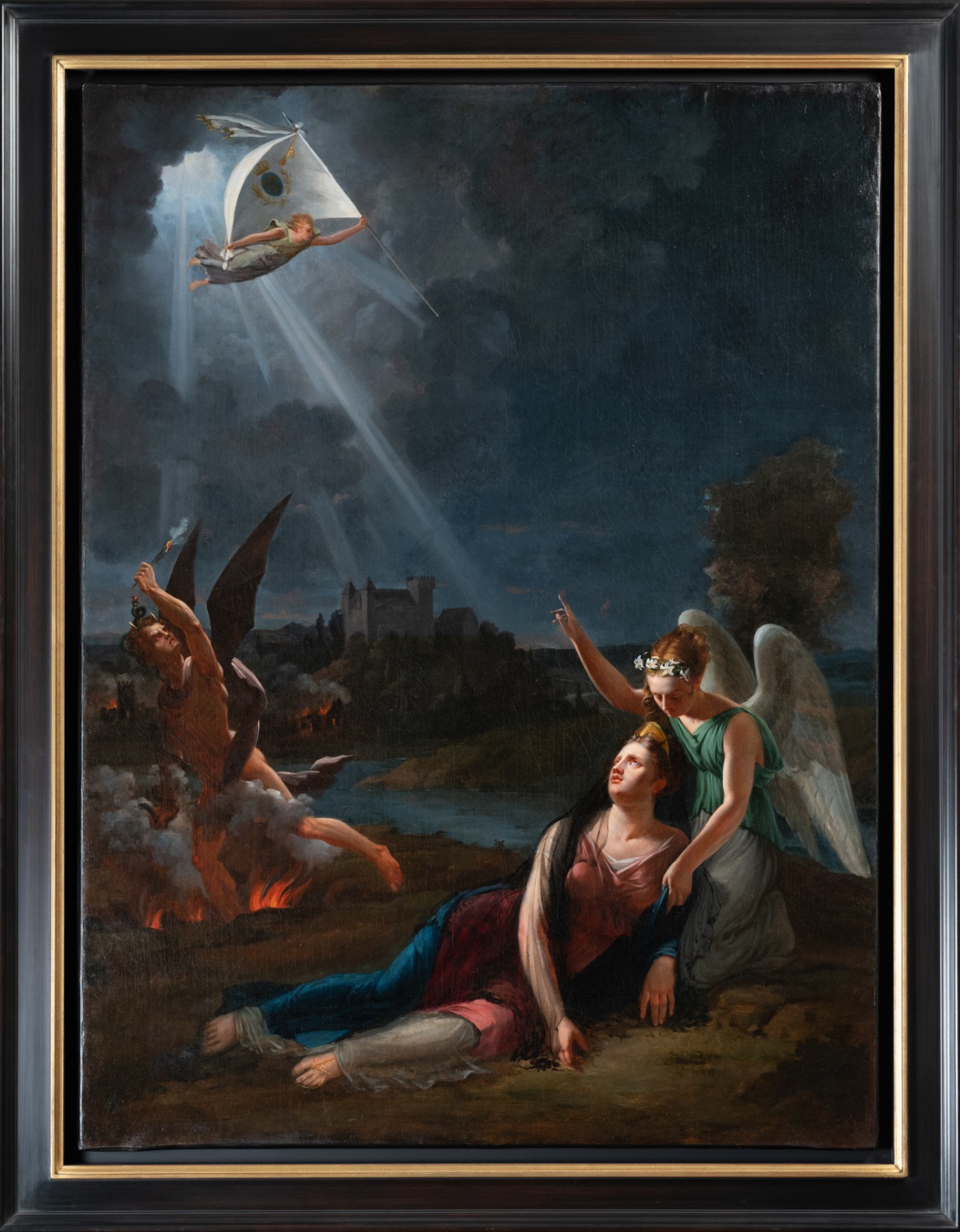
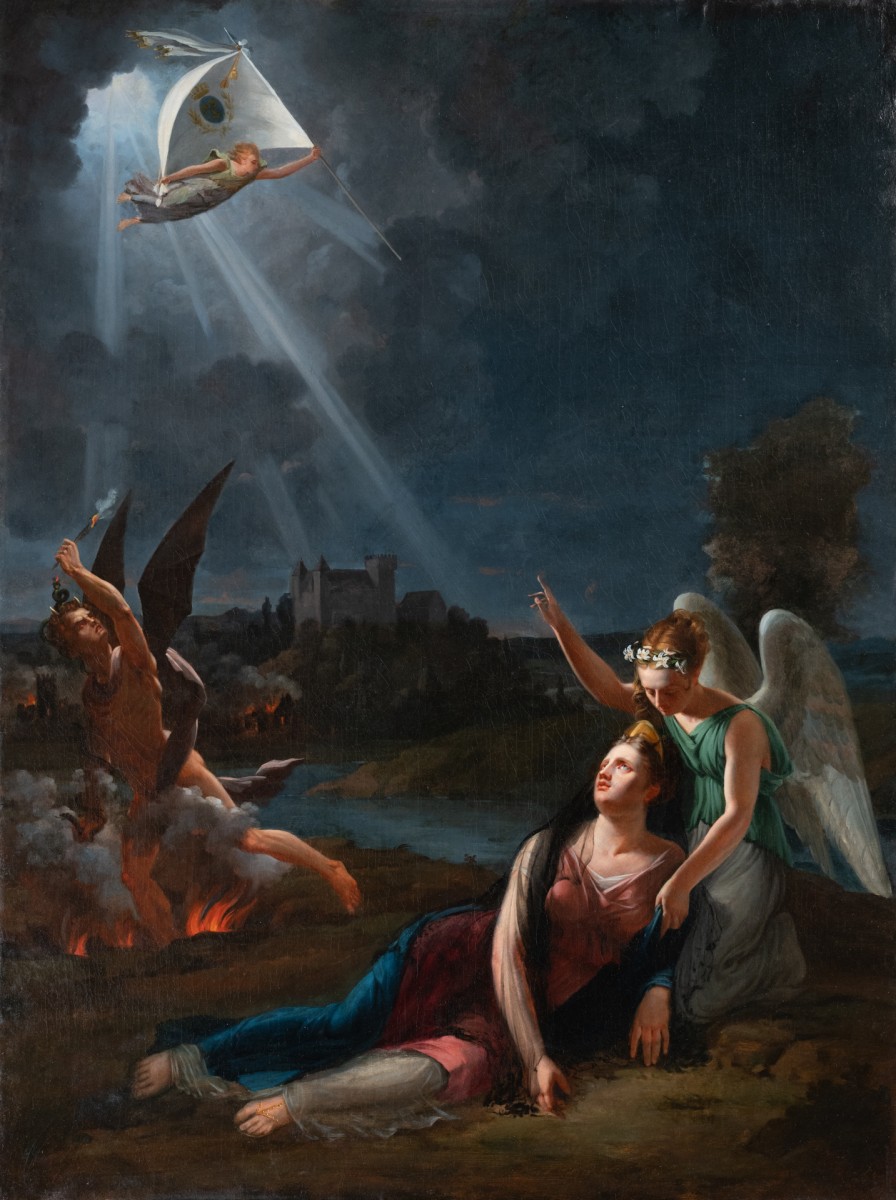
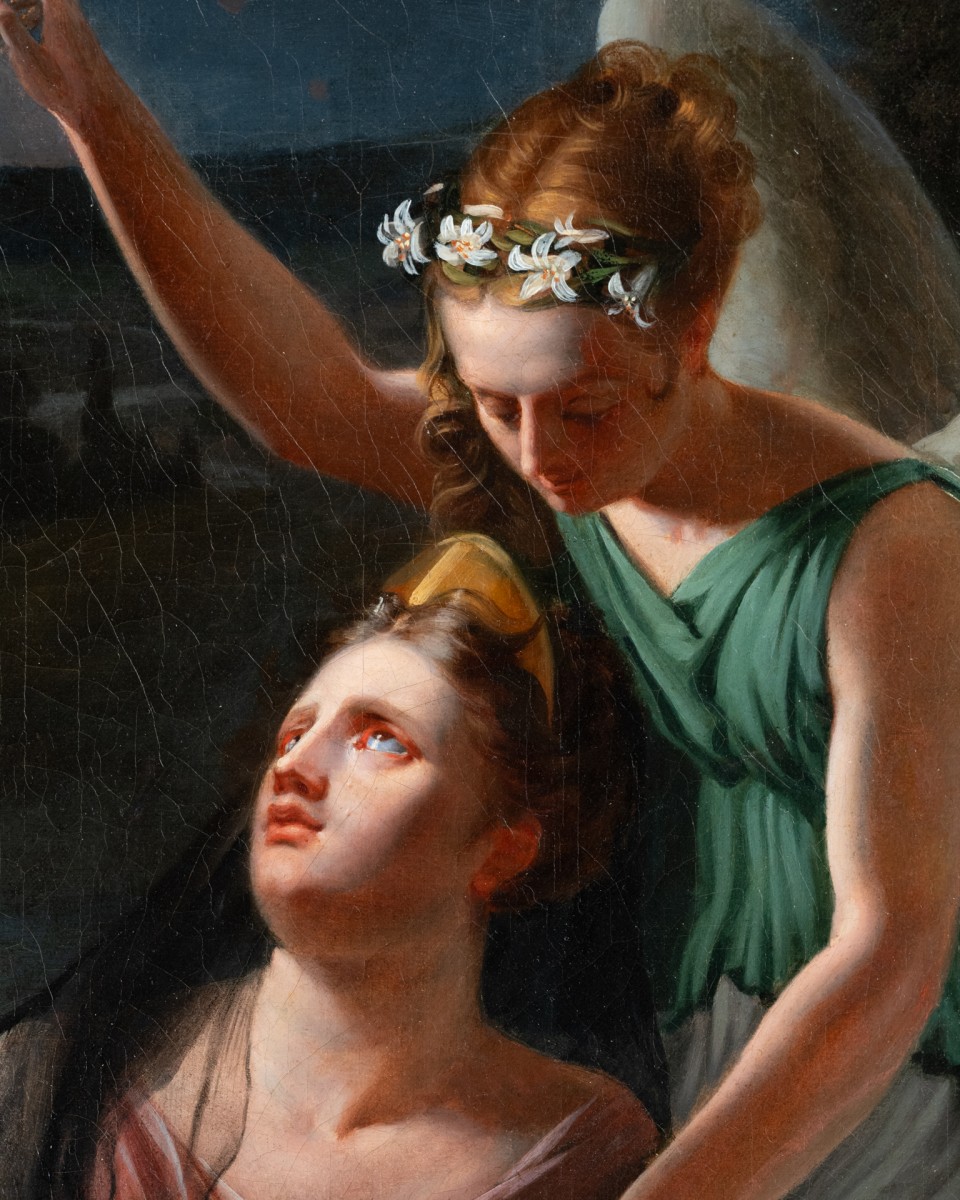
Providence Calling for the Return of the Bourbons, with the Château de Pau in the Background
Oil on canvas, circa 1814–1815
Dimensions including frame: 151 × 118 cm
This large allegorical composition belongs to a very specific moment in French history: the First Bourbon Restoration, when painting once again became a vehicle for political, moral, and symbolic expression. Far removed from triumphalist imagery or official celebration, the work offers a more introspective interpretation of the restoration of the monarchy, based on the idea of order being re-established not through force, but through Providence.
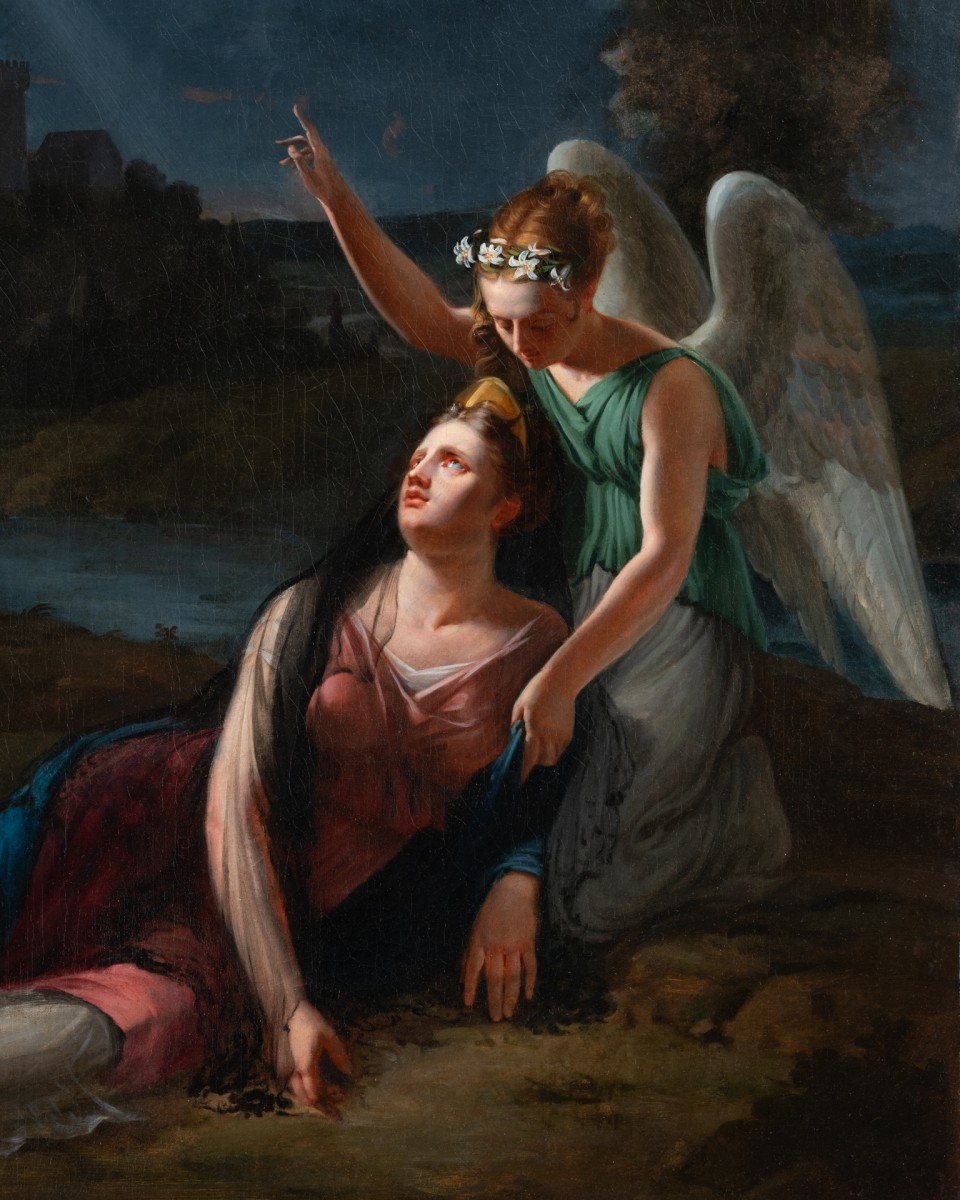
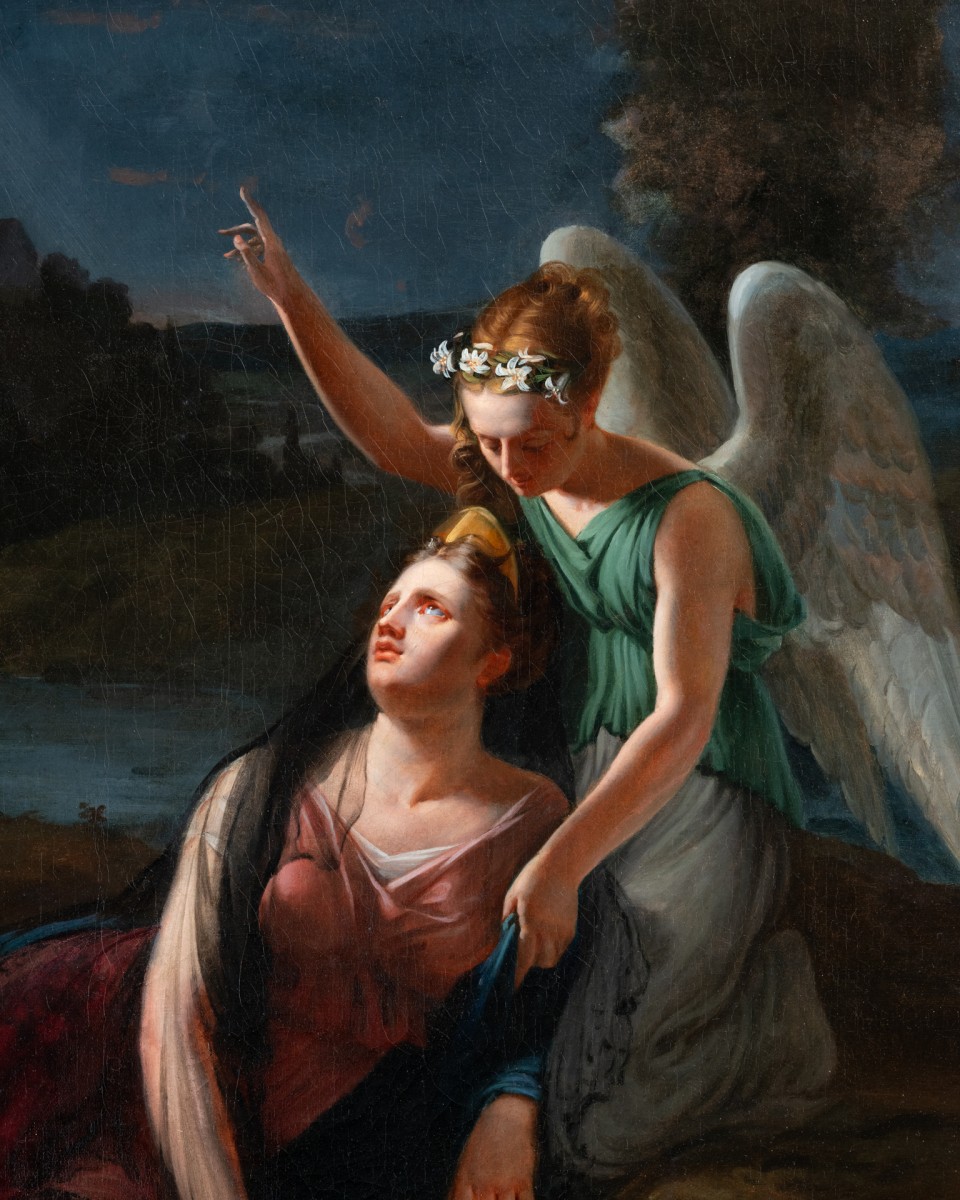
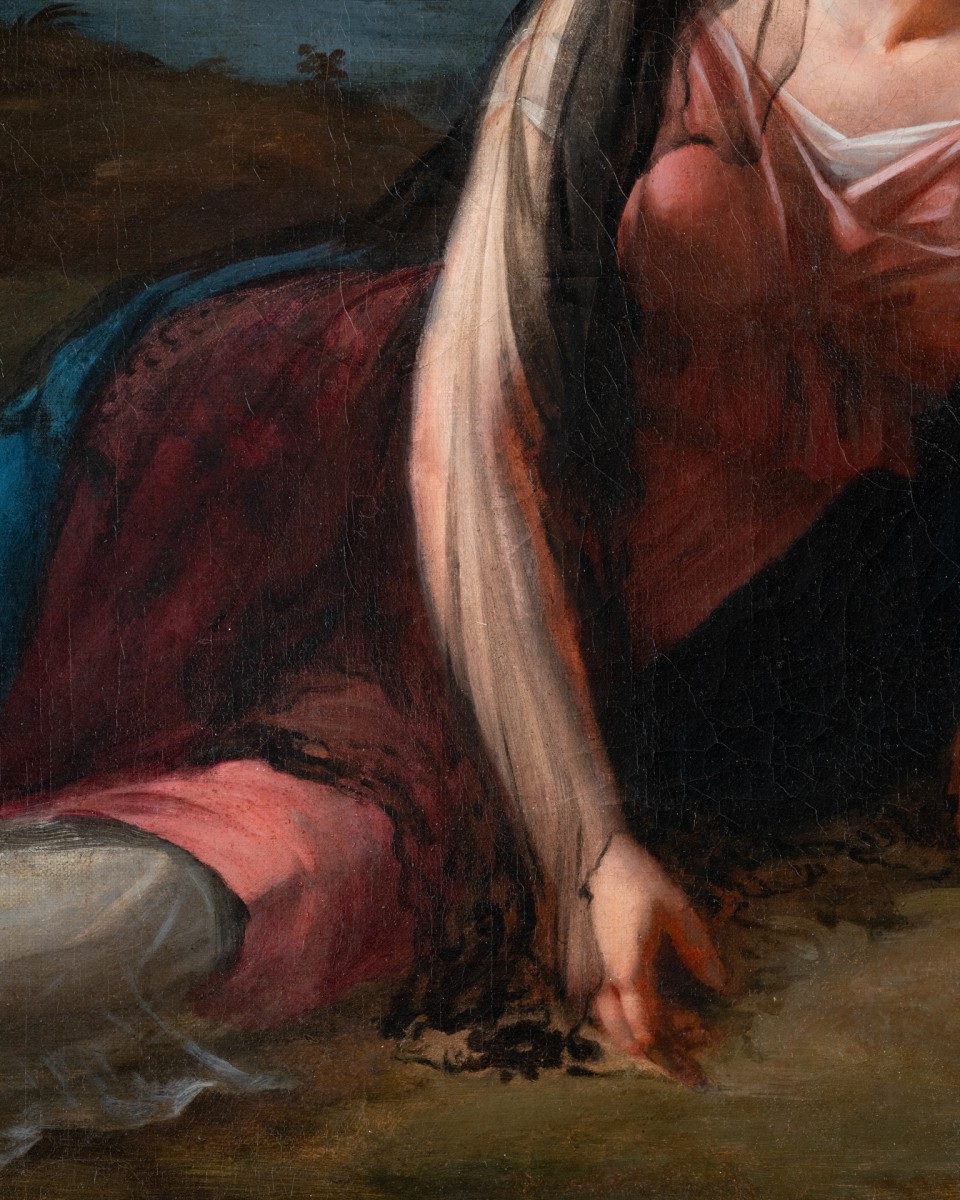
The composition unfolds along a clearly defined and deliberately hierarchical diagonal. At its centre, a reclining female figure personifies France. She is neither dead nor defeated, but weakened, seemingly suspended in a state of expectation. Her relaxed body and distant gaze convey the exhaustion of a country emerging wounded from the upheavals of the Revolution and the Empire. France is not presented heroically: she is vulnerable, human, yet still capable of salvation.
Above her, a celestial figure—identifiable as Providence—both supports and protects her. Her gesture is essential to the meaning of the composition: neither martial nor theatrical, it is calm and almost restrained. One hand offers support, while the other points the way. This simple movement governs the entire interpretation of the work: salvation does not arise from human action, but from a higher moral and historical order transcending recent events. The painting thus expresses a profoundly Legitimist vision, in which history regains meaning through its return to dynastic continuity.
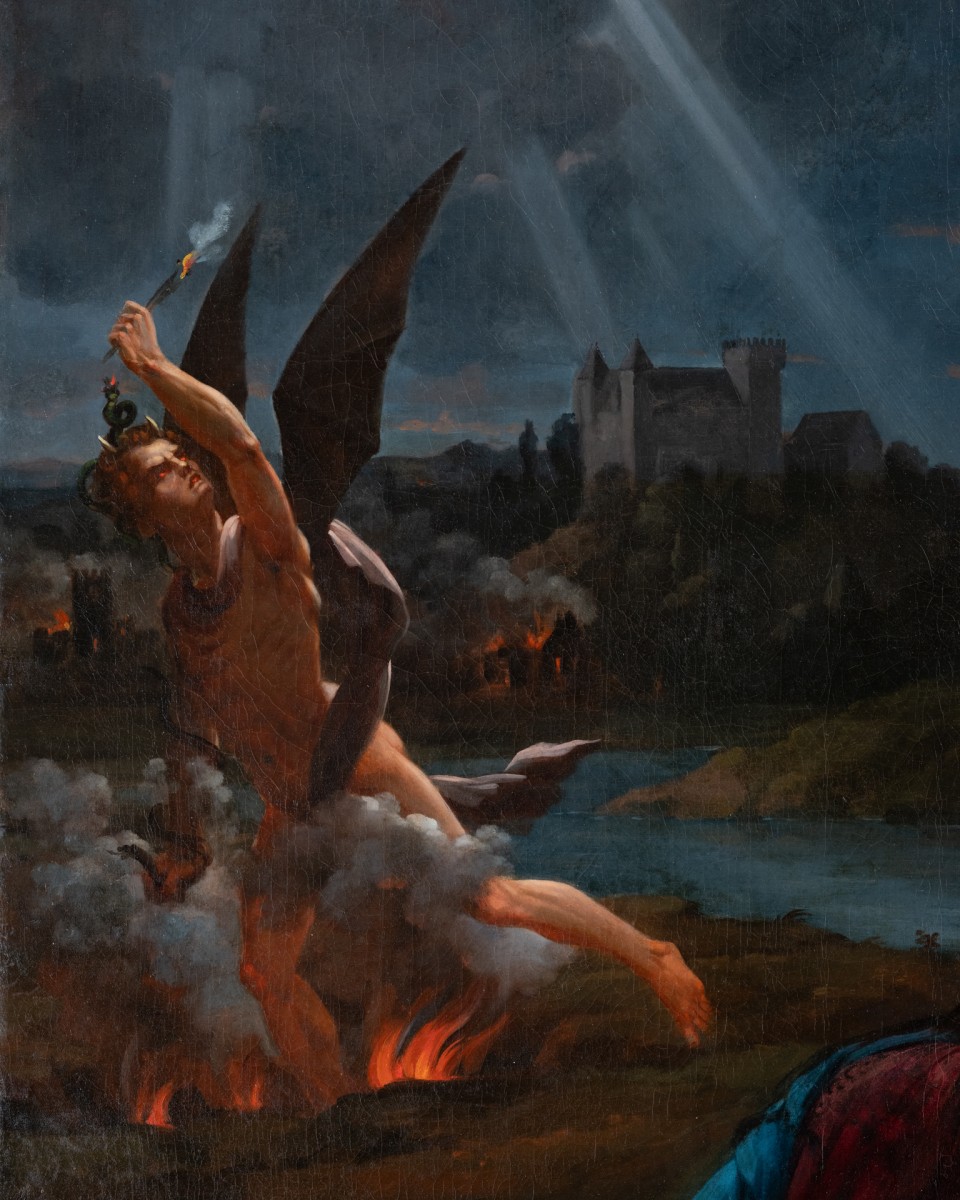
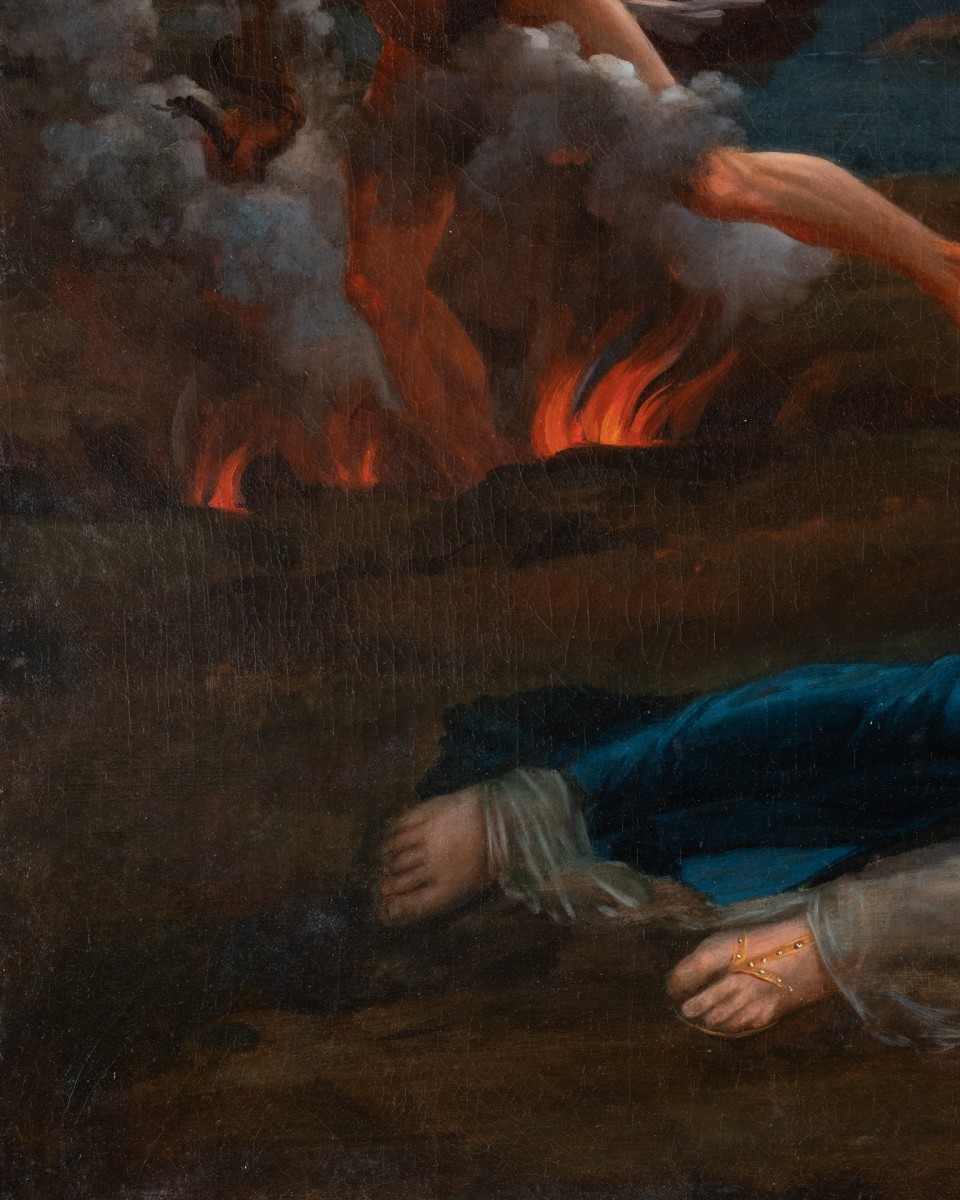
At the opposite side of the composition, pushed towards its margins, a dark winged figure falls into the flames. It no longer fights; it falls. Disorder—whether revolutionary or associated with usurpation—is not confronted but already cast aside. This iconographic choice is particularly revealing: the work glorifies neither struggle nor victory, but instead presents the Restoration as an established and seemingly inevitable order.
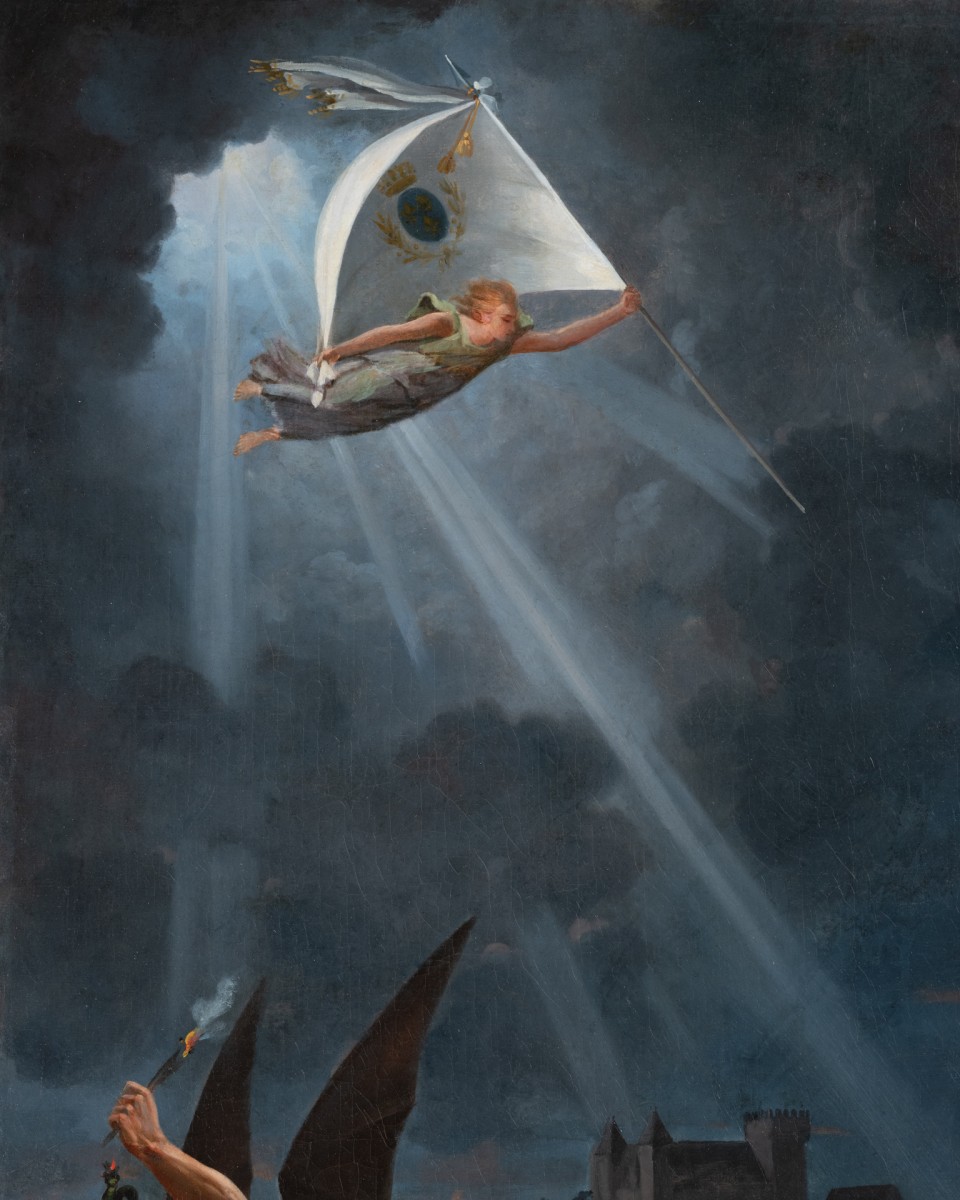
In the distance, the Château de Pau appears discreetly within the illuminated axis of the composition. Its presence is crucial. Far from serving merely as a picturesque backdrop, it functions as a precise historical symbol, recalling the birthplace of Henry IV and, through him, the antiquity and legitimacy of the Bourbon dynasty. The landscape is not depicted for its own sake; it is invoked as an embodiment of memory, almost as a dynastic seal.
Stylistically, the painting reveals a solid academic training. The draughtsmanship is clear and structured, without unnecessary formal experimentation. The figures are rigorously constructed in a tradition inherited from Neoclassicism, while already displaying elements of a restrained moral Romanticism. The flesh is handled with an opaque technique and modelled through successive layers, with clearly defined and visible shadows that favour legibility over painterly sensuality. The transitions do not seek a perfectly seamless finish; instead, they retain a certain firmness that reinforces the didactic character of the scene.
The hands, with their clear and demonstrative gestures, play a central role in this visual rhetoric. They do not merely suggest: they indicate and direct. The draperies, arranged in simple and occasionally weighty masses, structure the pictorial space without seeking decorative effect. The sky, painted with a visible, slightly granular surface, receives a directional light that organises the composition rather than simply bathing it, once again asserting the primacy of meaning over visual effect.
Taken as a whole, the painting reveals itself as a work of history painting conceived to persuade, explain and order both the viewer's gaze and thought. Rather than being an exercise in individual virtuosity, it is an image of conviction, probably intended for a private circle or a Legitimist patron rather than for public glorification.
In the absence of a signature or archival documentation, any attribution must remain deliberately cautious. Stylistic and technical analysis makes an attribution to one of the major figures of French Romanticism unlikely, as one would expect from such a hand a greater degree of tonal blending, individual expression and painterly introspection. The work can more convincingly be situated within the production of academically trained history painters active during the Bourbon Restoration, familiar with political allegory and ideologically motivated commissions.
This canvas therefore stands as a rare and eloquent testimony to the visual culture of post-Imperial France: an image in which painting becomes a moral language, politics is expressed through symbolism, and history seeks to restore continuity under the guiding sign of Providence.