Offered by Subert
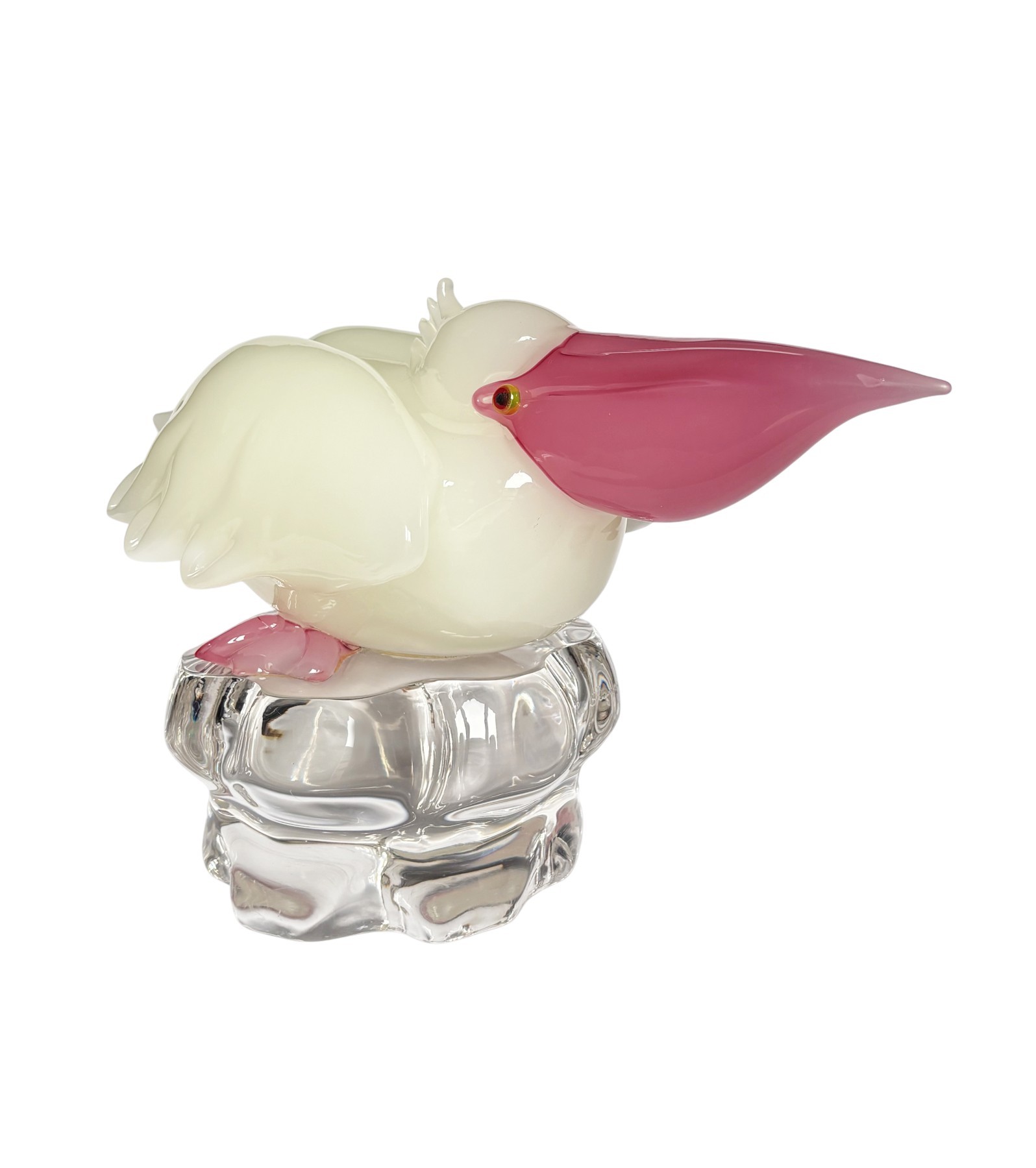
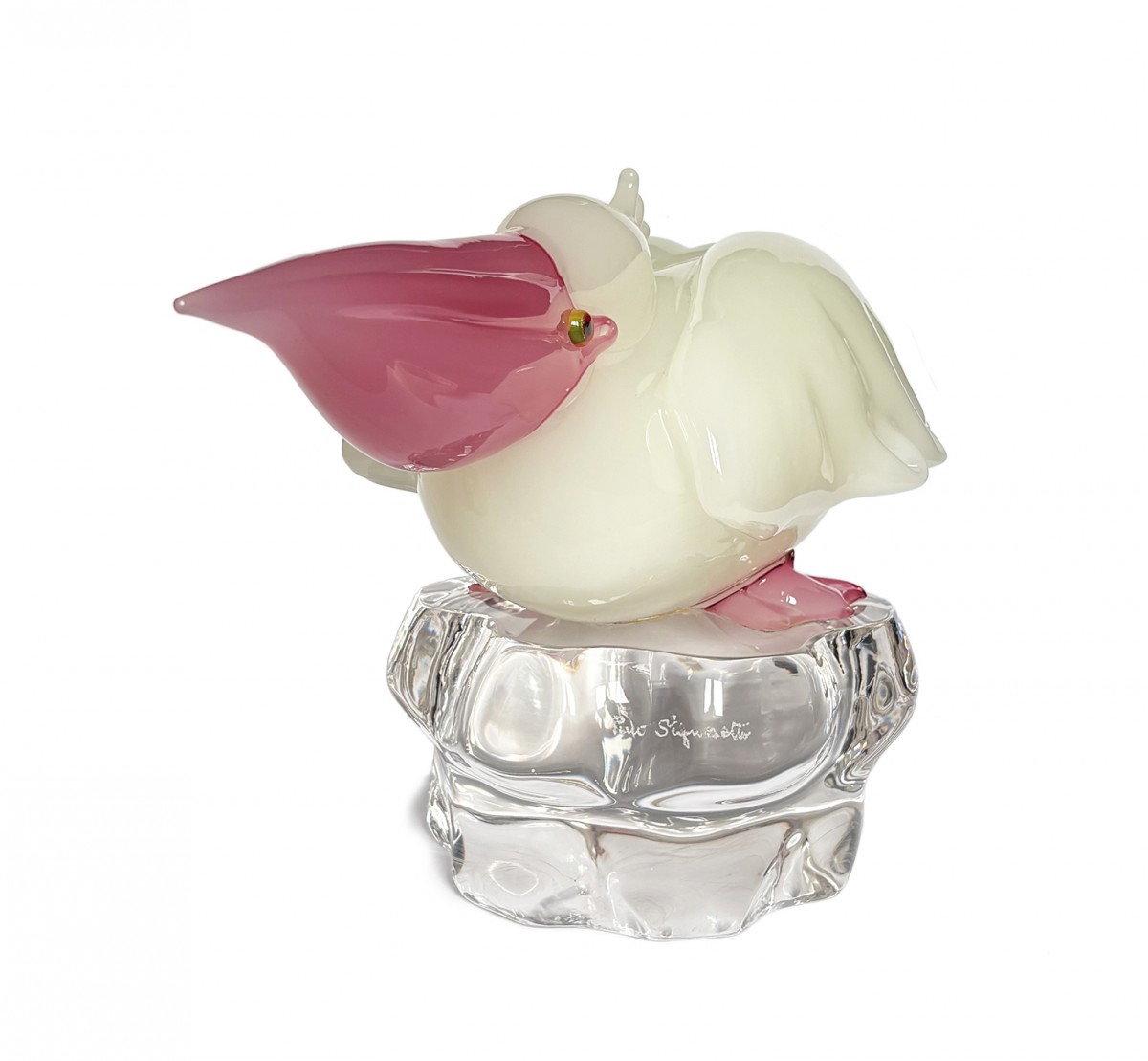
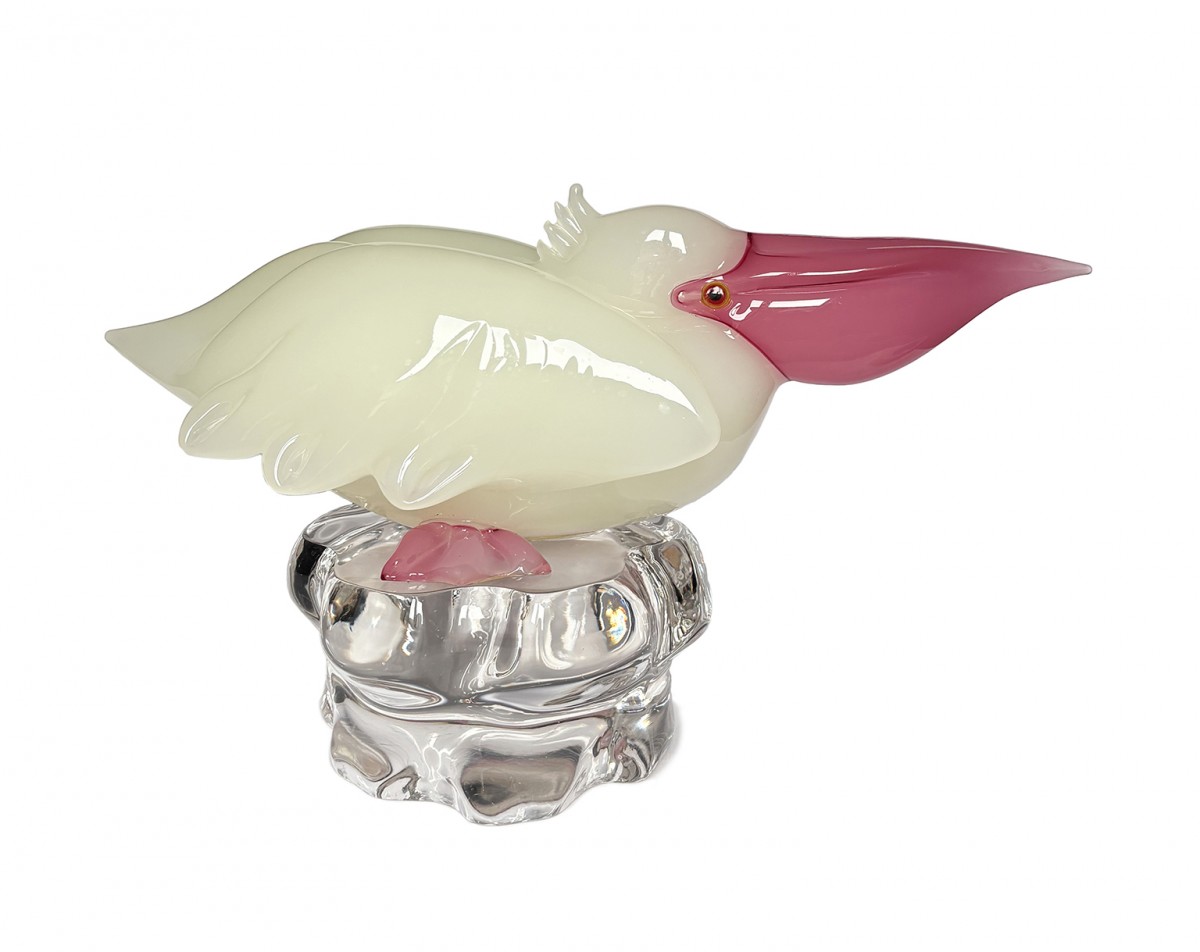

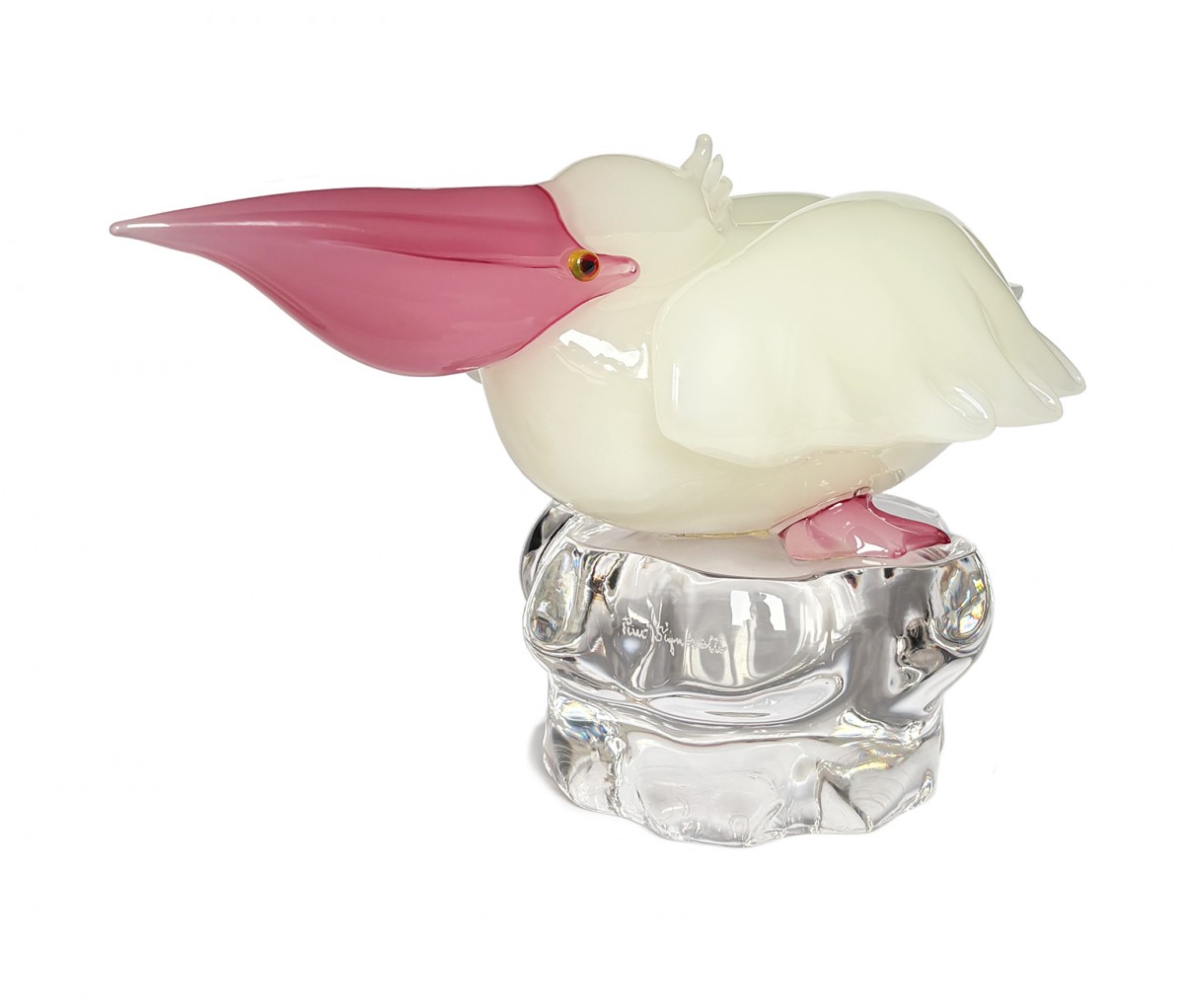
Sculpture en verre - shaped glass sculpture
Pino Signoretto
Murano, circa 1973
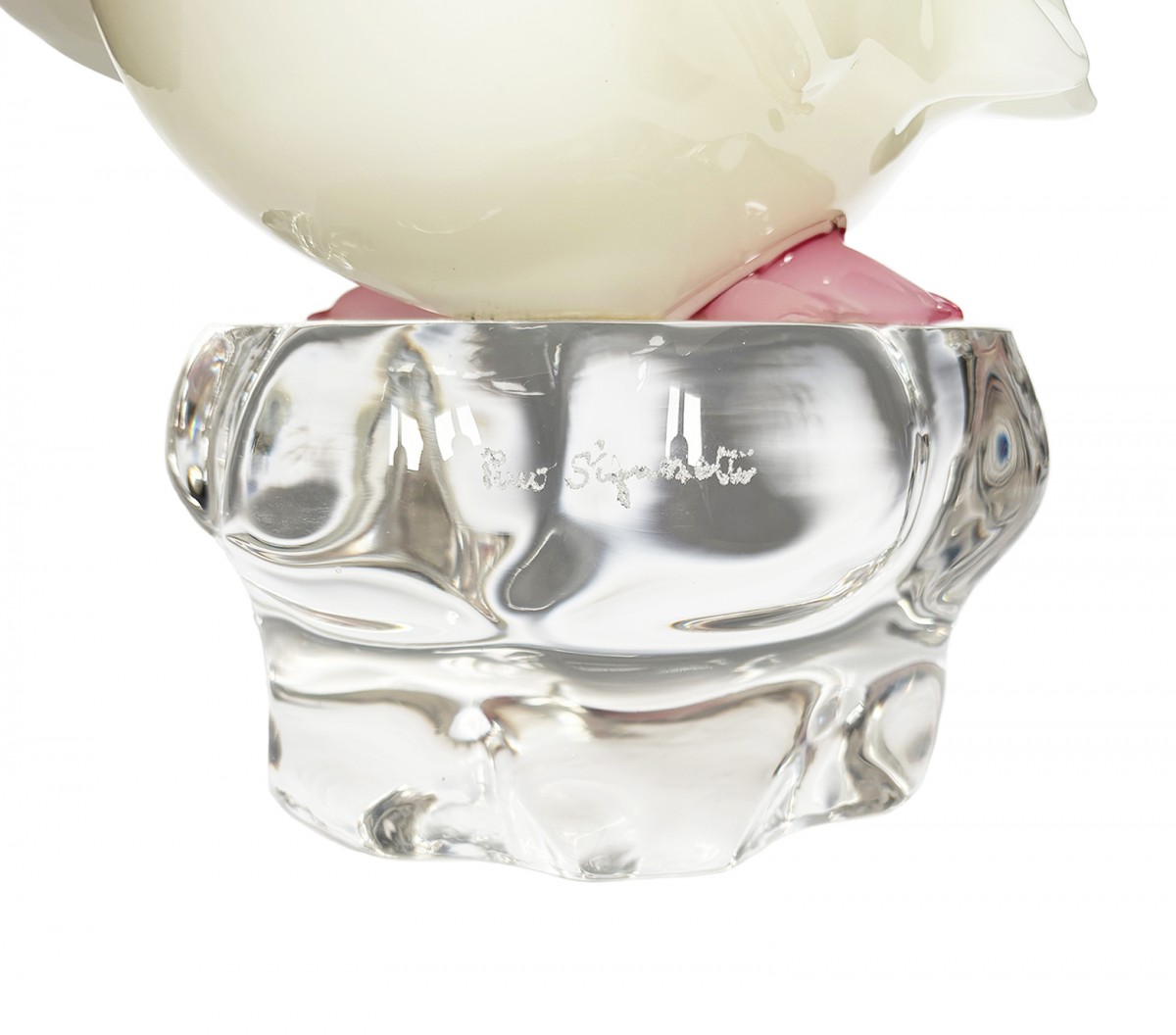
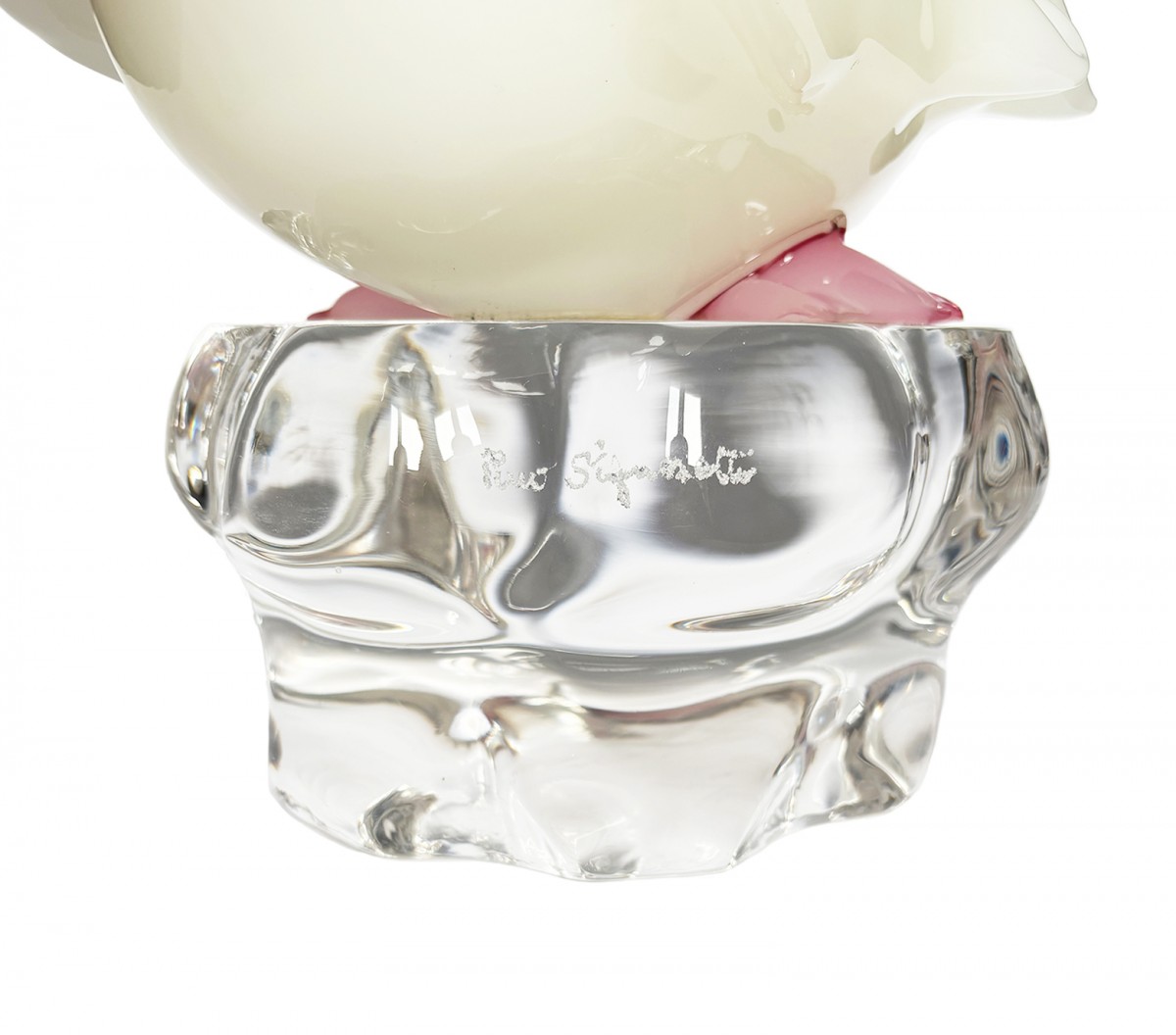
Engraved signature “Pino Signoretto” on the front of the base
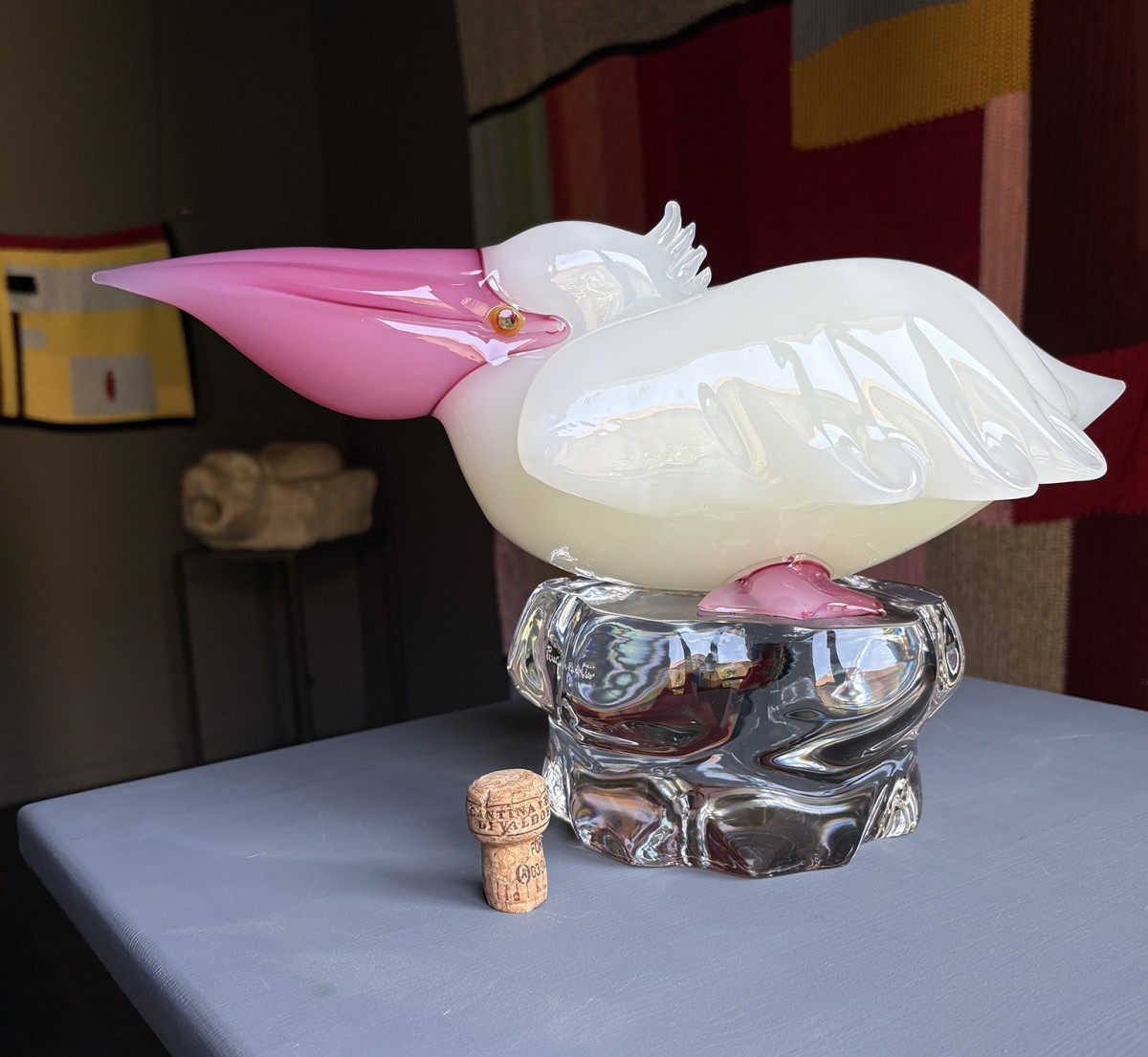
It measures: 10.04 in in height x 7.28 x 17.32 (25.5 cm x 18.50 x 44)
It weighs: 32.41 lb (14.7 kg)
State of conservation: intact
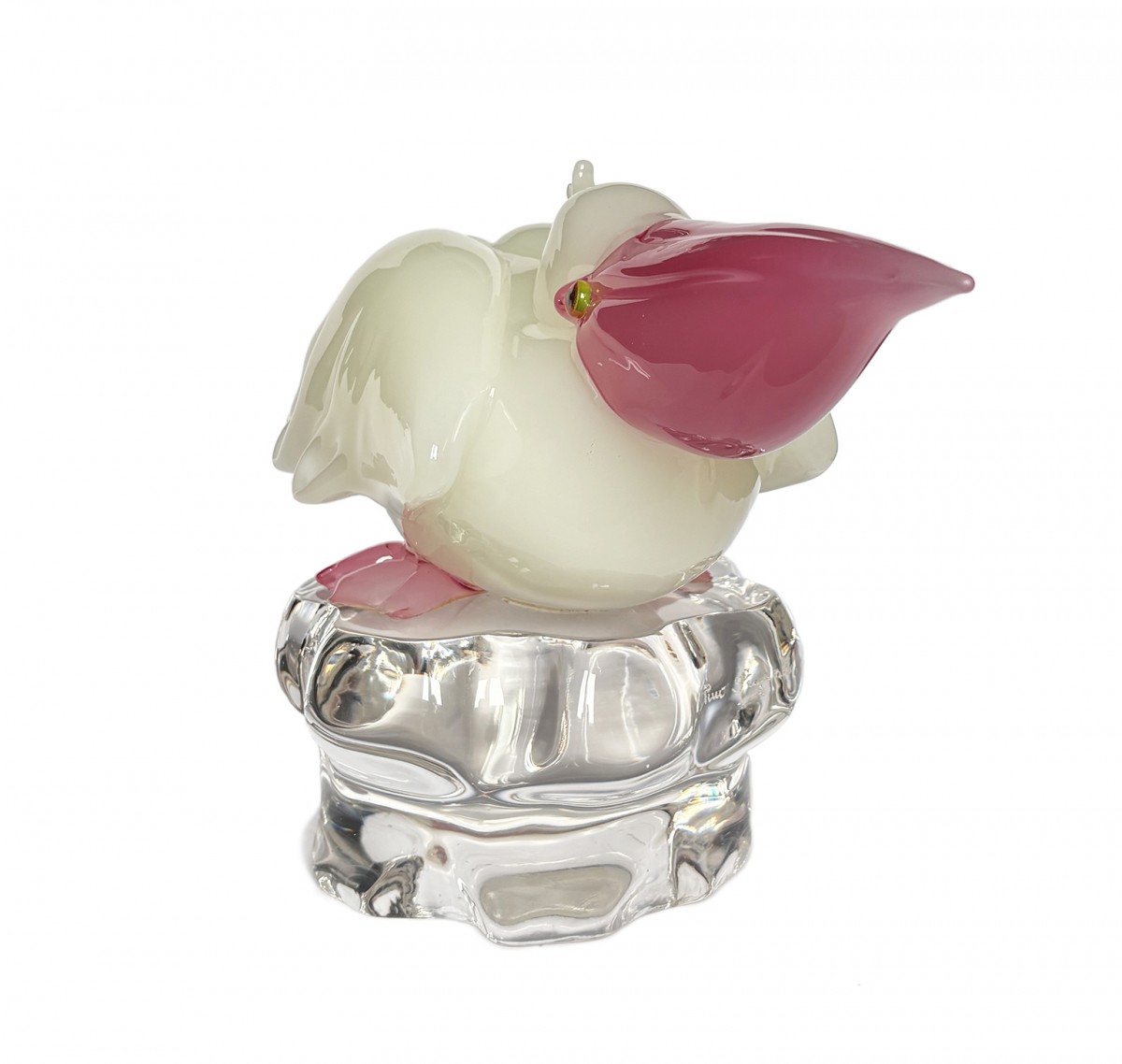
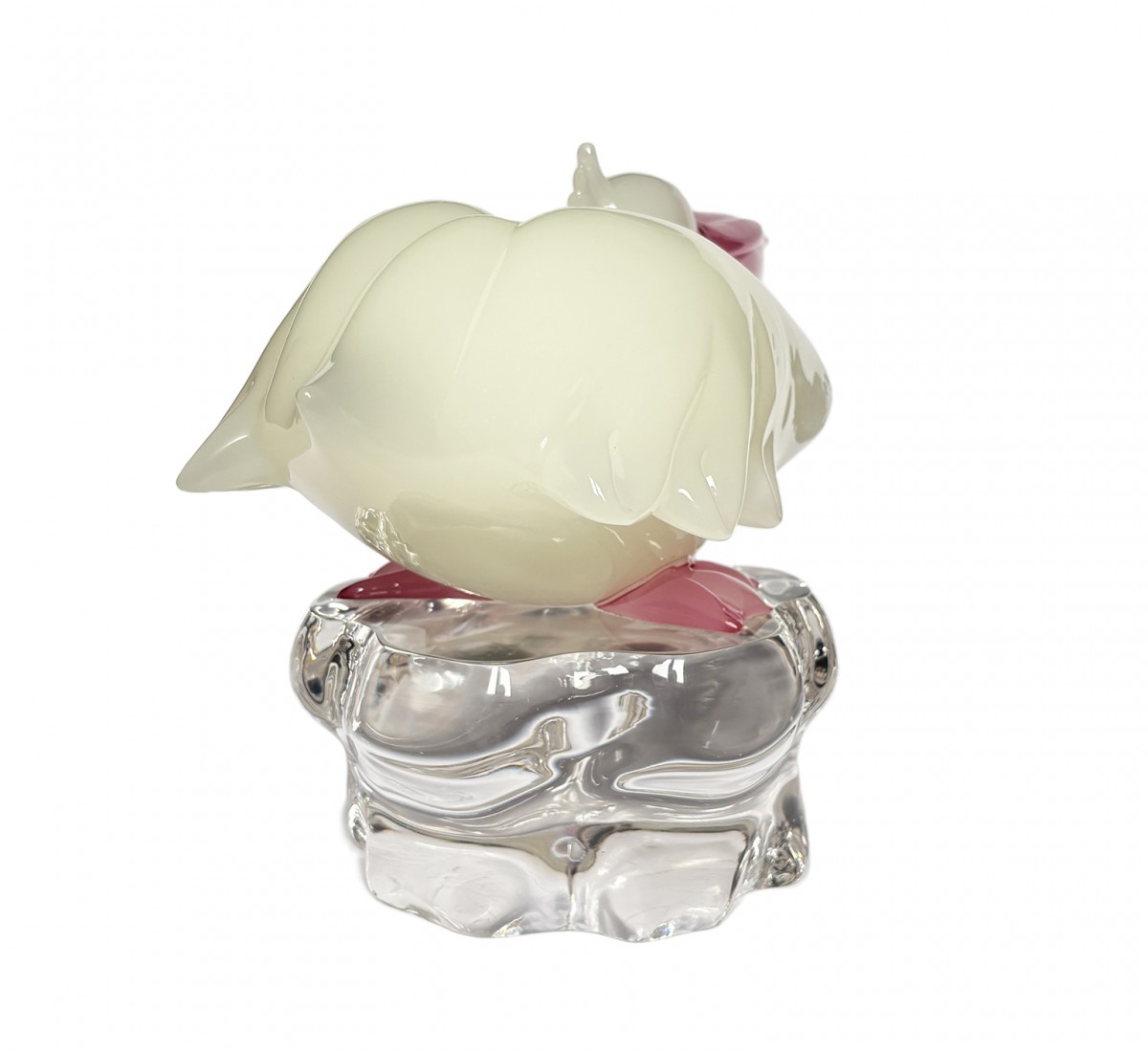
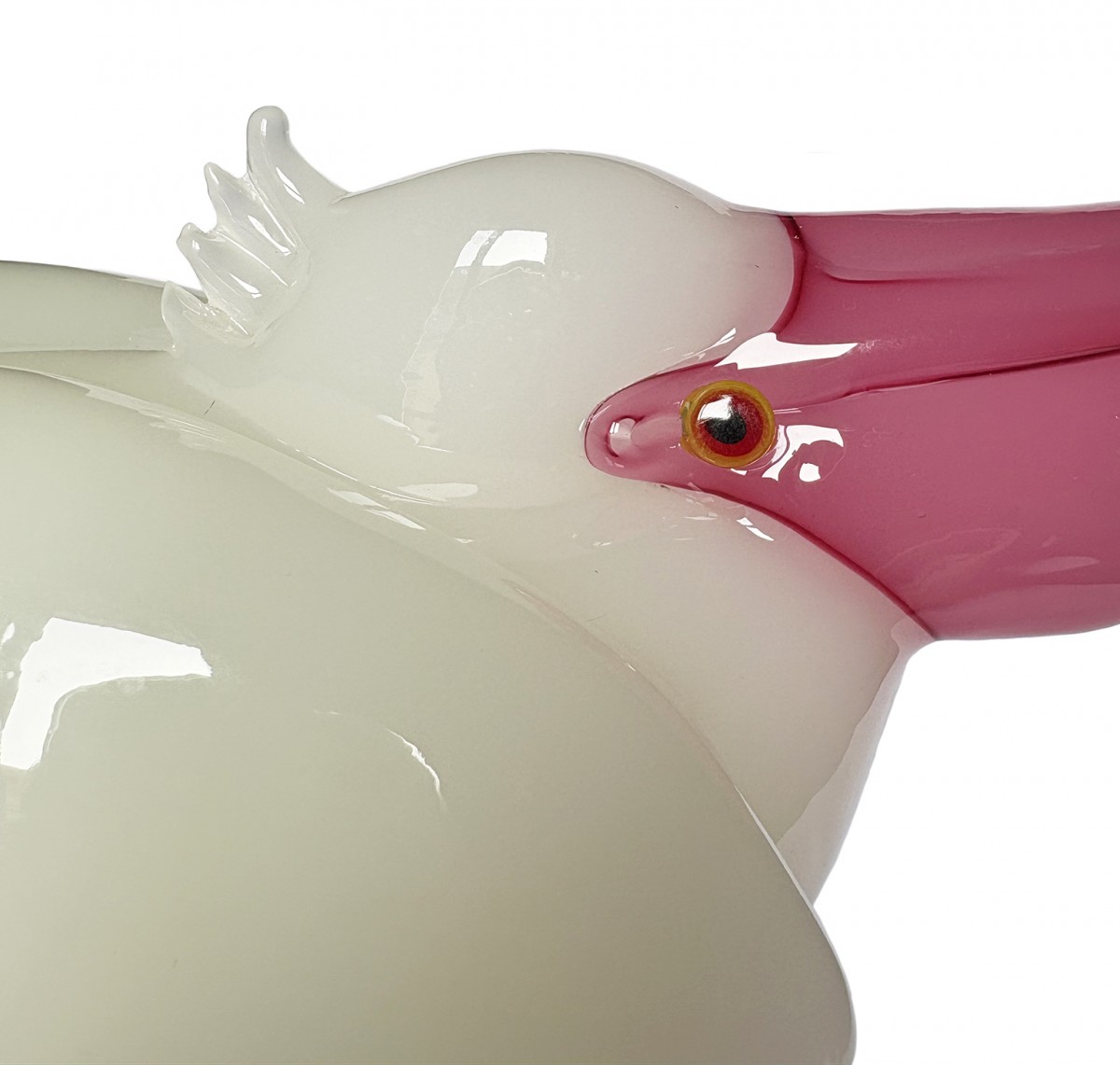
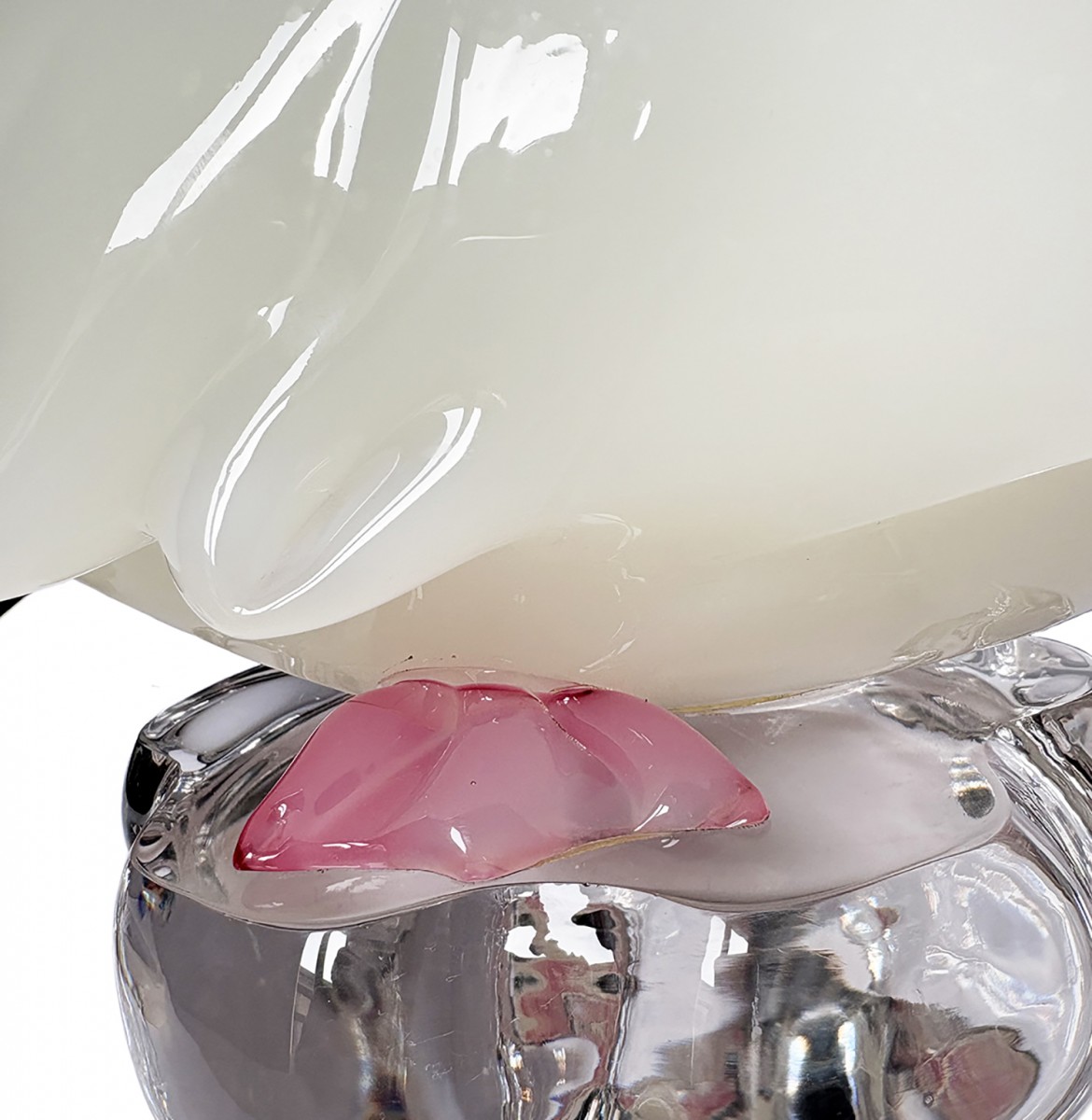
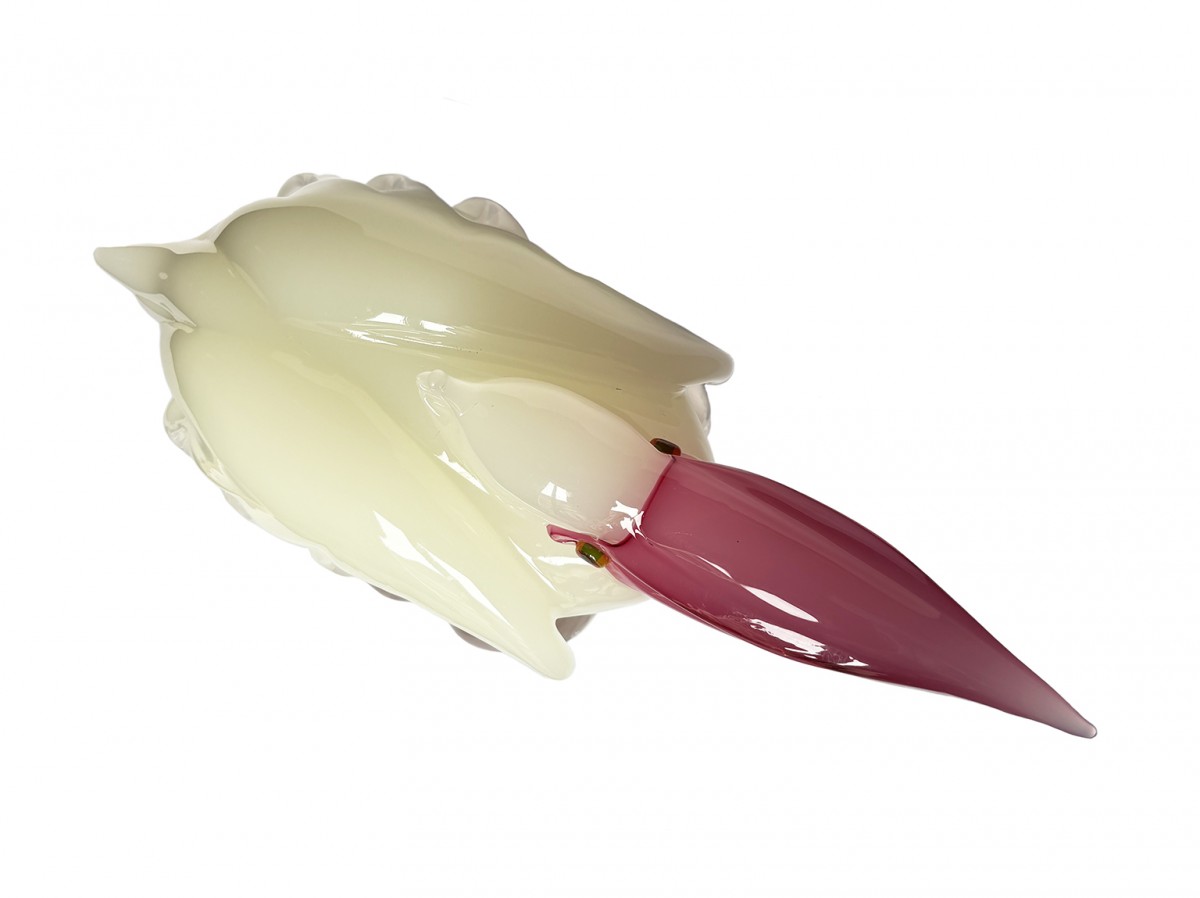
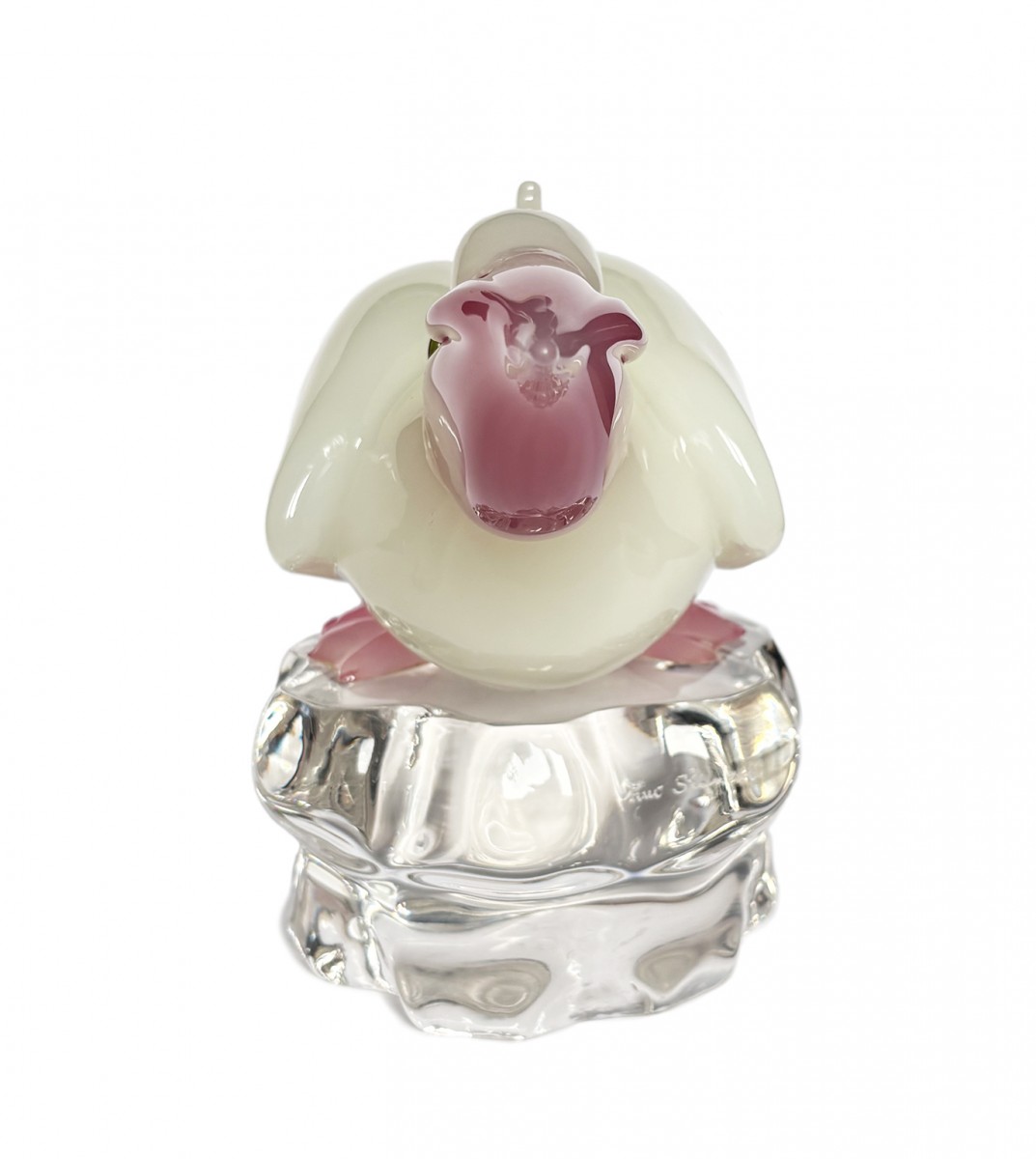
The solid glass sculpture in white, pink, and transparent crystal glass depicts a pelican modeled in a crouching position. The body, with its pure white plumage, is made of lattimo glass and is crouched with its wings folded in a resting position; a small crest of feathers adorns its head. The small head is distinguished by a long, pink beak made of coated glass, with a slightly pronounced throat pouch. Two pink, webbed legs pointing outward support the figure, which is completed by small ochre yellow, white, and black glass eyes.
The bird rests on a transparent crystal base shaped like a rock, engraved with the signature “Pino Signoretto”. The tranquil figure of a pelican was created by the master glassmaker, who in those years was also involved in the creation of works by great artists.
The design and creation of this sculpture are unique, as demonstrated by the different versions, which are never the same: in transparent glass, with black-edged flight feathers and the shorter beak typical of small birds; or the more monumental sculptures with outstretched wings or crouching with their beaks open in search of food. It is precisely Signoretto's characteristic use of color, with the striking contrast between the white of the “lattimo”glass and the pink-colored glass coating, that gives this figure of the “American white pelican” an unexpected tender naturalness.
Pino Signoretto è originario di Favaro Veneto (Venezia), dove nasce nel 1944. Comincia la sua carriera andando a bottega giovanissimo nel 1959 e lavorando con diversi maestri vetrai a Murano. Tra questi si ricordano le collaborazioni con Alfredo Barbini, Livio Seguso, Ermanno Nason e Angelo Seguso. In 1960, he became a master glassmaker and worked in the Murano glassworks until 1977, gaining experience.
In 1978, he opened his own studio in Murano, collaborating with world-renowned artists and designers such as Vedova, Licata, Del Pezzo, Vitali, and Pomodoro.
In 1989, he traveled to Japan to give a demonstration of his art in the presence of the imperial family. Since 1990, Signoretto has traveled around the world, giving demonstrations and teaching at prestigious schools in Europe, the United States, Canada, and Japan, including the Pilchuck Glass School in Seattle, the Toyama City Institute of Glass Art, the schools of Aomori and Otaru, and the Rochester Institute of Technology. In this regard, we recall the awards he received at major exhibitions, including: in 1982, the Gold Medal at the Foyer des Artistes in France; in 1983, the Venice Biennale Trophy; in 1984, once again the Gold Medal at the Foyer des Artistes in France. In 1989, he was named Cavaliere for his merits by the President of the Italian Republic; in 1989, 1990, and 1991, he received the Murano Glass Sculpture Award; in 1994, he received the Honorary Award from the European Economic Community; in 2001, he received the Murano Golden Rooster Award as Murano's personality of the year and in 2012, he received the “Glass in Venice” Award from the Veneto Institute of Sciences, Letters, and Arts.
In 2001, he began teaching at the Academy of Fine Arts in Venice and opened a new glassworks in Murano.
He has collaborated with various design studios and leading companies in the glass industry and has created monuments and trophies for prestigious cultural institutions.
His works have been exhibited in countless group and solo exhibitions in museums and galleries around the world. He has also collaborated with leading contemporary artists such as Jeff Koons, Marc Quinn, Martin Bradley, and Sandro Chia. In the early years of the new century, he was considered one of the greatest masters of glass in Venice for the virtuosity with which he approached the material, constantly creating new subjects. A tireless experimenter, he died in 2017. He was a famous teacher of Murano glass, not only in Venice but throughout the world, and he said of himself “… In any case, I am proud to be a master glassmaker, a title that eight centuries ago, the Venetian Republic considered equal to that of the patricians. For the master, it was nobility of art, for the patrician, nobility of blood. The master glassmaker cannot turn back: his mark remains, indomitable, he is not allowed to make mistakes." (VeneziaToday 31.12.2017).
After Pino Signoretto's death in 2017, his legacy was entrusted to his nephew Martino Signoretto, his pupil and also a master glassmaker.
Delevery information :
to be agreed with the customer depending on the object and the place of destination