Offered by Finch and Co
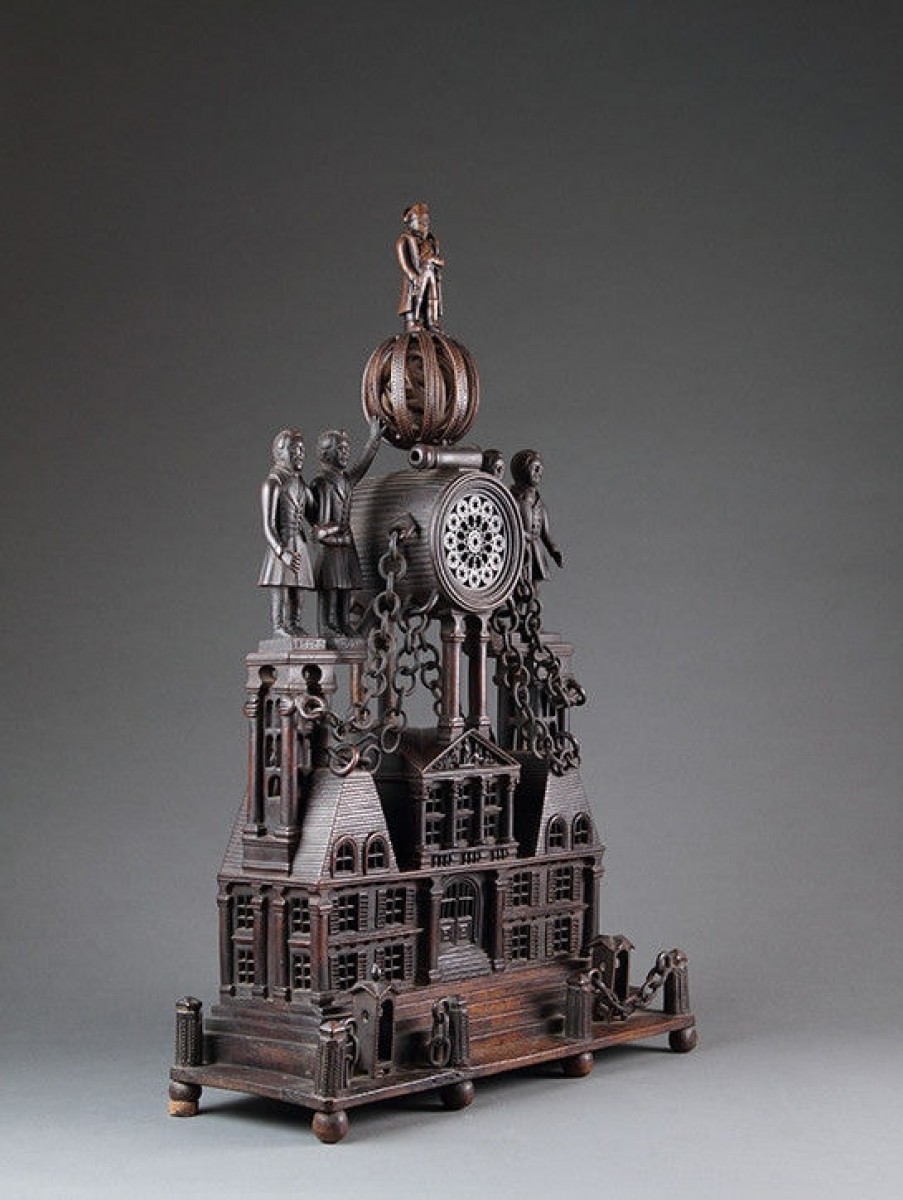
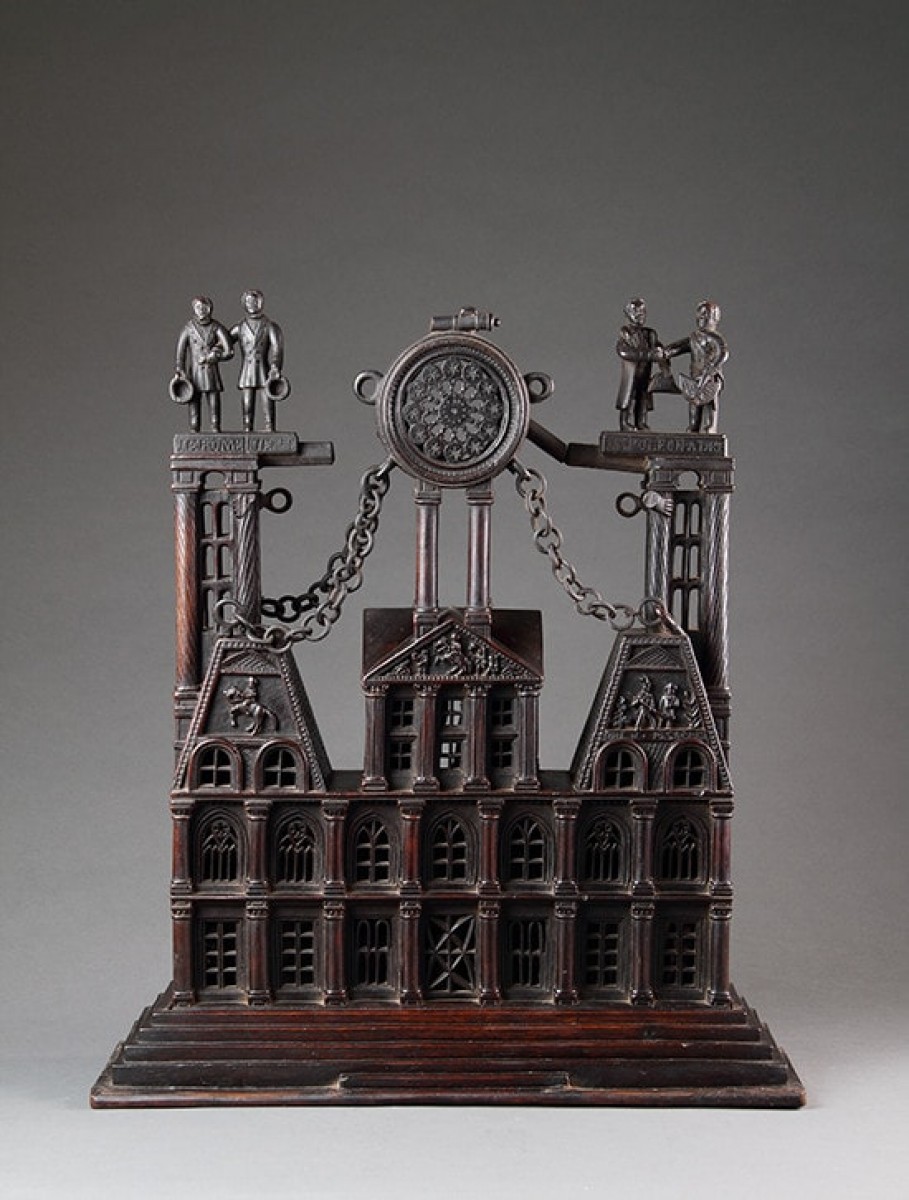

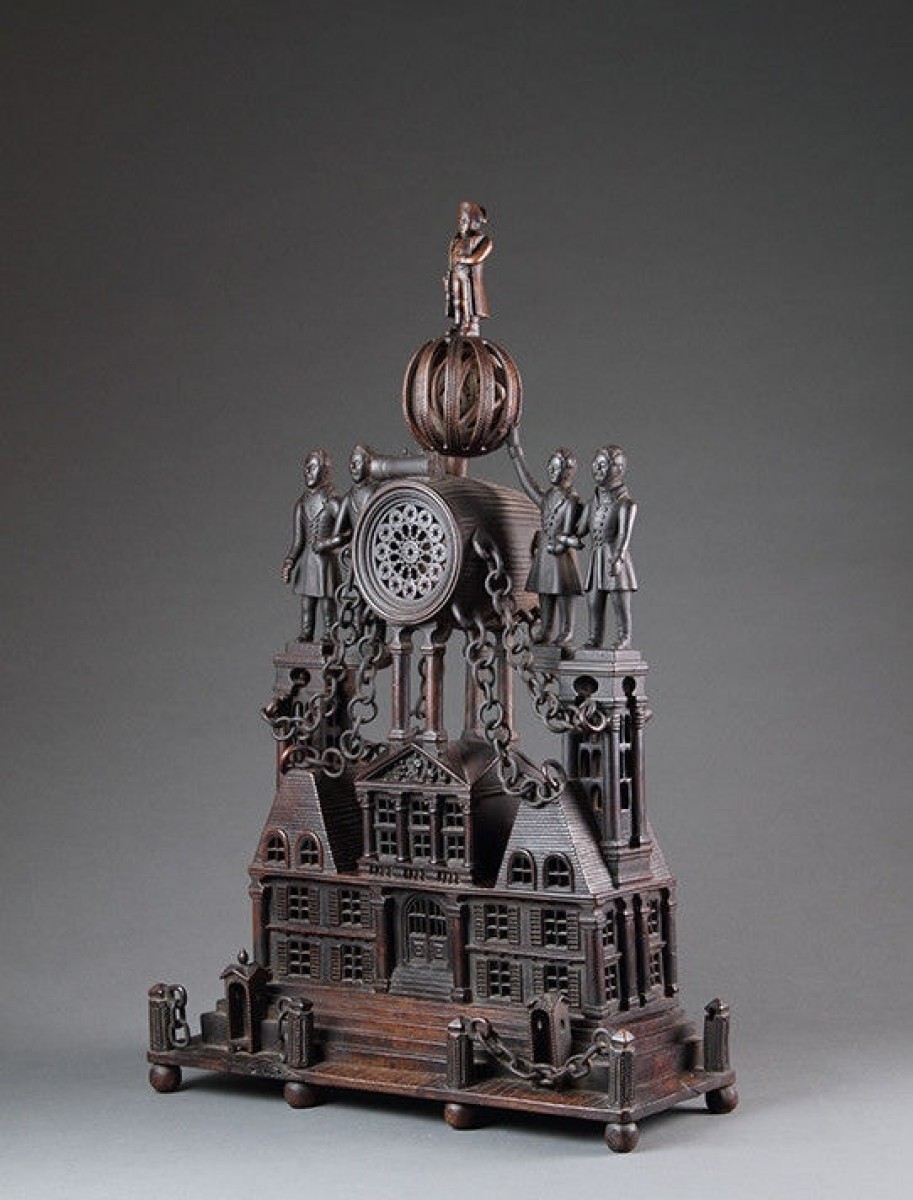
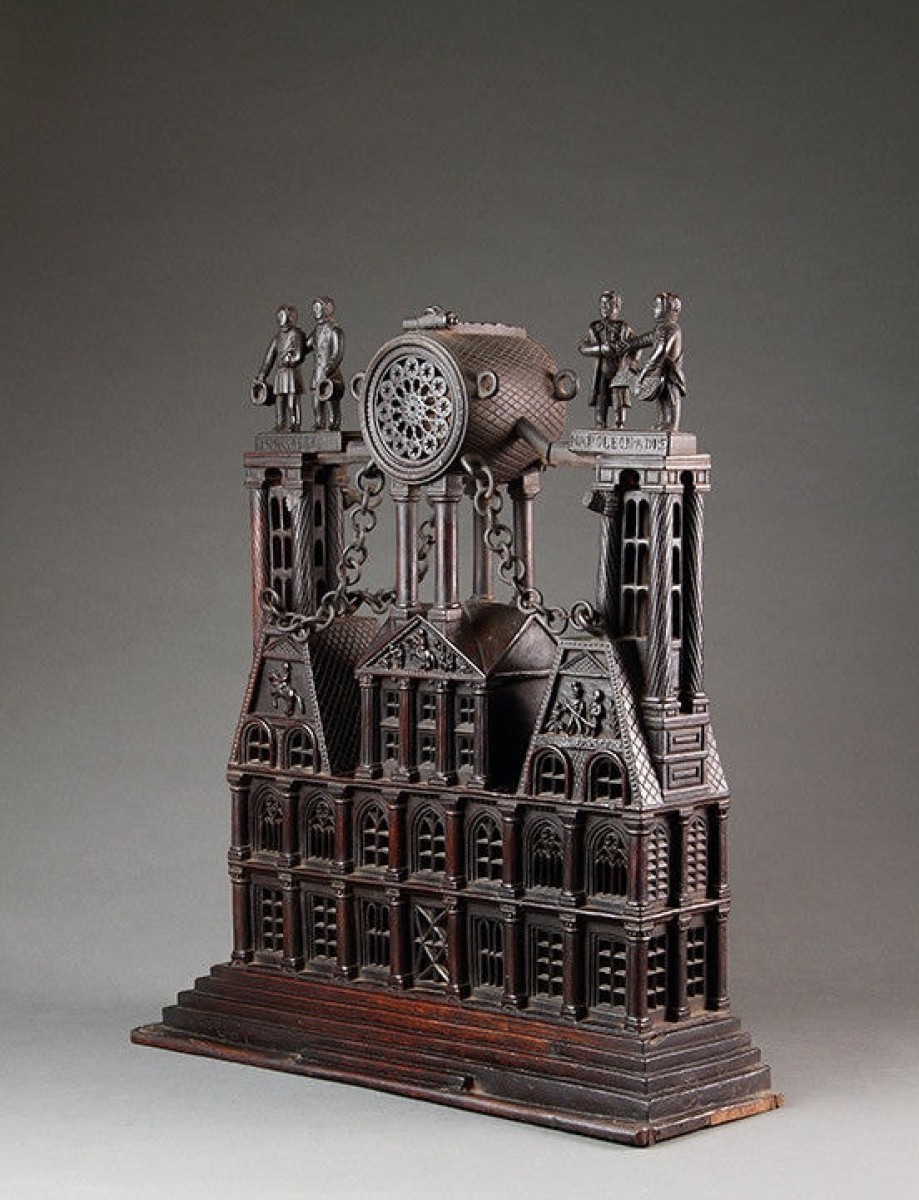
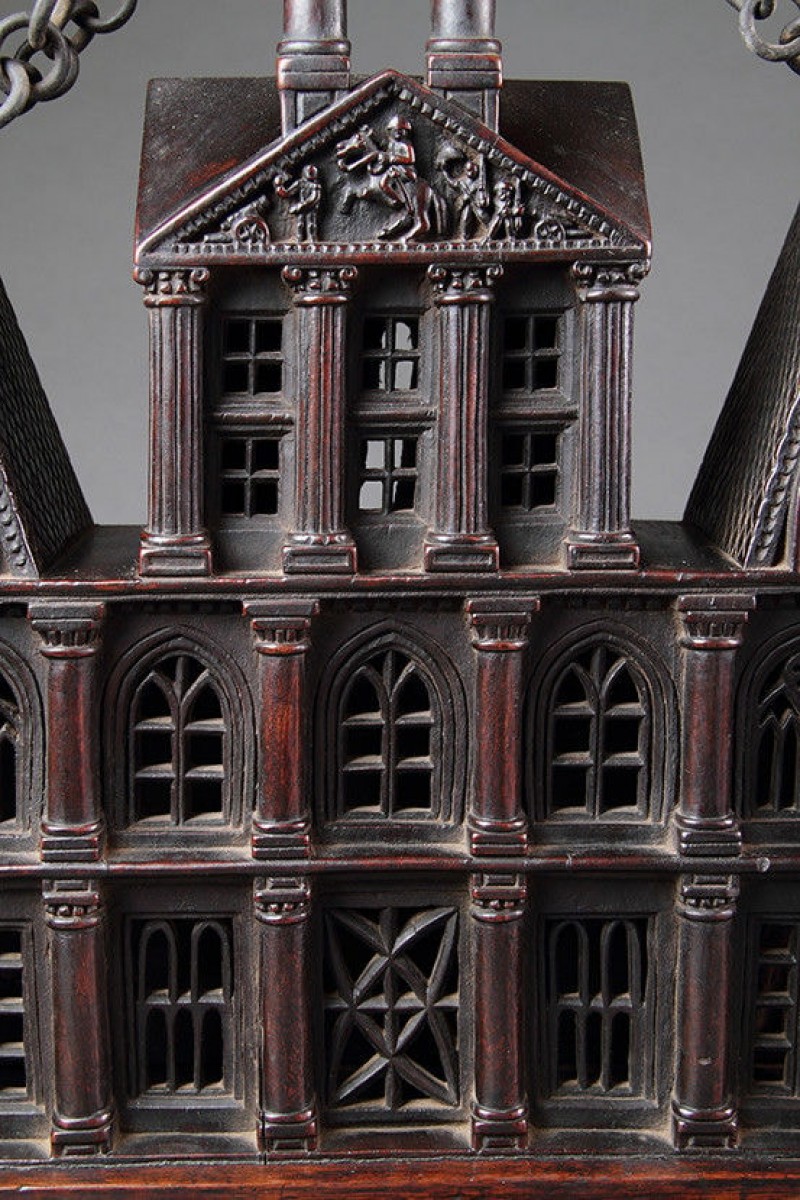
Probably based on the Louvre Palace in Paris
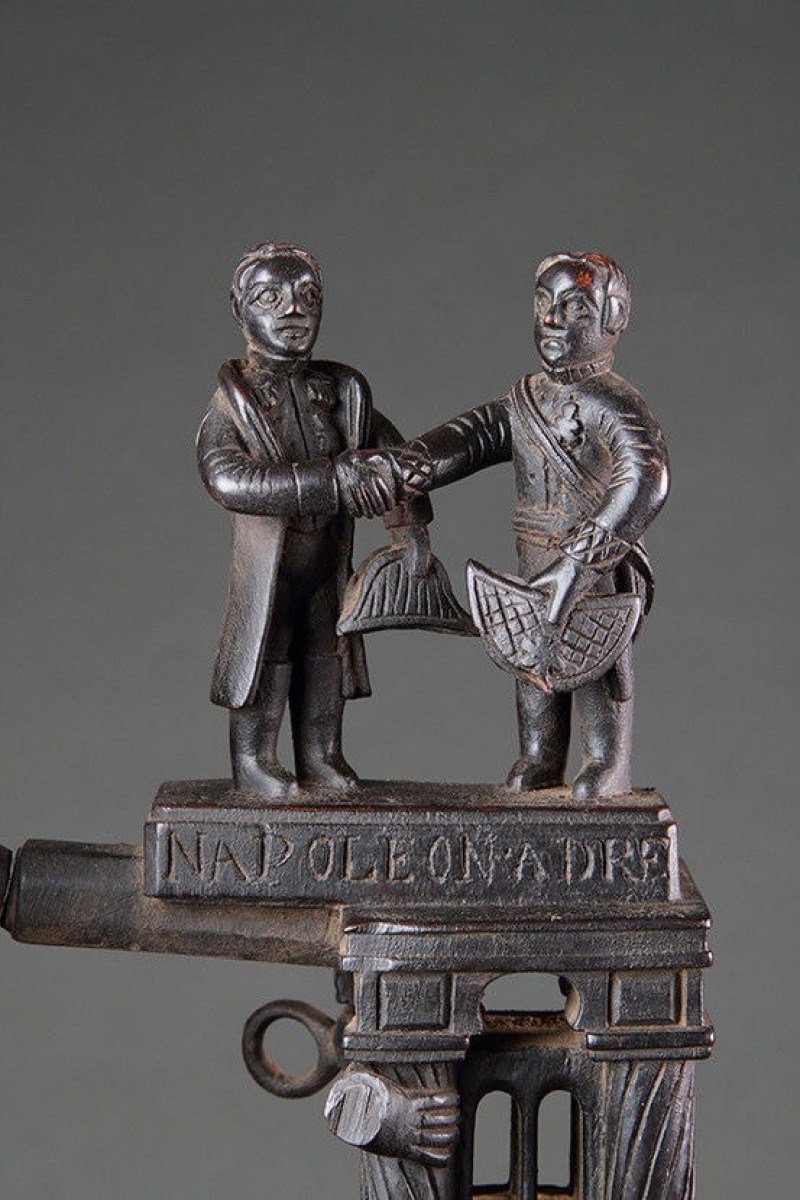
Both Carved with Napoleonic Associations
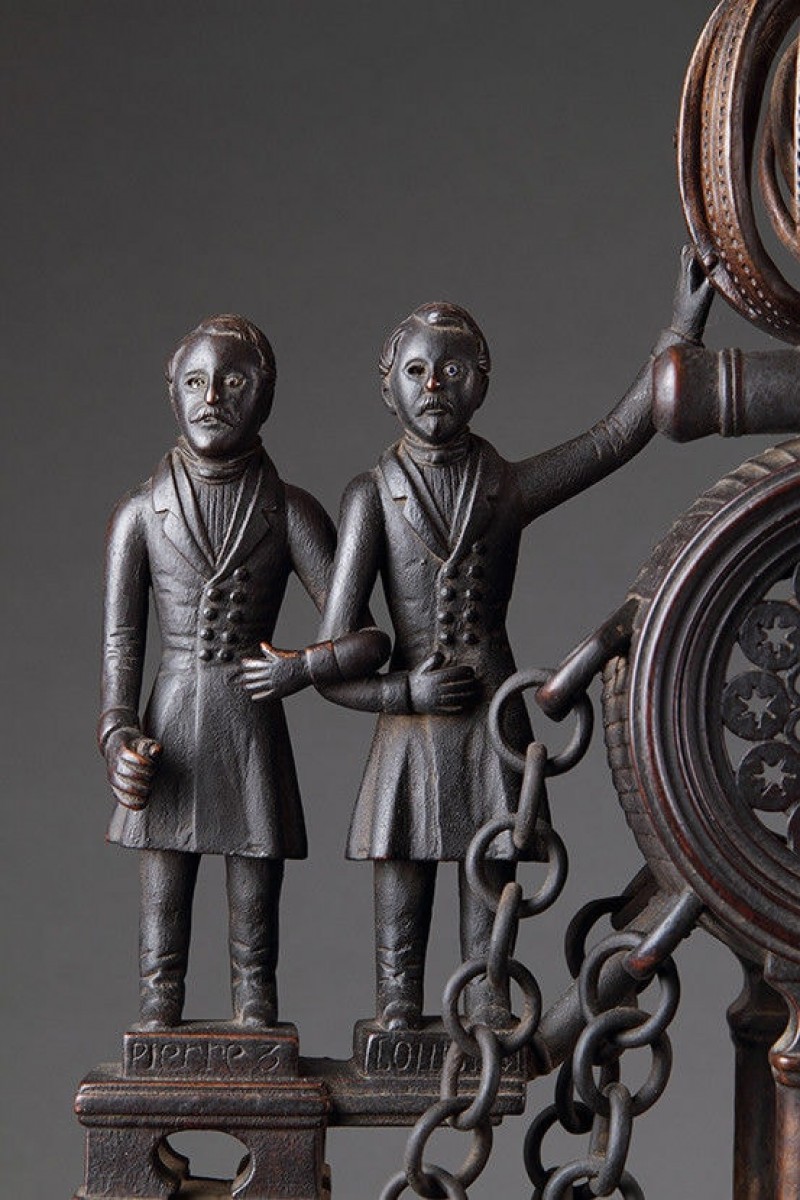
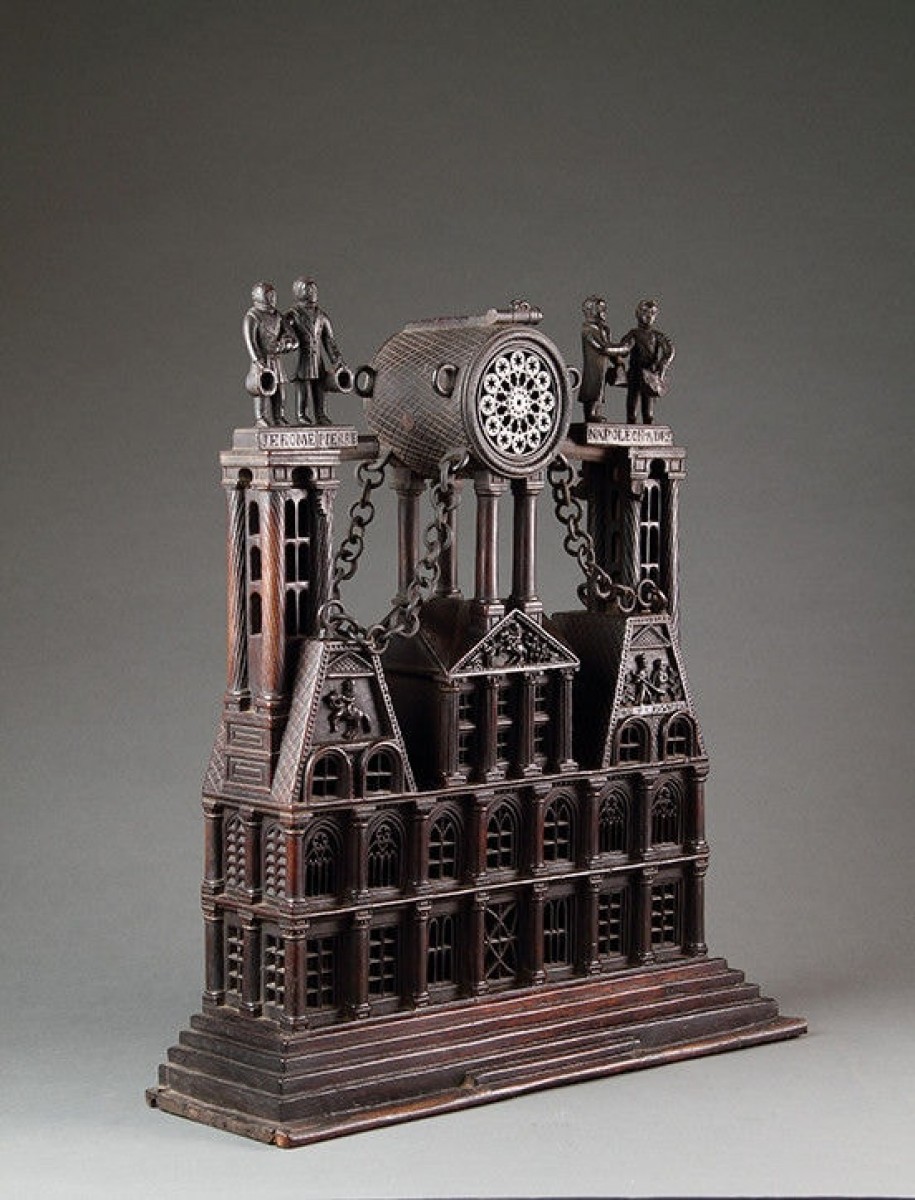
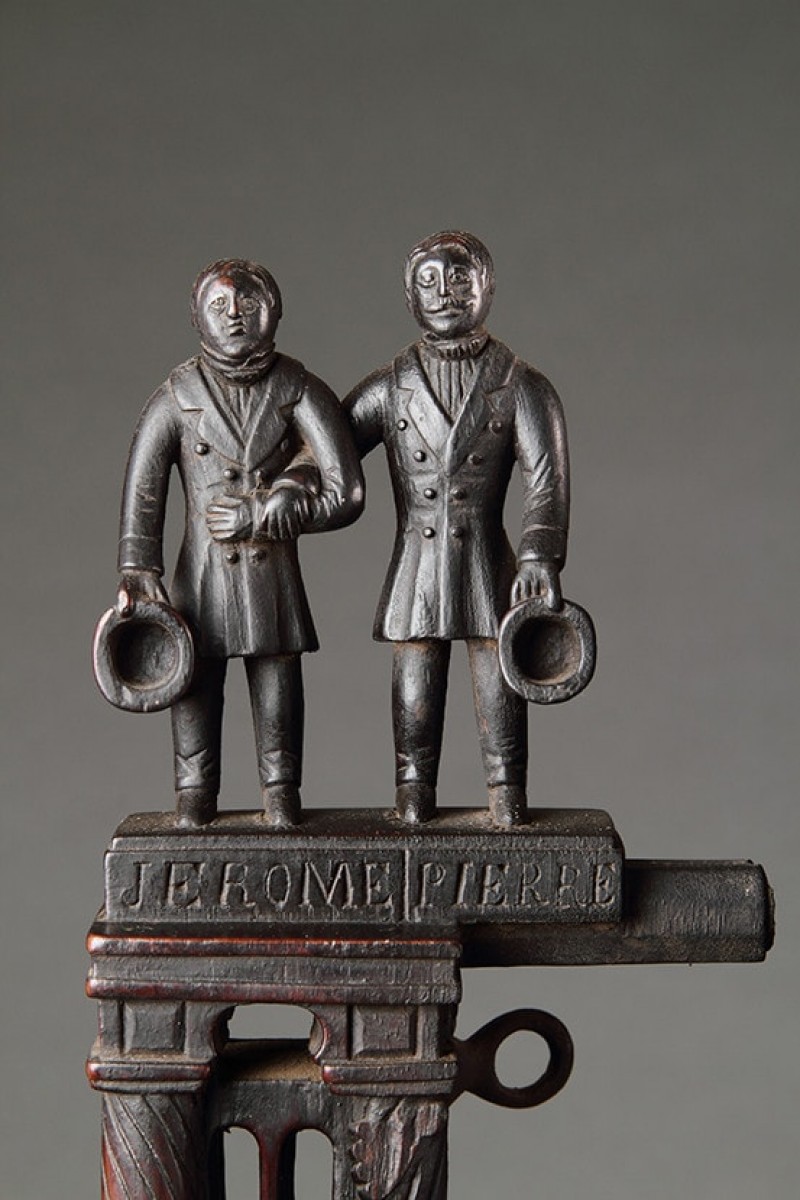
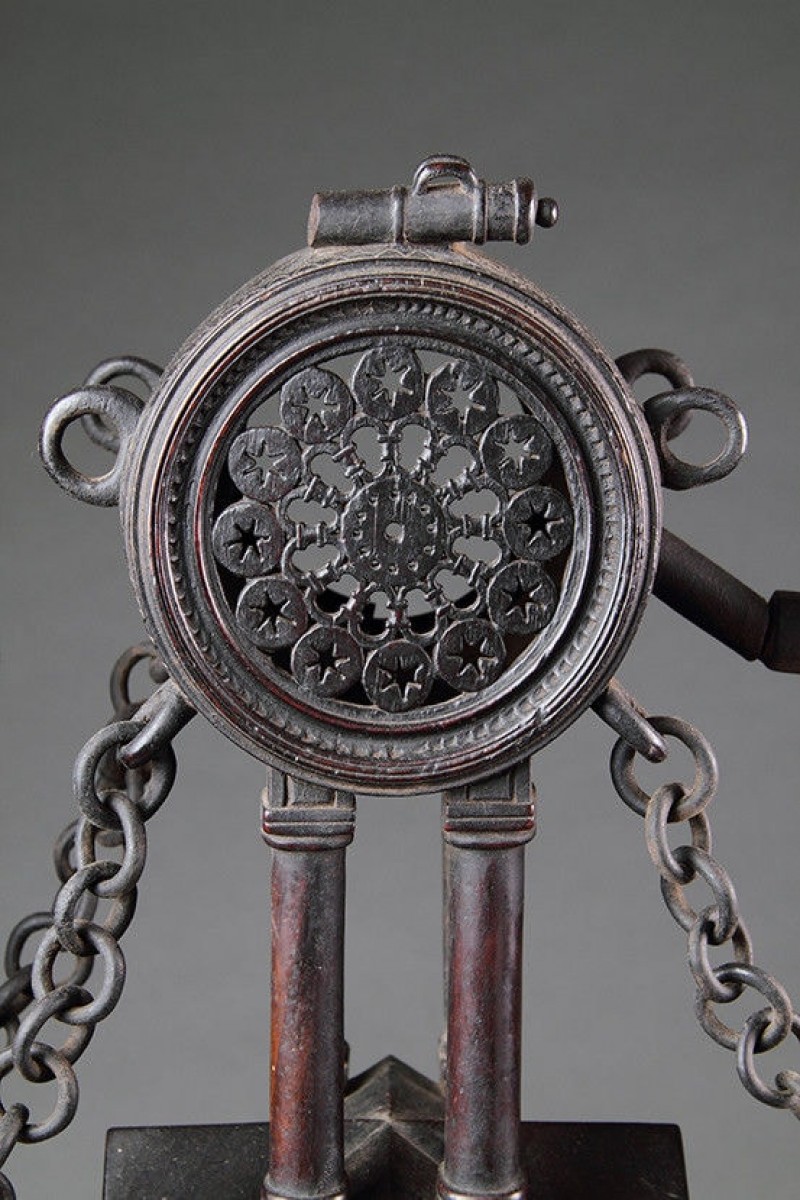
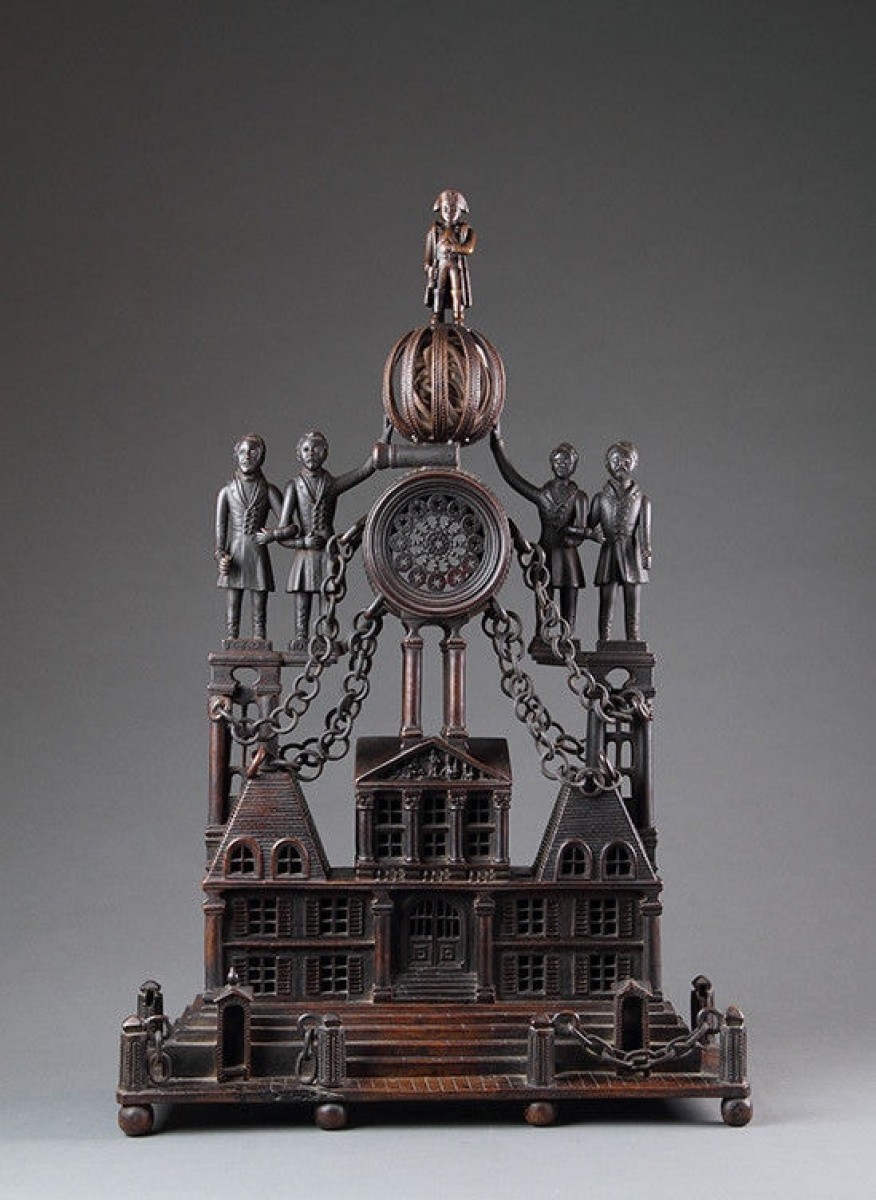
a. A cylinder with fretwork rose window to the top possibly used to insert discs of coloured glass to create a light box in front of a window beside which stand two pairs of gentlemen arm in arm and shaking hands underneath them inscriptions “J E Rome / Pierre’ and ‘Napoleon a Dre’
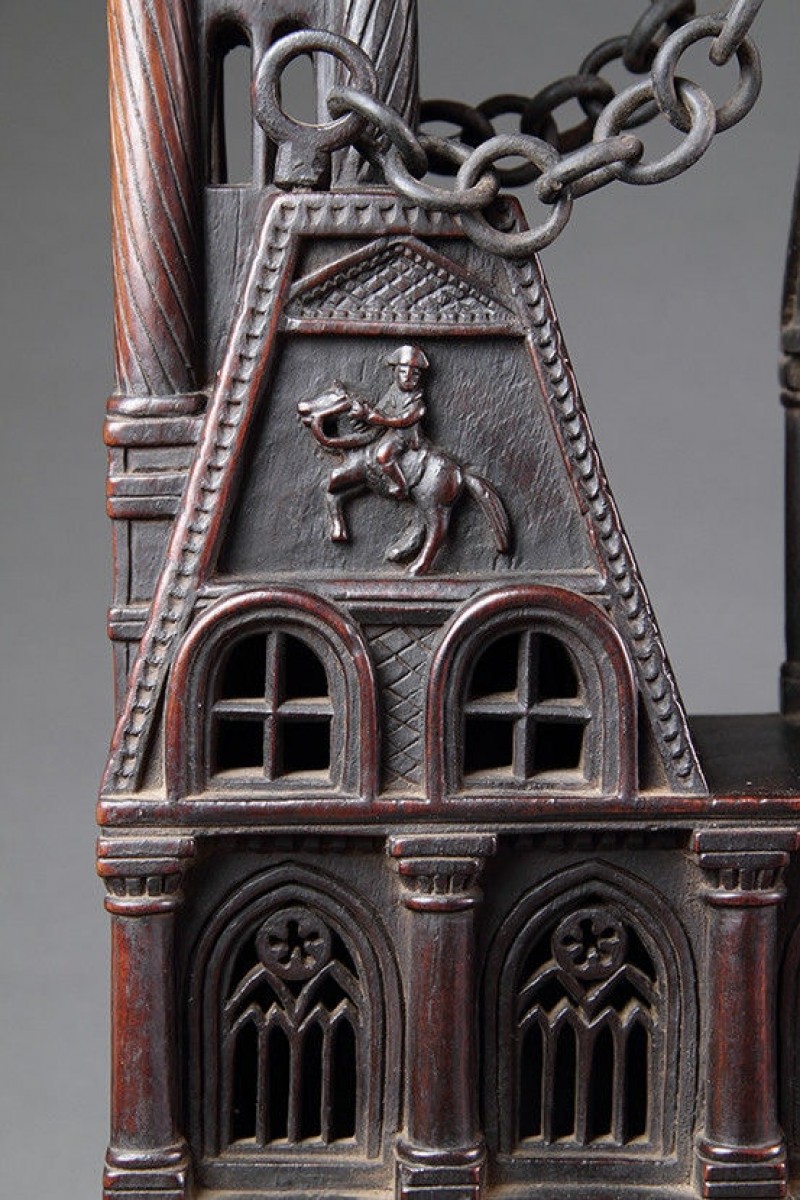
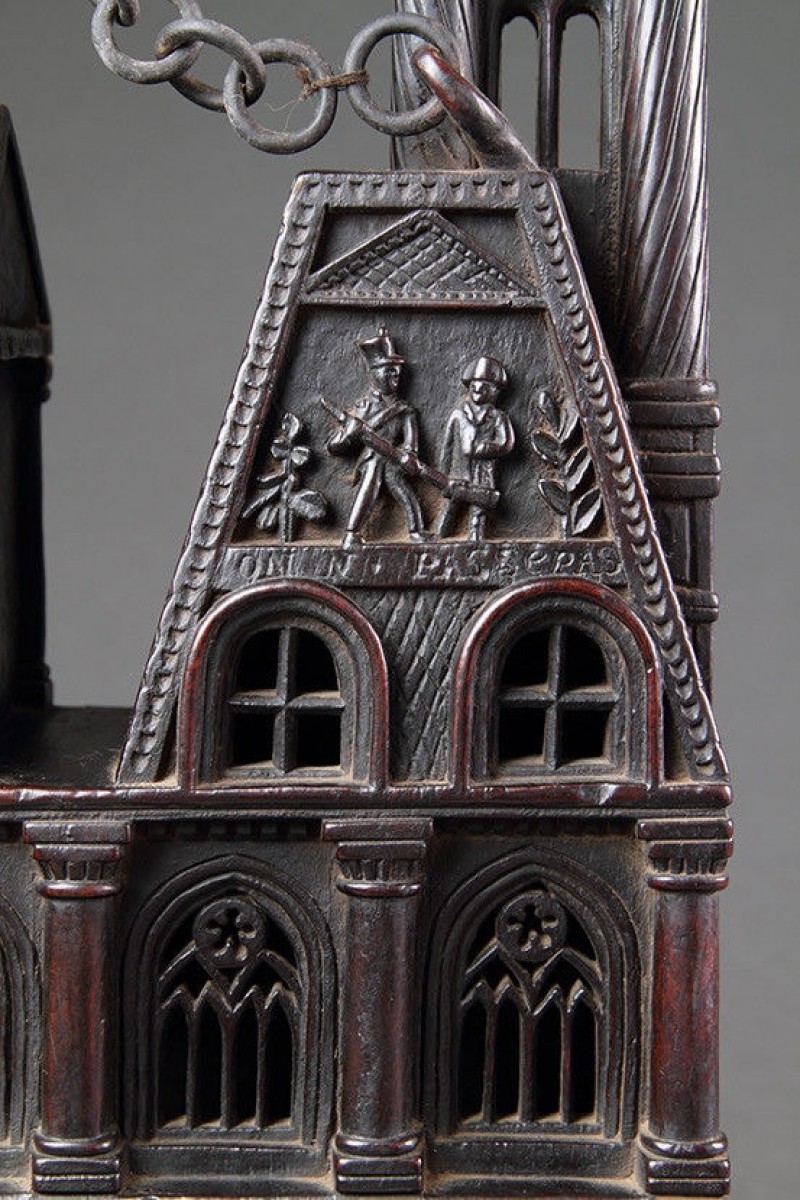
To the centre pediment is carved a battle scene with the Emperor on horseback on the left another shows Napoleon on his famous horse Marengo on the right a scene of a Soldier holding a gun preventing the Emperor’s entrance and underneath the motto ‘On N . Passe Pas’
Some losses to chain and cannon
Circa 1810 - 1820
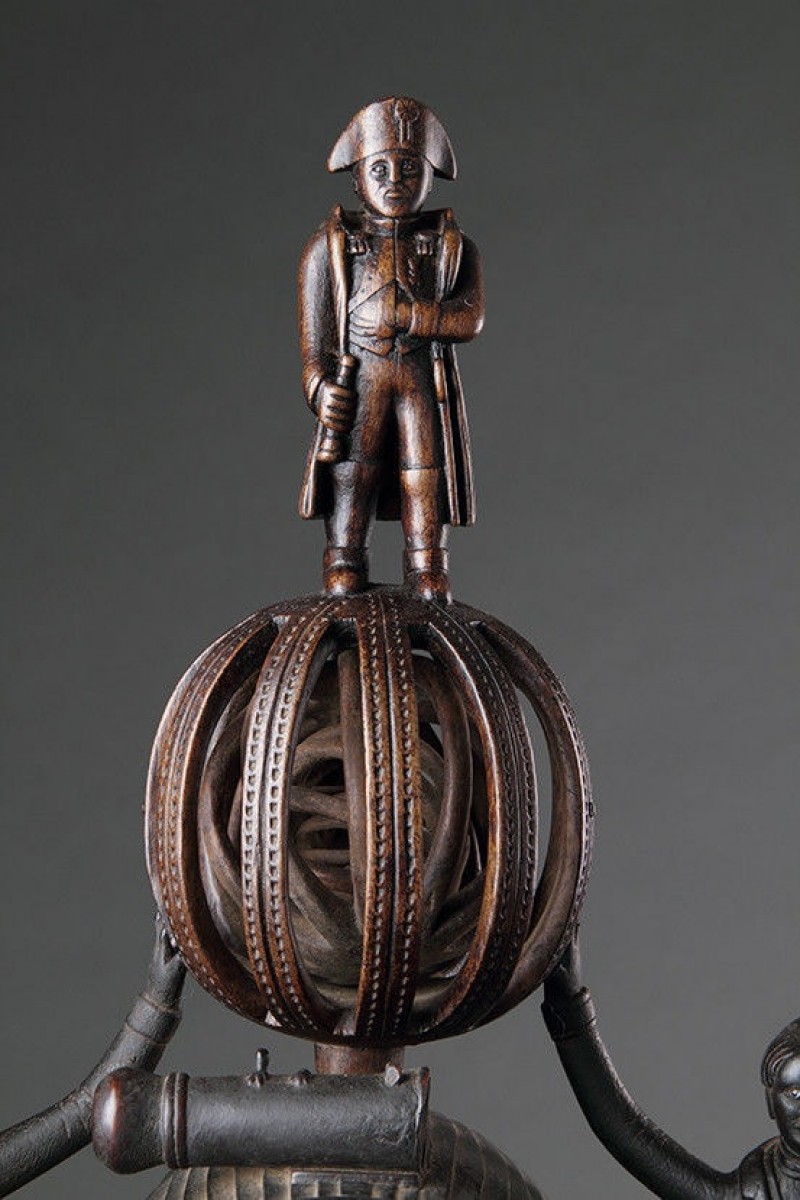
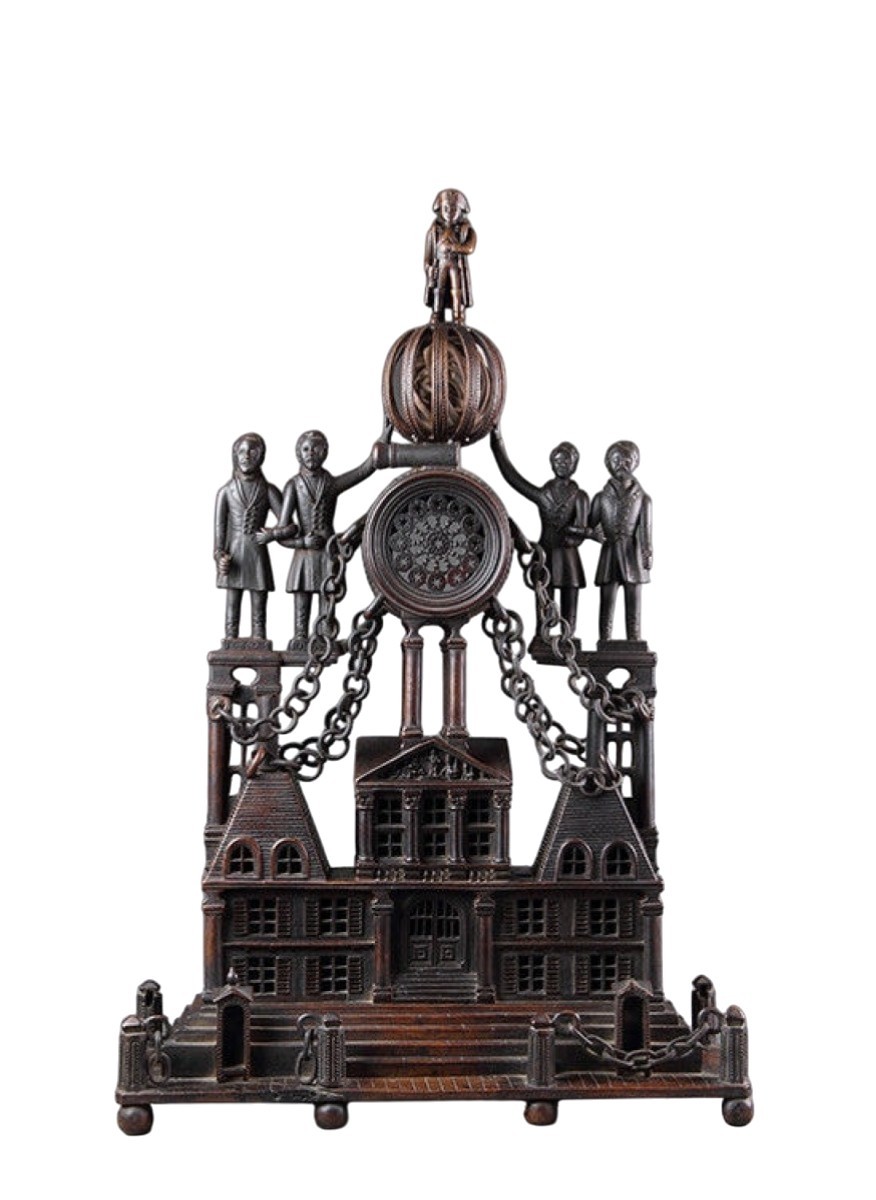
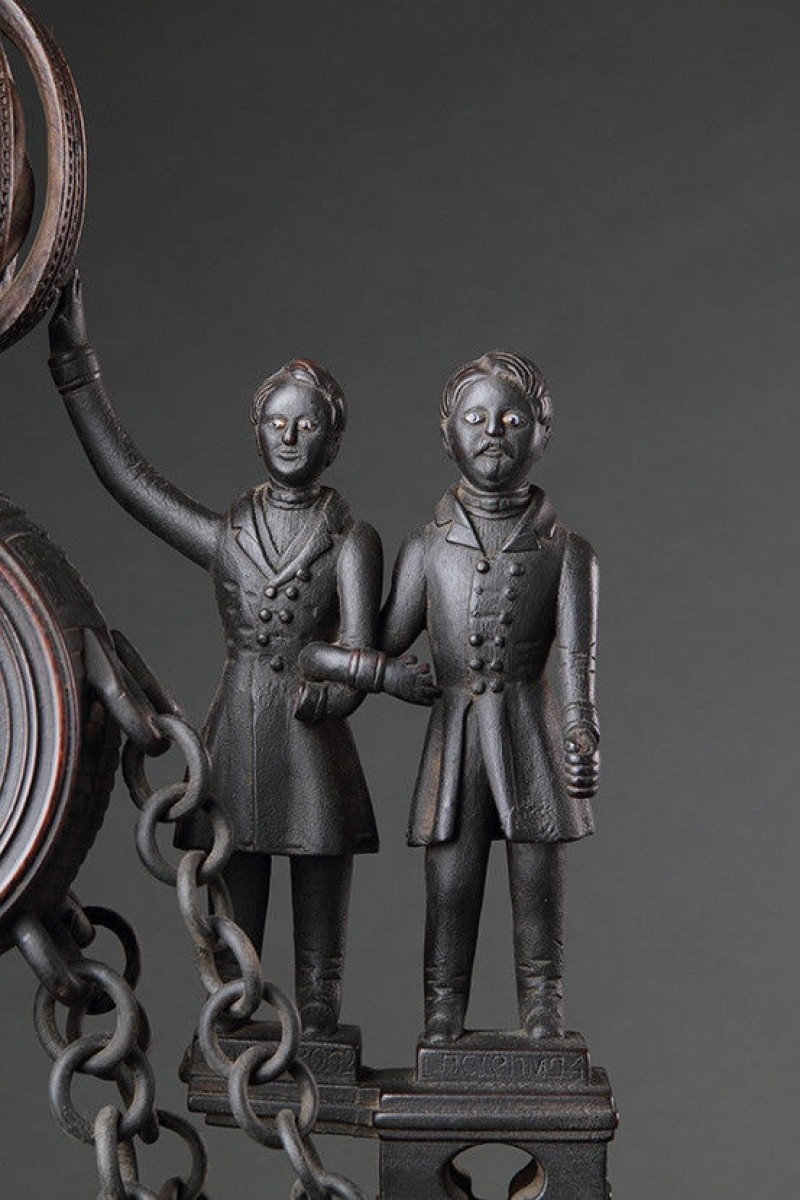
b. A second architectural model signed and dated to the cylinder barrel ‘Boularot to 1849’ and to the other side ‘POC Rochel Bonaparte PC Paris’ a central figure of Napoleon standing with his telescope upon a concentric ball Four Figures of Gentlemen with Inlaid Glass Eyes stand Two to each side with Uplifted arms acting as Supporters to the Emperor
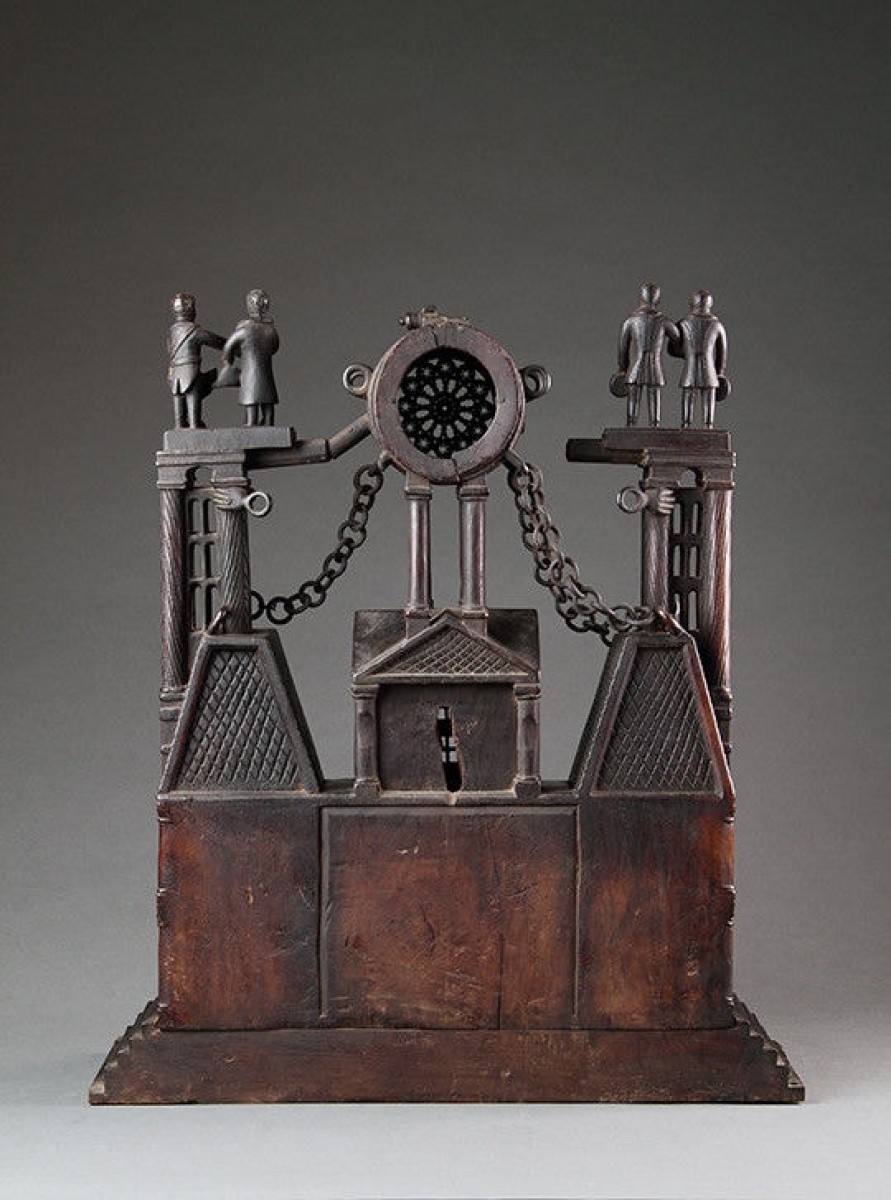
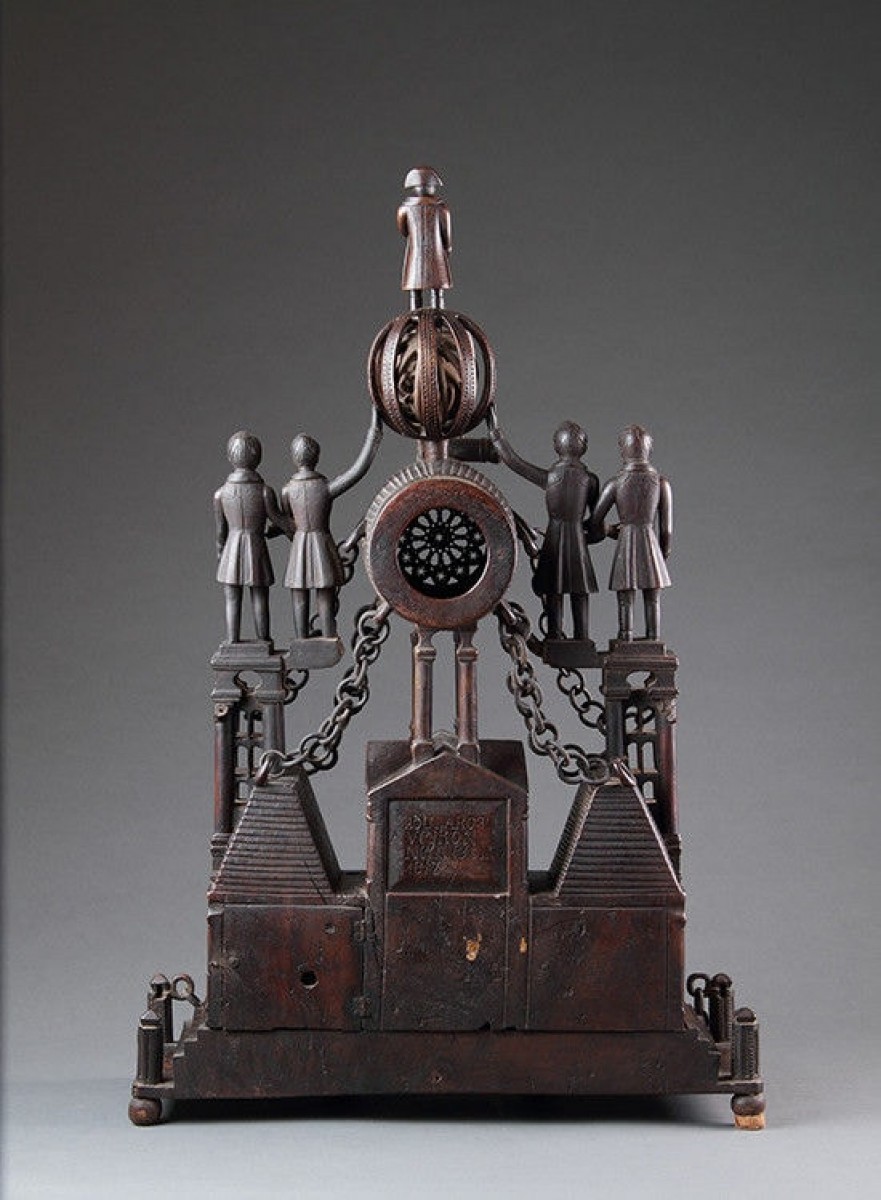
Underneath the left pair the words ‘Pierre 3’ and ‘Louis N2’ and on the right ‘Napoleon 2’ the central cylinder barrel with fretworked rose window hung about with interlinking chains the reverse has a hinged door to the bottom revealing a narrow chamber and carved with ’Boularot Aveyron NCA Estaing 1812’
Circa 1812 to 1849 (the figure of Napoleon 1880 - 90)
Size: 69cm high, 45cm wide, 16cm deep - 27¼ ins high, 17¾ ins wide, 6¼ ins deep / 65cm high, 48cm wide, 15.5cm deep - 25½ ins high, 19 ins wide, 6 ins deep
Provenance:
Ex Private collection
Ex Finch and Co, item number 58, catalogue number 27, winter 2016
Ex Private collection
Aveyron is a department situated in the northern region of Occitane, Southern France, named after the Aveyron River, which flows through the prefecture of Rodez. Establiement is a commune located within the Aveyron department.
Boularot is a family name associated with the area during the 18th and 19th centuries. It is plausible that this particular model was crafted by three generations of the Boularot family. The model was commenced in 1812, with additional modelling completed in 1849. The central figure of Napoleon was likely completed towards the end of the 19th century.
Scale models of buildings were systematic rather than innovative, as they were designed to represent tangible structures that facilitated the comprehension of potential clients regarding the fundamental aspects of an architectural project. These models were produced by amateur artists with a keen artistic sensibility and a strong sense of national patriotism and historical significance. They served both instructional and decorative purposes.
Delevery information :
Please email for details
Shipping can be arranged worldwide