Offered by Antichità di Alina

Northern painter active between Rome and the Low Countries
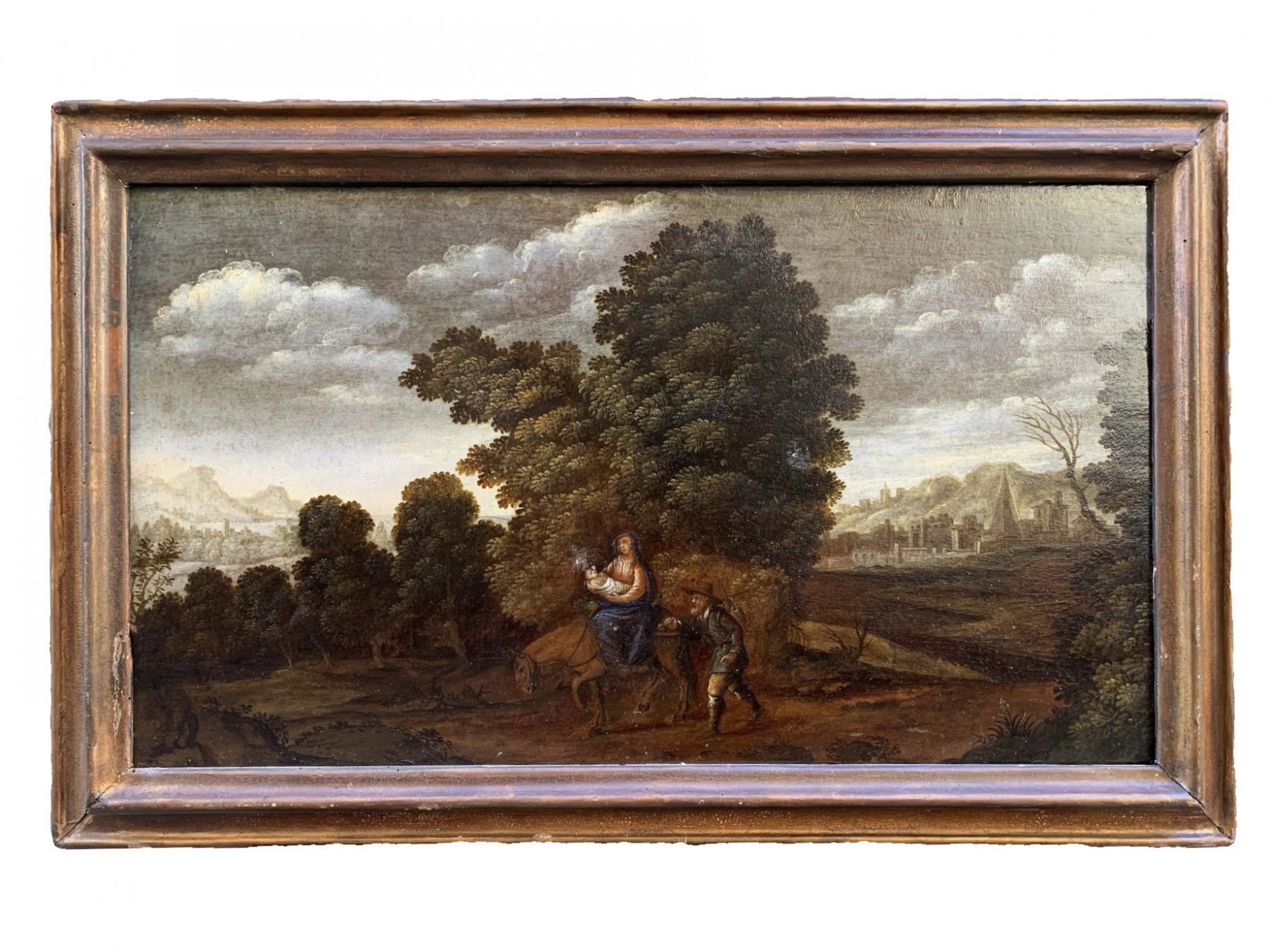
Early 17th century
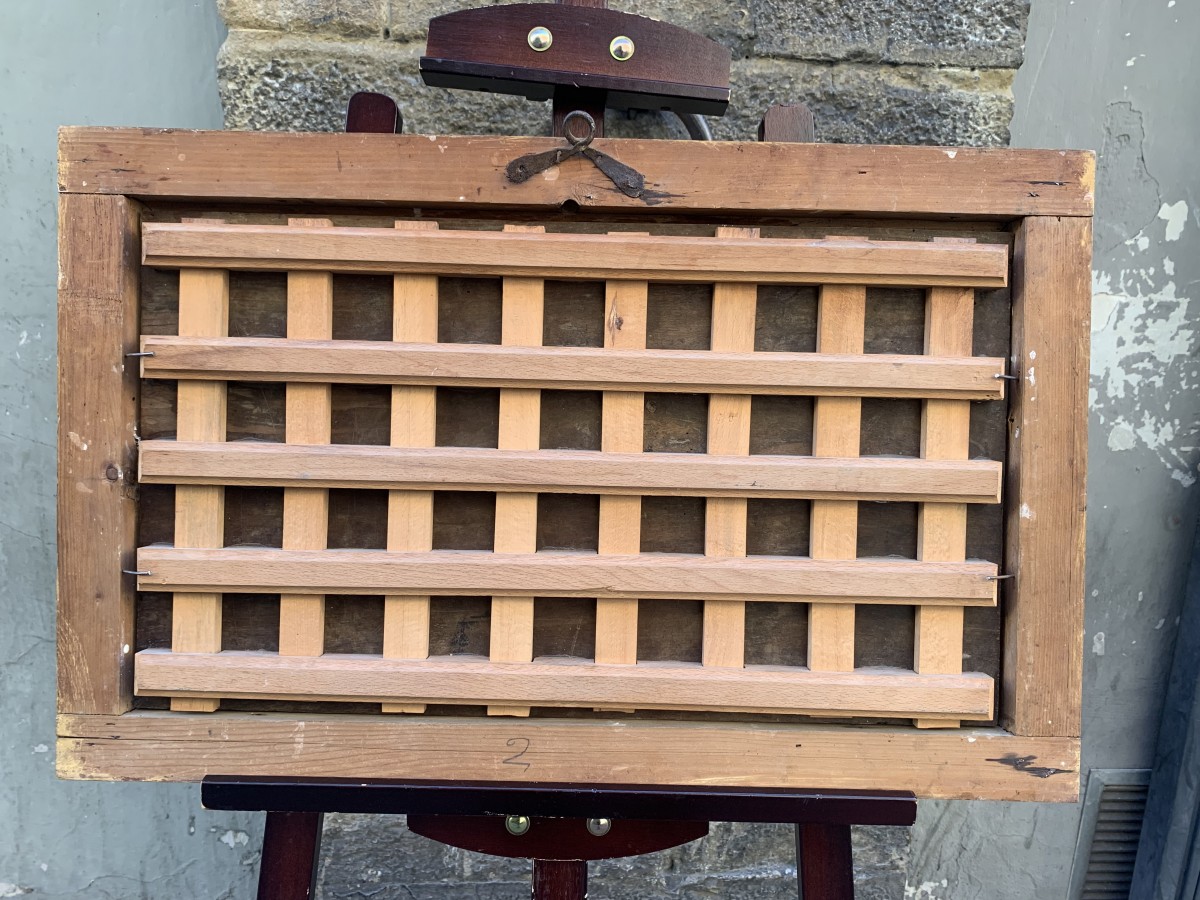
Oil on panel, cradled
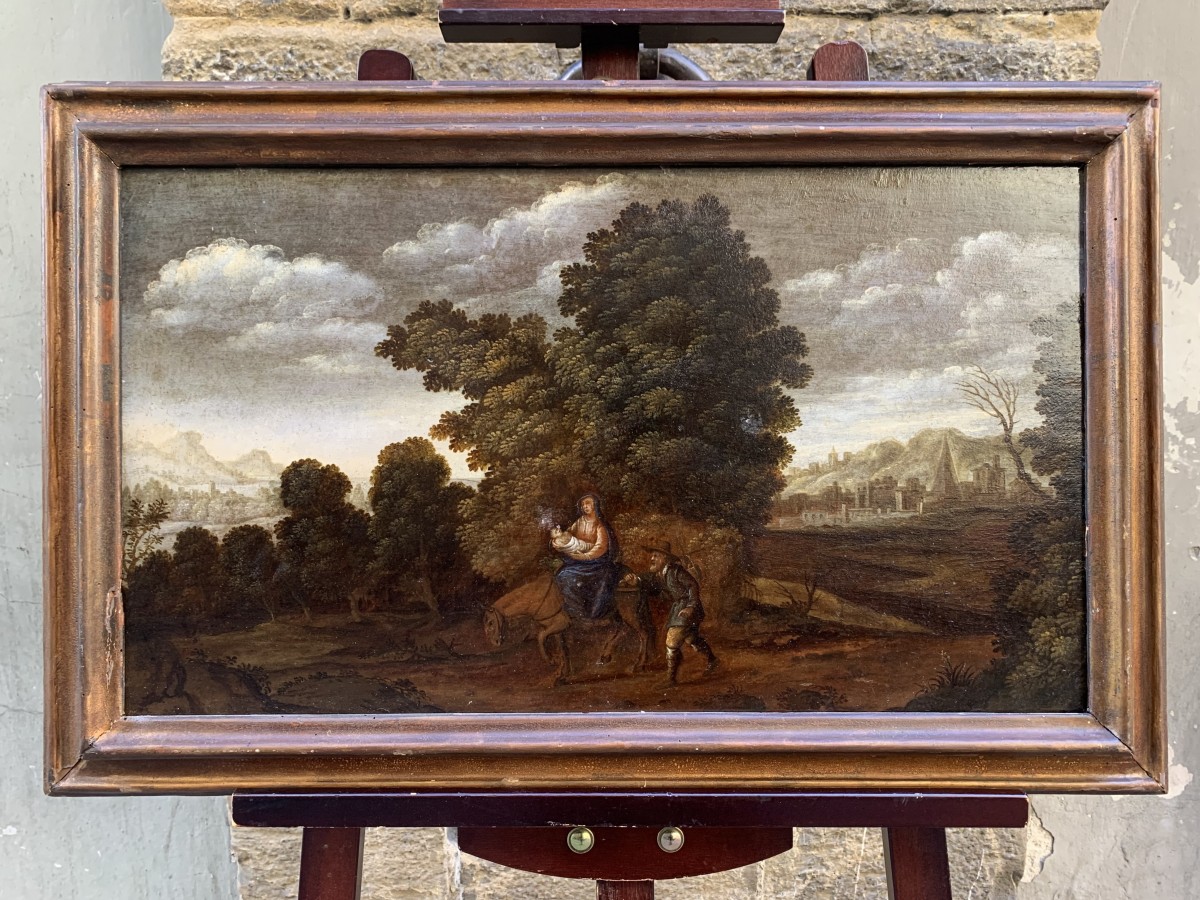
Dimensions with frame: 64 × 41 cm
Dimensions without frame: 55.5 × 32 cm
At the beginning of the seventeenth century, Rome was a vibrant centre for Northern European artists, who arrived in large numbers to study antiquity, landscape, and the legacy of classical ruins. While some of these painters are well known today, many others remained anonymous or gradually faded from view, their identities only now beginning to re-emerge through ongoing scholarly research and stylistic investigation.
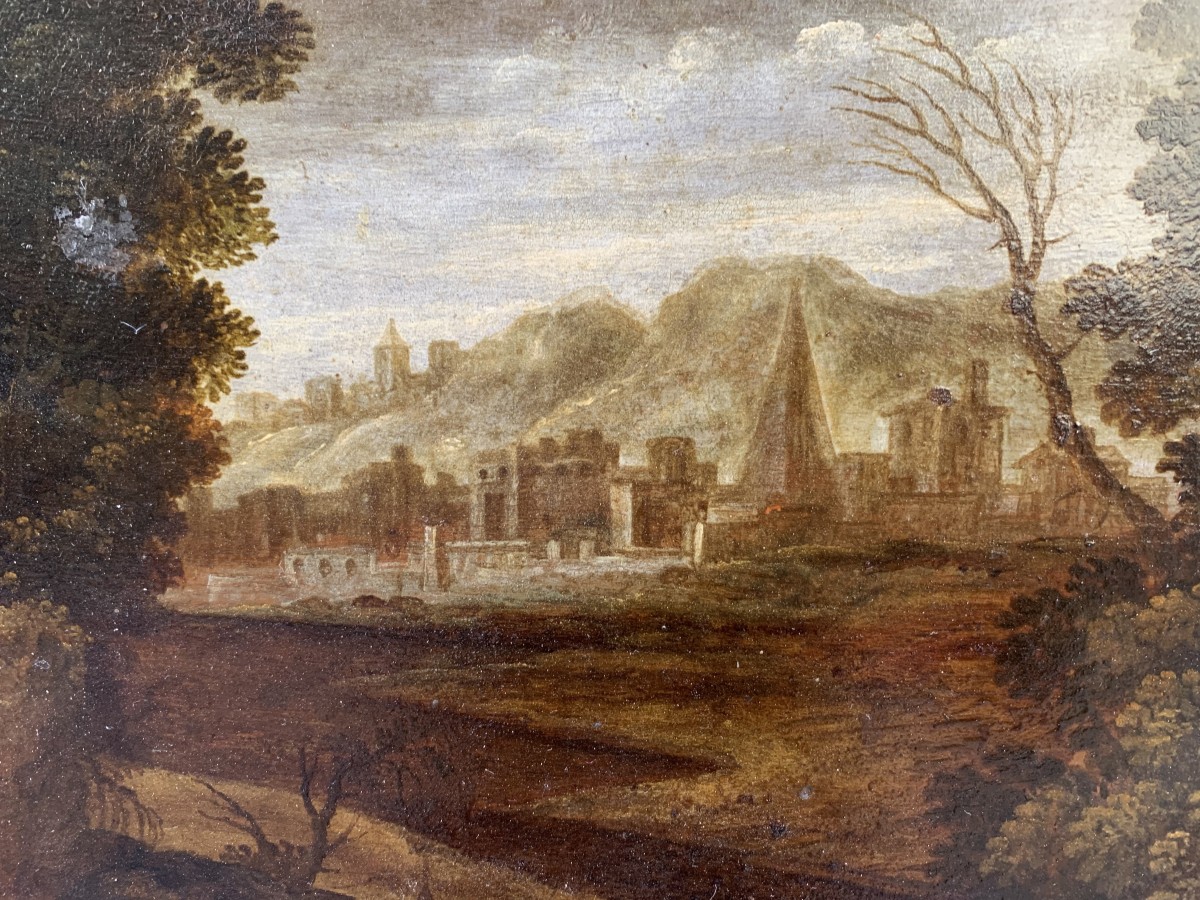
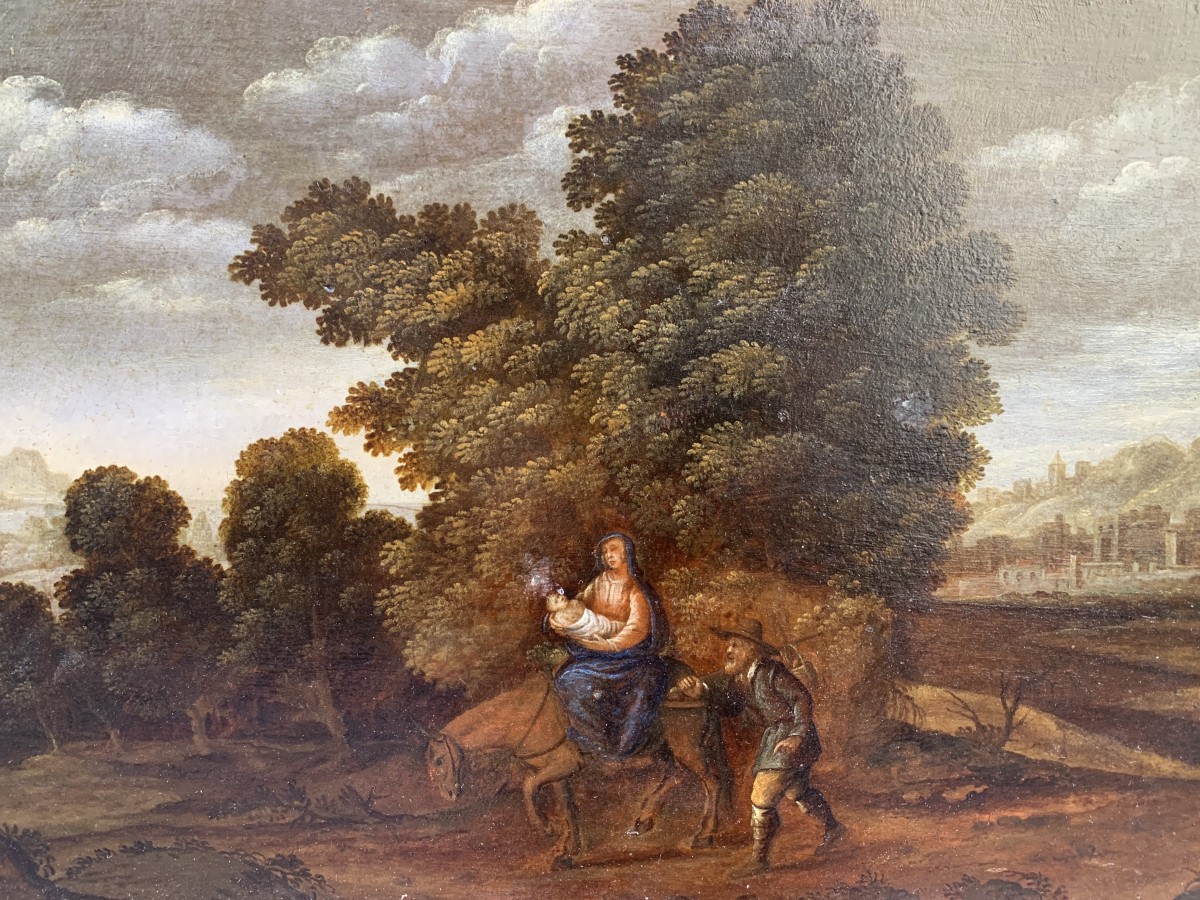
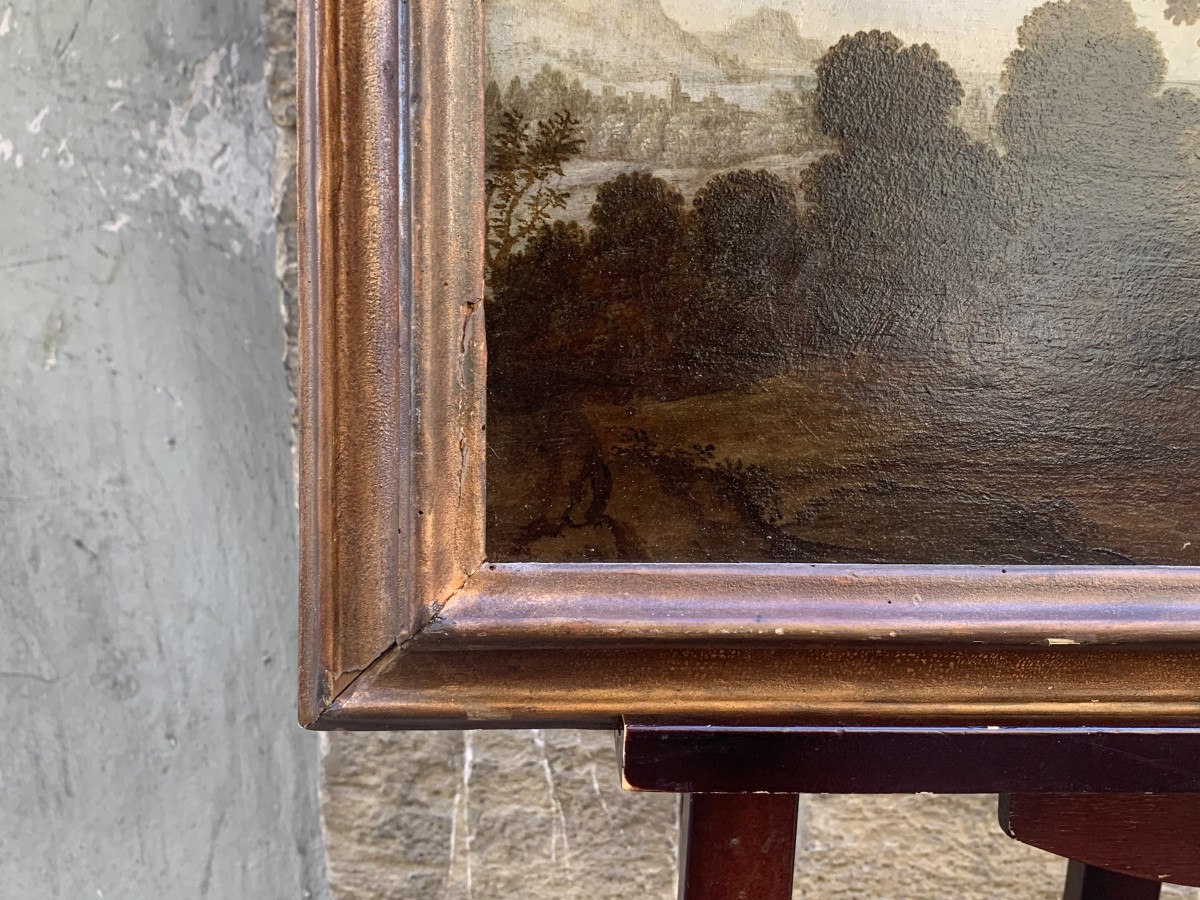
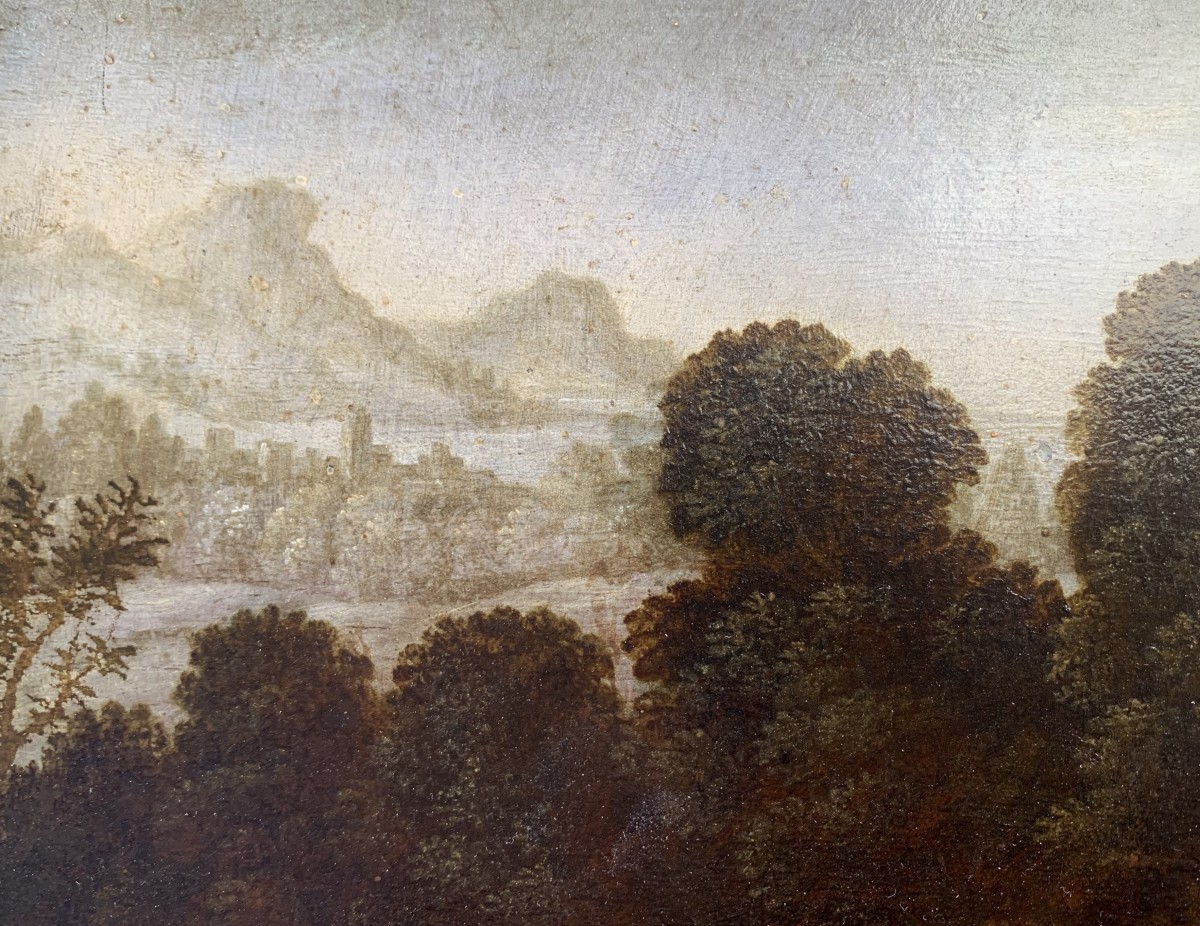
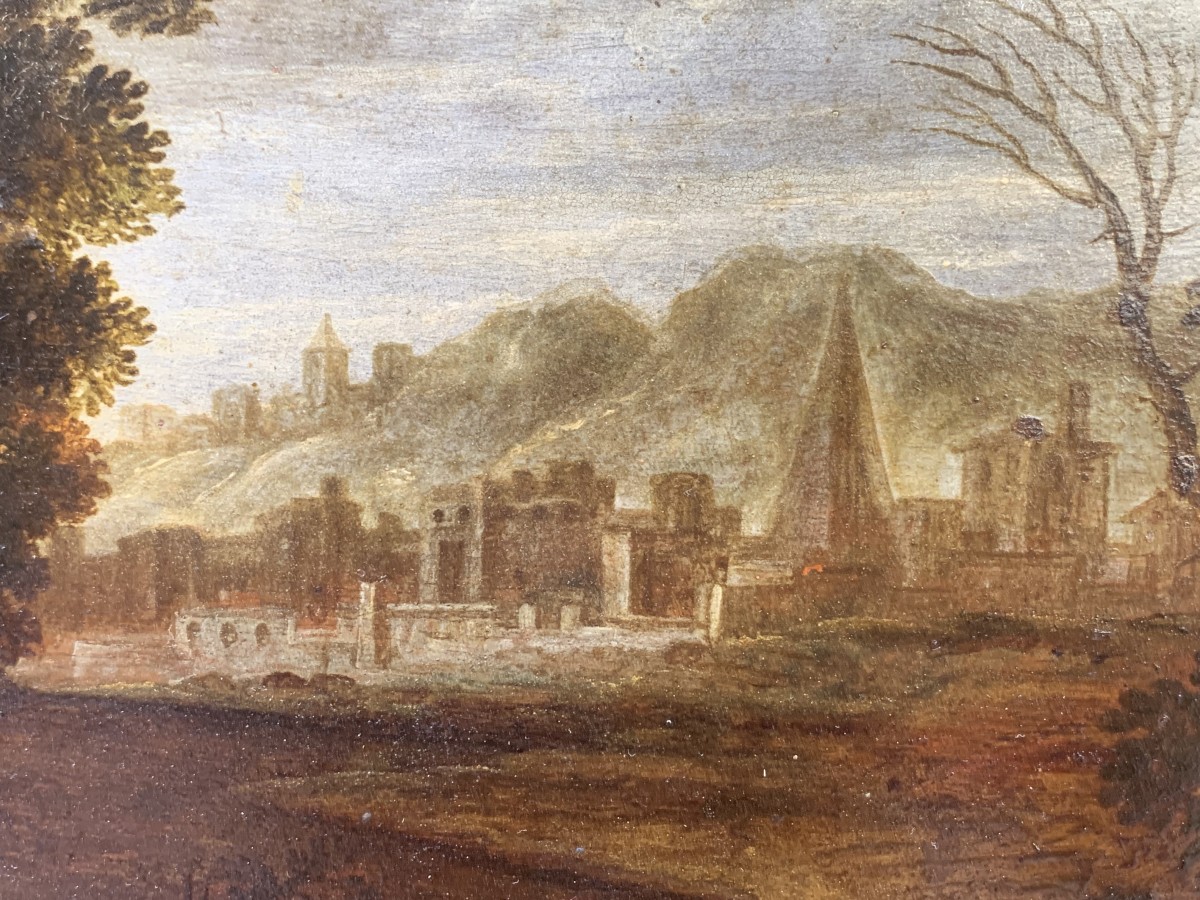
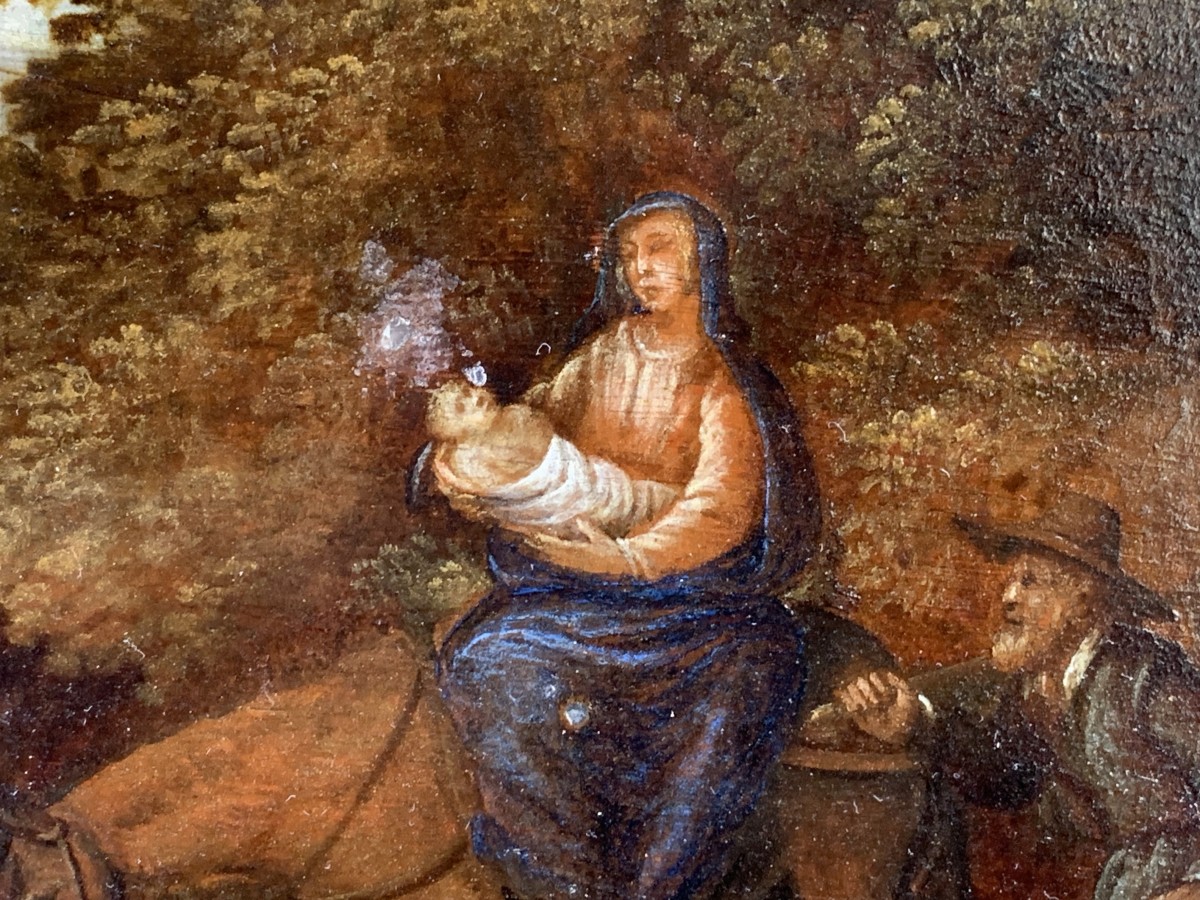
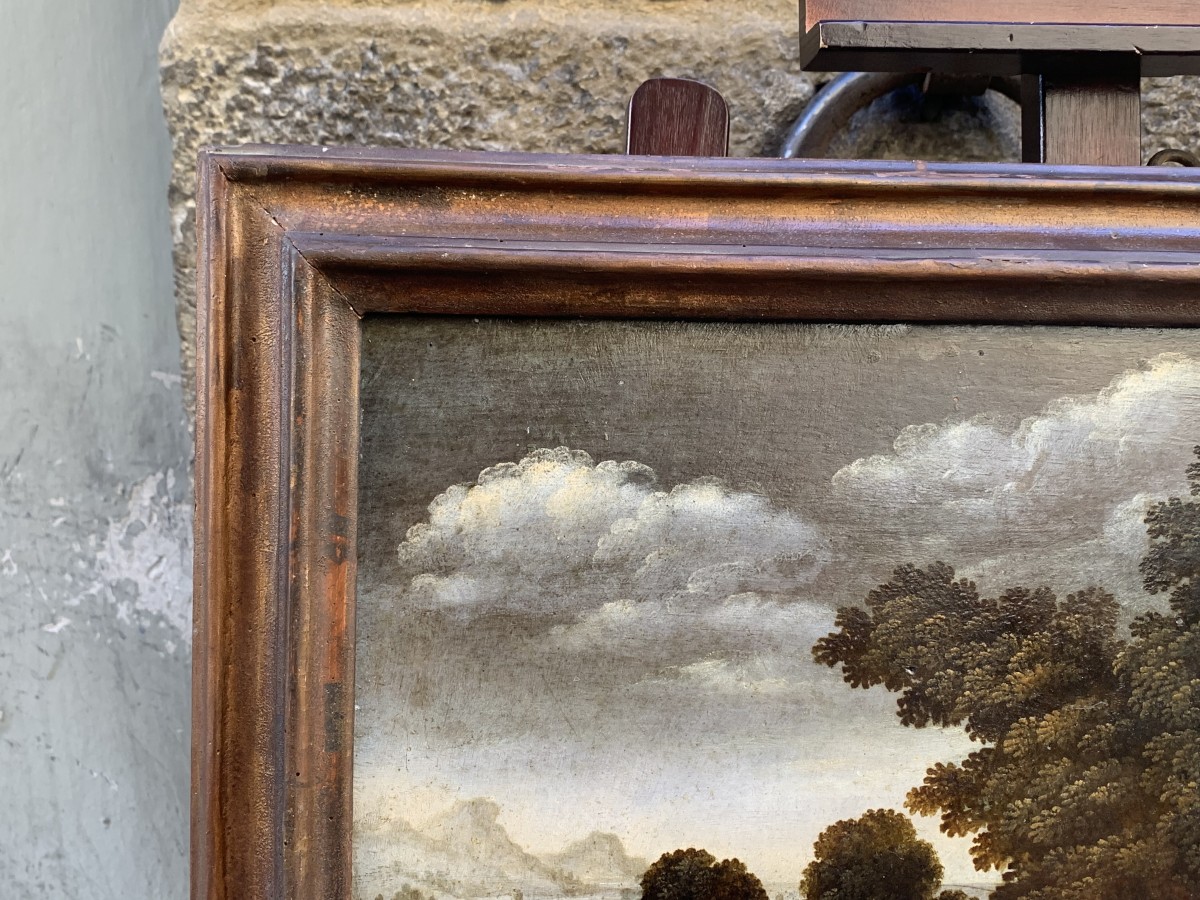
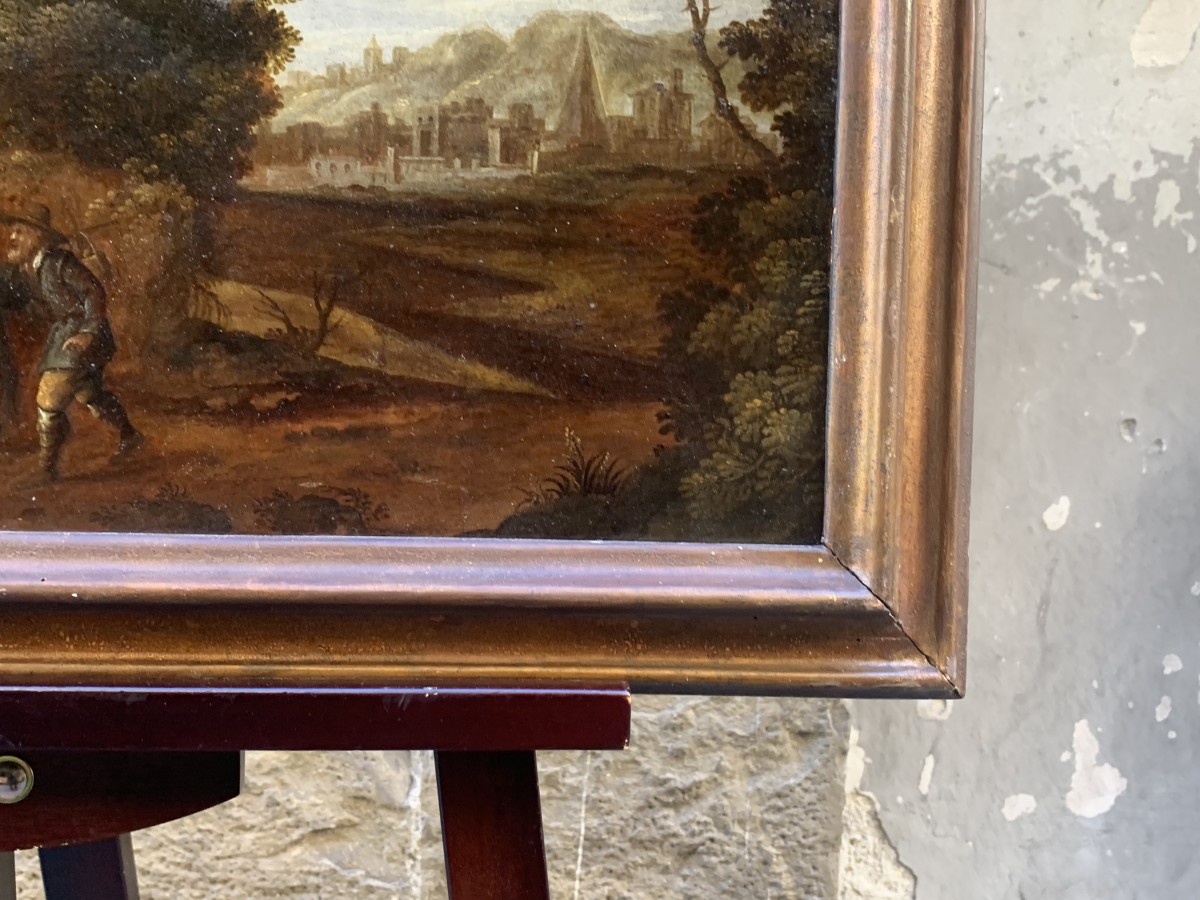
The present painting belongs convincingly to this Roman–Northern milieu. The composition depicts the Flight into Egypt set within an idealized landscape dominated by ancient ruins and a pyramid in the distance. This element, typical of the antiquarian and imaginative vision of Rome cultivated by Northern artists, creates a subtle conceptual bridge between the biblical subject and an idealized vision of Egypt filtered through Roman archaeology.
The landscape composition clearly reflects models rooted in late sixteenth- and early seventeenth-century Rome. The depiction of ruins and ancient architecture appears derived from drawings and engravings associated with the circle of Paul Bril and Matthijs Bril, as well as from the broader graphic tradition disseminated by Northern artists active in Rome, among them Willem van Nieulandt, who already in the early decades of the seventeenth century developed imaginative and dreamlike views of Roman ruins, anticipating a sensibility that would only later become central to the genre of architectural capriccio.
Particularly significant is the presence of the large tree acting as a structural wing of the composition. This element recalls compositional solutions associated with Adam Elsheimer and points to a direct familiarity with pictorial models developed by Northern artists working in Rome. The landscape atmospheres created through successive planes, dark foregrounds, and distant openings would later be absorbed and reinterpreted by painters such as Jacob Pynas.
Although the present painter operates on a more modest qualitative level, the work nevertheless reveals an erudite visual culture and a clear awareness of a precise artistic current. In this respect, the painting shows a curious affinity with works associated with the enigmatic Master of the Roman Songbook, particularly in the imaginative treatment of Roman ruins and the fusion of biblical narrative with a learned, idealized landscape.
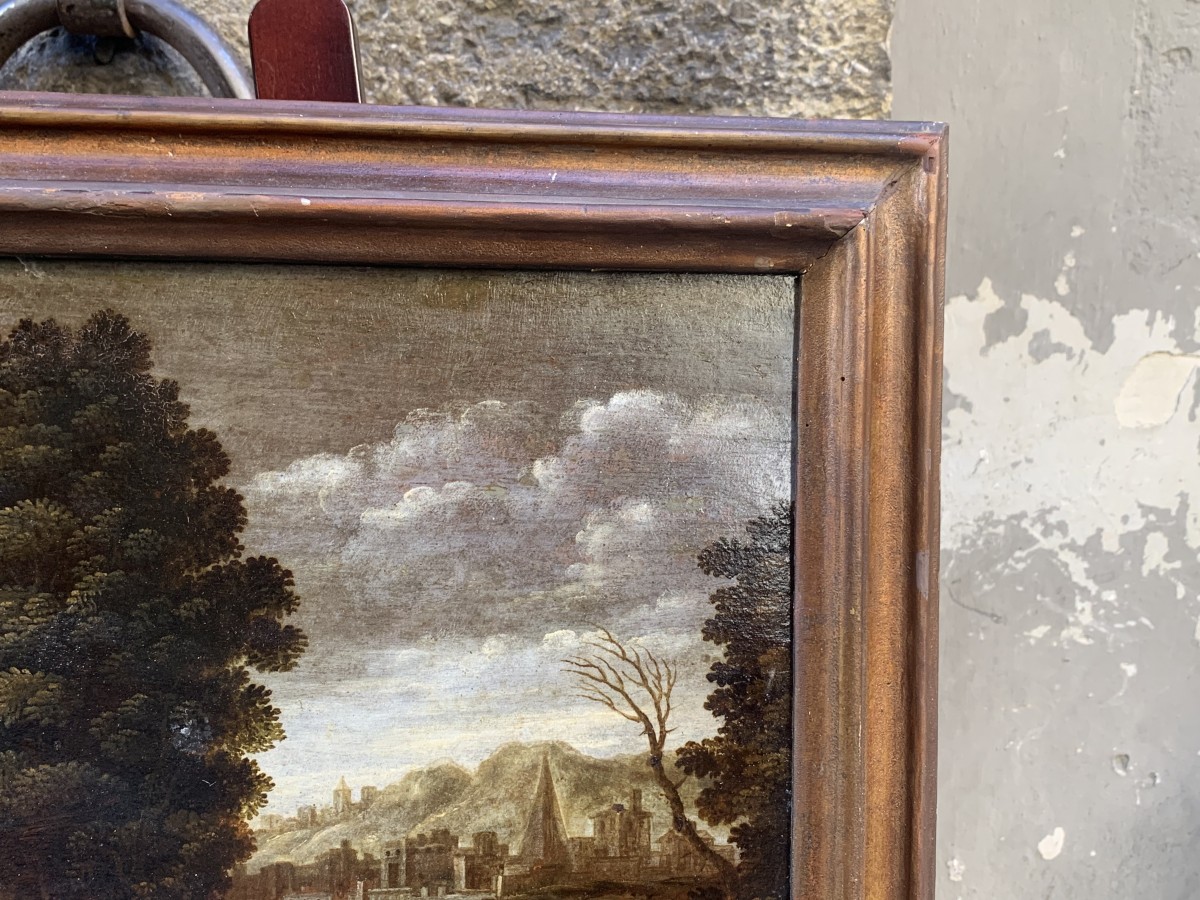
Condition: good overall condition; the panel is cradled, with a coherent surface patina consistent with the age of the work.