Offered by Galerie Delvaille
REQUEST INFORMATION

French furniture of the 18th century & French figurative paintings
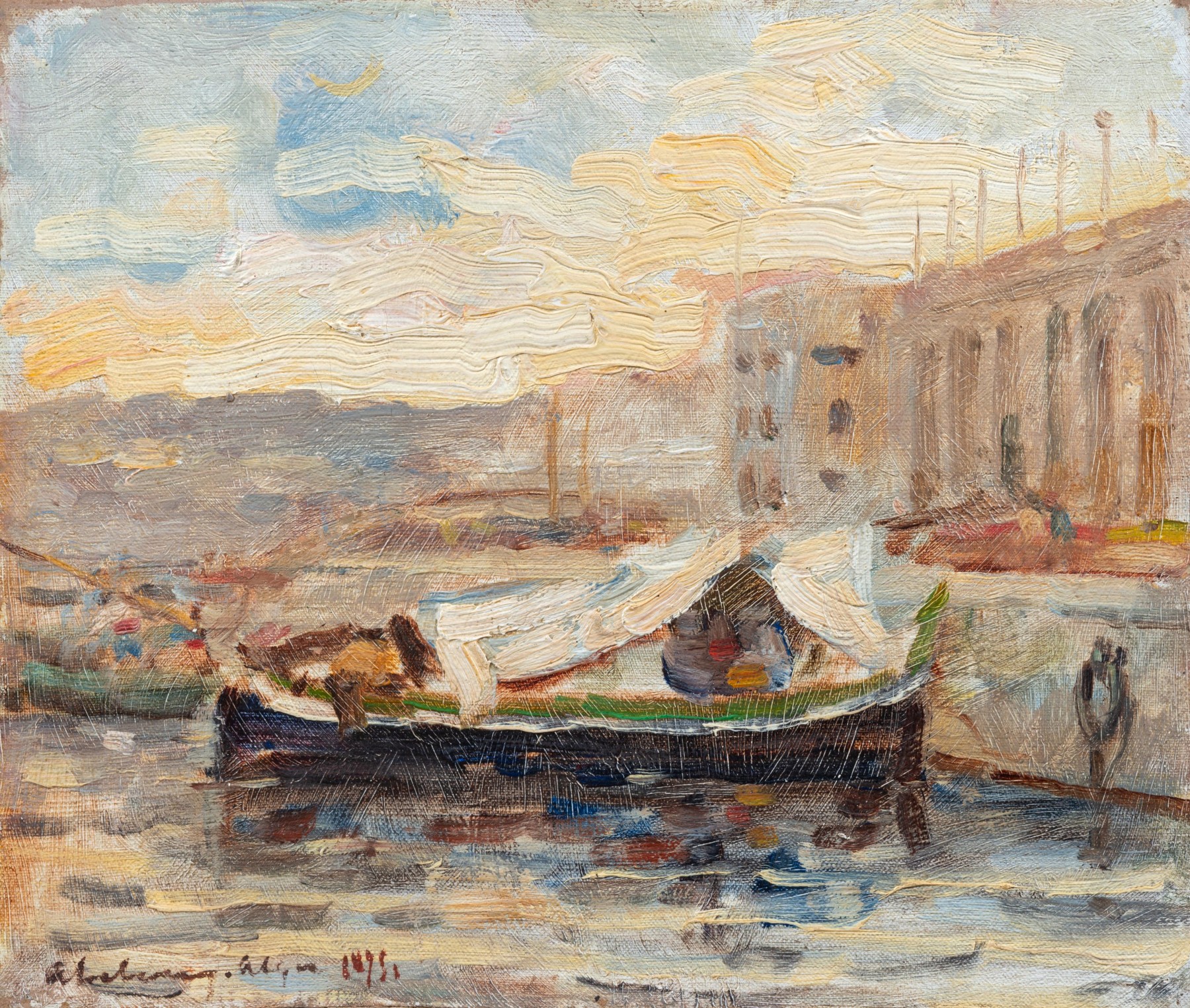
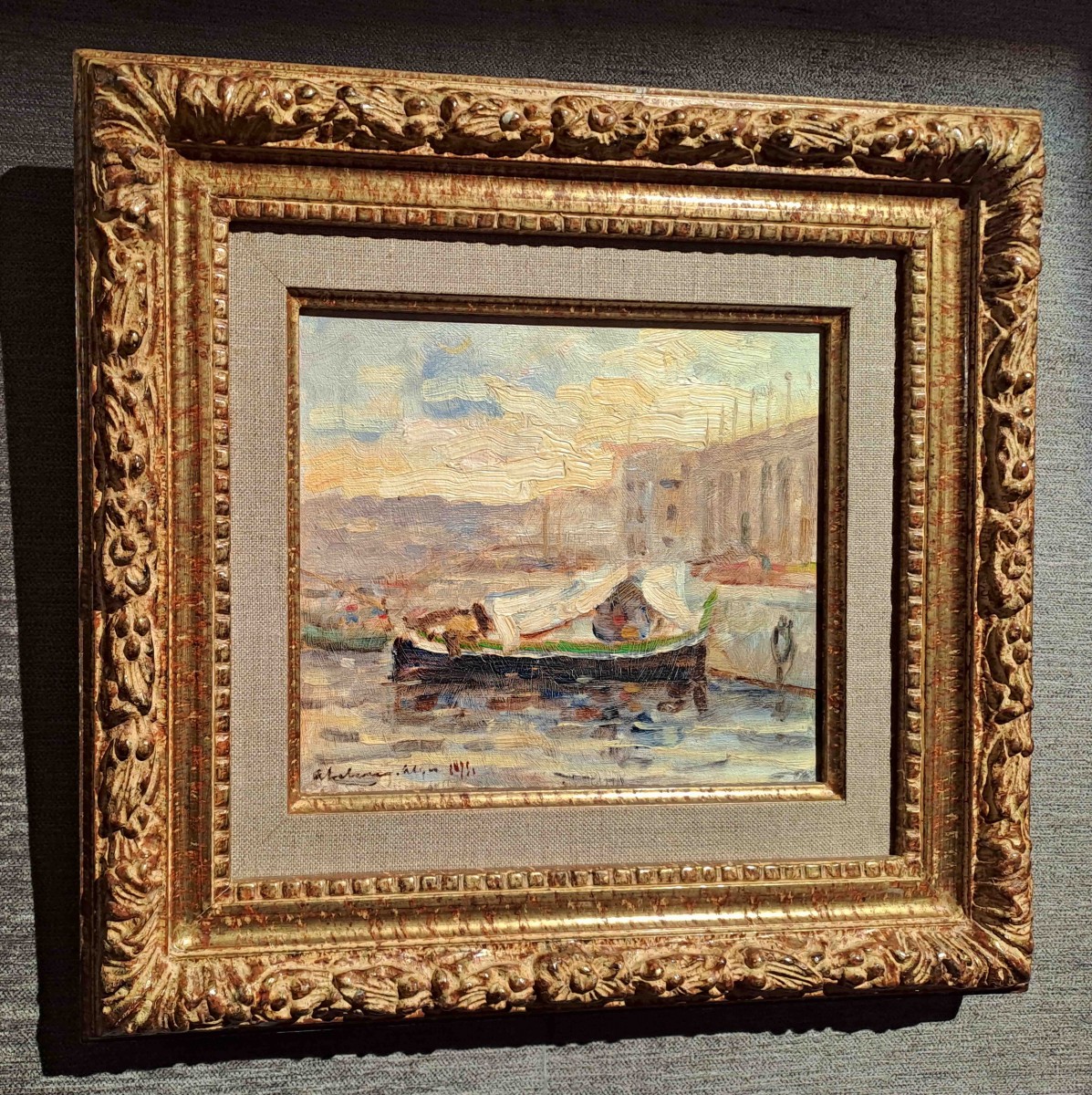
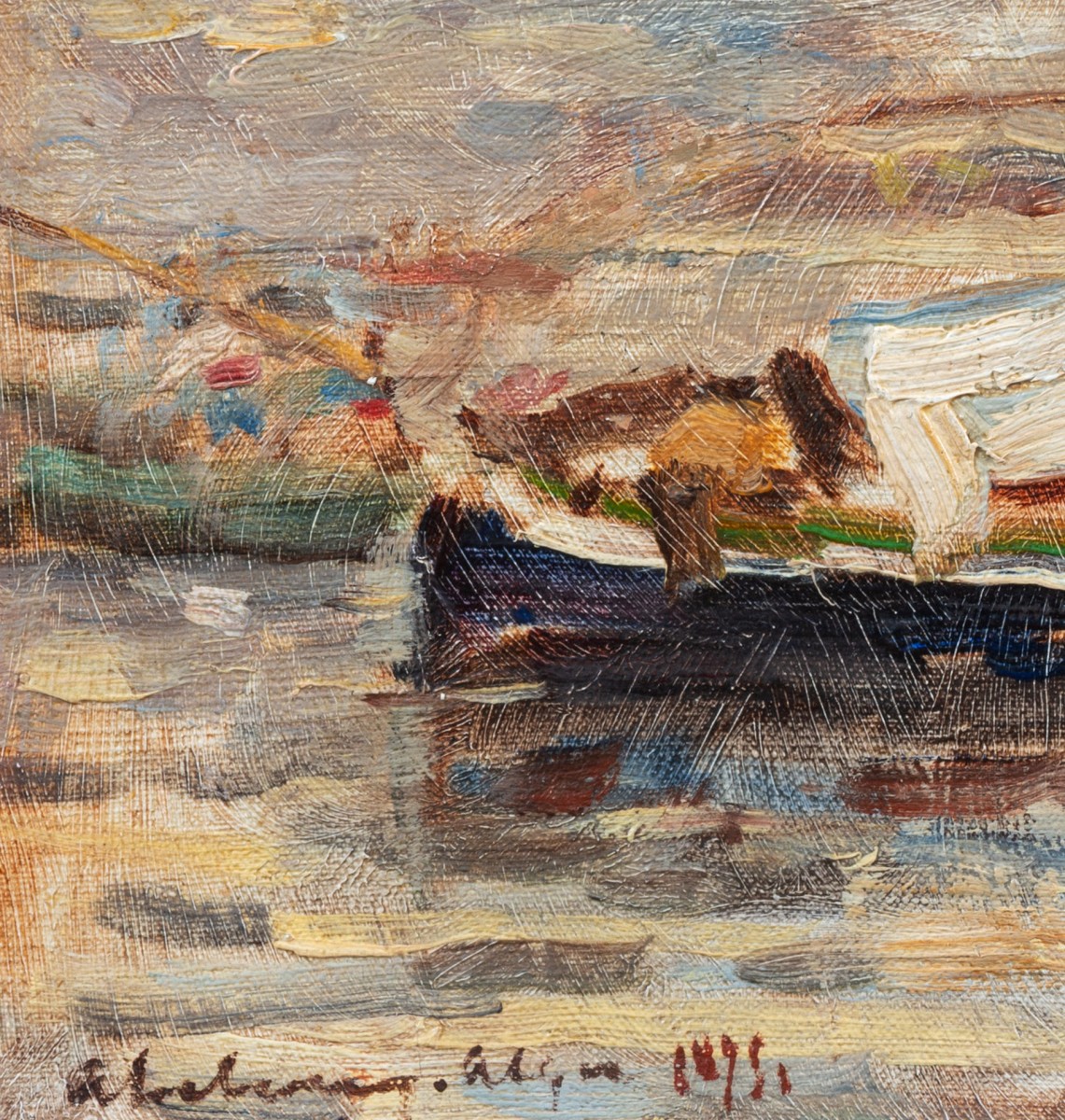
Oil on canvas signed lower left “A. Lebourg Alger 1875”
Dimensions: 19 cm x 22 cm / With frame : 32.3 cm x 35.3 cm
Provenance : Private collection since 1970
(Acquired at the Palais Galliera on December 2, 1970 from Maitre Couturier, expert Mme Caillac)
Previously sold at the Hôtel Drouot on February 26, 1926
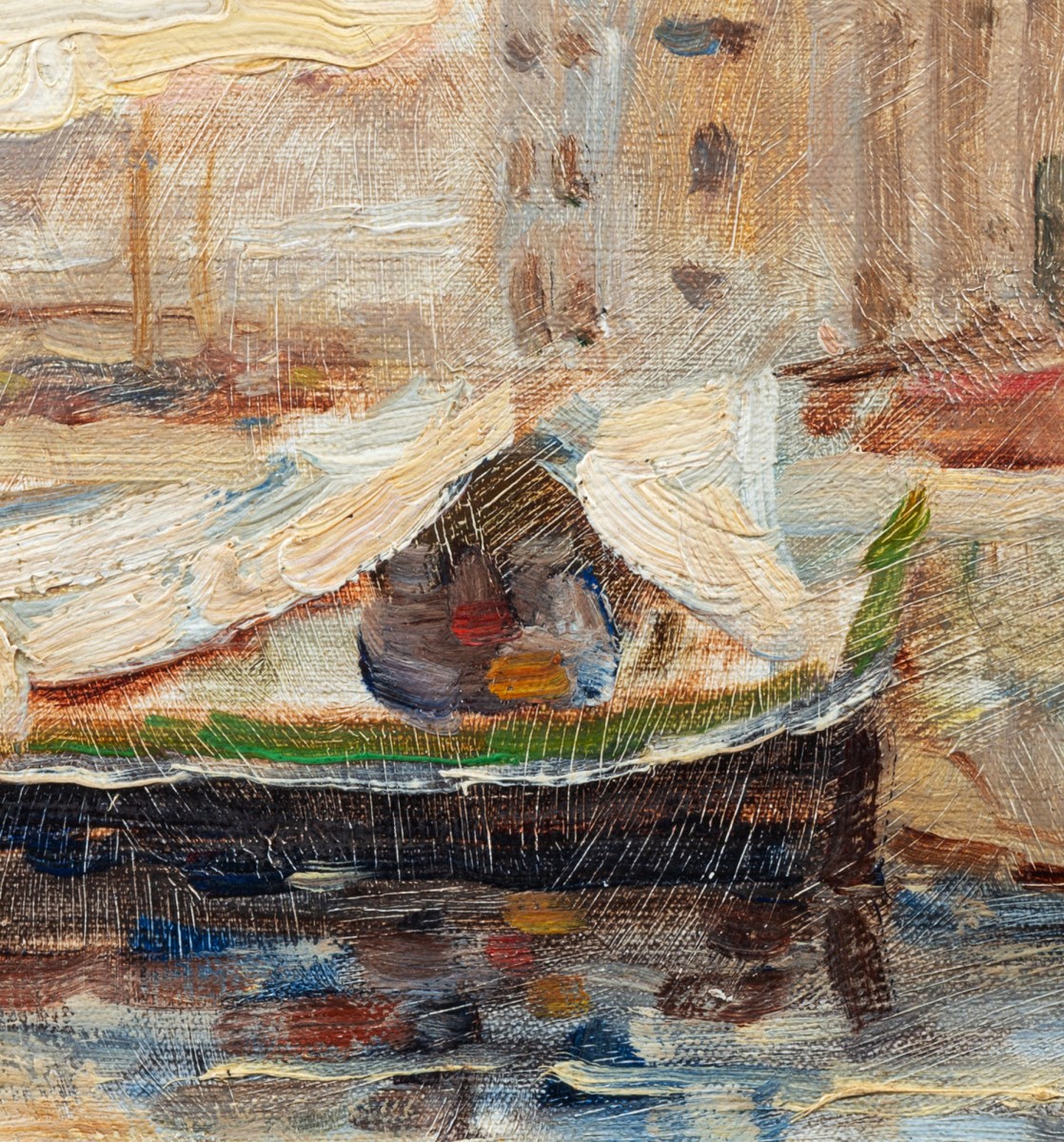
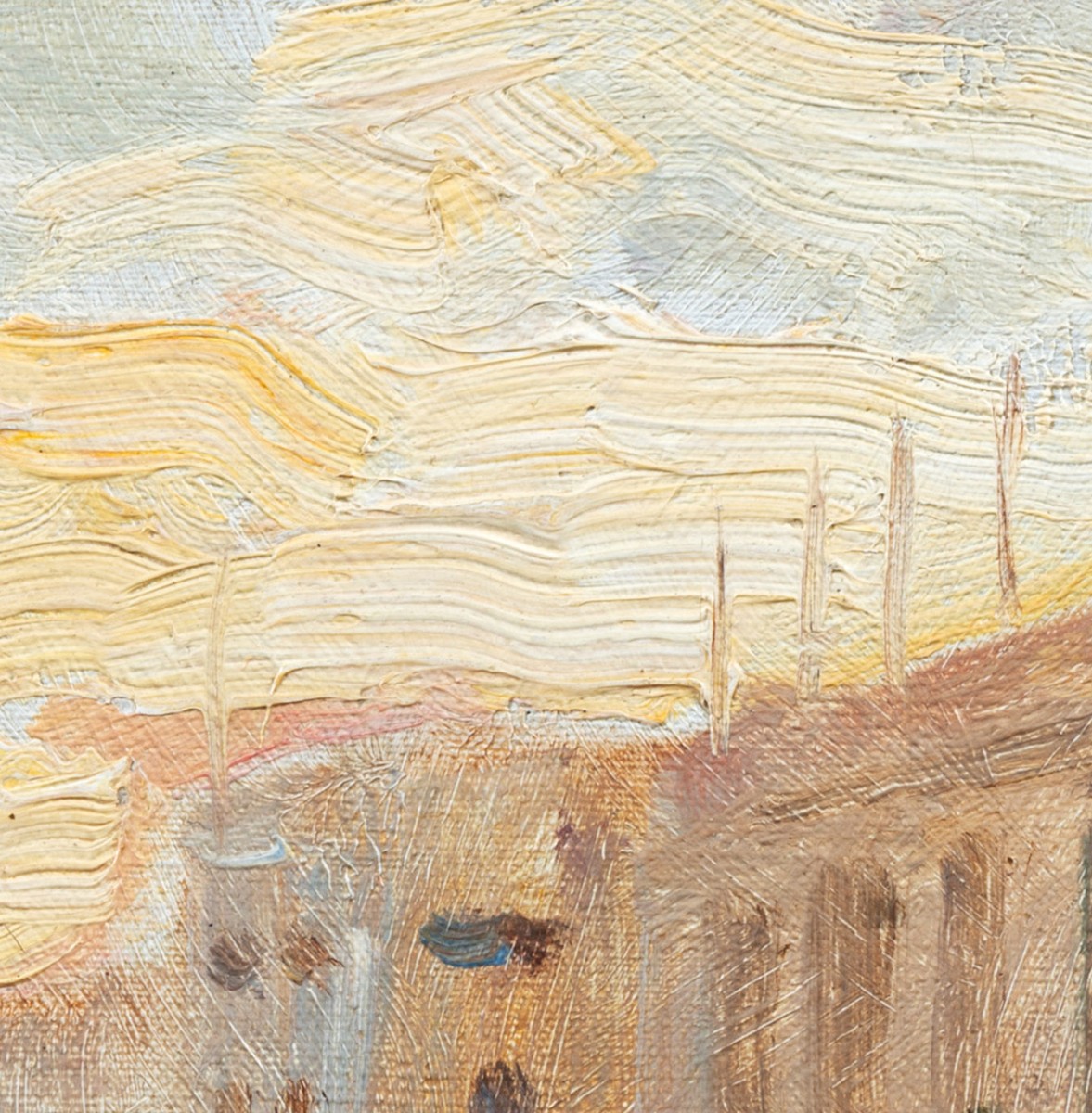
Albert Lebourg was a French Impressionist and leader of the Rouen school. The Musée d'Orsay, like other major museums, holds a large number of works by this important artist. The release of Wildenstein's catalogue raisonné, which had been eagerly awaited for half a century, and the incomprehensible absence of a national exhibition in France, partly explain his relatively low market value. However, the average value of his paintings is also based on his prolific output, particularly during the last 20 years of his life. Although his painting was modernist and visionary from 1870 onwards, his impressionist touch gave way to a conventional softness in some of his paintings. Albert Lebourg's beautiful oil paintings are rendered in thick impasto, often with a knife, using bright colors. While price differences between one work and another are normal for an artist, Albert Lebourg is one of those painters for whom certain criteria are decisive.
Albert Lebourg received his academic training in Rouen and exhibited in 1872 at the Salon Municipal de Rouen alongside Corot, Monet, Pissarro, Sisley, and Ziem. When he was only 23 years old, the president of the Société des Beaux-Arts d'Alger offered him a position as a drawing teacher. Lebourg was captivated by the light of North Africa and developed a free and lively painting technique there. Upon his return to Paris, Lebourg exhibited at the 4th and 5th Impressionist Exhibitions in 1879 and 1880. His favorite subjects were river landscapes.
Our painting: This is one of Albert Lebourg's earliest and most sought-after works. He was in Algiers in 1875 and was already giving advice at the school of fine arts, even though he was only 27 years old. Absent from the capital and without connections to the Impressionists who participated in the first salons of this nascent movement, Lebourg was a true visionary at the time, naturally adopting a modernist touch. The material is applied in broad strokes that foreshadow Post-Impressionism.
Lebourg's works in museums:
Louvre Museum, Orsay Museum, Carnavalet Museum, Petit Palais, Fine Arts Museums of Angers, Caen, Dunkirk, Lille, Rouen, Marseille, etc.